
Alaskan Malamute
mal-uh-MEWT
United States· Norton Sound, Alaska
The Alaskan Malamute is a large, powerful Arctic sled dog bred by the Mahlemut Inuit people of Alaska's Norton Sound region to haul heavy freight over long distances rather than to race.
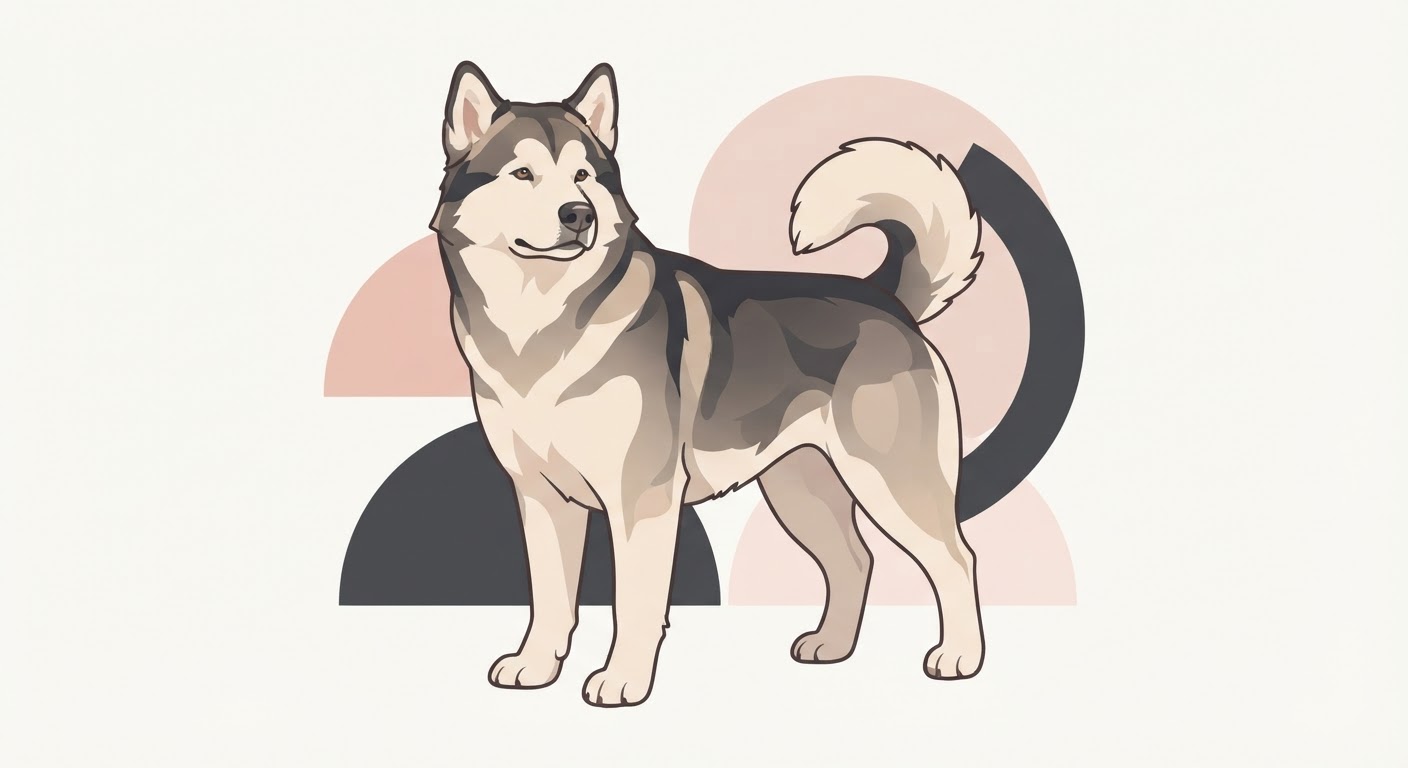
At a glance
Quick facts
Size
Large
Exercise needs
Over 90 minutes daily, ideally with a job
Home size suited to
Medium to large home
Grooming frequency
Twice weekly brush
Coat length
Medium
Sheds
Yes, heavily when moulting
Lifespan
10-14 years
Town or country
Either, with enough exercise
Garden size needed
Medium or larger
Where it comes from
Origins of the Alaskan Malamute
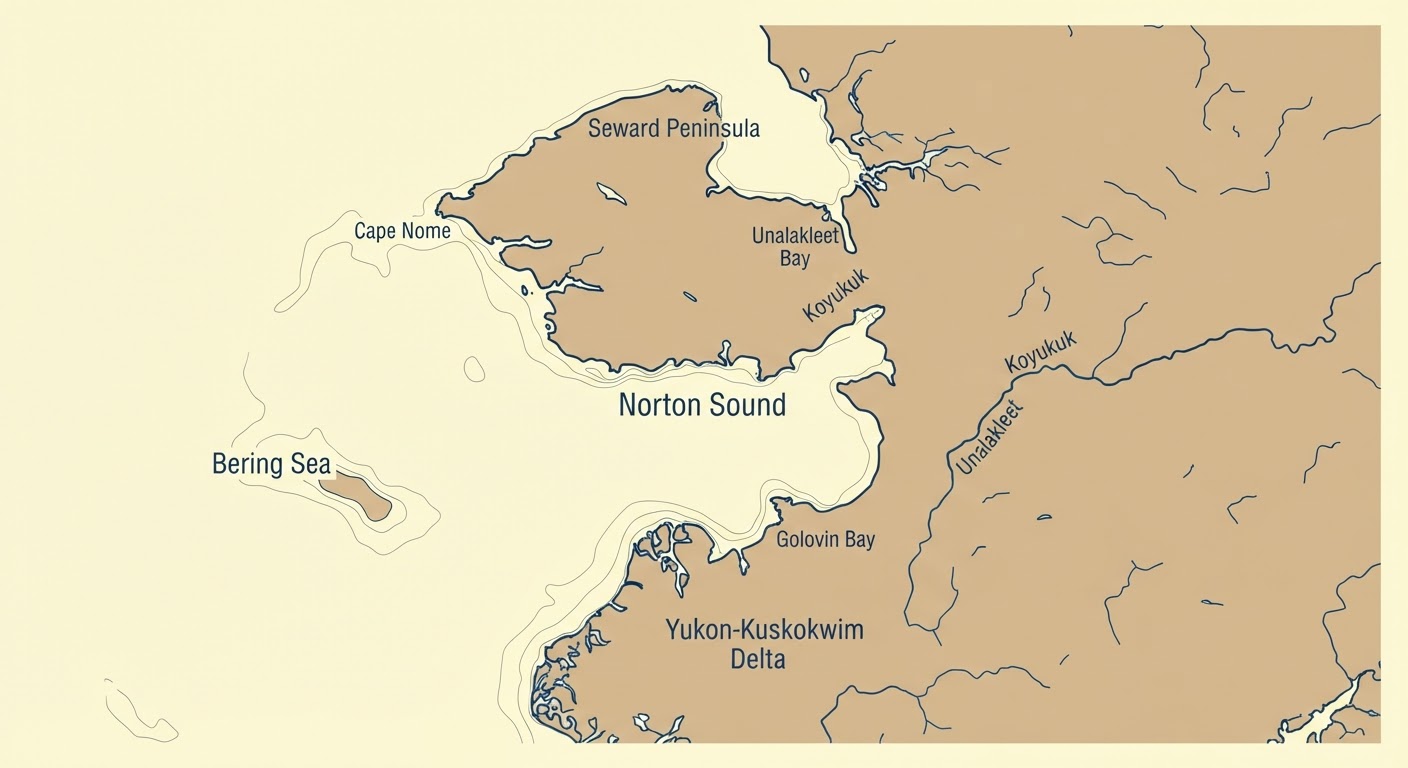
The Alaskan Malamute was bred by the Mahlemut people along Alaska's Norton Sound, where a large, immensely strong dog was needed to haul heavy loads across snow and ice over long distances.
- Region
- Norton Sound, Alaska
- Climate it was bred for
- Extreme Arctic cold
- Original job
- Hauling heavy freight over long distances
The long read
About the breed
The breed takes its name from the Mahlemut people, who bred these dogs over centuries for strength and endurance in extreme cold rather than raw speed, using them to move supplies, hunt seals at breathing holes and, at times, help take down polar bears. Unlike the lighter, faster Siberian Husky, the Malamute was shaped by heavy freight work, giving it a bigger frame and greater pulling power at a steadier pace.
Living with a Malamute means living with a dog built for hard physical work, and one that needs a real job or serious daily exercise to stay content. They are friendly and pack-oriented rather than one-person dogs, but that same pack instinct makes recall unreliable off-lead and can mean tension with other dogs of the same sex if not managed. Malamutes are notorious diggers and escape artists, and the heavy double coat sheds seasonally in large amounts.
Today the Malamute is kept as a working sled dog in some cold-climate regions and, more commonly worldwide, as a companion for owners prepared to meet its exercise and mental stimulation needs. It is not a breed for a sedentary household or a first-time dog owner who has not researched Arctic breeds specifically.
Living with one
Temperament & needs
Our own ratings, based on the breed standard and how these dogs behave in ordinary homes.
Friendliness
4/5
How openly the Alaskan Malamute greets people it does not know.
Trainability
3/5
Intelligent but independent, food and pack motivation work best.
Energy
5/5
Bred for sustained heavy work, needs serious daily exercise.
Barking
2/5
More likely to howl than bark repeatedly.
Grooming
4/5
Heavy seasonal shedding needs frequent brushing.
Suits a first-time owner
2/5
How forgiving the Alaskan Malamute is for someone taking on their first dog.
Sociability
4/5
Friendly and pack-oriented, rarely a good guard dog.
Independence
4/5
Strong-willed, was bred to work with minimal direction.
Illustrated breed standard
The points of the breed
Hover or tap a numbered point to read what the standard asks for.
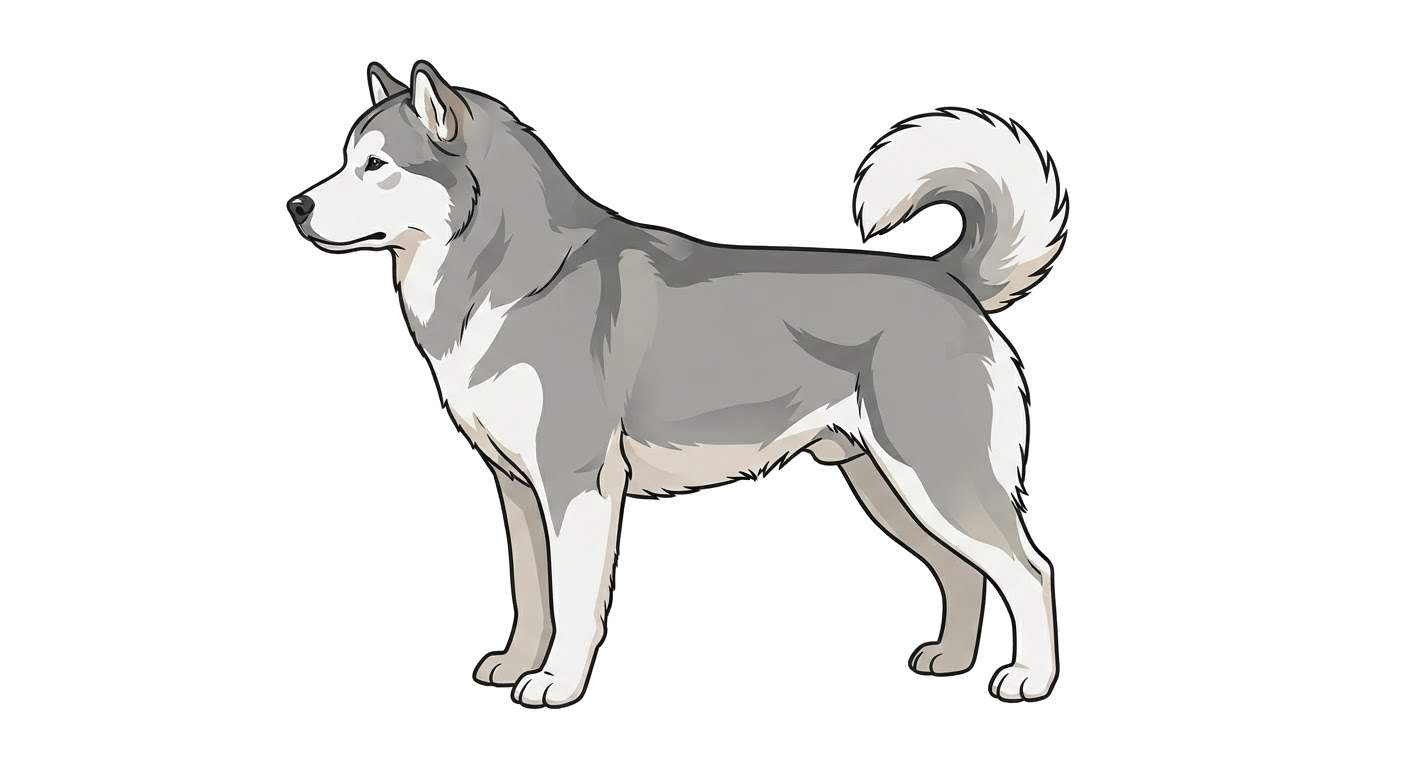
Point 1
Skull
The Alaskan Malamute's skull is judged on balance rather than size — proportionate to the body, with a clean cheek and a stop typical of the breed. Coarseness or an over-refined head are both faulted.
Colours & patterns
Recognised coats
Which coats the standard accepts — and which are simply popular.
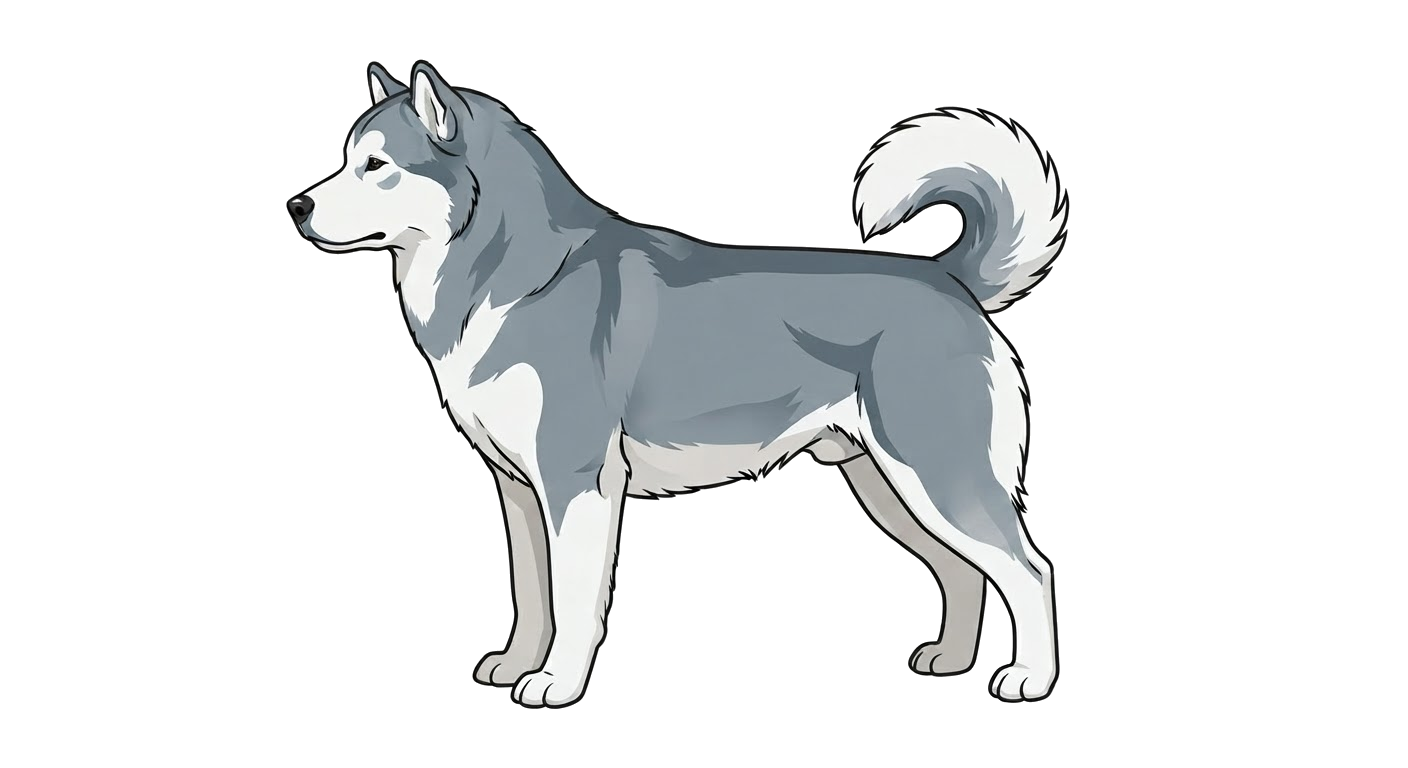
Grey and white
Standard colour
The most iconic Malamute colouring.
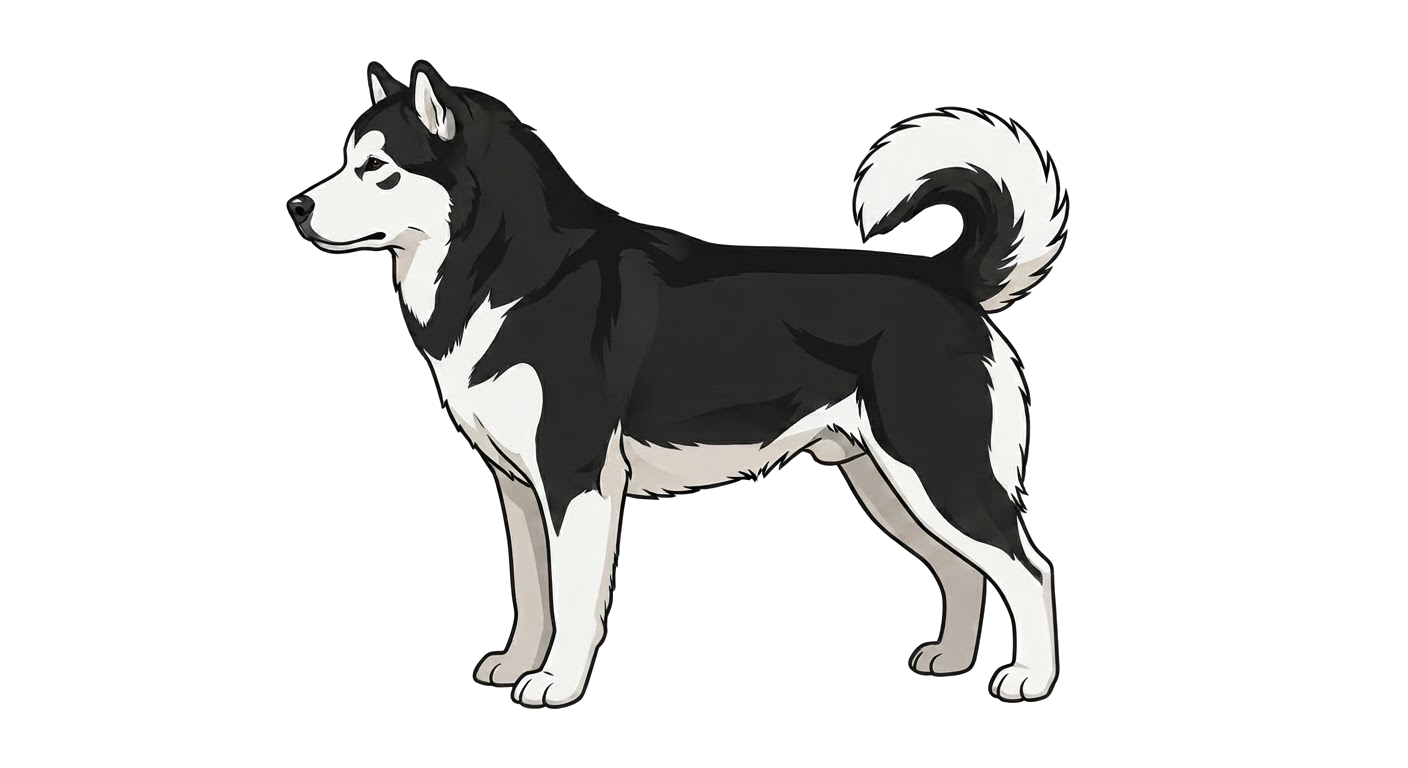
Black and white
Standard colour
A striking, high-contrast standard colour.
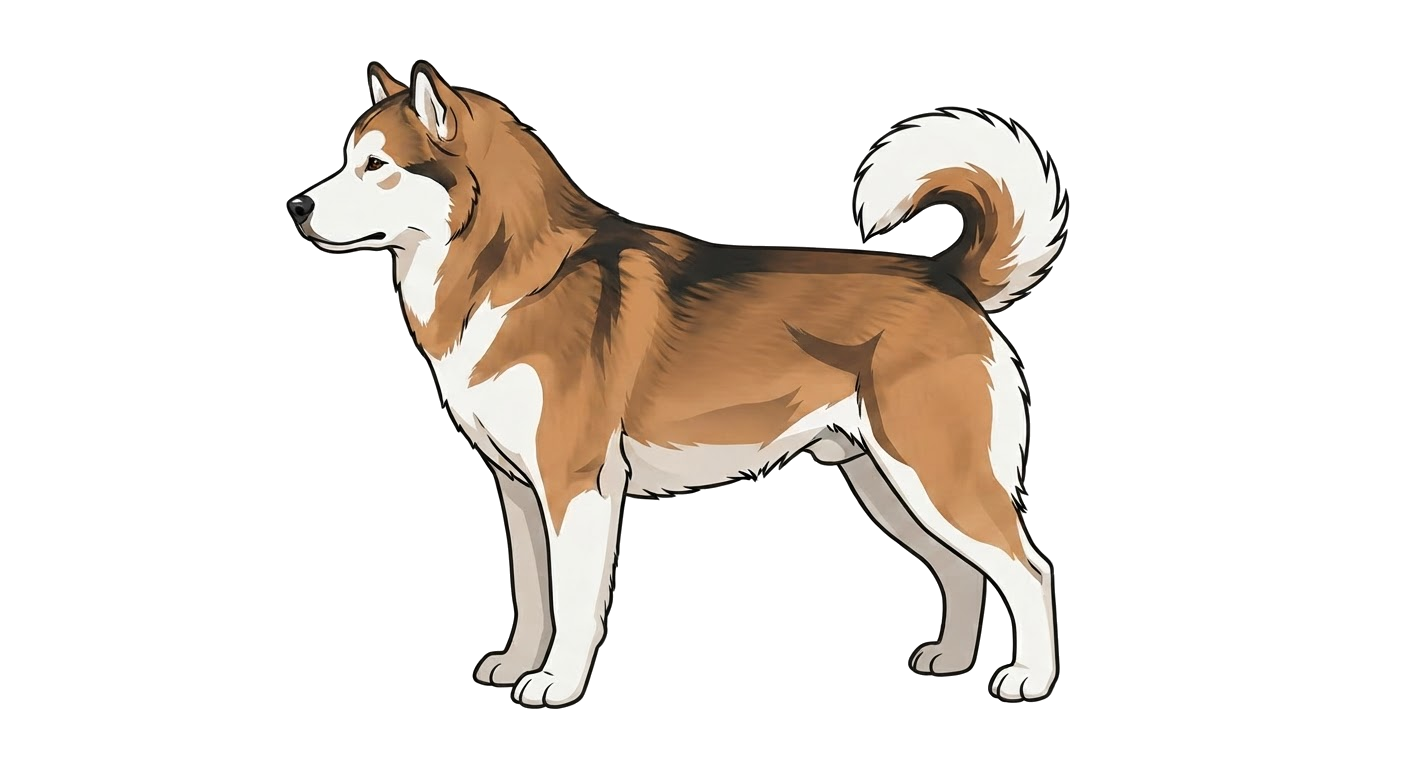
Sable and white
Standard colour
Warm reddish-brown shading over white.
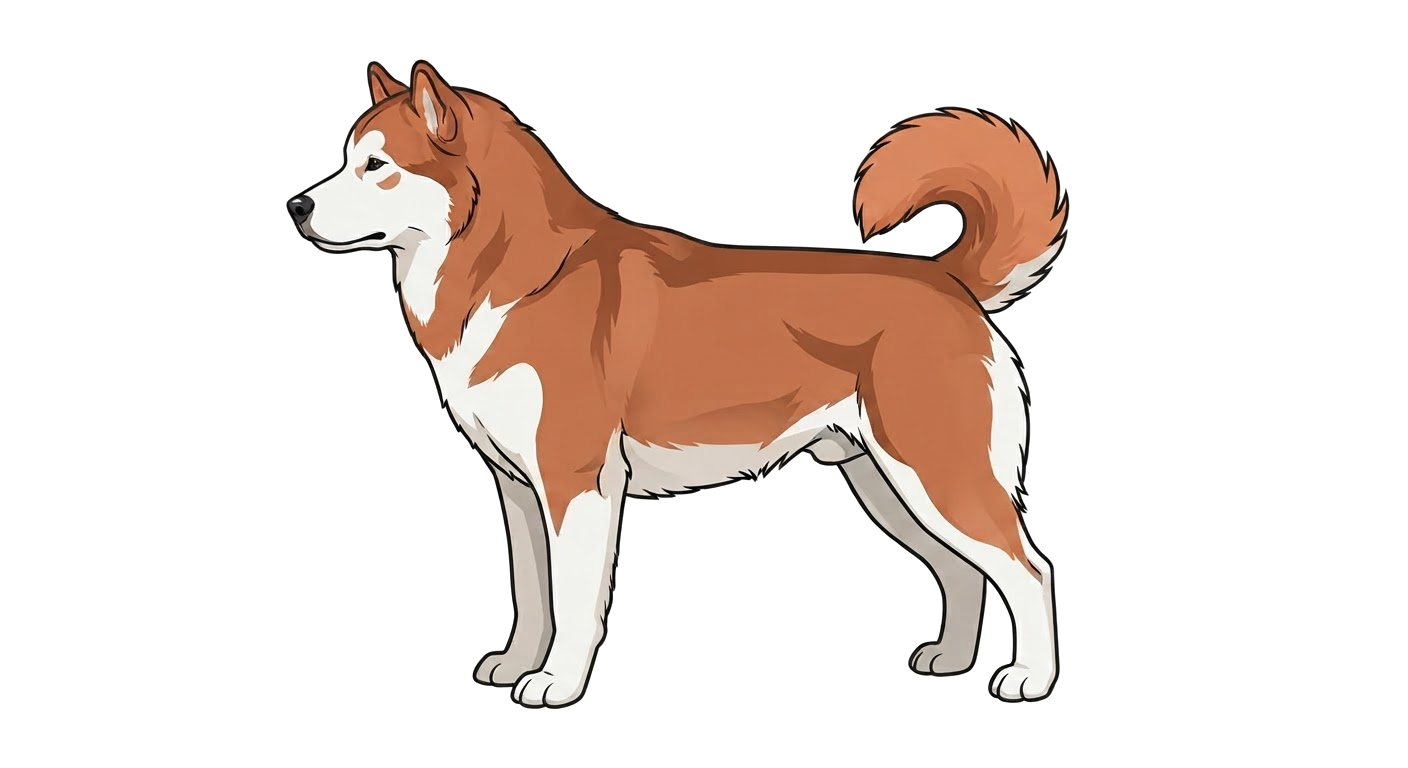
Red and white
Standard colour
Less common but accepted red-based colouring.
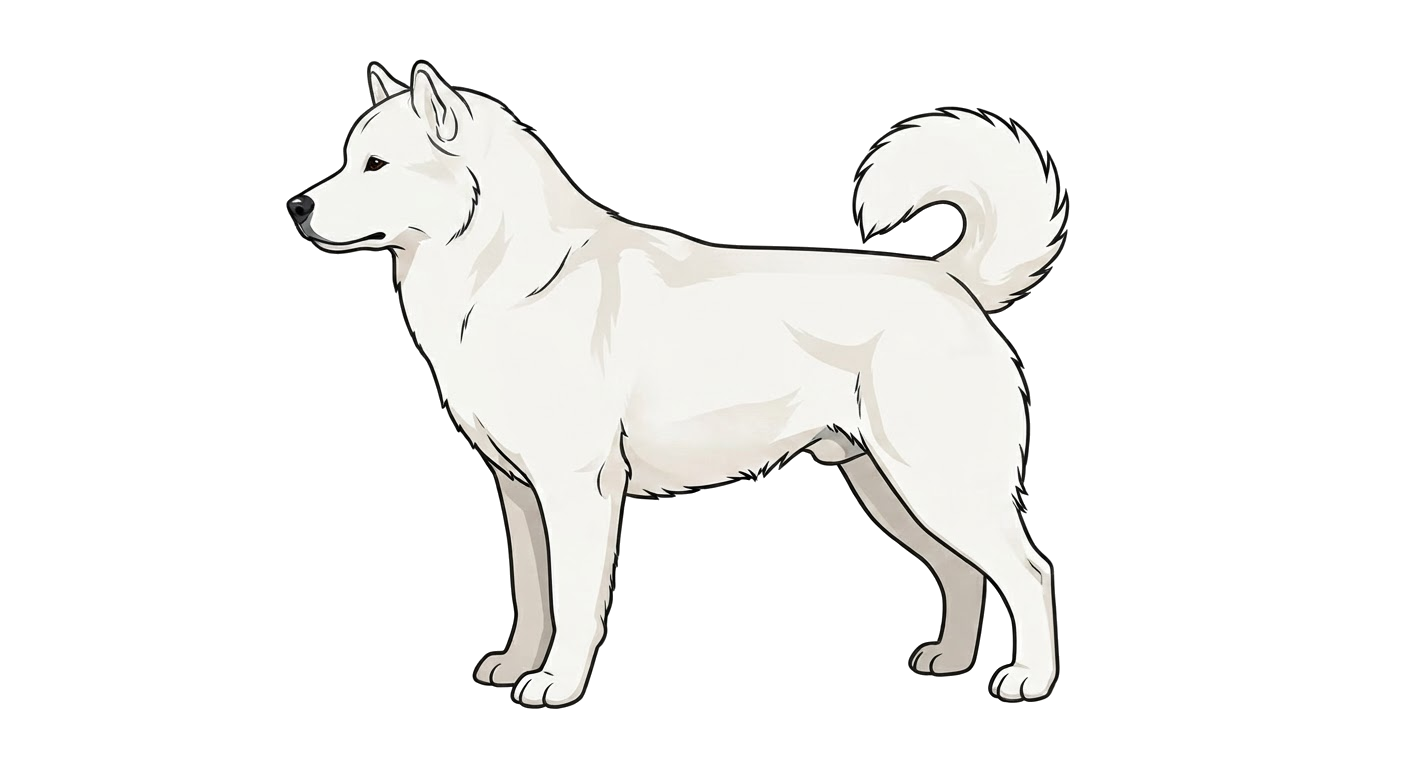
Solid white
Standard colour
The only self colour permitted in the standard.
Timeline
History & development
pre-1700s
Bred by the Mahlemut people
The Mahlemut Inuit of Alaska's Norton Sound region developed the breed over centuries for heavy freight hauling.
1896-1899
Klondike Gold Rush
Demand for sled dogs during the gold rush brought Malamutes wider recognition, alongside crossbreeding that diluted some lines.
1935
AKC recognition
The American Kennel Club recognised the Alaskan Malamute as a breed.
1940s
Wartime service
Malamutes served in Arctic search-and-rescue and transport roles during the Second World War.
1950s onward
The breed today
Kennel club registrations settled into a steady pattern and the Alaskan Malamute moved from a working specialist to a family companion, with breed clubs in the UK and abroad now focused on health testing and keeping true type alive.
Reference
Breed standard summary
- body
- Deep chest, strong compact frame built for pulling
- coat
- Thick double coat, coarse guard hairs over dense undercoat
- ears
- Medium, triangular, erect when alert
- eyes
- Almond-shaped, brown, giving an affectionate expression
- gait
- Steady, efficient, tireless trot built for endurance
- head
- Broad skull with a moderate stop and substantial muzzle
- size
- Large, 58-64 cm at the shoulder
- tail
- Well-furred, carried over the back like a plume
- colour
- Grey and white, Black and white, Sable and white, Red and white, Solid white. Colours outside this list are seen but are not accepted by the kennel clubs.
- temperament
- Typical of the breed: strongest in energy, sociability, independence. Nervousness or aggression are serious faults in the show ring and in the home.
- general appearance
- Large, powerfully built Arctic sled dog with a proud carriage
Health
What to screen for
Green means little to worry about, amber means ask the breeder for test results, red means manage it actively.
Hip dysplasia
Screen for it
Ask for hip scores on both parents before buying.
Inherited polyneuropathy
Watch closely
A DNA test exists; ask the breeder for results.
Hypothyroidism
Screen for it
Fairly common; yearly thyroid panels are worthwhile.
Cataracts
Screen for it
Request an eye clearance certificate from breeders.
General information only — always speak to your vet about your own dog.
From real owners
Dogs like this
Alaskan Malamutes added by PawPoint members through their pet passports. Share yours to appear here.
Loading the wall…
Made for the Alaskan Malamute
The book, plus prints, hoodies and mugs using our own Alaskan Malamute illustration — and one everyday accessory that suits any dog.

The book
Pawpoint: The Complete Dog Breed Book
Every officially recognised breed plus the unofficial ones nobody else documents. 400+ pages, hardback, printed and shipped from the UK.
Own stock — shipped by us
Framed poster
Alaskan Malamute Framed Poster
Museum-weight print of our Alaskan Malamute illustration, framed or unframed.
Printed to order
Hoodie
Alaskan Malamute Hoodie
Heavyweight hoodie carrying the Alaskan Malamute illustration on the chest.
Printed to order
Mug
Alaskan Malamute Mug
Ceramic mug with the Alaskan Malamute illustration wrapped around it.
Printed to order
Accessory
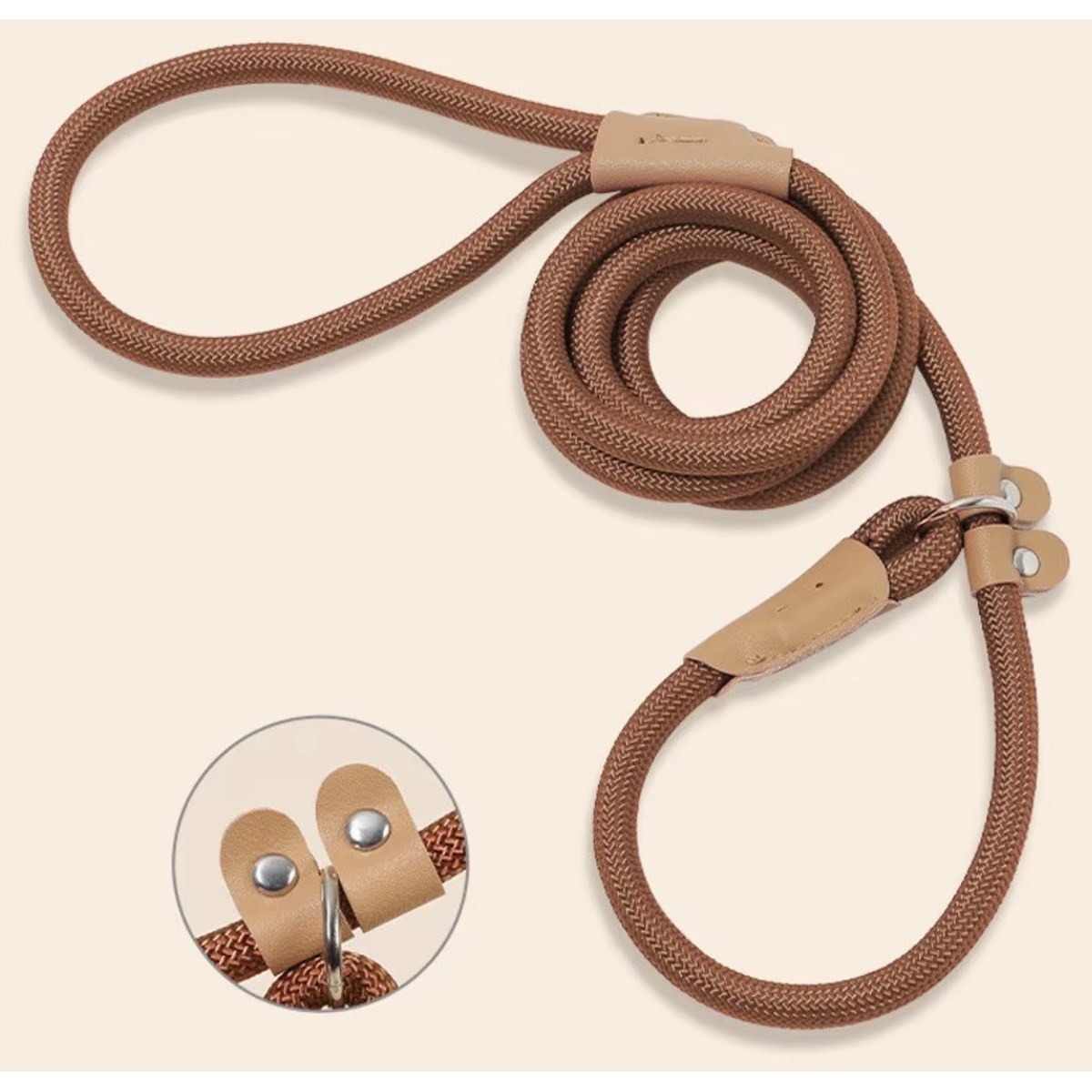
Rope Slip Lead
Braided rope lead with a leather stop, 150cm. Good for training walks.
Fits any dog
Pawpoint on YouTube
Watch the full Alaskan Malamute video
Breed deep-dives, history and honest ownership talk. New film every week.
Watch now