
American Bully (XL)
uh-MER-ik-uhn BULL-ee
United States· United States, bully-breed community nationwide
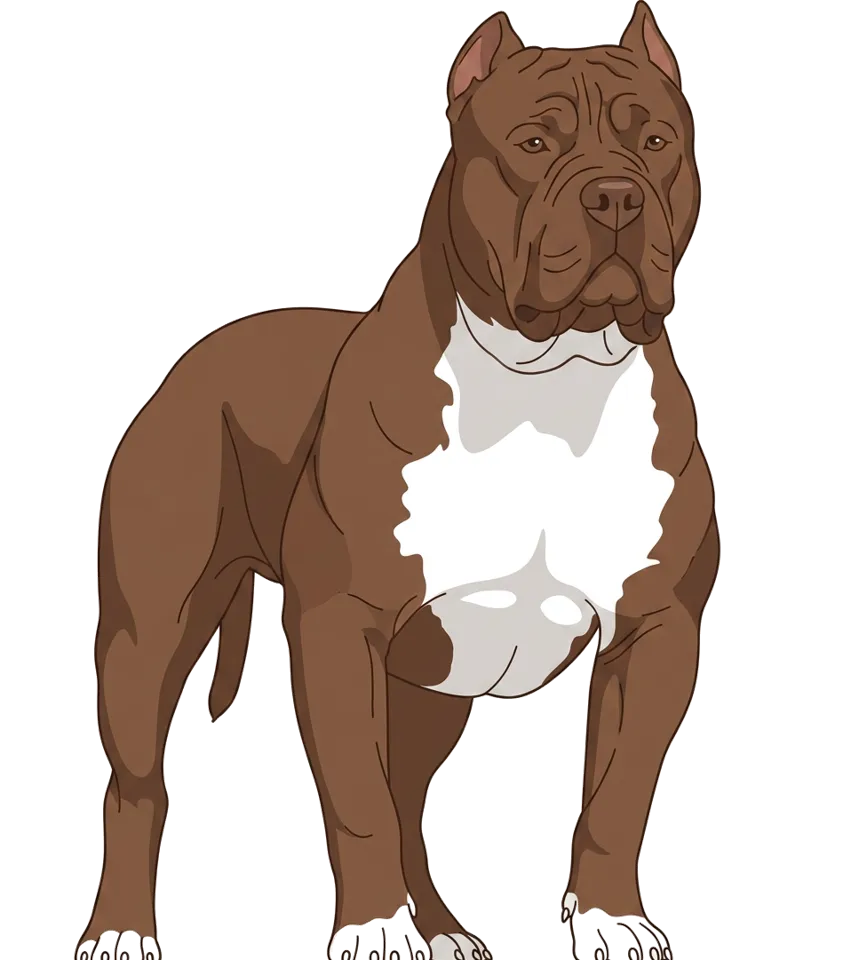
The American Bully (XL) is the largest recognised size variety of the American Bully, a muscular, imposing companion breed developed in the United States that keeps the breed's gentle, people-focused temperament in a considerably bigger frame.
At a glance
Quick facts
- Size
- Giant
- Exercise needs
- 45 minutes daily
- Home size suited to
- Large home with space to stretch out
- Grooming frequency
- Weekly brush
- Coat length
- Short
- Sheds
- Yes
- Lifespan
- 8-12 years
- Town or country
- Better suited to the country
- Garden size needed
- Large and securely fenced
Where it comes from
Origins of the American Bully (XL)

The XL Bully was developed by American Bully breeders selecting for greater size and bulk while keeping the breed's characteristic affectionate temperament, resulting in the largest of the American Bully varieties.
- Region
- United States, bully-breed community nationwide
- Climate it was bred for
- Varied US suburban and urban settings
- Original job
- Companionship, large-format bully-type breeding
The long read
About the breed
The XL variety emerged in the 2000s as some American Bully breeders in the US selected for greater height and bulk than the original Standard type while retaining the broad head and heavy bone associated with the breed. It draws on the same Pit Bull and Staffordshire Terrier foundation as the other bully sizes, but the emphasis on scale means XL dogs require noticeably more space, food and structured exercise than their smaller relatives.
Living with an XL Bully means living with a very large, very strong dog that, in most individuals, is also affectionate and eager to please. Because of the size and strength involved, early training and lead manners are essential rather than optional, and prospective owners should think carefully about handling, insurance and local legislation before committing, since XL Bully-type dogs have faced specific legal restrictions in parts of the UK in recent years. Socialisation from puppyhood is particularly important given the breed's size.
Today the XL is the most demanding American Bully variety in terms of space and management, and its ownership requirements and legal status vary significantly by country and region, so anyone considering the breed should check current local rules carefully before acquiring one.
The class is recognised by the American Bully Kennel Club (ABKC), the breed's founding registry since 2004, which publishes the official standard used here; it is not currently recognised by the KC, AKC or FCI.
Living with one
Temperament & needs
Our own ratings, based on the breed standard and how these dogs behave in ordinary homes.
Friendliness
4/5
How openly the American Bully (XL) greets people it does not know.
Trainability
4/5
Eager to please, though size makes early training especially important.
Energy
3/5
Moderate exercise needs relative to size, but needs consistent daily activity.
Barking
2/5
Not a frequent barker.
Grooming
1/5
Short coat, minimal grooming needed.
Suits a first-time owner
4/5
How forgiving the American Bully (XL) is for someone taking on their first dog.
Sociability
4/5
Affectionate with family when well socialised.
Independence
2/5
Prefers company and does not do well left alone for long periods.
Illustrated breed standard
The points of the breed
Hover or tap a numbered point to read what the standard asks for.
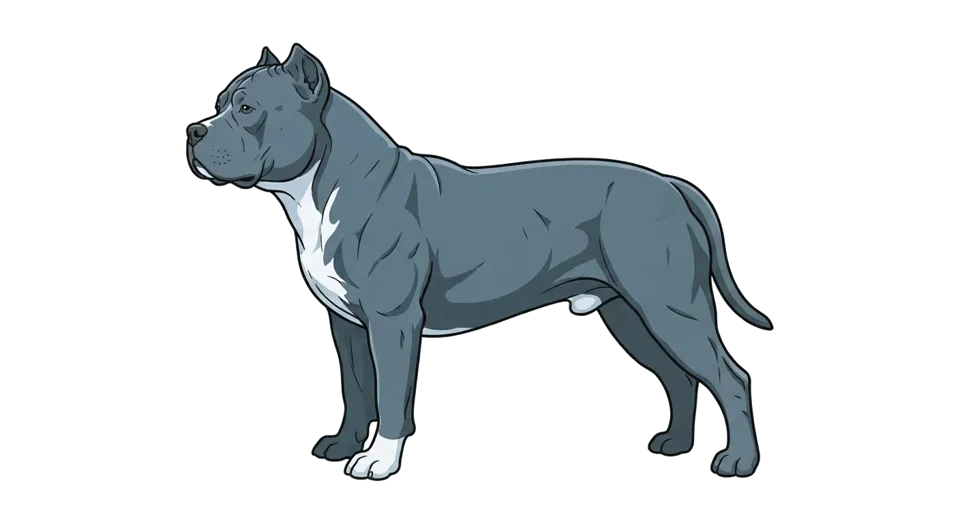
Point 1
Skull
The American Bully (XL)'s skull is judged on balance rather than size — proportionate to the body, with a clean cheek and a stop typical of the breed. Coarseness or an over-refined head are both faulted.
Colours & patterns
Recognised coats
Which coats the standard accepts — and which are simply popular.
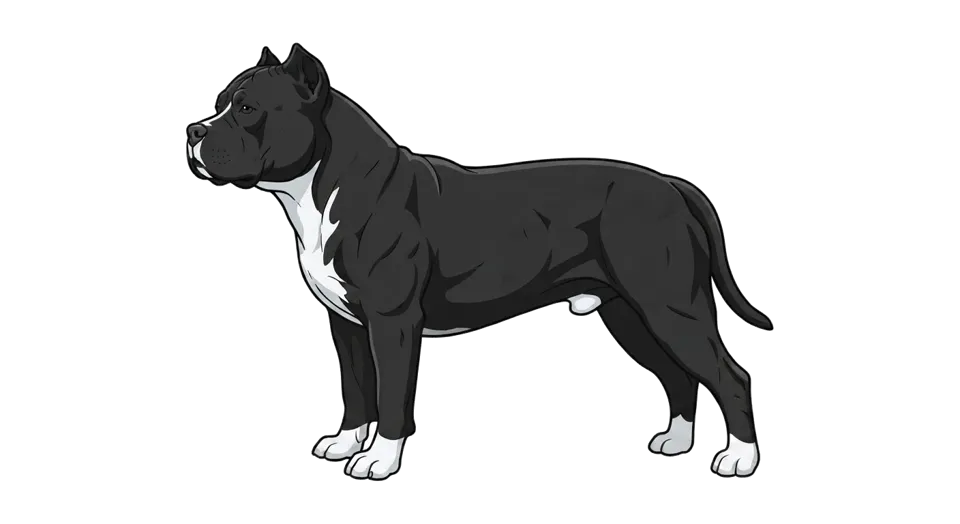
Black
Standard colour
Solid black is common in the variety.
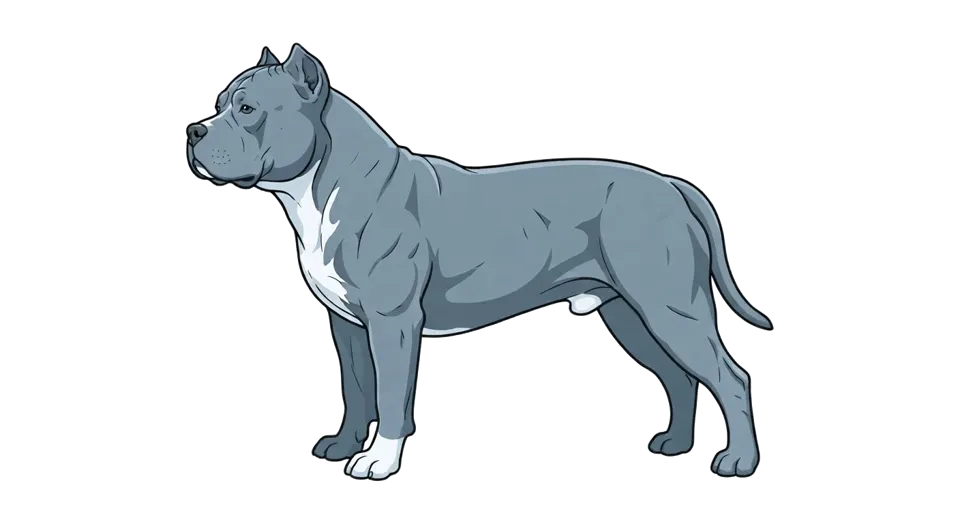
Blue
Standard colour
A popular dilute grey-blue.
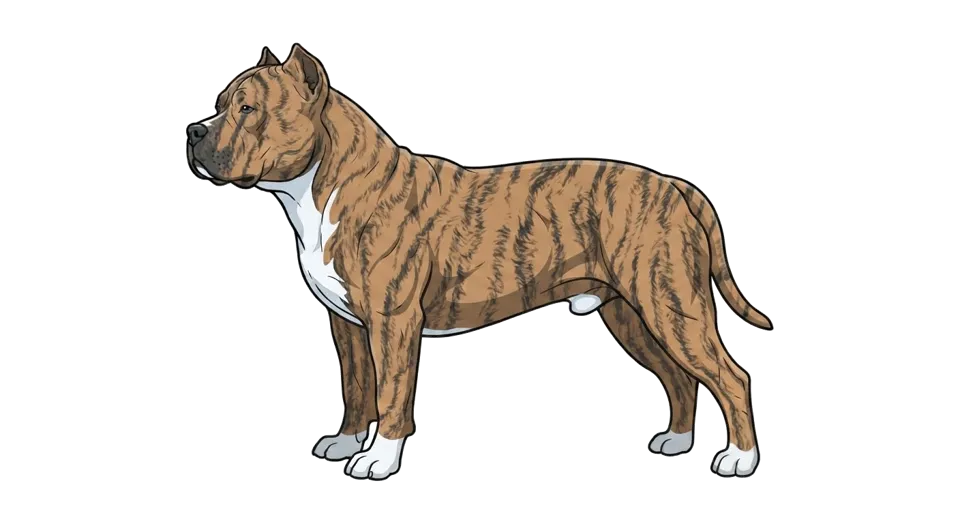
Brindle
Standard colour
Striped pattern over a base colour.
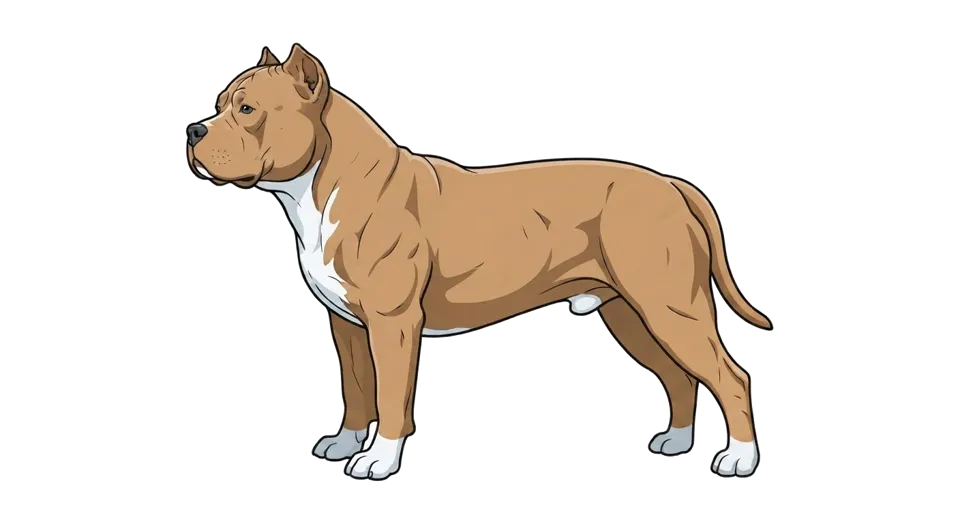
Fawn
Standard colour
Light tan, widely seen.
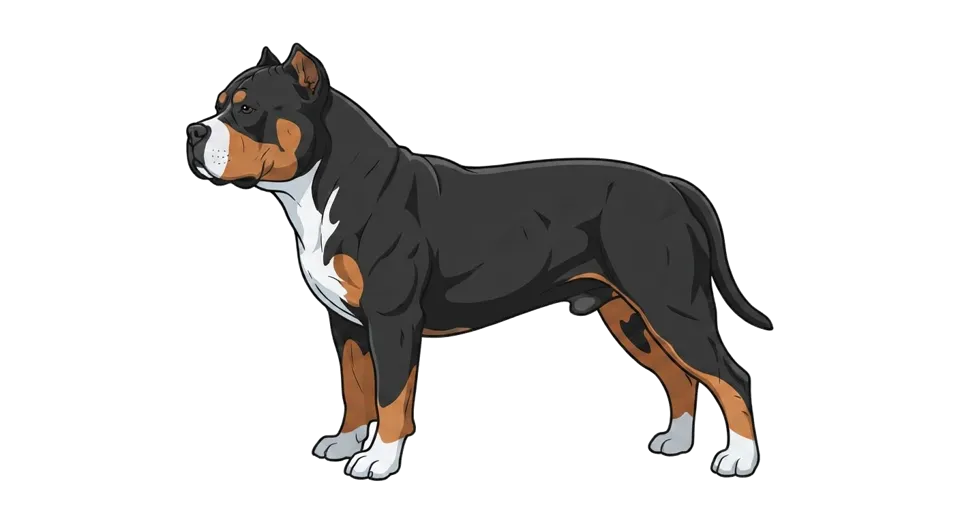
Tri-colour
Standard colour
Three-colour pattern popular in modern lines.
Timeline
History & development
2000s
XL type emerges
Breeders selected for greater height and bulk within the American Bully community, creating the largest recognised variety.
2013
Size classifications formalised
The American Bully Kennel Club defined XL as a distinct size category alongside Standard, Classic and Pocket.
2023
UK legislation
The XL Bully type became subject to specific legal restrictions in the United Kingdom, reflecting concerns about size and management.
Reference
Breed standard summary
- body
- Broad, deep chest, thick-set and powerful
- coat
- Short, smooth, glossy
- ears
- Rose or half-prick, natural preferred
- eyes
- Round to almond, low-set
- gait
- Heavy, powerful, deliberate movement
- head
- Large, broad skull with pronounced cheek muscles
- size
- Giant, 51-58 cm at the shoulder
- tail
- Low-set, tapering to a point
- colour
- Black, Blue, Brindle, Fawn, Tri-colour. Colours outside this list are seen but fall outside the ABKC standard for the class.
- temperament
- Typical of the breed: strongest in trainability, sociability, energy. Nervousness or aggression are serious faults in the show ring and in the home.
- general appearance
- Very large, heavily muscled dog with a massive, blocky head
Health
What to screen for
Green means little to worry about, amber means ask the breeder for test results, red means manage it actively.
Hip dysplasia
Watch closely
Large size increases joint strain; insist on hip scores for both parents.
Elbow dysplasia
Screen for it
Ask for elbow screening alongside hip results.
Cardiac issues
Watch closely
Larger bully lines can carry heart concerns; ask about cardiac screening.
Bloat (GDV)
Watch closely
Deep-chested and large-bodied; feed smaller meals and avoid exercise after eating.
General information only — always speak to your vet about your own dog.
From real owners
American Bully (XL)s in the PAWPOINT Pack
American Bully (XL)s added by PawPoint members through their pet passports. Share yours to appear here.
Loading the wall…
Made for the American Bully (XL)
The book, plus hoodies, tees and mugs featuring the American Bully (XL).