
American Hairless Terrier
uh-MER-ik-uhn HAIR-luss TER-ee-uhr
United States· Trout, Louisiana
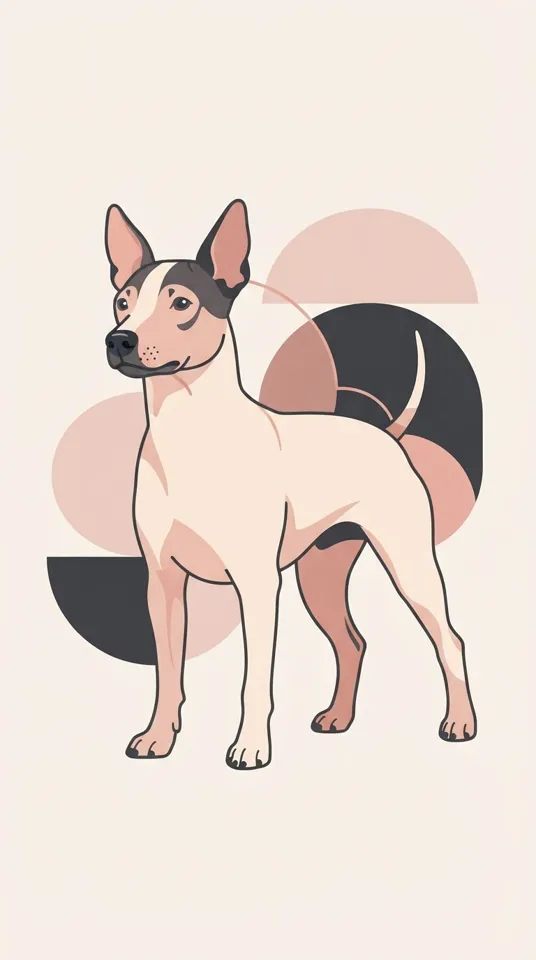
The American Hairless Terrier is a small, entirely hairless or short-coated terrier developed in Louisiana in the 1970s from a single hairless Rat Terrier pup, bred to keep the ratting instincts of the breed without the shedding coat.
At a glance
Quick facts
- Size
- Small
- Exercise needs
- 30-45 minutes daily
- Home size suited to
- Flat or small home
- Grooming frequency
- Skin care weekly
- Coat length
- Hairless
- Sheds
- No
- Lifespan
- 14-16 years
- Town or country
- Either, with enough exercise
- Garden size needed
- Small garden or none
Where it comes from
Origins of the American Hairless Terrier
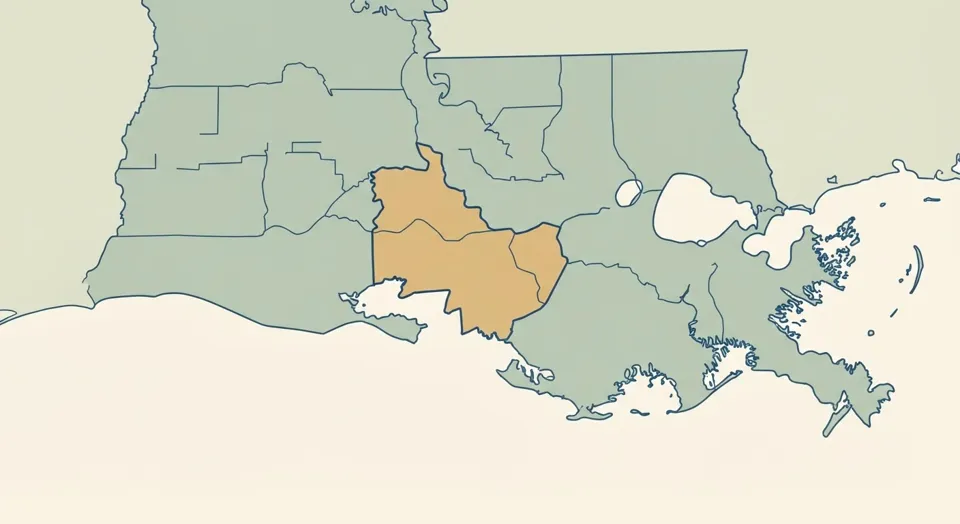
The breed began with a single hairless puppy born in a Rat Terrier litter in rural Louisiana in 1972. Selective breeding by the Scott family fixed the hairless trait while keeping the Rat Terrier's ratting drive.
- Region
- Trout, Louisiana
- Climate it was bred for
- Humid subtropical, hot summers
- Original job
- Ratting and vermin control
The long read
About the breed
The breed's origin traces to a single hairless female puppy, Josephine, born in a litter of coated Rat Terriers in 1972 in Trout, Louisiana. Her owners, the Scott family, bred her selectively over subsequent generations to establish a hairless line that bred true, while keeping the working terrier temperament of its Rat Terrier ancestors. The breed remained a small regional curiosity for decades before wider recognition followed.
Living with an American Hairless Terrier means living with an energetic, alert small dog with a big terrier personality in a smooth, warm-to-the-touch body. They are quick to learn, generally friendly with people, and need daily exercise and mental stimulation to avoid boredom-driven digging or barking. The lack of coat means no shedding and less allergy trigger for some sensitive owners, but bare skin needs sun protection in summer and a coat or jumper in cold weather.
Today the breed is still relatively rare outside the United States, kept as a companion and occasional vermin-control dog. It suits owners drawn to a low-shedding, low-grooming terrier who are prepared to manage sun exposure and cold sensitivity, and who want a dog with genuine working-terrier drive rather than a purely decorative novelty.
Living with one
Temperament & needs
Our own ratings, based on the breed standard and how these dogs behave in ordinary homes.
Friendliness
4/5
How openly the American Hairless Terrier greets people it does not know.
Trainability
4/5
Eager to please and quick to pick up commands.
Energy
4/5
Lively and playful, needs a proper daily walk and games.
Barking
3/5
Alert to noises but not constantly vocal.
Grooming
1/5
No coat to brush, but skin needs sunscreen and moisturiser care.
Suits a first-time owner
3/5
How forgiving the American Hairless Terrier is for someone taking on their first dog.
Sociability
4/5
Generally friendly, often good with other pets when socialised early.
Independence
2/5
Bonds closely and prefers company to being left alone.
Illustrated breed standard
The points of the breed
Hover or tap a numbered point to read what the standard asks for.
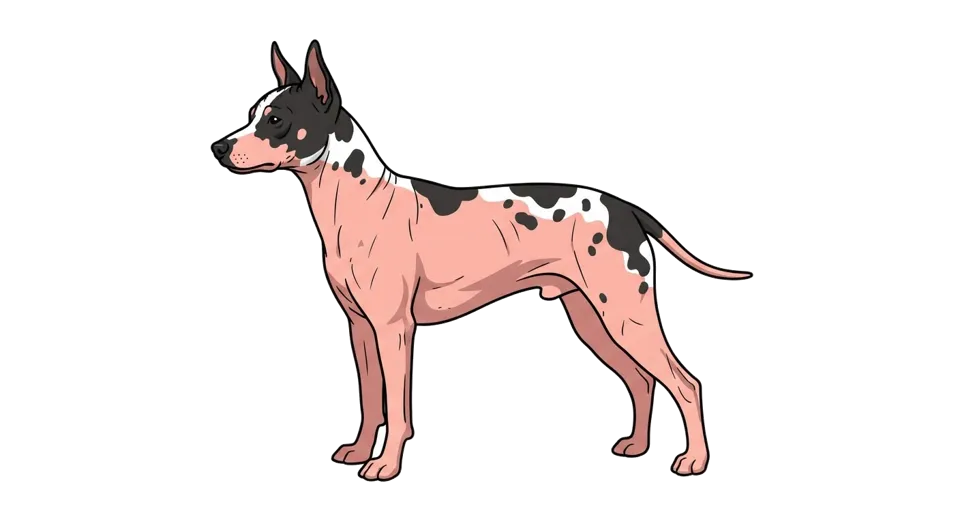
Point 1
Skull
The American Hairless Terrier's skull is judged on balance rather than size — proportionate to the body, with a clean cheek and a stop typical of the breed. Coarseness or an over-refined head are both faulted.
Colours & patterns
Recognised coats
Which coats the standard accepts — and which are simply popular.
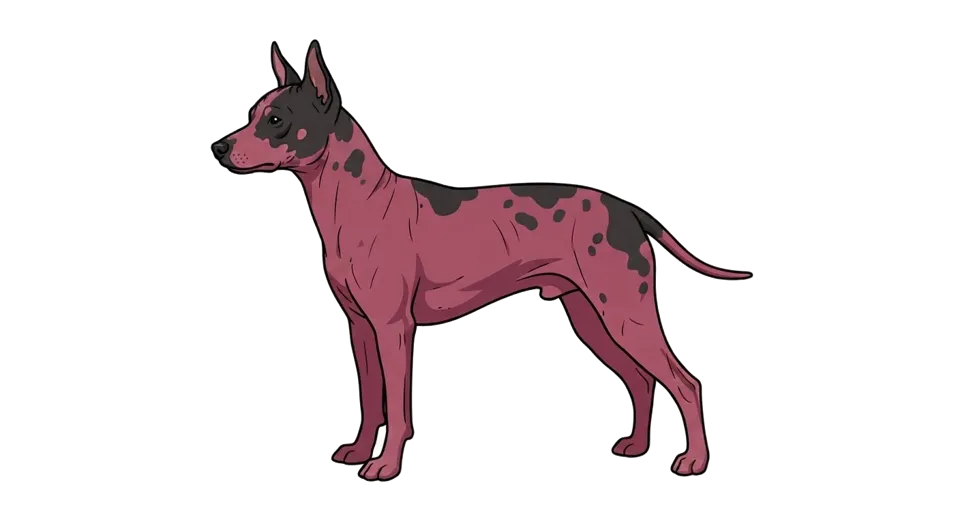
Pink/flesh (hairless)
Standard colour
Bare pink skin, sometimes with pigmented patches.
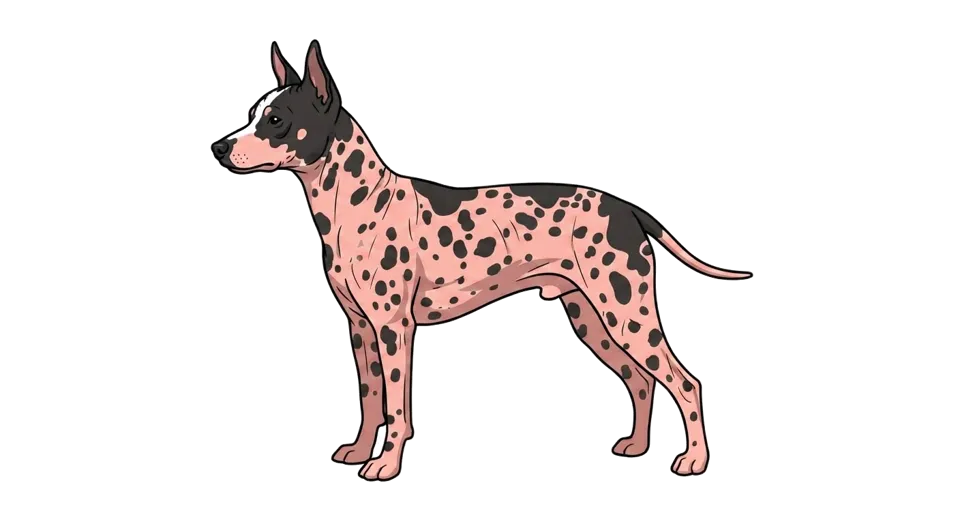
Black-spotted (hairless)
Standard colour
Pink skin with dark pigmented spots.
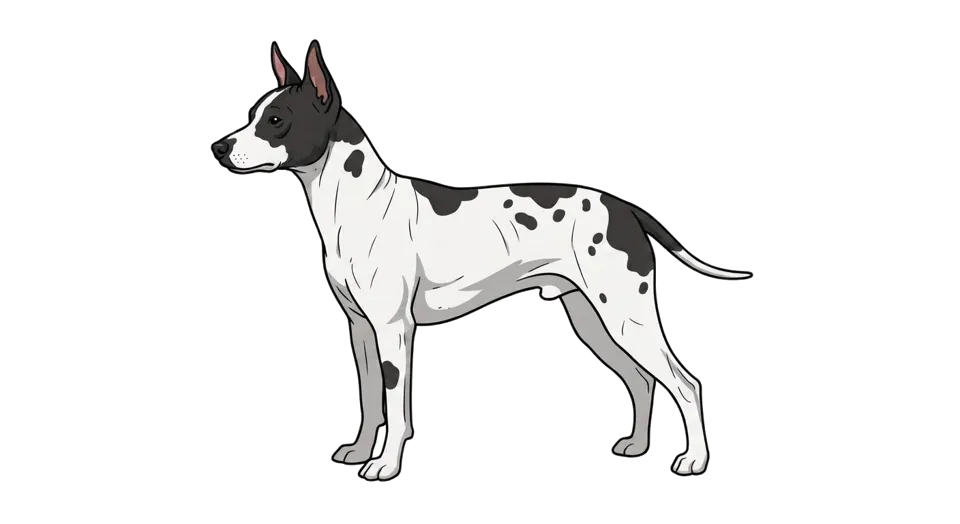
Coated variety
Standard colour
A short, smooth-coated variety exists within the breed.
Timeline
History & development
1972
Josephine is born
A hairless female puppy appeared in a litter of Rat Terriers in Trout, Louisiana.
1970s-1980s
Line establishment
The Scott family bred Josephine's descendants to fix the hairless trait as a breeding true line.
2004
UKC recognition
The United Kennel Club recognised the American Hairless Terrier as a distinct breed.
2016
AKC recognition
The American Kennel Club admitted the breed to its Terrier Group.
Reference
Breed standard summary
- body
- Athletic, moderately muscled, slightly longer than tall
- coat
- Hairless with fine down, or short smooth coat in the coated variety
- ears
- V-shaped, can be erect, semi-erect or dropped
- eyes
- Almond-shaped, alert and expressive
- gait
- Free, quick and agile
- head
- Wedge-shaped with a defined stop
- size
- Small terrier
- tail
- Set high, tapering, carried up when alert
- colour
- Pink/flesh (hairless), Black-spotted (hairless), Coated variety. Colours outside this list are seen but are not accepted by the kennel clubs.
- temperament
- Typical of the breed: strongest in energy, trainability, sociability. Nervousness or aggression are serious faults in the show ring and in the home.
- general appearance
- Small, athletic terrier, hairless or short-coated, alert expression
Health
What to screen for
Green means little to worry about, amber means ask the breeder for test results, red means manage it actively.
Skin sensitivity
Screen for it
Bare skin sunburns and chafes easily; use sun-safe balm and coats in cold weather.
Patellar luxation
Screen for it
Ask for a patella check on breeding parents.
Missing teeth
Low concern
Some hairless-gene dogs have fewer teeth; a vet dental check at puppyhood is sensible.
Allergic reactions
Low concern
Some dogs react to certain plants or fabrics against bare skin; watch for rashes.
General information only — always speak to your vet about your own dog.
From real owners
American Hairless Terriers in the PAWPOINT Pack
American Hairless Terriers added by PawPoint members through their pet passports. Share yours to appear here.
Loading the wall…
Made for the American Hairless Terrier
The book, plus hoodies, tees and mugs featuring the American Hairless Terrier.