American Pit Bull Terrier
uh-MER-ik-uhn PIT bull TERR-ee-er
United States· United States, developed from British bull-and-terrier stock
The American Pit Bull Terrier was developed in the 1800s from Old English Bulldog and terrier stock brought to America by British and Irish immigrants. On American farms it worked as a catch dog on cattle and hogs, a vermin killer and a general-purpose farm dog — and, in a darker chapter of its history, in blood sport before that was outlawed.
At a glance
Quick facts
Size
Medium
Exercise needs
60-90 minutes daily
Home size suited to
Any secure home with an active household
Grooming frequency
Weekly brush
Coat length
Short
Sheds
Yes
Lifespan
12-14 years
Town or country
Either, with enough exercise
Garden size needed
Securely fenced
Where it comes from
Origins of the American Pit Bull Terrier
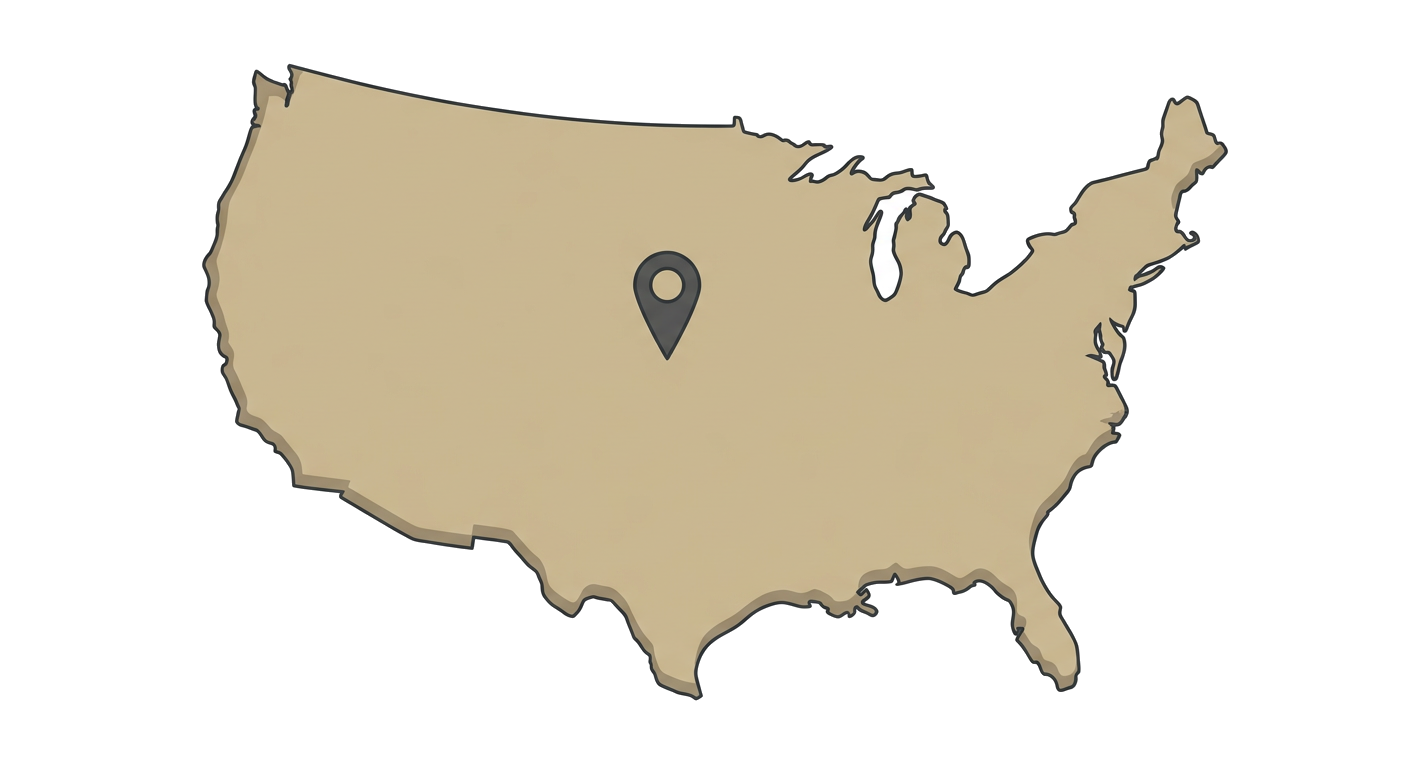
Bull-and-terrier dogs brought from Britain in the 1800s were bred in America into a taller, more athletic working dog used for farm and catch work before being standardised by the UKC and ADBA.
- Region
- United States, developed from British bull-and-terrier stock
- Climate it was bred for
- Varied US farm, rural and urban settings
- Original job
- Farm work, catch-dog duties, companionship
The long read
About the breed
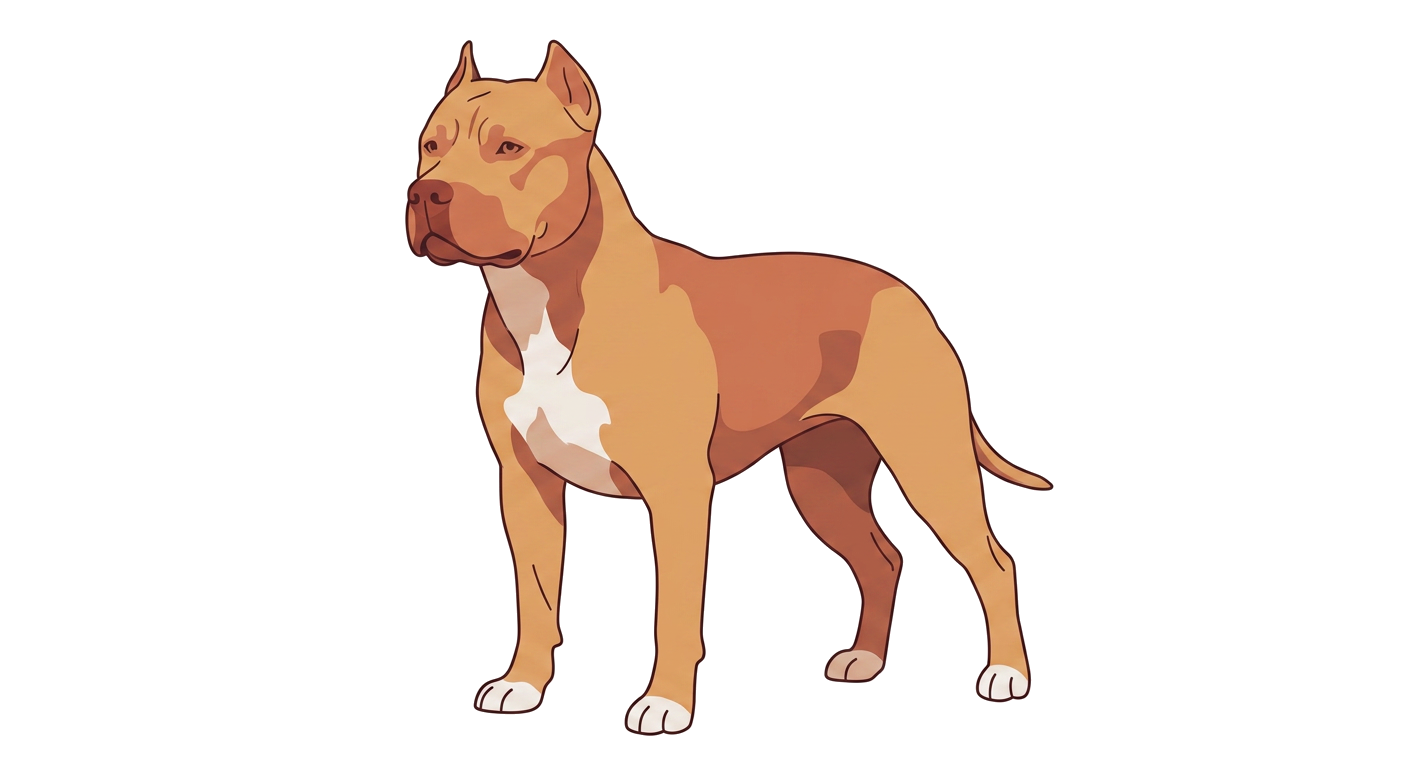
It is a medium-sized, powerfully built, short-coated dog with a broad head, well-defined cheek muscles and an athletic, agile frame rather than a purely bulky one. The breed is highly trainable and historically valued for loyalty, biddability and work drive, which is why it appears so often in weight pull, agility and protection sport.
Today it is one of the most misunderstood and legislated dogs in the world. It is routinely conflated with the broad "pit bull type" umbrella and with the modern bully breeds, despite being a specific breed with written UKC and ADBA standards. It is recognised by the UKC and ADBA but not by the AKC or the UK Kennel Club, and it is subject to legal restrictions in many countries — including the United Kingdom.
Illustrated breed standard
The points of the breed
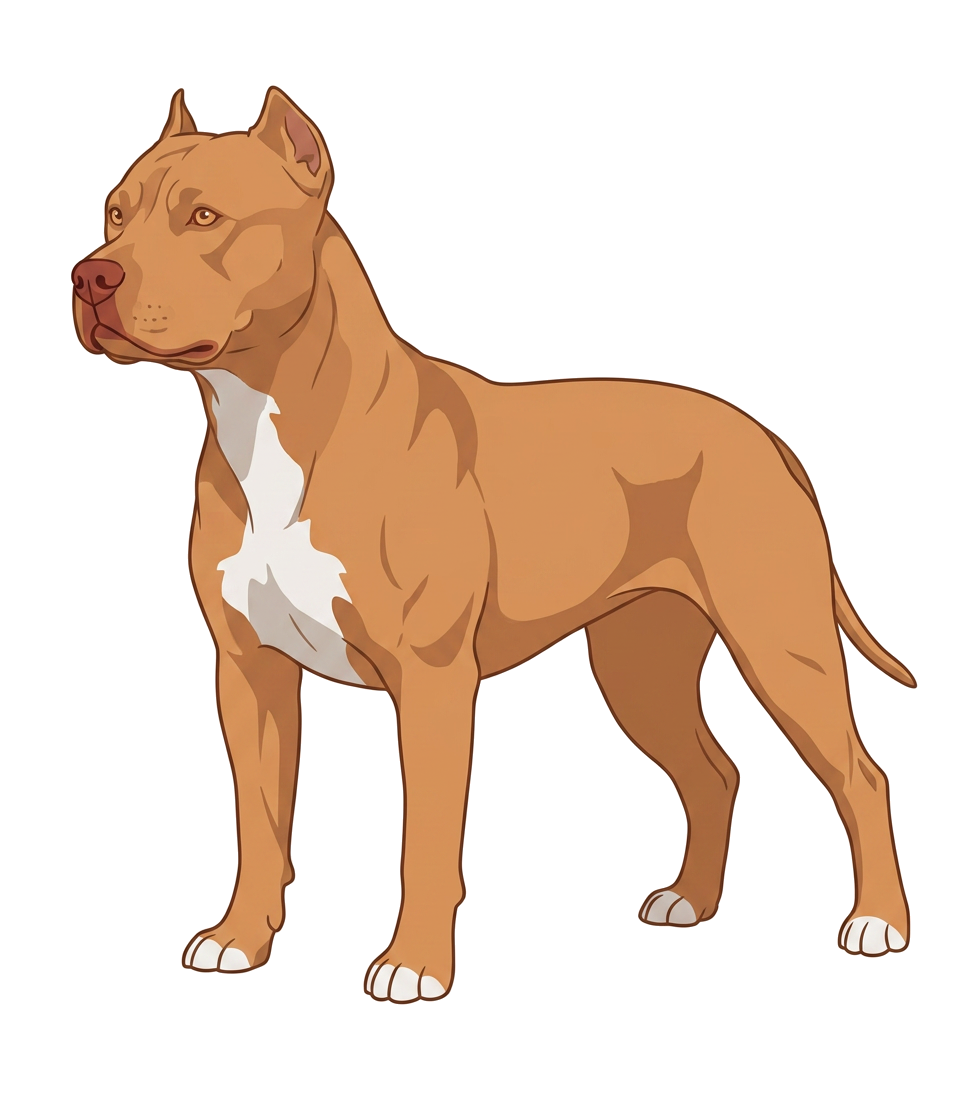
Hover or tap a numbered point to read what the standard asks for.
Point 1
Skull
The American Bully (XL)'s skull is judged on balance rather than size — proportionate to the body, with a clean cheek and a stop typical of the breed. Coarseness or an over-refined head are both faulted.
Colours & patterns
Recognised coats
Which coats the standard accepts — and which are simply popular.
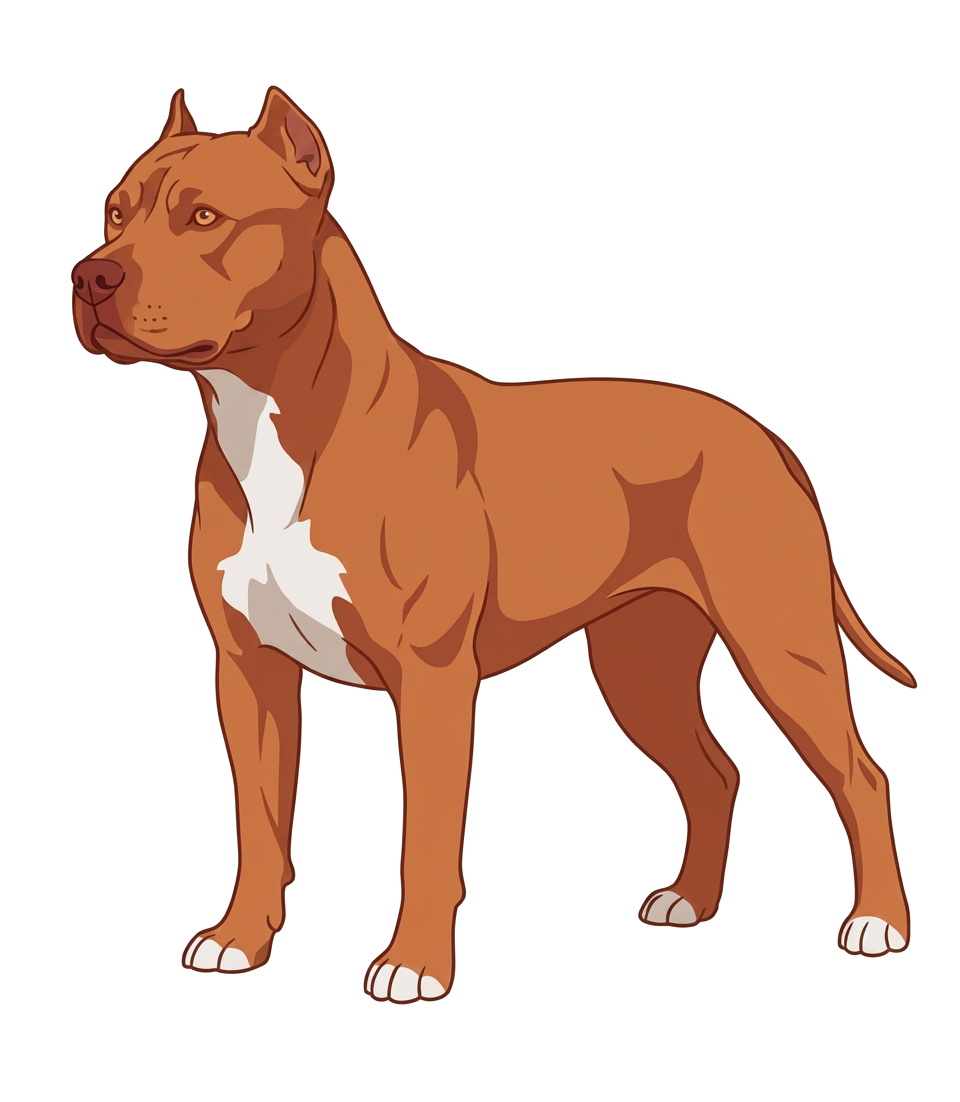
Red / Fawn (red nose)
Standard colour
A tan to red coat with a matching liver-red nose, often with a white chest patch and white toes.
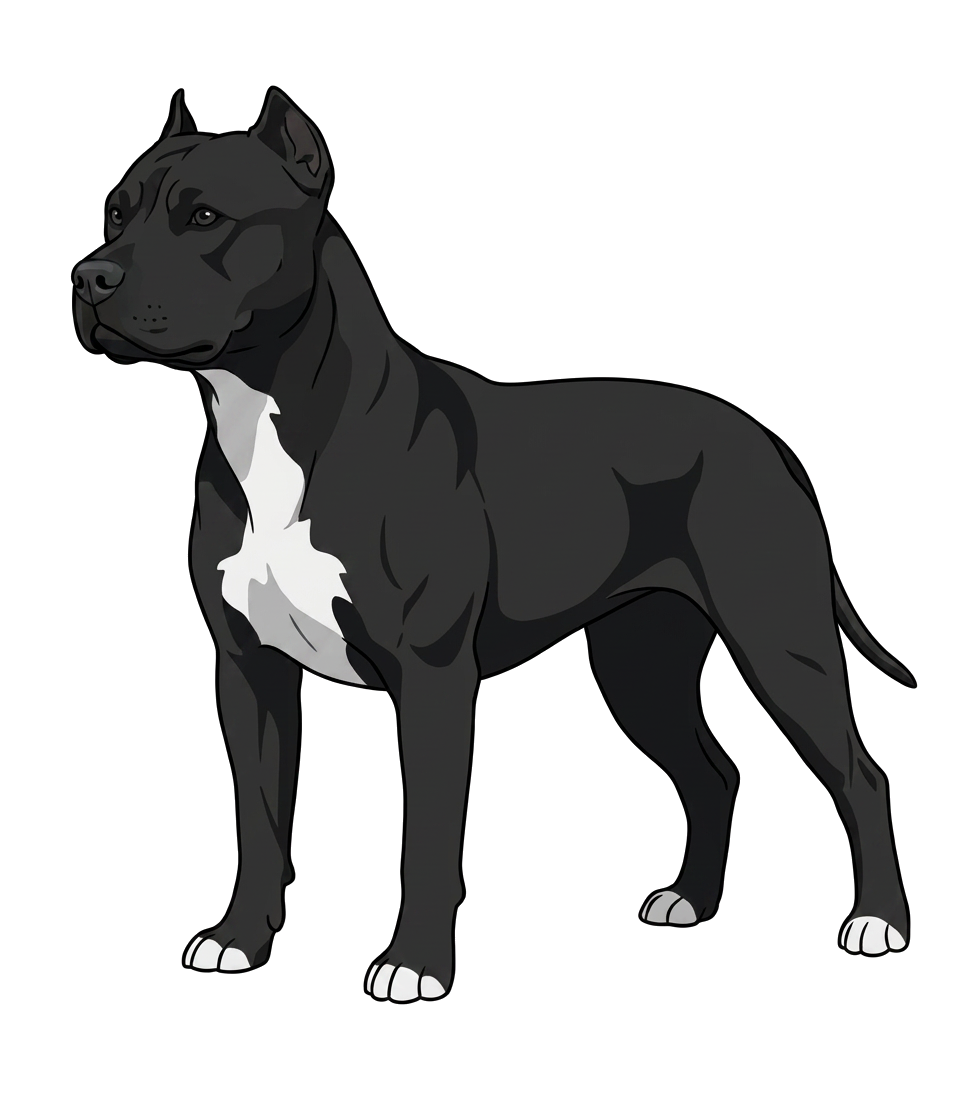
Black
Standard colour
Solid black, sometimes with white on the chest and feet.
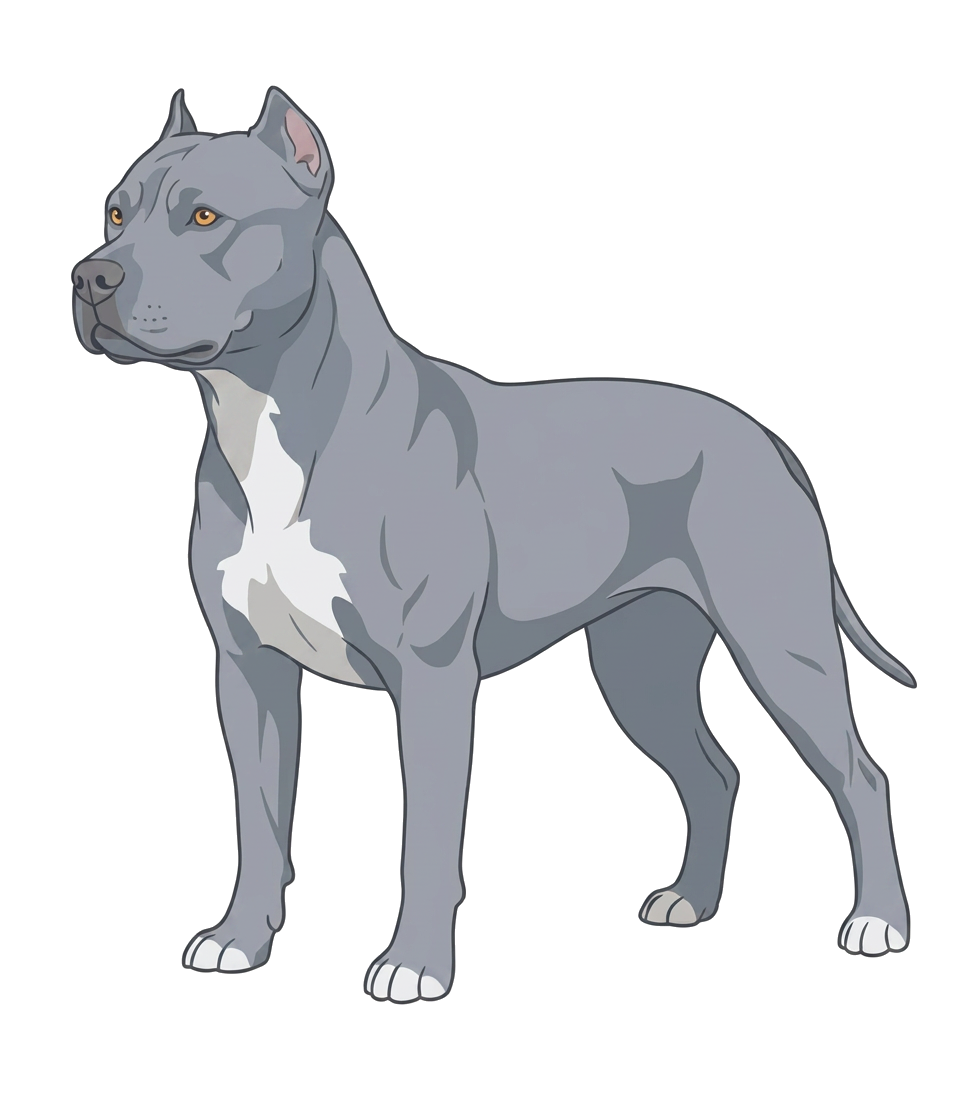
Blue
Standard colour
A dilute grey-blue coat with a matching grey nose.
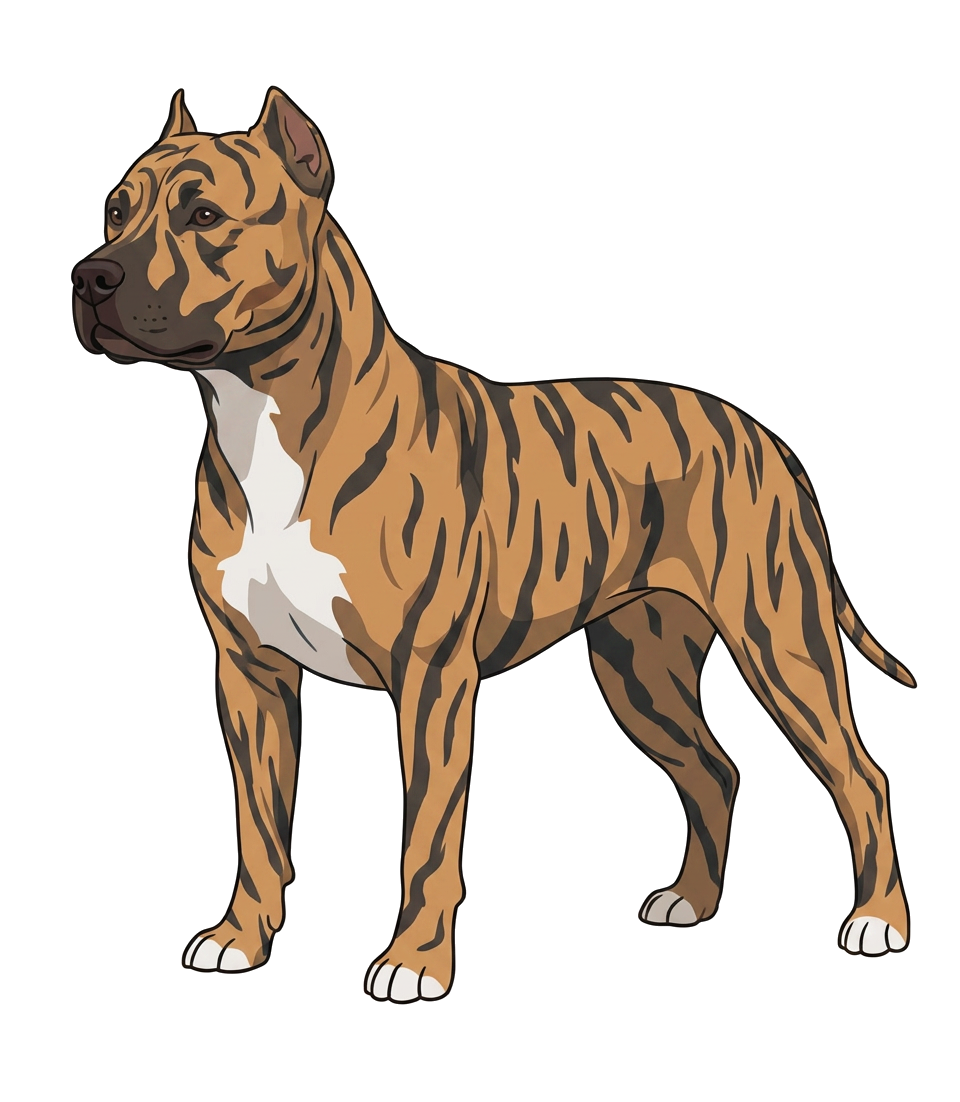
Brindle
Standard colour
Dark striping over a fawn, red or blue base — one of the oldest patterns in the breed.
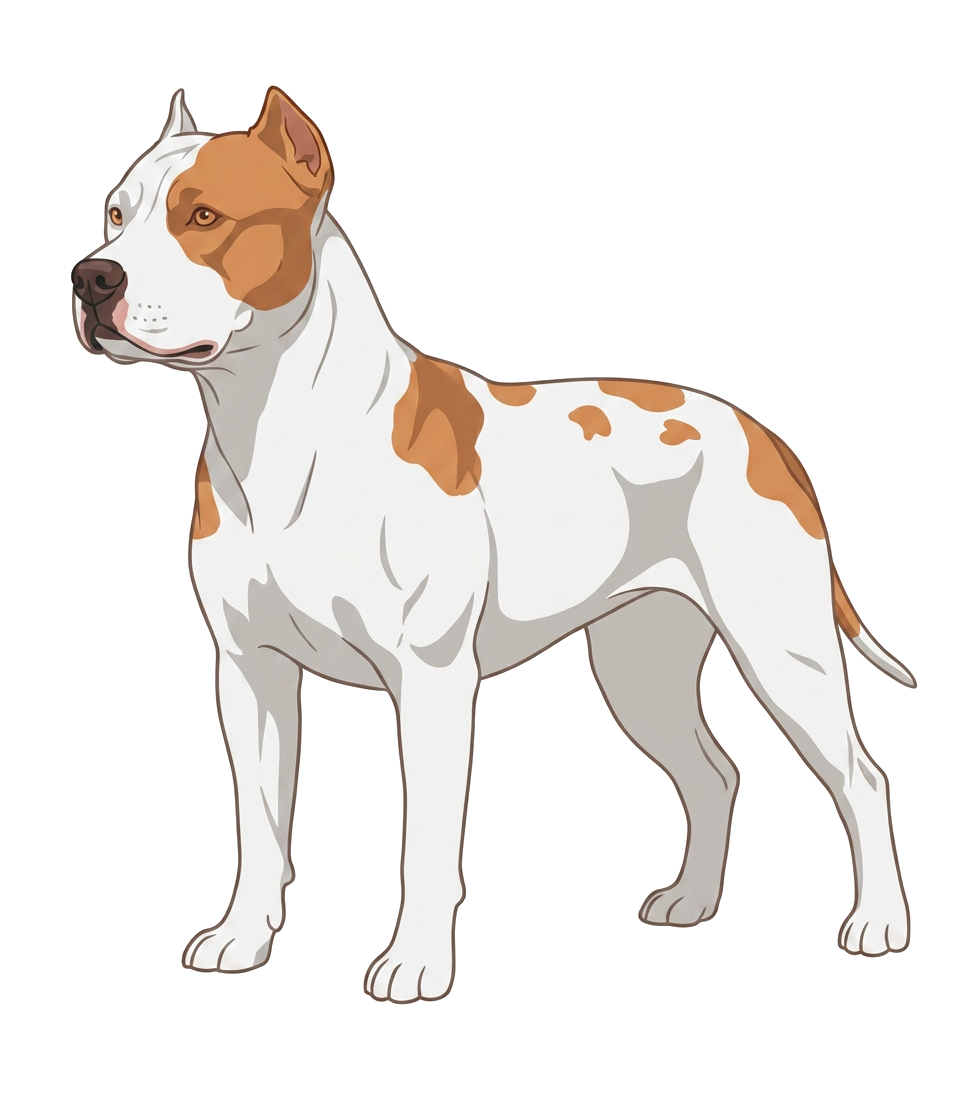
White & tan
Standard colour
Predominantly white with tan or red patches. Any colour is accepted except merle.
Timeline
History & development
1800s
Bull-and-terrier stock arrives
British and Irish immigrants bring Old English Bulldog and terrier crosses to America, where they are bred as farm and catch dogs.
1898
UKC founded around the breed
The United Kennel Club is established, registering the American Pit Bull Terrier as its founding breed.
1909
ADBA registry opens
The American Dog Breeders Association begins registering the breed with its own written standard.
1991
UK restrictions
The Dangerous Dogs Act places the pit bull terrier type under legal restriction in the United Kingdom.
Reference
Breed standard summary
- body
- Deep chest, well-sprung ribs, level topline, short-coupled and muscular
- coat
- Short, smooth, close and glossy
- ears
- Naturally short prick or half-prick; cropping is faulted in the UKC ring
- eyes
- Round to almond, set well apart, any colour except blue
- gait
- Effortless, powerful and springy with good reach and drive
- head
- Broad, flat skull with well-defined cheek muscles and a moderate stop
- size
- Medium, 43-53 cm at the shoulder
- tail
- Short in proportion, set low, tapering to a point; never docked
- colour
- Any colour, colour pattern or combination of colours accepted by UKC and ADBA standards, except merle
- muzzle
- Broad and deep, of medium length, with a strong lower jaw
- temperament
- Confident, eager to please and zestful; unprovoked human aggression is uncharacteristic and heavily faulted
- general appearance
- Medium-sized, solidly built, short-coated dog of great strength for its size, athletic rather than bulky
Health
What to screen for
Green means little to worry about, amber means ask the breeder for test results, red means manage it actively.
Hip dysplasia
Watch closely
Ask for hip scores on both parents; the breed's athleticism masks early joint pain.
Skin and contact allergies
Screen for it
Itching, ear infections and hot spots are common; ask about allergy history in the line.
Cerebellar ataxia (NCL-A)
Screen for it
An inherited neurological disease with a DNA test available — both parents should be tested clear.
Cardiac defects
Watch closely
Congenital heart defects appear in some lines; ask for a cardiac check.
Cruciate and joint injury
Watch closely
Hard, explosive exercise on a heavy frame risks ligament damage; build fitness gradually.
General information only — always speak to your vet about your own dog.
From real owners
Dogs like this
American Pit Bull Terriers added by PawPoint members through their pet passports. Share yours to appear here.
Loading the wall…
Made for the American Pit Bull Terrier
The book, plus prints, hoodies and mugs using our own American Pit Bull Terrier illustration — and one everyday accessory that suits any dog.

The book
Pawpoint: The Complete Dog Breed Book
Every officially recognised breed plus the unofficial ones nobody else documents. 400+ pages, hardback, printed and shipped from the UK.
Own stock — shipped by us
Framed poster
American Pit Bull Terrier Framed Poster
Museum-weight print of our American Pit Bull Terrier illustration, framed or unframed.
Printed to order
Hoodie
American Pit Bull Terrier Hoodie
Heavyweight hoodie carrying the American Pit Bull Terrier illustration on the chest.
Printed to order
Mug
American Pit Bull Terrier Mug
Ceramic mug with the American Pit Bull Terrier illustration wrapped around it.
Printed to order
Accessory
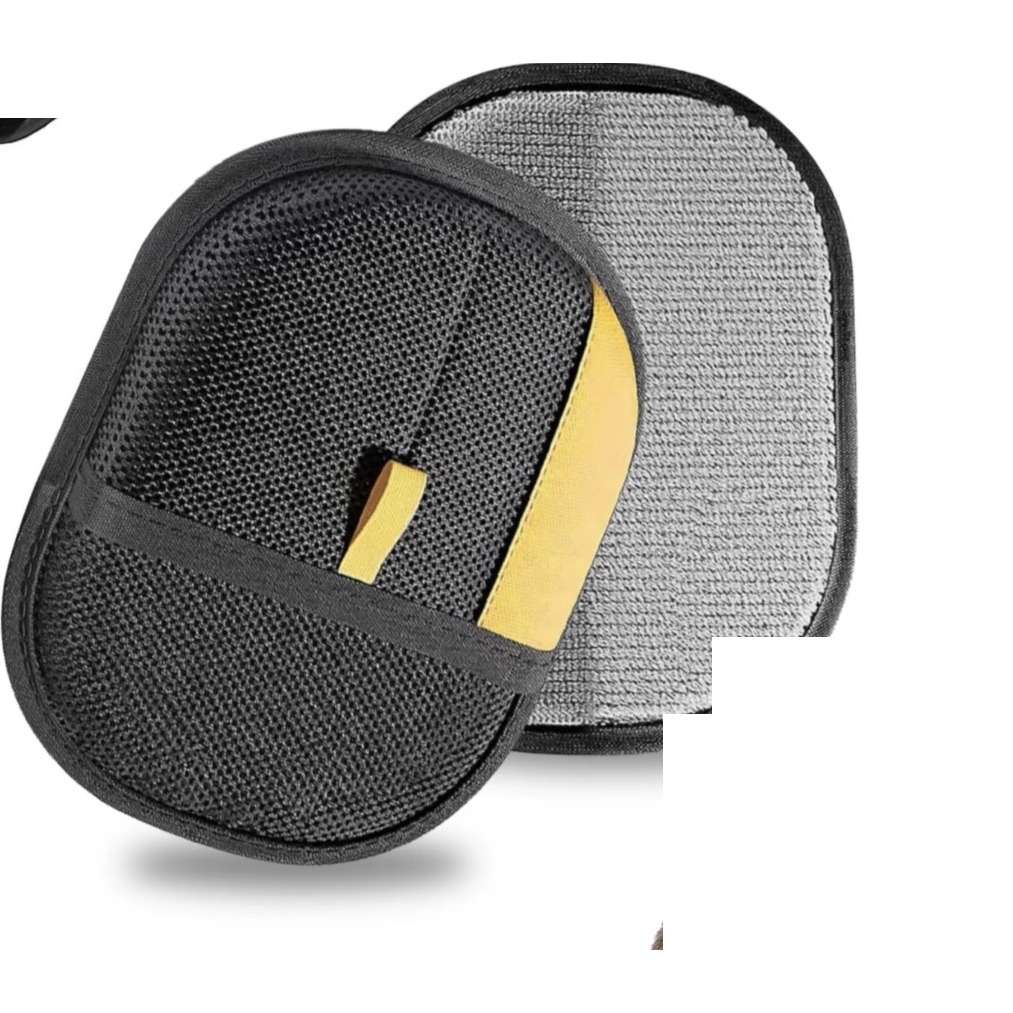
Slicker & Deshedding Brush
Self-cleaning slicker head for coats of every length.
Fits any dog
Pawpoint on YouTube
Watch the full American Pit Bull Terrier video
Breed deep-dives, history and honest ownership talk. New film every week.
Watch now