
Anglo-Français de Petite Vénerie
AHN-gloh frahn-SEH duh puh-TEET vay-nuh-REE
France· France
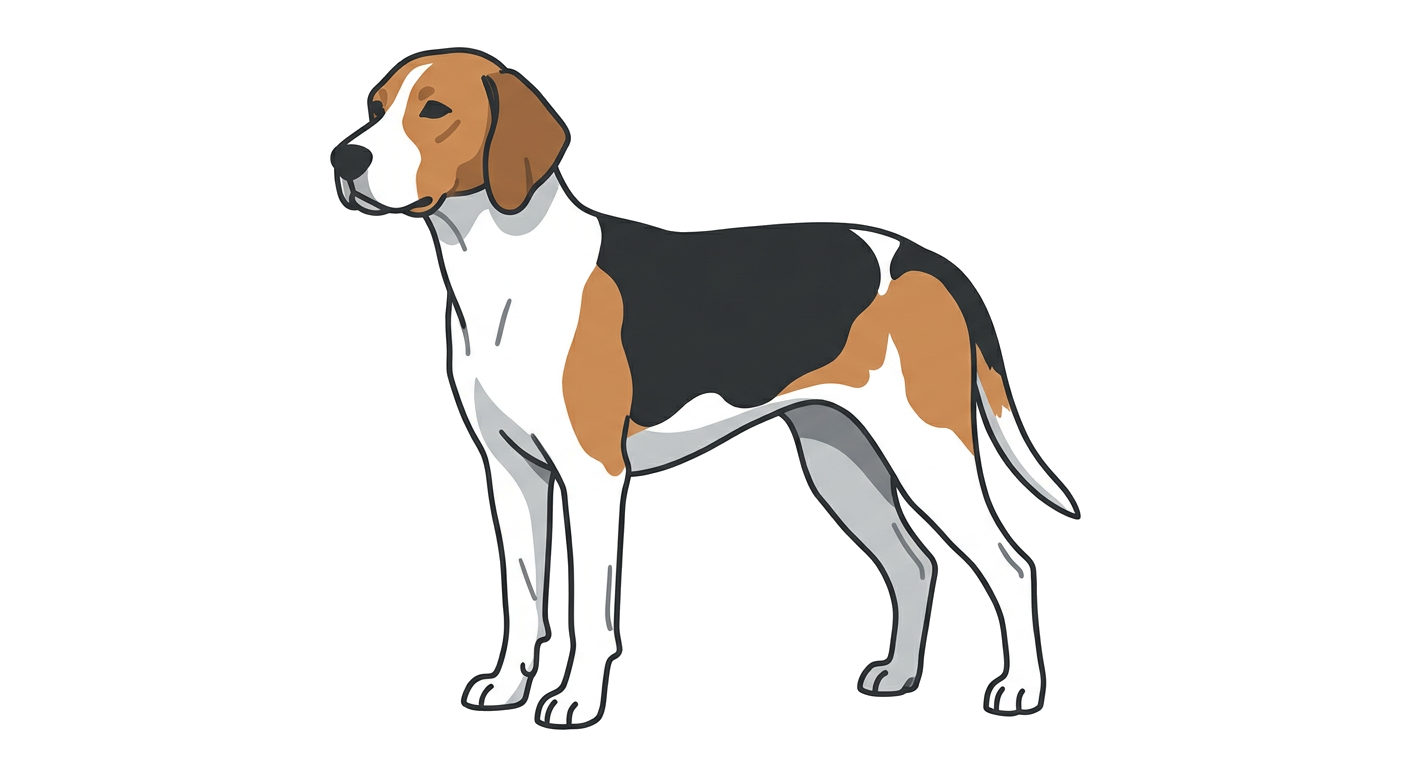
The Anglo-Français de Petite Vénerie is a medium-sized French scenthound bred specifically for hunting quarry categorised under *petite vénerie*—principally hare, though also roe deer and fox. A common point of confusion is the breed's name: 'petite vénerie' denotes the size of the game hunted rather than the dimensions of the hound itself. Derived from calculated crosses between native French hounds and British hunting stock, the breed retains the keen olfactory prowess and ringing voice typical of French scenthounds alongside the stamina, compact power, and pack focus of British hounds.
At a glance
Quick facts
Size
Medium
Exercise needs
High (at least 90–120 minutes daily)
Home size suited to
Country home with ample space
Grooming frequency
Low (weekly brushing)
Coat length
Short
Sheds
Moderate
Lifespan
11–13 years
Town or country
Country / Rural
Garden size needed
Large and securely fenced
Where it comes from
Origins of the Anglo-Français de Petite Vénerie
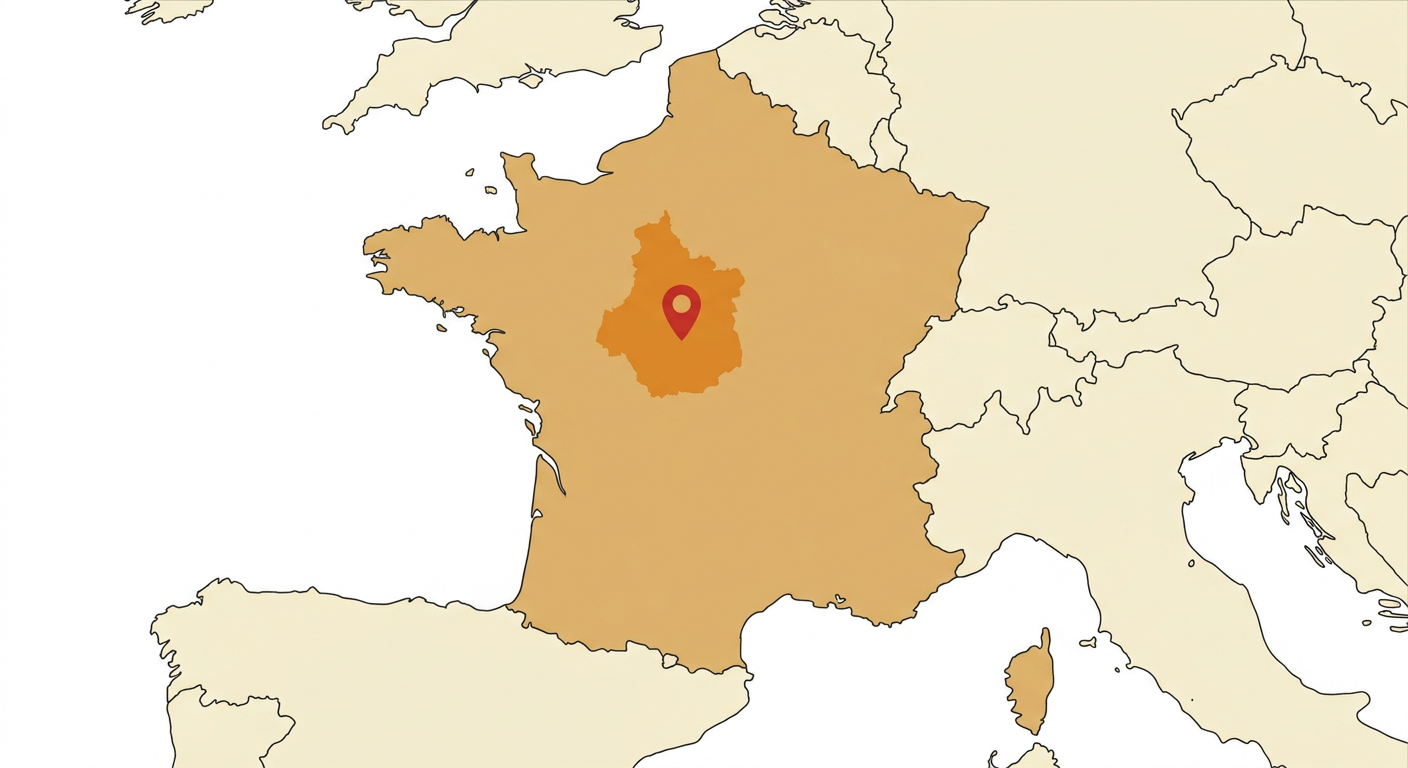
Developed in rural France by crossing native scenthounds with British hunting stock for hunting hare and other small game.
- Region
- France
- Climate it was bred for
- Temperate maritime and continental
- Original job
- Medium-sized pack hound for hunting small game
The long read
About the breed
In the field, these hounds are purposeful, agile, and tenacious, capable of working challenging terrain across long days. They possess a balanced, medium build that allows for greater manoeuvrability in dense undergrowth than their larger Grand Anglo-Français counterparts. While traditionally maintained in working packs in rural France, individuals exhibit a friendly, cooperative nature with fellow canines and generally display a mild, docile disposition around handlers when their substantial exercise and scenting requirements are met.
As companions, they remain relatively uncommon outside French hunting circles and are rarely kept purely as domestic pets. Their pronounced prey drive, independence on a trail, and instinct to vocalise make them best suited to rural environments with secure fencing and active owners. Prospective owners must account for their high energy levels and working ancestry, as under-stimulated hounds may develop behavioural issues or wander if allowed off-lead in unsecured areas.
Living with one
Temperament & needs
Our own ratings, based on the breed standard and how these dogs behave in ordinary homes.
Energy
4/5
Settles well once exercised.
Barking
4/5
Quick to sound off.
Grooming
1/5
Wash-and-go coat.
Sociability
4/5
Friendly and outgoing.
Independence
4/5
Independent thinker; tolerates being left to it.
Trainability
3/5
Capable, with consistent fair handling.
Illustrated breed standard
The points of the breed
Hover or tap a numbered point to read what the standard asks for.
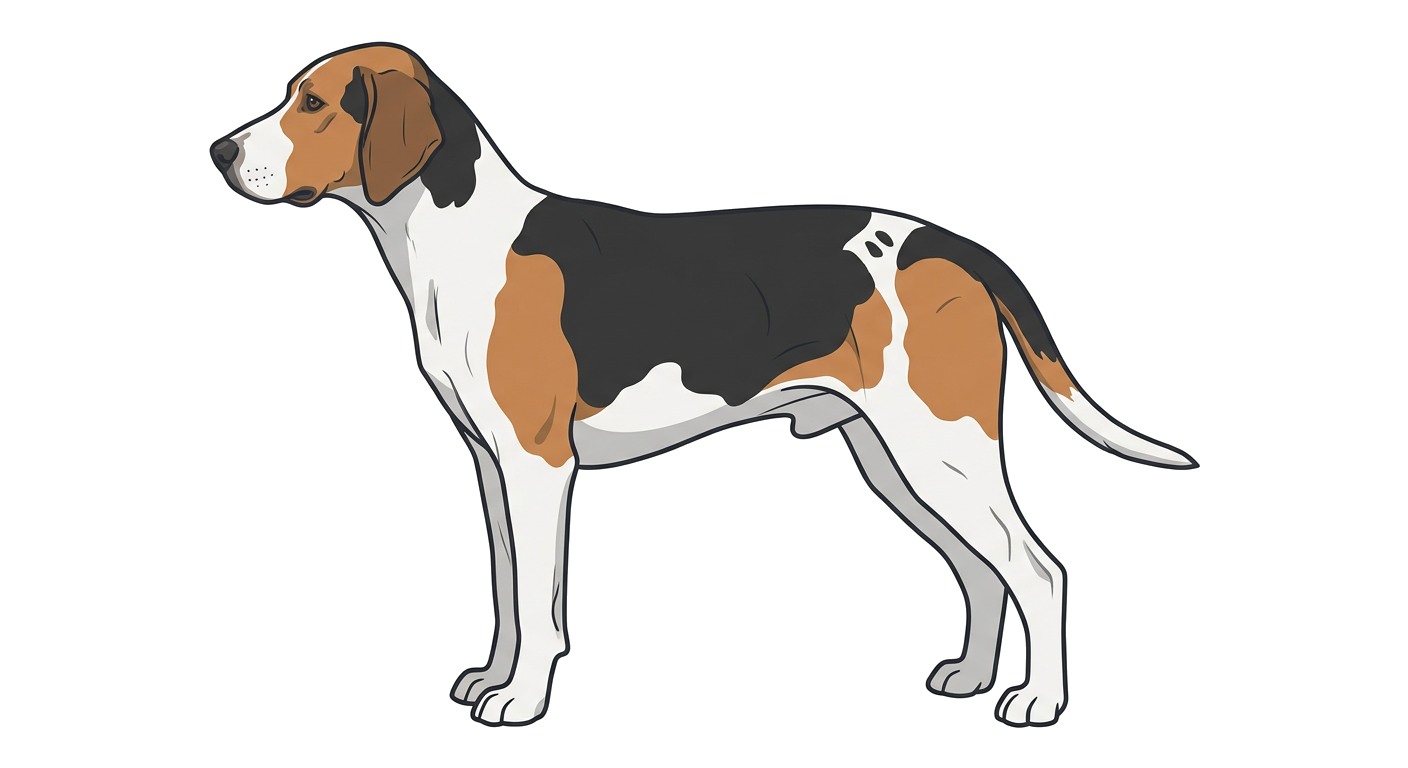
Point 1
Head
Elongated and not overly broad, with a moderate stop and cleanly chiselled contours under the eyes.
Colours & patterns
Recognised coats
Which coats the standard accepts — and which are simply popular.
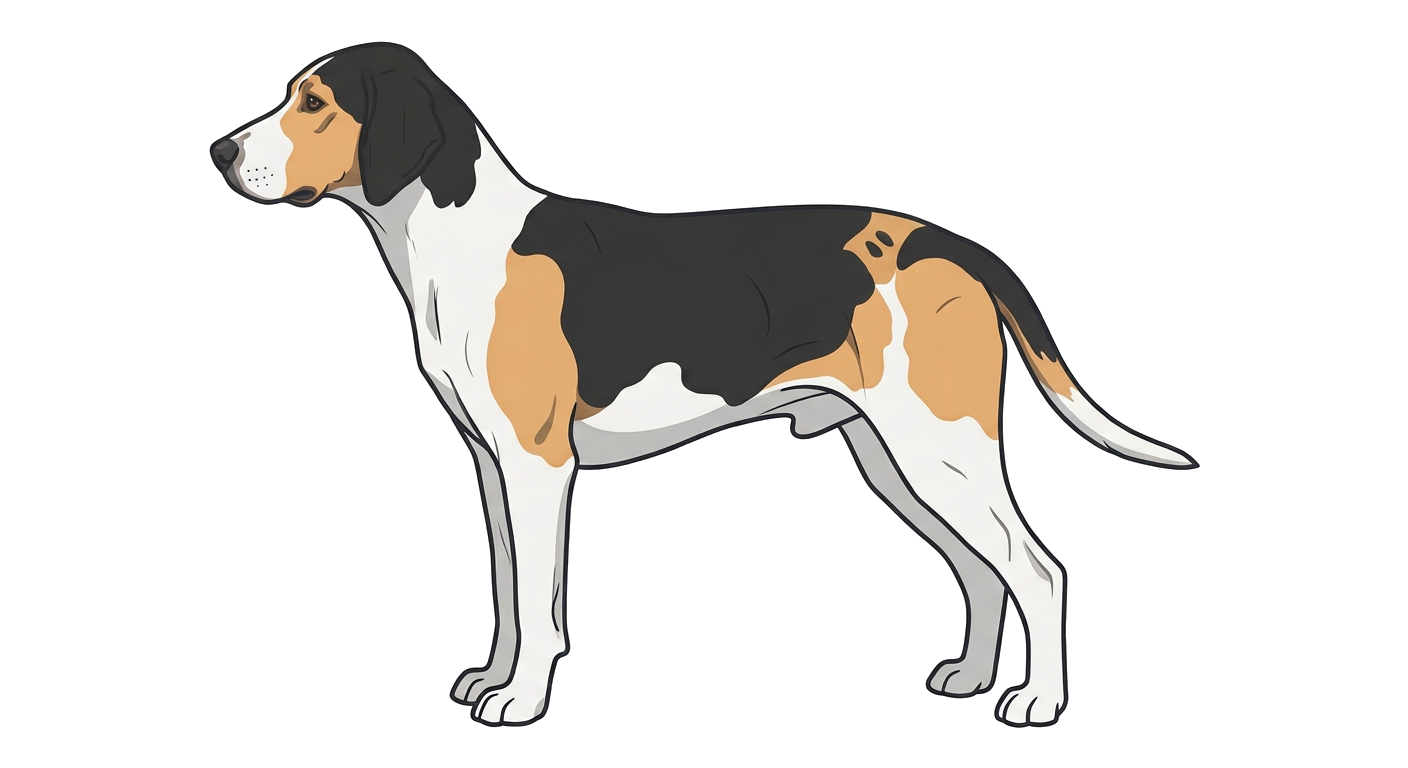
Tricolour
Standard colour
White and black with vivid or pale tan markings, often with a black blanket or patches.
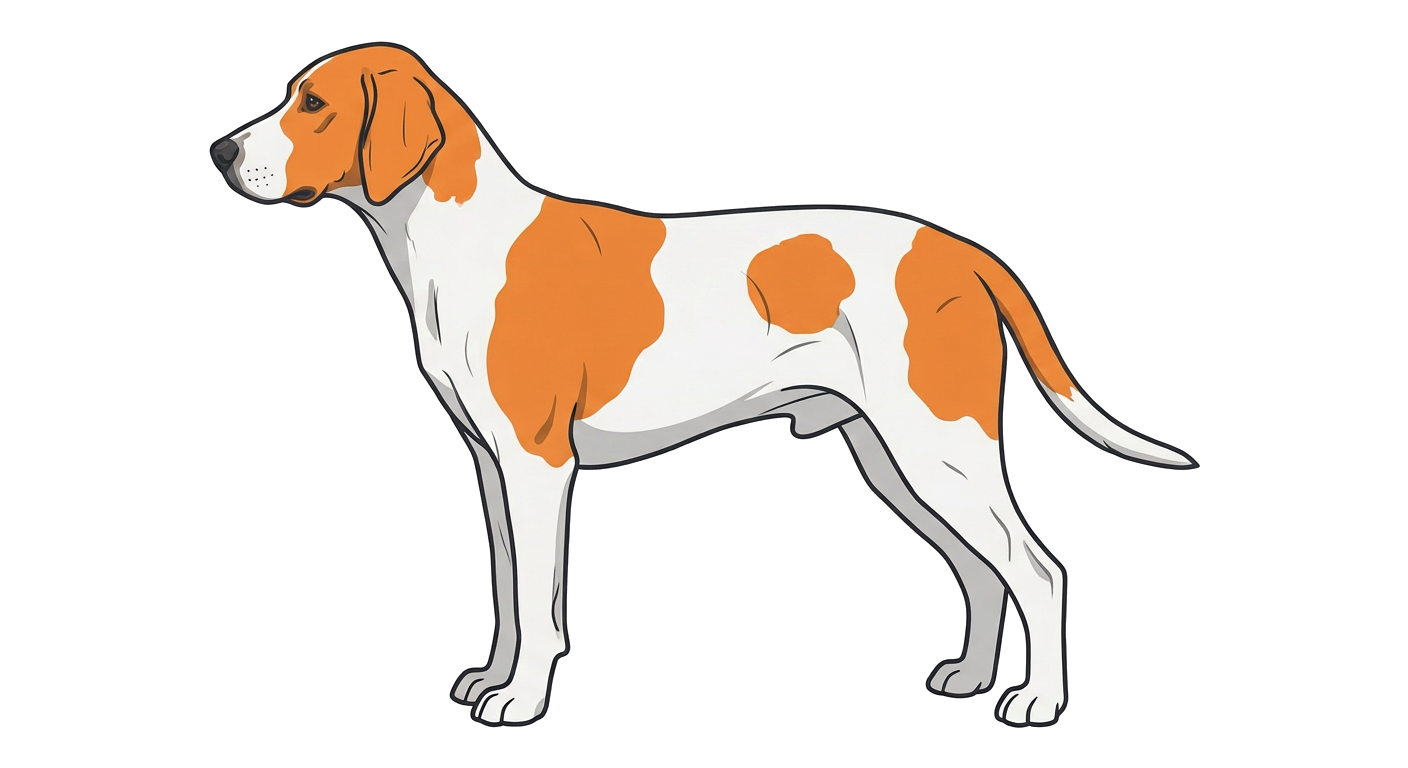
White and Orange
Standard colour
White ground colour with clear orange patches.
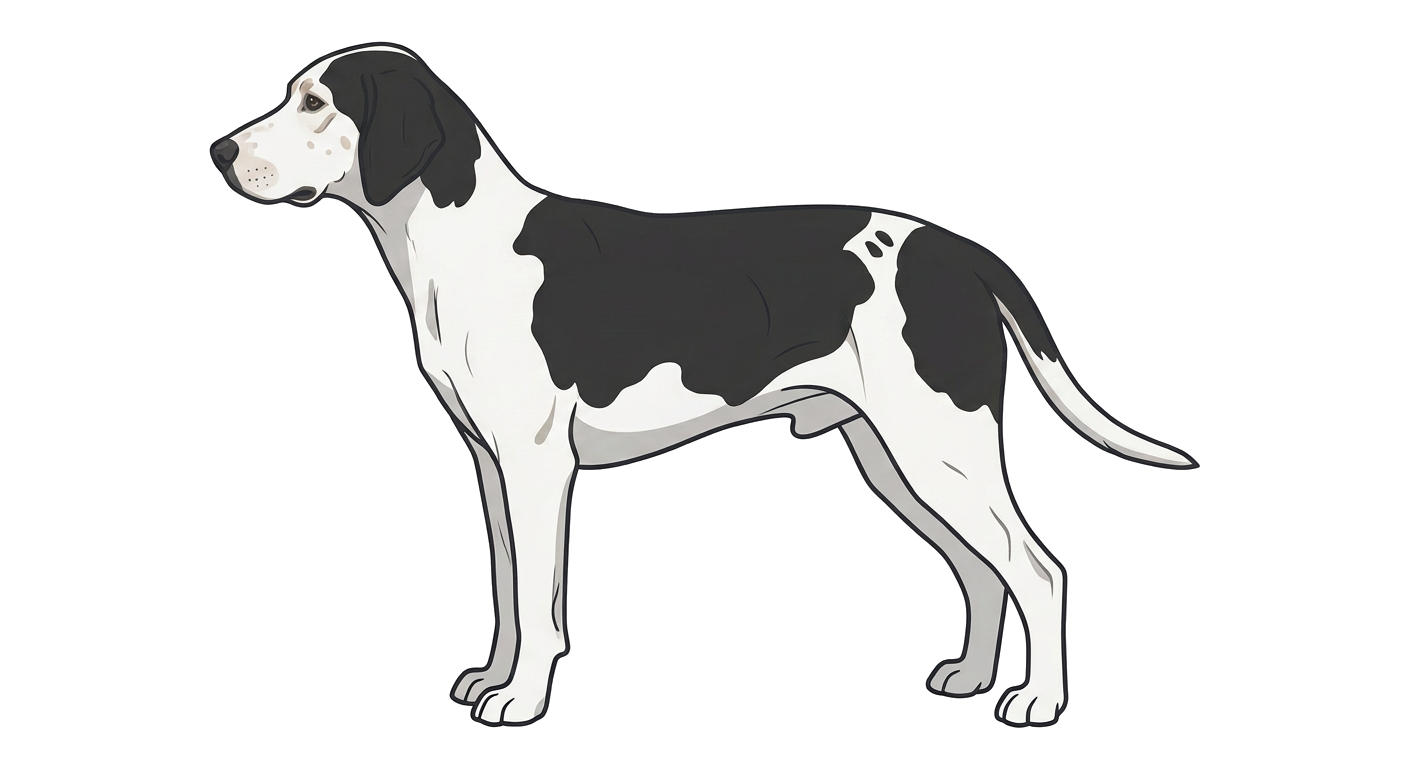
White and Black
Standard colour
White ground colour with black patches, with or without pale tan points.
Timeline
History & development
Late 19th C.
Foundation crosses
French huntsmen systematically crossed native scenthounds (such as the Poitevin and Petit Gascon Saintongeois) with British Harriers and Foxhounds to produce a hardy, medium-sized pack hound.
1957
Initial recognition
The breed received formal recognition under the collective umbrella name Petit Anglo-Français, though ambiguity persisted regarding whether the name described the dog's size or its quarry.
1978
Name revision
The breed standard was officially revised, and the name was formally updated to Anglo-Français de Petite Vénerie to clarify its specialized role in hunting small game.
1983
FCI standard publication
The Fédération Cynologique Internationale published the definitive international breed standard under Group 6 for medium-sized scenthounds.
Reference
Breed standard summary
- body
- Chest deep and reaching to the elbows, ribs well sprung, back straight and firm, with short, muscular loins.
- coat
- Short, smooth, dense, and flat against the skin, offering weather protection.
- ears
- Set below the eye line, supple, slightly turned inwards, reaching near the base of the nose leather.
- eyes
- Large, brown, set moderately deep, expressing gentleness and intelligence.
- gait
- Supple, effortless, and ground-covering trot demonstrating substantial endurance.
- head
- Elongated and not overly broad, with a moderate stop and cleanly chiselled contours under the eyes.
- size
- Height at the withers ranges from 48 to 56 cm (with an acceptable tolerance of plus or minus 1 cm for exceptional individuals).
- tail
- Medium length, set on high, carried sabre-fashion when in motion, tapering evenly towards the tip.
- colour
- Tricolour (white and black with bright tan markings), white and black, or white and orange.
- muzzle
- Approximately equal in length to the skull, with a straight nasal bridge and tightly fitting lips.
- temperament
- Tenacious, highly scent-driven, and energetic in the field; calm, obedient, and sociable within a pack setting.
- general appearance
- A well-balanced, medium-sized hound of solid substance and elegance, presenting clear dual French and British hound heritage without coarseness.
Health
What to screen for
Green means little to worry about, amber means ask the breeder for test results, red means manage it actively.
Otitis Externa
Screen for it
Drop ears reduce air circulation in the canal, predisposing the dog to bacterial and yeast infections.
Field Trauma and Abrasions
Watch closely
Active work in dense cover frequently leads to minor lacerations, thorn punctures, and ear tears.
Hip Dysplasia
Watch closely
Occasional joint laxity can occur in medium-to-large active hounds; screening remains advisable.
General information only — always speak to your vet about your own dog.
From real owners
Dogs like this
Anglo-Français de Petite Véneries added by PawPoint members through their pet passports. Share yours to appear here.
Loading the wall…
Made for the Anglo-Français de Petite Vénerie
The book, plus prints, hoodies and mugs using our own Anglo-Français de Petite Vénerie illustration — and one everyday accessory that suits any dog.
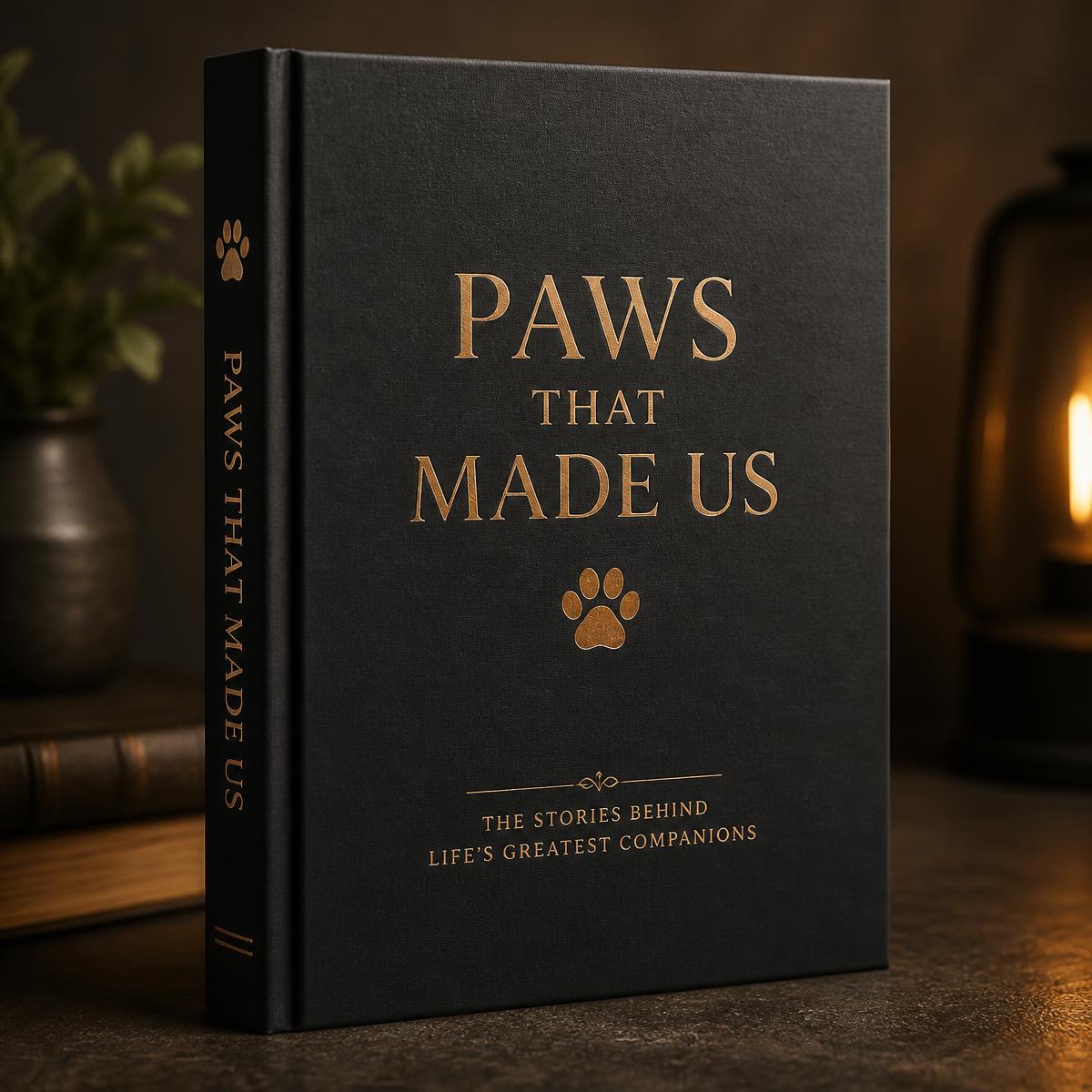
The book
Pawpoint: The Complete Dog Breed Book
Every officially recognised breed plus the unofficial ones nobody else documents. 400+ pages, hardback, printed and shipped from the UK.
Own stock — shipped by us
Framed poster
Anglo-Français de Petite Vénerie Framed Poster
Museum-weight print of our Anglo-Français de Petite Vénerie illustration, framed or unframed.
Printed to order
Hoodie
Anglo-Français de Petite Vénerie Hoodie
Heavyweight hoodie carrying the Anglo-Français de Petite Vénerie illustration on the chest.
Printed to order
Mug
Anglo-Français de Petite Vénerie Mug
Ceramic mug with the Anglo-Français de Petite Vénerie illustration wrapped around it.
Printed to order
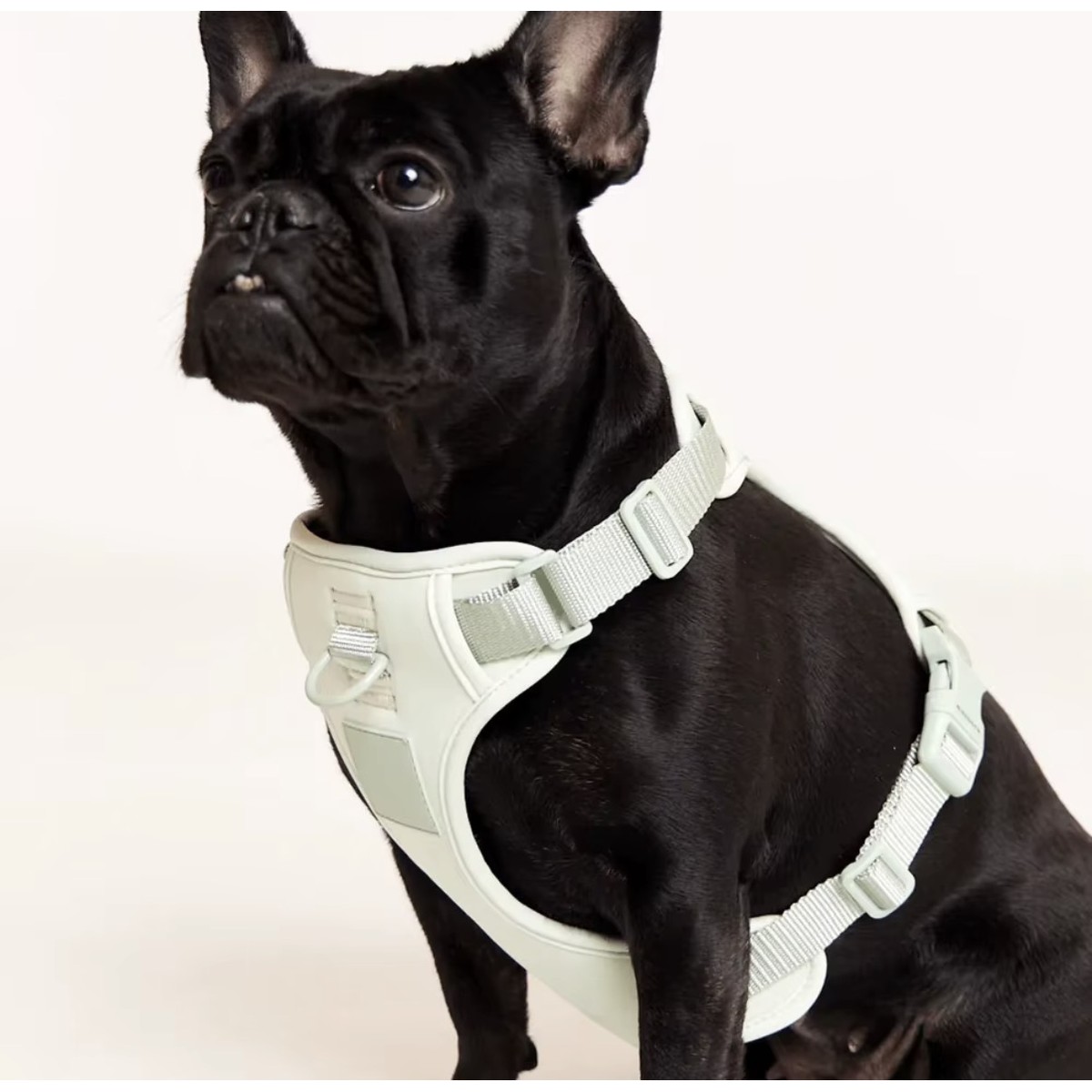
Accessory
Adjustable Harness (S/M/L)
Fully adjustable chest and girth straps — no fixed sizing.
Fits any dog
Pawpoint on YouTube
Watch the full Anglo-Français de Petite Vénerie video
Breed deep-dives, history and honest ownership talk. New film every week.
Watch now