
Artois Hound
AR-twah hownd
France· Artois and Picardy, northern France
The Artois Hound, also known as the Chien d'Artois, is one of France's oldest and rarest scenthound breeds, traditionally used for hunting deer and hare.
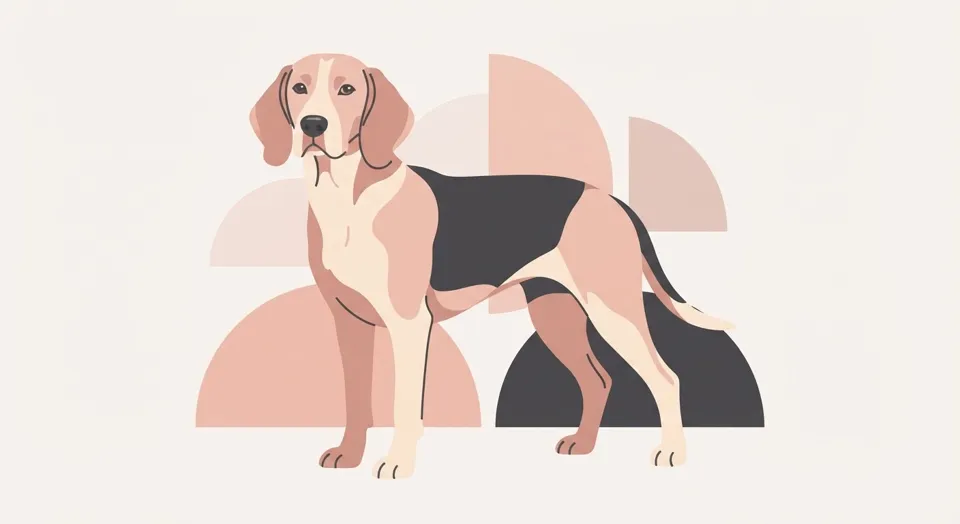
At a glance
Quick facts
- Size
- Medium
- Exercise needs
- 1-2 hours per day
- Home size suited to
- Medium or larger
- Grooming frequency
- Weekly brush
- Coat length
- Short
- Sheds
- Yes
- Lifespan
- 11-13 years
- Town or country
- Country preferred
- Garden size needed
- Large
Where it comes from
Origins of the Artois Hound
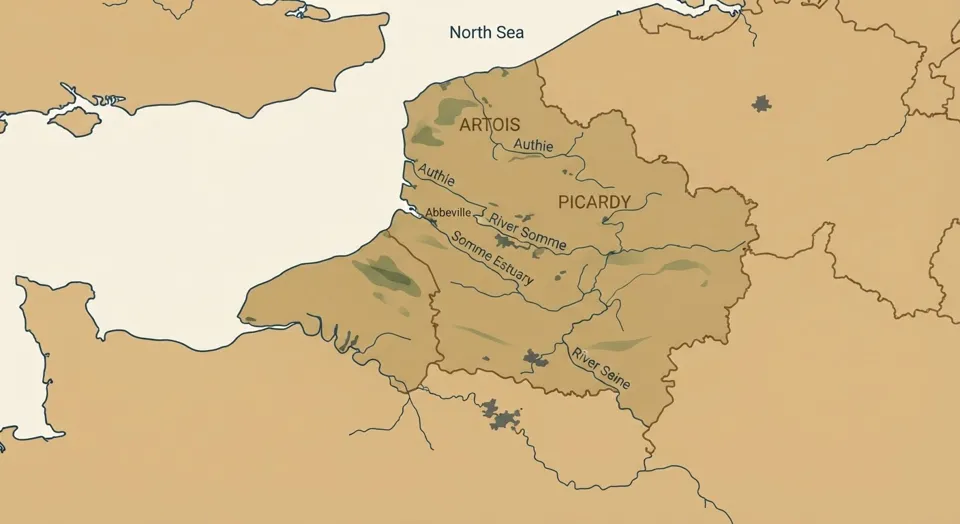
The flat farmland of Artois and Picardy produced a heavier, low-scenting hound suited to steady trailing rather than speed across open fields and hedgerows. Local hunters valued a dog that could work methodically through damp woodland and thick cover. Crossbreeding with imported hounds over the centuries gradually diluted the original type. Today only a handful of dedicated breeders maintain the line true to its old form.
- Region
- Artois and Picardy, northern France
- Climate it was bred for
- Flat, damp lowland farmland with mild, wet winters
- Original job
- Hunting deer and hare over open farmland and woodland edges
The long read
About the breed
Centuries of steady trailing work over farmland and woodland shaped a heavy-boned, low-set hound with a deep, resonant voice and a methodical working style rather than speed.
It is a calm, affectionate companion in the home but retains strong hunting instincts and needs an experienced owner able to provide regular access to open country for exercise.
The breed is critically rare today, with only a very small number of dedicated breeders in France working to prevent its extinction.
Living with one
Temperament & needs
Our own ratings, based on the breed standard and how these dogs behave in ordinary homes.
Friendliness
3/5
How openly the Artois Hound greets people it does not know.
Trainability
3/5
How readily the breed takes to training in an ordinary home.
Energy
3/5
How much daily exercise and stimulation the breed expects.
Barking
3/5
How vocal the breed tends to be day to day.
Grooming
3/5
How much coat work the breed needs to stay comfortable.
Suits a first-time owner
3/5
How forgiving the Artois Hound is for someone taking on their first dog.
Illustrated breed standard
The points of the breed
Hover or tap a numbered point to read what the standard asks for.
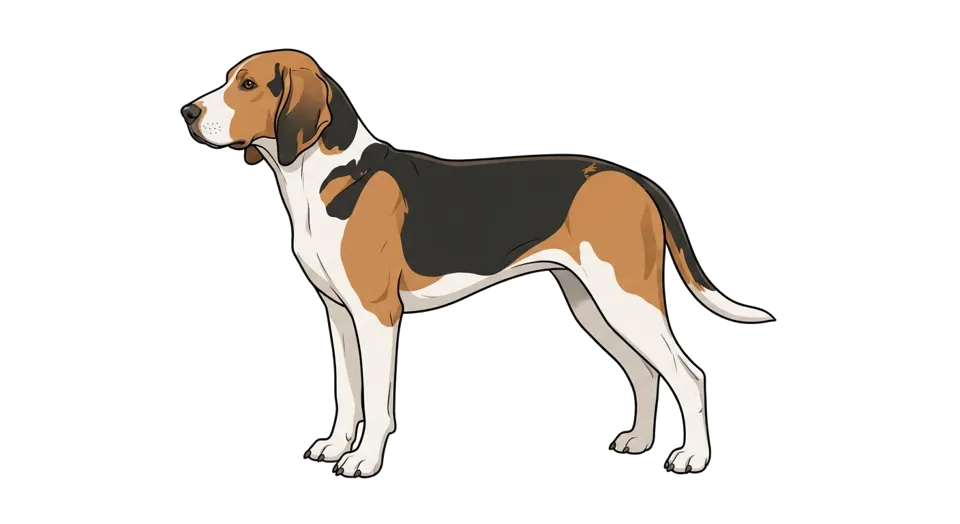
Point 1
Skull
The Artois Hound's skull is judged on balance rather than size — proportionate to the body, with a clean cheek and a stop typical of the breed. Coarseness or an over-refined head are both faulted.
Timeline
History & development
1500s
Old provincial hound
A distinct hound type was recorded working farmland and forest in Artois and Picardy.
1700s-1800s
Dilution of type
Crossing with English and other French hounds nearly eliminated the original Artois type.
1920s
Revival attempt
A small group of enthusiasts sought to reconstruct and standardise the breed.
1980s
Near extinction
The breed came close to disappearing entirely, surviving through only a few kennels.
2000s
Conservation breeding
Dedicated French breeders continue a careful conservation programme to keep the line alive.
Reference
Breed standard summary
- body
- Long, deep-chested body with strong bone throughout.
- coat
- Short, dense and close-lying.
- ears
- Long, low-set and rounded at the tip.
- eyes
- Dark brown, gentle expression.
- head
- Broad and slightly domed skull with a square, deep muzzle.
- size
- Dogs and bitches 54-58cm
- colour
- Fawn or tricolour with white markings.
- temperament
- Calm, steady and affectionate, methodical when working.
- general appearance
- A robust, heavily built hound of ancient type with a calm, dignified bearing.
Health
What to screen for
Green means little to worry about, amber means ask the breeder for test results, red means manage it actively.
General information only — always speak to your vet about your own dog.
From real owners
Artois Hounds in the PAWPOINT Pack
Artois Hounds added by PawPoint members through their pet passports. Share yours to appear here.
Loading the wall…
Made for the Artois Hound
The book, plus hoodies, tees and mugs featuring the Artois Hound.