
Australian Cattle Dog
oss-TRAY-lee-uhn KAT-uhl
Australia· New South Wales outback stations
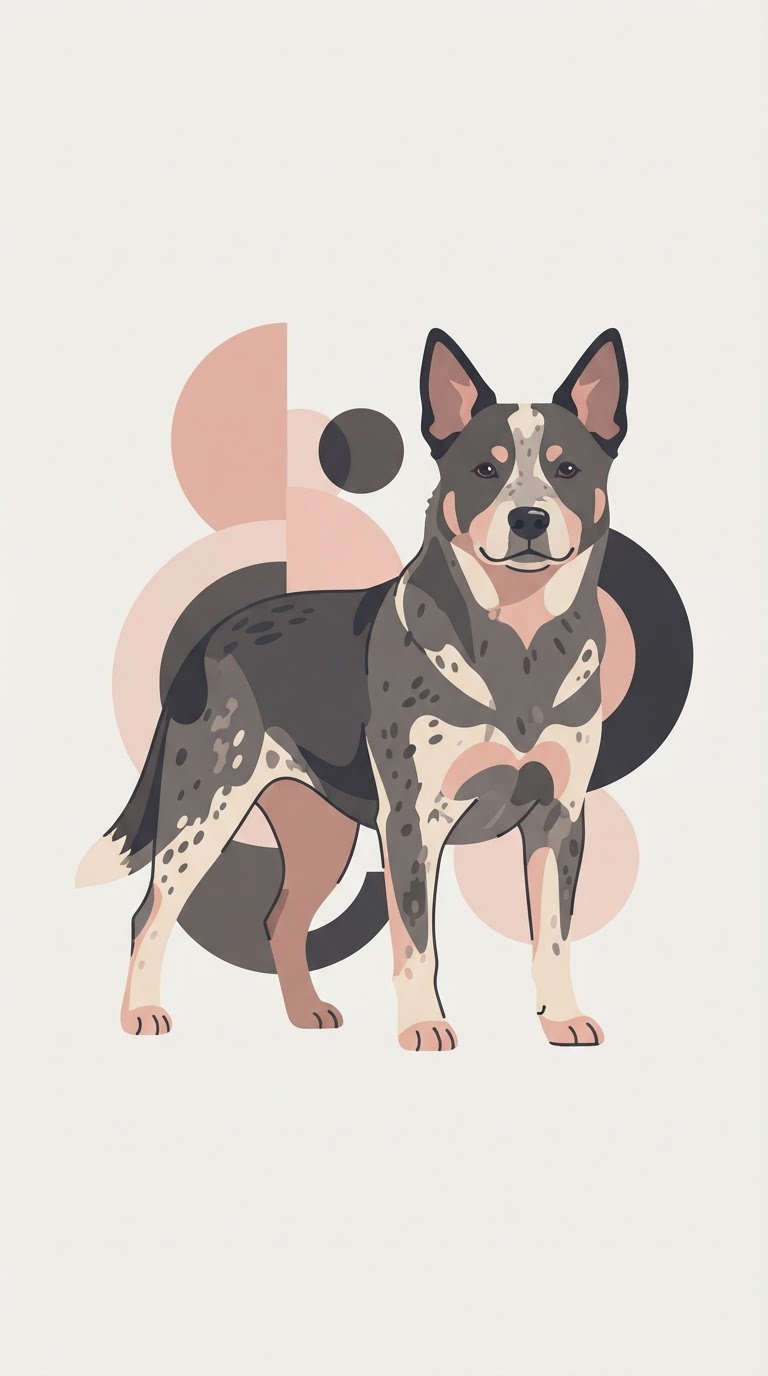
The Australian Cattle Dog is a tough, compact herding breed developed in 19th-century Australia to drive semi-wild cattle over vast, harsh distances, prized for stamina, grit and a low-key nip that moves stock without spooking it.
At a glance
Quick facts
Size
Medium
Exercise needs
90+ minutes daily plus mental work
Home size suited to
Small to medium home
Grooming frequency
Weekly brush
Coat length
Short
Sheds
Yes, heavily when moulting
Lifespan
12-15 years
Town or country
Happiest in the country
Garden size needed
Small to medium
Where it comes from
Origins of the Australian Cattle Dog
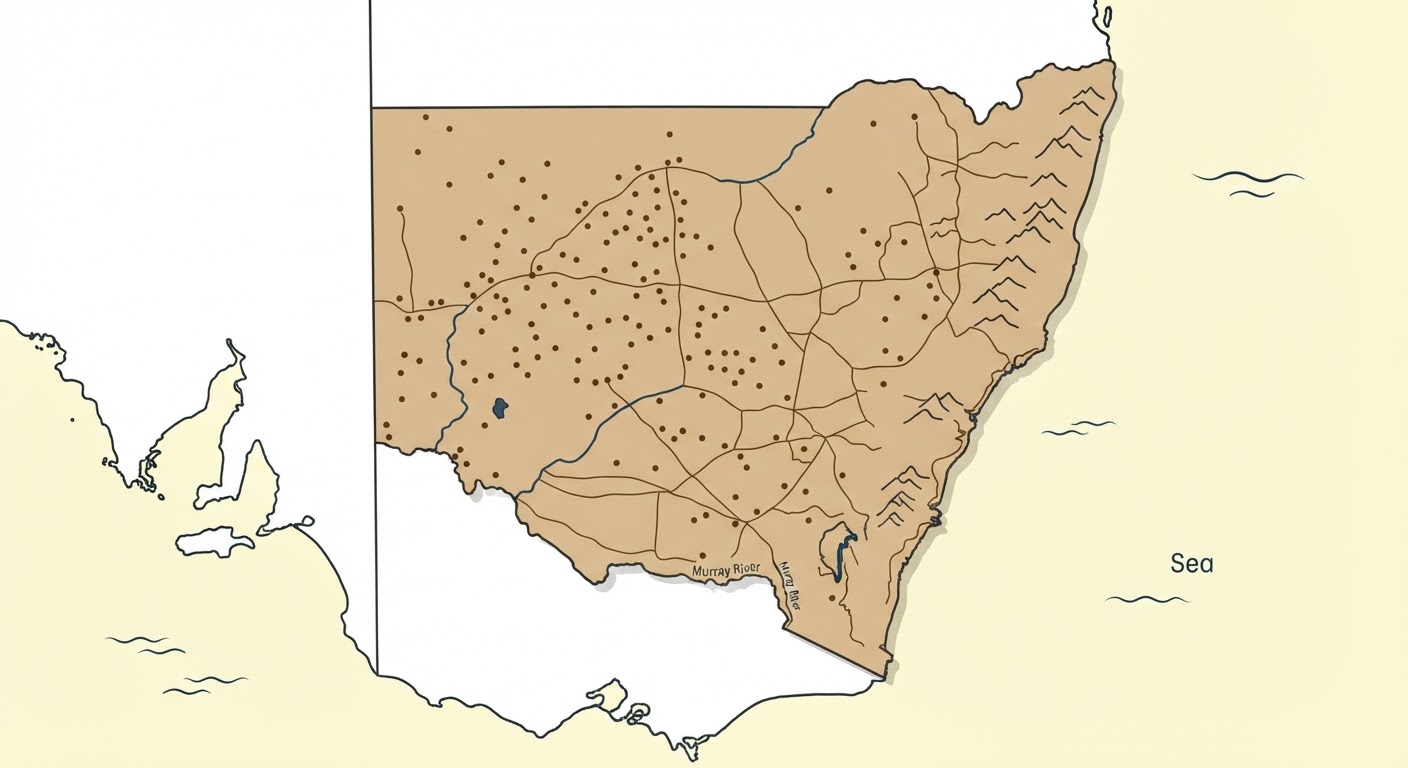
The breed was developed on vast, hot New South Wales cattle stations where imported British herding dogs could not cope with the heat or the semi-wild stock. Crossing in dingo blood gave the breed the stamina and toughness the work demanded.
- Region
- New South Wales outback stations
- Climate it was bred for
- Hot, arid outback
- Original job
- Droving and herding cattle over long distances
The long read
About the breed
Colonial drovers needed a dog that could work cattle across enormous outback stations in punishing heat, and imported British herding breeds struggled with the distances and the aggressive, half-wild stock. Breeders including Thomas Hall crossed Collie-type dogs with dingoes and later Dalmatian and Kelpie blood, aiming for a dog with heat tolerance, quiet working style and toughness enough to dodge a kicking hoof. The result, refined through the late 1800s, became the standard drover's dog across much of rural Australia.
Living with an Australian Cattle Dog means living with one of the most driven working breeds commonly kept as a pet. They need serious daily exercise and a job to do, whether herding, agility or structured training, and boredom reliably produces destructive chewing, digging or nipping at heels, including children's. They are intensely loyal, often to one person especially, and can be wary of strangers and other dogs without careful socialisation. The short double coat is easy to maintain but sheds heavily twice a year.
Today the breed still works cattle on Australian stations and increasingly competes in dog sports worldwide, from herding trials to flyball. It suits experienced, active owners with room to run the dog and a genuine task to give it, and is a poor match for sedentary households or those wanting a placid family pet.
Living with one
Temperament & needs
Our own ratings, based on the breed standard and how these dogs behave in ordinary homes.
Friendliness
2/5
How openly the Australian Cattle Dog greets people it does not know.
Trainability
5/5
Exceptionally intelligent and eager to work, thrives with a job.
Energy
5/5
Extremely high drive, needs hours of purposeful activity.
Barking
2/5
Not a big barker, but will herd by nipping if bored.
Grooming
2/5
Short double coat is easy between seasonal heavy sheds.
Suits a first-time owner
3/5
How forgiving the Australian Cattle Dog is for someone taking on their first dog.
Sociability
2/5
Deeply loyal to its family, often reserved or wary elsewhere.
Independence
3/5
Confident decision-maker when working stock unsupervised.
Illustrated breed standard
The points of the breed
Hover or tap a numbered point to read what the standard asks for.
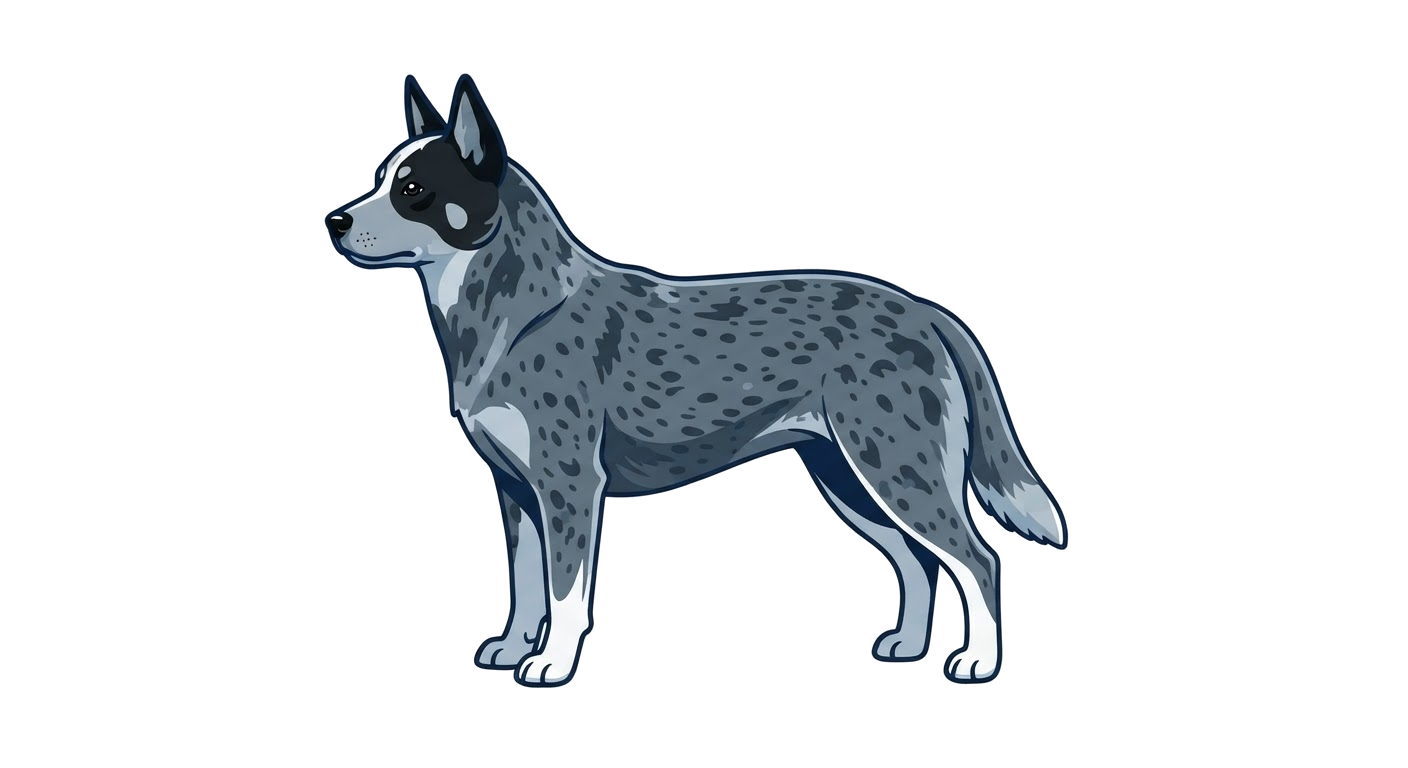
Point 1
Skull
The Australian Cattle Dog's skull is judged on balance rather than size — proportionate to the body, with a clean cheek and a stop typical of the breed. Coarseness or an over-refined head are both faulted.
Colours & patterns
Recognised coats
Which coats the standard accepts — and which are simply popular.
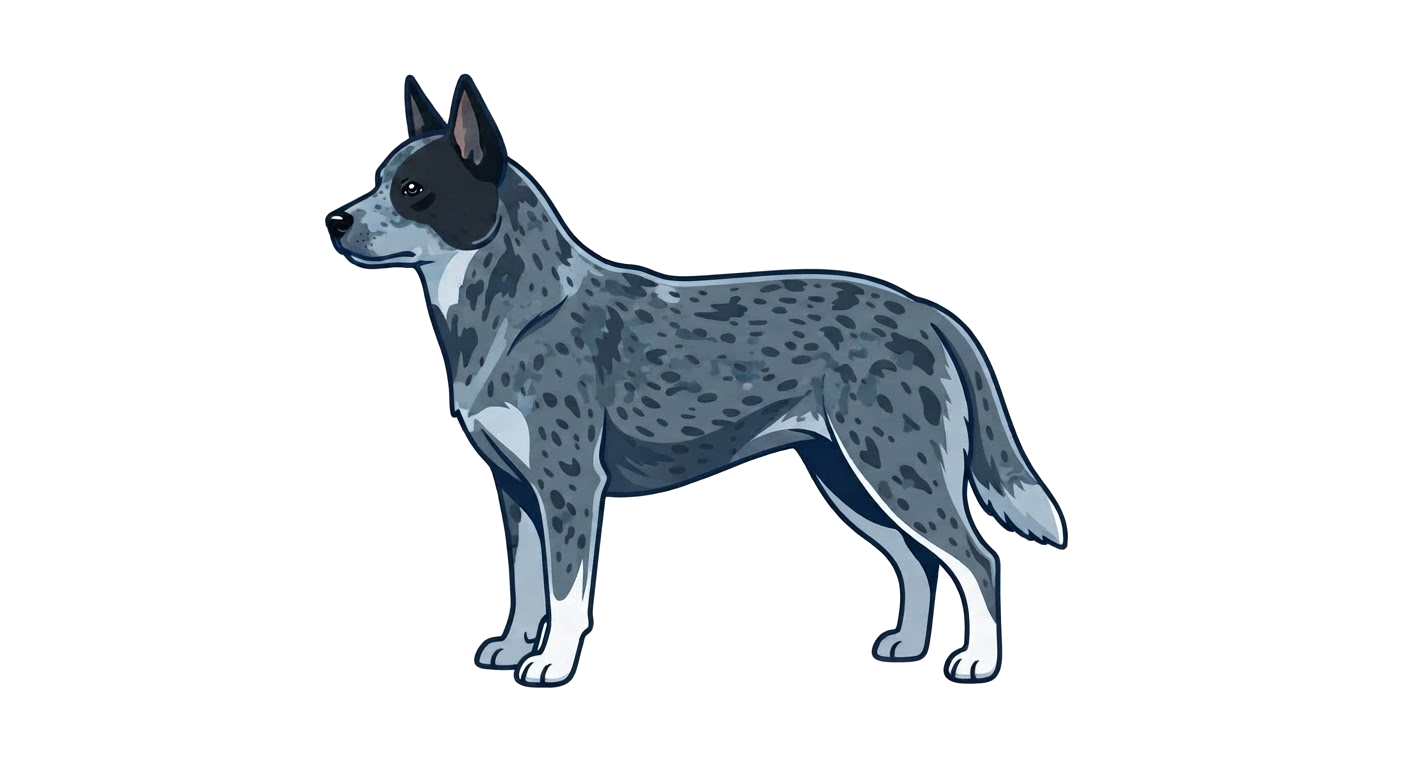
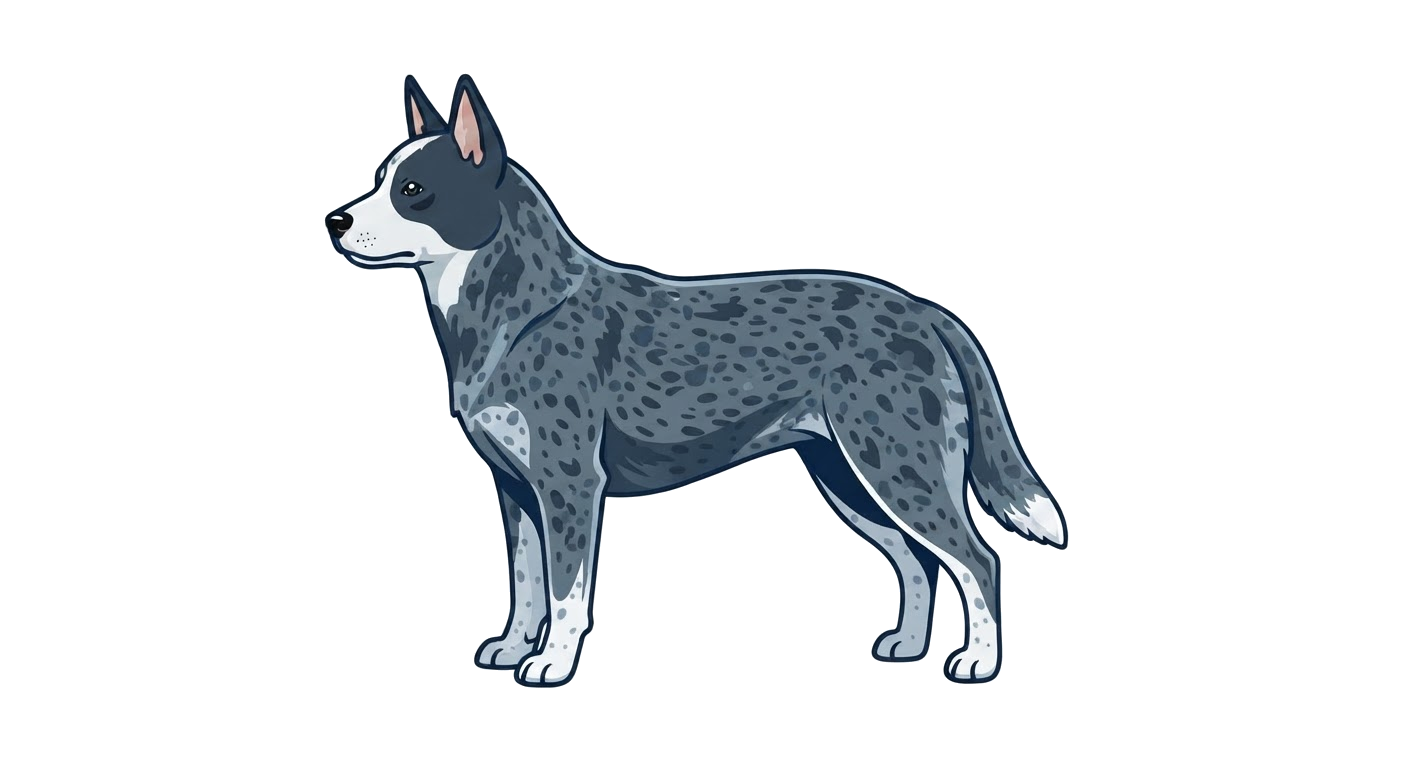
Blue
Standard colour
Mottled or speckled blue-grey, the classic Cattle Dog colour.
Blue mottled
Standard colour
Blue with darker patches, often with tan markings.
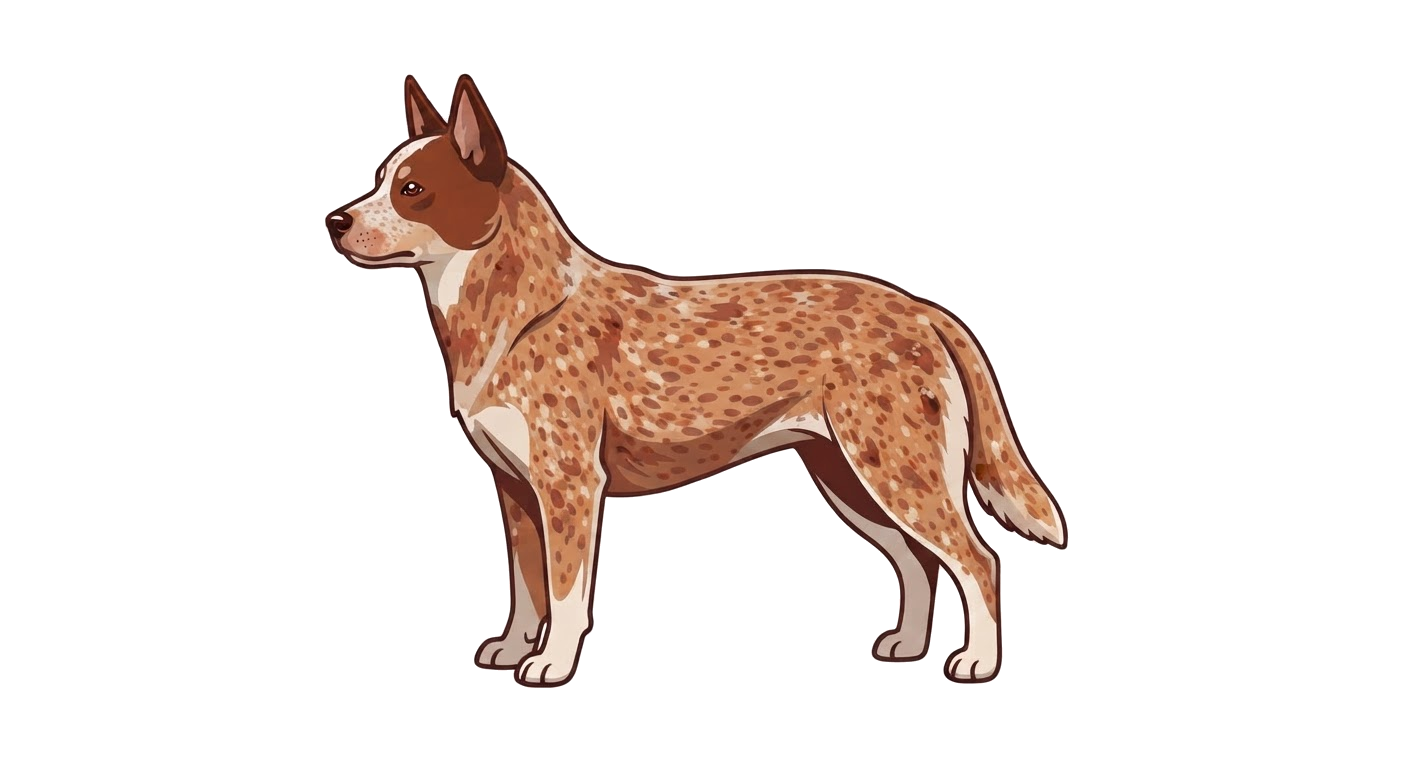
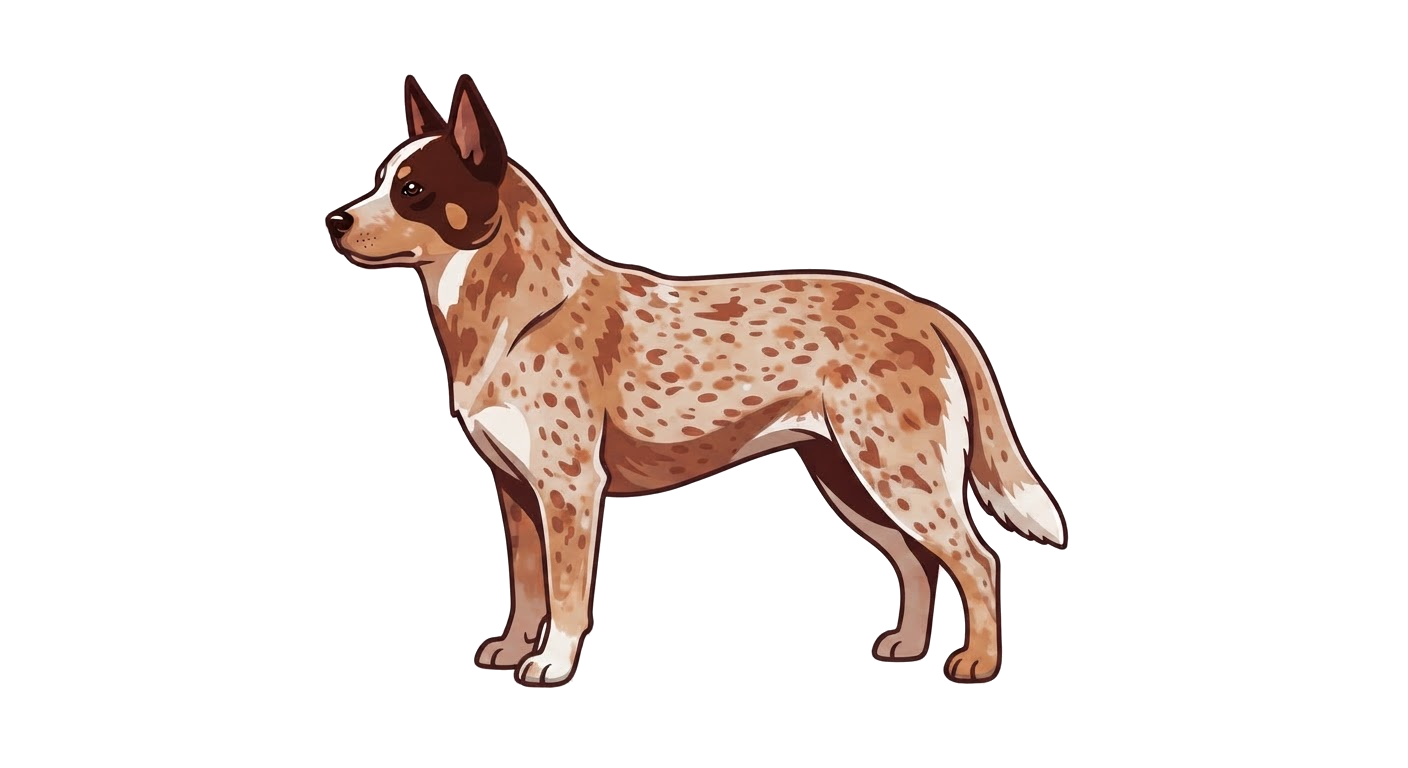
Red speckled
Standard colour
Even red speckling all over, the other recognised colour.
Red mottled
Standard colour
Red with darker mottled patches.
Timeline
History & development
1830s-1840s
Colonial droving need
Australian cattle stations needed a dog able to handle vast distances and tough semi-wild cattle.
1840s
Dingo crossing
Thomas Hall crossed Collie-type dogs with dingoes to improve heat tolerance and stamina.
1890s
Breed standardised
Robert Kaleski wrote the first breed standard, fixing the blue and red speckled colouring.
1980
AKC recognition
The American Kennel Club formally recognised the Australian Cattle Dog.
Reference
Breed standard summary
- body
- Slightly longer than tall, deep chest, strong loin
- coat
- Short, straight, dense double coat, weatherproof
- ears
- Pricked, moderately pointed, wide set
- eyes
- Oval, dark brown, alert
- gait
- Tireless, ground-covering trot
- head
- Broad skull, moderate stop, strong muzzle
- size
- Medium, 43-51 cm at the shoulder
- tail
- Set moderately low, brush-like, carried low at rest
- colour
- Blue, Blue mottled, Red speckled, Red mottled. Colours outside this list are seen but are not accepted by the kennel clubs.
- temperament
- Typical of the breed: strongest in energy, trainability, independence. Nervousness or aggression are serious faults in the show ring and in the home.
- general appearance
- Sturdy, compact, muscular herder with an alert, watchful expression
Health
What to screen for
Green means little to worry about, amber means ask the breeder for test results, red means manage it actively.
Progressive retinal atrophy
Screen for it
Ask for a DNA or annual eye certificate on both parents.
Hereditary deafness
Watch closely
BAER hearing testing of puppies is standard good practice.
Hip dysplasia
Screen for it
Request hip scoring on breeding stock.
Elbow dysplasia
Low concern
Elbow scoring is a useful additional check for active working lines.
General information only — always speak to your vet about your own dog.
From real owners
Dogs like this
Australian Cattle Dogs added by PawPoint members through their pet passports. Share yours to appear here.
Loading the wall…
Made for the Australian Cattle Dog
The book, plus prints, hoodies and mugs using our own Australian Cattle Dog illustration — and one everyday accessory that suits any dog.
The book
Pawpoint: The Complete Dog Breed Book
Every officially recognised breed plus the unofficial ones nobody else documents. 400+ pages, hardback, printed and shipped from the UK.
Own stock — shipped by us
Framed poster
Australian Cattle Dog Framed Poster
Museum-weight print of our Australian Cattle Dog illustration, framed or unframed.
Printed to order
Hoodie
Australian Cattle Dog Hoodie
Heavyweight hoodie carrying the Australian Cattle Dog illustration on the chest.
Printed to order
Mug
Australian Cattle Dog Mug
Ceramic mug with the Australian Cattle Dog illustration wrapped around it.
Printed to order
Accessory
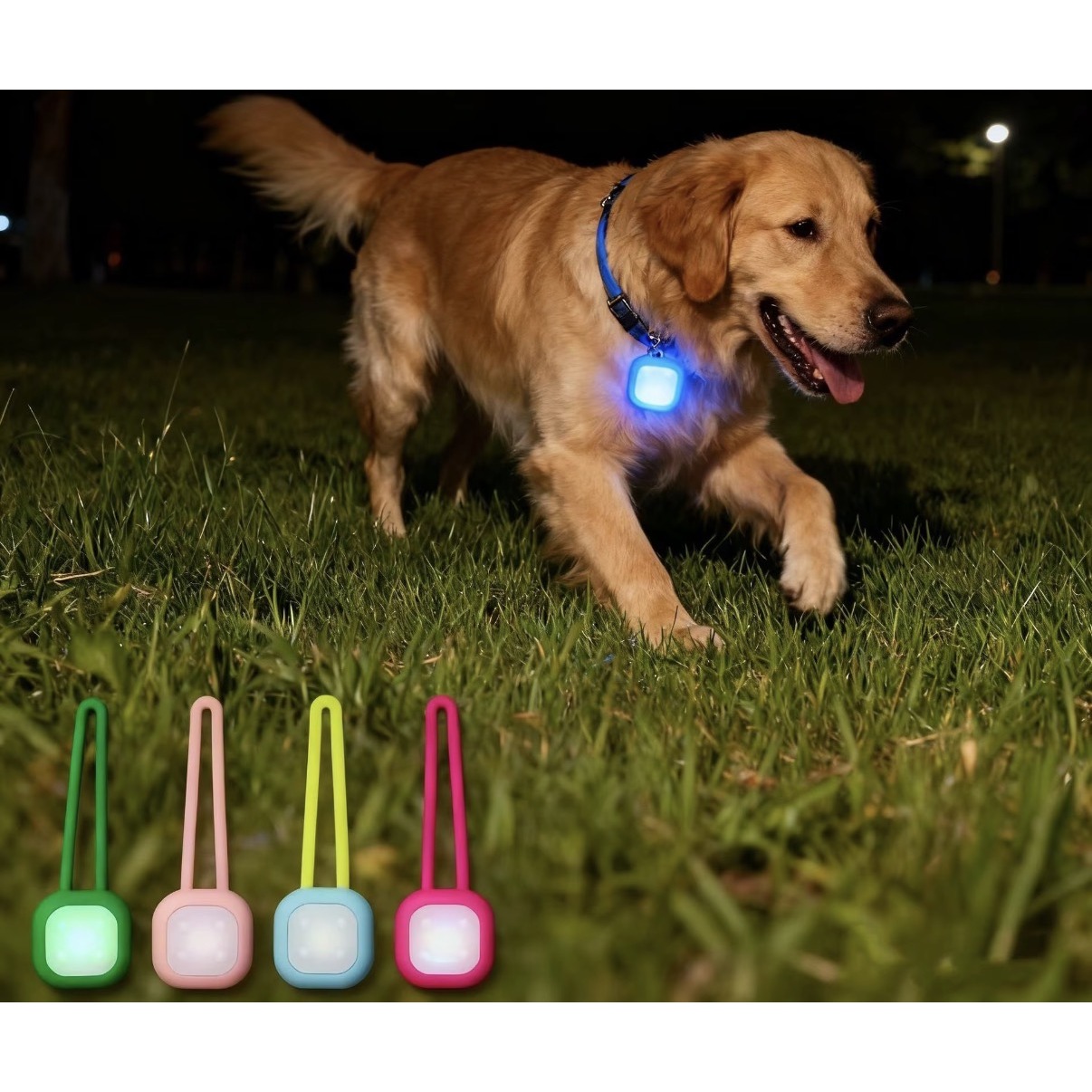
LED Reflective Lead Light
Rechargeable clip-on light for dark walks.
Fits any dog
Pawpoint on YouTube
Watch the full Australian Cattle Dog video
Breed deep-dives, history and honest ownership talk. New film every week.
Watch now