
Australian Shepherd
oss-TRAY-lee-uhn SHEP-uhd
United States· Western ranches, California and Colorado
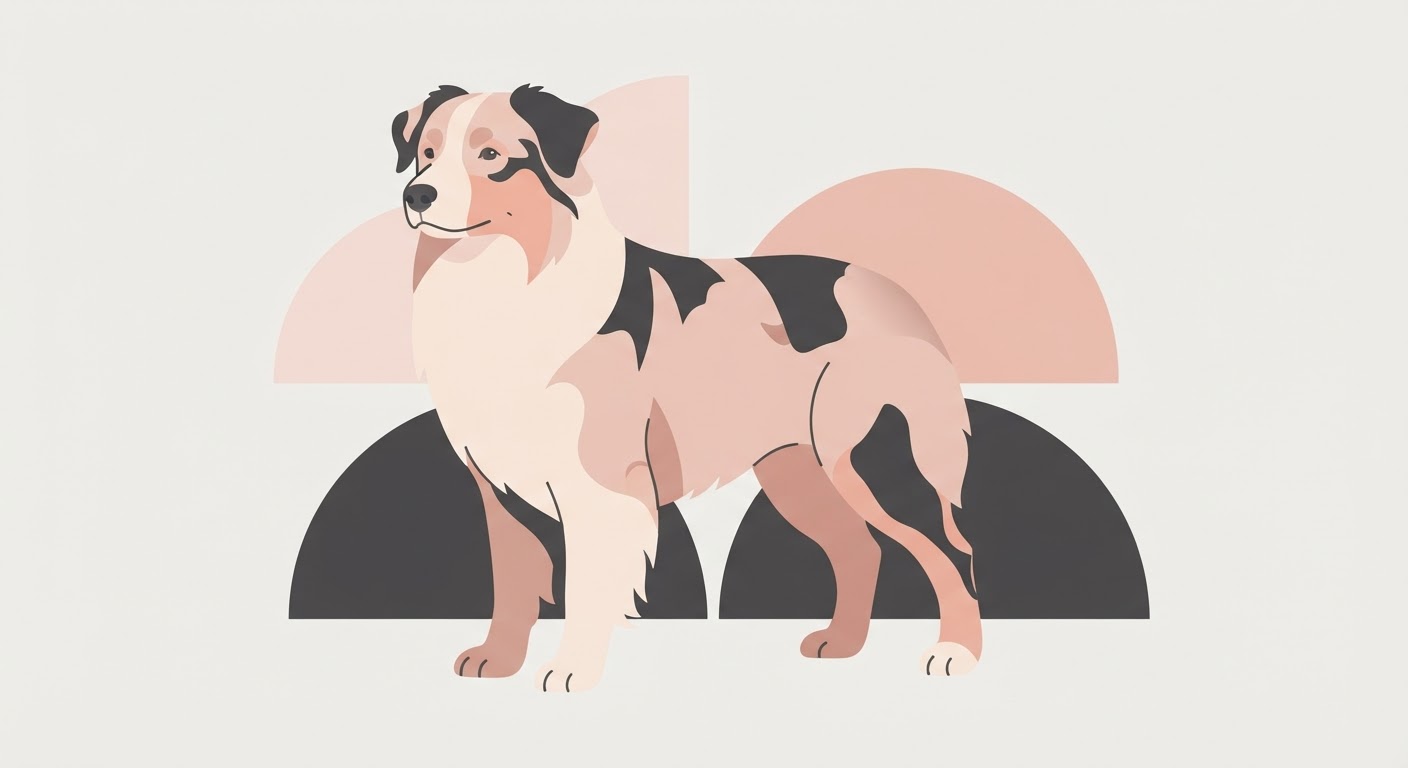
The Australian Shepherd is a medium-sized, weatherproof herding breed developed on ranches in the western United States in the 19th and 20th centuries, despite the misleading name that points to Australia rather than its American working roots.
At a glance
Quick facts
Size
Medium
Exercise needs
90+ minutes daily plus mental stimulation
Home size suited to
Medium to large home
Grooming frequency
Twice weekly brush
Coat length
Medium
Sheds
Yes, heavily when moulting
Lifespan
12-15 years
Town or country
Happiest in the country
Garden size needed
Medium or larger
Where it comes from
Origins of the Australian Shepherd
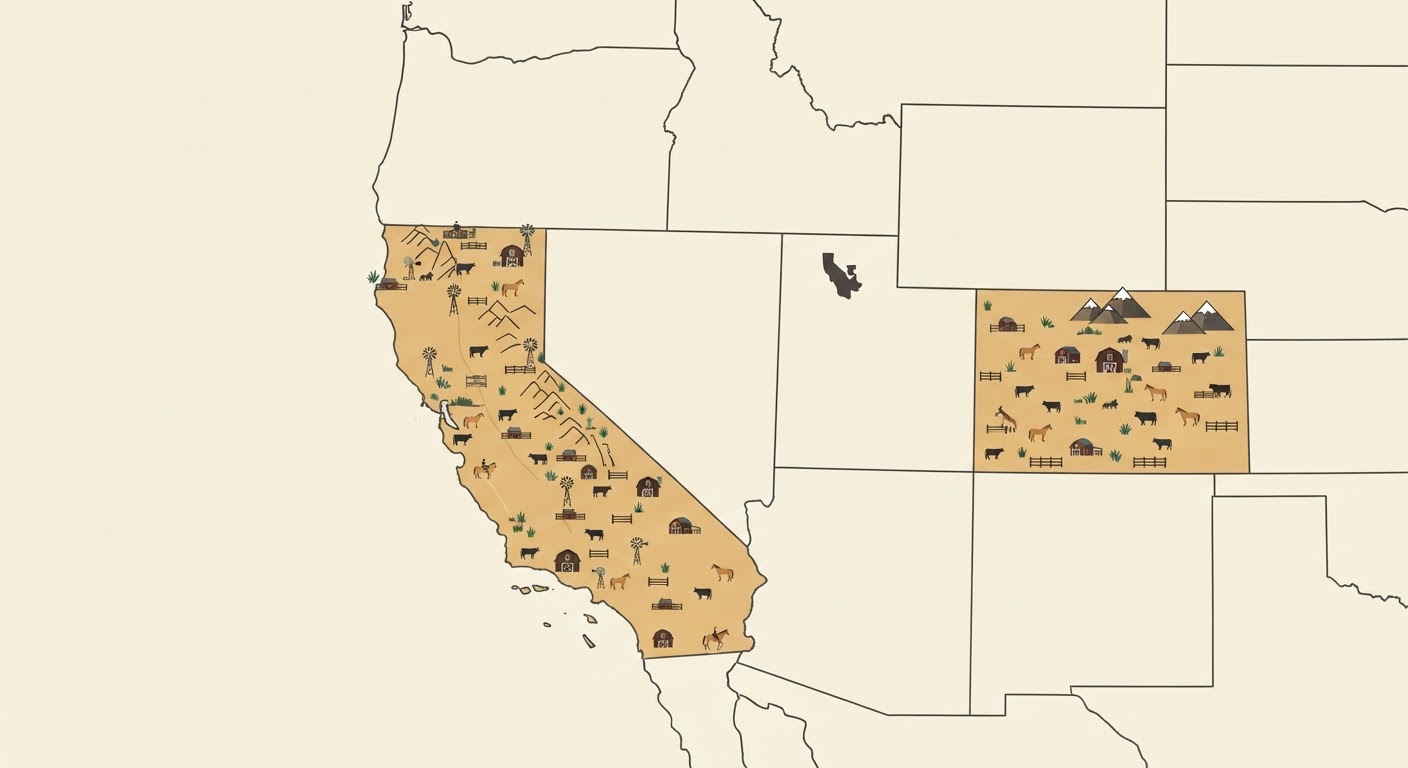
Despite the name, the breed was largely developed on American ranches in California and Colorado. Basque shepherds travelling via Australia to the American West brought early herding stock that gave the breed its misleading name.
- Region
- Western ranches, California and Colorado
- Climate it was bred for
- Varied, from arid plains to mountain cold
- Original job
- Herding sheep and cattle on ranches
The long read
About the breed
The breed's ancestors likely arrived with Basque shepherds who passed through Australia en route from Europe to California during the 19th-century sheep boom, picking up the "Australian" label along the way even though the dogs were refined mainly on American ranches. Cowboys and ranchers in California, Colorado and neighbouring states selected for a versatile stock dog able to herd sheep and cattle, work all day in rough terrain, and cope with heat and cold alike, and the breed became a fixture of rodeo and ranch life by the mid-20th century.
Living with an Australian Shepherd means living with a highly intelligent, athletic dog that needs a genuine outlet for its herding drive. Without work, structured training or serious daily exercise, "Aussies" become anxious, destructive or fixate on herding children, cars or other pets by nipping heels. They are typically devoted to their family and wary of strangers, and the medium-length double coat, which comes in striking merle patterns as well as solid colours, needs brushing two or three times a week.
Today the breed thrives in agility, herding trials, disc dog and search and rescue as much as on working ranches, and remains one of the most popular herding breeds kept as a companion in the United States and increasingly the UK. It suits active, experienced owners able to give it a job, and is not well suited to apartment living or long hours alone.
Living with one
Temperament & needs
Our own ratings, based on the breed standard and how these dogs behave in ordinary homes.
Friendliness
3/5
How openly the Australian Shepherd greets people it does not know.
Trainability
5/5
Exceptionally quick learner, excels in obedience and agility.
Energy
5/5
Extremely active, needs a real job or hours of daily exercise.
Barking
3/5
Alert and vocal when herding or guarding territory.
Grooming
3/5
Medium double coat needs brushing two to three times weekly.
Suits a first-time owner
3/5
How forgiving the Australian Shepherd is for someone taking on their first dog.
Sociability
3/5
Loyal and affectionate with family, reserved with strangers.
Independence
3/5
Capable of working decisions but happiest partnered with a handler.
Illustrated breed standard
The points of the breed
Hover or tap a numbered point to read what the standard asks for.
Point 1
Skull
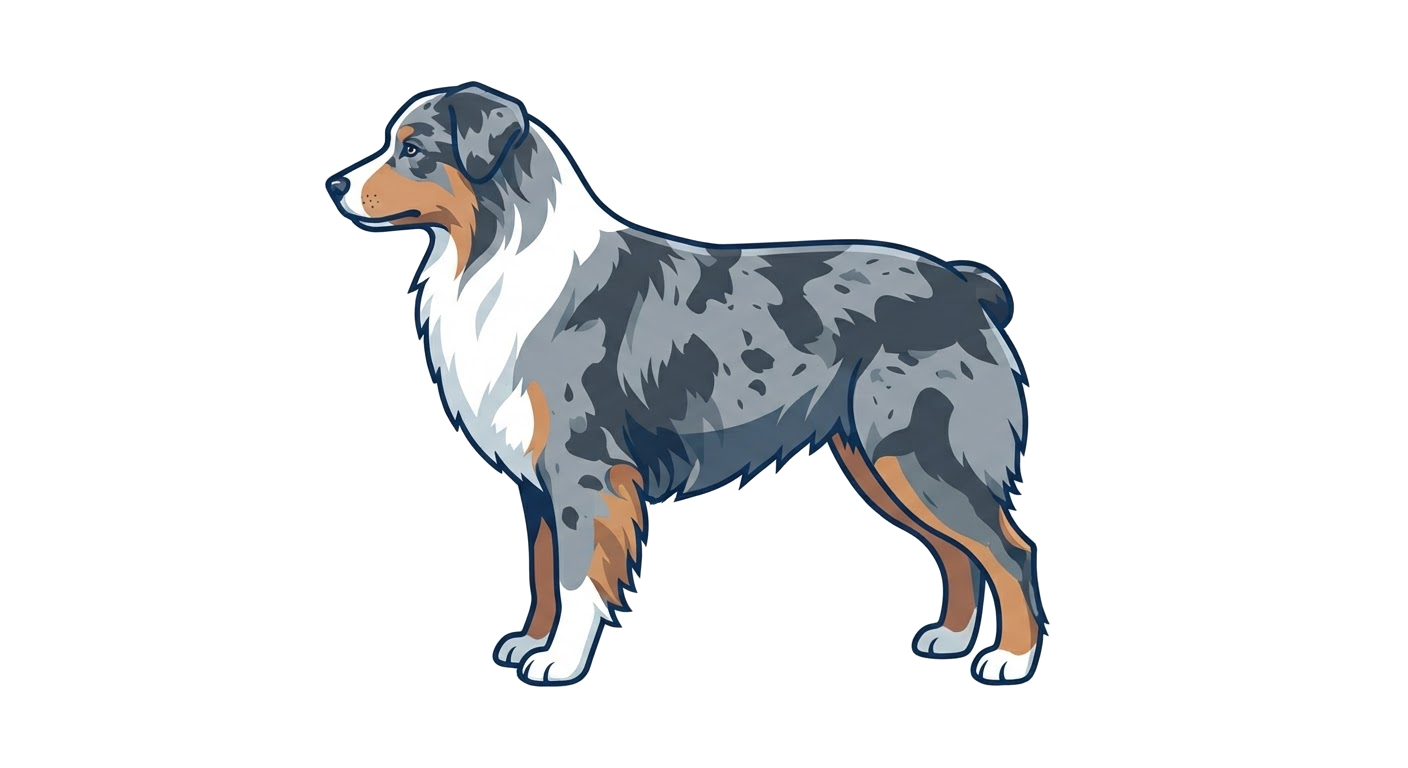
The Australian Shepherd's skull is judged on balance rather than size — proportionate to the body, with a clean cheek and a stop typical of the breed. Coarseness or an over-refined head are both faulted.
Colours & patterns
Recognised coats
Which coats the standard accepts — and which are simply popular.
Blue merle
Standard colour
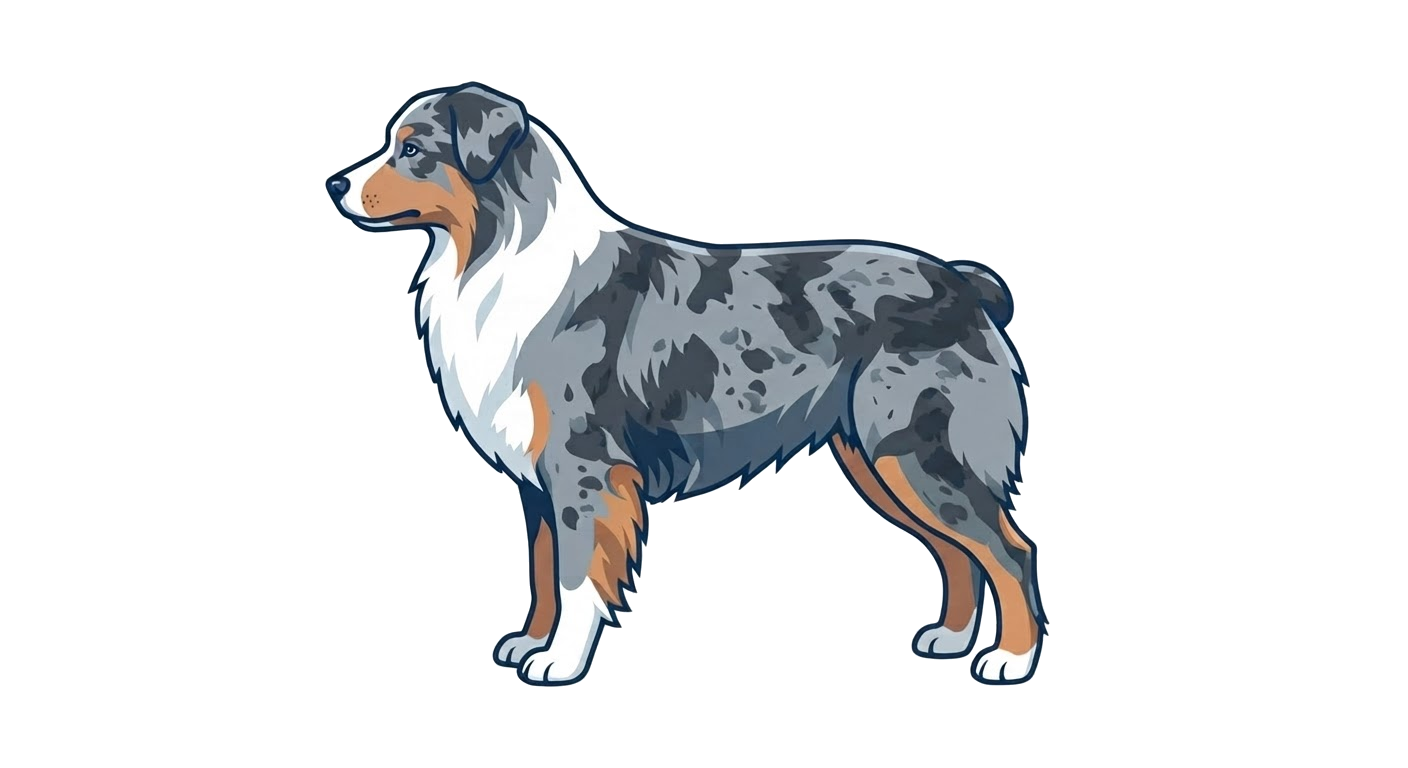
Mottled grey-blue patches, one of the breed's signature colours.
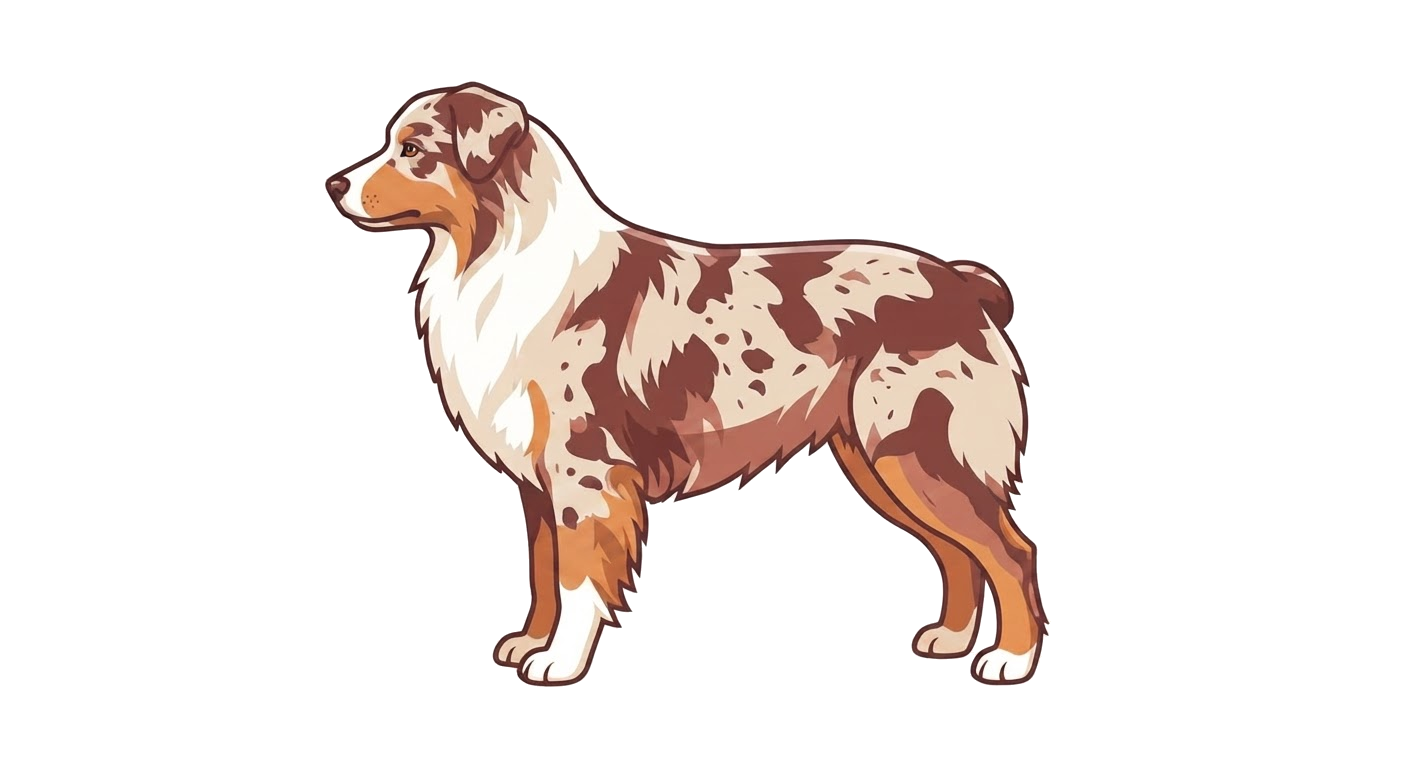
Red merle
Standard colour
Mottled red-brown patches over a lighter base.
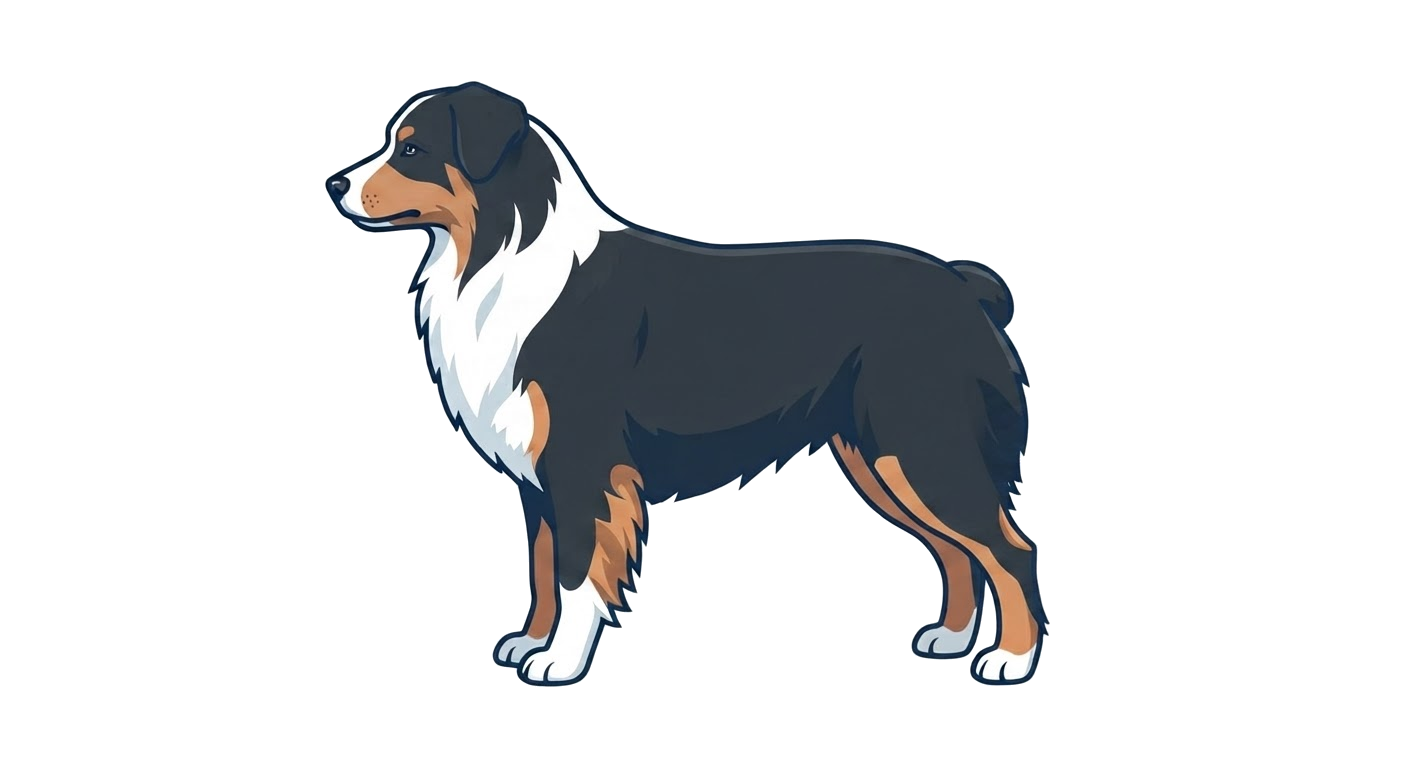
Black tricolour
Standard colour
Solid black with white and copper points.
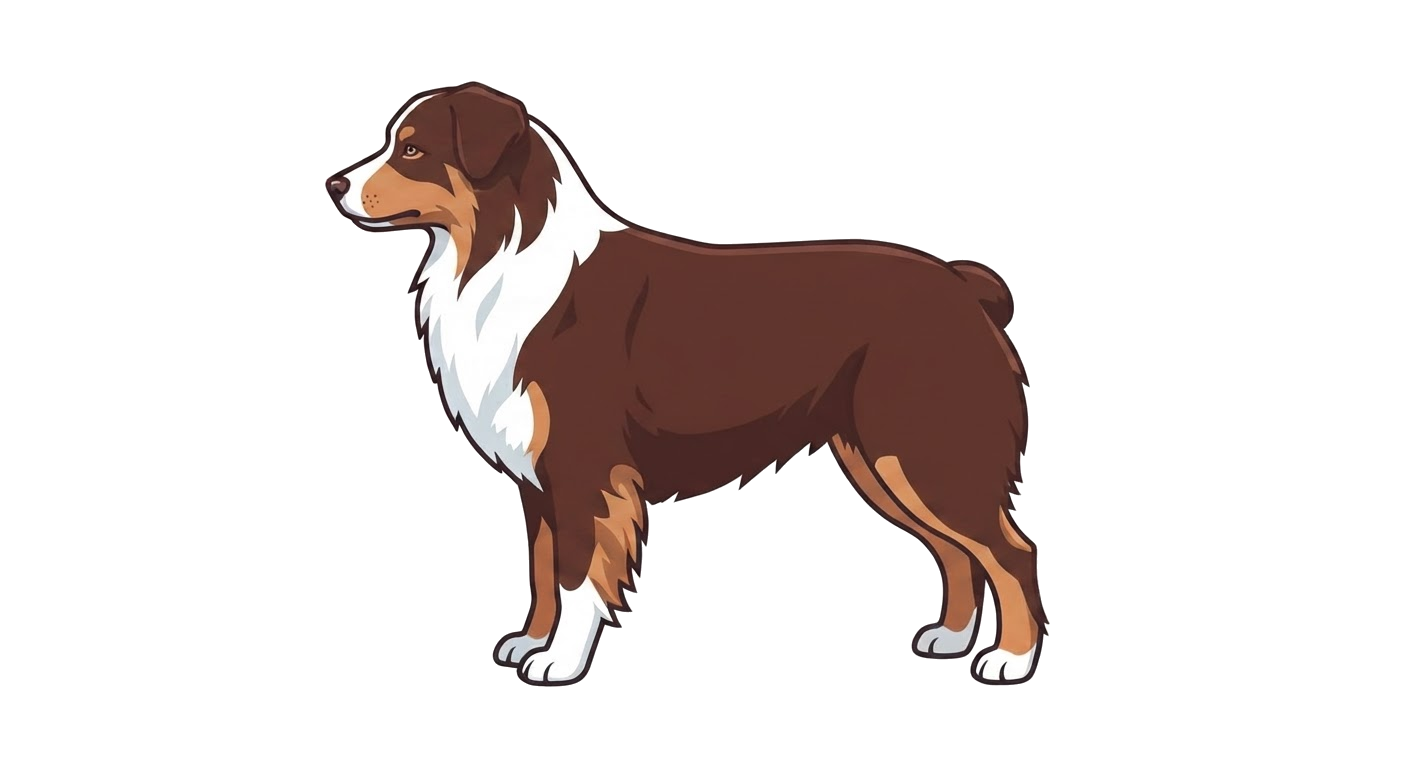
Red tricolour
Standard colour
Solid red with white and copper points.
Timeline
History & development
1800s
Basque shepherd migration
Herding dogs travelled with Basque shepherds via Australia to the sheep ranches of the American West.
early-mid 1900s
Ranch refinement
American ranchers in California and Colorado selectively bred versatile stock dogs suited to rough terrain.
1950s-60s
Rodeo popularity
The breed gained wide recognition performing tricks at rodeos across the western United States.
1993
AKC recognition
The American Kennel Club formally recognised the Australian Shepherd.
Reference
Breed standard summary
- body
- Slightly longer than tall, deep chest, level topline
- coat
- Medium length, straight to wavy, weather-resistant double coat
- ears
- Triangular, set high, breaking forward or to the side
- eyes
- Almond-shaped, brown, blue, amber or marbled, often striking in merles
- gait
- Free, smooth, ground-covering
- head
- Clean-cut, strong, in proportion to the body
- size
- Medium, 46-58 cm at the shoulder
- tail
- Naturally bobbed or docked, straight, not exceeding 10 cm
- colour
- Blue merle, Red merle, Black tricolour, Red tricolour. Colours outside this list are seen but are not accepted by the kennel clubs.
- temperament
- Typical of the breed: strongest in energy, trainability, sociability. Nervousness or aggression are serious faults in the show ring and in the home.
- general appearance
- Well-balanced, medium herder of moderate size with a keen, alert expression
Health
What to screen for
Green means little to worry about, amber means ask the breeder for test results, red means manage it actively.
Hip dysplasia
Screen for it
Ask for OFA or BVA hip scores on both parents.
Hereditary cataracts and CEA
Screen for it
Request DNA or CERF eye clearance certificates.
MDR1 drug sensitivity
Watch closely
A DNA test identifies carriers, who need care with certain medications.
Epilepsy
Watch closely
Ask breeders about seizure history in the line.
General information only — always speak to your vet about your own dog.
From real owners
Dogs like this
Australian Shepherds added by PawPoint members through their pet passports. Share yours to appear here.
Loading the wall…
Made for the Australian Shepherd
The book, plus prints, hoodies and mugs using our own Australian Shepherd illustration — and one everyday accessory that suits any dog.

The book
Pawpoint: The Complete Dog Breed Book
Every officially recognised breed plus the unofficial ones nobody else documents. 400+ pages, hardback, printed and shipped from the UK.
Own stock — shipped by us
Framed poster
Australian Shepherd Framed Poster
Museum-weight print of our Australian Shepherd illustration, framed or unframed.
Printed to order
Hoodie
Australian Shepherd Hoodie
Heavyweight hoodie carrying the Australian Shepherd illustration on the chest.
Printed to order
Mug
Australian Shepherd Mug
Ceramic mug with the Australian Shepherd illustration wrapped around it.
Printed to order
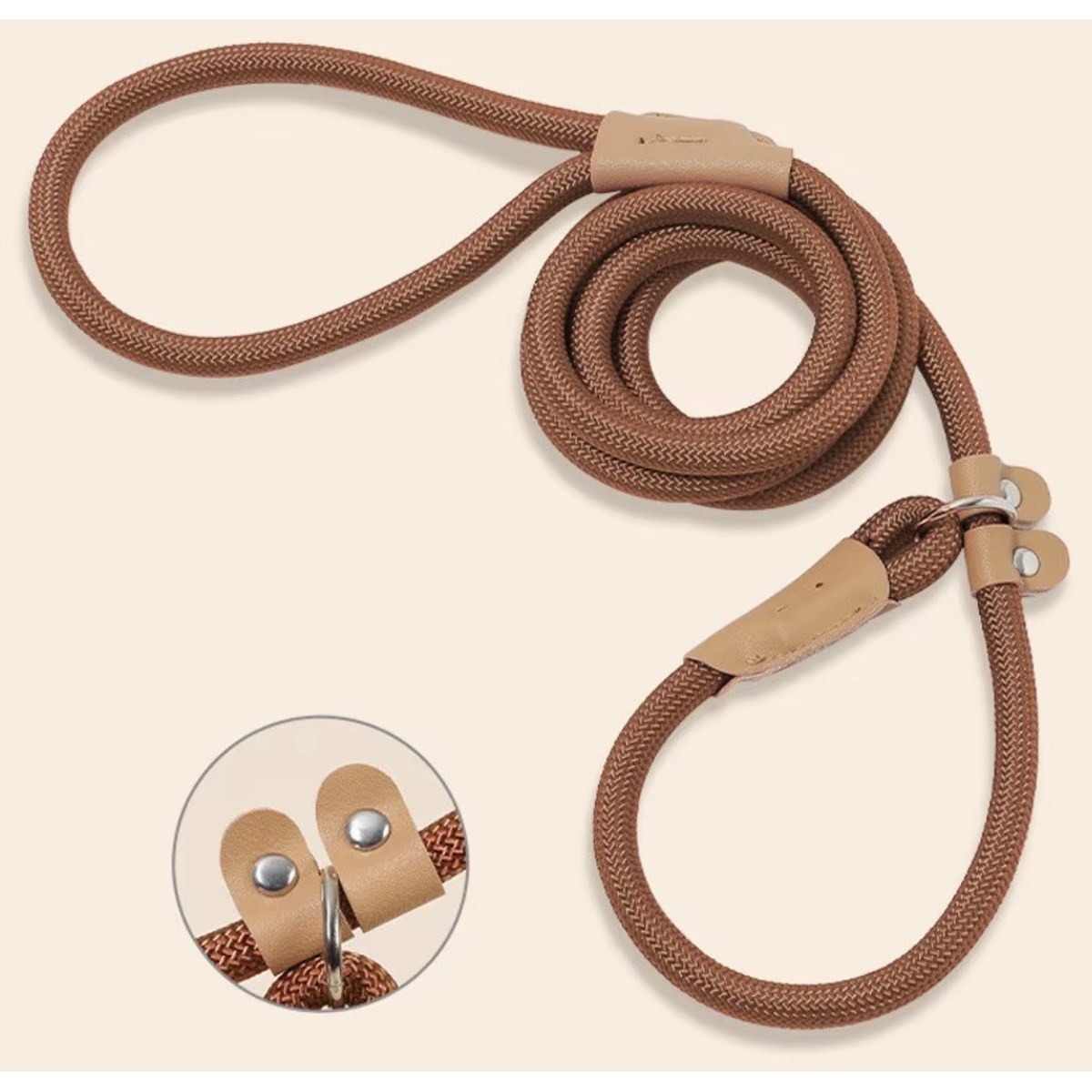
Accessory
Rope Slip Lead
Braided rope lead with a leather stop, 150cm. Good for training walks.
Fits any dog
Pawpoint on YouTube
Watch the full Australian Shepherd video
Breed deep-dives, history and honest ownership talk. New film every week.
Watch now