
Australian Terrier
oss-TRAY-lee-uhn TER-ee-uhr
Australia· Tasmania and Victoria
The Australian Terrier is a small, rough-coated working terrier bred in colonial Australia to kill rats and snakes around homesteads and mining camps.
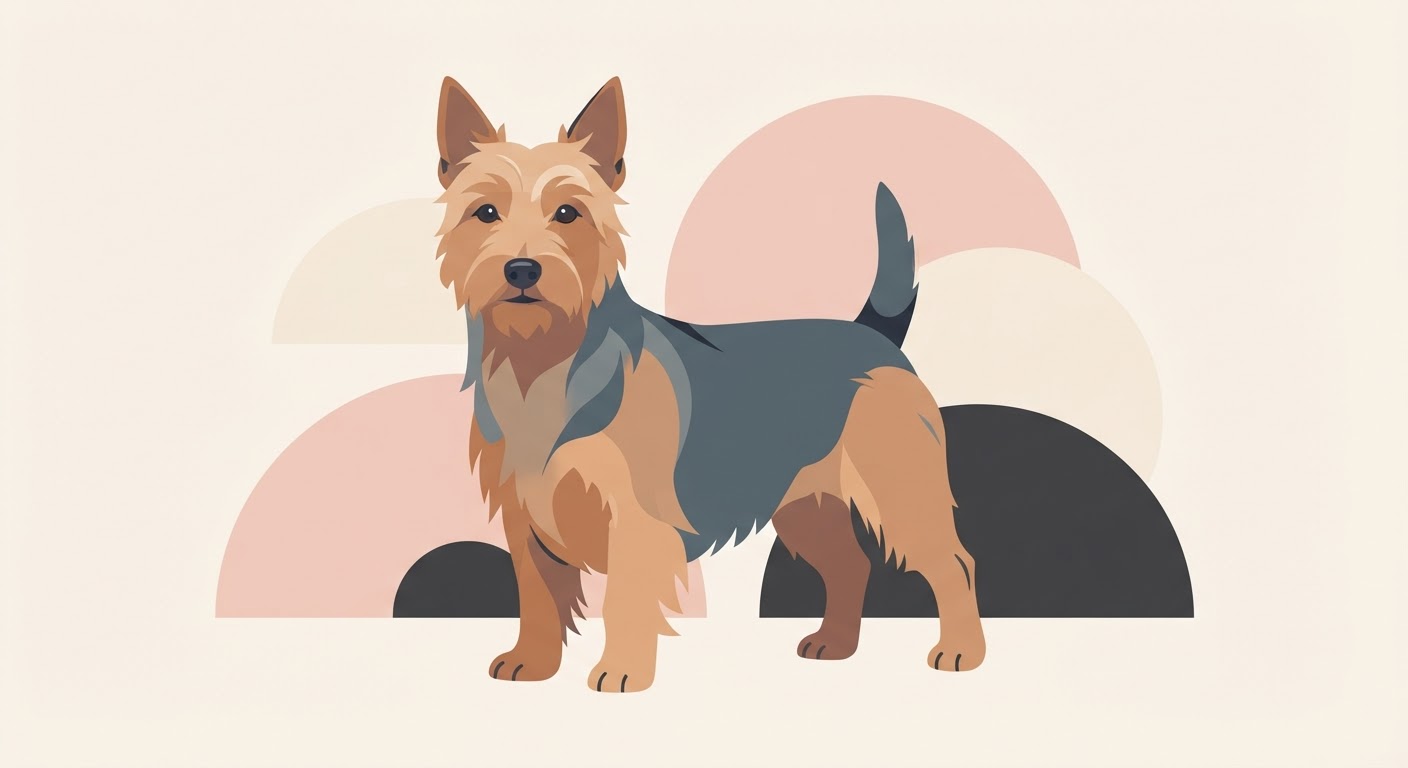
At a glance
Quick facts
Size
Small
Exercise needs
45-60 minutes daily
Home size suited to
Flat or small home
Grooming frequency
Weekly brush, hand-strip a few times a year
Coat length
Wiry
Sheds
Yes, heavily when moulting
Lifespan
12-15 years
Town or country
Either, with enough exercise
Garden size needed
Small garden or none
Where it comes from
Origins of the Australian Terrier
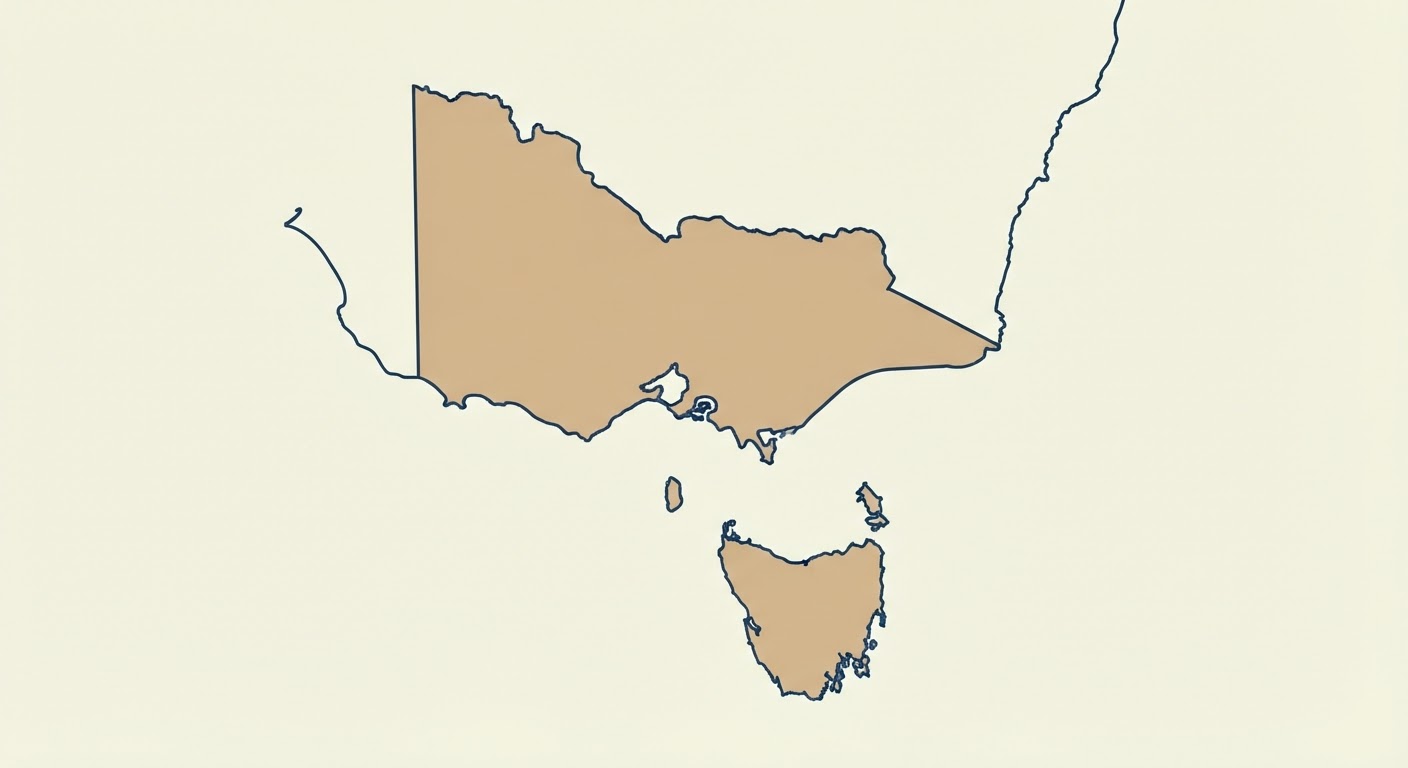
Developed by settlers in Tasmania and Victoria who needed a hardy terrier able to work in extreme heat and dust. Its harsh coat and small, low build suited squeezing into burrows and outbuildings after vermin.
- Region
- Tasmania and Victoria
- Climate it was bred for
- Hot, dry bush country
- Original job
- Ratting and snake-killing on homesteads
The long read
About the breed
Settlers in Tasmania and Victoria crossed terriers brought from Britain, including the Yorkshire, Cairn, Skye and Dandie Dinmont, to produce a tough little dog that could cope with the heat, the dust and the venomous wildlife of the bush. It was recognised as a distinct breed in 1896, one of the first breeds developed in Australia to gain formal recognition, and it worked as a farm dog, a watchdog and a companion in equal measure.
Living with one means accepting a dog with genuine terrier grit. It is alert, quick to bark at anything unusual, and happiest with a job, even if that job is just patrolling the garden for the postman. It gets on well with its own household, including children, but small furry pets are not safe around it, and it can be scrappy with unfamiliar dogs of the same sex. The harsh double coat sheds dirt rather than holding it, and needs hand-stripping or clipping every few months rather than daily brushing.
Today it remains rare outside Australia and a handful of enthusiast circles in Britain and North America, which keeps prices high and puppy availability patchy. It suits an owner who wants a low-shedding, portable, alert dog and does not mind a bit of terrier stubbornness at training class.
Living with one
Temperament & needs
Our own ratings, based on the breed standard and how these dogs behave in ordinary homes.
Friendliness
3/5
How openly the Australian Terrier greets people it does not know.
Trainability
4/5
Sharp but can be wilful.
Energy
4/5
Busy and alert for its size.
Barking
4/5
Quick to sound the alarm.
Grooming
2/5
Hand-stripping every few months.
Suits a first-time owner
3/5
How forgiving the Australian Terrier is for someone taking on their first dog.
Sociability
3/5
Loyal to its family, wary of strangers.
Independence
3/5
Happy to work things out alone.
Illustrated breed standard
The points of the breed
Hover or tap a numbered point to read what the standard asks for.
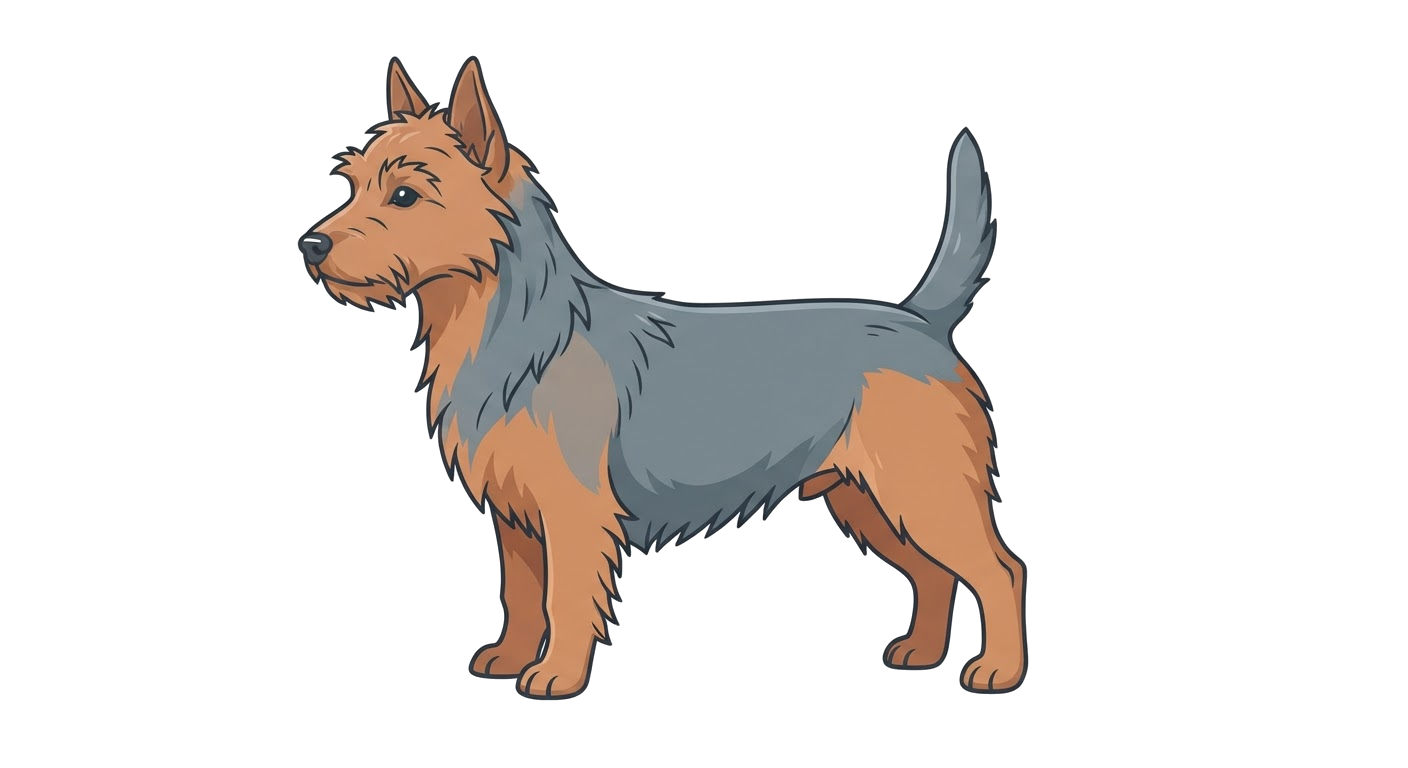
Point 1
Skull
The Australian Terrier's skull is judged on balance rather than size — proportionate to the body, with a clean cheek and a stop typical of the breed. Coarseness or an over-refined head are both faulted.
Colours & patterns
Recognised coats
Which coats the standard accepts — and which are simply popular.
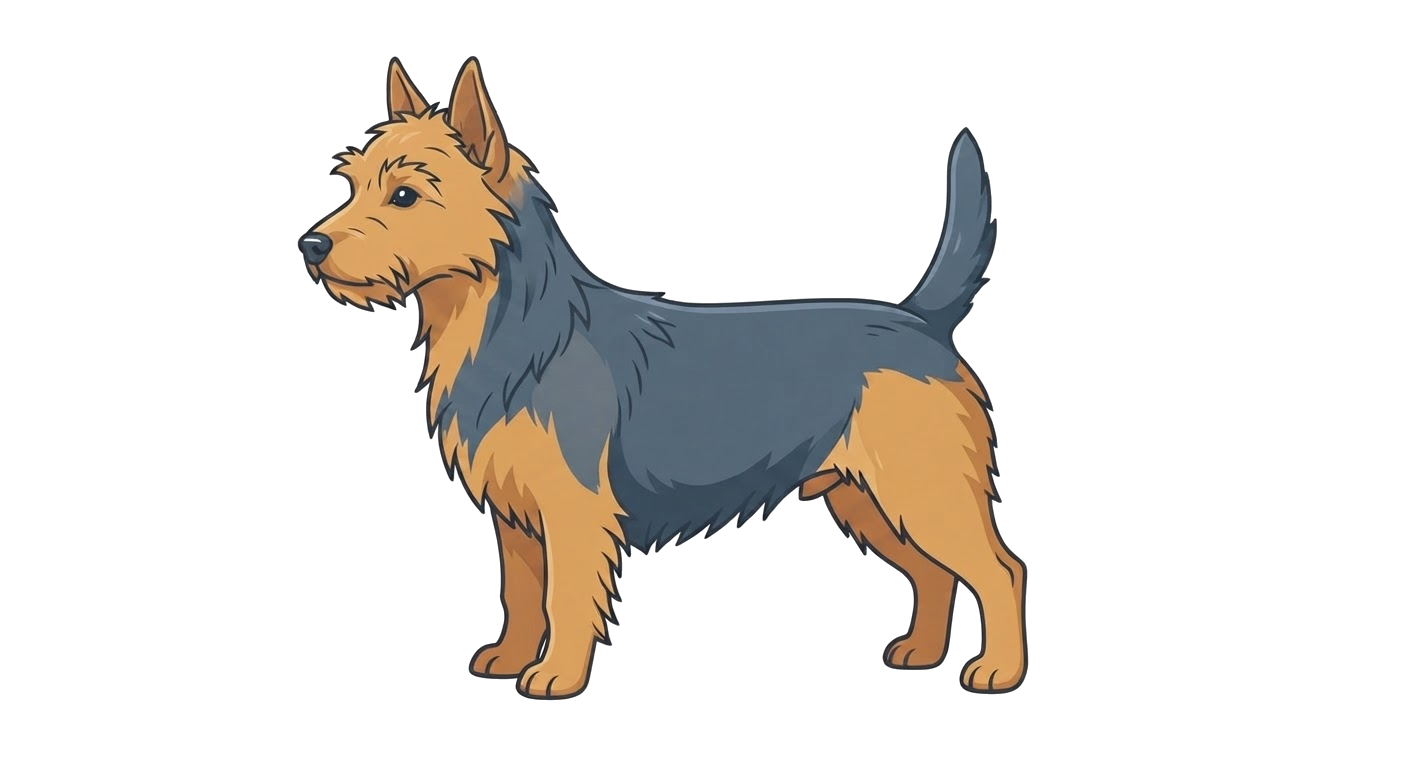
Blue and Tan
Standard colour
The classic colour, blue-black body with rich tan markings.
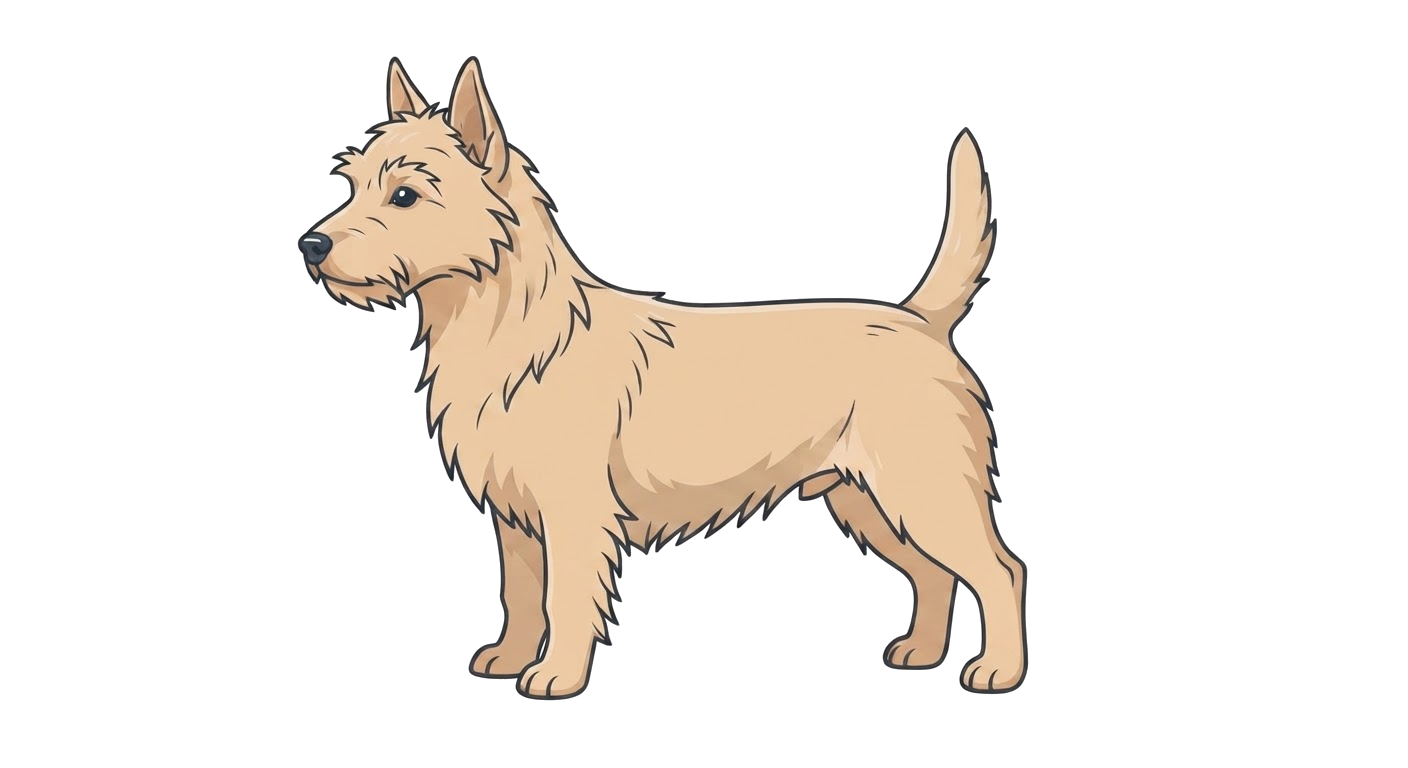
Sandy
Standard colour
Solid sandy red, common and fully accepted.
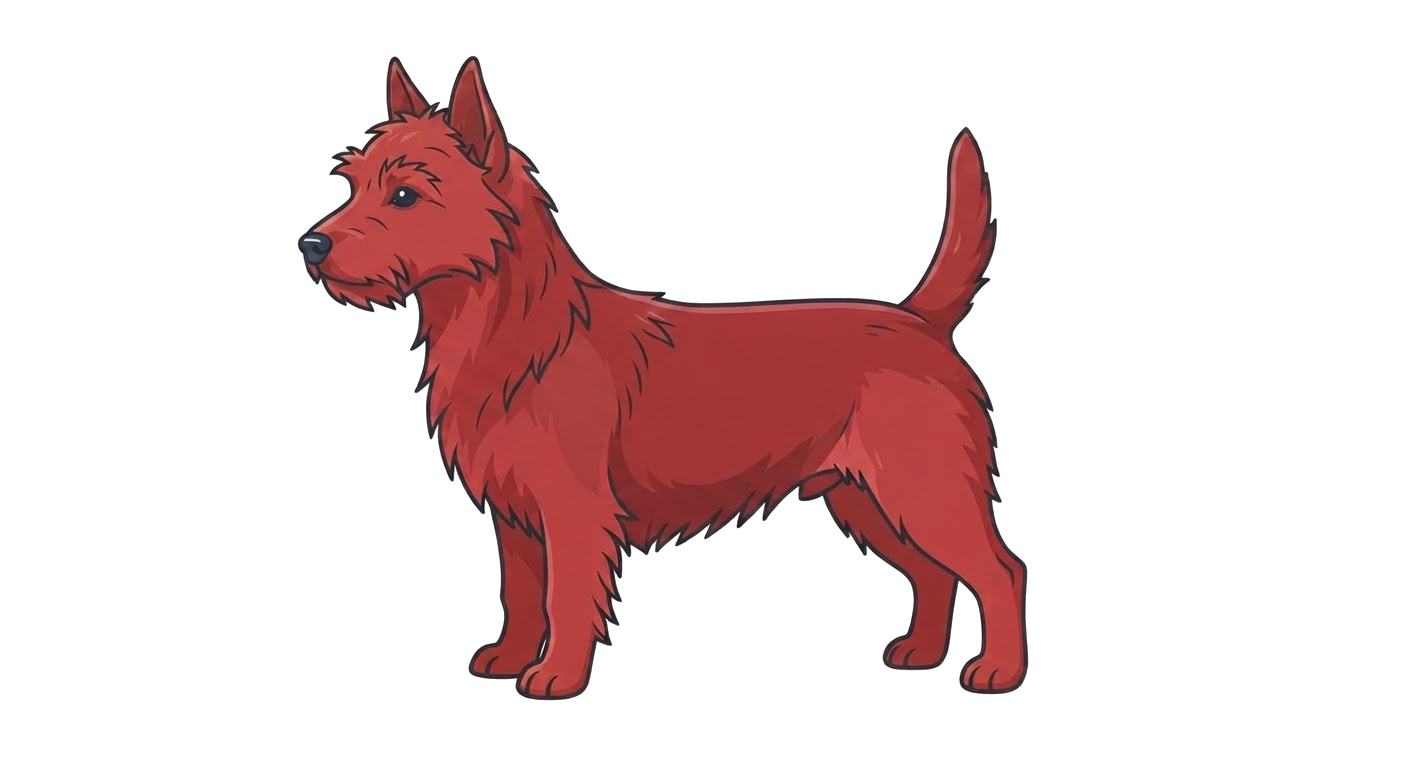
Clear Red
Standard colour
Deeper red than sandy, accepted in most standards.
Timeline
History & development
1820s
Early settler terriers
Terriers brought by British colonists to Tasmania were crossed to cope with local vermin and climate.
1896
Formal recognition
The breed was shown and recognised in Australia, among the first Australian breeds to gain formal status.
1930s
Arrival in Britain
Exported dogs began to establish the breed with British and American fanciers.
1960
UK Kennel Club recognition
The breed gained full recognition with The Kennel Club.
Reference
Breed standard summary
- body
- Compact with a level topline.
- coat
- Harsh, straight topcoat with a soft undercoat.
- ears
- Small, erect, set high.
- eyes
- Small, dark and keen.
- gait
- Free and springy.
- head
- Long, flat skull with a slight stop.
- size
- Small
- tail
- Set high, carried erect.
- colour
- Blue and Tan, Sandy, Clear Red. Colours outside this list are seen but are not accepted by the kennel clubs.
- temperament
- Typical of the breed: strongest in energy, trainability, barking. Nervousness or aggression are serious faults in the show ring and in the home.
- general appearance
- Small, sturdy, rough-coated working terrier, longer than tall.
Health
What to screen for
Green means little to worry about, amber means ask the breeder for test results, red means manage it actively.
Patellar luxation
Screen for it
Ask breeders for a patella check on both parents.
Legg-Calve-Perthes disease
Screen for it
Rare hip condition seen in small terriers; watch for hindleg lameness in puppies.
Diabetes mellitus
Screen for it
Reported at above-average rates in the breed; keep weight lean.
Allergic skin disease
Low concern
Generally robust skin but seek a vet promptly for persistent itching.
General information only — always speak to your vet about your own dog.
From real owners
Dogs like this
Australian Terriers added by PawPoint members through their pet passports. Share yours to appear here.
Loading the wall…
Made for the Australian Terrier
The book, plus prints, hoodies and mugs using our own Australian Terrier illustration — and one everyday accessory that suits any dog.

The book
Pawpoint: The Complete Dog Breed Book
Every officially recognised breed plus the unofficial ones nobody else documents. 400+ pages, hardback, printed and shipped from the UK.
Own stock — shipped by us
Framed poster
Australian Terrier Framed Poster
Museum-weight print of our Australian Terrier illustration, framed or unframed.
Printed to order
Hoodie
Australian Terrier Hoodie
Heavyweight hoodie carrying the Australian Terrier illustration on the chest.
Printed to order
Mug
Australian Terrier Mug
Ceramic mug with the Australian Terrier illustration wrapped around it.
Printed to order
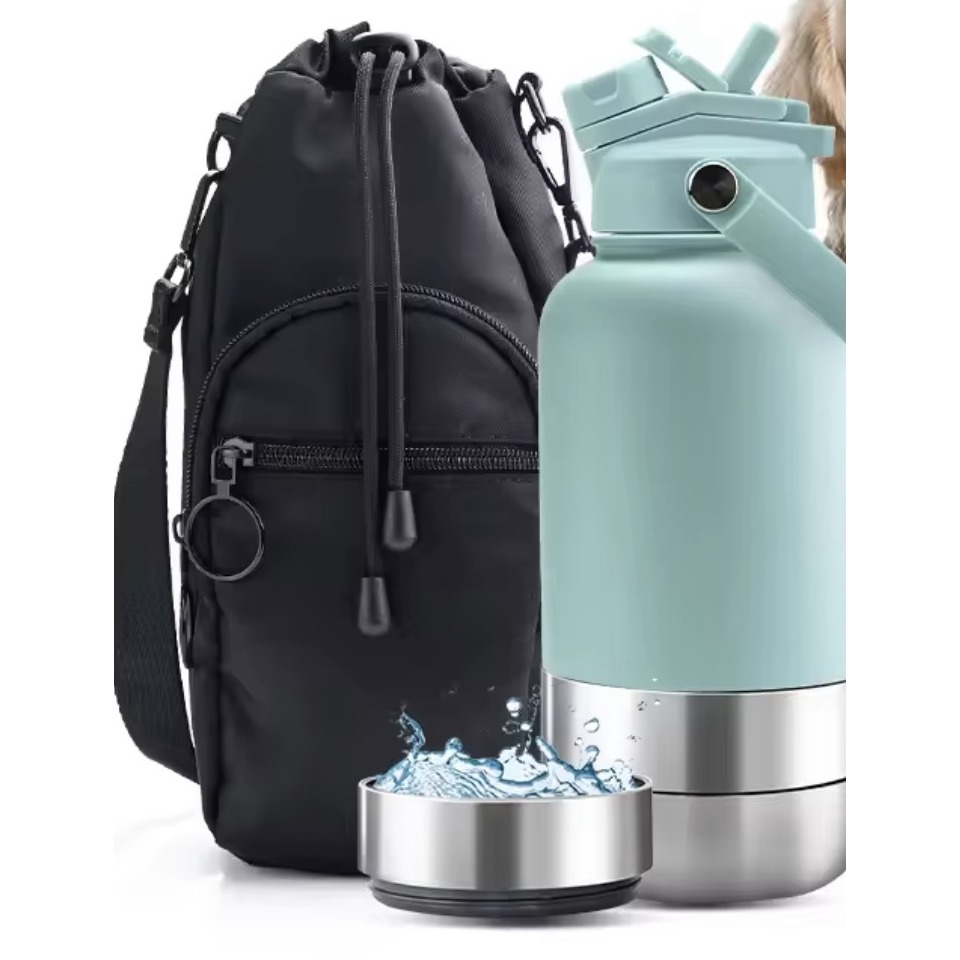
Accessory
Travel Water Bottle & Bowl
550ml bottle with a fold-out drinking trough.
Fits any dog
Pawpoint on YouTube
Watch the full Australian Terrier video
Breed deep-dives, history and honest ownership talk. New film every week.
Watch now