
Barbet
bar-BAY
France· Sologne and the Camargue
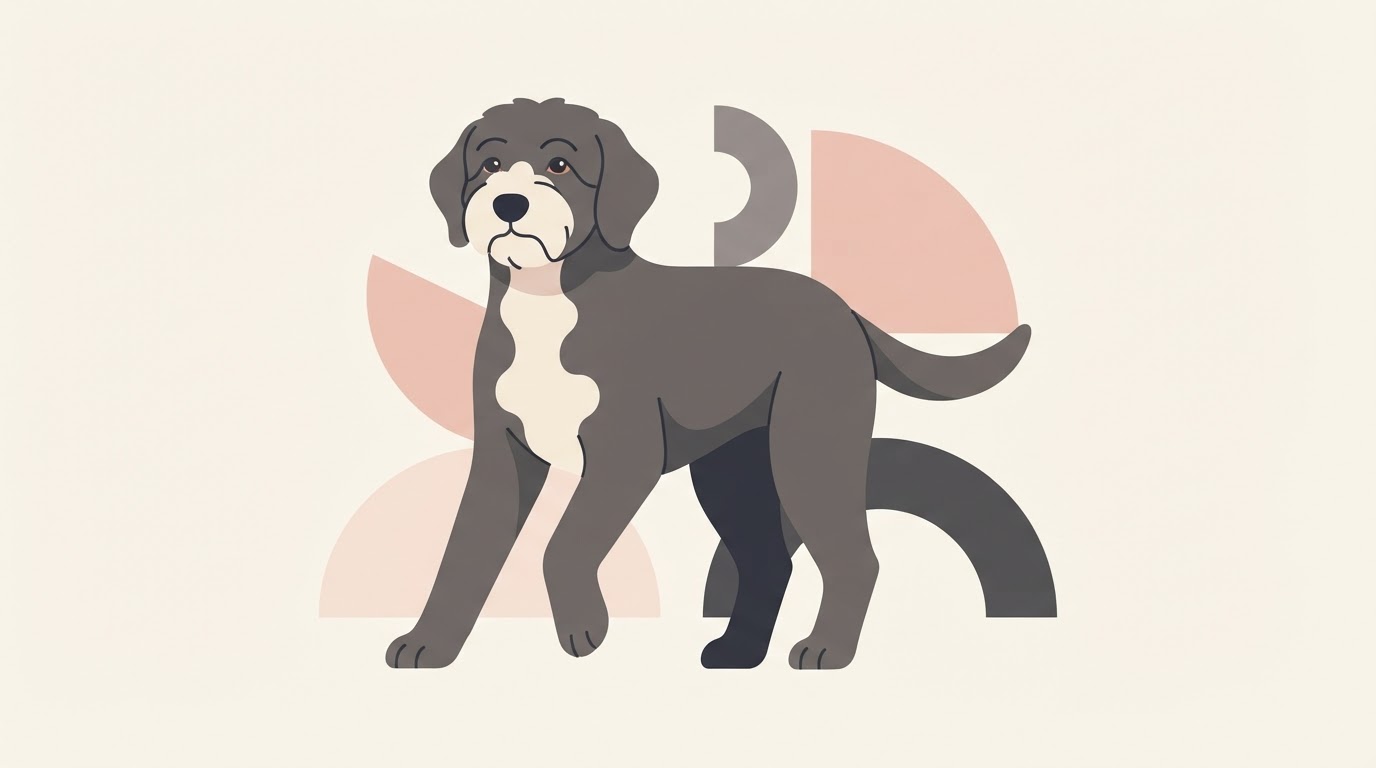
The Barbet is a shaggy, curly-coated French water dog bred for centuries to retrieve waterfowl from marshes and rivers.
At a glance
Quick facts
Size
Medium
Exercise needs
60+ minutes daily, ideally with swimming
Home size suited to
Small to medium home
Grooming frequency
Brush every other day, clip regularly
Coat length
Curly
Sheds
Very little
Lifespan
12-14 years
Town or country
Either, with enough exercise
Garden size needed
Small to medium
Where it comes from
Origins of the Barbet
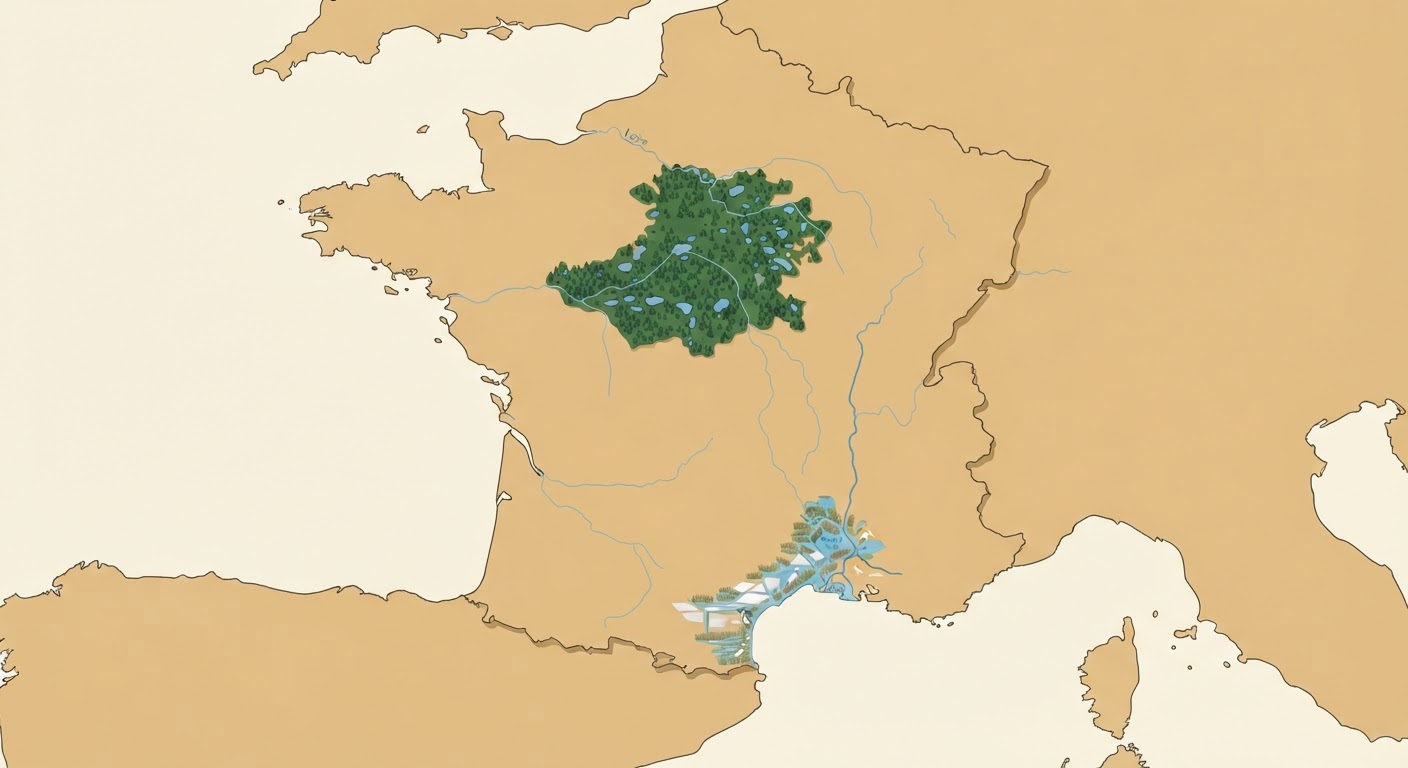
Bred in the wetlands of central and southern France, where hunters needed a dog willing to swim repeatedly into cold water. The dense curly coat evolved to insulate against the wet rather than to look decorative.
- Region
- Sologne and the Camargue
- Climate it was bred for
- Wet marshland and river valleys
- Original job
- Retrieving waterfowl from marsh and river
The long read
About the breed
Its name comes from "barbe", French for beard, a nod to the thick facial furnishings that also gave rise to the word "barbichon", an ancestor name shared with several small companion breeds. Depictions of barbet-type dogs appear in French art and writing back to at least the 16th century, when they worked alongside hunters in the wetlands of regions such as the Camargue and the Sologne, swimming out to fetch downed duck.
Living with a Barbet means living with a genuinely amphibious dog. It loves water at any opportunity and needs regular, vigorous exercise to be settled indoors. Its coat is dense, curly and continues growing, so it needs brushing several times a week and clipping every couple of months to avoid matting, particularly behind the ears and under the legs. It is a sociable, biddable breed that bonds closely with its family and generally gets on well with children and other dogs, though its retrieving instinct means small pets should be introduced carefully.
By the mid-20th century the Barbet had become rare, reduced to a handful of dedicated French breeders, and only careful, documented breeding programmes from the 1980s onward rebuilt numbers. It remains uncommon in Britain, sought mainly by owners wanting a working retriever type with a low-shedding coat, and buyers should expect a wait for a puppy from a health-tested litter.
Living with one
Temperament & needs
Our own ratings, based on the breed standard and how these dogs behave in ordinary homes.
Friendliness
5/5
How openly the Barbet greets people it does not know.
Trainability
4/5
Eager to please and food-motivated.
Energy
4/5
Needs real exercise, ideally with water.
Barking
2/5
Not a natural barker.
Grooming
5/5
Curly coat needs frequent brushing and clipping.
Suits a first-time owner
3/5
How forgiving the Barbet is for someone taking on their first dog.
Sociability
5/5
Very people-focused, dislikes being left alone.
Independence
2/5
Prefers company to solo activities.
Illustrated breed standard
The points of the breed
Hover or tap a numbered point to read what the standard asks for.
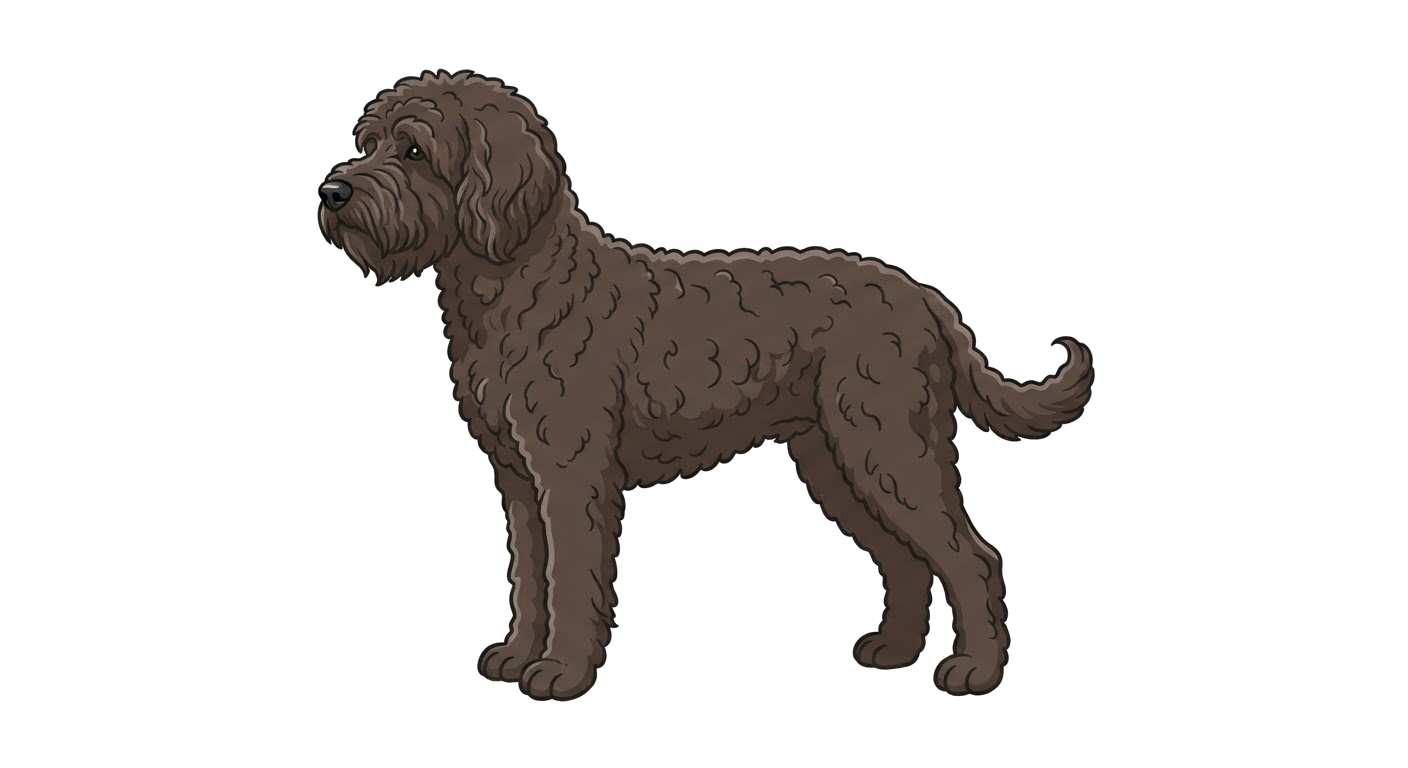
Point 1
Skull
The Barbet's skull is judged on balance rather than size — proportionate to the body, with a clean cheek and a stop typical of the breed. Coarseness or an over-refined head are both faulted.
Colours & patterns
Recognised coats
Which coats the standard accepts — and which are simply popular.
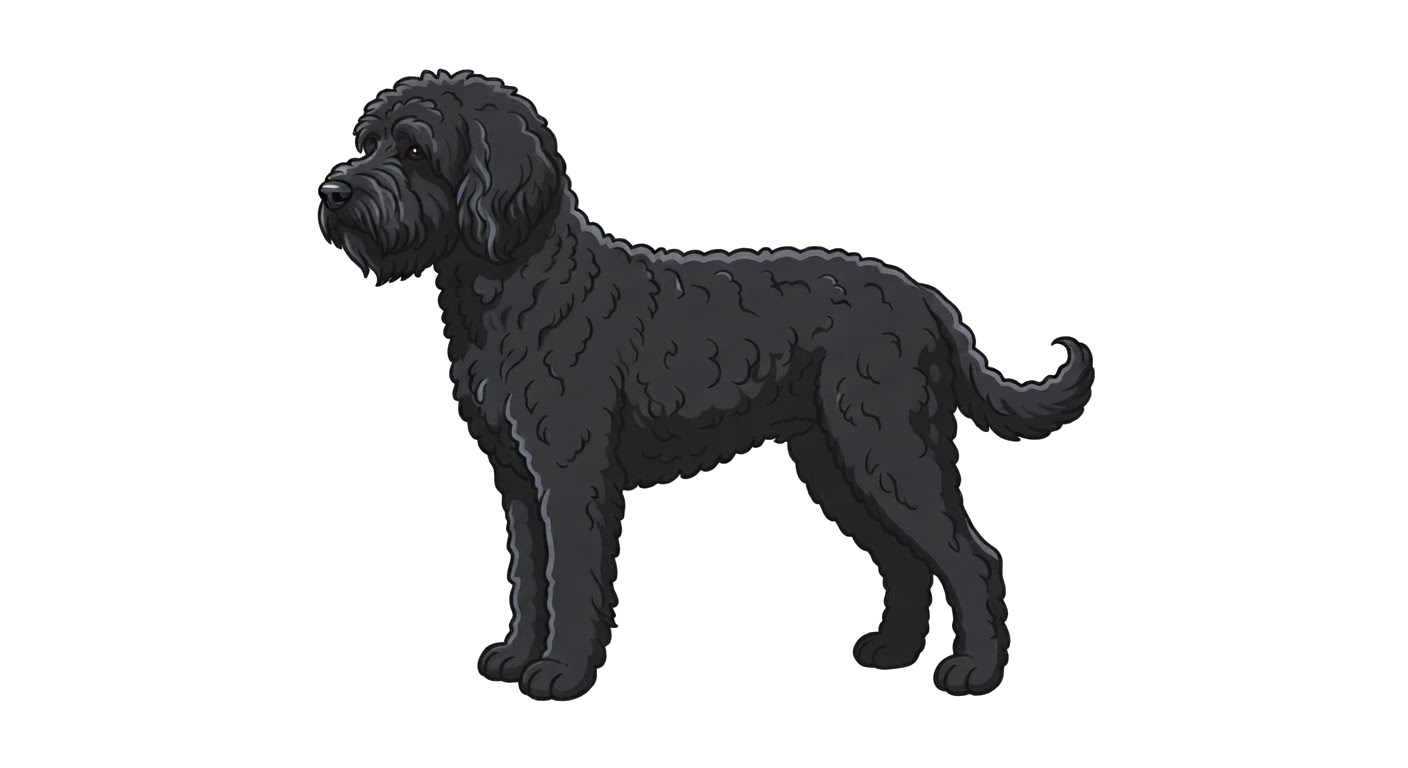
Black
Standard colour
Solid black, one of the classic Barbet colours.
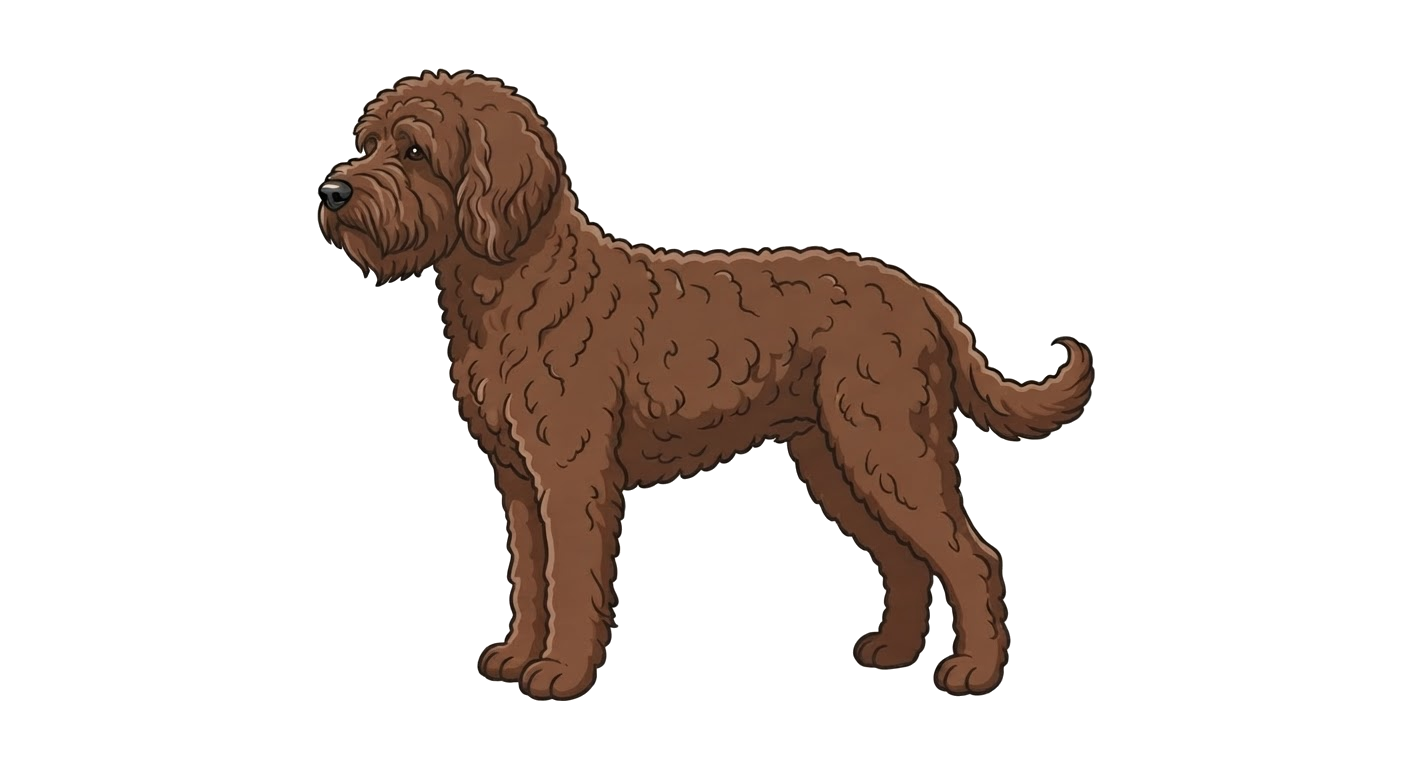
Brown
Standard colour
Rich chocolate brown, accepted in the standard.
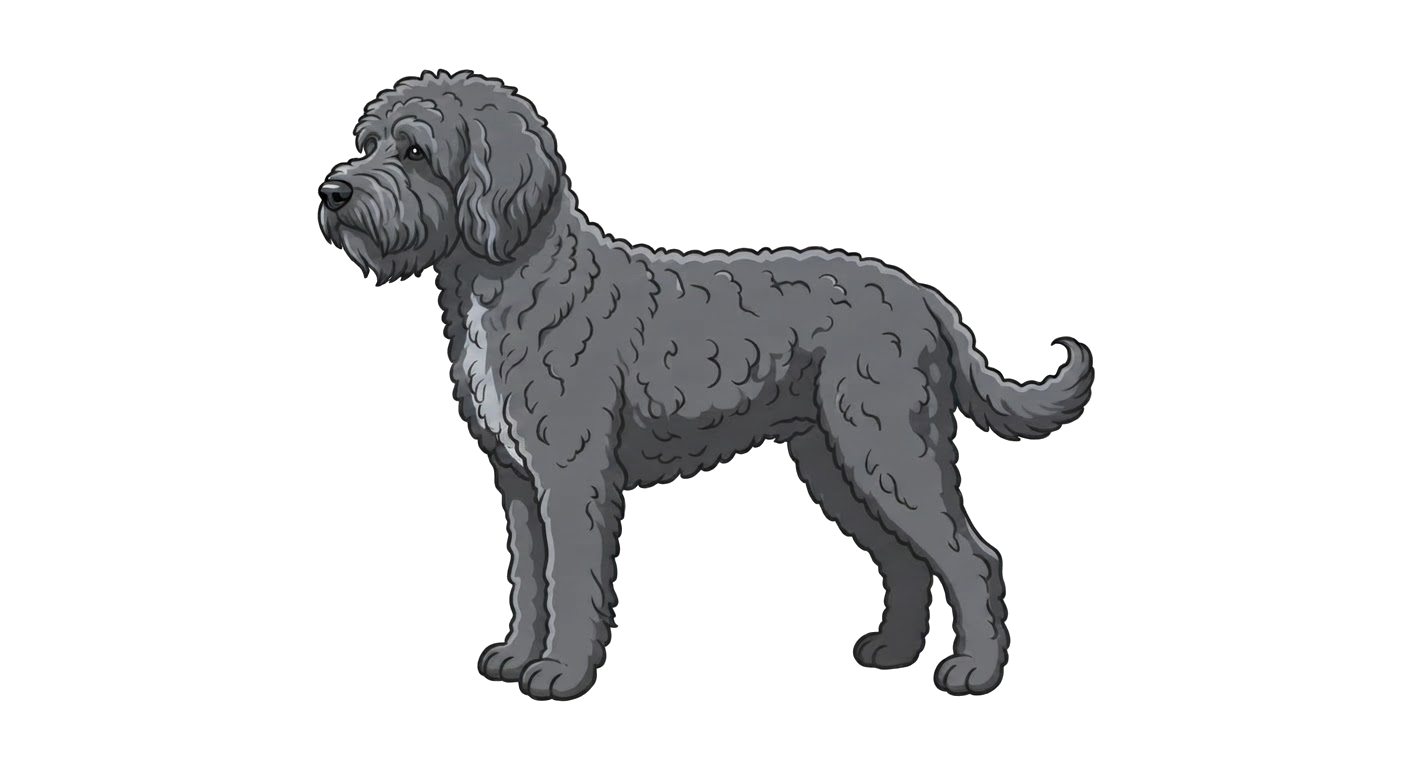
Grey
Standard colour
Softer grey shade, accepted.
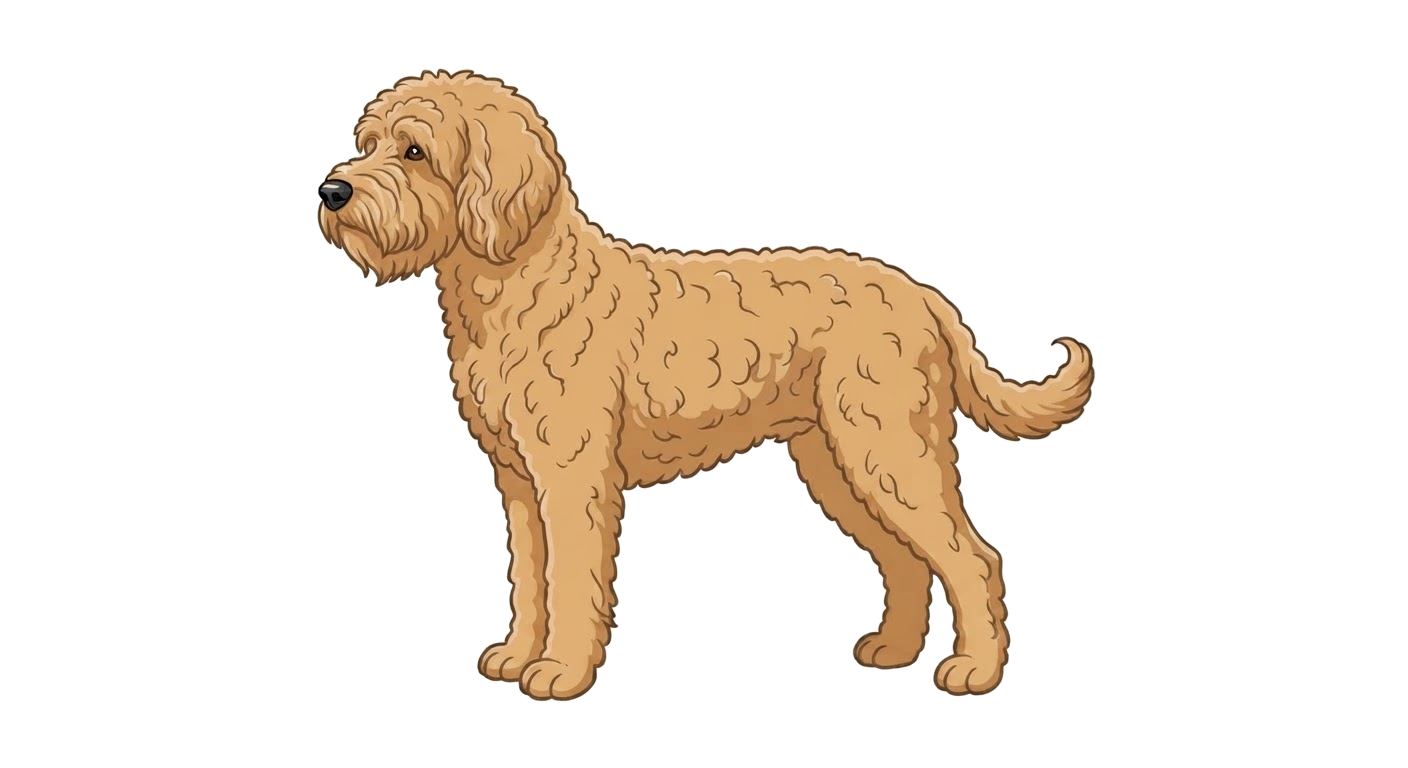
Fawn
Standard colour
Pale fawn, accepted with black or brown pigment.
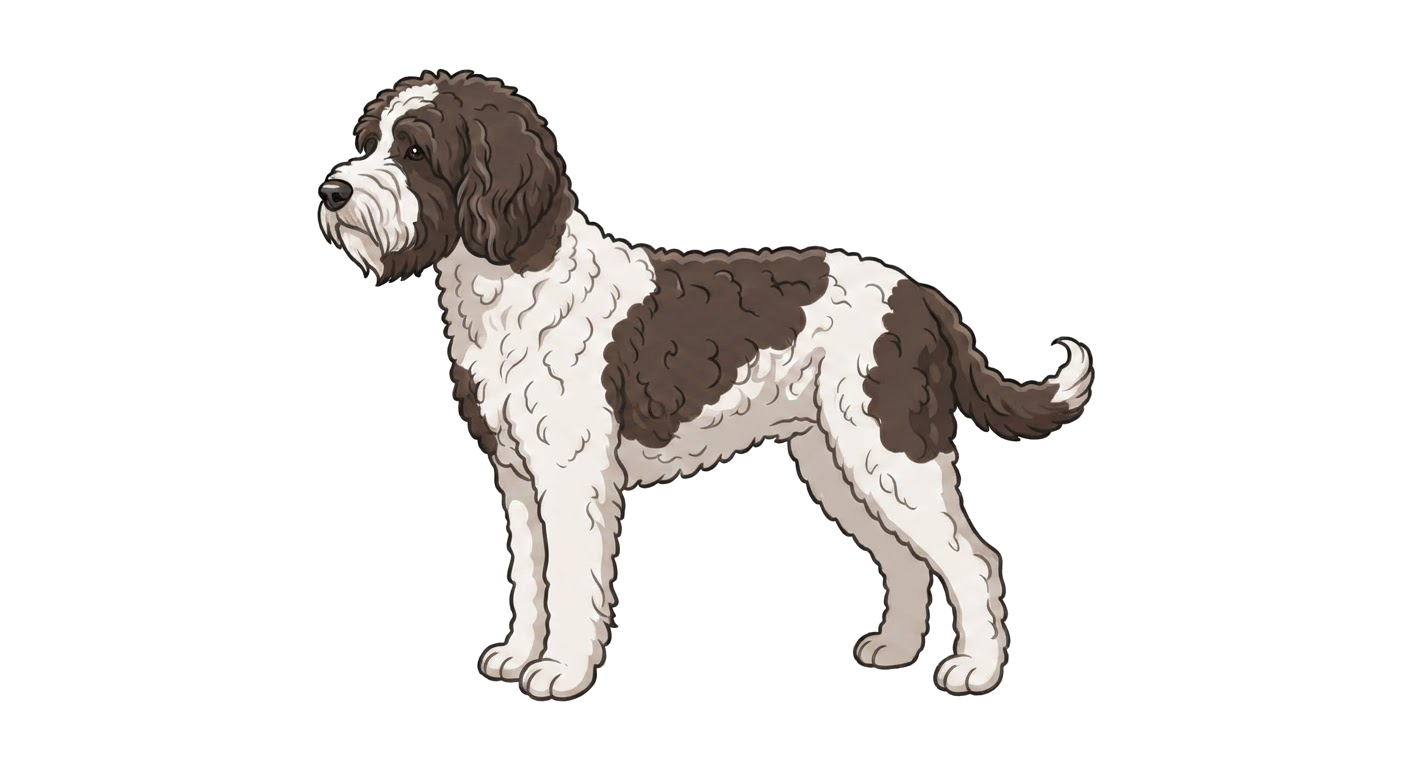
Pied
Standard colour
White with patches of another standard colour.
Timeline
History & development
16th century
Early references
Barbet-type dogs appear in French writing and art as marsh retrievers.
1600s
Ancestor to other breeds
The Barbet is considered a forebear of the Poodle and several small bichon-type breeds.
1950s
Near disappearance
The breed's numbers fell so low that it was close to extinction in France.
1980s
Revival programme
Dedicated French breeders rebuilt the population from a small founding stock.
Reference
Breed standard summary
- body
- Solid and slightly longer than tall.
- coat
- Dense, woolly curls covering the whole body.
- ears
- Long, hanging, covered in curly hair.
- eyes
- Large, oval, dark.
- gait
- Supple and free-moving.
- head
- Broad, rounded skull with a beard and moustache.
- size
- Medium
- tail
- Low set, carried in a curve, not curled.
- colour
- Black, Brown, Grey, Fawn, Pied. Colours outside this list are seen but are not accepted by the kennel clubs.
- temperament
- Typical of the breed: strongest in sociability, grooming, energy. Nervousness or aggression are serious faults in the show ring and in the home.
- general appearance
- Medium, sturdy water dog with a dense curly coat.
Health
What to screen for
Green means little to worry about, amber means ask the breeder for test results, red means manage it actively.
Hip dysplasia
Screen for it
Ask for hip scores on both parents before buying.
Elbow dysplasia
Screen for it
Elbow grading certificates are worth requesting.
Ear infections
Low concern
Floppy, hairy ears trap moisture; dry thoroughly after swimming.
Progressive retinal atrophy
Low concern
DNA testing is available and increasingly used by breeders.
General information only — always speak to your vet about your own dog.
From real owners
Dogs like this
Barbets added by PawPoint members through their pet passports. Share yours to appear here.
Loading the wall…
Made for the Barbet
The book, plus prints, hoodies and mugs using our own Barbet illustration — and one everyday accessory that suits any dog.

The book
Pawpoint: The Complete Dog Breed Book
Every officially recognised breed plus the unofficial ones nobody else documents. 400+ pages, hardback, printed and shipped from the UK.
Own stock — shipped by us
Framed poster
Barbet Framed Poster
Museum-weight print of our Barbet illustration, framed or unframed.
Printed to order
Hoodie
Barbet Hoodie
Heavyweight hoodie carrying the Barbet illustration on the chest.
Printed to order
Mug
Barbet Mug
Ceramic mug with the Barbet illustration wrapped around it.
Printed to order
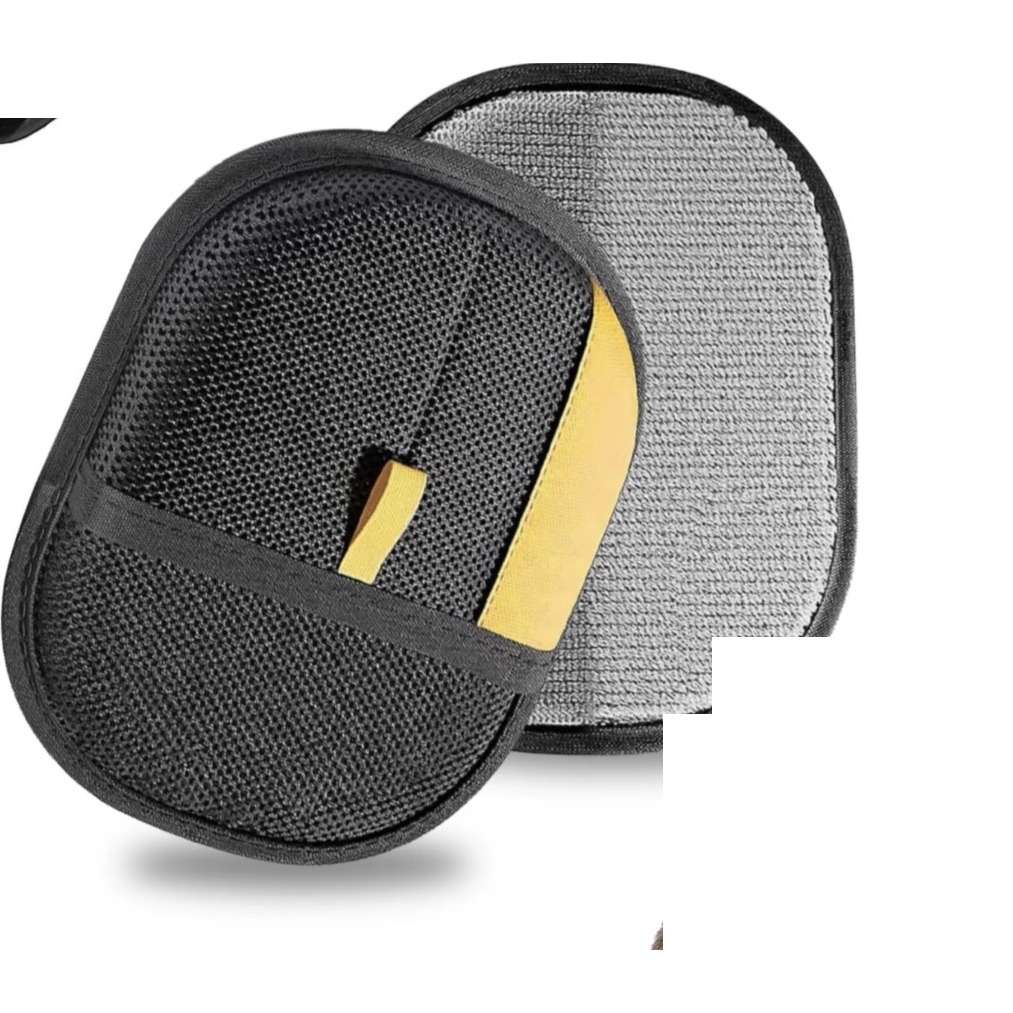
Accessory
Slicker & Deshedding Brush
Self-cleaning slicker head for coats of every length.
Fits any dog
Pawpoint on YouTube
Watch the full Barbet video
Breed deep-dives, history and honest ownership talk. New film every week.
Watch now