
Basset Artésien Normand
bah-SAY ar-tay-zee-EN nor-MAHN
France· Normandy and Artois, Northern France
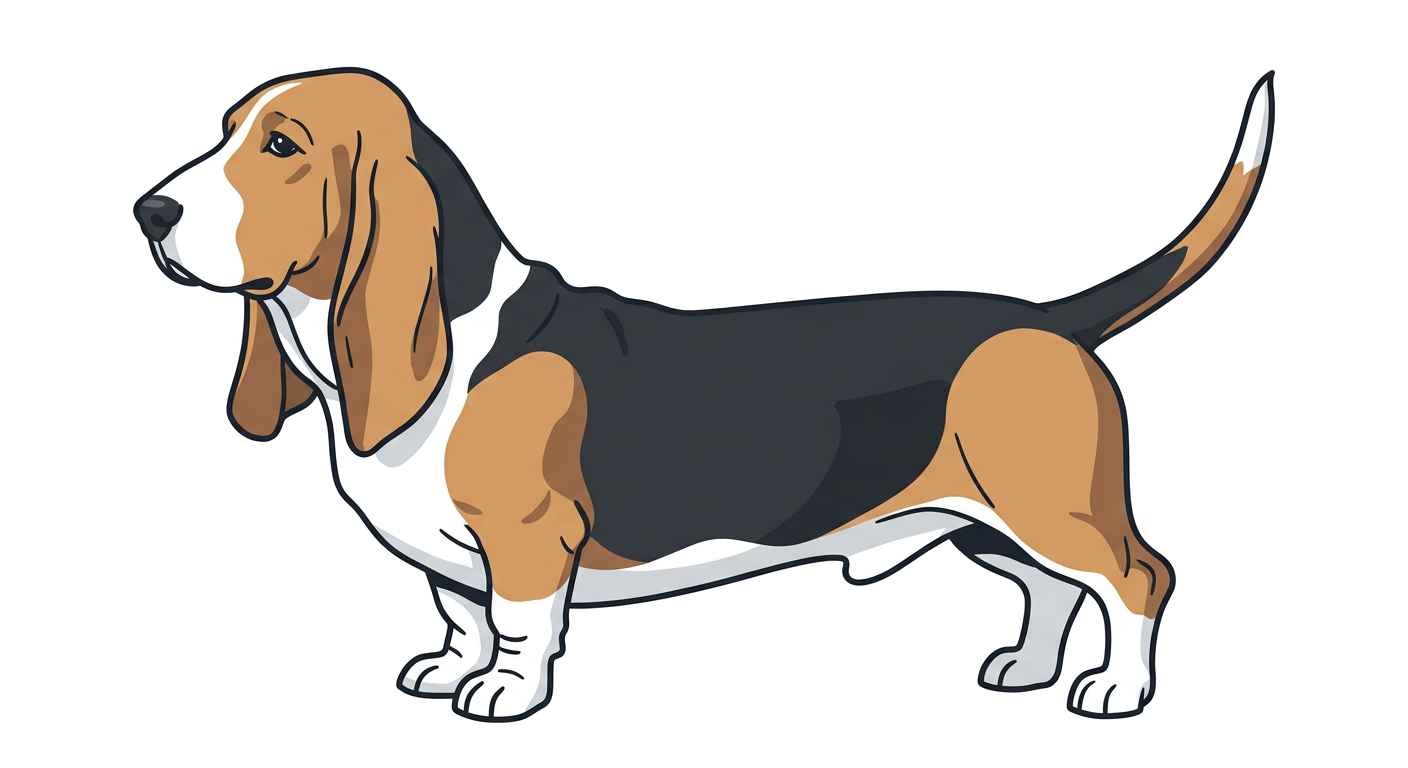
The Basset Artésien Normand is an athletic, low-slung French scenthound bred primarily to hunt small game such as rabbit, hare, and roe deer on foot. Developed in northern France during the late nineteenth century by combining regional basset lines from Artois and Normandy, the breed represents an intentional compromise between the lighter, faster Artois type and the heavier, longer-eared Norman hound. It retains the signature long ears, deep chest, and short limbs of the basset family while maintaining a lighter, more agile frame than its British descendant, the Basset Hound.
At a glance
Quick facts
Size
Medium (low-set)
Exercise needs
Moderate to high
Home size suited to
Adaptable
Grooming frequency
Low
Coat length
Short
Sheds
Moderate
Lifespan
12–15 years
Town or country
Country or semi-rural preferred
Garden size needed
Small to medium (securely fenced)
Where it comes from
Origins of the Basset Artésien Normand
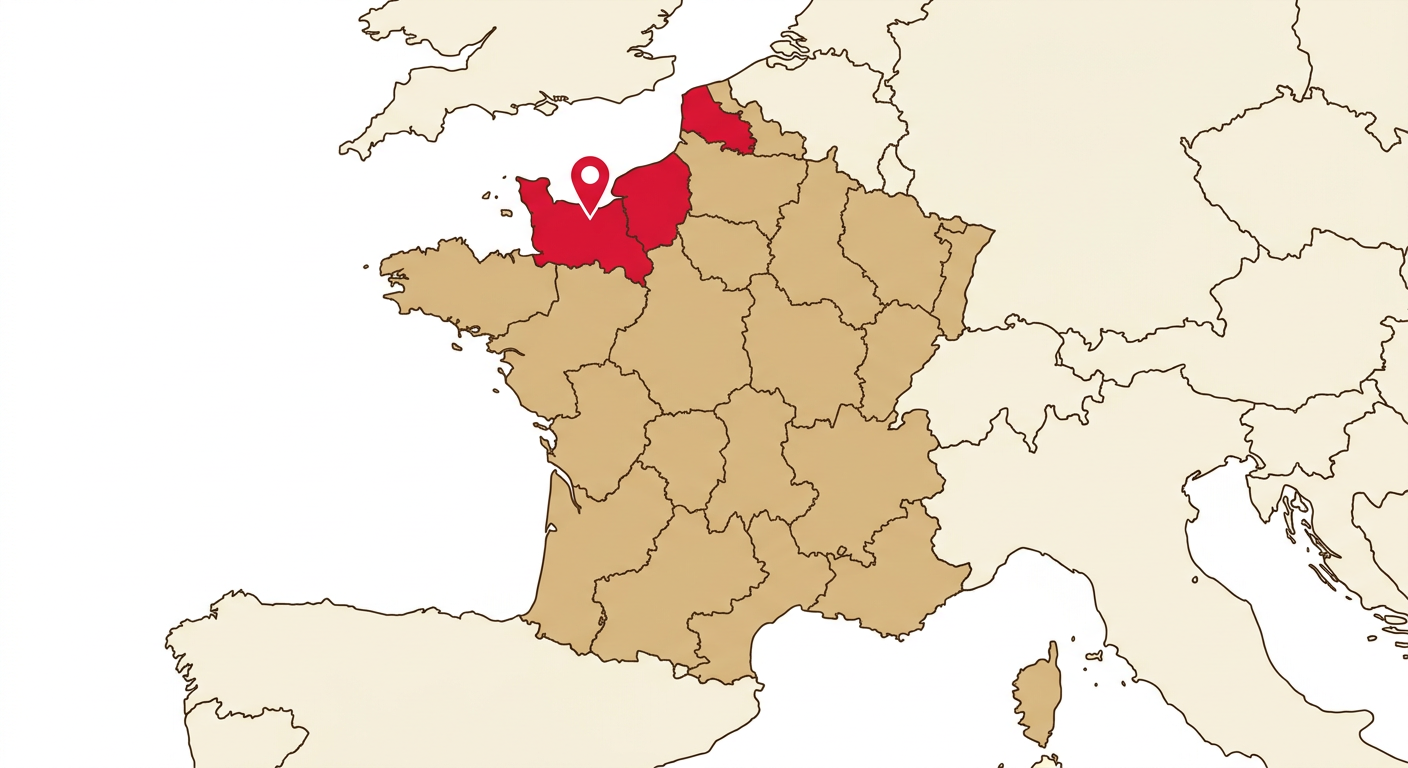
Developed in northern France during the late nineteenth century through the blending of Artois and Normandy basset strains.
- Region
- Normandy and Artois, Northern France
- Climate it was bred for
- Temperate maritime
- Original job
- Hunting small game on foot in dense cover
The long read
About the breed
In the field, the Basset Artésien Normand is an industrious and persevering tracker, known for possessing a deep, resonant voice and an exceptionally keen sense of smell. It is capable of negotiating thick undergrowth and thorny cover that larger hounds cannot easily penetrate. While historically worked in small packs or individually, the breed exhibits a calm, amicable demeanor towards other hounds and humans alike, making it an agreeable companion when not actively hunting.
Today, the breed remains relatively rare outside continental Europe, where it is still kept both as a traditional working hound and as an affectionate family pet. It requires dedicated scent work or regular outdoor exercise to satisfy its tracking instincts. Prospective owners should anticipate a hound that is gentle and placid indoors, but whose independent working heritage can manifest as selective deafness when following an intriguing scent line.
Living with one
Temperament & needs
Our own ratings, based on the breed standard and how these dogs behave in ordinary homes.
Energy
3/5
Moderate energy; daily walks and play.
Barking
3/5
Will give voice when working or alarmed.
Grooming
1/5
Wash-and-go coat.
Sociability
4/5
Friendly and outgoing.
Independence
4/5
Independent thinker; tolerates being left to it.
Trainability
3/5
Capable, with consistent fair handling.
Illustrated breed standard
The points of the breed
Hover or tap a numbered point to read what the standard asks for.
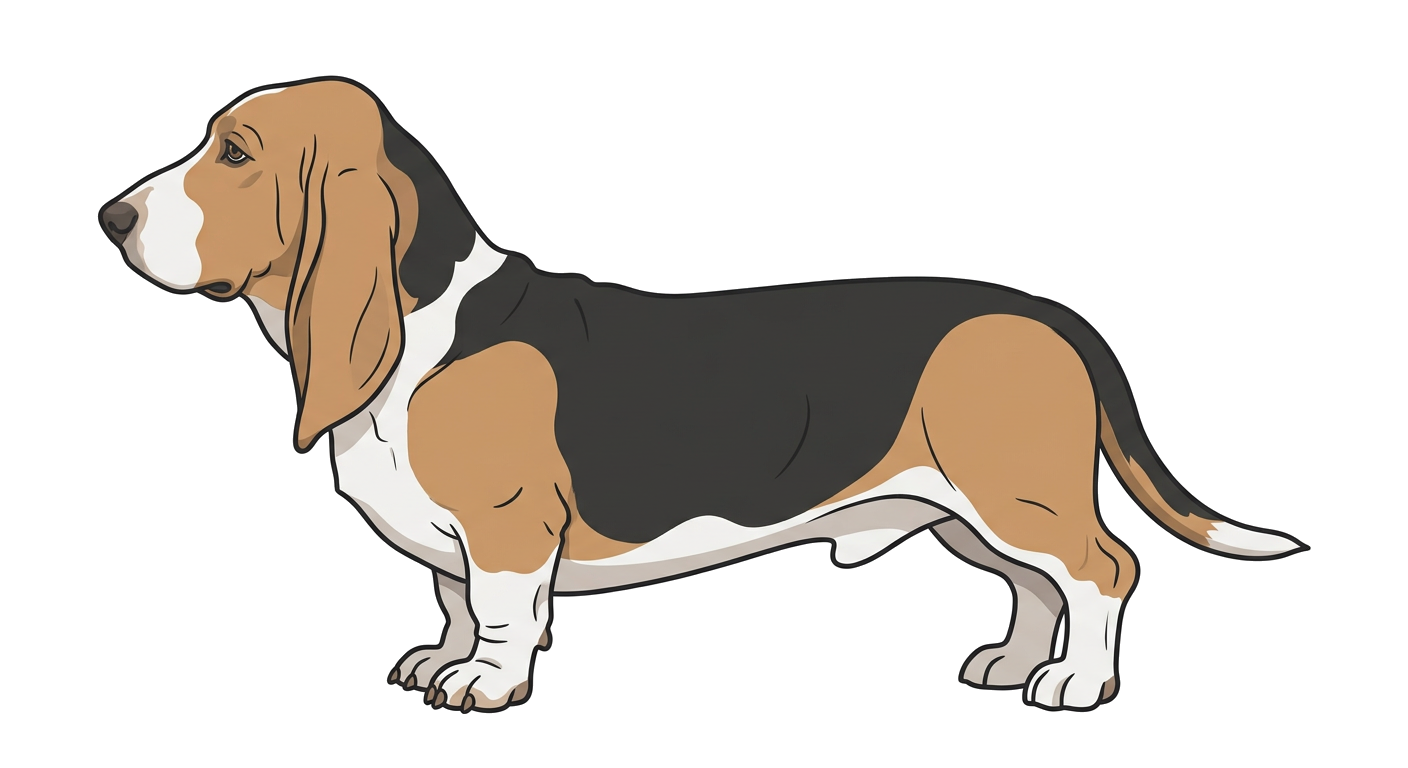
Point 1
Head
Dome-shaped and of medium width, lean and dry, with finely chiselled skin and moderate stop.
Colours & patterns
Recognised coats
Which coats the standard accepts — and which are simply popular.
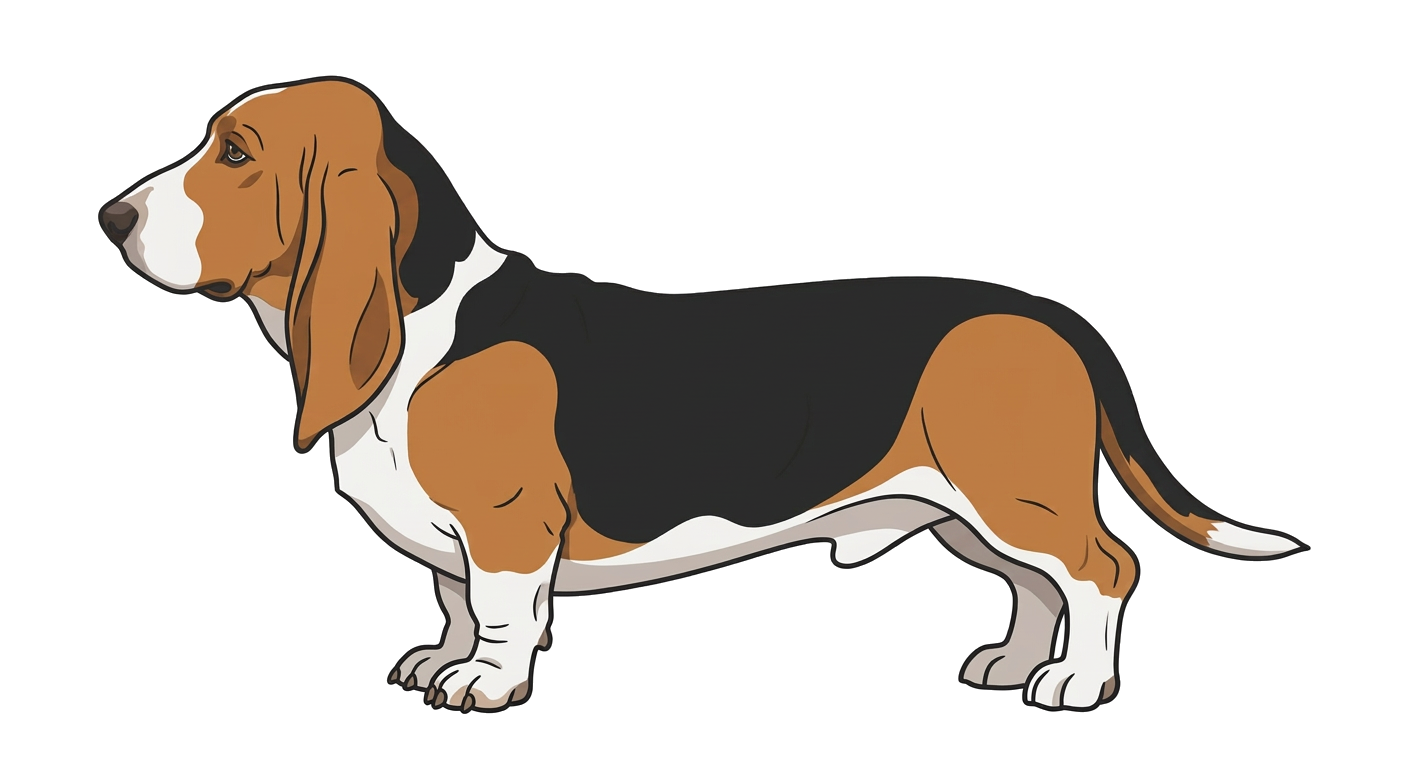
Tricolour (Fawn, Black & White)
Standard colour
Classic coat pattern featuring a black blanket or mantle, rich fawn head and points, and white markings.
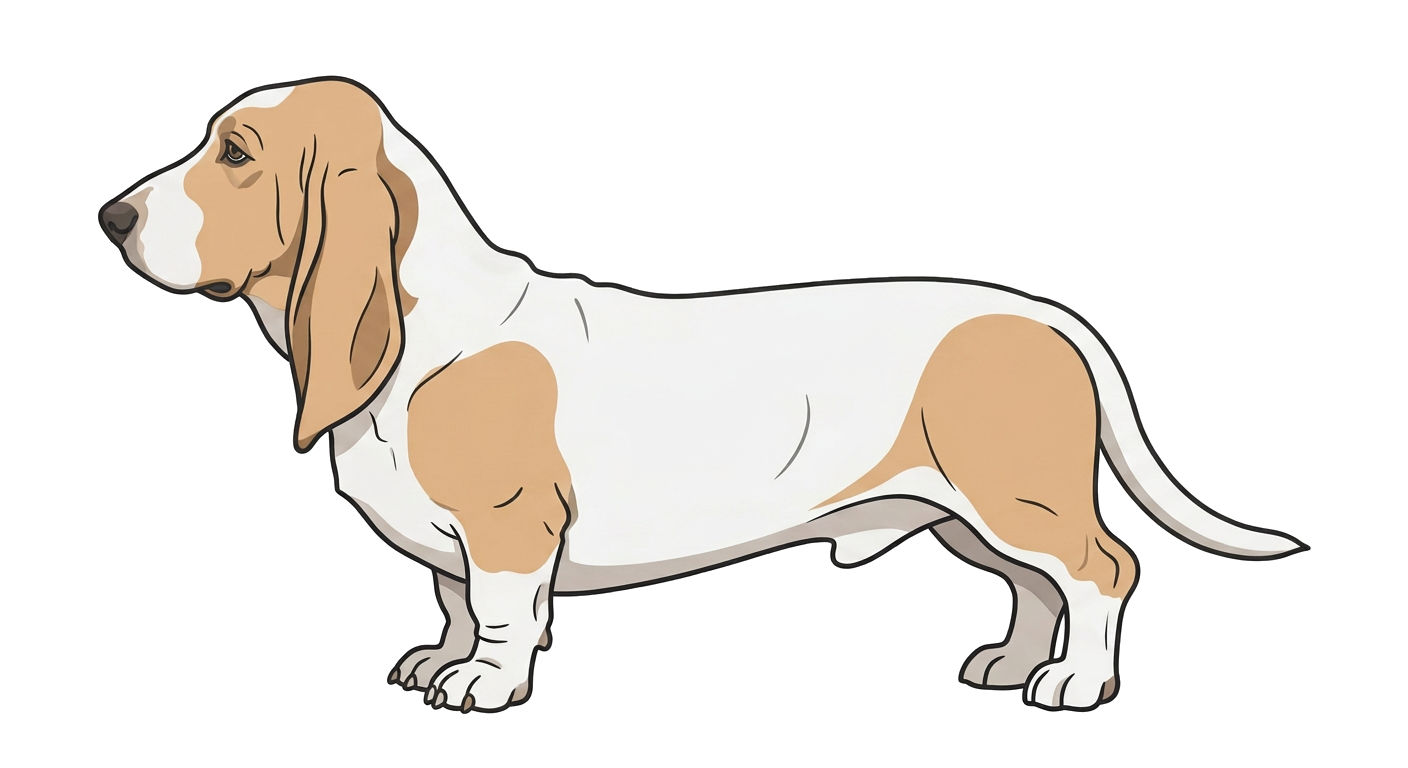
Bicolour (Fawn & White)
Standard colour
Clear fawn patches distributed across a predominantly white ground, without black shading.
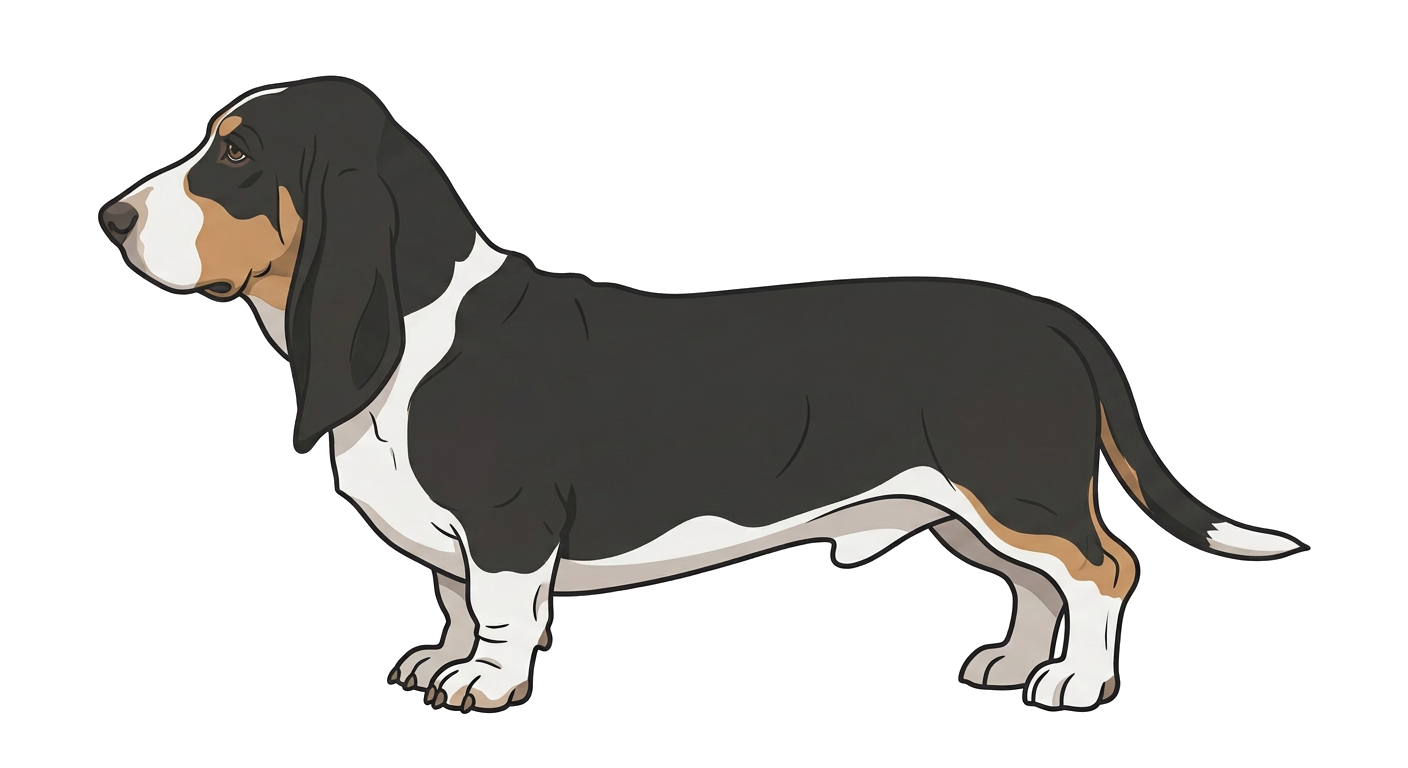
Tricolour with Black Mantle
Standard colour
Variation with a solid black saddle or mantle extending across the back and over the flanks.
Timeline
History & development
1870
Early Line Breeding
Systematic breeding of short-legged hounds begins in northern France, led by Comte Jean-Emmanuel Le Couteulx de Canteleu working with Artois strains and Louis Lane developing Normandy lines.
1898
First Combined Standard
An early standard is drafted to reconcile the distinct characteristics of the heavier Normandy type and the lighter, straighter-limbed Artois hound.
1910
Breed Club Founded
The Club du Basset Artésien Normand is established in France to oversee and unify the breeding programmes of the two regional varieties.
1924
Consolidation of Type
Breed leadership formally unifies the lines under a single name and standard, cementing the lighter, functional hunting conformation seen today.
1963
FCI Recognition
The Fédération Cynologique Internationale officially publishes Standard No. 34, cementing international recognition for the Basset Artésien Normand.
Reference
Breed standard summary
- body
- Back broad and well-supported; loin slightly arched; chest broad, deep, with a well-developed sternum extending down between the forelegs.
- coat
- Short, smooth, and tight-fitting, dense enough to offer weather protection without being coarse.
- ears
- Set on very low, supple, fine, curling inwards, and reaching at least to the tip of the nose when drawn forward.
- eyes
- Large, dark, oval in shape, showing a calm and serious expression, with tight lower lids showing minimal haw.
- gait
- Regular, ground-covering, and effortless, showing good forward reach and balanced drive despite short limbs.
- head
- Dome-shaped and of medium width, lean and dry, with finely chiselled skin and moderate stop.
- size
- Height at the withers is typically 30 to 36 cm for both dogs and bitches, with a tolerance of 1 cm either way.
- tail
- Rather long, strong at the root and tapering, carried saber-fashion when active without curling over the back.
- colour
- Tricolour (fawn with black blanket and white) or bicolour (fawn and white), with clear markings.
- muzzle
- Approximately equal in length to the skull, straight or slightly arched, with a large, black nose and well-fitting upper lips.
- temperament
- Courageous and tenacious when hunting; gentle, highly affectionate, and steady-tempered in the home.
- general appearance
- A small, long-bodied, short-legged hound of notable substance and nobility, displaying strength and agility without excessive heaviness.
Health
What to screen for
Green means little to worry about, amber means ask the breeder for test results, red means manage it actively.
Intervertebral Disc Disease (IVDD)
Screen for it
Elongated spinal structure increases mechanical strain on discs; weight control and ramp access help mitigate risk.
Otitis Externa
Screen for it
Long, folded drop ears limit airflow, making regular ear cleaning essential to prevent bacterial and yeast infections.
Hip and Elbow Dysplasia
Watch closely
Occurs occasionally despite the breed's moderate weight; pre-breeding screening remains advisable.
Obesity
Watch closely
Excess weight places significant additional strain on the spine and dwarf limbs, requiring managed feeding.
General information only — always speak to your vet about your own dog.
From real owners
Dogs like this
Basset Artésien Normands added by PawPoint members through their pet passports. Share yours to appear here.
Loading the wall…
Made for the Basset Artésien Normand
The book, plus prints, hoodies and mugs using our own Basset Artésien Normand illustration — and one everyday accessory that suits any dog.

The book
Pawpoint: The Complete Dog Breed Book
Every officially recognised breed plus the unofficial ones nobody else documents. 400+ pages, hardback, printed and shipped from the UK.
Own stock — shipped by us
Framed poster
Basset Artésien Normand Framed Poster
Museum-weight print of our Basset Artésien Normand illustration, framed or unframed.
Printed to order
Hoodie
Basset Artésien Normand Hoodie
Heavyweight hoodie carrying the Basset Artésien Normand illustration on the chest.
Printed to order
Mug
Basset Artésien Normand Mug
Ceramic mug with the Basset Artésien Normand illustration wrapped around it.
Printed to order

Accessory
Stainless Dog Bowl
Weighted, non-slip base. Dishwasher safe.
Fits any dog

Pawpoint on YouTube
Watch the full Basset Artésien Normand video
Breed deep-dives, history and honest ownership talk. New film every week.
Watch now