
Basset Hound
BASS-it HOWND
France· Normandy and Artois
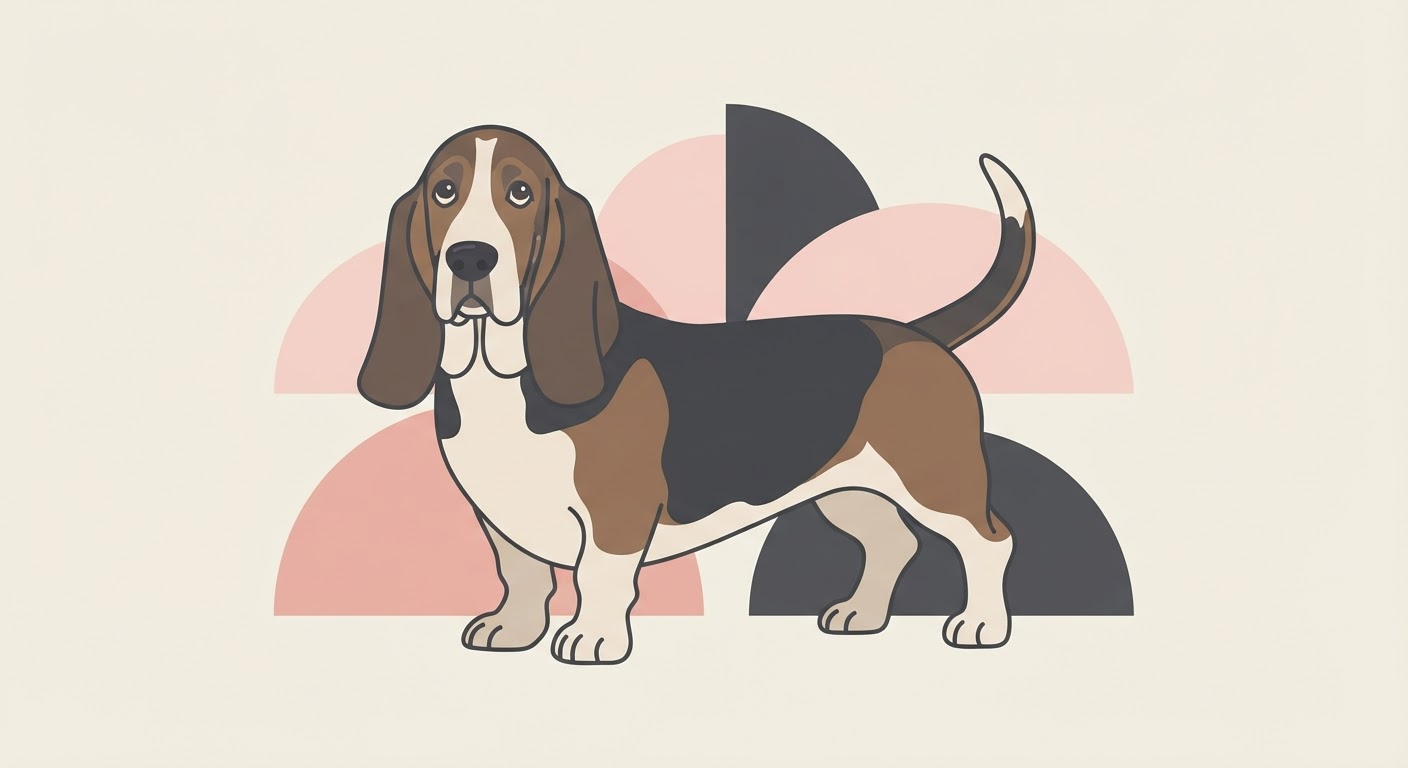
The Basset Hound is a long-bodied, short-legged French scent hound bred to track hare and rabbit at a walking pace hunters could follow on foot.
At a glance
Quick facts
Size
Medium
Exercise needs
30-45 minutes daily
Home size suited to
Small to medium home
Grooming frequency
Weekly brush
Coat length
Short
Sheds
Yes, heavily when moulting
Lifespan
10-12 years
Town or country
Happiest in the country
Garden size needed
Small to medium
Where it comes from
Origins of the Basset Hound
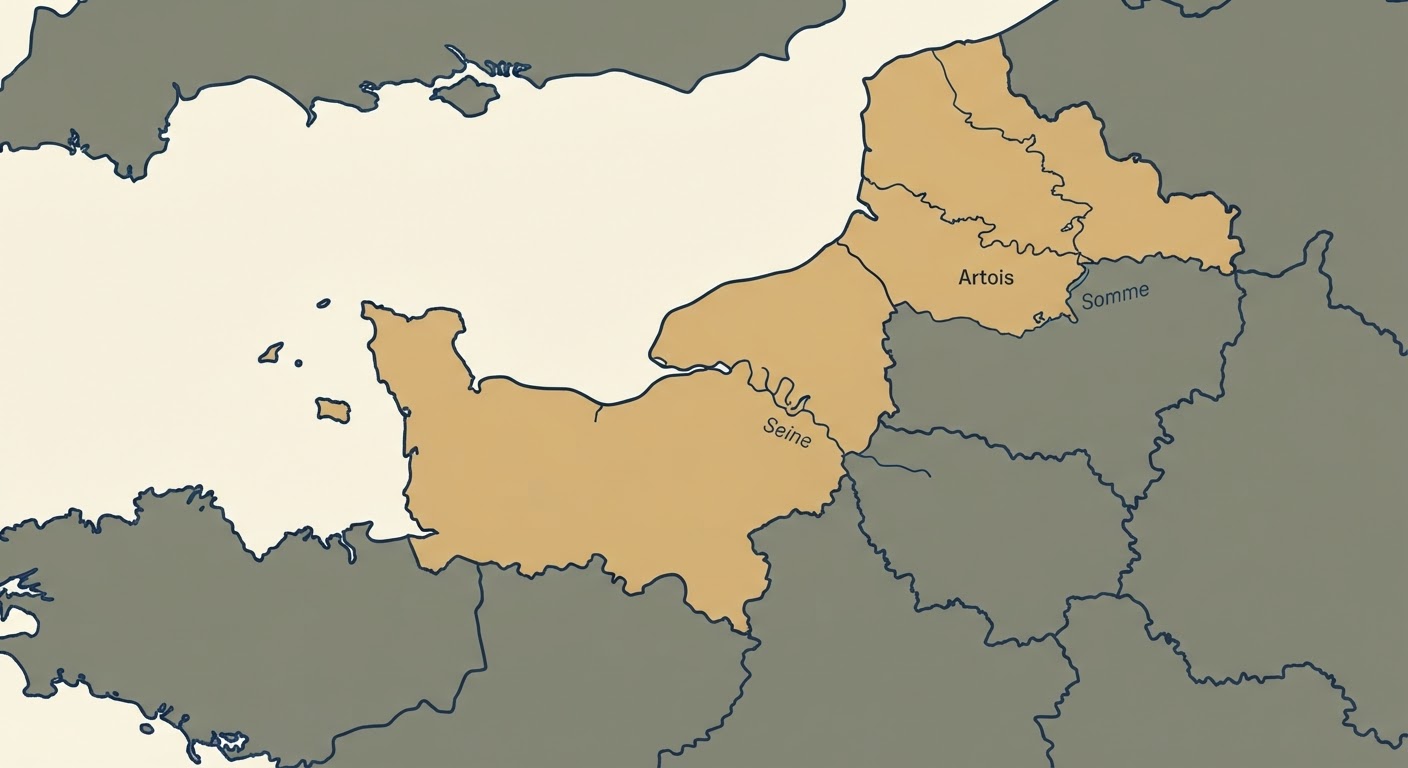
Bred in French monasteries and hunting estates where a slow, methodical hound was preferred over a fast one, so hunters on foot could keep pace. Its short legs and heavy bone came from deliberate selection, not accident.
- Region
- Normandy and Artois
- Climate it was bred for
- Temperate farmland
- Original job
- Tracking hare and rabbit on foot
The long read
About the breed
It developed in France from the same stock as the Bloodhound, with monks and hunters selecting for shorter legs so the dog could work dense cover slowly and thoroughly rather than chase game down. The name comes from the French "bas", meaning low. It arrived in England in the 1860s and became popular with landed hunting families before crossing over into companion life.
Living with a Basset Hound means living with a placid, affectionate, food-driven dog that will happily sleep most of the day but follows scent with total commitment once outdoors. Its long ears and loose skin need regular cleaning to avoid infection, and its heavy body puts real strain on joints if it is allowed to become overweight, which happens easily given its appetite. It gets on well with children and other dogs, and its calm nature suits households that want a low-energy companion rather than an athletic one.
Today it remains a popular family pet in Britain and the United States, prized for its temperament and distinctive look, though prospective owners should be prepared for drool, snoring and a stubborn refusal to be hurried on a walk.
Living with one
Temperament & needs
Our own ratings, based on the breed standard and how these dogs behave in ordinary homes.
Friendliness
5/5
How openly the Basset Hound greets people it does not know.
Trainability
2/5
Stubborn once scent is involved.
Energy
2/5
Low energy, content with modest walks.
Barking
3/5
Deep bay, used sparingly.
Grooming
2/5
Short coat but ears need regular cleaning.
Suits a first-time owner
3/5
How forgiving the Basset Hound is for someone taking on their first dog.
Sociability
5/5
Gentle and friendly with everyone.
Independence
4/5
Follows its nose regardless of calls.
Illustrated breed standard
The points of the breed
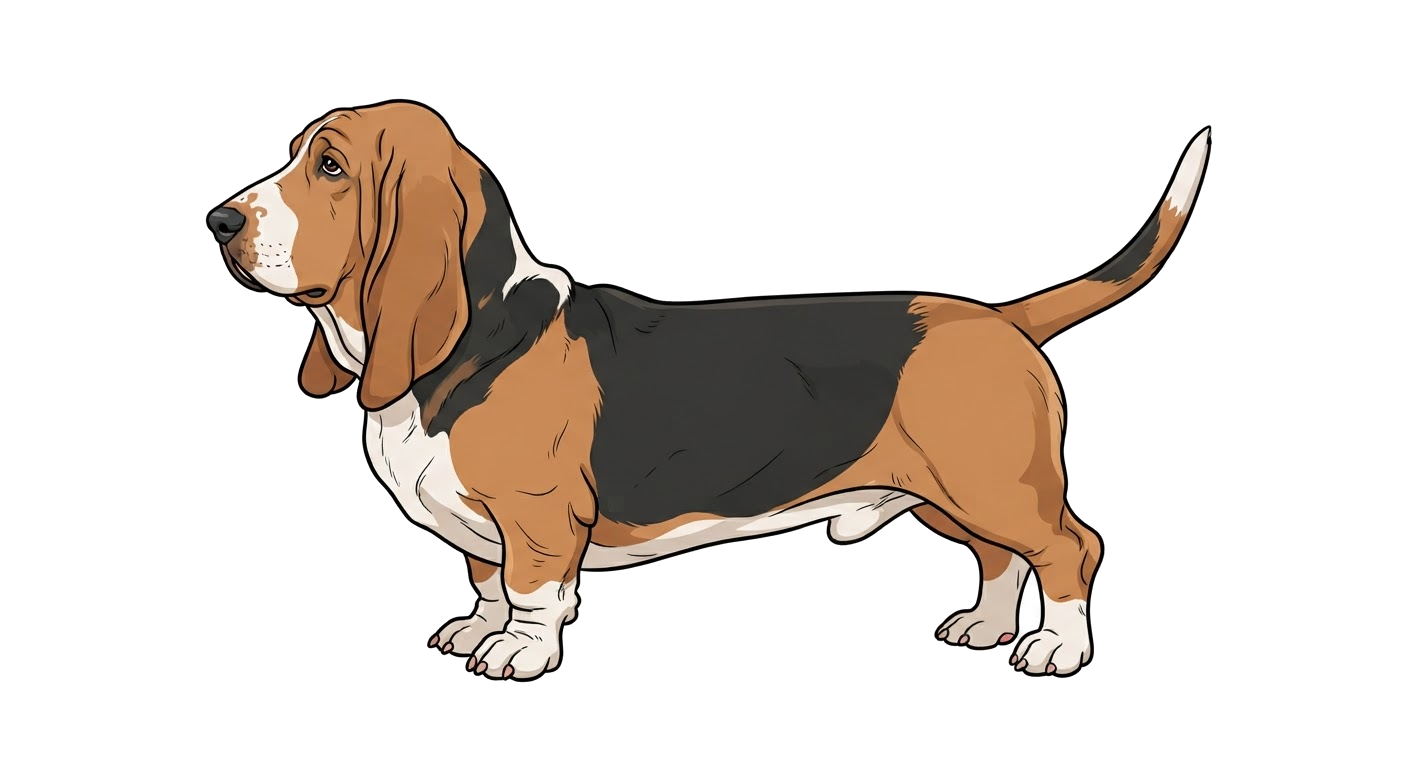
Hover or tap a numbered point to read what the standard asks for.
Point 1
Skull
The Basset Hound's skull is judged on balance rather than size — proportionate to the body, with a clean cheek and a stop typical of the breed. Coarseness or an over-refined head are both faulted.
Colours & patterns
Recognised coats
Which coats the standard accepts — and which are simply popular.
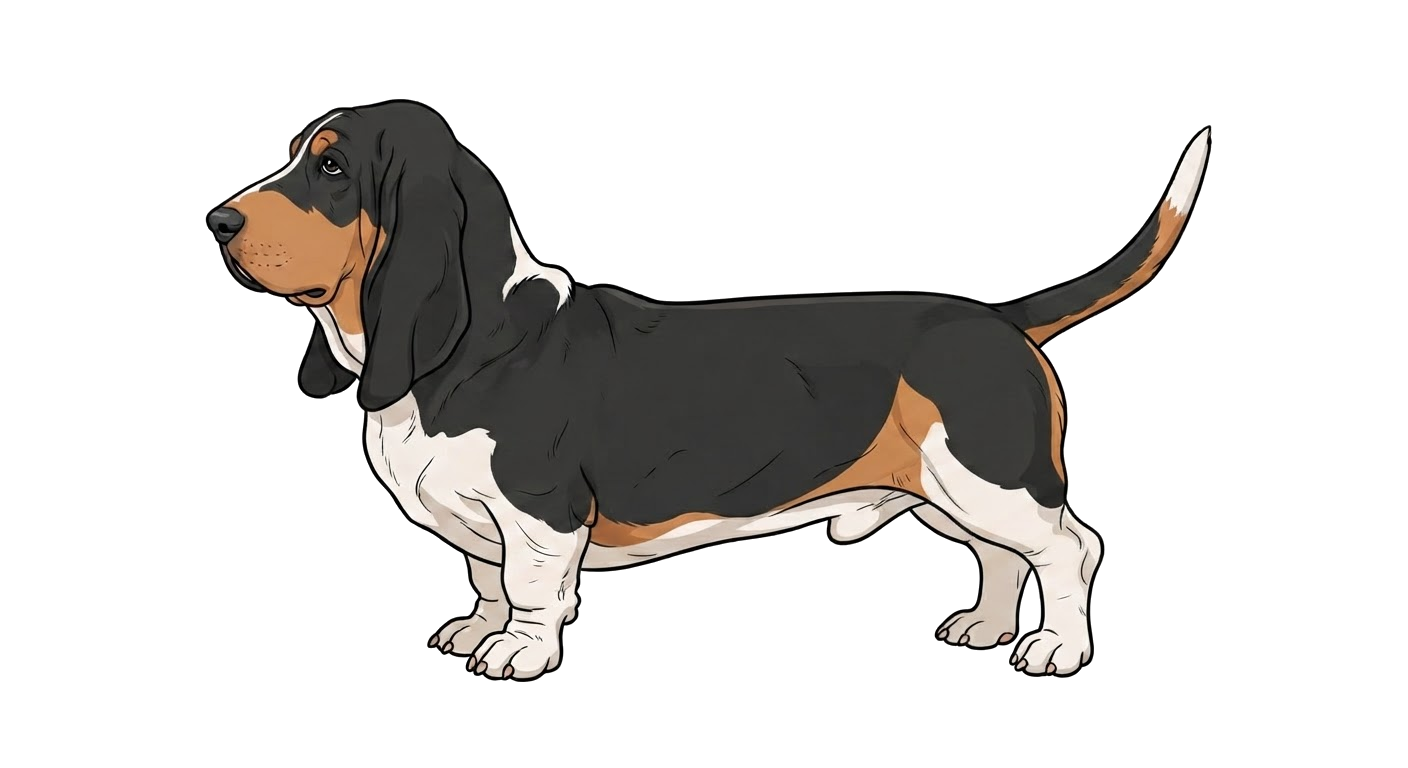
Tricolour
Standard colour
Black, white and tan, the most common colour.
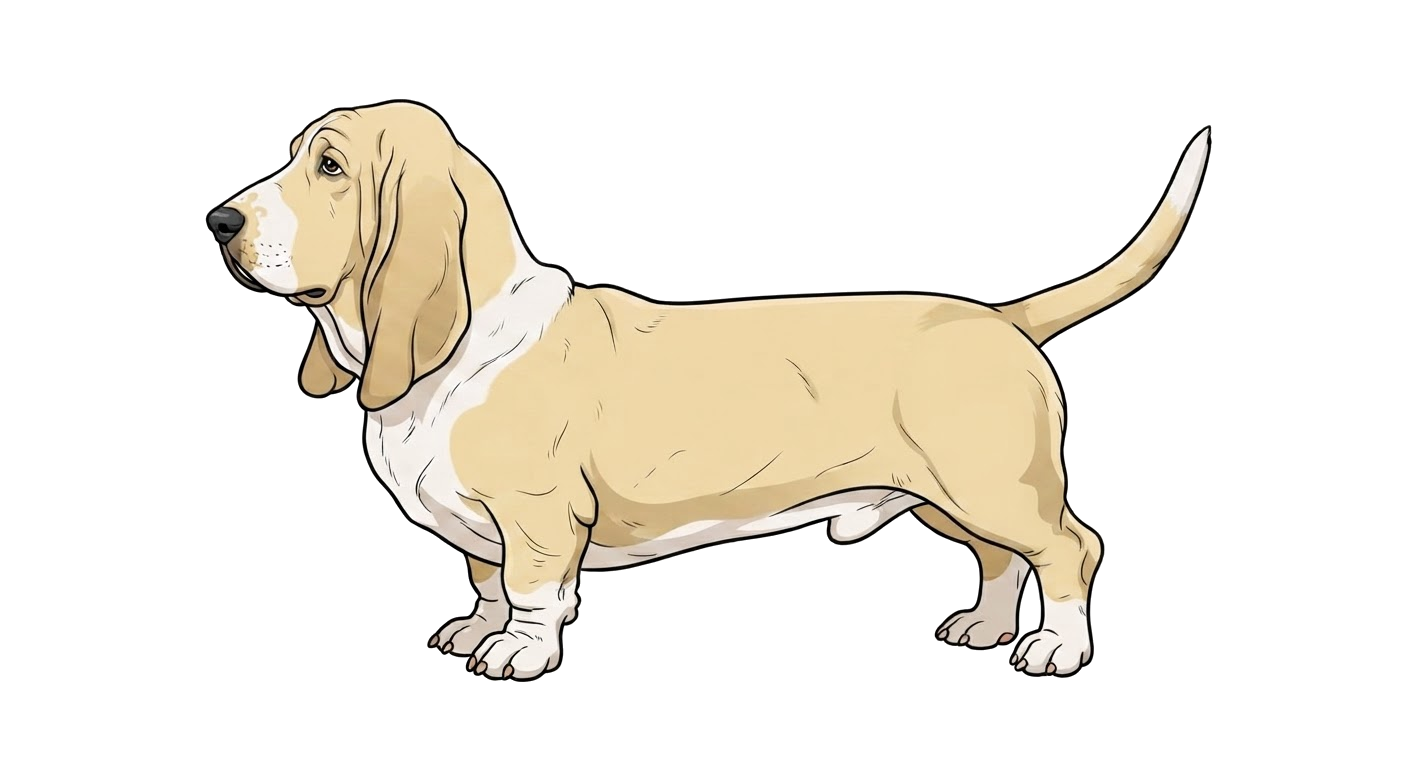
Lemon and White
Standard colour
Pale lemon patches on white.
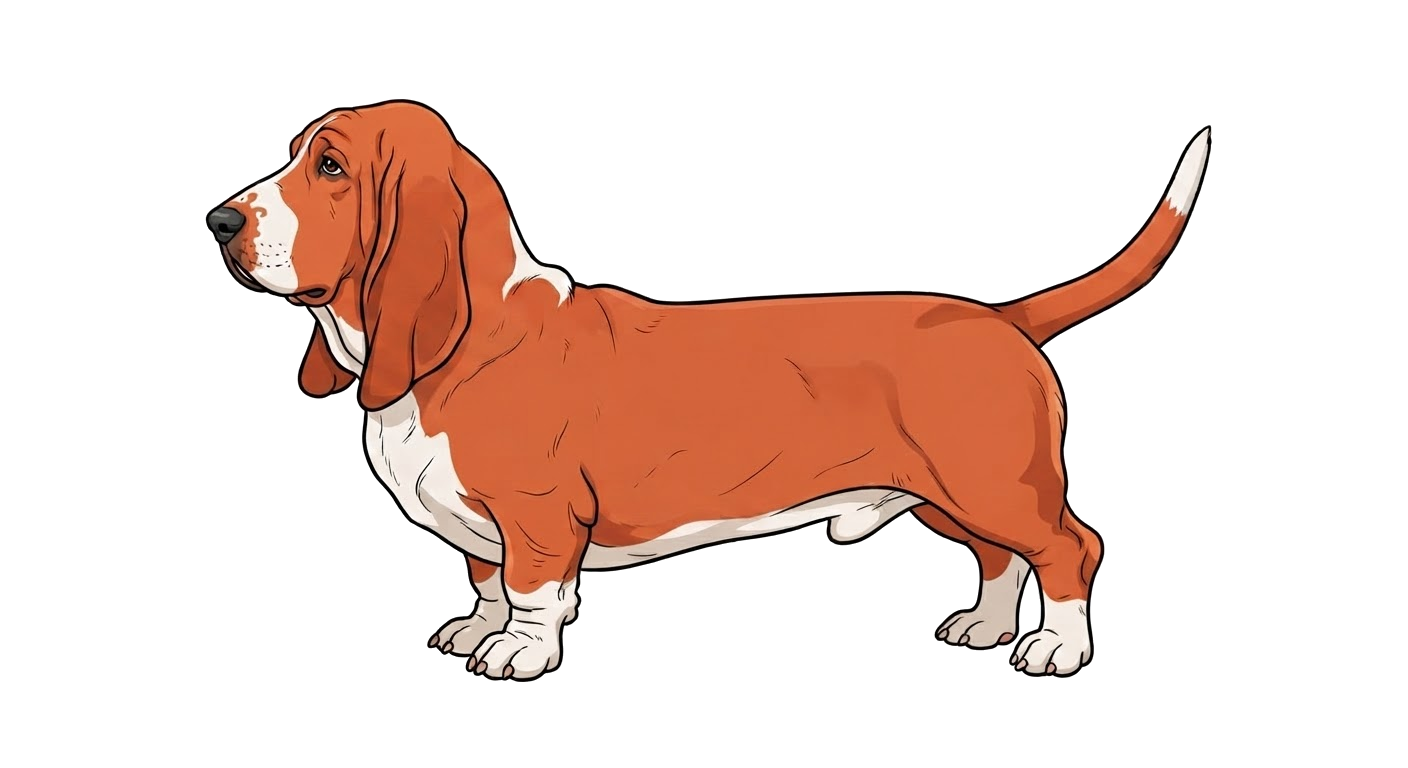
Red and White
Standard colour
Rich red patches on white.
Timeline
History & development
1500s
French monastic origins
Developed in French abbeys alongside the ancestors of the Bloodhound.
1863
First shown in Paris
The breed appeared at a Paris dog show, drawing wider attention.
1866
Arrival in England
Imported dogs established the breed with English hunting families.
1935
AKC recognition
Recognised in the United States, cementing its popularity abroad.
1950s onward
The breed today
Kennel club registrations settled into a steady pattern and the Basset Hound moved from a working specialist to a family companion, with breed clubs in the UK and abroad now focused on health testing and keeping true type alive.
Reference
Breed standard summary
- body
- Long and deep-chested.
- coat
- Short, smooth and close.
- ears
- Very long, low set, velvety.
- eyes
- Diamond-shaped, showing some haw.
- gait
- Deliberate, rolling stride.
- head
- Domed skull with pronounced occiput.
- size
- Medium
- tail
- Long, carried sabre-like.
- colour
- Tricolour, Lemon and White, Red and White. Colours outside this list are seen but are not accepted by the kennel clubs.
- temperament
- Typical of the breed: strongest in sociability, independence, barking. Nervousness or aggression are serious faults in the show ring and in the home.
- general appearance
- Long, low, heavy-boned hound with loose skin.
Health
What to screen for
Green means little to worry about, amber means ask the breeder for test results, red means manage it actively.
Hip dysplasia
Screen for it
Ask for hip scores given the breed's heavy frame.
Ear infections
Low concern
Long, low-set ears need weekly checking and cleaning.
Obesity
Watch closely
Very prone to weight gain; measure food carefully.
Intervertebral disc disease
Watch closely
Long back is vulnerable to disc injury; avoid stairs and jumping.
General information only — always speak to your vet about your own dog.
From real owners
Dogs like this
Basset Hounds added by PawPoint members through their pet passports. Share yours to appear here.
Loading the wall…
Made for the Basset Hound
The book, plus prints, hoodies and mugs using our own Basset Hound illustration — and one everyday accessory that suits any dog.

The book
Pawpoint: The Complete Dog Breed Book
Every officially recognised breed plus the unofficial ones nobody else documents. 400+ pages, hardback, printed and shipped from the UK.
Own stock — shipped by us
Framed poster
Basset Hound Framed Poster
Museum-weight print of our Basset Hound illustration, framed or unframed.
Printed to order
Hoodie
Basset Hound Hoodie
Heavyweight hoodie carrying the Basset Hound illustration on the chest.
Printed to order
Mug
Basset Hound Mug
Ceramic mug with the Basset Hound illustration wrapped around it.
Printed to order
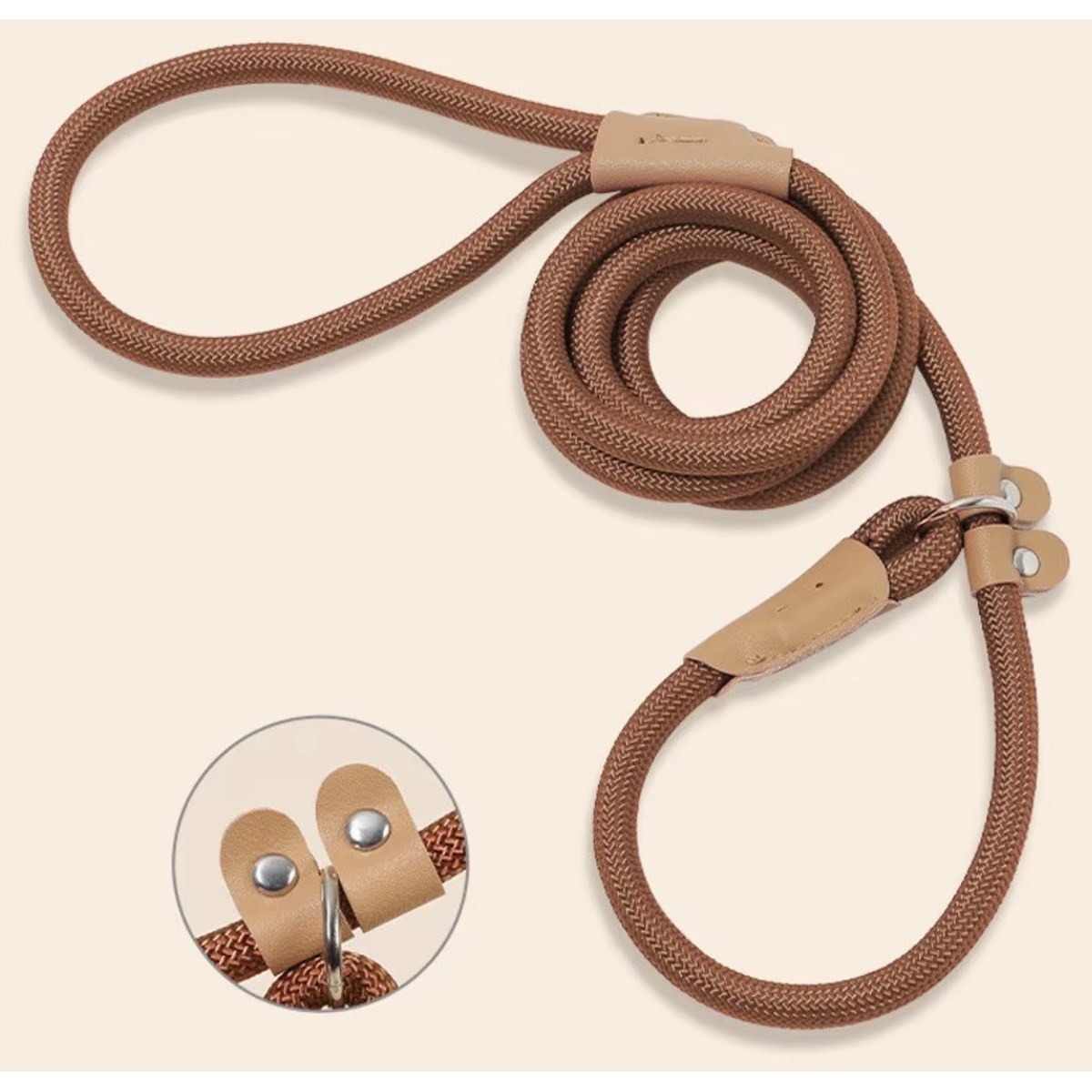
Accessory
Rope Slip Lead
Braided rope lead with a leather stop, 150cm. Good for training walks.
Fits any dog

Pawpoint on YouTube
Watch the full Basset Hound video
Breed deep-dives, history and honest ownership talk. New film every week.
Watch now