
Beauceron
BOH-suh-ron
France· Beauce plain, south of Paris
The Beauceron is a large, powerful French herding and guarding dog developed on the open plains of the Beauce region south of Paris.
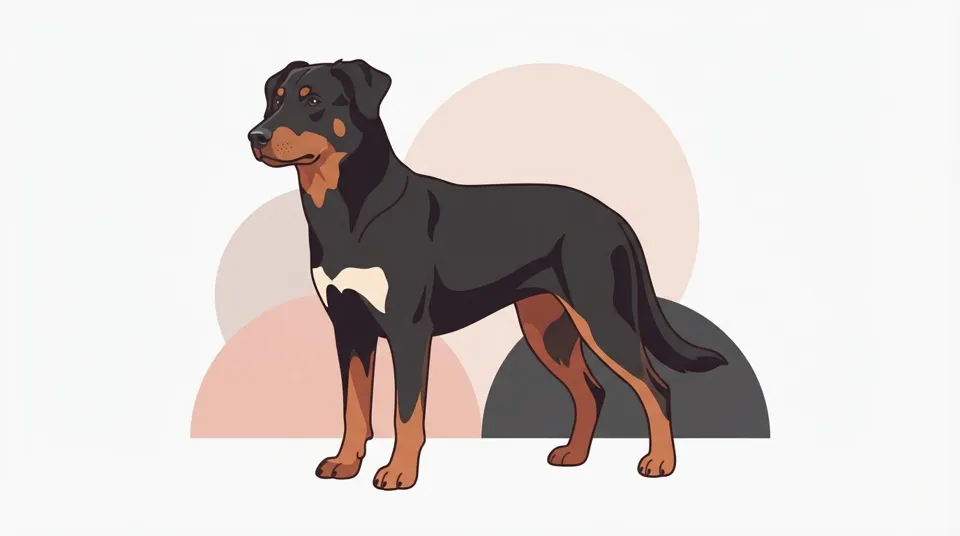
At a glance
Quick facts
- Size
- Large
- Exercise needs
- 1.5-2 hours daily
- Home size suited to
- Medium to large home
- Grooming frequency
- Weekly brush
- Coat length
- Short
- Sheds
- Yes, heavily when moulting
- Lifespan
- 10-12 years
- Town or country
- Happiest in the country
- Garden size needed
- Medium or larger
Where it comes from
Origins of the Beauceron
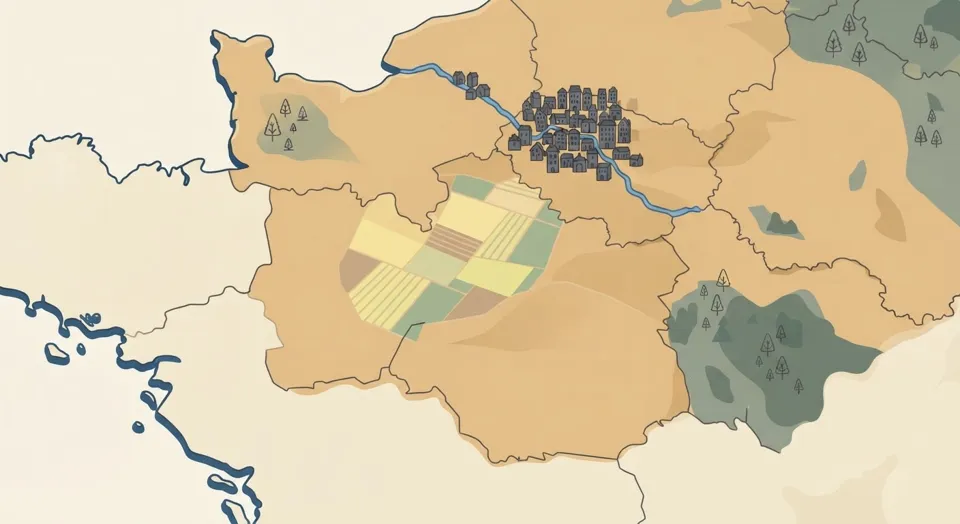
Bred on the flat, exposed farmland of the Beauce plain, where flocks grazed across huge unfenced fields with little shelter. The dog needed stamina, a weatherproof short coat, and enough presence to see off wolves and thieves.
- Region
- Beauce plain, south of Paris
- Climate it was bred for
- Damp winters, warm open plains
- Original job
- Herding and guarding sheep on open plains
The long read
About the breed
Farmers in the flat, exposed farmland of the Beauce needed a dog able to work all day in open country with no cover, driving and guarding flocks of sheep across huge unfenced fields, and also deterring wolves and thieves after dark. Alongside the smaller, rougher-coated Briard, the Beauceron developed as the short-coated type suited to the region's damp winters and warm summers. Its strength and steadiness later made it useful beyond farming: French army messenger and mine-detection dogs in both World Wars, and today it works in police and military roles across Europe.
Living with a Beauceron means living with a serious working dog that needs a serious owner. It is intelligent, watchful and deeply loyal to its family, but it is naturally reserved with strangers and needs early, thorough socialisation to avoid becoming overprotective. It thrives on structured training, physical work and a clear routine, and can become destructive or pushy if left without enough to do. The short coat is easy to maintain, needing only a weekly brush and more during the twice-yearly moult.
Today the Beauceron remains a working dog at heart, popular in France for herding, protection and police work, and slowly gaining ground elsewhere as a serious sporting and family companion for experienced owners. It is not a first dog for a novice household, but it rewards committed handlers with exceptional loyalty and capability.
Living with one
Temperament & needs
Our own ratings, based on the breed standard and how these dogs behave in ordinary homes.
Friendliness
2/5
How openly the Beauceron greets people it does not know.
Trainability
5/5
Highly intelligent, thrives on structured training.
Energy
4/5
Needs substantial daily work, not just walks.
Barking
3/5
Alerts to anything unusual but not needlessly noisy.
Grooming
2/5
Short coat, weekly brushing, heavier moults twice a year.
Suits a first-time owner
3/5
How forgiving the Beauceron is for someone taking on their first dog.
Sociability
2/5
Reserved with strangers, devoted to its own family.
Independence
3/5
Confident and capable of working things out alone.
Illustrated breed standard
The points of the breed
Hover or tap a numbered point to read what the standard asks for.
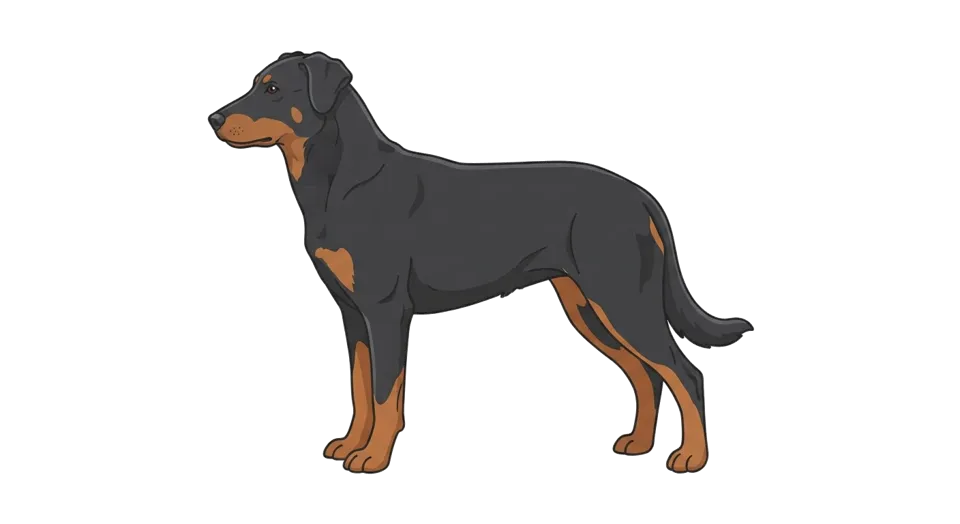
Point 1
Skull
The Beauceron's skull is judged on balance rather than size — proportionate to the body, with a clean cheek and a stop typical of the breed. Coarseness or an over-refined head are both faulted.
Colours & patterns
Recognised coats
Which coats the standard accepts — and which are simply popular.
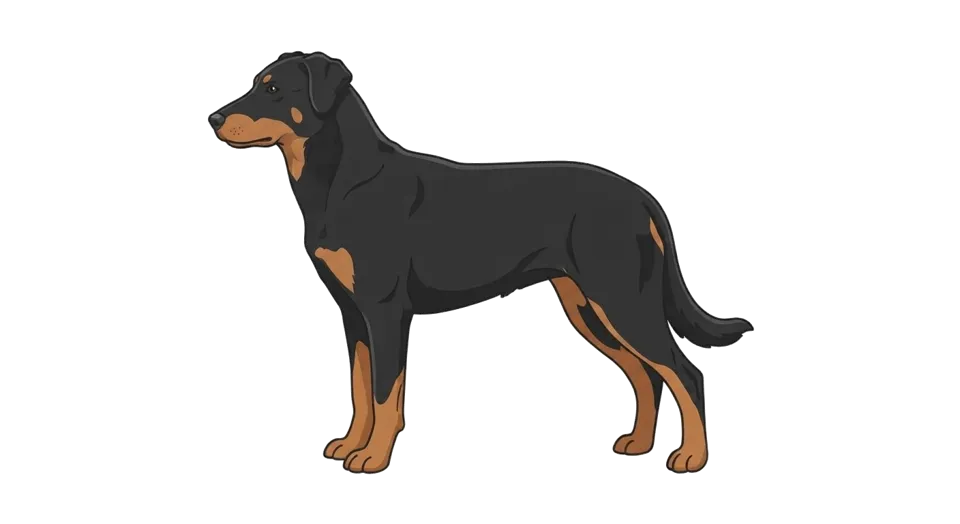
Black and Tan
Standard colour
The most common and classic colouring.
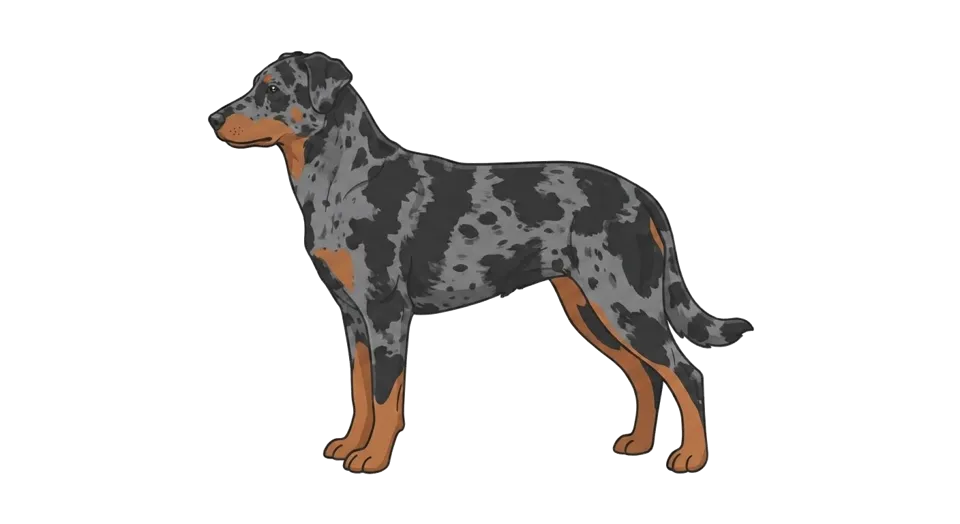
Harlequin (Grey, Black and Tan)
Standard colour
A mottled grey pattern over black and tan, distinctive to the breed.
Timeline
History & development
1500s
Farm dog of the Beauce
Short-coated sheepdogs were already established on the Beauce plain, distinct from the rough-coated Briard.
1863
First shown in Paris
The breed appeared at an early Paris dog show, drawing attention beyond its home region.
1922
French breed standard
The Societe Centrale Canine formalised the standard, distinguishing it clearly from the Briard.
1914-1945
Wartime service
Beaucerons served the French army as messenger, mine-detection and guard dogs through both World Wars.
1950s onward
The breed today
Kennel club registrations settled into a steady pattern and the Beauceron moved from a working specialist to a family companion, with breed clubs in the UK and abroad now focused on health testing and keeping true type alive.
Reference
Breed standard summary
- body
- Long, muscular, deep chest.
- coat
- Short, dense outer coat with a fine undercoat.
- ears
- Set high, historically cropped, natural ears semi-erect.
- eyes
- Dark, oval, expressing confidence.
- gait
- Powerful, ground-covering trot.
- head
- Strong, long, with a flat skull.
- size
- Large
- tail
- Long, forming a J-hook at the tip when relaxed.
- colour
- Black and Tan, Harlequin (Grey, Black and Tan). Colours outside this list are seen but are not accepted by the kennel clubs.
- temperament
- Typical of the breed: strongest in trainability, energy, independence. Nervousness or aggression are serious faults in the show ring and in the home.
- general appearance
- Large, muscular, rustic herding dog with a confident bearing.
Health
What to screen for
Green means little to worry about, amber means ask the breeder for test results, red means manage it actively.
Hip dysplasia
Screen for it
Ask for hip scoring certificates on both parents.
Gastric dilatation-volvulus (bloat)
Watch closely
A deep-chested breed; ask about feeding advice and consider a preventive gastropexy discussion with a vet.
Elbow dysplasia
Screen for it
Request elbow grading results from the breeder.
Progressive retinal atrophy
Screen for it
Ask for DNA or eye clearance certificates.
General information only — always speak to your vet about your own dog.
From real owners
Beaucerons in the PAWPOINT Pack
Beaucerons added by PawPoint members through their pet passports. Share yours to appear here.
Loading the wall…
Made for the Beauceron
The book, plus hoodies, tees and mugs featuring the Beauceron.