Bernedoodle
BUR-nuh-doodle
Canada· Ontario, then widely bred across North America and Britain
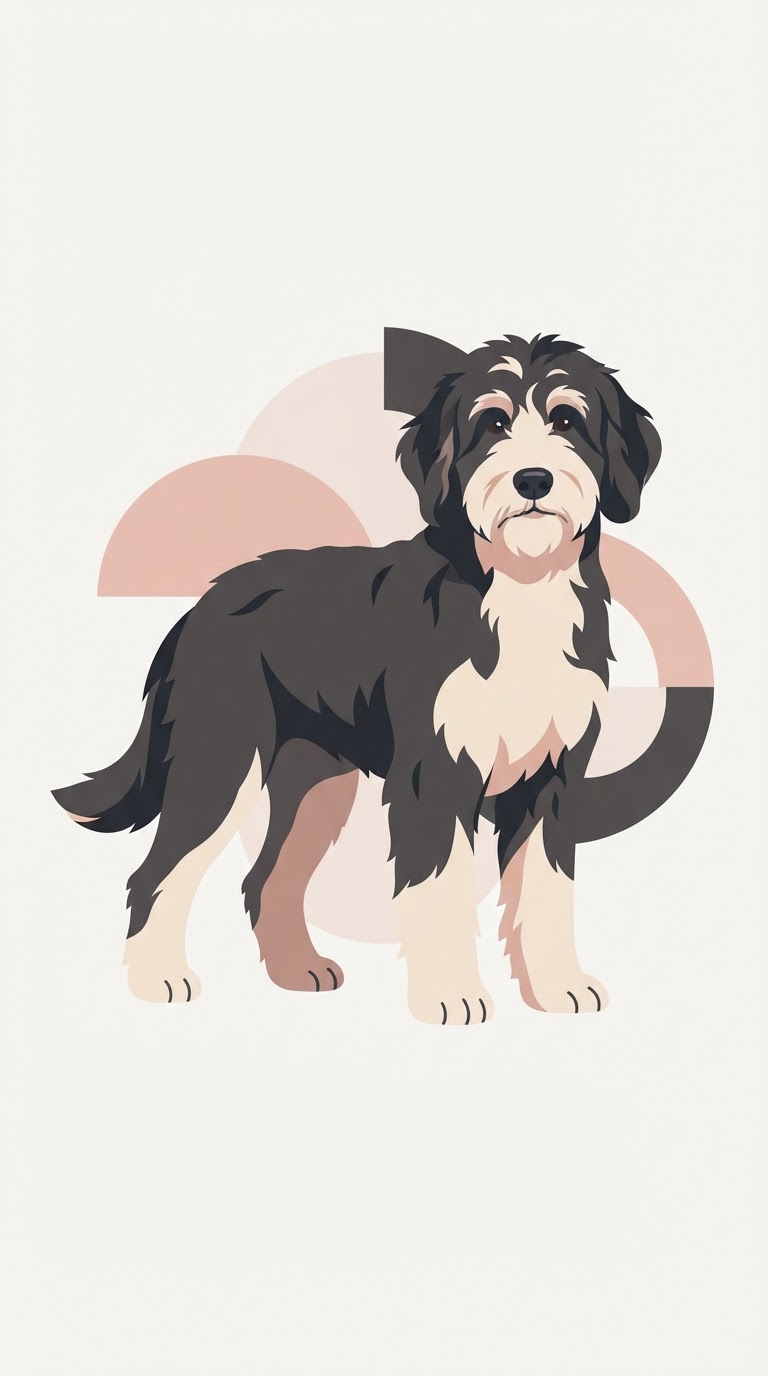
The Bernedoodle is a Bernese Mountain Dog crossed with a Poodle, popularised in Canada from the early 2000s and now widely bred in Britain. It has no breed standard and is recognised by no kennel club, so it should be judged as a first cross rather than a breed.
At a glance
Quick facts
Size
Medium to large
Exercise needs
1 hour per day
Home size suited to
House with garden
Grooming frequency
Brush several times a week, clip every 6-8 weeks
Coat length
Medium to long
Sheds
Low to moderate
Lifespan
12-15 years
Town or country
Either
Garden size needed
Medium or larger
Where it comes from
Origins of the Bernedoodle

The cross was popularised in Ontario from around 2003, pairing a Bernese Mountain Dog with a Standard, Miniature or Toy Poodle to keep the Bernese temperament and markings in a lower-shedding package. It has no standard and no kennel club recognition.
- Region
- Ontario, then widely bred across North America and Britain
- Climate it was bred for
- Temperate; a household dog
- Original job
- A lower-shedding family companion with Bernese markings
The long read
About the breed
That matters practically. Depending on which Poodle was used, adults range from roughly 10kg to over 40kg, and coats run from a tight poodle curl to a wavier, shedding Bernese-type jacket. No Bernedoodle is reliably hypoallergenic — allergens come from dander and saliva, not hair — and the traditional tricolour is not guaranteed in any litter.
Temperament is the most consistent part. Both parents are people-focused, so the cross is typically affectionate, playful and biddable, often a little goofy through adolescence and inclined to lean on its household. The Bernese side can bring a slower, stubborn streak and real sensitivity to heat; the Poodle side brings quick learning and a need for mental work. Separation-related behaviour is the most commonly reported problem.
Grooming is the hidden cost: a wavy or curled coat mats to the skin within weeks and needs brushing several times a week plus professional clipping every six to eight weeks. A good one comes from a breeder who health-tests both parents to each parent breed's standards — hips, elbows, eyes, von Willebrand's and degenerative myelopathy — and is honest that size, coat and colour cannot be promised.
Living with one
Temperament & needs
Our own ratings, based on the breed standard and how these dogs behave in ordinary homes.
Friendliness
5/5
Openly sociable with people it does not know.
Trainability
4/5
Quick and food-motivated, though adolescence can be stubborn.
Energy
3/5
About an hour a day plus scent and puzzle work.
Barking
2/5
Alerts at the door but is not typically noisy.
Grooming
5/5
The coat mats; professional clipping every six to eight weeks.
Suits a first-time owner
3/5
Manageable temperament, but grooming cost and adult size are often underestimated.
Illustrated breed standard
The points of the breed
Hover or tap a numbered point to read what the standard asks for.
Point 1
Skull
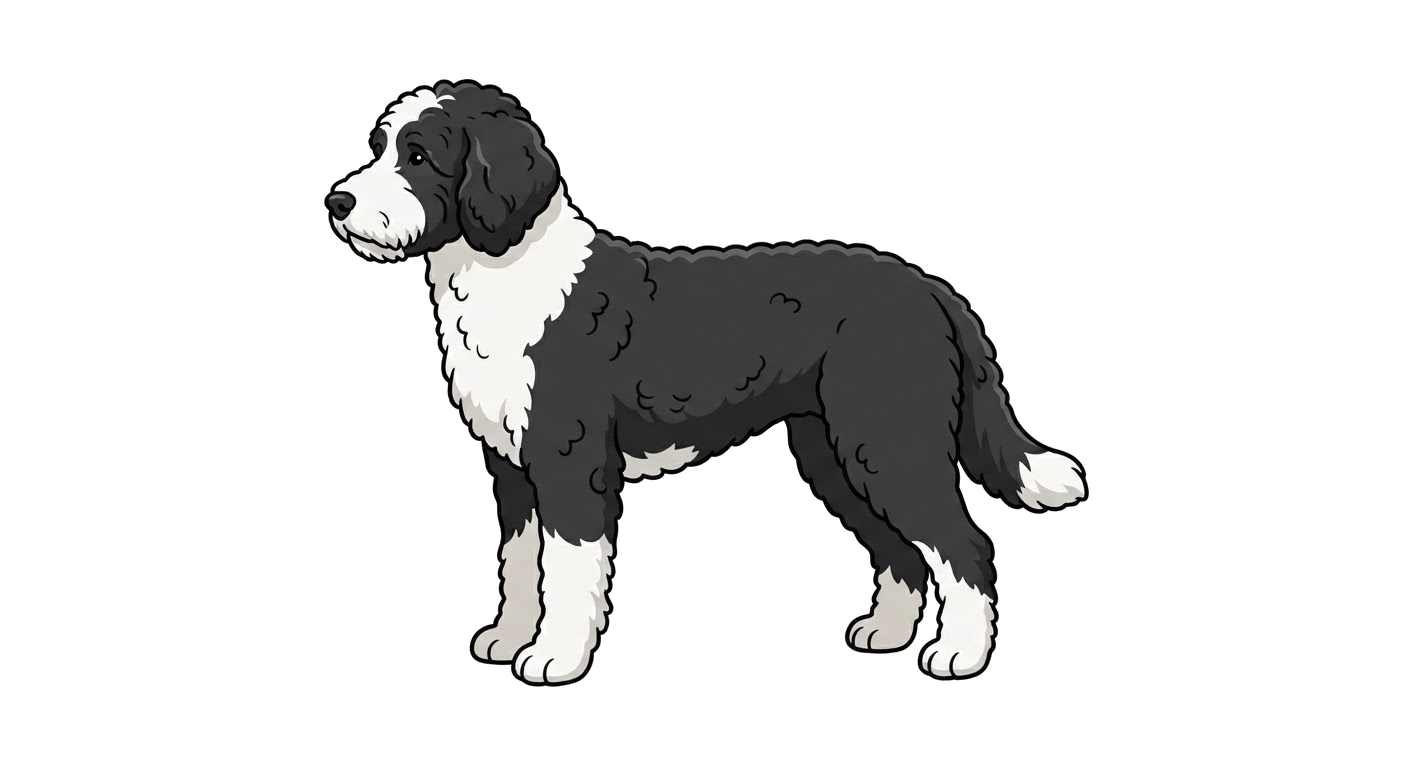
A broad, gently rounded skull with a moderate stop, in balance with the body. Coarse heads and over-refined, narrow skulls both spoil the look of the cross.
Outside the standard
Other colours
Dilute coats you will see advertised. They are the same breed, but no kennel club accepts them.
Tricolour
Not in the standard
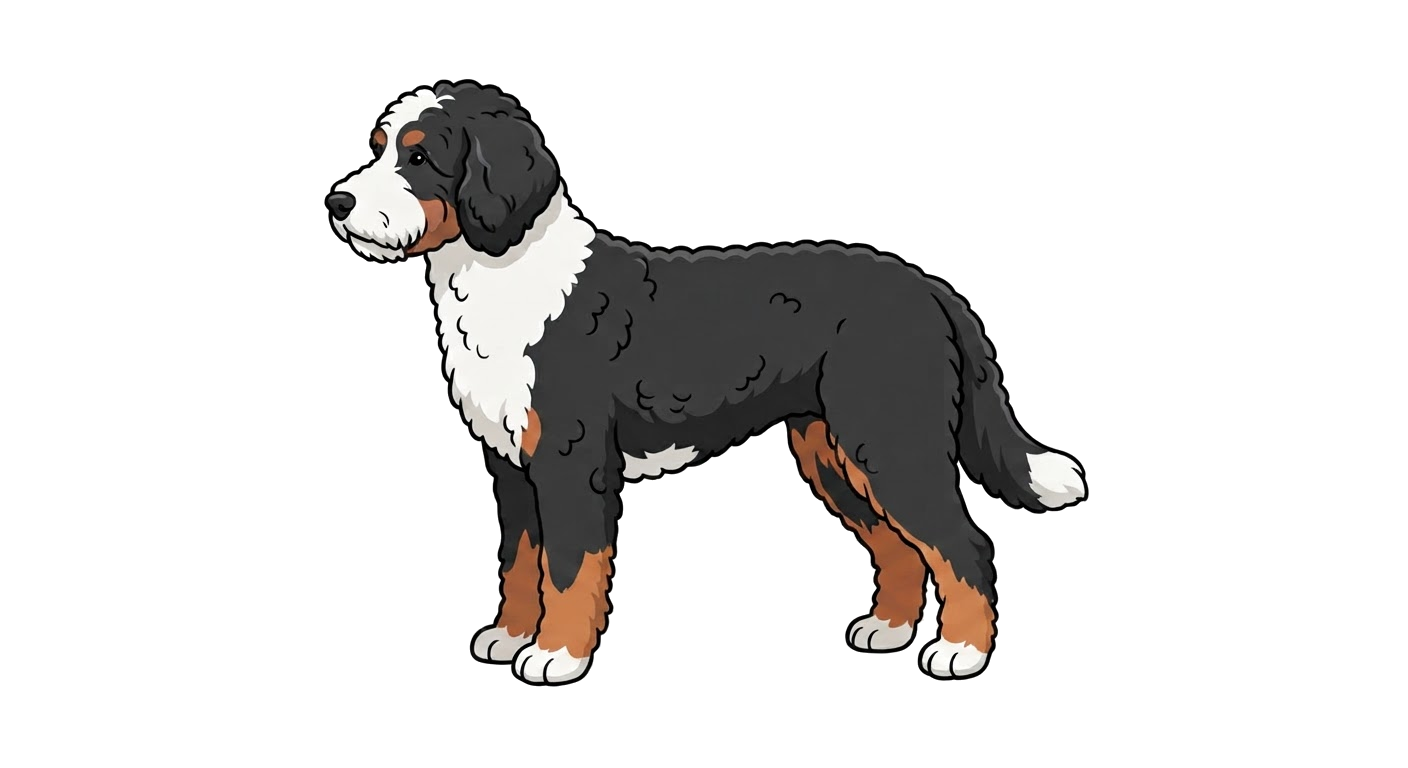
Black, white and rust — the classic Bernese pattern and the most requested.
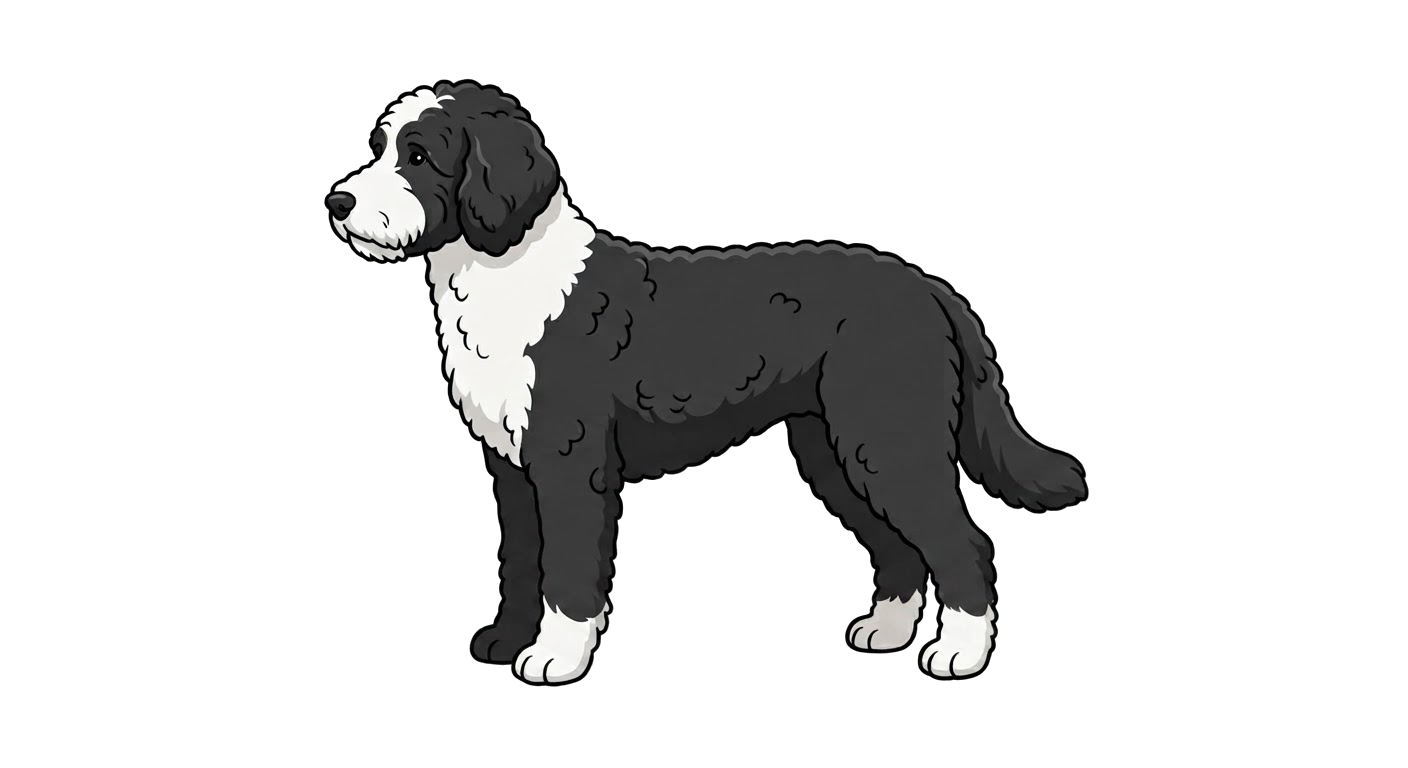
Black & white
Not in the standard
Bernese markings without the rust.
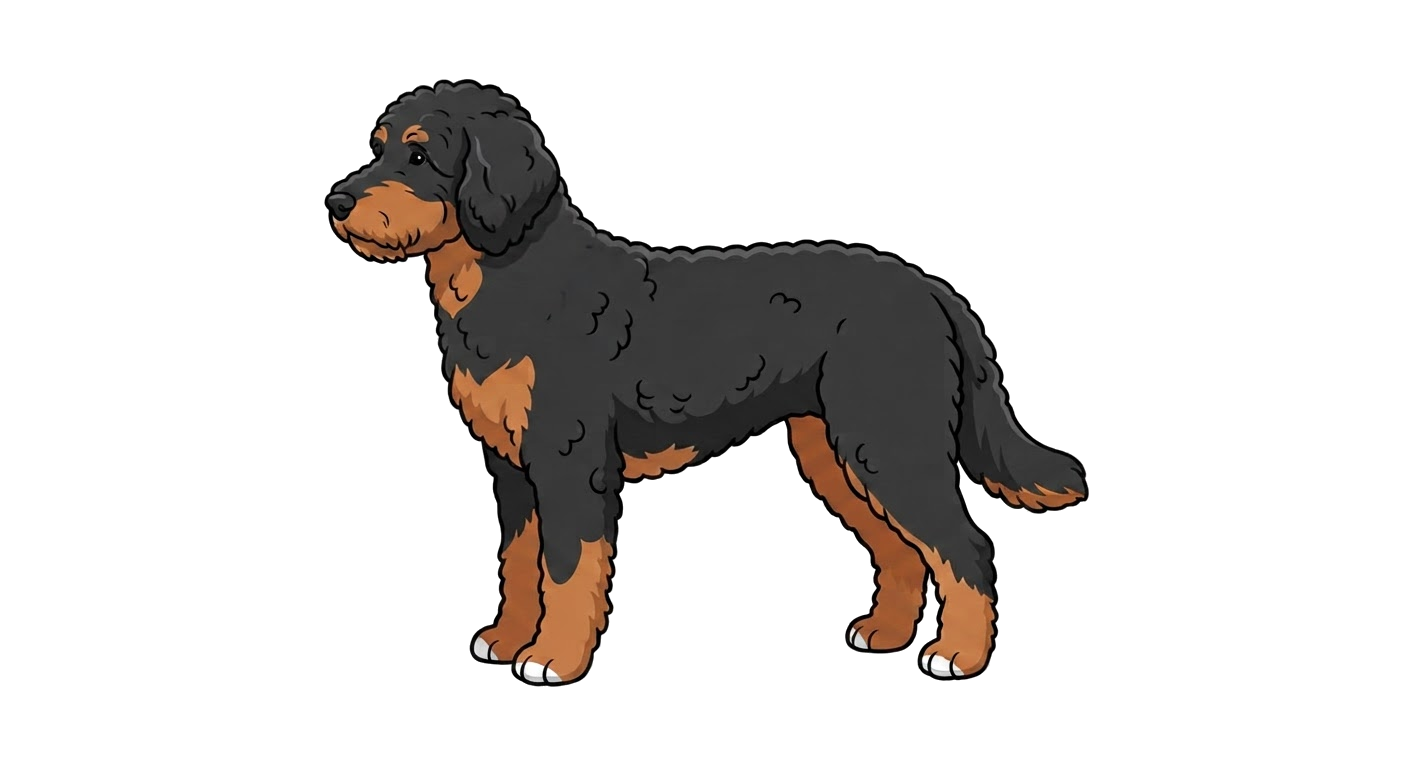
Black & rust
Not in the standard
No white; often called phantom.
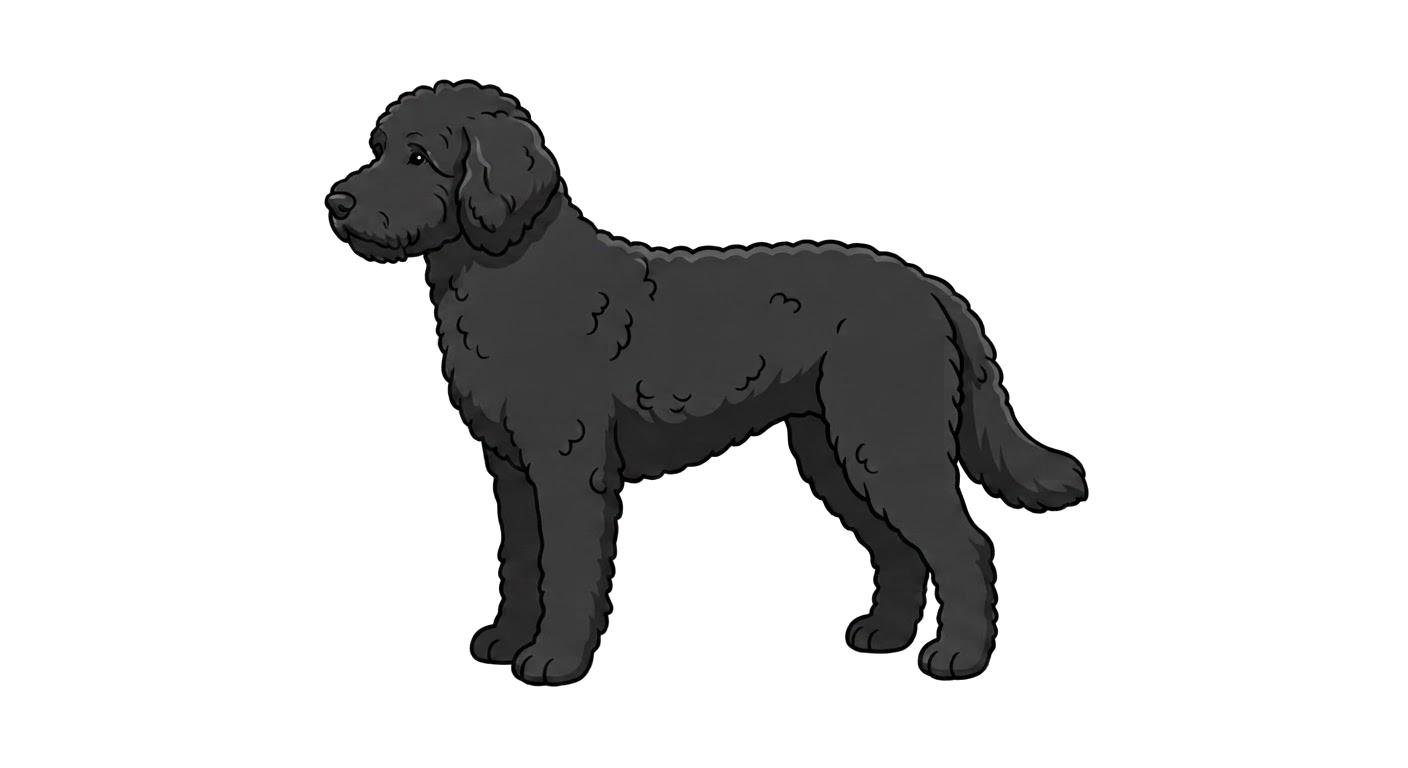
Solid black
Not in the standard
Common where the Poodle side dominates.
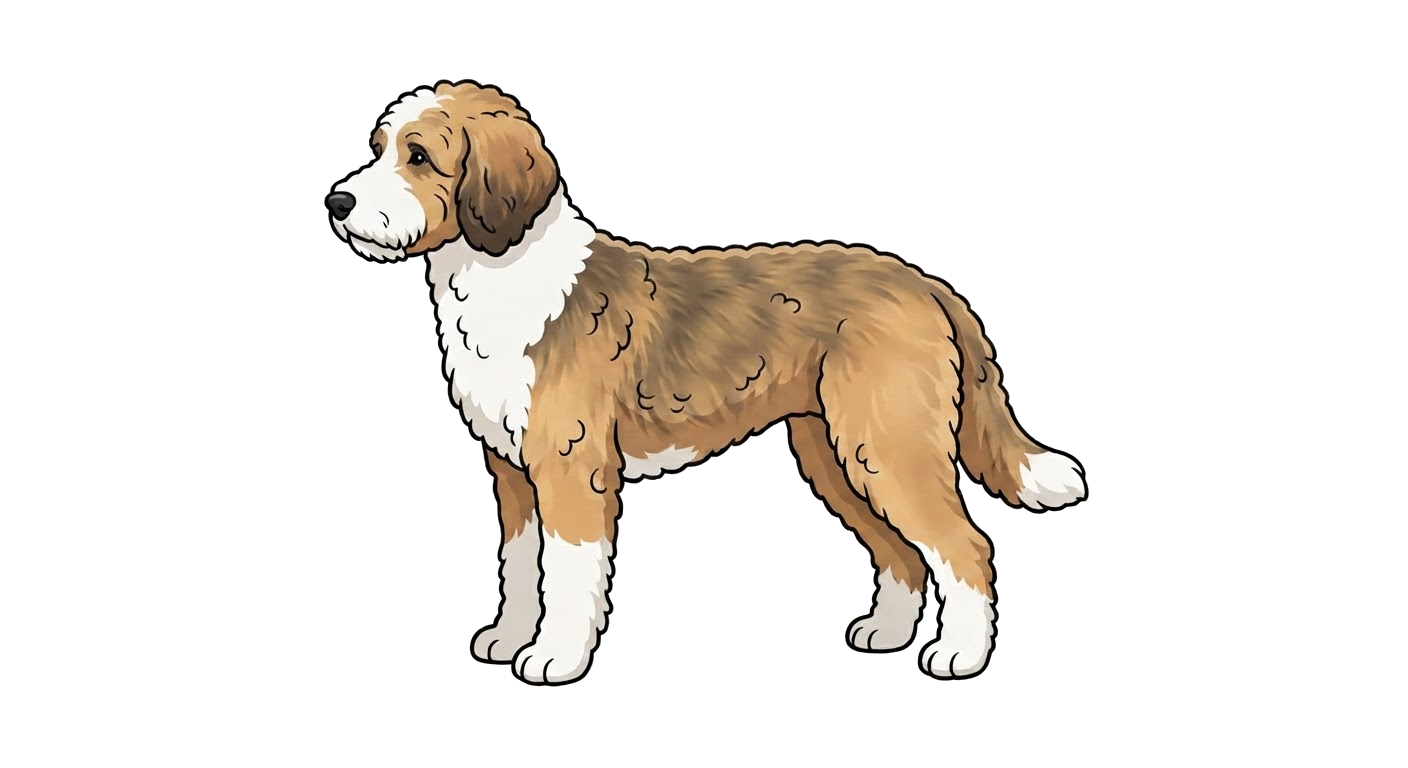
Sable
Not in the standard
Often lightens considerably with age.
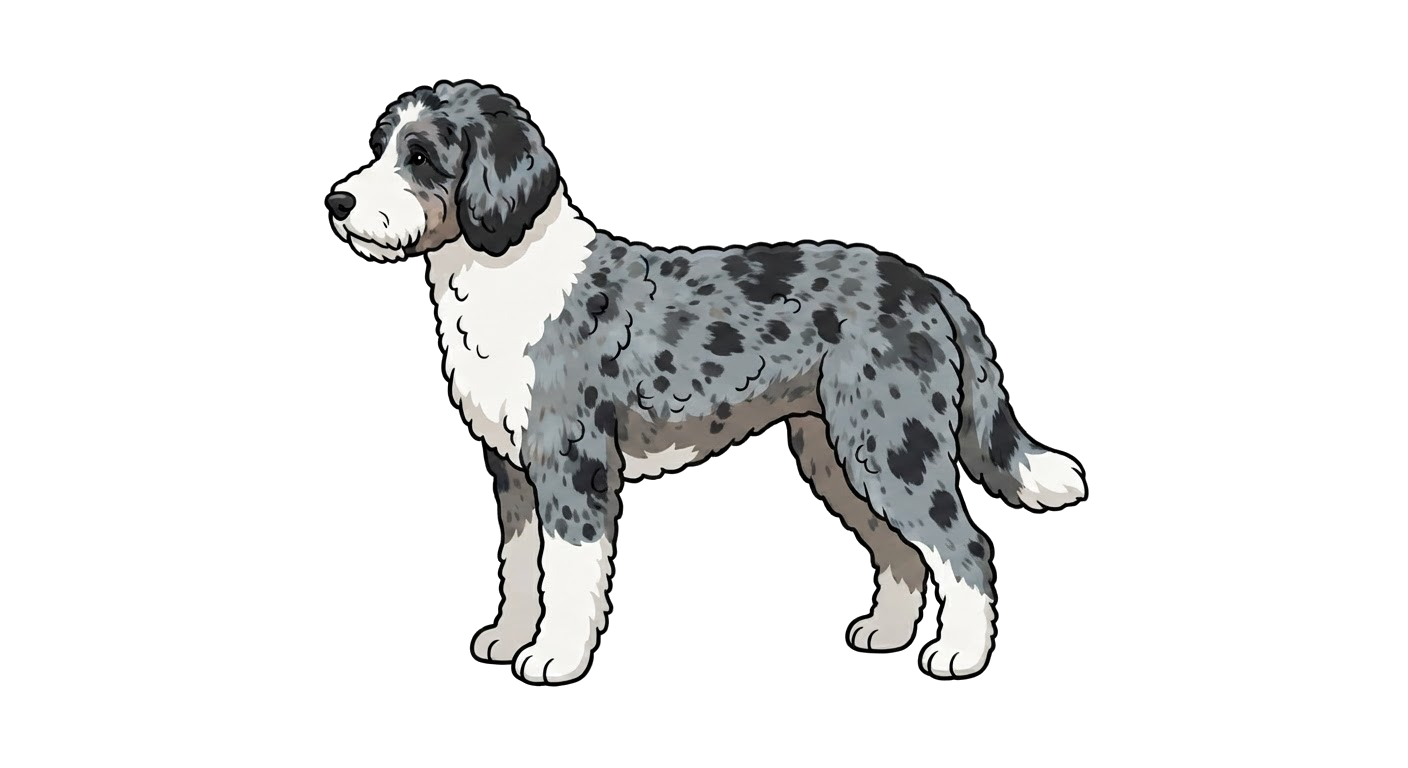
Merle
Not in the standard
Introduced from outside either parent breed and carries real health risk when doubled.
Timeline
History & development
2003
First deliberate crosses
An Ontario breeder pairs a Bernese Mountain Dog with a Standard Poodle, aiming for Bernese temperament in a lower-shedding, longer-lived dog.
2010s
The doodle boom
Miniature and toy versions appear as demand for smaller doodles rises across North America and Britain.
2020s
Boom and buyer caution
Pandemic demand pushes prices up and prompts warnings about untested breeding and unpredictable coats.
Today
Unrecognised but popular
No kennel club recognises the Bernedoodle, yet it is one of the most sought-after crosses in Britain.
Reference
Breed standard summary
- body
- Compact and level with a moderately deep chest and firm loin.
- coat
- Highly variable — loose curls, waves or a straighter Bernese-type coat, all needing regular professional grooming.
- ears
- Set at or above eye level, hanging and well furnished.
- eyes
- Oval, dark and set well apart, with a gentle, alert expression.
- head
- Broad, rounded skull with a moderate stop and a muzzle shorter than the Poodle parent's.
- size
- Roughly 30-70cm and 10-40kg depending on whether a Toy, Miniature or Standard Poodle was used.
- colour
- Any colour found in either parent, tricolour being the most sought after; merle occurs and carries real risk when doubled.
- temperament
- Typically affectionate, playful and people-focused; poor at being left alone.
- general appearance
- No official standard exists. In practice a sturdy, square-built dog of medium to large size with a softly furnished head and often Bernese tricolour markings.
Health
What to screen for
Green means little to worry about, amber means ask the breeder for test results, red means manage it actively.
Hip and elbow dysplasia
Watch closely
Both parents should be scored; keep growing puppies lean and low-impact.
Cancer in Bernese lines
Watch closely
Ask about longevity and cause of death in the Bernese side of the pedigree.
Progressive retinal atrophy
Screen for it
Both parents should carry current DNA test results.
Von Willebrand's disease
Screen for it
A Poodle-side clotting disorder; ask for the parents' DNA results.
Ear infections
Low concern
Furnished drop ears need weekly checks and drying after swimming.
Hybrid variability
Screen for it
No standard exists, so adult size, coat and colour cannot be predicted.
General information only — always speak to your vet about your own dog.
From real owners
Dogs like this
Bernedoodles added by PawPoint members through their pet passports. Share yours to appear here.
Loading the wall…
Made for the Bernedoodle
The book, plus prints, hoodies and mugs using our own Bernedoodle illustration — and one everyday accessory that suits any dog.

The book
Pawpoint: The Complete Dog Breed Book
Every officially recognised breed plus the unofficial ones nobody else documents. 400+ pages, hardback, printed and shipped from the UK.
Own stock — shipped by us
Framed poster
Bernedoodle Framed Poster
Museum-weight print of our Bernedoodle illustration, framed or unframed.
Printed to order
Hoodie
Bernedoodle Hoodie
Heavyweight hoodie carrying the Bernedoodle illustration on the chest.
Printed to order
Mug
Bernedoodle Mug
Ceramic mug with the Bernedoodle illustration wrapped around it.
Printed to order
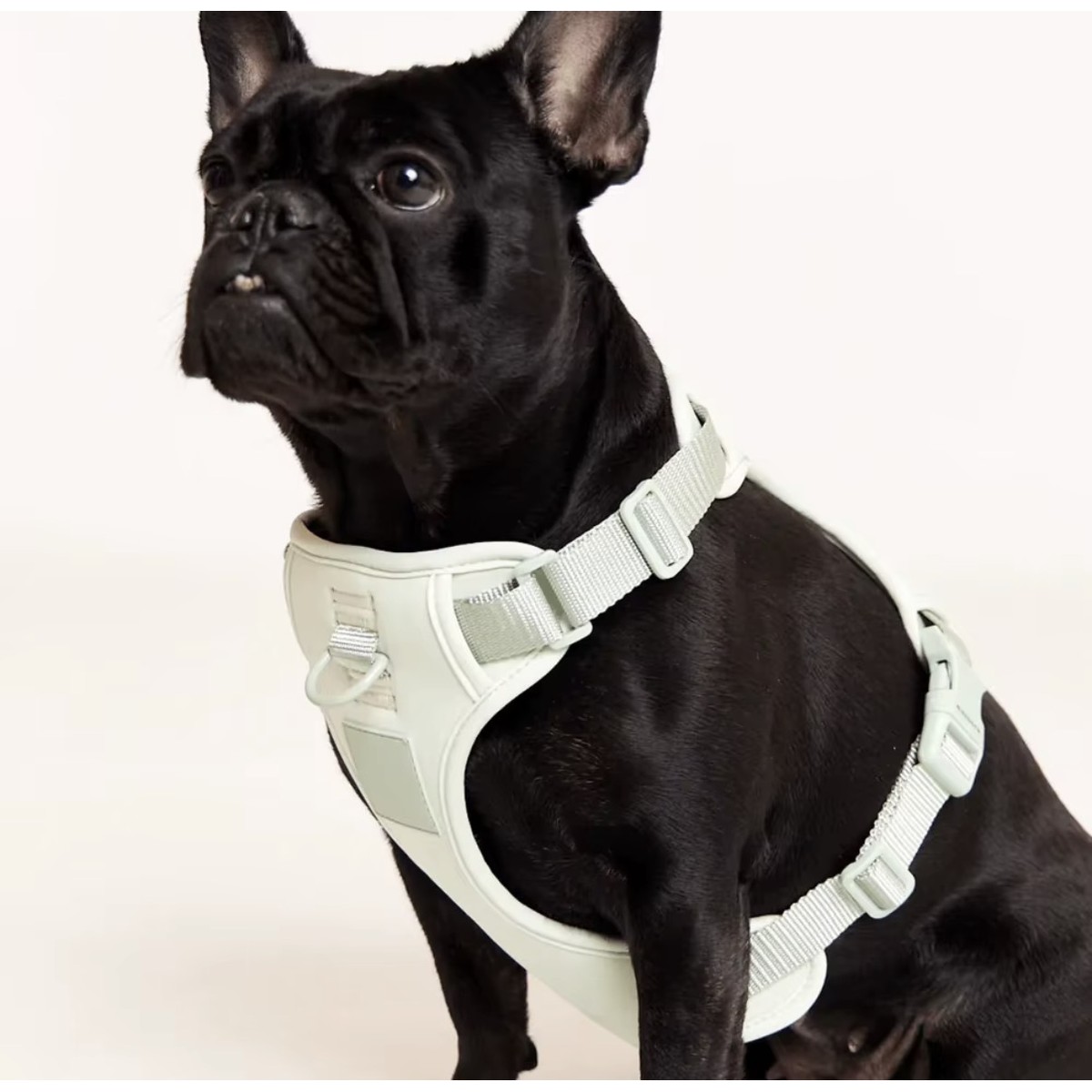
Accessory
Adjustable Harness (S/M/L)
Fully adjustable chest and girth straps — no fixed sizing.
Fits any dog
Pawpoint on YouTube
Watch the full Bernedoodle video
Breed deep-dives, history and honest ownership talk. New film every week.
Watch now