
Bernese Mountain Dog
ber-NEEZ
Switzerland· Canton of Bern
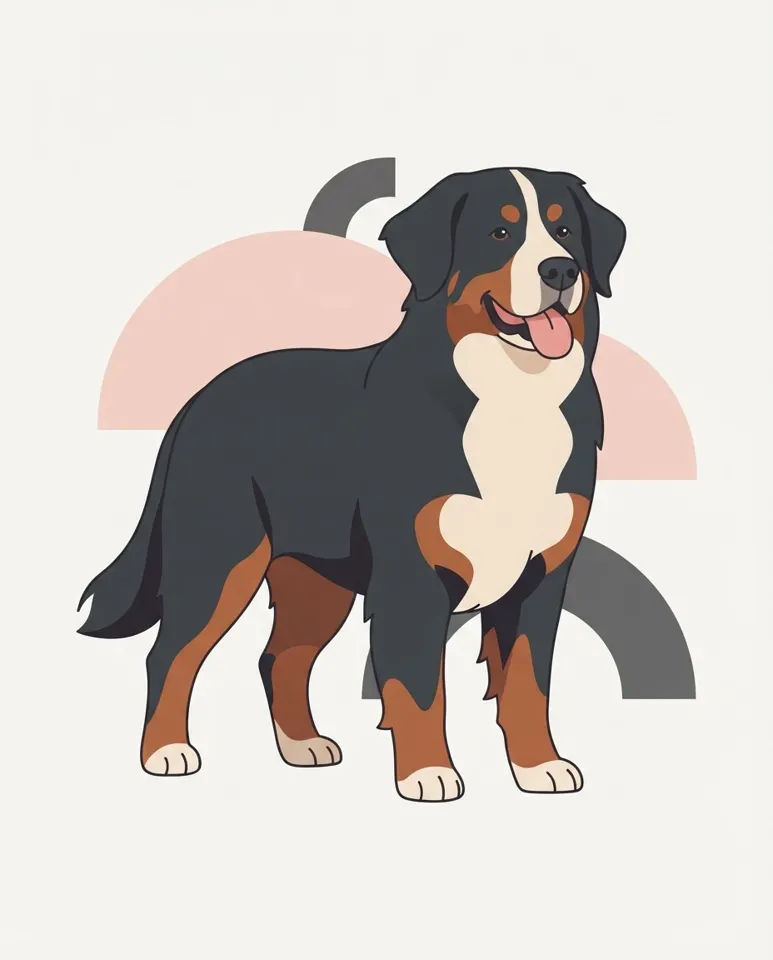
The Bernese Mountain Dog is a large, tricolour Swiss farm dog bred in the canton of Bern to pull carts, drive cattle and guard mountain farms.
At a glance
Quick facts
- Size
- Large
- Exercise needs
- 45-60 minutes daily
- Home size suited to
- Medium to large home
- Grooming frequency
- Daily brushing
- Coat length
- Long
- Sheds
- Yes, heavily when moulting
- Lifespan
- 7-10 years
- Town or country
- Either, with enough exercise
- Garden size needed
- Medium or larger
Where it comes from
Origins of the Bernese Mountain Dog
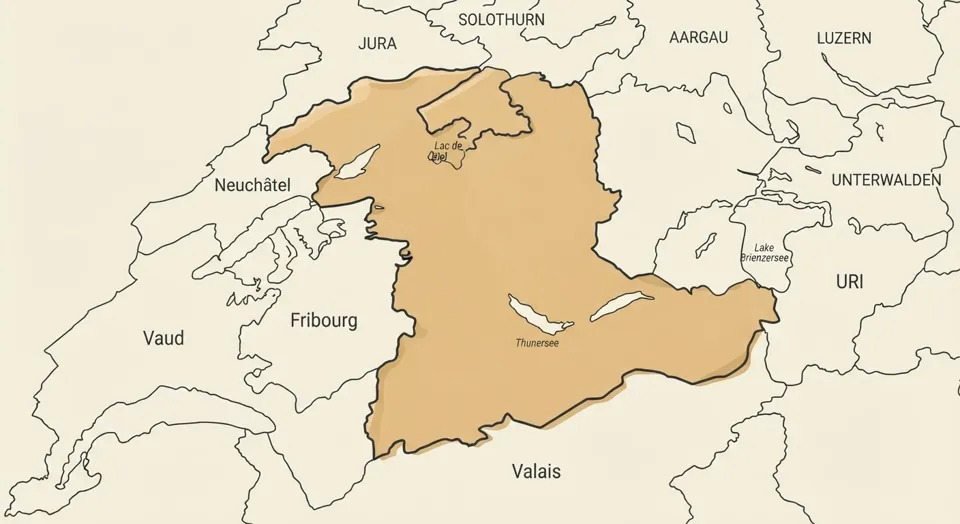
Bred by farmers in the hills around Bern to pull carts, drive cattle and guard isolated smallholdings through harsh Alpine winters. Its thick tricolour coat gave real protection against snow and cold.
- Region
- Canton of Bern
- Climate it was bred for
- Cold Alpine winters
- Original job
- Cart-pulling, droving and farm guarding
The long read
About the breed
It descends from mastiff-type dogs brought to the Alps by Roman traders and refined over centuries by farmers in the hills around Bern into four related Sennenhund breeds, of which the Bernese is the only long-coated one. It hauled milk and cheese carts to market, drove cattle between pastures, and guarded isolated farmsteads through harsh Alpine winters, doing whatever heavy work a smallholding needed from a dog large enough to matter. By the early twentieth century the breed had declined sharply as motor transport replaced cart dogs, and it survived largely through the efforts of Swiss fancier Franz Schertenleib, who tracked down remaining examples in the hills.
Living with a Bernese means living with a calm, patient, deeply affectionate giant that is genuinely gentle with children and generally easygoing with other animals. It is not a highly energetic breed and does not need relentless exercise, but it does need company: it forms close bonds with its family and does not thrive left alone for long stretches. The double coat sheds heavily year-round and needs brushing two or three times a week to control, and the breed's size means training and manners matter early, before an adult dog's strength becomes a handling problem.
Today the Bernese Mountain Dog is popular as a family companion worldwide, though prospective owners should know its Achilles heel: a relatively short lifespan of 7 to 10 years, driven largely by high cancer rates in the breed. It remains, while it is with a family, an unusually calm and devoted dog for its size.
Living with one
Temperament & needs
Our own ratings, based on the breed standard and how these dogs behave in ordinary homes.
Friendliness
5/5
How openly the Bernese Mountain Dog greets people it does not know.
Trainability
4/5
Eager to please, responds well to gentle, consistent training.
Energy
2/5
Calm and steady, moderate exercise needs.
Barking
2/5
Generally quiet, occasional alert barking.
Grooming
4/5
Heavy year-round shedding, brushing several times a week.
Suits a first-time owner
4/5
How forgiving the Bernese Mountain Dog is for someone taking on their first dog.
Sociability
5/5
Gentle and affectionate with family and strangers alike.
Independence
2/5
Forms close bonds and dislikes being left alone.
Illustrated breed standard
The points of the breed
Hover or tap a numbered point to read what the standard asks for.
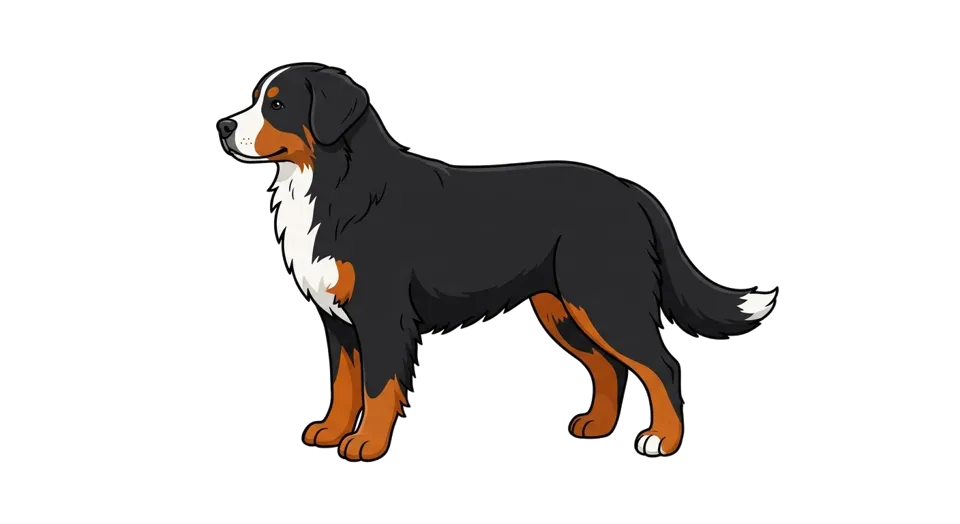
Point 1
Skull
The Bernese Mountain Dog's skull is judged on balance rather than size — proportionate to the body, with a clean cheek and a stop typical of the breed. Coarseness or an over-refined head are both faulted.
Colours & patterns
Recognised coats
Which coats the standard accepts — and which are simply popular.
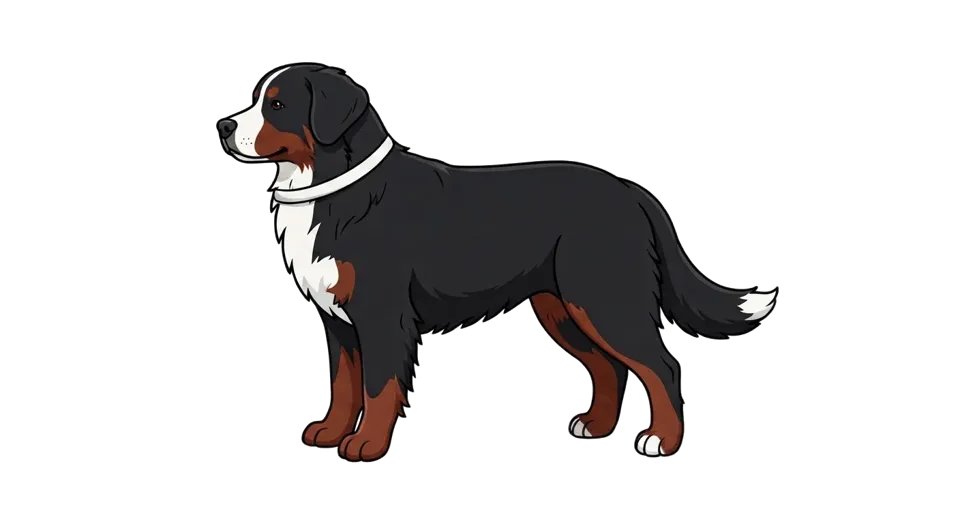
Black, Tan and White Tricolour
Standard colour
The only accepted colouring, with a white blaze, chest and paws.
Timeline
History & development
Roman era
Alpine mastiff ancestry
Large mastiff-type dogs brought by Roman traders formed the base stock for Swiss mountain dog breeds.
1800s
Farm dog of the Bernese hills
Farmers around Bern used the breed for cart-pulling, droving and guarding, alongside the three other Sennenhund types.
1892
Near decline
Motor transport reduced demand for cart dogs and numbers fell sharply.
1907
Revival by Franz Schertenleib
A Swiss fancier tracked down surviving examples and founded the modern breed club.
1950s onward
The breed today
Kennel club registrations settled into a steady pattern and the Bernese Mountain Dog moved from a working specialist to a family companion, with breed clubs in the UK and abroad now focused on health testing and keeping true type alive.
Reference
Breed standard summary
- body
- Deep chest, level topline, strong loin.
- coat
- Long, thick, slightly wavy, tricolour.
- ears
- Medium, triangular, set high, hanging close to the head.
- eyes
- Dark brown, almond-shaped.
- gait
- Slow, powerful trot with good reach.
- head
- Flat skull, strong, with a slight stop.
- size
- Large
- tail
- Bushy, carried low, slight upward curve.
- colour
- Black, Tan and White Tricolour. Colours outside this list are seen but are not accepted by the kennel clubs.
- temperament
- Typical of the breed: strongest in sociability, trainability, grooming. Nervousness or aggression are serious faults in the show ring and in the home.
- general appearance
- Large, sturdy, tricolour mountain dog with a calm bearing.
Health
What to screen for
Green means little to worry about, amber means ask the breeder for test results, red means manage it actively.
Cancer (various types)
Watch closely
The breed's leading cause of death; ask the breeder about longevity and cause of death in close relatives.
Hip and elbow dysplasia
Screen for it
Ask for BVA/KC hip and elbow scores on both parents.
Gastric dilatation-volvulus (bloat)
Watch closely
A deep-chested breed; ask about feeding advice and emergency signs.
Degenerative myelopathy
Watch closely
Ask for DNA test results where available.
General information only — always speak to your vet about your own dog.
From real owners
Bernese Mountain Dogs in the PAWPOINT Pack
Bernese Mountain Dogs added by PawPoint members through their pet passports. Share yours to appear here.
Loading the wall…
Made for the Bernese Mountain Dog
The book, plus hoodies, tees and mugs featuring the Bernese Mountain Dog.