
Bloodhound
BLUD-hownd
Belgium· Ardennes
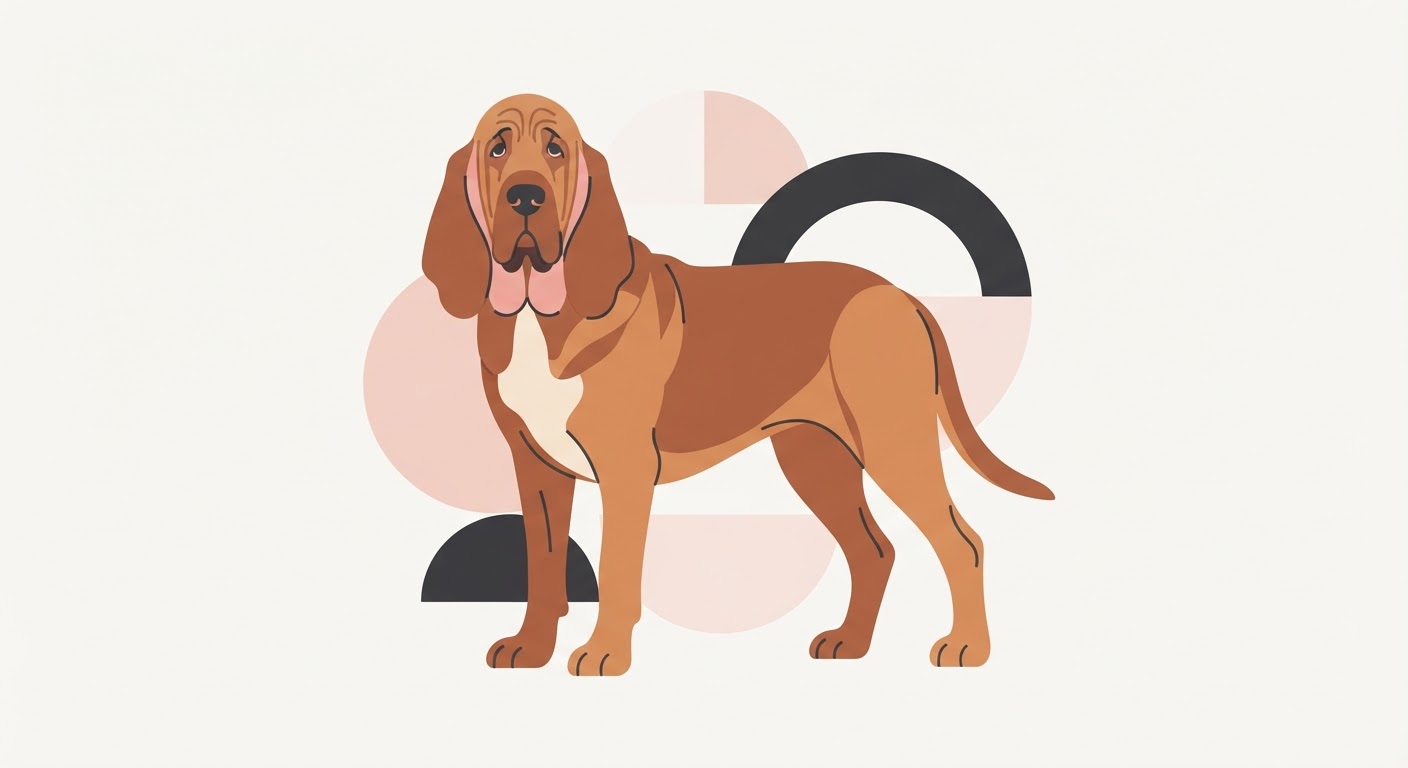
The Bloodhound is a large scenthound bred for centuries to follow a trail of human scent over long distances and difficult terrain, prized above all other hounds for the accuracy of its nose.
At a glance
Quick facts
Size
Large
Exercise needs
1-2 hours, ideally scent-based
Home size suited to
Medium to large home
Grooming frequency
Weekly brush
Coat length
Short
Sheds
Yes, heavily when moulting
Lifespan
10-12 years
Town or country
Happiest in the country
Garden size needed
Medium or larger
Where it comes from
Origins of the Bloodhound
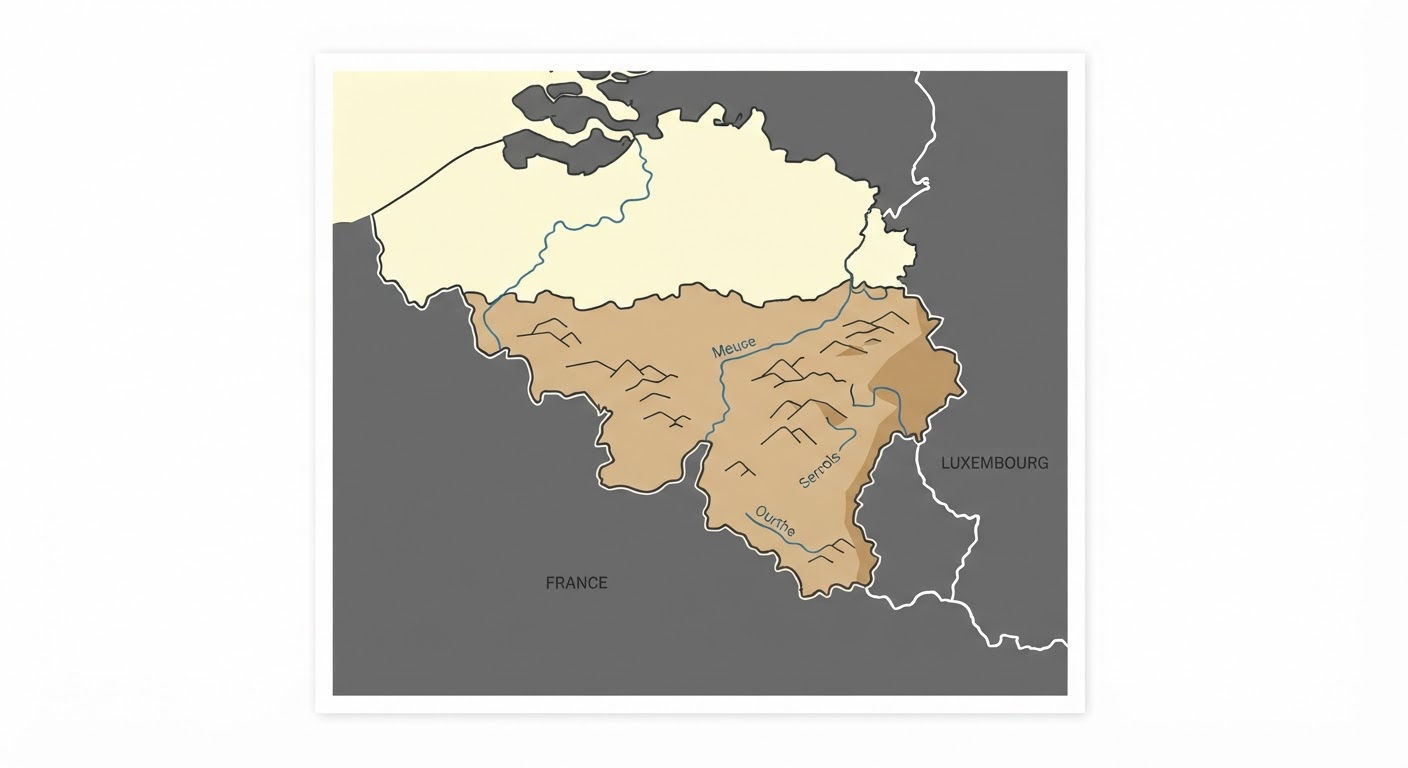
The Bloodhound's ancestors were kept by monks at the abbey of Saint-Hubert in the Belgian Ardennes, a forested, hilly region well suited to tracking deer over long distances. That need for stamina and scenting accuracy over rough ground shaped the breed's nose and build.
- Region
- Ardennes
- Climate it was bred for
- Cool, damp forest and hill country
- Original job
- Trailing human and deer scent over distance
The long read
About the breed
The breed's ancestry runs back to hounds kept by monasteries in medieval Europe, most famously the abbey of Saint-Hubert in the Ardennes, from which the dog took one of its old names, the St Hubert Hound. Norman nobles brought these hounds to England after 1066, where huntsmen used them to track deer and later, in the border country between England and Scotland, to trail cattle thieves. By the nineteenth century the Bloodhound's nose had a second career: police forces in Britain and America used the breed to follow the trail of missing persons and suspects, work it still does today in search and rescue.
Living with a Bloodhound means living with a nose that overrides most other instincts. A Bloodhound that catches an interesting trail will follow it, often ignoring recall entirely, so secure fencing and a long line for training are not optional. The breed is large, slobbery and shakes its head enthusiastically, spraying drool on walls and clothing. Despite the working intensity of its nose, the temperament off the trail is gentle, patient and rather dignified; Bloodhounds are notably tolerant with children and other dogs, though their sheer size means a boisterous puppy can knock a toddler over without meaning to.
Today the Bloodhound is still used by mantrailing units and mountain rescue teams, and a smaller number are kept purely as companions by people who enjoy nose-work hobbies. The loose skin and long ears that help funnel scent to the nostrils need regular cleaning to avoid infection, and the breed's deep chest carries a real risk of bloat, so owners are advised to feed smaller meals and avoid strenuous exercise straight after eating.
Living with one
Temperament & needs
Our own ratings, based on the breed standard and how these dogs behave in ordinary homes.
Friendliness
4/5
How openly the Bloodhound greets people it does not know.
Trainability
3/5
Keen to follow scent, less keen to follow instructions.
Energy
3/5
Needs long tracking walks, not high-speed exercise.
Barking
2/5
A deep bay when excited, otherwise fairly quiet.
Grooming
2/5
Short coat but ears and skin folds need regular cleaning.
Suits a first-time owner
3/5
How forgiving the Bloodhound is for someone taking on their first dog.
Sociability
4/5
Gentle and tolerant with people and other dogs.
Independence
4/5
Works a trail on its own terms once it picks one up.
Illustrated breed standard
The points of the breed
Hover or tap a numbered point to read what the standard asks for.
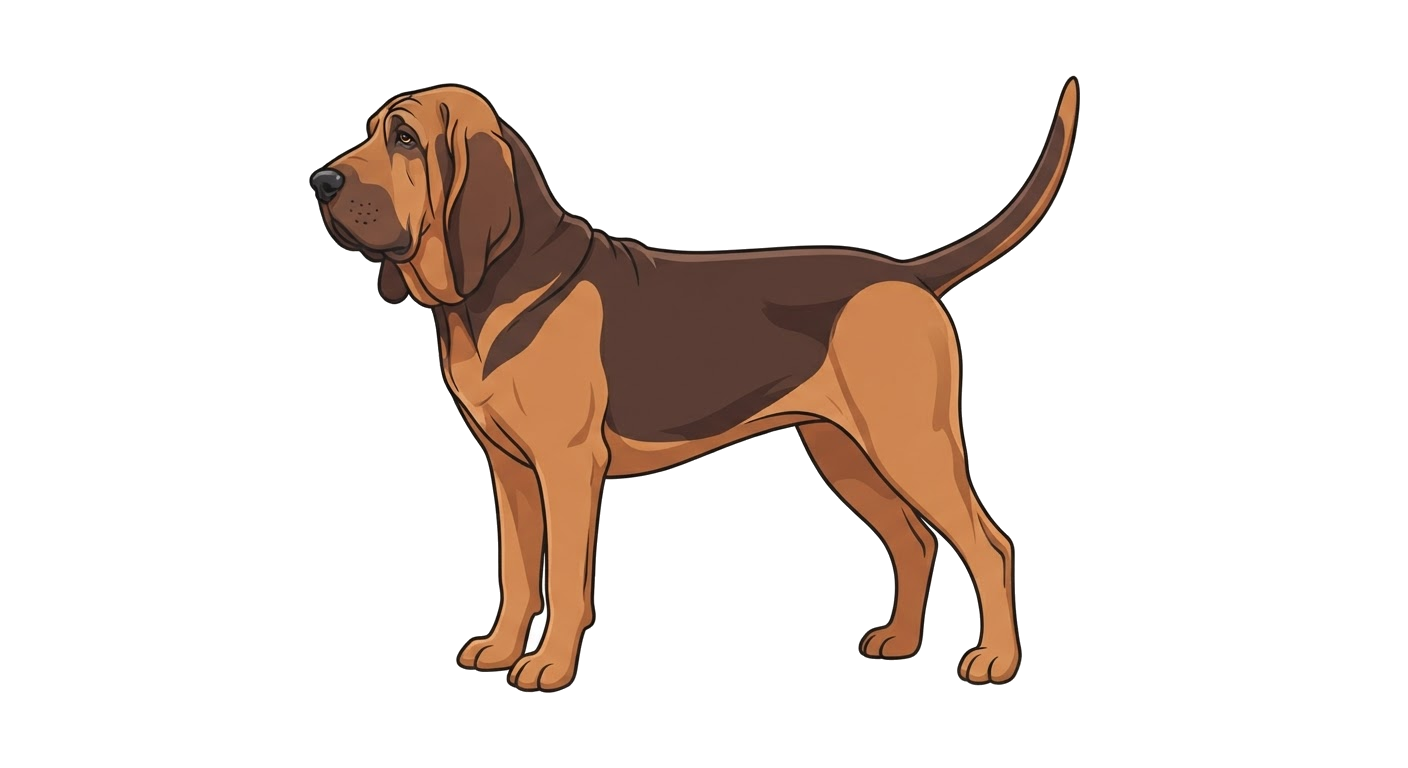
Point 1
Skull
The Bloodhound's skull is judged on balance rather than size — proportionate to the body, with a clean cheek and a stop typical of the breed. Coarseness or an over-refined head are both faulted.
Colours & patterns
Recognised coats
Which coats the standard accepts — and which are simply popular.
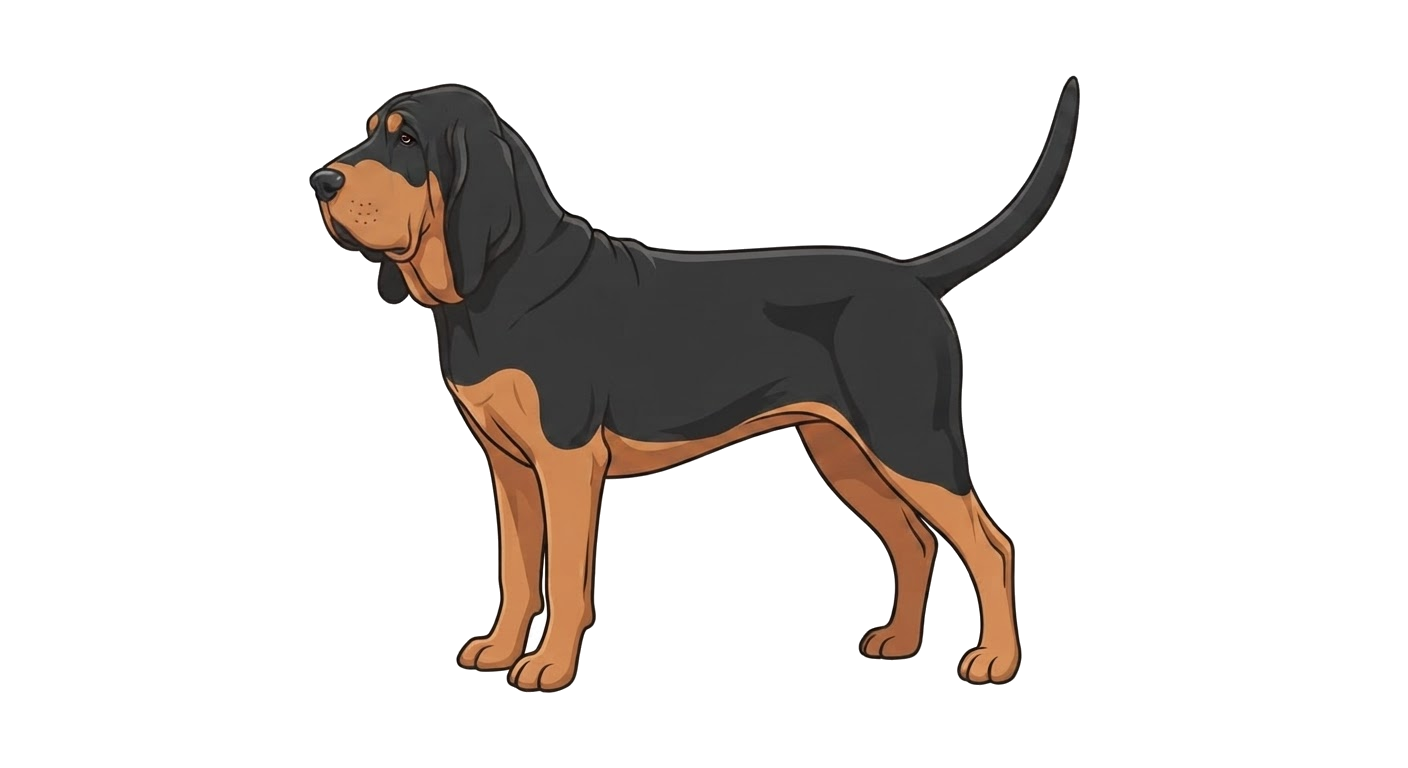
Black and tan
Standard colour
The most common and traditional colouring.
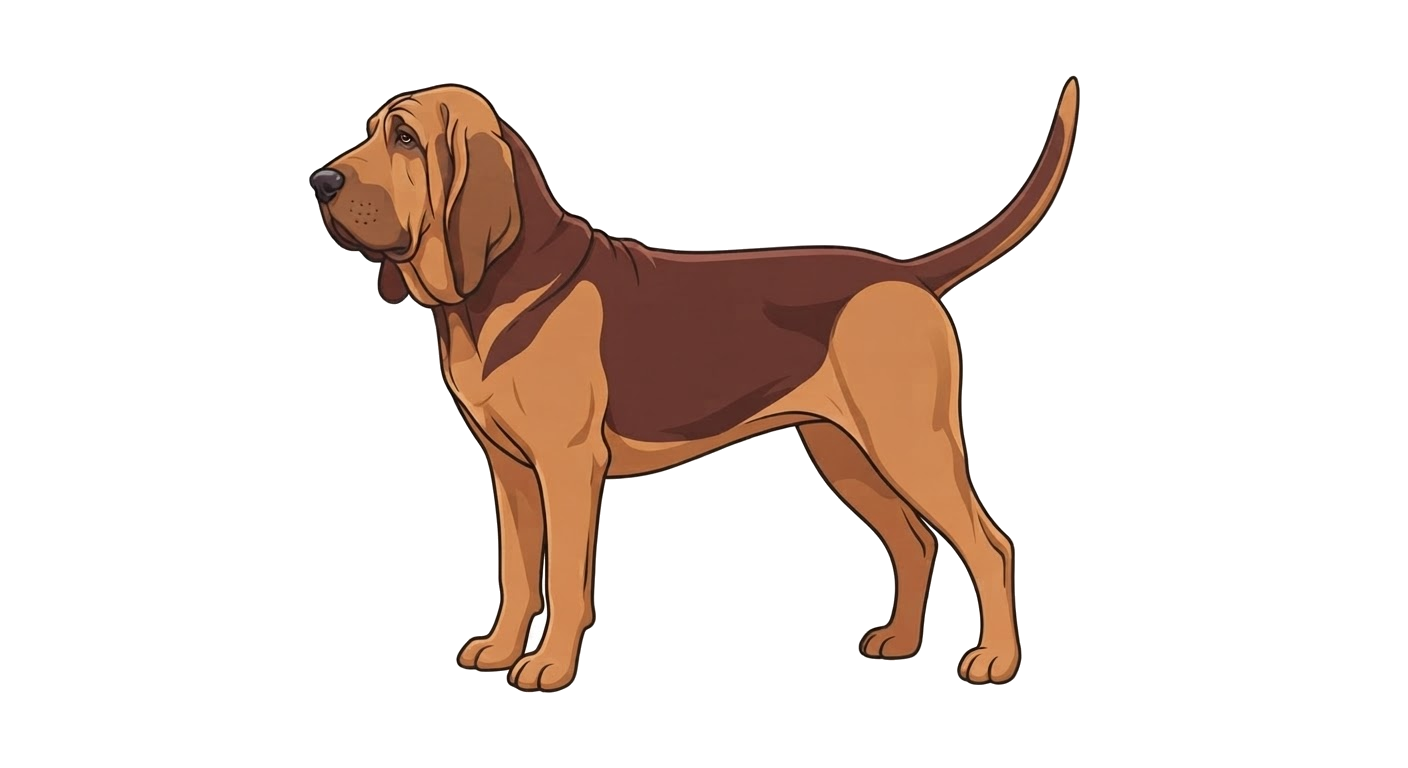
Liver and tan
Standard colour
A warmer brown replacing the black.
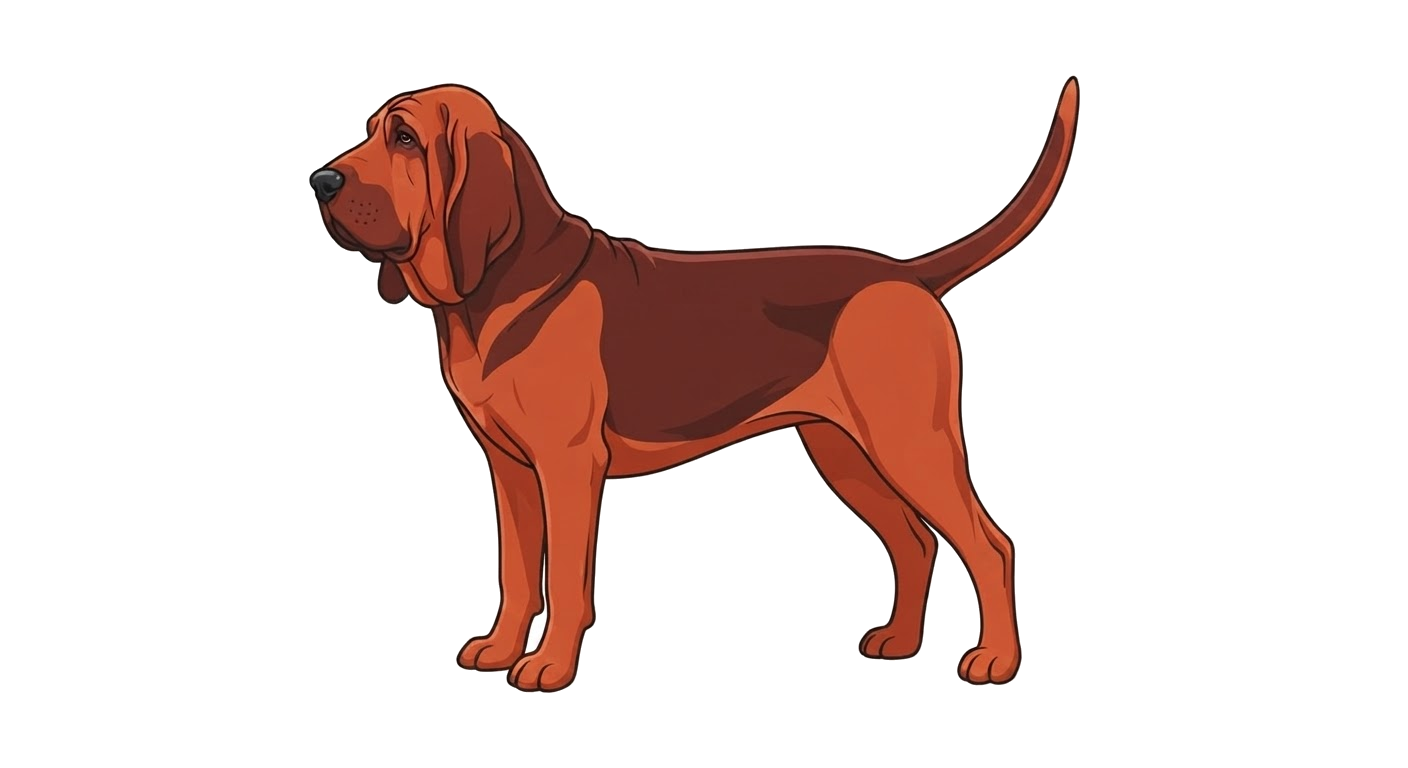
Red
Standard colour
A solid tawny-red coat, sometimes with a darker saddle.
Timeline
History & development
12th century
Monastic origins
Hounds resembling the modern Bloodhound were bred at the abbey of Saint-Hubert in what is now Belgium.
1066
Arrival in Britain
Norman nobles brought St Hubert Hounds to England for hunting deer and boar.
1805
First American import
Bloodhounds were imported to the United States, where they became closely associated with police trailing work.
1888
UK breed club founded
The Association of Bloodhound Breeders formalised the standard still recognisable today.
1950s onward
The breed today
Kennel club registrations settled into a steady pattern and the Bloodhound moved from a working specialist to a family companion, with breed clubs in the UK and abroad now focused on health testing and keeping true type alive.
Reference
Breed standard summary
- body
- Deep chest, strong loin, considerable substance.
- coat
- Short, smooth, but tough.
- ears
- Very long, thin and low-set, falling in graceful folds.
- eyes
- Deep-set, diamond-shaped, giving a mournful look.
- gait
- Elastic, showing power and drive from the hindquarters.
- head
- Long and narrow with pronounced occipital peak and deep wrinkles.
- size
- 58-69 cm at the shoulder.
- tail
- Long, tapering, carried high when working.
- colour
- Black and tan, Liver and tan, Red. Colours outside this list are seen but are not accepted by the kennel clubs.
- temperament
- Typical of the breed: strongest in sociability, independence, energy. Nervousness or aggression are serious faults in the show ring and in the home.
- general appearance
- Large, powerfully built hound with loose, wrinkled skin and a solemn expression.
Health
What to screen for
Green means little to worry about, amber means ask the breeder for test results, red means manage it actively.
Hip dysplasia
Screen for it
Ask breeders for BVA/KC hip scores on both parents.
Bloat (gastric dilatation-volvulus)
Watch closely
Feed smaller meals and rest the dog after eating; know the emergency signs.
Ear infections
Low concern
Clean the long, low-set ears regularly to prevent moisture build-up.
Entropion/ectropion
Low concern
Have a vet check eyelid conformation before breeding.
General information only — always speak to your vet about your own dog.
From real owners
Dogs like this
Bloodhounds added by PawPoint members through their pet passports. Share yours to appear here.
Loading the wall…
Made for the Bloodhound
The book, plus prints, hoodies and mugs using our own Bloodhound illustration — and one everyday accessory that suits any dog.

The book
Pawpoint: The Complete Dog Breed Book
Every officially recognised breed plus the unofficial ones nobody else documents. 400+ pages, hardback, printed and shipped from the UK.
Own stock — shipped by us
Framed poster
Bloodhound Framed Poster
Museum-weight print of our Bloodhound illustration, framed or unframed.
Printed to order
Hoodie
Bloodhound Hoodie
Heavyweight hoodie carrying the Bloodhound illustration on the chest.
Printed to order
Mug
Bloodhound Mug
Ceramic mug with the Bloodhound illustration wrapped around it.
Printed to order
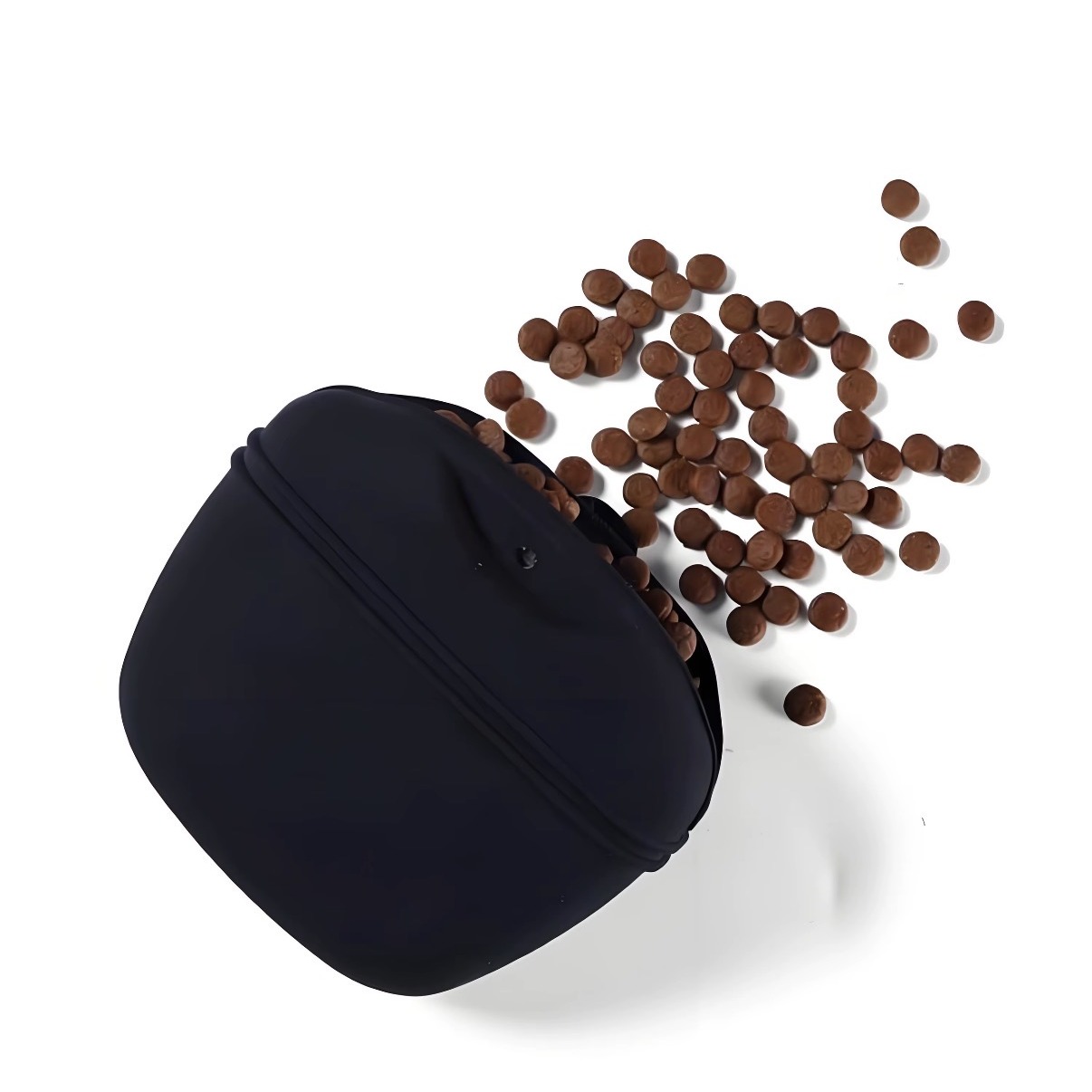
Accessory
Treat Pouch
Magnetic-close belt pouch for training sessions.
Fits any dog
Pawpoint on YouTube
Watch the full Bloodhound video
Breed deep-dives, history and honest ownership talk. New film every week.
Watch now