
Boerboel
"BOR-bull"
South Africa· Farms across the South African interior
The Boerboel is a large South African mastiff-type guardian dog, bred by Dutch and later British settler farmers to protect isolated homesteads against predators ranging from jackals to leopards.

At a glance
Quick facts
- Size
- Giant
- Exercise needs
- 1 hour daily, plus space to patrol
- Home size suited to
- Large home with space to stretch out
- Grooming frequency
- Weekly brush
- Coat length
- Short
- Sheds
- Yes, heavily when moulting
- Lifespan
- 9-11 years
- Town or country
- Better suited to the country
- Garden size needed
- Large and securely fenced
Where it comes from
Origins of the Boerboel
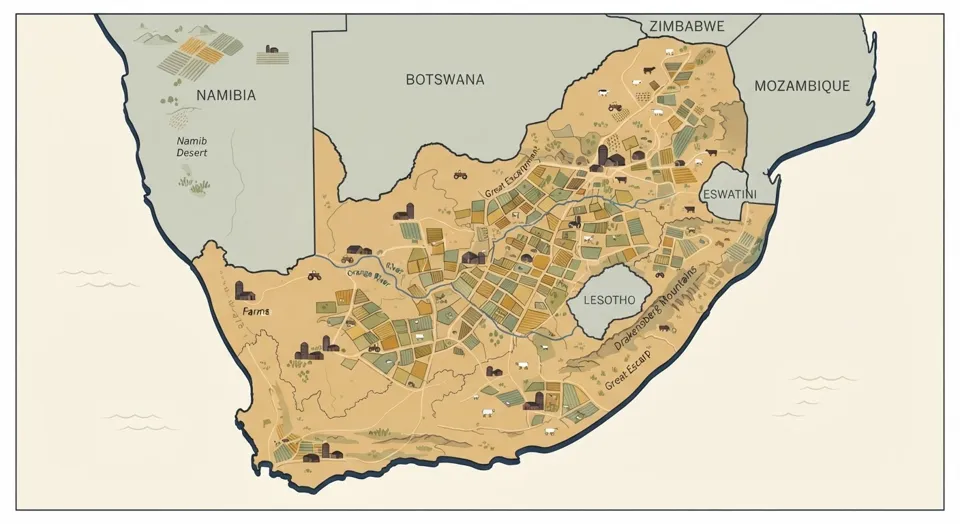
Bred on remote South African farms from the 1600s onward, the Boerboel had to guard homesteads against jackals, leopards and human intruders across vast, sparsely populated veld, which favoured size, courage and independent judgement over portability or refinement.
- Region
- Farms across the South African interior
- Climate it was bred for
- Hot, dry savannah and veld
- Original job
- Guarding isolated farms against predators and intruders
The long read
About the breed
The name comes from the Afrikaans "boer" (farmer) and "boel" (dog), and the breed developed from the 1600s onward from dogs brought by Dutch, French and British colonists, crossed with local African dogs, to produce an all-purpose farm guardian capable of holding its ground against dangerous wildlife while still being manageable around livestock and family. For much of its history it was bred purely for function on remote farms, with little formal record-keeping, and it only gained organised breed clubs and export markets from the late twentieth century.
Living with a Boerboel means living with a genuinely large, powerful dog that takes its guarding instincts seriously. They are calm and affectionate with their own family, often gentle with children they know, but naturally wary of strangers and other dogs, and they need firm, consistent handling and thorough socialisation from puppyhood to avoid becoming difficult to manage as adults. Their size alone means training and containment are not optional extras; a Boerboel that has not been taught boundaries can be a serious liability.
Today the breed is kept both as a working farm guardian in South Africa and increasingly as a family protection dog abroad, though several countries and insurers treat it with the same caution as other large guarding mastiffs, and some jurisdictions restrict ownership. Responsible breeders screen heavily for hip and heart soundness given the breed's size and rapid growth as puppies.
Living with one
Temperament & needs
Our own ratings, based on the breed standard and how these dogs behave in ordinary homes.
Friendliness
2/5
How openly the Boerboel greets people it does not know.
Trainability
3/5
Intelligent but strong-willed, needs an experienced handler.
Energy
3/5
Moderate energy but needs space to patrol and exercise.
Barking
2/5
Alerts to genuine concerns rather than barking constantly.
Grooming
1/5
Short coat needs minimal upkeep.
Suits a first-time owner
3/5
How forgiving the Boerboel is for someone taking on their first dog.
Sociability
2/5
Devoted to family, naturally suspicious of strangers.
Independence
4/5
Bred to make its own decisions about threats.
Illustrated breed standard
The points of the breed
Hover or tap a numbered point to read what the standard asks for.

Point 1
Skull
The Boerboel's skull is judged on balance rather than size — proportionate to the body, with a clean cheek and a stop typical of the breed. Coarseness or an over-refined head are both faulted.
Colours & patterns
Recognised coats
Which coats the standard accepts — and which are simply popular.
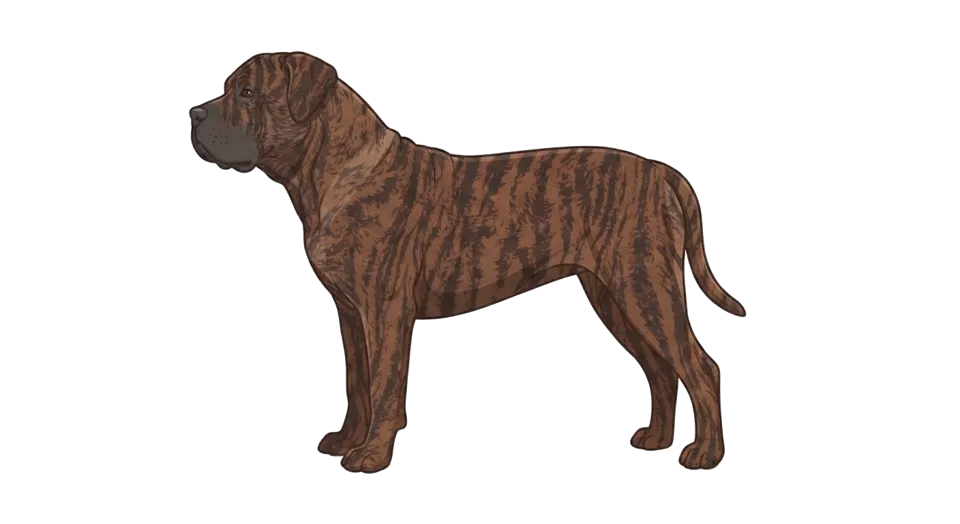
Brindle
Standard colour
A common patterned colouring.
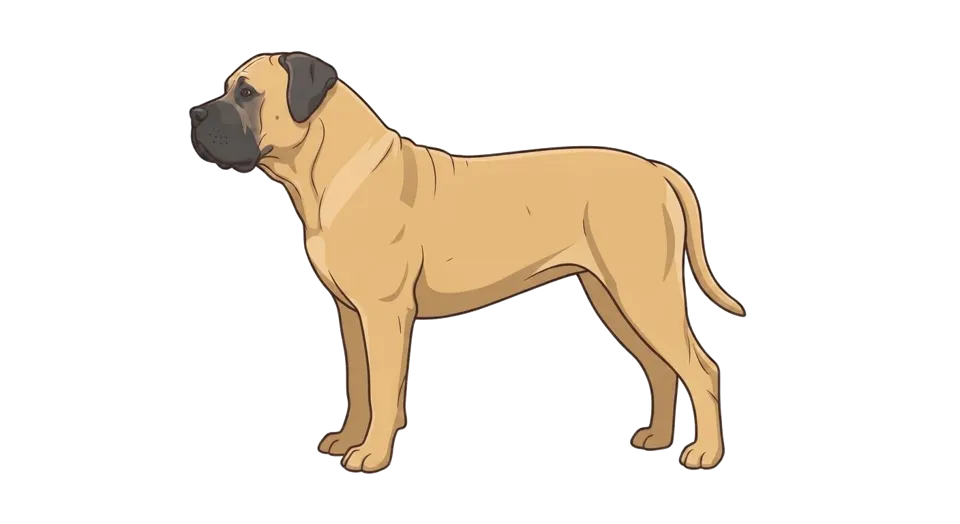
Fawn
Standard colour
Ranges from pale cream to deep red-fawn.

Red
Standard colour
A solid deep red coat, often with a black mask.
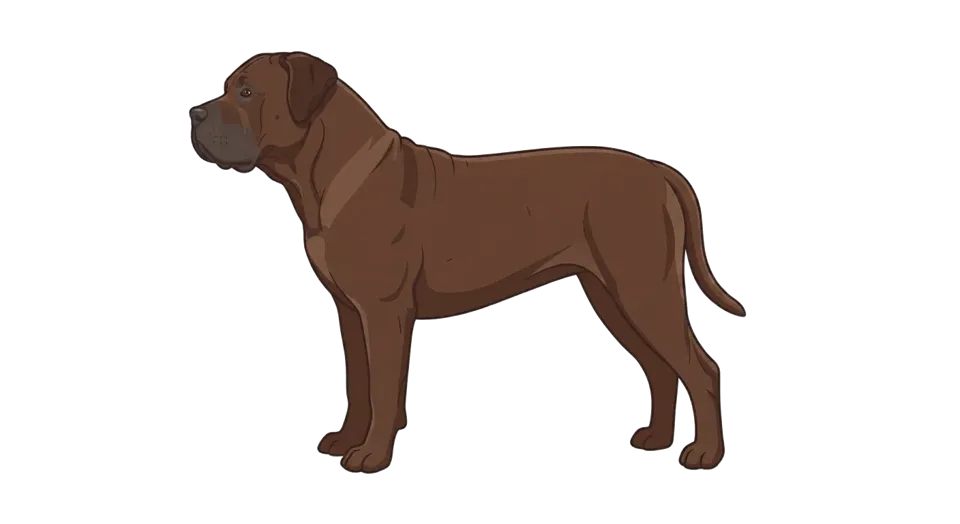
Brown
Standard colour
A rich chocolate brown, less common than fawn or brindle.
Timeline
History & development
1650s
Colonial arrival
Dutch settlers brought mastiff-type dogs to the Cape, which were later crossed with dogs brought by other European settlers.
1700s-1900s
Farm development
Farmers across South Africa bred for dogs able to guard homesteads against predators and intruders with minimal supervision.
1983
Breed society formed
The South African Boerboel Breeders Society was established to standardise and register the breed.
2000s
International export
The Boerboel began to be exported and recognised by kennel clubs outside South Africa.
Reference
Breed standard summary
- body
- Deep chest, strong back, muscular throughout.
- coat
- Short, dense, weather-resistant.
- ears
- Set high, drooping, often docked in country of origin historically.
- eyes
- Medium, any shade of brown, alert expression.
- gait
- Powerful, purposeful stride.
- head
- Large, blocky, with a broad muzzle.
- size
- 59-70 cm at the shoulder.
- tail
- Thick at base, tapering.
- colour
- Brindle, Fawn, Red, Brown. Colours outside this list are seen but are not accepted by the kennel clubs.
- temperament
- Typical of the breed: strongest in independence, energy, trainability. Nervousness or aggression are serious faults in the show ring and in the home.
- general appearance
- Large, muscular mastiff-type dog giving an impression of great power.
Health
What to screen for
Green means little to worry about, amber means ask the breeder for test results, red means manage it actively.
Hip and elbow dysplasia
Watch closely
Insist on hip and elbow scores for both parents given the breed's size.
Dilated cardiomyopathy
Watch closely
Ask breeders whether cardiac screening has been done.
Bloat
Watch closely
Feed smaller meals and avoid vigorous exercise around feeding time.
Entropion
Low concern
Have eyelid conformation checked by a vet in puppyhood.
General information only — always speak to your vet about your own dog.
From real owners
Boerboels in the PAWPOINT Pack
Boerboels added by PawPoint members through their pet passports. Share yours to appear here.
Loading the wall…
Made for the Boerboel
The book, plus hoodies, tees and mugs featuring the Boerboel.