
Border Collie
BOR-duh KOL-ee
United Kingdom (Scottish Borders)· The Anglo-Scottish border hills
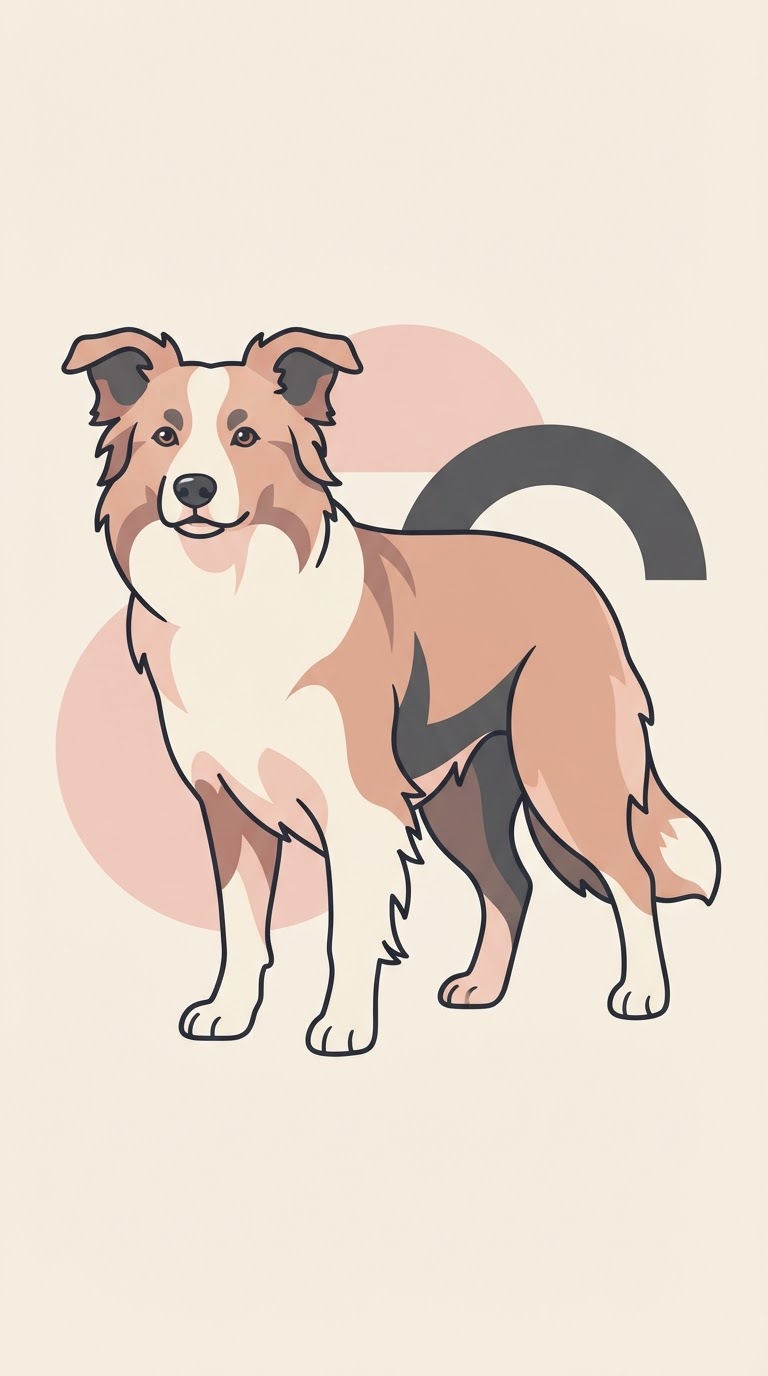
The Border Collie is a medium herding dog from the hill country between Scotland and England, widely regarded as the most trainable and the most demanding breed in the world.
At a glance
Quick facts
Size
Medium
Exercise needs
2 hours+ per day, plus mental work
Home size suited to
Any, if exercise needs are met
Grooming frequency
Twice weekly brush
Coat length
Medium (or smooth)
Sheds
Yes
Lifespan
12-15 years
Town or country
Country preferred
Garden size needed
Medium or larger
Where it comes from
Origins of the Border Collie

The breed takes its name from the border country between Scotland and England, where thin soil supports sheep rather than crops. Flocks scattered across open hills had to be gathered by a dog working half a mile from its handler. That distance bred a dog that thinks for itself and reads stock at a glance.
- Region
- The Anglo-Scottish border hills
- Climate it was bred for
- Cold, wet upland pasture
- Original job
- Gathering and driving hill sheep
The long read
About the breed
It was shaped entirely by sheep. On open upland grazing a shepherd could not walk to every ewe, so the dog had to go out half a mile, read the flock and bring it back on whistled commands. That work rewarded intelligence, stamina and the intense crouching stare known as eye. Most modern Border Collies trace to a single dog, Old Hemp, born in Northumberland in 1893, whose quiet, powerful working style became the template for the breed.
Living with one is a commitment rather than a hobby. A Border Collie will learn almost anything, including habits nobody intended to teach, and it needs mental work as much as exercise. Denied a job it invents one: chasing cars, herding children, patrolling fences, barking at shadows. Two long walks a day are not sufficient on their own; scent work, obedience, agility or actual stock work fill the gap. Many struggle in noisy, unpredictable households.
Today the breed is split between working lines bred purely on trial performance and show lines bred to a written standard, with a growing sport population between them. Well matched to its owner it is affectionate, endlessly capable and often long-lived. Badly matched it becomes the anxious, reactive dog that fills rescue kennels, which is why breed clubs are unusually blunt about who should not buy one.
Living with one
Temperament & needs
Our own ratings, based on the breed standard and how these dogs behave in ordinary homes.
Friendliness
3/5
How openly the Border Collie greets people it does not know.
Trainability
5/5
Learns sequences quickly, including ones nobody intended to teach.
Energy
5/5
Bred for a full working day and rarely satisfied by a walk.
Barking
3/5
Vocal at movement, traffic and cyclists if left unmanaged.
Grooming
3/5
A weekly brush, more during the spring and autumn moult.
Suits a first-time owner
3/5
How forgiving the Border Collie is for someone taking on their first dog.
Sociability
3/5
Loyal to its own household, often reserved with strangers.
Independence
3/5
Works at distance but checks in constantly with its handler.
Illustrated breed standard
The points of the breed
Hover or tap a numbered point to read what the standard asks for.
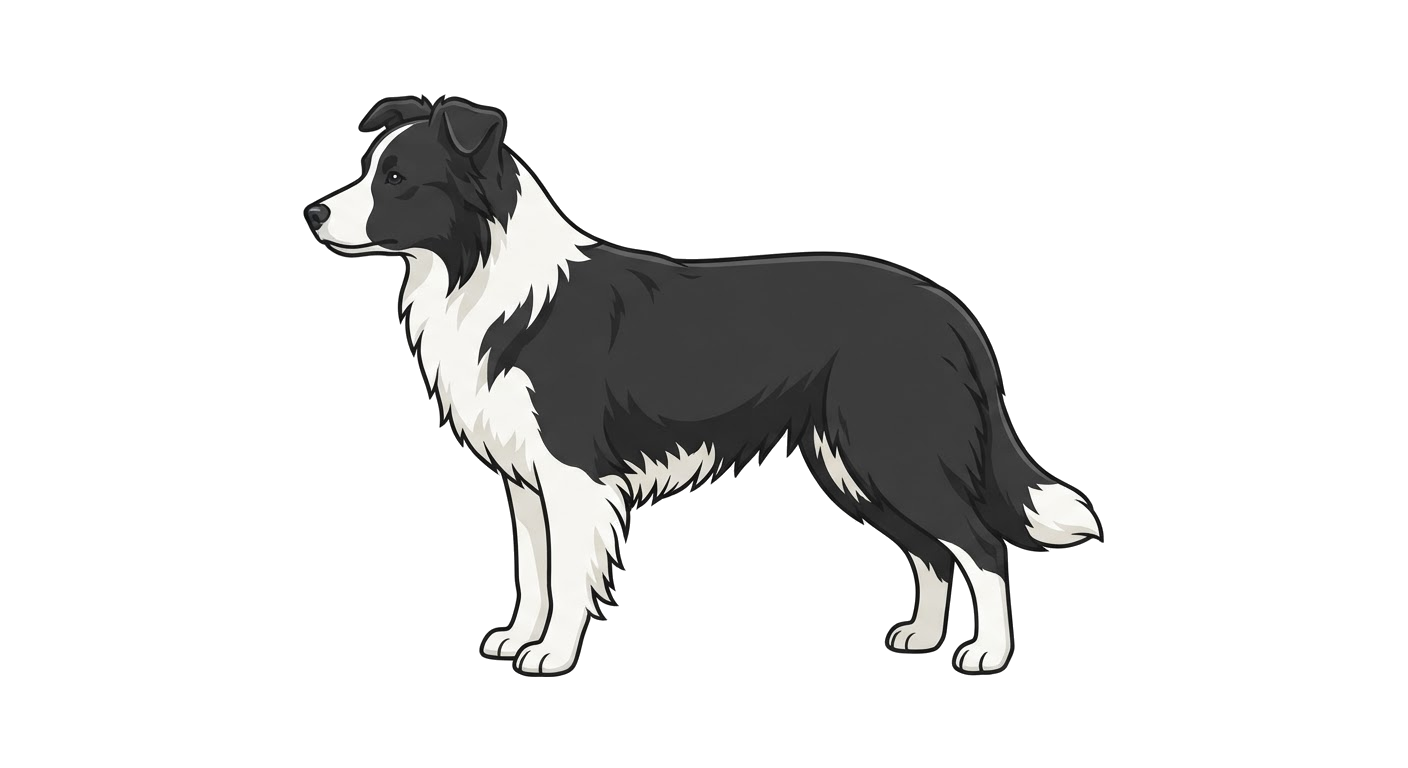
Point 1
Skull
The Border Collie's skull is judged on balance rather than size — proportionate to the body, with a clean cheek and a stop typical of the breed. Coarseness or an over-refined head are both faulted.
Colours & patterns
Recognised coats
Which coats the standard accepts — and which are simply popular.
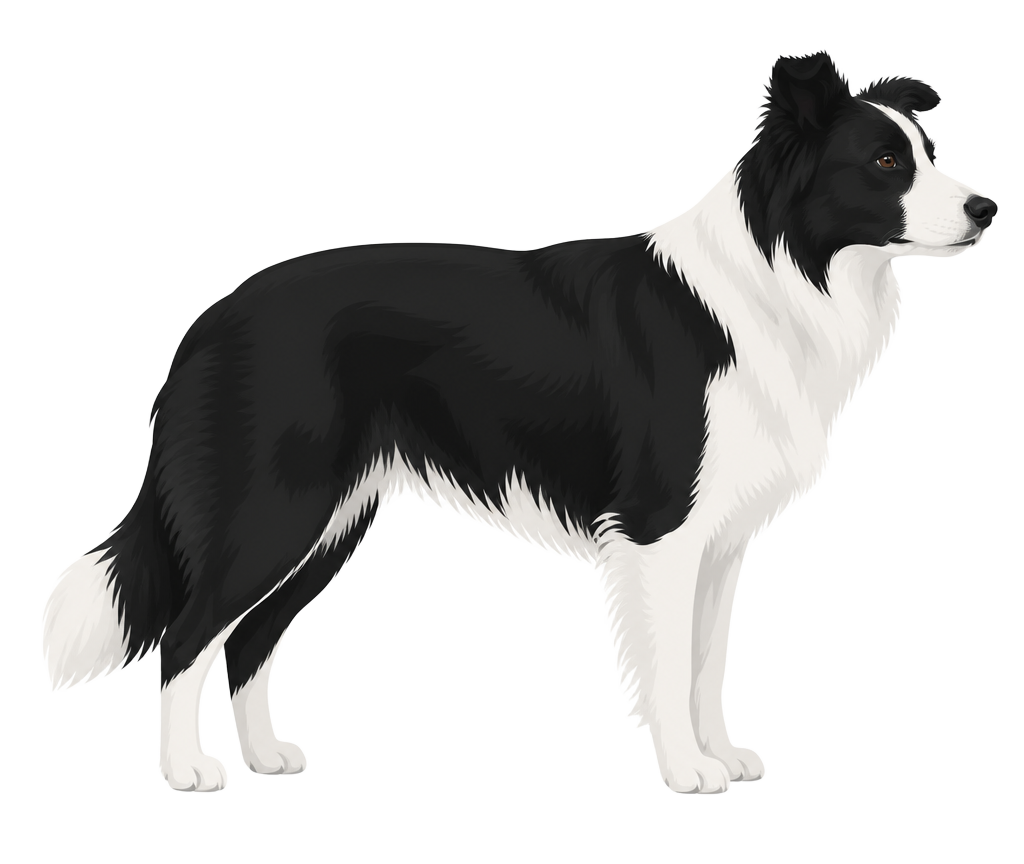
Black and white
Standard colour
The classic and most common marking pattern.
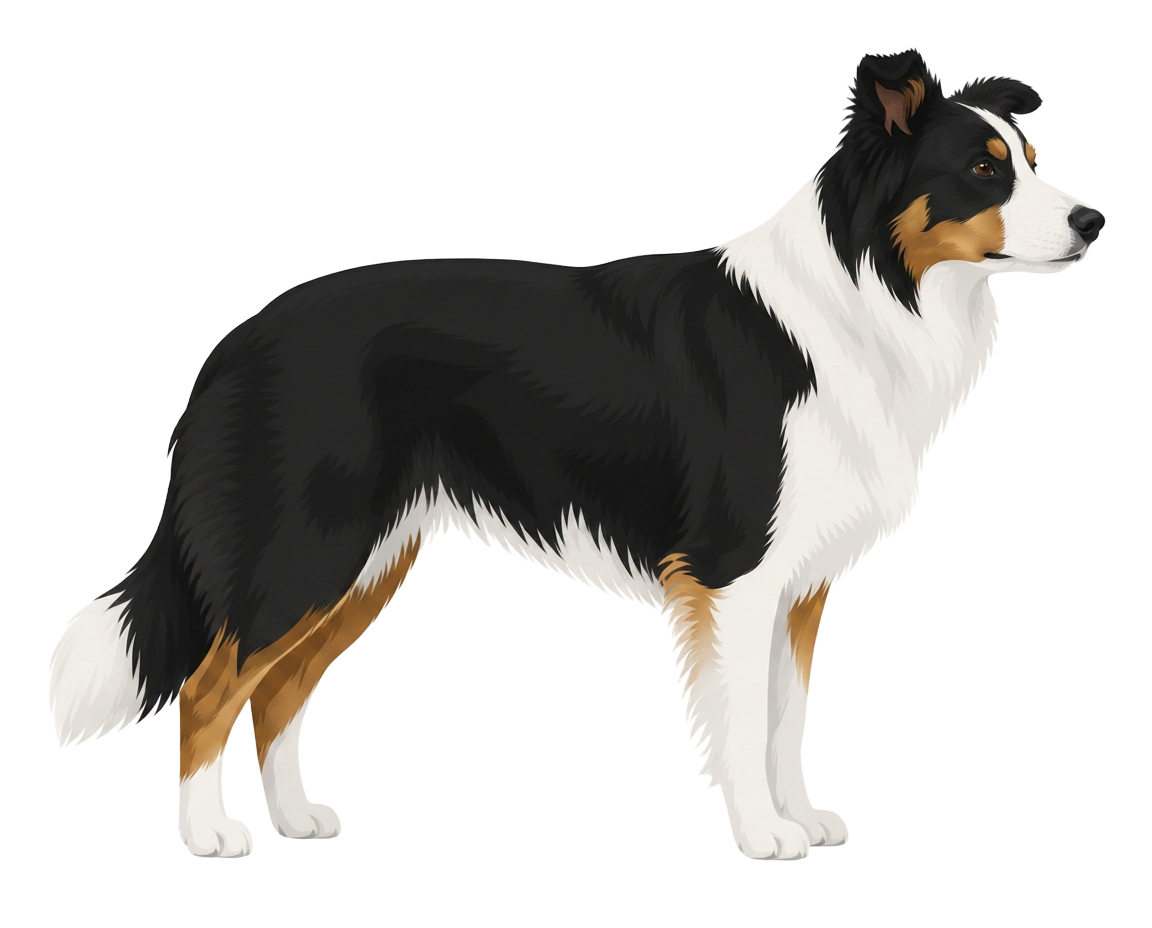
Tricolour
Standard colour
Black and white with tan points on face and legs.
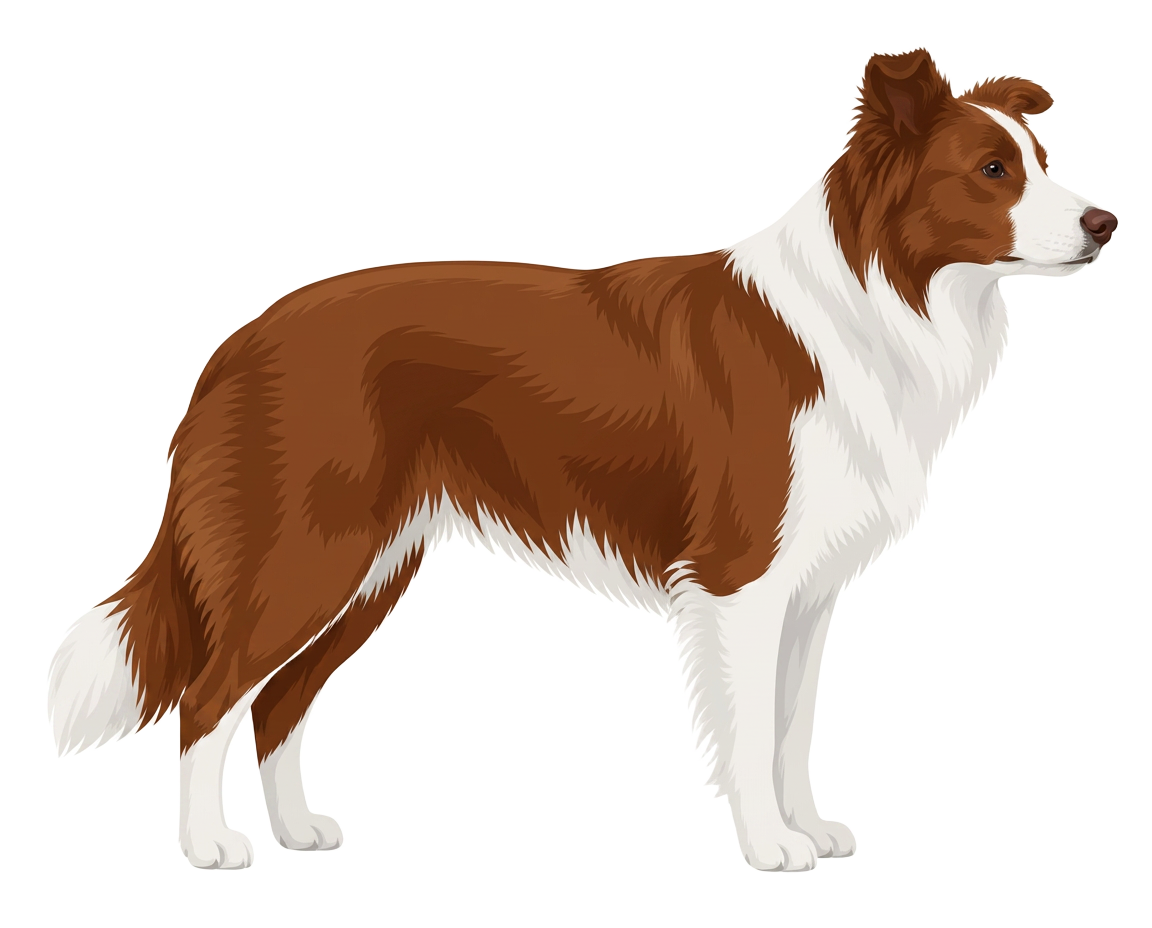
Red and white
Standard colour
A recessive dilution of black, fully within the standard.
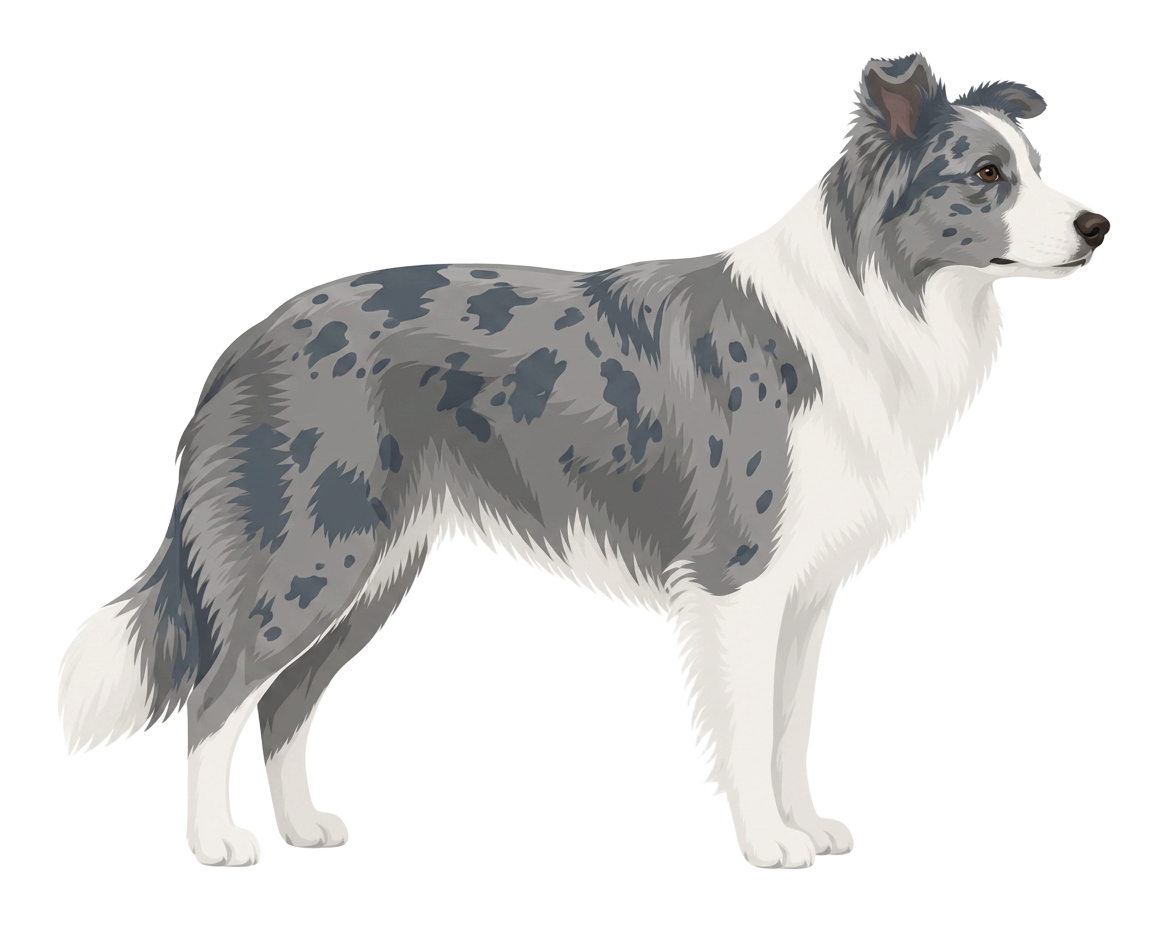
Blue merle
Standard colour
Mottled grey; merle should never be bred to merle.
Outside the standard
Other colours
Dilute coats you will see advertised. They are the same breed, but no kennel club accepts them.
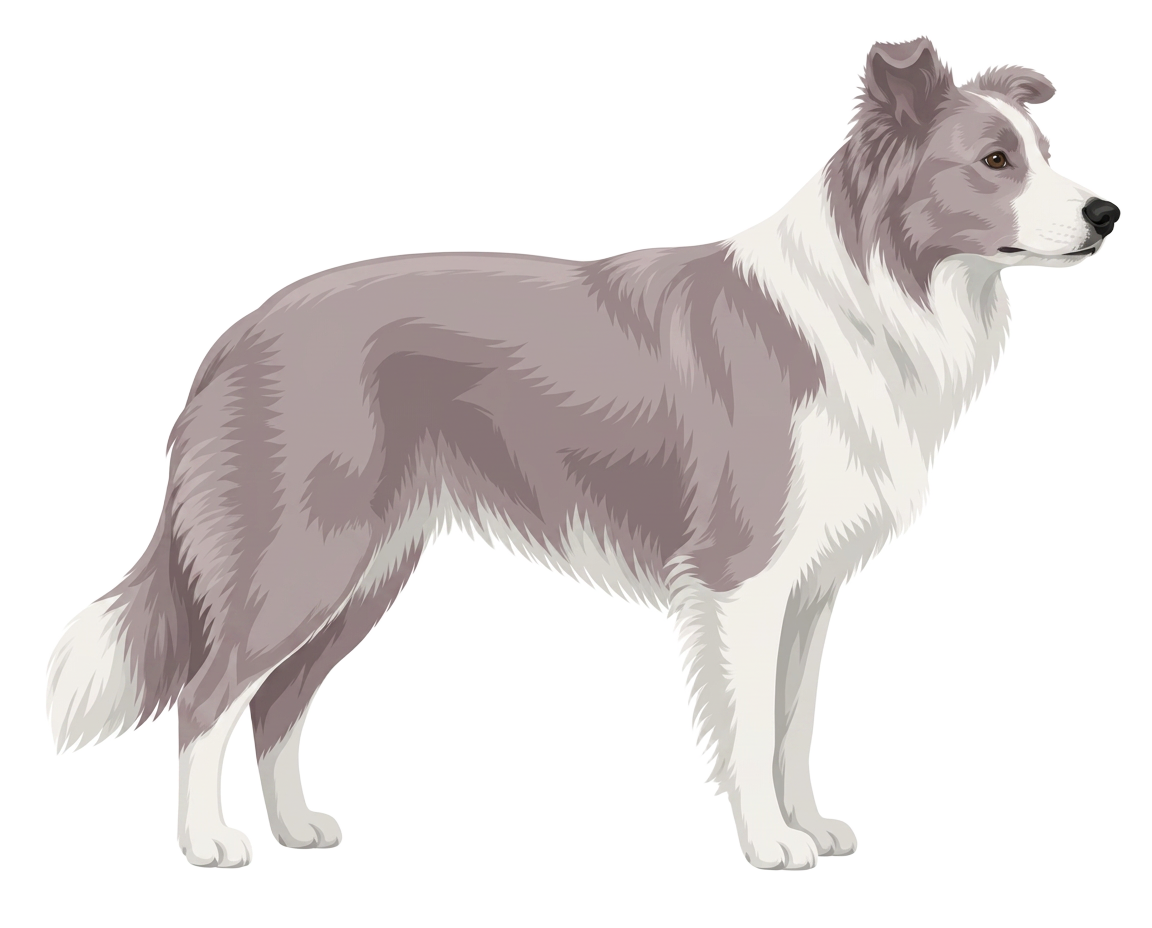
Lilac
Not in the standard
A rare double dilute, outside the working tradition and often marketed at a premium.
Timeline
History & development
1700s
Hill farm sheepdogs
Border farms breed working collies purely on ability to gather and drive sheep, with no interest in appearance.
1873
The first sheepdog trials
Formal trials in Bala, Wales help standardise what good working style looks like.
1894
Old Hemp
A quiet, powerful working dog born in Northumberland becomes the breed's foundation sire.
1976
Kennel Club recognition
The Border Collie is recognised as a show breed in the UK, decades after its working reputation was established.
1995
AKC recognition
The breed enters the AKC Herding Group.
Reference
Breed standard summary
- body
- Slightly longer than tall, with a deep chest, well-sprung ribs and muscular loins.
- coat
- Two varieties — moderately long or smooth. Both have a dense, weather-resistant undercoat.
- ears
- Medium in size and texture, carried semi-erect or erect and highly mobile.
- eyes
- Oval, moderately sized and set well apart, usually brown. Merles may have one or both eyes blue.
- head
- Skull fairly broad with a moderate stop, tapering to a strong muzzle of roughly equal length.
- size
- Dogs roughly 53cm at the withers, bitches slightly less.
- colour
- A wide range is permitted provided white does not dominate.
- temperament
- Keen, alert and highly responsive. Reserved with strangers is acceptable; nervousness or aggression is not.
- general appearance
- Well proportioned and athletic, with smooth outlines and no suggestion of coarseness. Every line suggests speed and endurance.
Health
What to screen for
Green means little to worry about, amber means ask the breeder for test results, red means manage it actively.
Hip dysplasia
Screen for it
Ask to see hip scores for both parents against the breed mean.
Collie eye anomaly
Screen for it
A DNA test exists; both parents should be tested clear or carrier-to-clear.
Epilepsy
Watch closely
No test is available, so ask the breeder about seizures in the wider family.
Noise and movement sensitivity
Screen for it
Early, careful exposure to traffic and livestock reduces reactivity later.
General longevity
Low concern
Fit working lines commonly reach twelve to fifteen years.
General information only — always speak to your vet about your own dog.
From real owners
Dogs like this
Border Collies added by PawPoint members through their pet passports. Share yours to appear here.
Loading the wall…
Made for the Border Collie
The book, plus prints, hoodies and mugs using our own Border Collie illustration — and one everyday accessory that suits any dog.

The book
Pawpoint: The Complete Dog Breed Book
Every officially recognised breed plus the unofficial ones nobody else documents. 400+ pages, hardback, printed and shipped from the UK.
Own stock — shipped by us
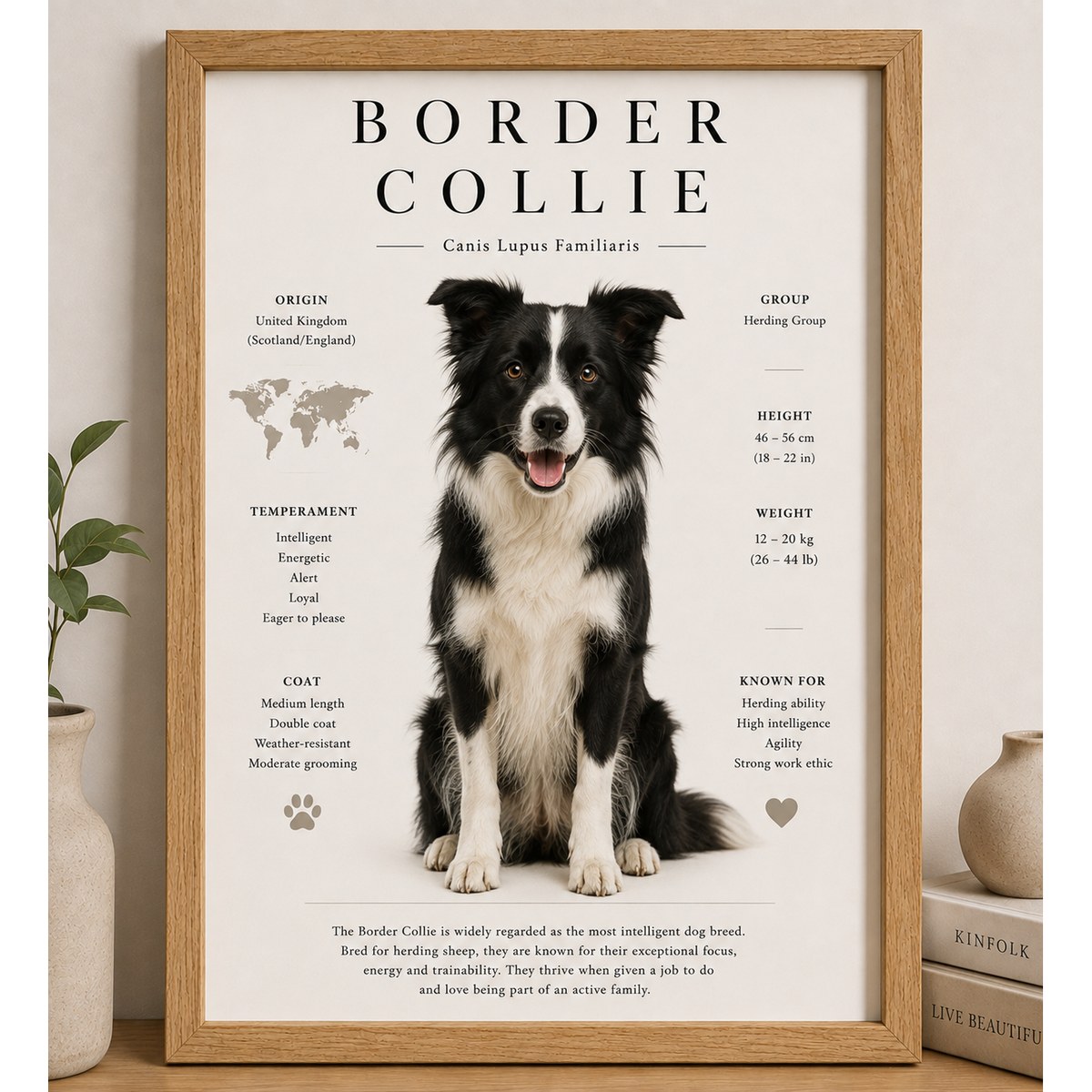
Framed poster
Border Collie Framed Poster
Framed giclée print of the breed, museum-quality paper in a solid oak frame. Printed on demand.
Printed to order
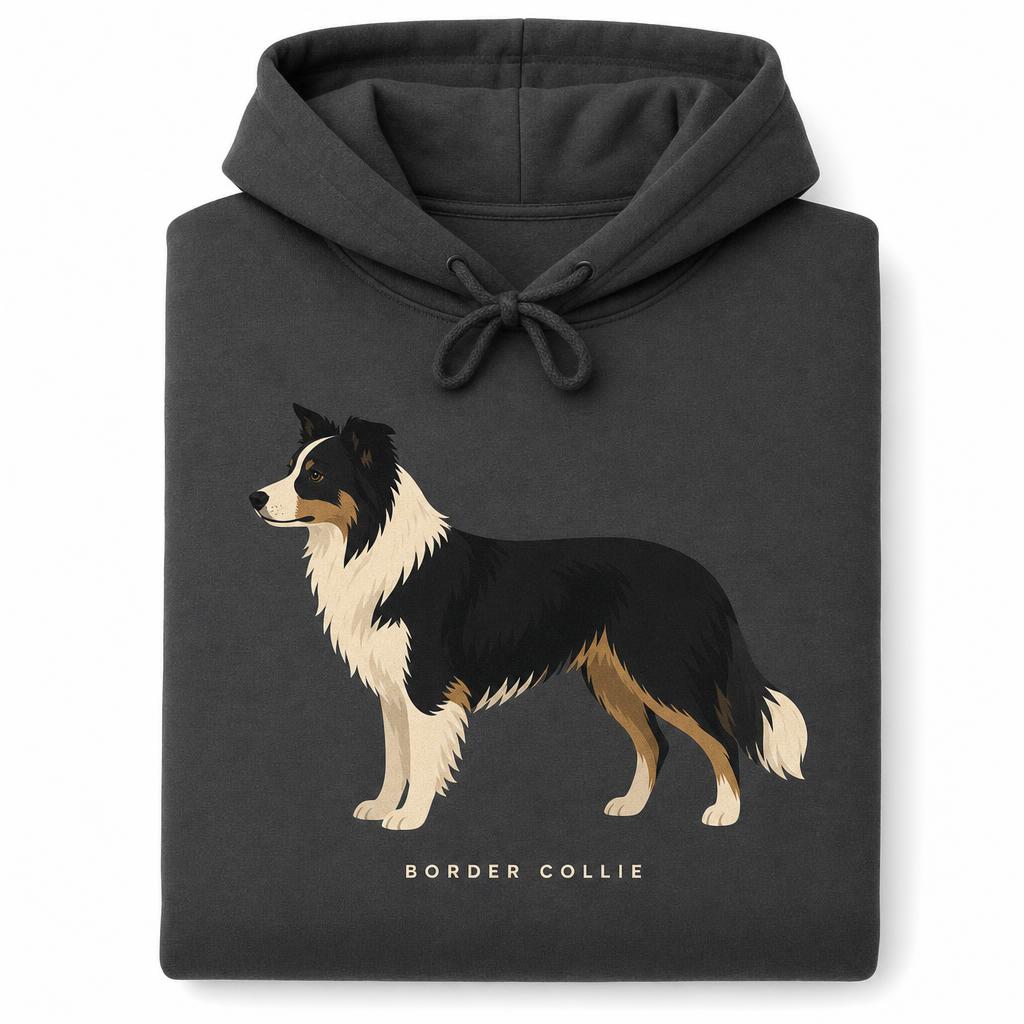
Hoodie
Border Collie Hoodie
Heavyweight charcoal hoodie carrying the breed illustration on the chest. Printed on demand.
Printed to order
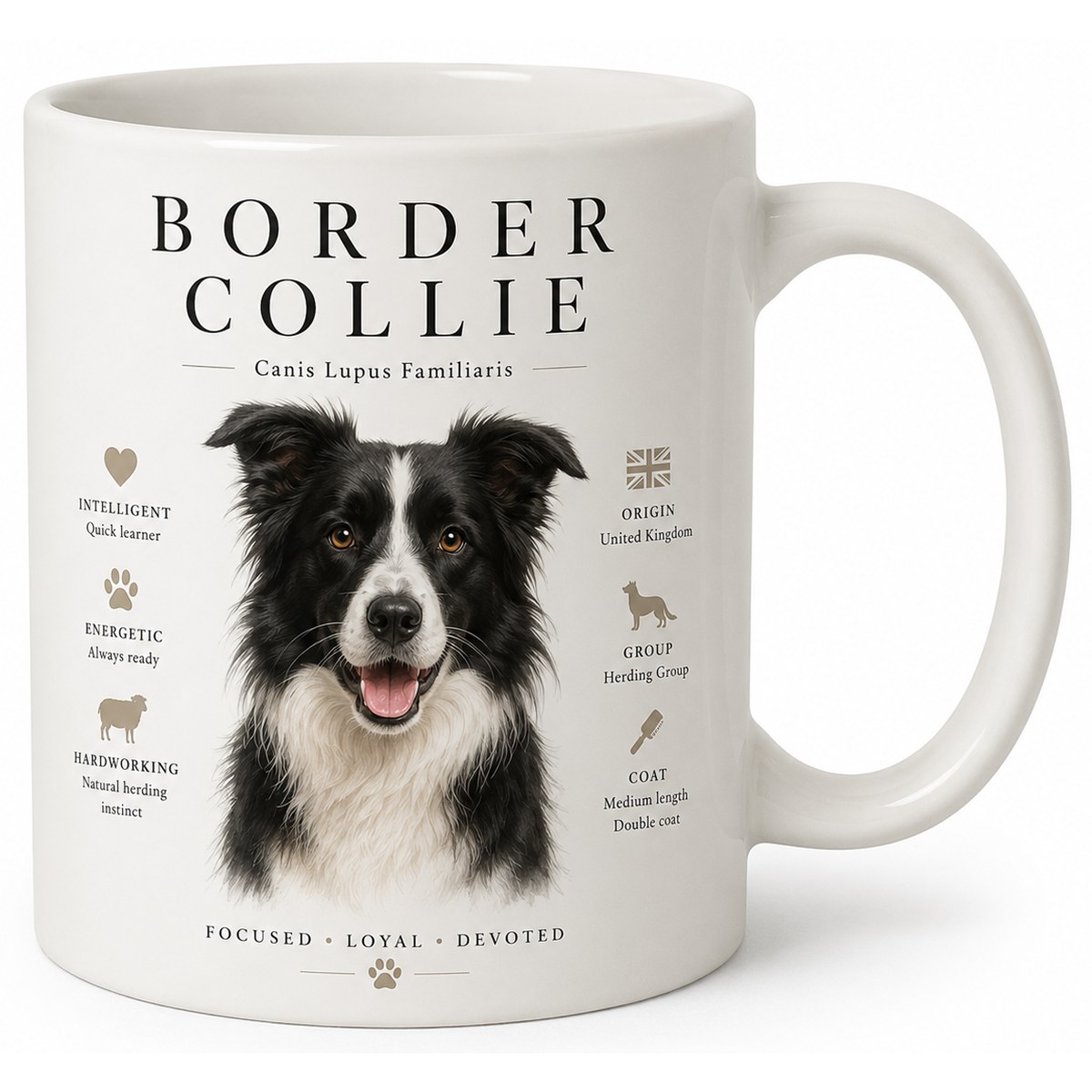
Mug
Border Collie Mug
11oz stoneware mug with the breed illustration. Dishwasher safe.
Printed to order
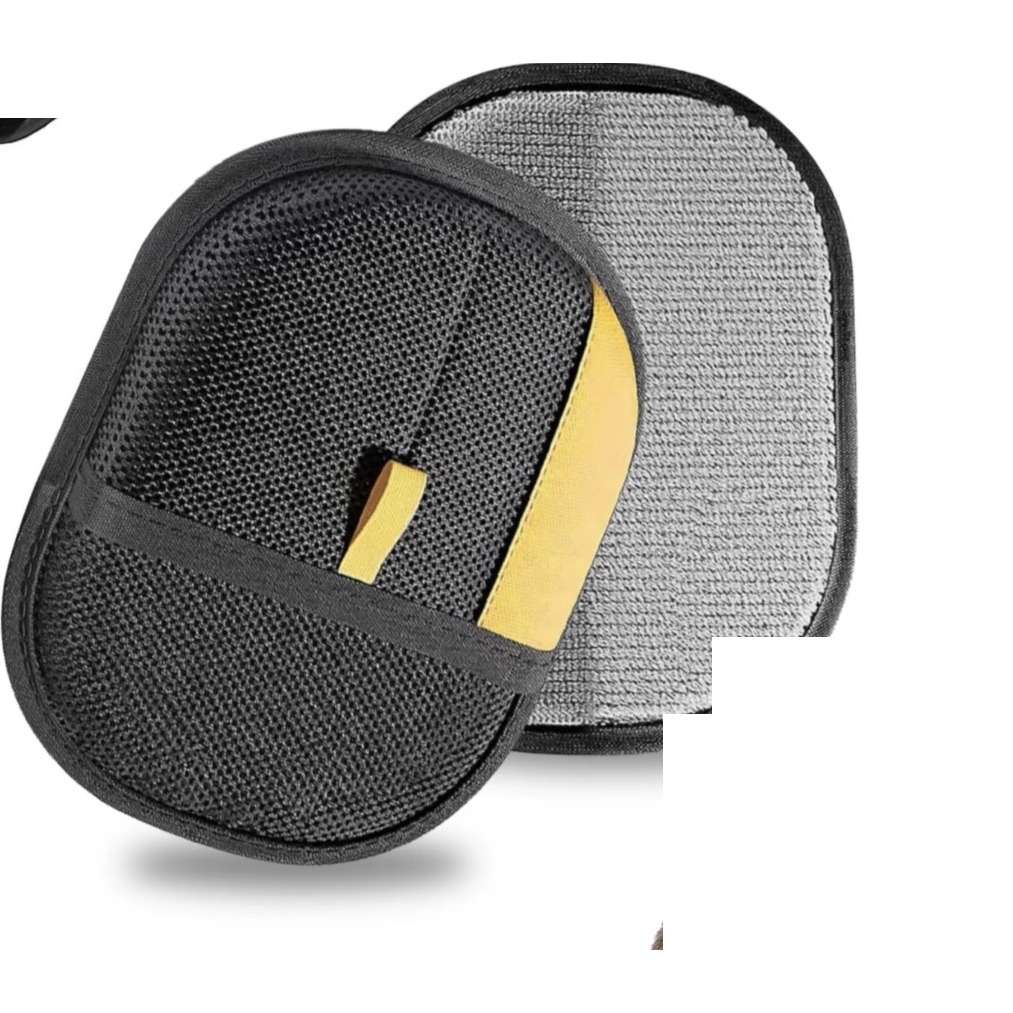
Accessory
Slicker & Deshedding Brush
Self-cleaning slicker head for coats of every length.
Fits any dog
Pawpoint on YouTube
Watch the full Border Collie video
Breed deep-dives, history and honest ownership talk. New film every week.
Watch now