
Borzoi
"BOR-zoy"
Russia· Russian steppe estates
The Borzoi is a tall, elegant Russian sighthound bred by aristocratic hunters to course wolves and hare across open steppe at high speed.
At a glance
Quick facts
Size
Large
Exercise needs
30-45 minutes plus sprint sessions
Home size suited to
Large home with space to stretch out
Grooming frequency
Brush every other day, clip regularly
Coat length
Curly
Sheds
Very little
Lifespan
9-11 years
Town or country
Happiest in the country
Garden size needed
Large and securely fenced
Where it comes from
Origins of the Borzoi
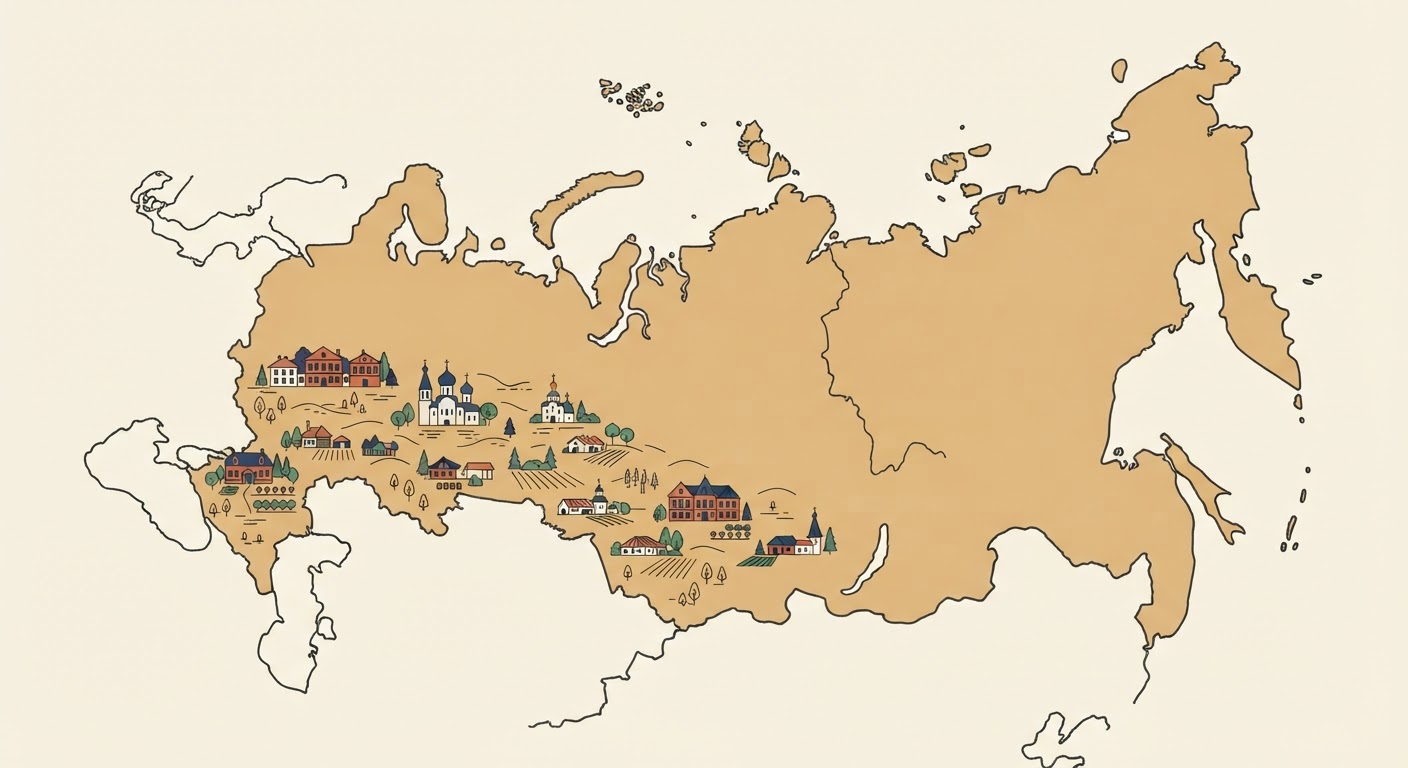
Bred on the great estates of Russian nobility, the Borzoi needed to cross open, snow-covered steppe at speed and confront a wolf on sighting it, which favoured its long legs, deep chest and long, silky coat suited to a cold climate.
- Region
- Russian steppe estates
- Climate it was bred for
- Cold, open steppe and forest edge
- Original job
- Coursing wolves and hare at speed on open ground
The long read
About the breed
The breed developed over centuries in Russia, likely from crosses between native coursing hounds and coated breeds brought from Central Asia, reaching its refined modern form on the estates of the Russian nobility, where wolf hunting with Borzoi and pairs of hounds working in relay was a formal, ritualised sport into the nineteenth century. The Russian Revolution nearly ended the breed at home, as many aristocratic kennels were broken up, and much of the surviving bloodline outside Russia descends from dogs gifted to European and American nobility and heads of state before 1917.
Living with a Borzoi means living with a dog built for a short, explosive gallop rather than constant activity. Indoors they are famously calm, quiet and almost cat-like, content to lounge for much of the day, but outdoors the sighthound instinct is strong and a Borzoi will chase anything that moves fast, including small dogs and cats it does not already know, so secure, high fencing and a fenced area for off-lead running matter more than daily mileage. They are gentle and undemonstrative rather than boisterously affectionate, and they tend to be reserved with strangers.
Today the Borzoi is kept mainly as a companion and show dog, with a smaller community still involved in lure coursing. Its size and deep chest carry the same bloat risk as other large, narrow-bodied breeds, and its thin skin and low body fat make it sensitive to cold, sedation and rough play, so owners of Borzoi tend to be experienced sighthound people who understand these breed-specific quirks.
Living with one
Temperament & needs
Our own ratings, based on the breed standard and how these dogs behave in ordinary homes.
Friendliness
3/5
How openly the Borzoi greets people it does not know.
Trainability
2/5
Independent sighthound mind, not naturally biddable.
Energy
3/5
Needs brief high-speed runs rather than long endurance walks.
Barking
1/5
Notably quiet indoors.
Grooming
3/5
Long silky coat needs regular brushing to prevent tangles.
Suits a first-time owner
2/5
How forgiving the Borzoi is for someone taking on their first dog.
Sociability
3/5
Gentle but reserved, especially with strangers.
Independence
4/5
Will chase fast-moving animals on instinct.
Illustrated breed standard
The points of the breed
Hover or tap a numbered point to read what the standard asks for.
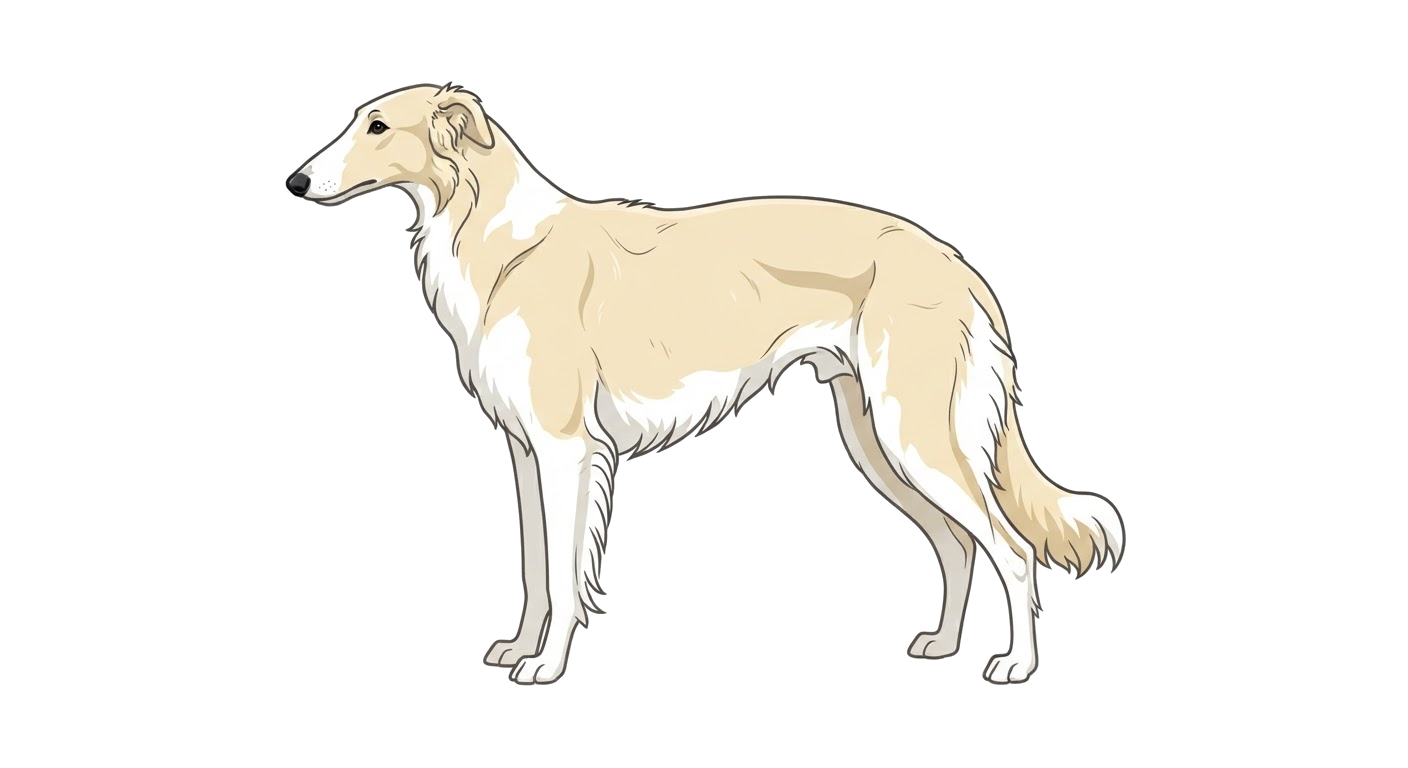
Point 1
Skull
The Borzoi's skull is judged on balance rather than size — proportionate to the body, with a clean cheek and a stop typical of the breed. Coarseness or an over-refined head are both faulted.
Colours & patterns
Recognised coats
Which coats the standard accepts — and which are simply popular.
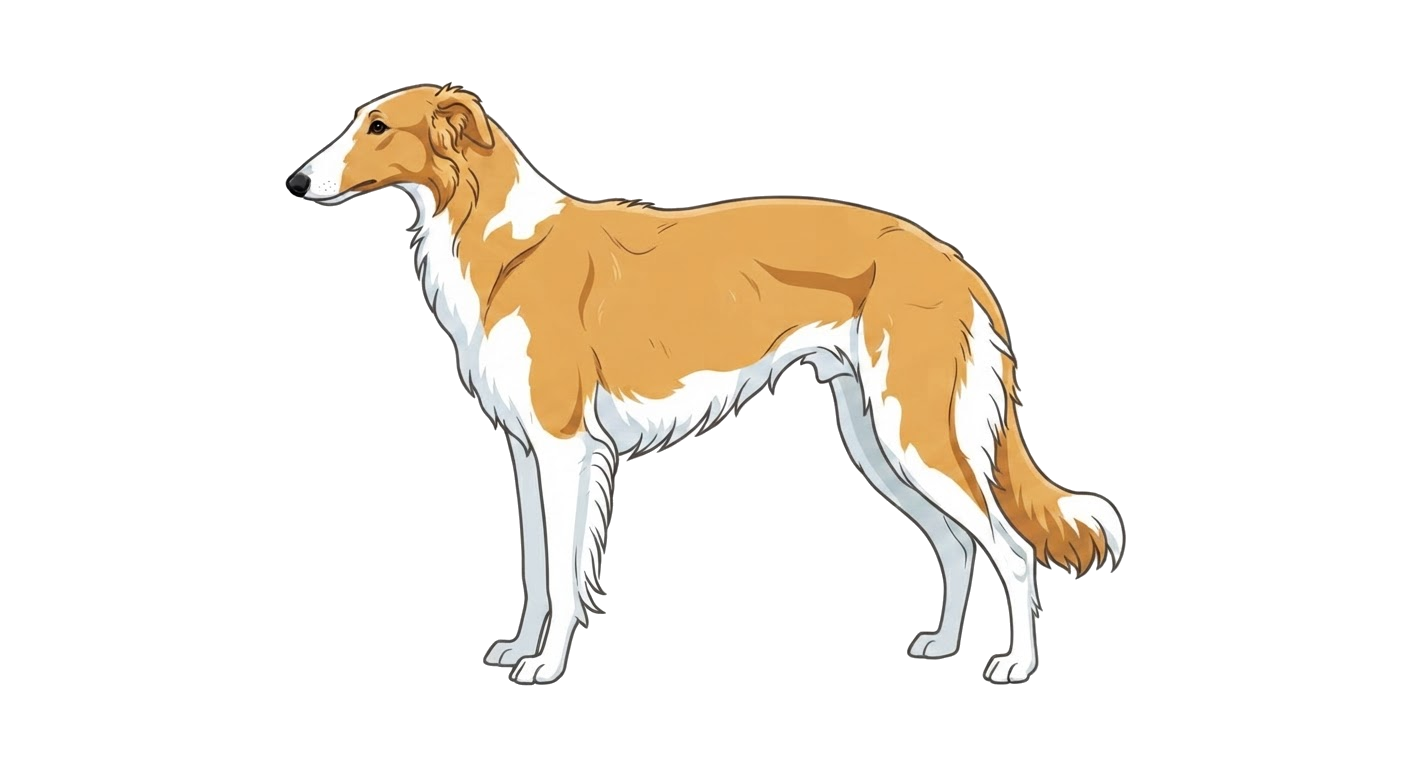
White and gold
Standard colour
A classic combination, pale gold patches on white.
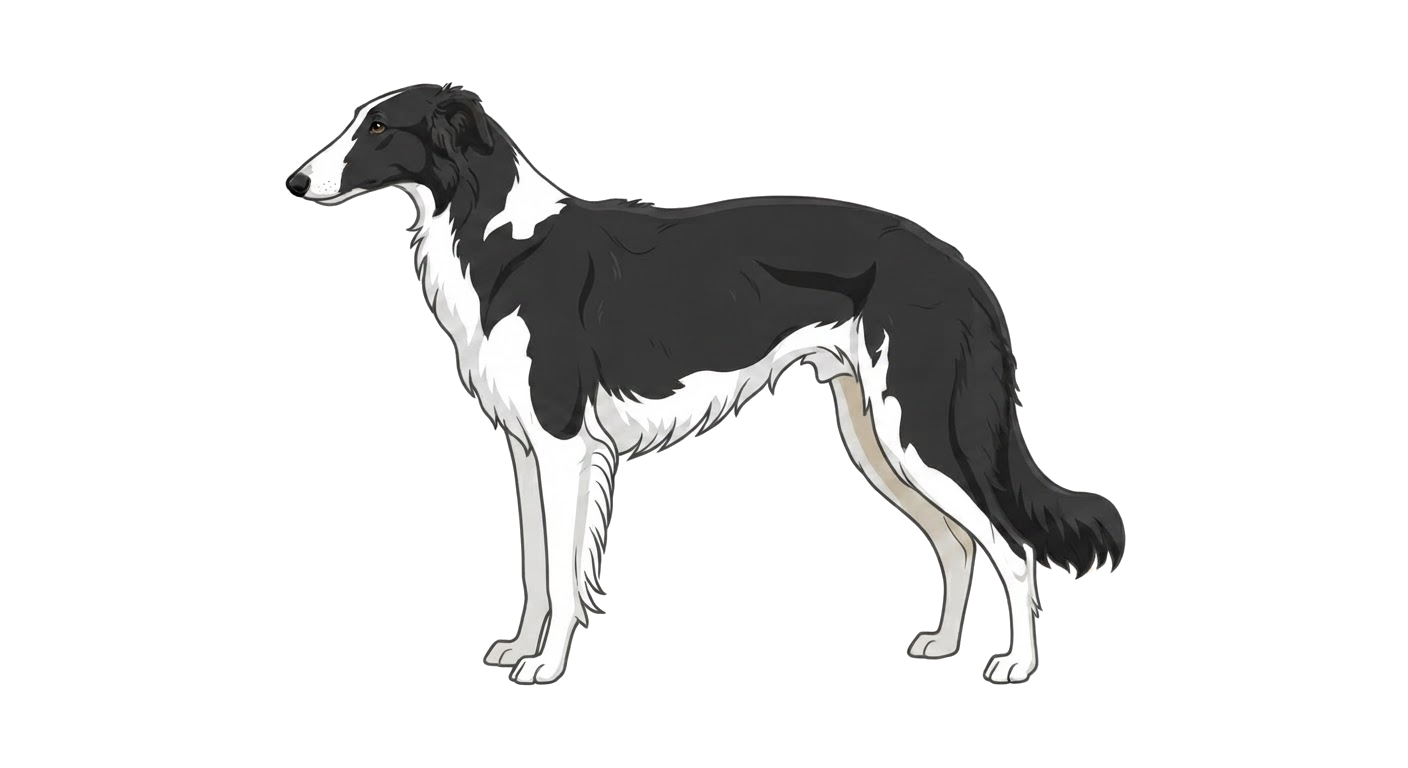
Black and white
Standard colour
Bold black patching on a white base.
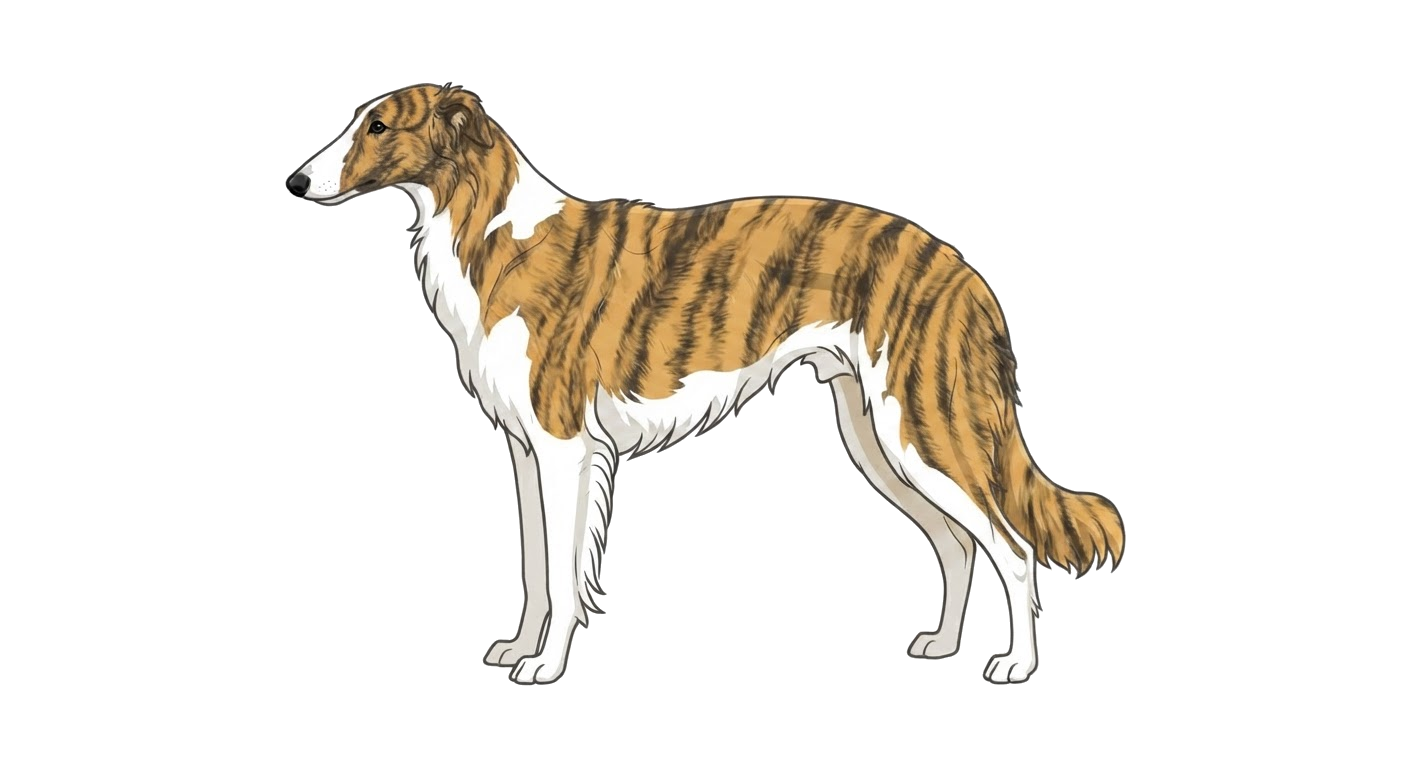
Brindle
Standard colour
A striped pattern, less common but accepted.
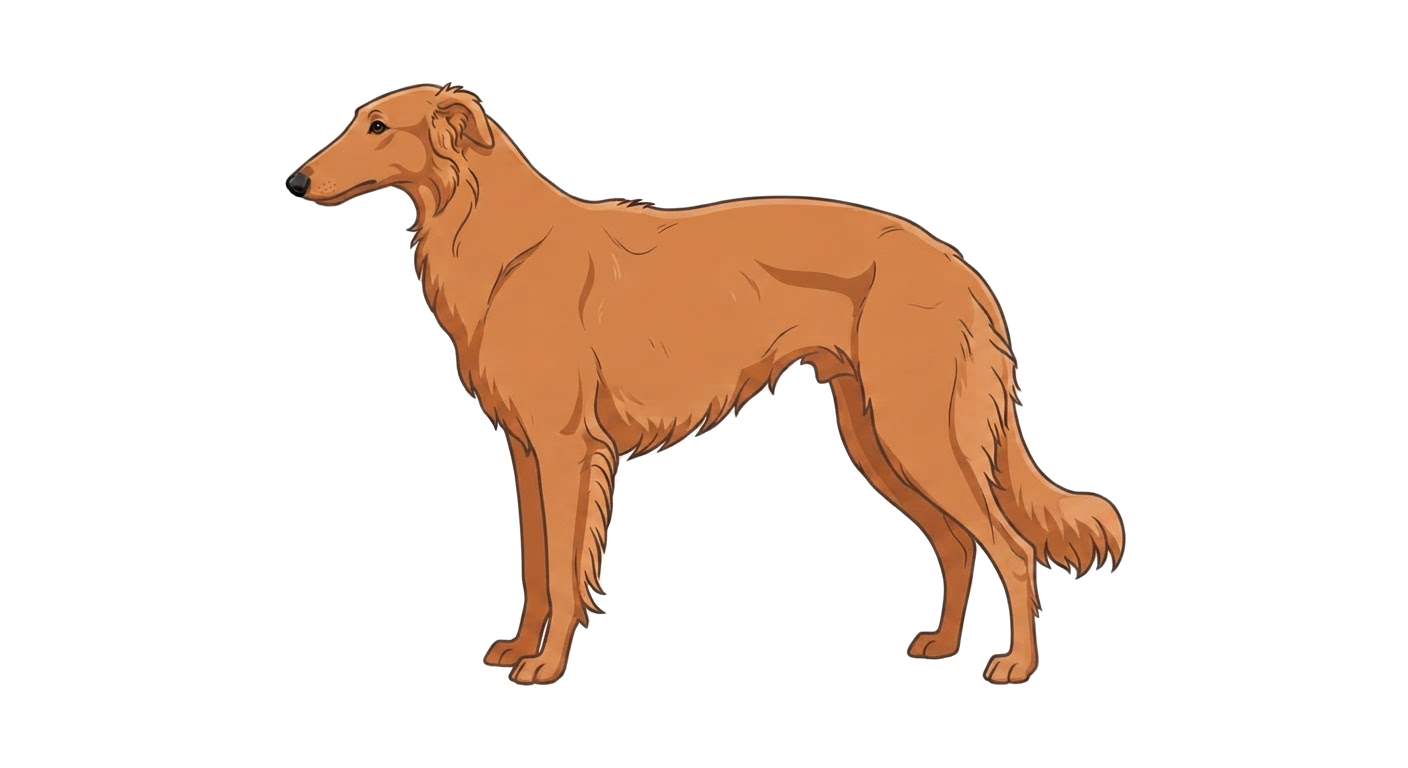
Solid red
Standard colour
A rarer self-coloured coat.
Timeline
History & development
1600s
Early development
Coursing hounds resembling the modern Borzoi were bred on Russian noble estates.
1873
Formal standard
Russian aristocrats formalised breeding practices and hunting rules for the Borzoi.
1889
Western export
Borzoi were exhibited and exported to Britain and the United States, gaining aristocratic popularity abroad.
1917
Russian Revolution disruption
Many Russian aristocratic kennels were dismantled, shifting the breed's population centre abroad.
1950s onward
The breed today
Kennel club registrations settled into a steady pattern and the Borzoi moved from a working specialist to a family companion, with breed clubs in the UK and abroad now focused on health testing and keeping true type alive.
Reference
Breed standard summary
- body
- Deep chest, arched loin, narrow waist.
- coat
- Long, silky, wavy or curly.
- ears
- Small, folded back when at rest.
- eyes
- Dark, expressive, almond-shaped.
- gait
- Free, effortless, ground-covering gallop.
- head
- Long, narrow, Roman-nosed profile.
- size
- 68-78 cm at the shoulder.
- tail
- Long, low-set, carried in a curve.
- colour
- White and gold, Black and white, Brindle, Solid red. Colours outside this list are seen but are not accepted by the kennel clubs.
- temperament
- Typical of the breed: strongest in independence, energy, sociability. Nervousness or aggression are serious faults in the show ring and in the home.
- general appearance
- Tall, elegant sighthound with a graceful, arched topline.
Health
What to screen for
Green means little to worry about, amber means ask the breeder for test results, red means manage it actively.
Bloat
Watch closely
Feed smaller meals and avoid exercise around feeding times.
Cardiac issues
Watch closely
Ask breeders about heart screening given the breed's deep chest.
Sensitivity to anaesthesia
Screen for it
Make sure any vet is experienced with sighthound-appropriate drug dosing.
General information only — always speak to your vet about your own dog.
From real owners
Dogs like this
Borzois added by PawPoint members through their pet passports. Share yours to appear here.
Loading the wall…
Made for the Borzoi
The book, plus prints, hoodies and mugs using our own Borzoi illustration — and one everyday accessory that suits any dog.

The book
Pawpoint: The Complete Dog Breed Book
Every officially recognised breed plus the unofficial ones nobody else documents. 400+ pages, hardback, printed and shipped from the UK.
Own stock — shipped by us
Framed poster
Borzoi Framed Poster
Museum-weight print of our Borzoi illustration, framed or unframed.
Printed to order
Hoodie
Borzoi Hoodie
Heavyweight hoodie carrying the Borzoi illustration on the chest.
Printed to order
Mug
Borzoi Mug
Ceramic mug with the Borzoi illustration wrapped around it.
Printed to order
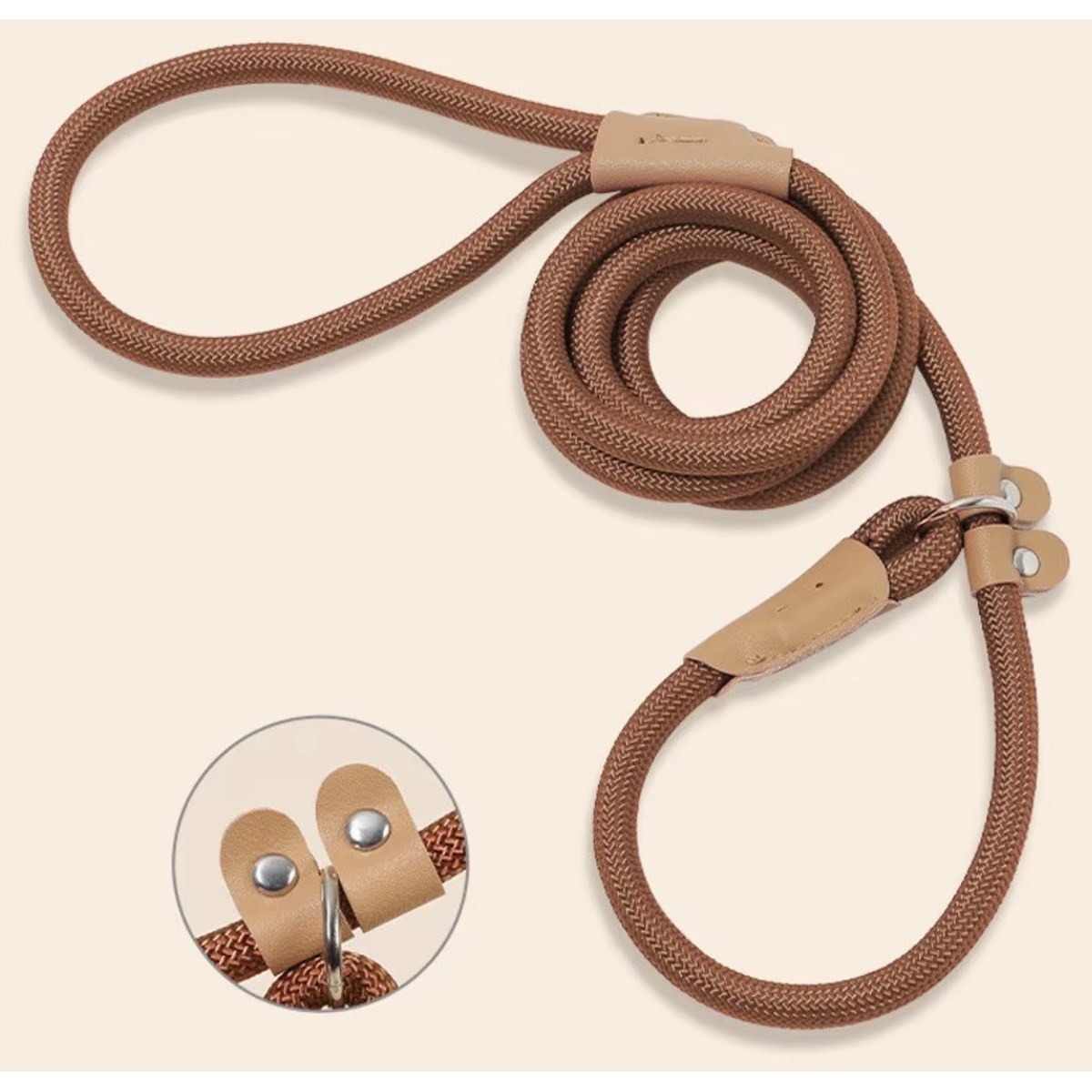
Accessory
Rope Slip Lead
Braided rope lead with a leather stop, 150cm. Good for training walks.
Fits any dog

Pawpoint on YouTube
Watch the full Borzoi video
Breed deep-dives, history and honest ownership talk. New film every week.
Watch now