
Bouvier des Flandres
"BOO-vee-ay day FLON-druh"
Belgium· Flanders
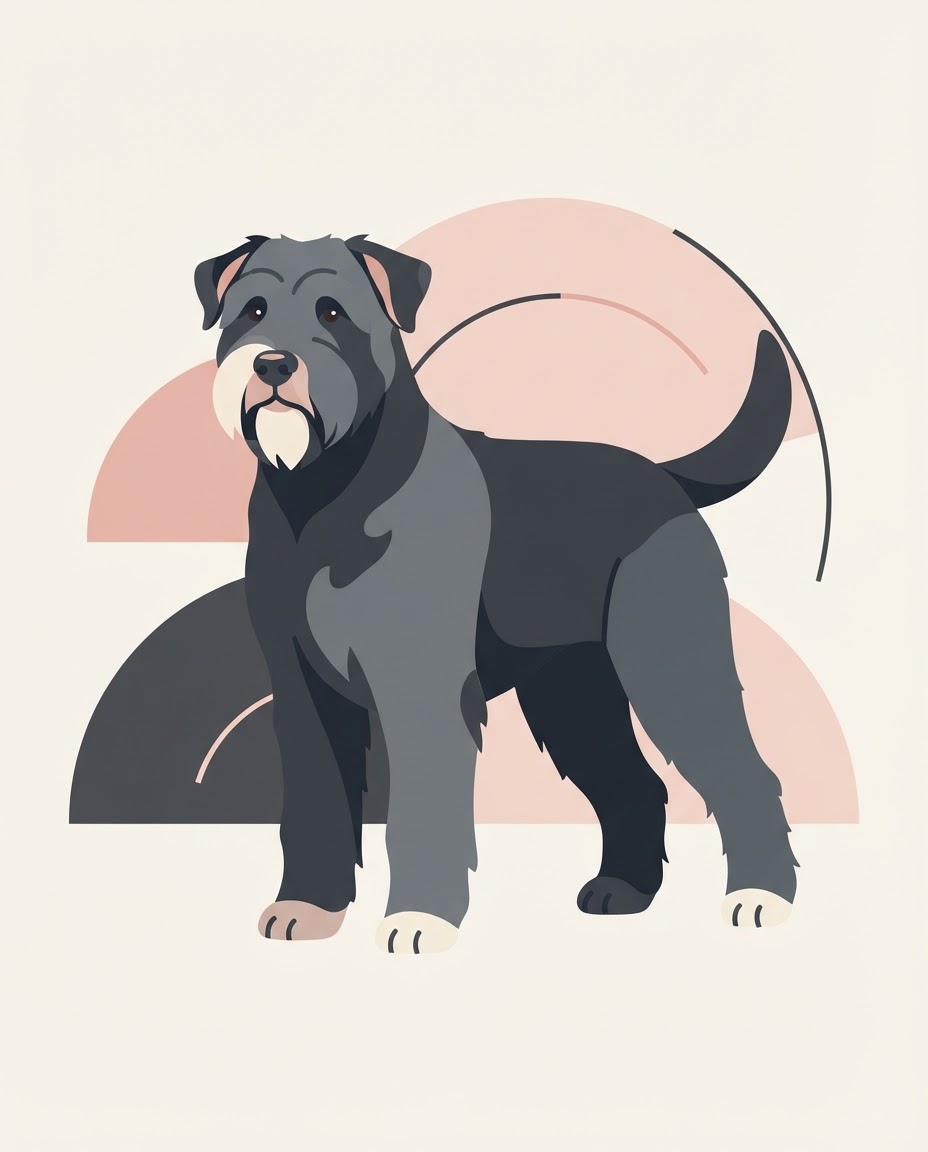
The Bouvier des Flandres is a large, powerfully built herding and cattle-driving dog from the Flanders region spanning northern France and Belgium, originally an all-purpose farm dog rather than a specialist.
At a glance
Quick facts
Size
Large
Exercise needs
1 hour daily plus mental work
Home size suited to
Medium to large home
Grooming frequency
Twice weekly brush
Coat length
Medium
Sheds
Yes, heavily when moulting
Lifespan
10-12 years
Town or country
Either, with enough exercise
Garden size needed
Medium or larger
Where it comes from
Origins of the Bouvier des Flandres
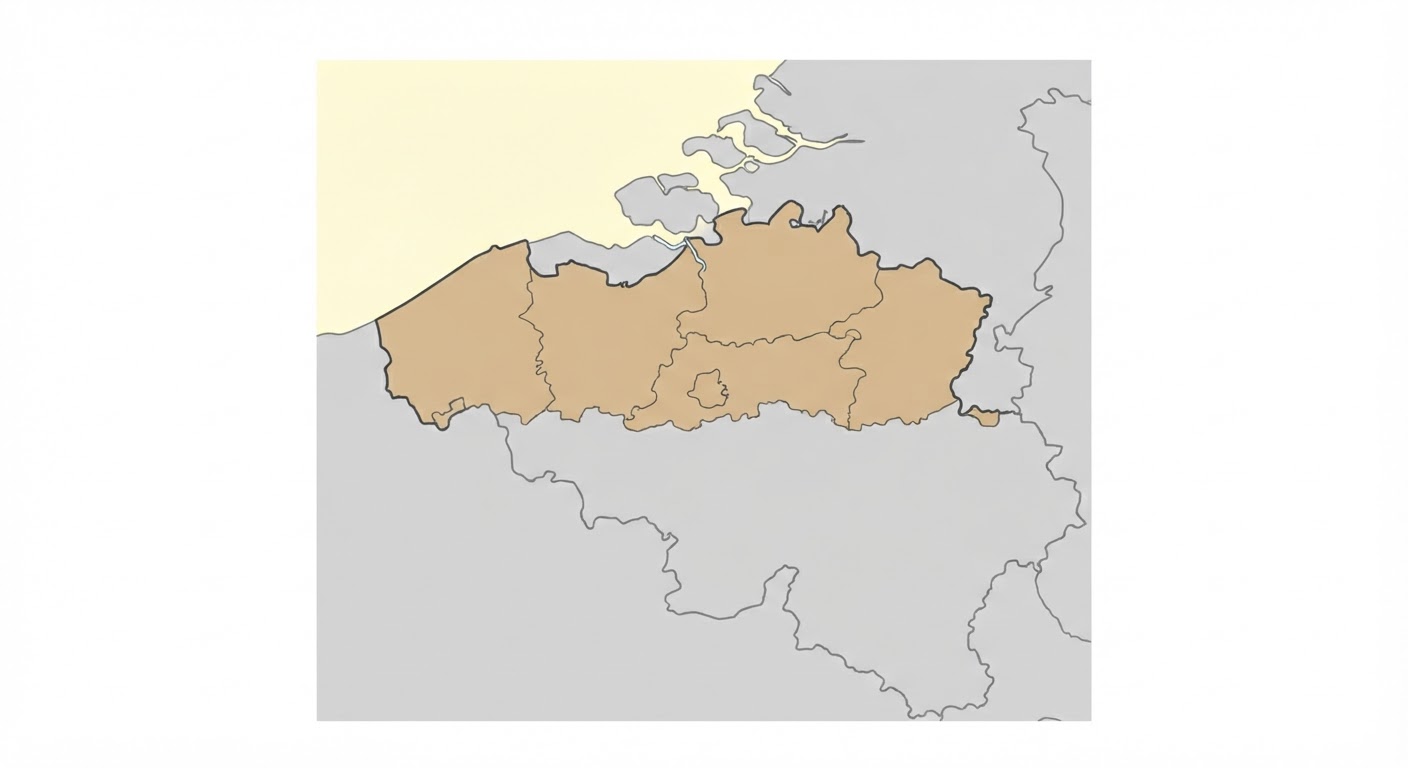
Bred by farmers across the flat, wet farmland of Flanders, the Bouvier needed a weatherproof coat and heavy build to drive cattle and pull carts through mud and cold, and to guard isolated farmyards.
- Region
- Flanders
- Climate it was bred for
- Cool, damp, low-lying farmland
- Original job
- Driving cattle, pulling carts, farm guarding
The long read
About the breed
Farmers in Flanders bred the Bouvier to drive cattle to market, pull carts, and guard the farmyard, valuing a rough, weatherproof coat and heavy build over refinement; the name simply means "cowherd" in French. The breed nearly disappeared during the First World War, when much of Flanders became a battlefield, and the modern population descends largely from a small number of survivors, including a dog named Nic de Sottegem who is behind many pedigrees today. It later found further work as a police and military dog owing to its strength and trainability.
Living with a Bouvier means living with a large, calm, watchful dog that takes its guarding role seriously but is generally gentle and patient with its own family, including children. They need a confident, consistent handler and enough exercise and mental work to stay settled, since an under-stimulated Bouvier can become pushy or overprotective. The dense, tousled double coat mats readily and needs proper brushing several times a week, plus regular professional grooming to keep it manageable.
Today the Bouvier is kept as a working farm dog in parts of Belgium and France and, more widely, as a family guardian and show dog. Its size brings the joint and bloat risks common to large breeds, and its heavy facial furnishings need cleaning to avoid skin irritation and eye problems.
Living with one
Temperament & needs
Our own ratings, based on the breed standard and how these dogs behave in ordinary homes.
Friendliness
3/5
How openly the Bouvier des Flandres greets people it does not know.
Trainability
4/5
Intelligent and capable, used in police and service work.
Energy
3/5
Needs daily exercise but is not hyperactive.
Barking
2/5
Alerts to genuine concerns rather than barking needlessly.
Grooming
4/5
Dense, tousled coat mats easily and needs frequent brushing plus trimming.
Suits a first-time owner
3/5
How forgiving the Bouvier des Flandres is for someone taking on their first dog.
Sociability
3/5
Loyal to family, reserved and watchful with strangers.
Independence
3/5
Confident and can be strong-willed without training.
Illustrated breed standard
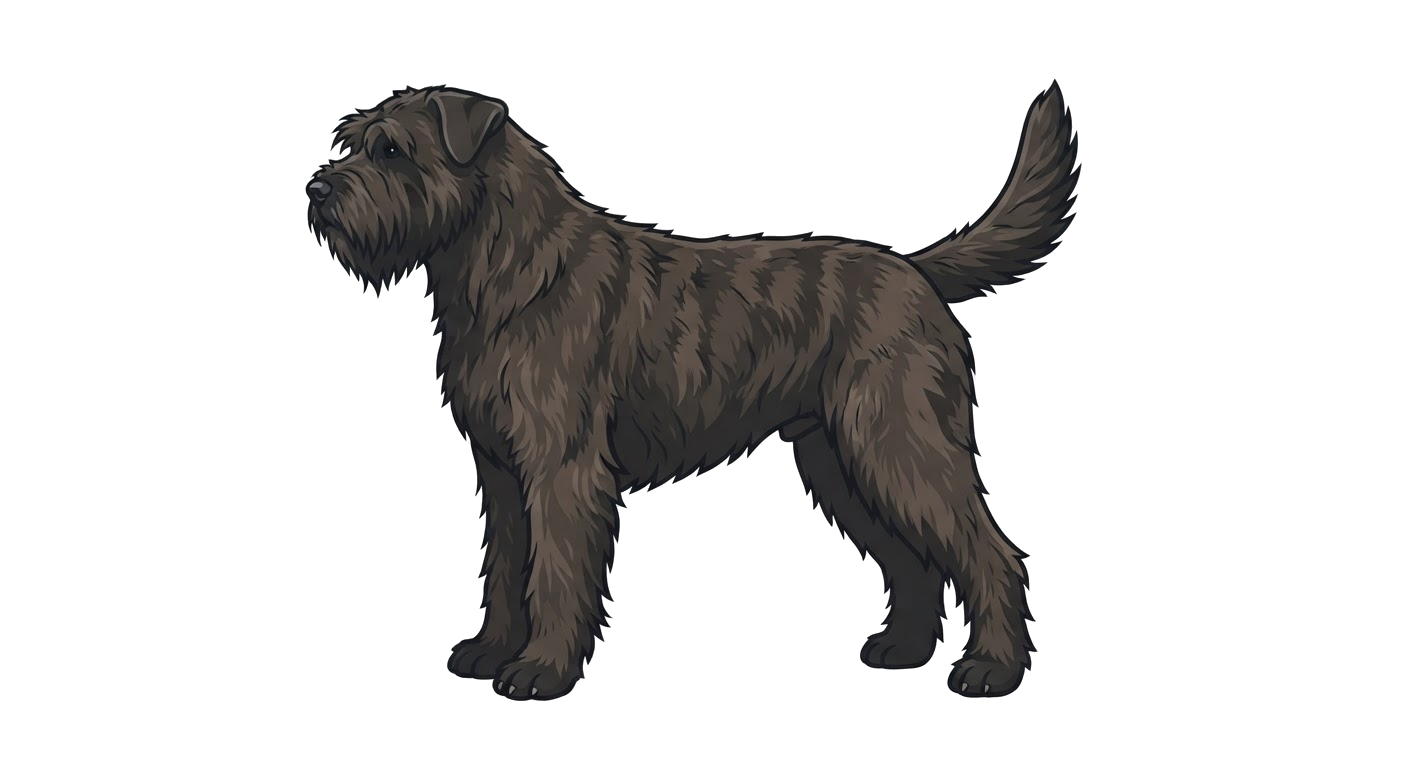
The points of the breed
Hover or tap a numbered point to read what the standard asks for.
Point 1
Skull
The Bouvier des Flandres's skull is judged on balance rather than size — proportionate to the body, with a clean cheek and a stop typical of the breed. Coarseness or an over-refined head are both faulted.
Colours & patterns
Recognised coats
Which coats the standard accepts — and which are simply popular.
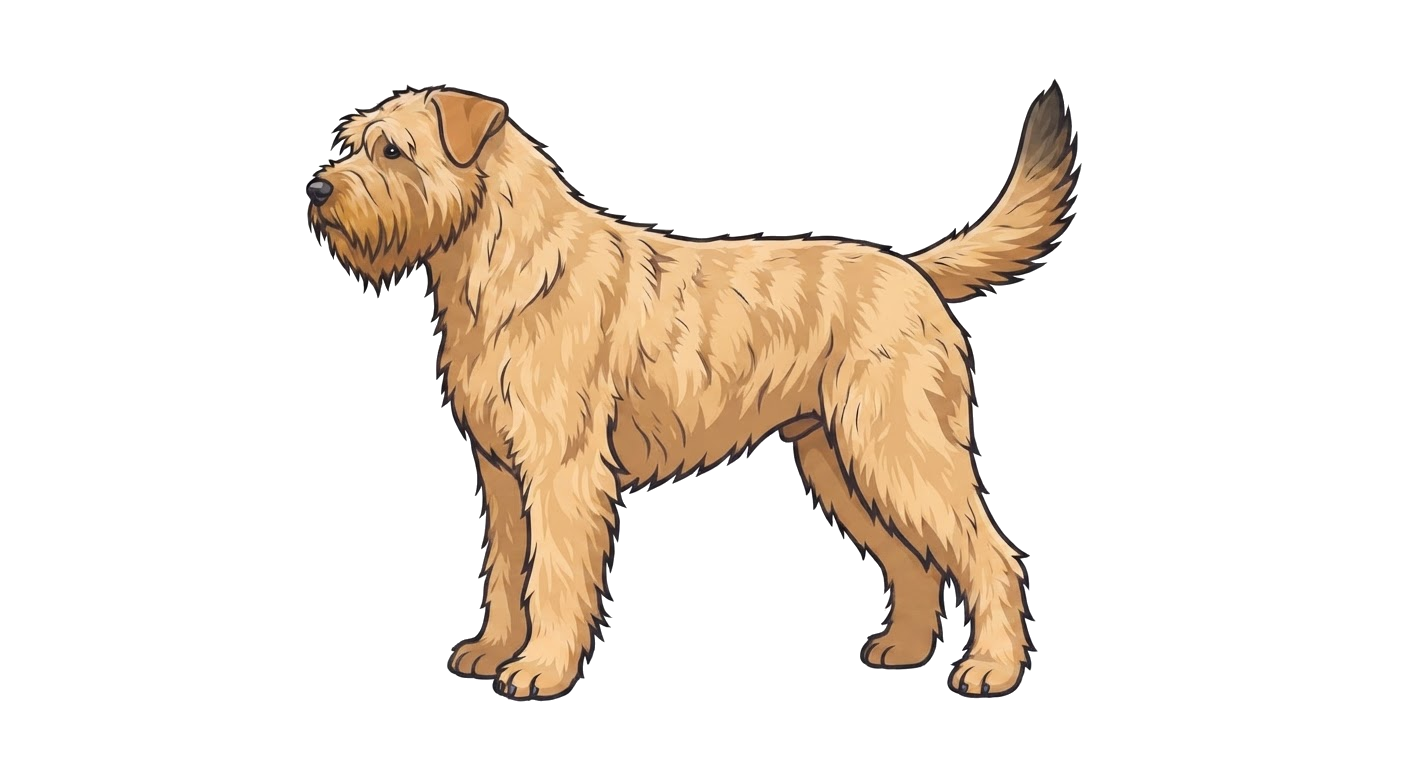
Fawn
Standard colour
A warm sandy colour, sometimes with black shading.
Grey
Standard colour
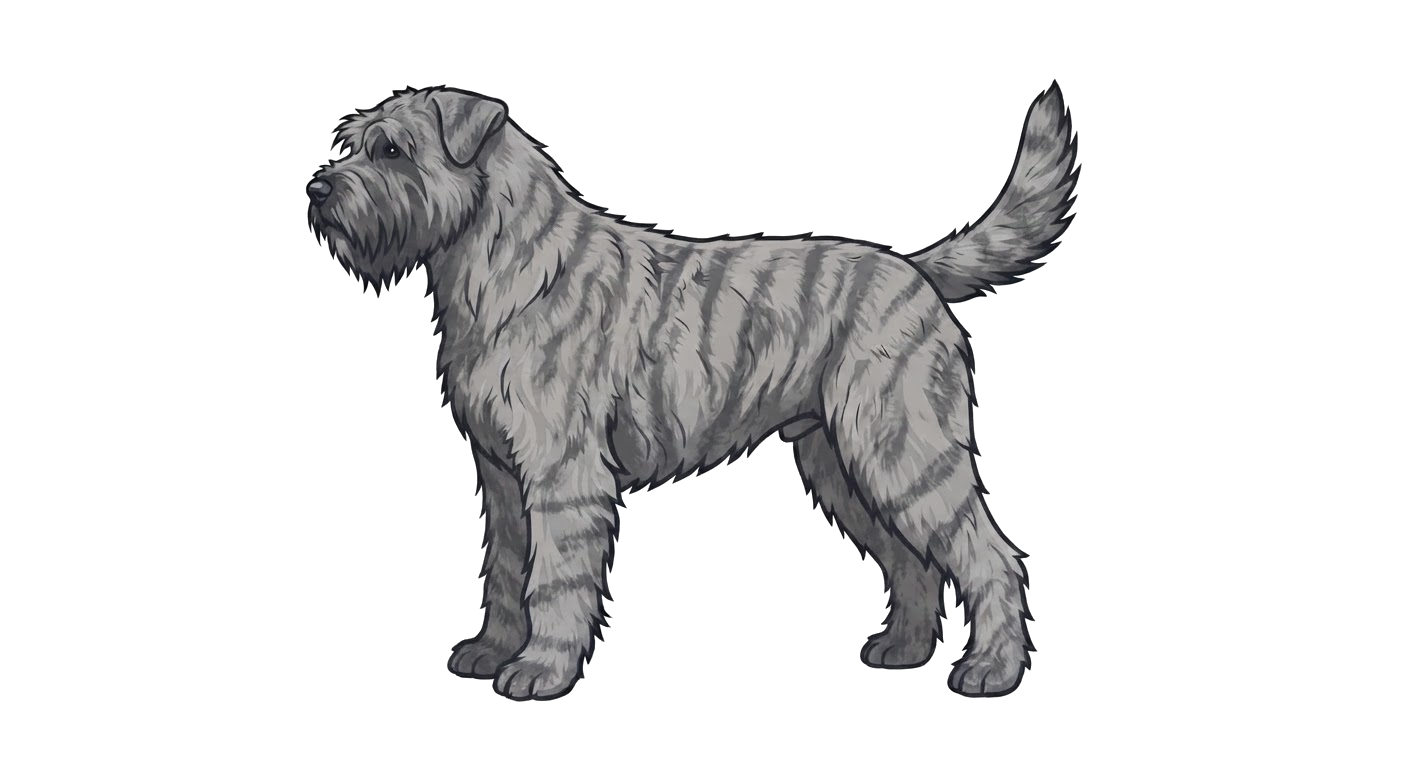
A common pepper-and-salt grey.
Black
Standard colour
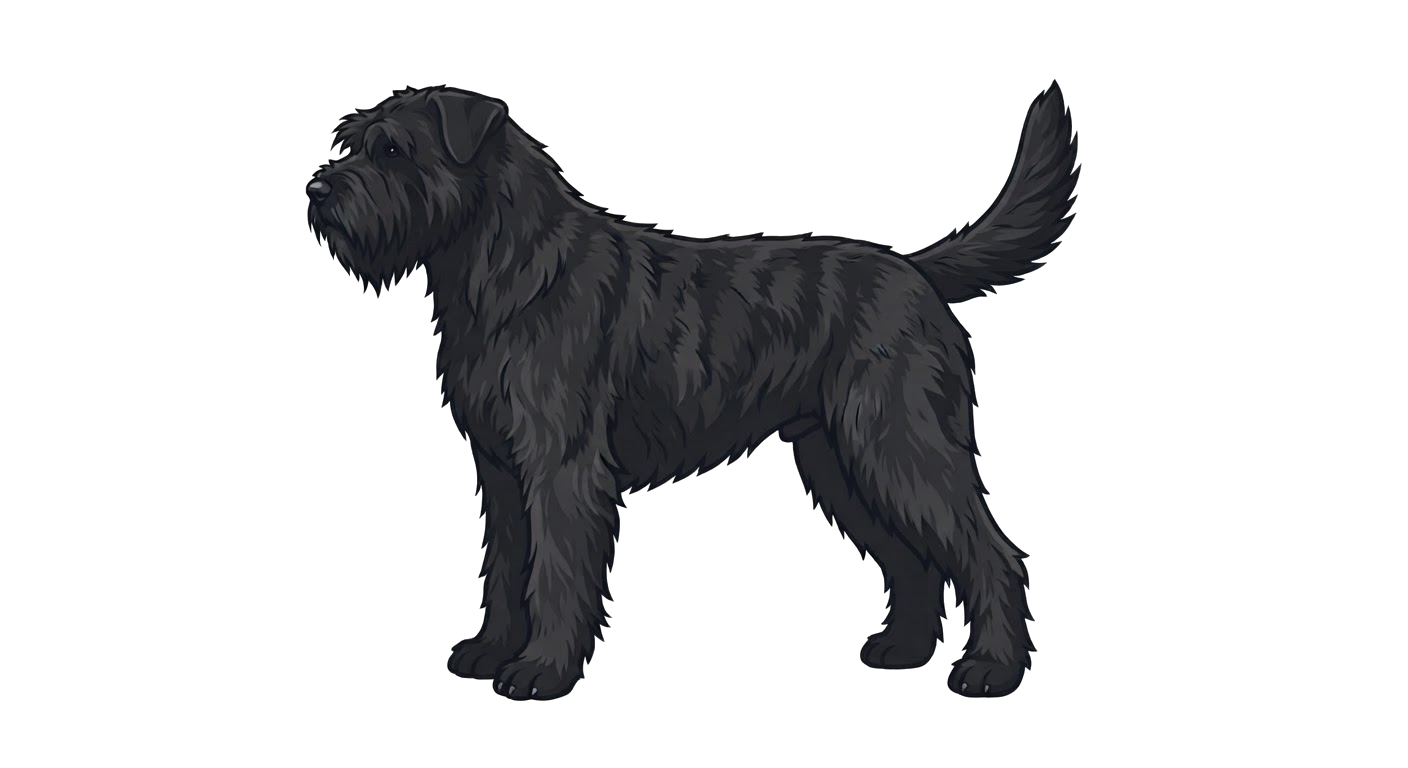
A solid black coat, less common but accepted.
Brindle
Standard colour
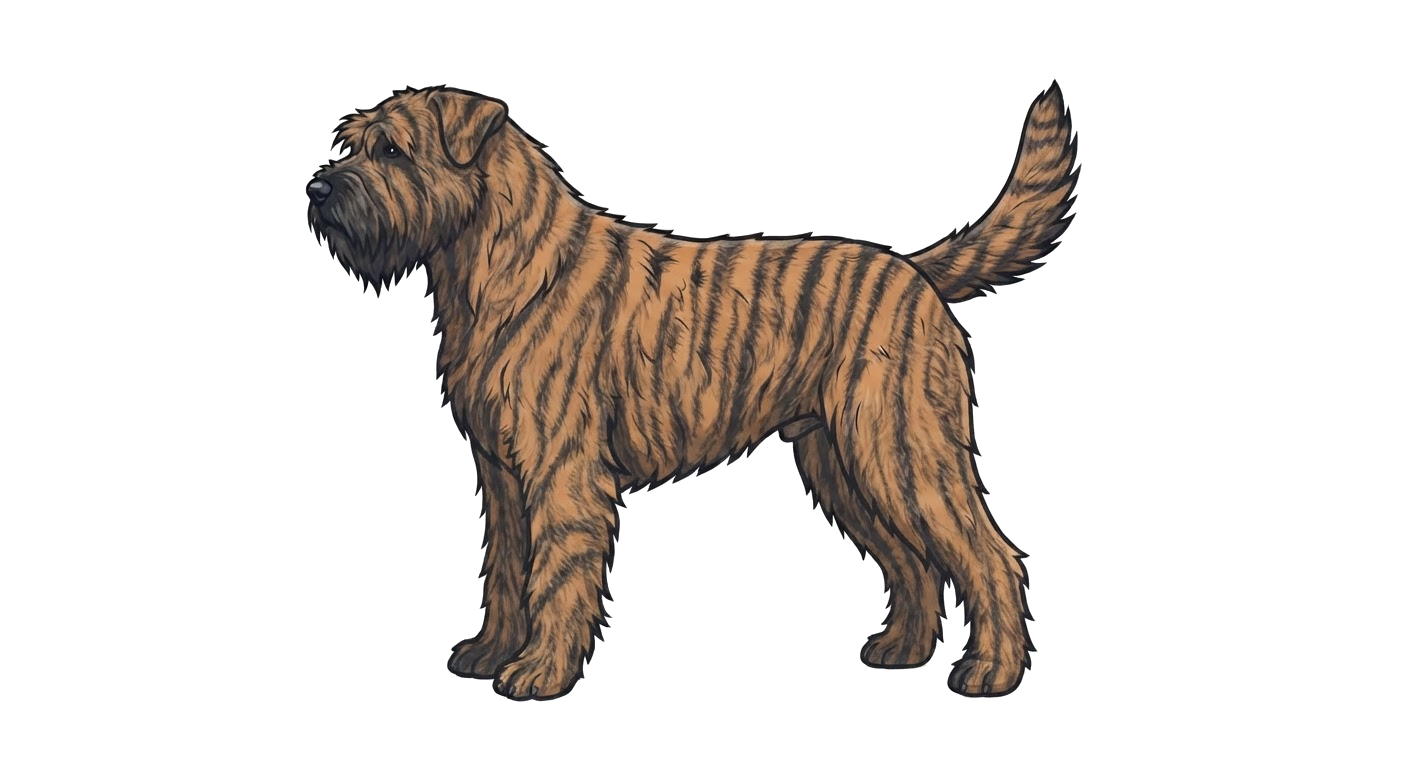
A striped pattern over a lighter base.
Timeline
History & development
1800s
Farm dog origins
Flemish farmers bred an all-purpose dog for driving cattle, pulling carts and guarding property.
1914-1918
Near extinction
The First World War devastated Flanders and nearly wiped out the breed.
1920s
Revival
Surviving dogs, including the influential Nic de Sottegem, formed the basis of the modern breed.
1965
International recognition
The breed gained wider recognition and popularity as a working and show dog abroad.
Reference
Breed standard summary
- body
- Short, strong back, deep chest.
- coat
- Rough, tousled, weather-resistant double coat.
- ears
- Set high, often cropped historically, natural ears fold forward.
- eyes
- Dark brown, alert expression.
- gait
- Powerful, free-moving, ground-covering.
- head
- Strong, slightly rounded skull with heavy moustache and beard.
- size
- 59-68 cm at the shoulder.
- tail
- Traditionally docked; natural tail carried low.
- colour
- Fawn, Grey, Black, Brindle. Colours outside this list are seen but are not accepted by the kennel clubs.
- temperament
- Typical of the breed: strongest in trainability, grooming, energy. Nervousness or aggression are serious faults in the show ring and in the home.
- general appearance
- Powerfully built, rough-coated dog with a calm, confident bearing.
Health
What to screen for
Green means little to worry about, amber means ask the breeder for test results, red means manage it actively.
Hip dysplasia
Screen for it
Ask for hip scores on both parents.
Elbow dysplasia
Screen for it
Ask breeders for elbow screening results.
Bloat
Watch closely
Feed smaller meals and avoid exercise straight after eating.
Glaucoma
Low concern
Ask about any family history of eye issues.
General information only — always speak to your vet about your own dog.
From real owners
Dogs like this
Bouvier des Flandress added by PawPoint members through their pet passports. Share yours to appear here.
Loading the wall…
Made for the Bouvier des Flandres
The book, plus prints, hoodies and mugs using our own Bouvier des Flandres illustration — and one everyday accessory that suits any dog.

The book
Pawpoint: The Complete Dog Breed Book
Every officially recognised breed plus the unofficial ones nobody else documents. 400+ pages, hardback, printed and shipped from the UK.
Own stock — shipped by us
Framed poster
Bouvier des Flandres Framed Poster
Museum-weight print of our Bouvier des Flandres illustration, framed or unframed.
Printed to order
Hoodie
Bouvier des Flandres Hoodie
Heavyweight hoodie carrying the Bouvier des Flandres illustration on the chest.
Printed to order
Mug
Bouvier des Flandres Mug
Ceramic mug with the Bouvier des Flandres illustration wrapped around it.
Printed to order
Accessory
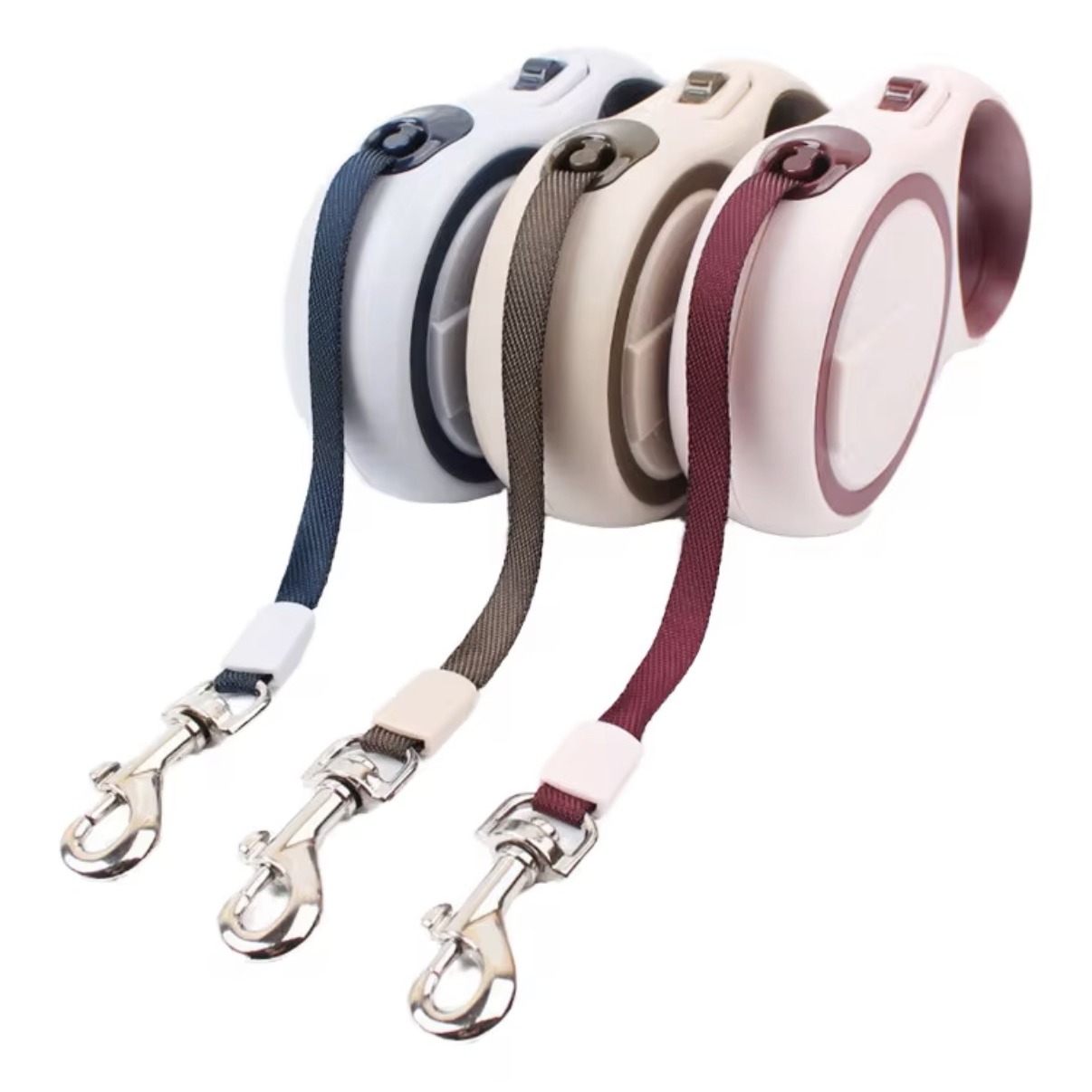
Retractable Lead
5m retractable with one-touch brake.
Fits any dog
Pawpoint on YouTube
Watch the full Bouvier des Flandres video
Breed deep-dives, history and honest ownership talk. New film every week.
Watch now