
Boxer
BOK-suhr
Germany· Munich, Bavaria
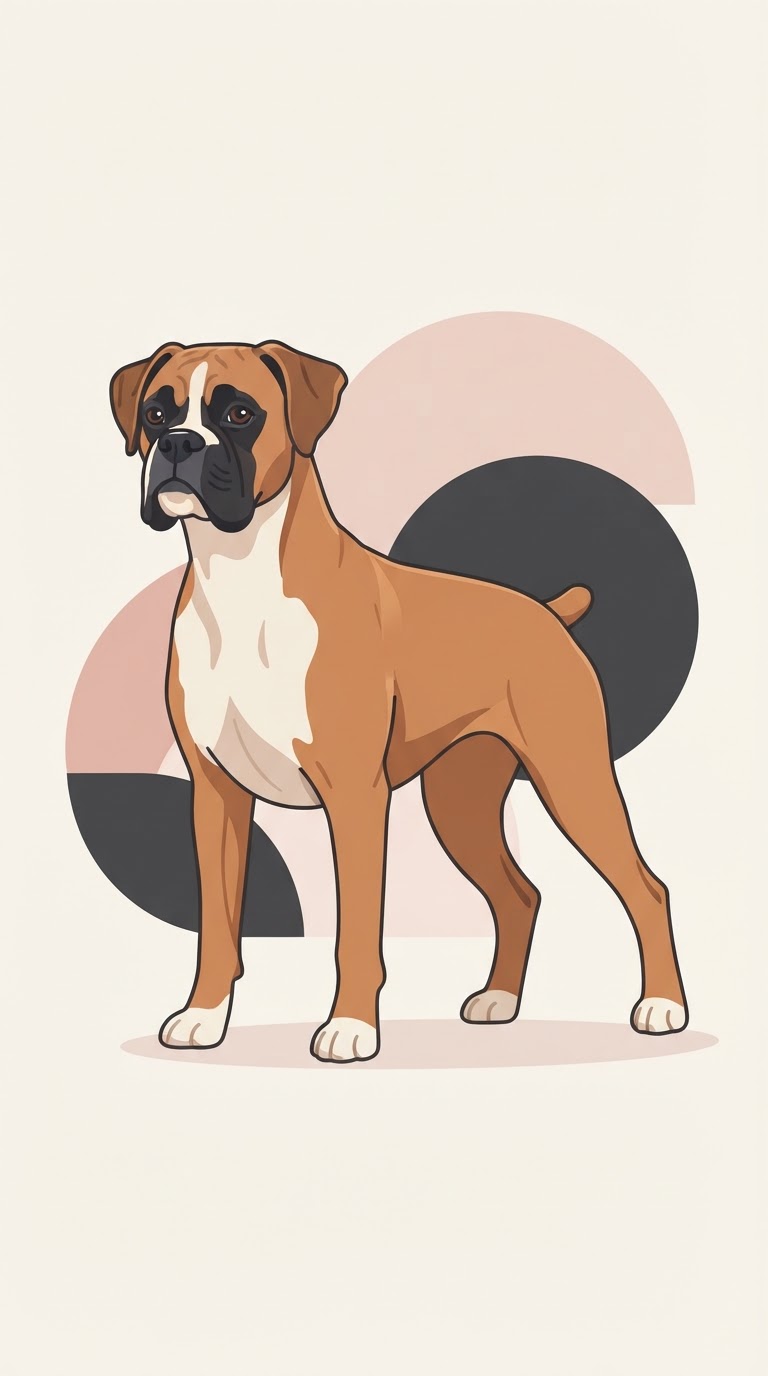
The Boxer is a medium-large German working breed developed in the late nineteenth century from mastiff-type bullenbeisser stock, originally used for hunting large game and later for police, military and guide dog work.
At a glance
Quick facts
Size
Large
Exercise needs
1-2 hours daily
Home size suited to
Medium to large home
Grooming frequency
Weekly brush
Coat length
Short
Sheds
Yes
Lifespan
10-12 years
Town or country
Either, with enough exercise
Garden size needed
Medium or larger
Where it comes from
Origins of the Boxer

Developed in Munich from the mastiff-type Bullenbeisser, the Boxer was bred to seize and hold large game such as boar until hunters arrived, a task that shaped its powerful jaw, muscular build and fearless temperament.
- Region
- Munich, Bavaria
- Climate it was bred for
- Temperate central European climate
- Original job
- Hunting large game and holding it at bay
The long read
About the breed
The Boxer descends from the Bullenbeisser, a mastiff-type hunting dog used in Germany to hold boar and deer at bay until hunters arrived, crossed in the 1890s with Bulldogs brought from England to add tenacity and a shorter muzzle. Munich breeders formalised the modern Boxer around this cross, and the breed's athleticism and trainability quickly saw it adopted for police work, and later, after both World Wars, for guide dog and military messenger roles.
Living with a Boxer means living with a high-energy, playful dog that keeps a puppyish enthusiasm well into adulthood, often called "the Peter Pan of dogs" by owners. They are affectionate and patient with children, generally sociable with other dogs when socialised early, and thrive on structured exercise and training; a bored Boxer becomes a destructive one. Their short coat sheds moderately but needs little grooming, and their flat-ish face, while less extreme than a Bulldog's, still leaves them prone to overheating in hot weather.
Today the Boxer remains a popular family and working dog, still used in some protection and detection roles. It carries a higher-than-average cancer rate, particularly mast cell tumours, and a notable rate of dilated cardiomyopathy and subaortic stenosis, so cardiac screening of breeding stock is one of the most important things a buyer can ask about.
Living with one
Temperament & needs
Our own ratings, based on the breed standard and how these dogs behave in ordinary homes.
Friendliness
4/5
How openly the Boxer greets people it does not know.
Trainability
4/5
Intelligent and eager, though can be stubborn as a young dog.
Energy
5/5
High energy and playful well into adulthood.
Barking
2/5
Alert but not typically a nuisance barker.
Grooming
1/5
Short coat, minimal grooming needed.
Suits a first-time owner
3/5
How forgiving the Boxer is for someone taking on their first dog.
Sociability
4/5
Affectionate with family, good with children when raised together.
Independence
2/5
Wants to be with people and involved in activity.
Illustrated breed standard
The points of the breed
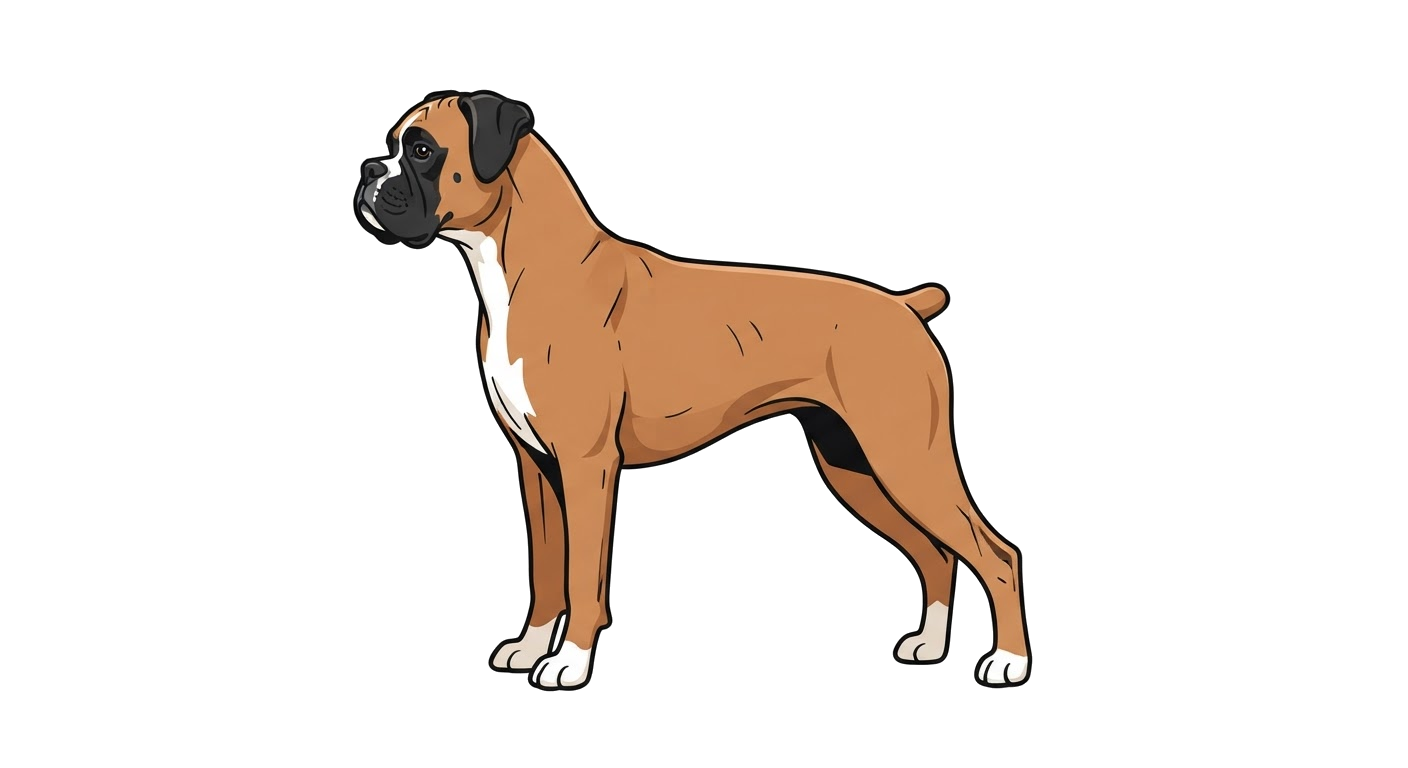
Hover or tap a numbered point to read what the standard asks for.
Point 1
Skull
The Boxer's skull is judged on balance rather than size — proportionate to the body, with a clean cheek and a stop typical of the breed. Coarseness or an over-refined head are both faulted.
Colours & patterns
Recognised coats
Which coats the standard accepts — and which are simply popular.
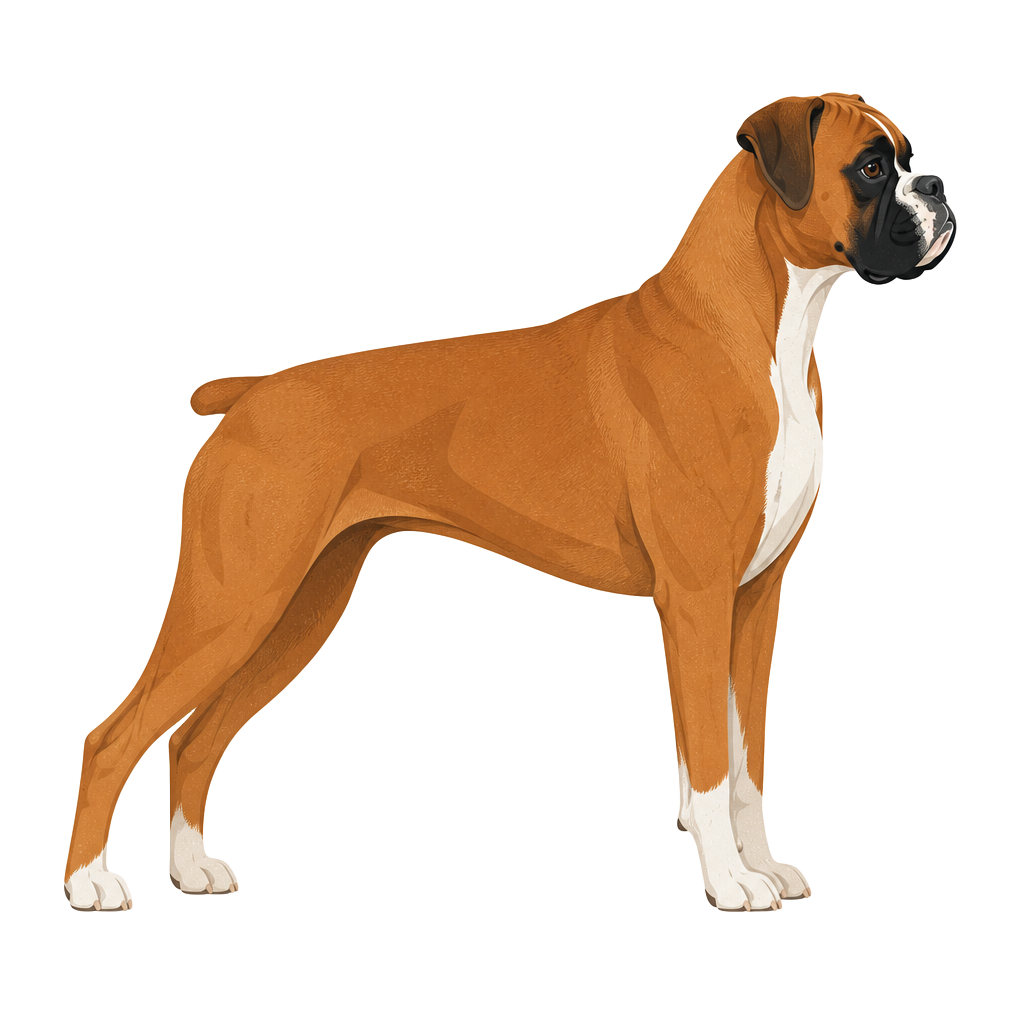
Fawn
Standard colour
Ranges from light tan to deep mahogany.
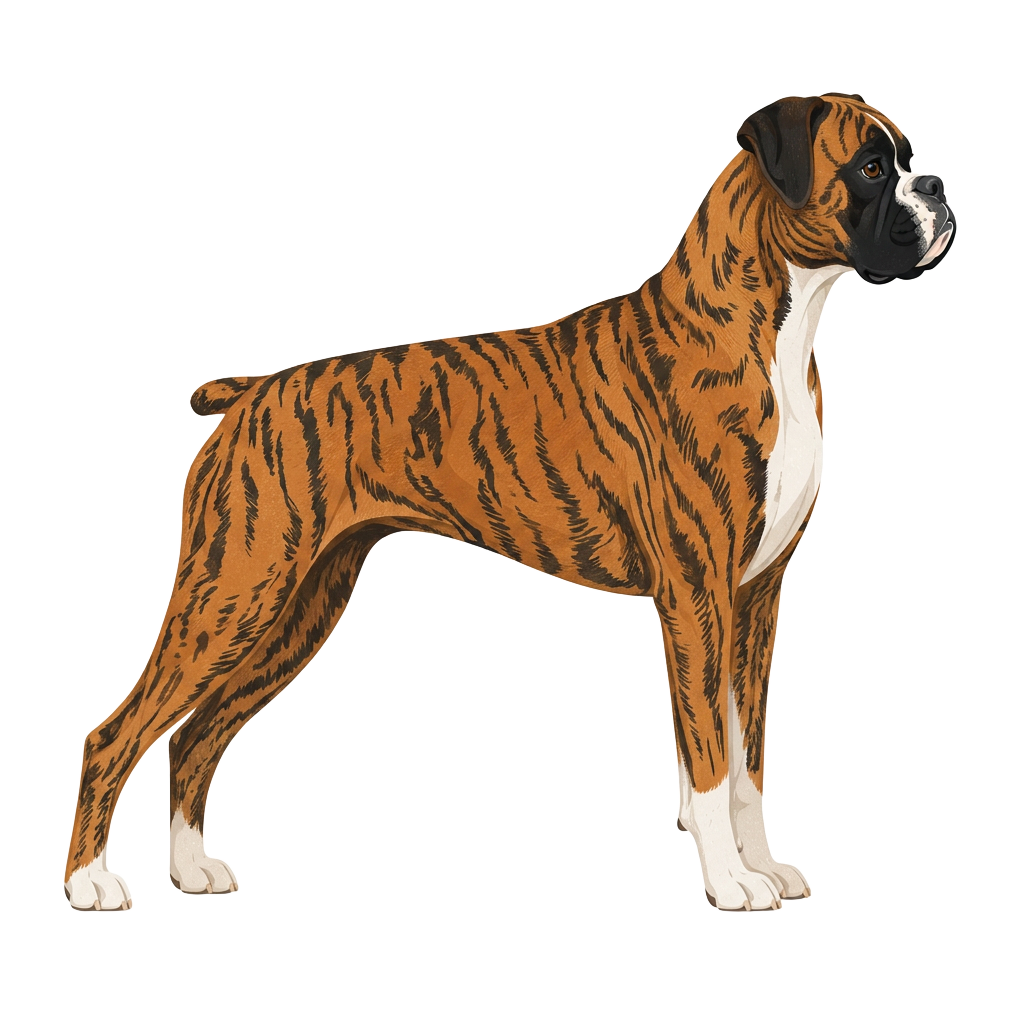
Brindle
Standard colour
Black stripes over a fawn base.
Outside the standard
Other colours
Dilute coats you will see advertised. They are the same breed, but no kennel club accepts them.
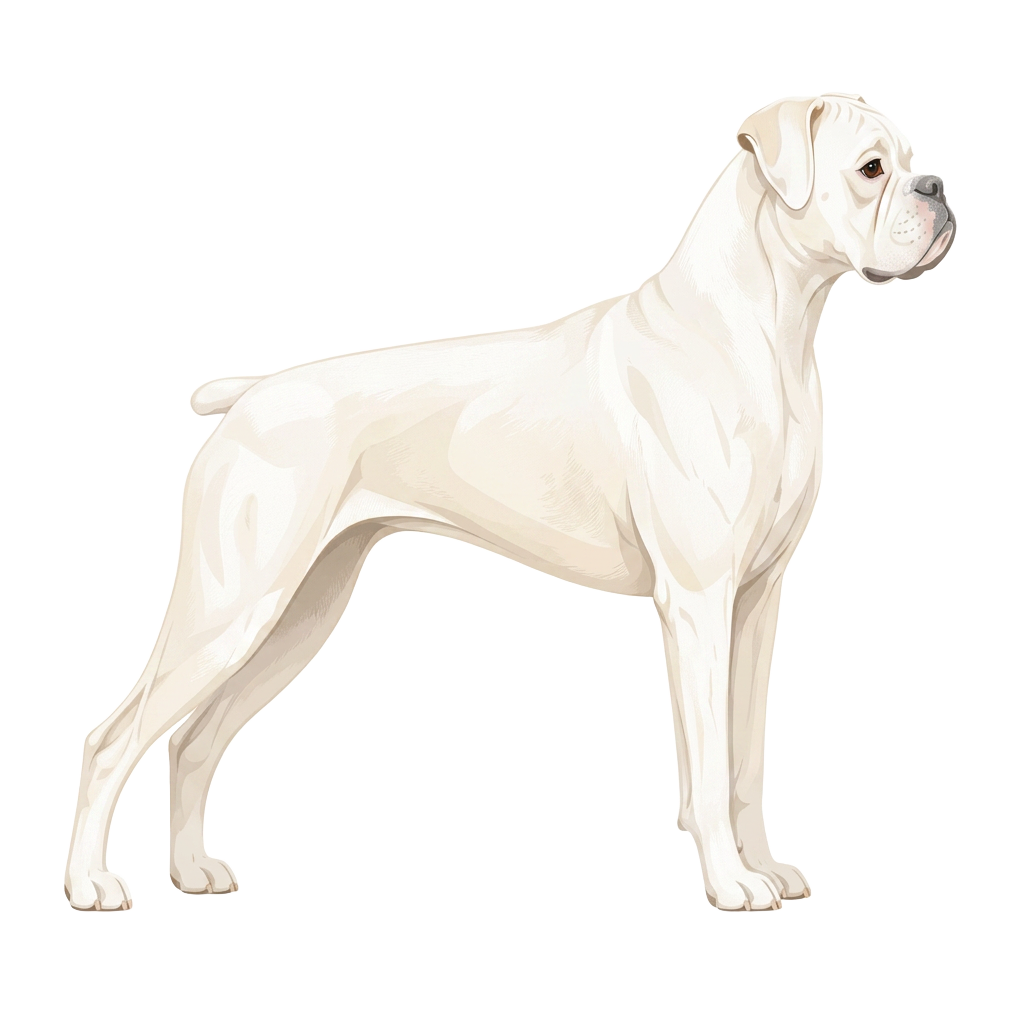
White
Not in the standard
Common but not standard; often linked to a higher risk of deafness.
Timeline
History & development
1890s
Breed development
Munich breeders crossed the Bullenbeisser with imported Bulldogs to create the modern Boxer.
1895
First breed club
The Deutscher Boxer Club was founded in Munich.
1904
AKC recognition
The Boxer was recognised by the American Kennel Club.
1940s
Wartime and guide dog roles
Boxers served as messenger and guard dogs in both World Wars and were later used as guide dogs.
1950s onward
The breed today
Kennel club registrations settled into a steady pattern and the Boxer moved from a working specialist to a family companion, with breed clubs in the UK and abroad now focused on health testing and keeping true type alive.
Reference
Breed standard summary
- body
- Square, muscular, deep chest.
- coat
- Short, shiny, close-lying.
- ears
- Set high, natural ears fold forward.
- eyes
- Dark brown, forward-facing, alert.
- gait
- Powerful, ground-covering trot.
- head
- Broad, blunt muzzle, distinctive undershot bite.
- size
- 53-63 cm at the shoulder.
- tail
- Traditionally docked; natural tail carried level.
- colour
- Fawn, Brindle. Colours outside this list are seen but are not accepted by the kennel clubs.
- temperament
- Typical of the breed: strongest in energy, trainability, sociability. Nervousness or aggression are serious faults in the show ring and in the home.
- general appearance
- Medium-large, square-built dog with a strong, athletic frame.
Health
What to screen for
Green means little to worry about, amber means ask the breeder for test results, red means manage it actively.
Dilated cardiomyopathy
Watch closely
Ask for cardiac screening (Holter monitor or echocardiogram) on breeding stock.
Subaortic stenosis
Screen for it
Ask whether parents have been heart-tested.
Mast cell tumours
Screen for it
Boxers have a higher-than-average cancer rate; regular vet checks help catch lumps early.
Bloat
Watch closely
Feed smaller meals and avoid strenuous exercise after eating.
General information only — always speak to your vet about your own dog.
From real owners
Dogs like this
Boxers added by PawPoint members through their pet passports. Share yours to appear here.
Loading the wall…
Made for the Boxer
The book, plus prints, hoodies and mugs using our own Boxer illustration — and one everyday accessory that suits any dog.

The book
Pawpoint: The Complete Dog Breed Book
Every officially recognised breed plus the unofficial ones nobody else documents. 400+ pages, hardback, printed and shipped from the UK.
Own stock — shipped by us
Framed poster
Boxer Framed Poster
Museum-weight print of our Boxer illustration, framed or unframed.
Printed to order
Hoodie
Boxer Hoodie
Heavyweight hoodie carrying the Boxer illustration on the chest.
Printed to order
Mug
Boxer Mug
Ceramic mug with the Boxer illustration wrapped around it.
Printed to order
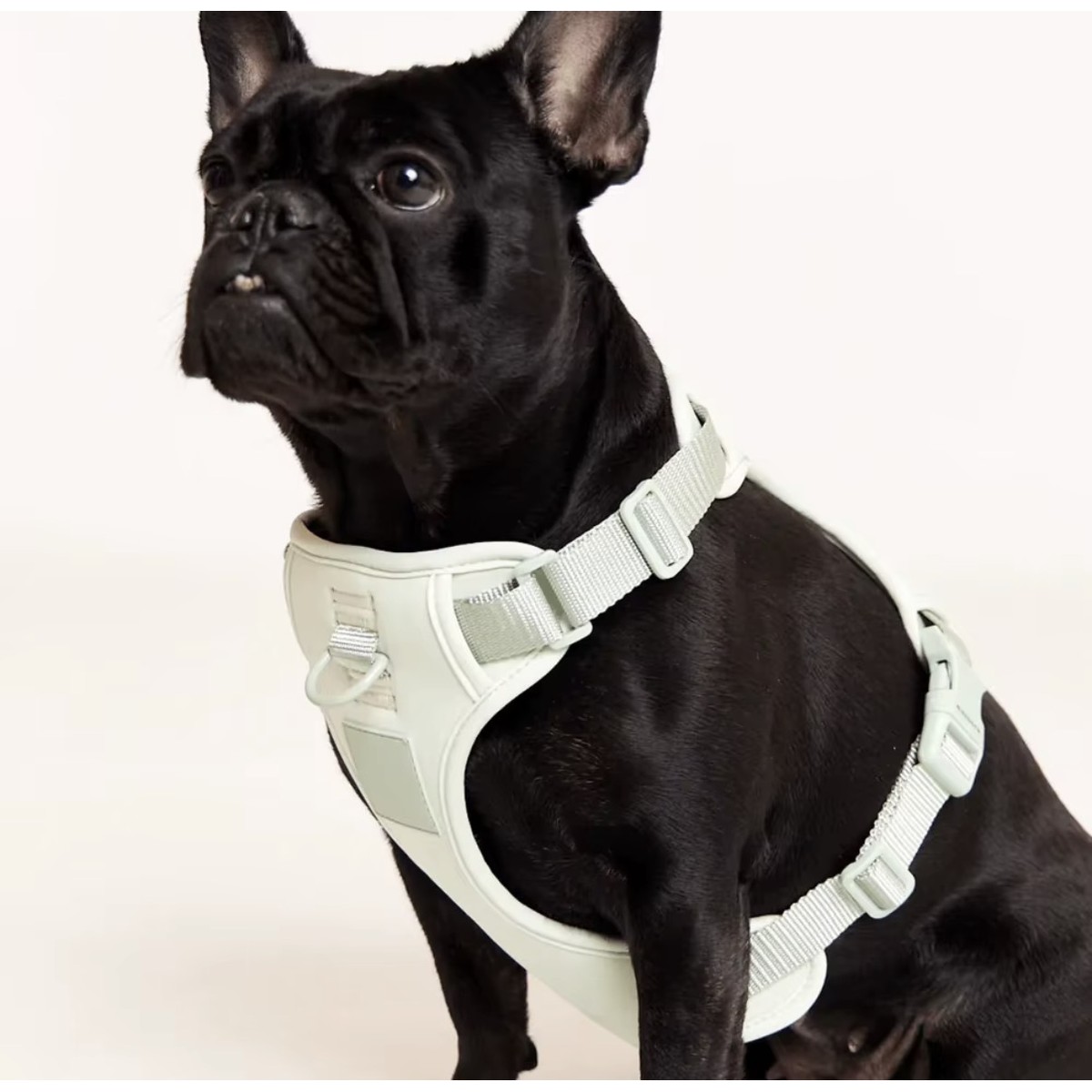
Accessory
Adjustable Harness (S/M/L)
Fully adjustable chest and girth straps — no fixed sizing.
Fits any dog
Pawpoint on YouTube
Watch the full Boxer video
Breed deep-dives, history and honest ownership talk. New film every week.
Watch now