
Briard
BREE-ard
France· Brie, east of Paris
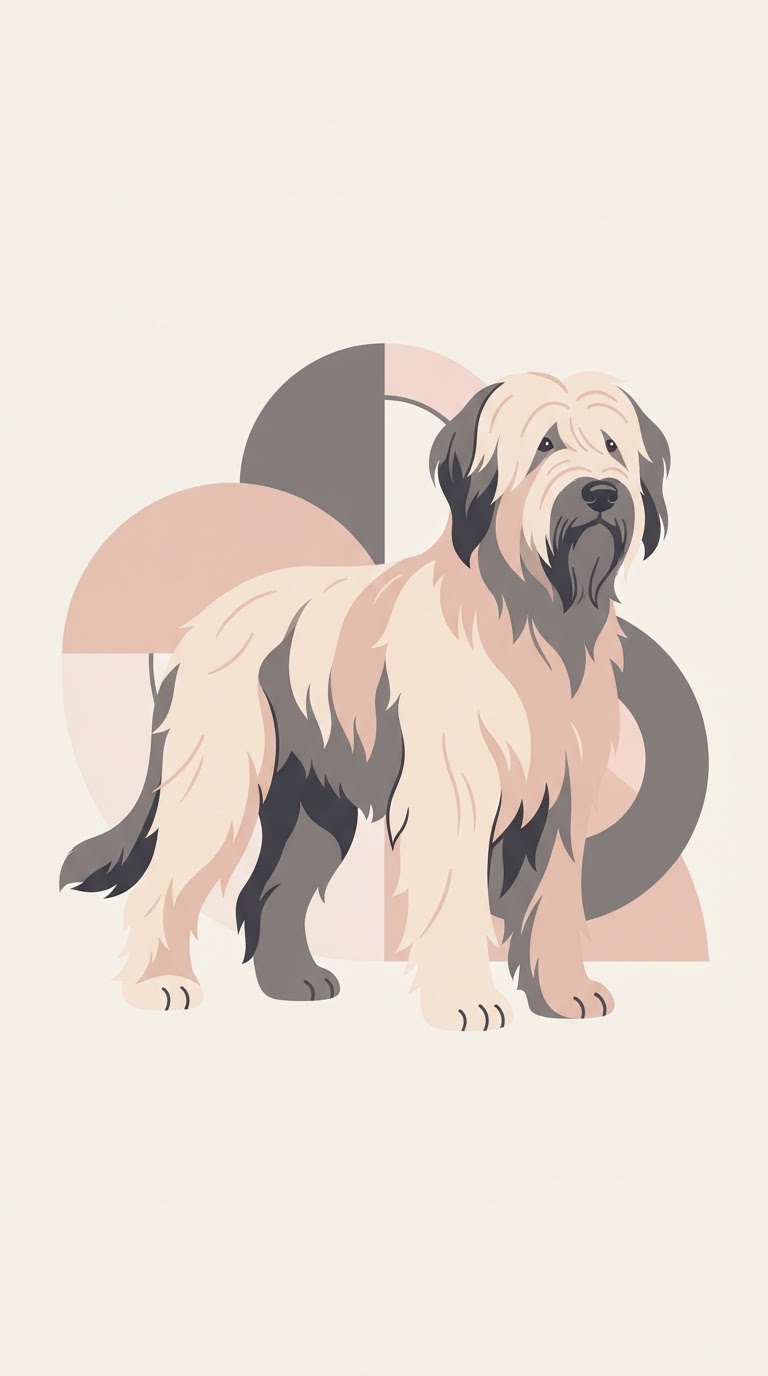
The Briard is a large French herding breed, historically used to guard and drive flocks of sheep across open farmland, distinguished by its long, wavy double coat and confident, watchful character.
At a glance
Quick facts
Size
Large
Exercise needs
1-2 hours plus mental stimulation
Home size suited to
Medium to large home
Grooming frequency
Daily brushing
Coat length
Long
Sheds
Yes, heavily when moulting
Lifespan
10-12 years
Town or country
Happiest in the country
Garden size needed
Medium or larger
Where it comes from
Origins of the Briard
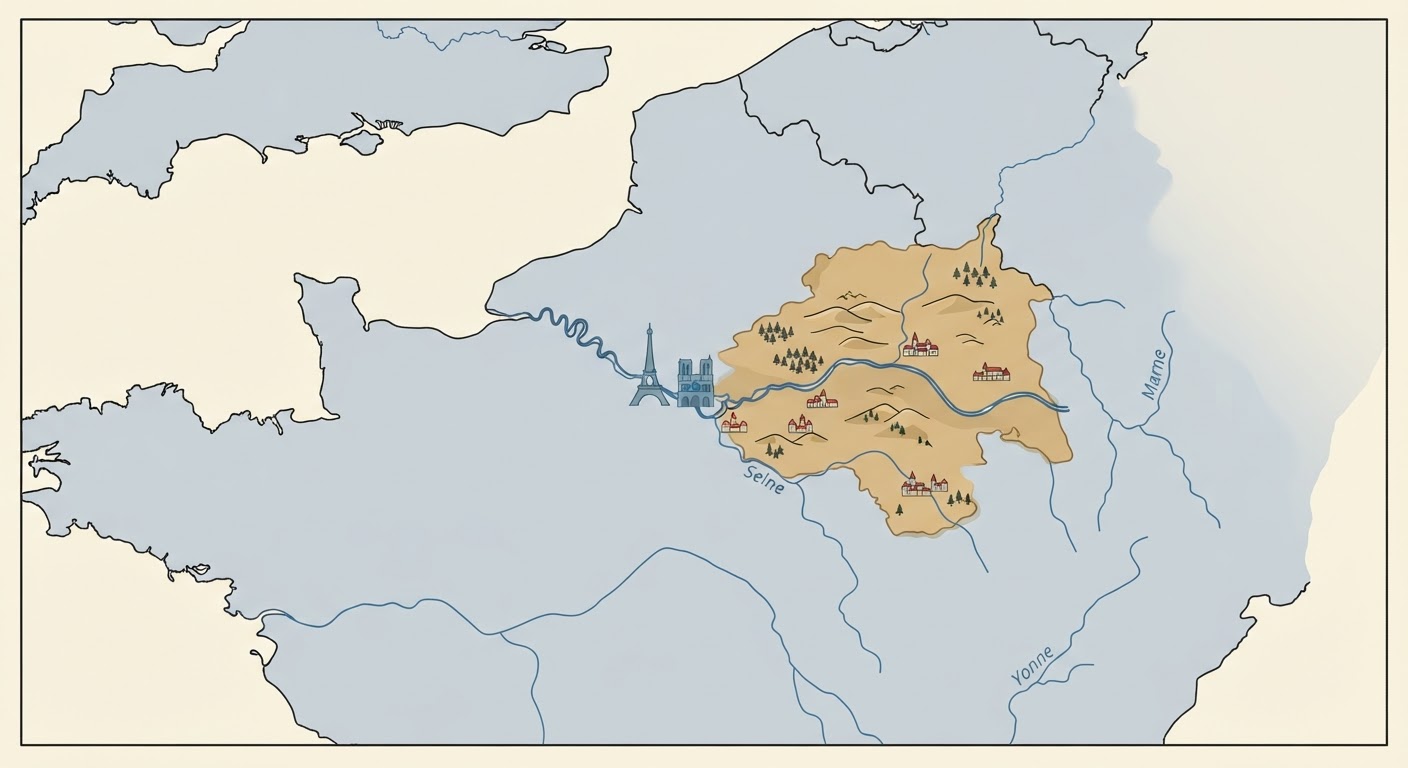
The Briard developed on the farmland of the Brie region east of Paris, where shepherds needed a dog able to both move sheep and guard them overnight against wolves and thieves. That dual role shaped its independence and protective instinct.
- Region
- Brie, east of Paris
- Climate it was bred for
- Temperate farmland with cold, wet winters
- Original job
- Herding and guarding sheep flocks
The long read
About the breed
The breed takes its name from the Brie region east of Paris, though similar shaggy herding dogs were kept across northern France for centuries before the name was fixed in the nineteenth century. French shepherds relied on the Briard not just to move sheep but to guard them overnight against wolves and thieves, work that demanded both independence of judgement and loyalty to the flock and shepherd. The breed also served in both World Wars as a messenger and sentry dog, and its numbers fell sharply as French sheep farming declined through the twentieth century.
Living with a Briard means living with a large, protective dog that bonds closely with its family and can be wary of strangers, a legacy of its guarding role. The coat, coarse and long over a soft undercoat, needs brushing several times a week to prevent matting, more if the dog is active outdoors. Briards are intelligent and can be strong-willed, doing best with an owner who provides consistent, early socialisation and a real job or activity to occupy their mind.
Today the Briard survives mainly as a companion and occasional herding or protection dog, popular with owners who want a loyal, low-shedding-relative watchdog and are prepared for the coat upkeep and a assertive personality that needs firm, kind handling from puppyhood.
Living with one
Temperament & needs
Our own ratings, based on the breed standard and how these dogs behave in ordinary homes.
Friendliness
3/5
How openly the Briard greets people it does not know.
Trainability
3/5
Intelligent but can be strong-willed.
Energy
4/5
Needs substantial daily exercise and mental work.
Barking
3/5
Will alert bark at anything unusual.
Grooming
5/5
Long, coarse coat needs brushing several times a week.
Suits a first-time owner
2/5
How forgiving the Briard is for someone taking on their first dog.
Sociability
3/5
Loyal to family, reserved or wary with strangers.
Independence
4/5
Bred to make its own decisions guarding a flock.
Illustrated breed standard
The points of the breed
Hover or tap a numbered point to read what the standard asks for.
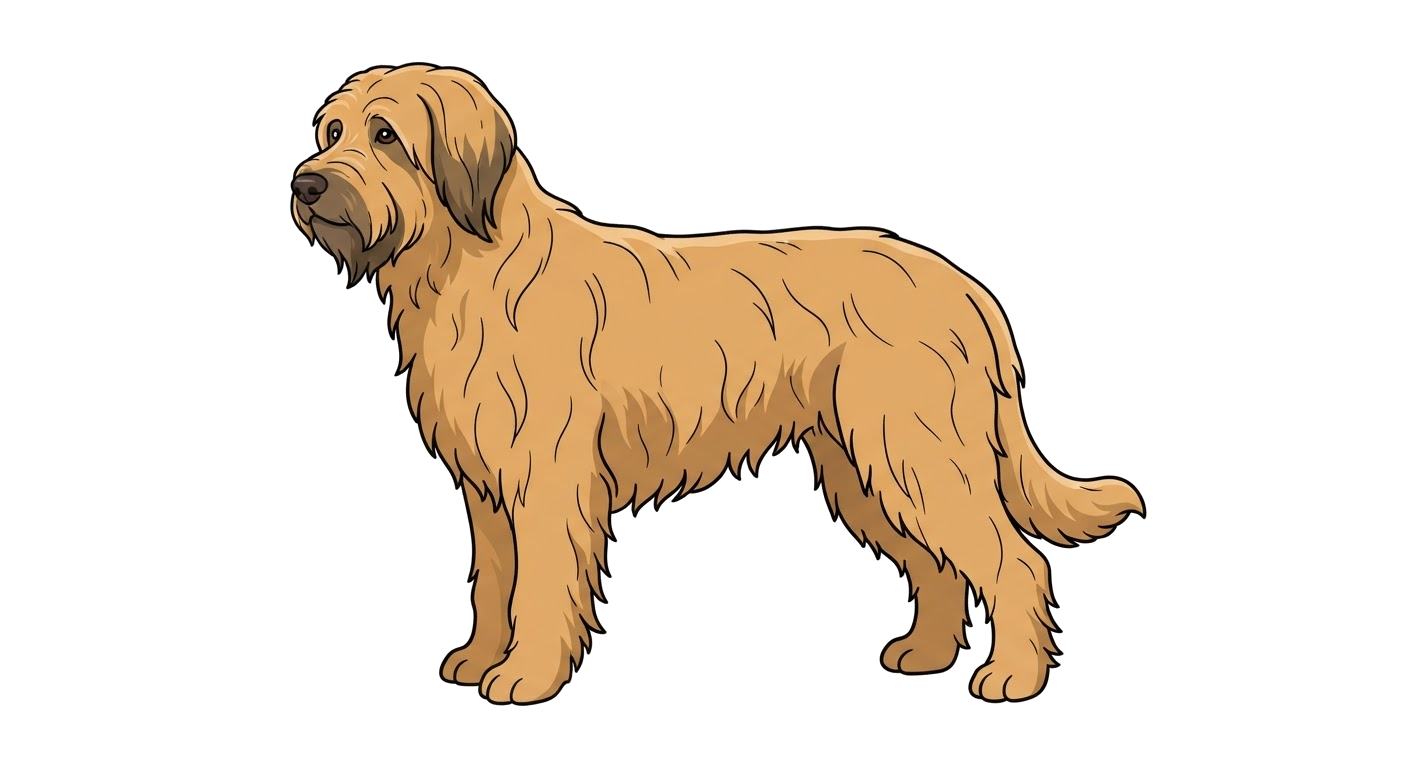
Point 1
Skull
The Briard's skull is judged on balance rather than size — proportionate to the body, with a clean cheek and a stop typical of the breed. Coarseness or an over-refined head are both faulted.
Colours & patterns
Recognised coats
Which coats the standard accepts — and which are simply popular.
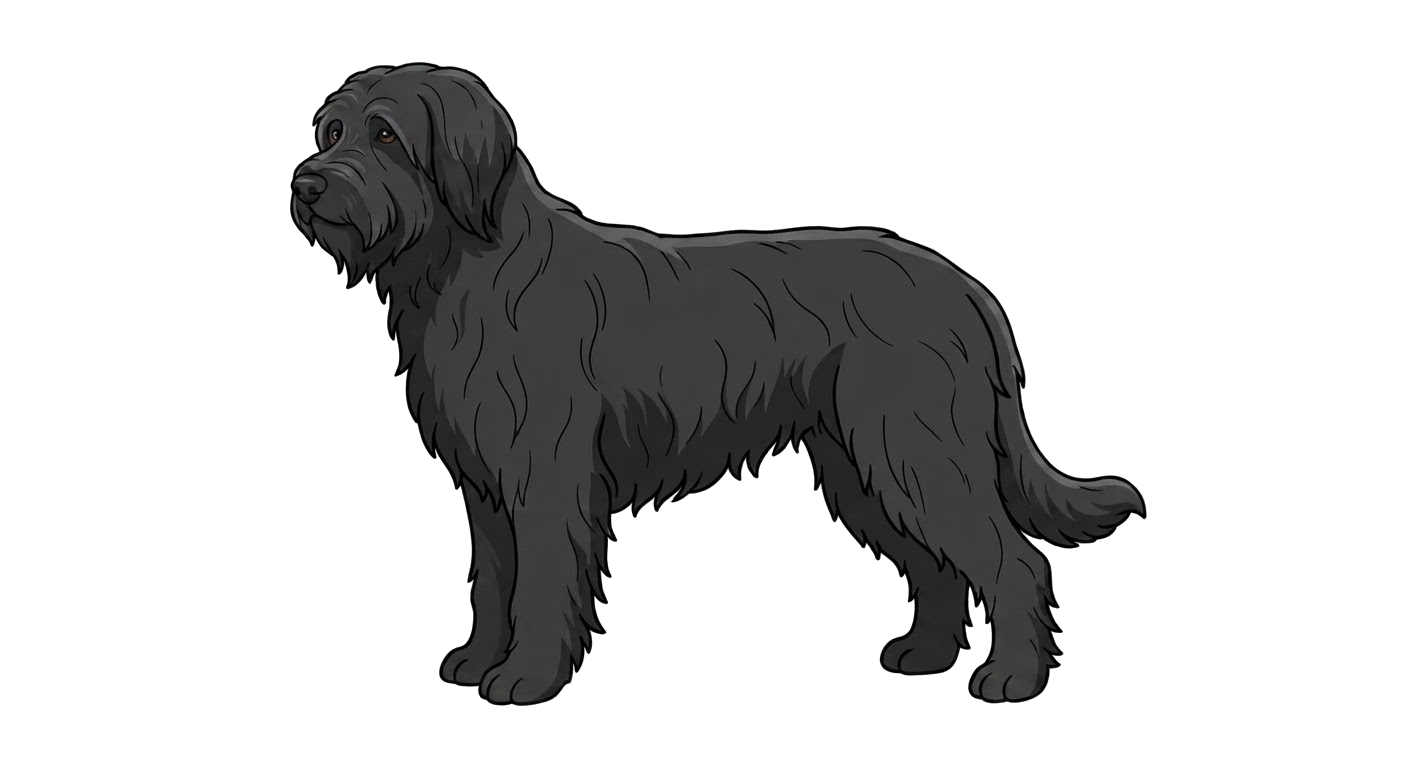
Black
Standard colour
A solid, glossy black coat.
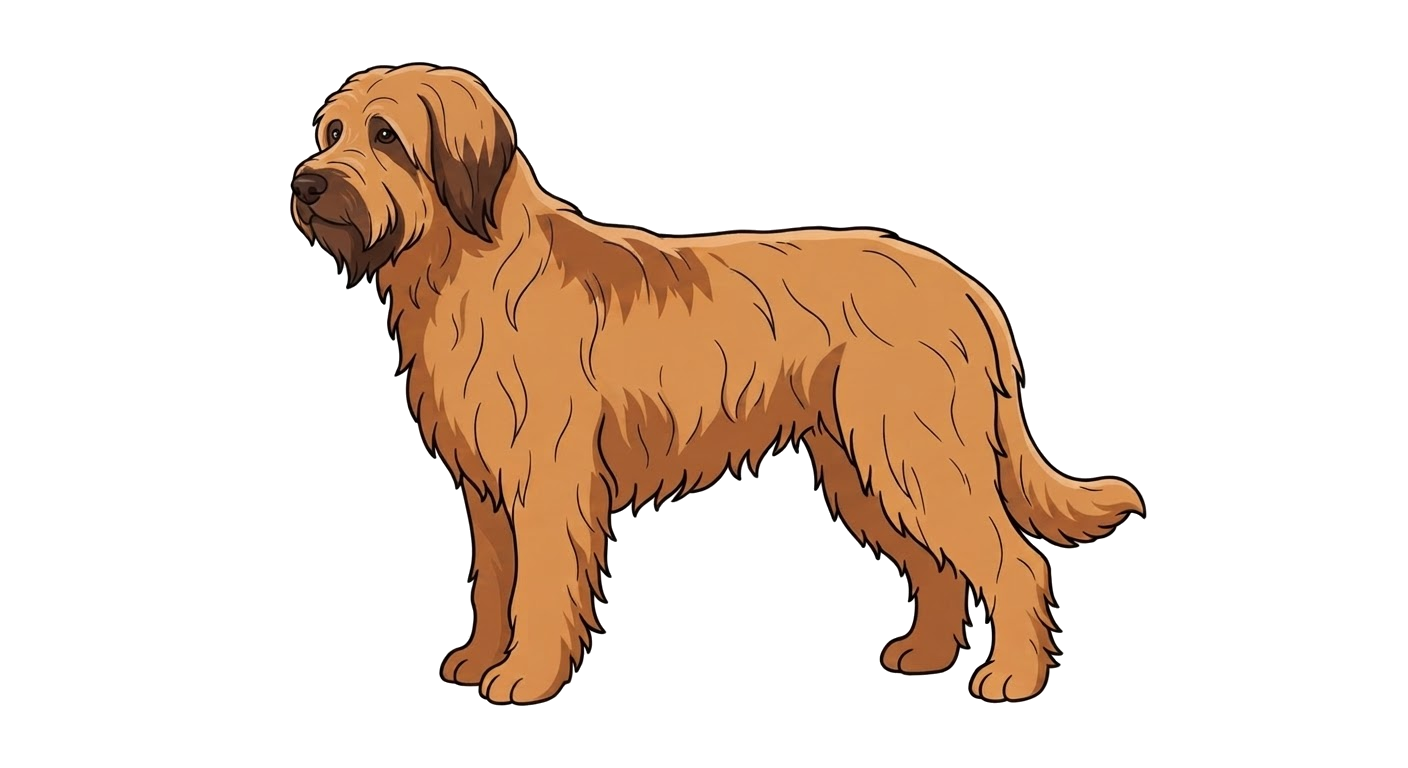
Tawny
Standard colour
Ranges from light gold to dark red-brown.
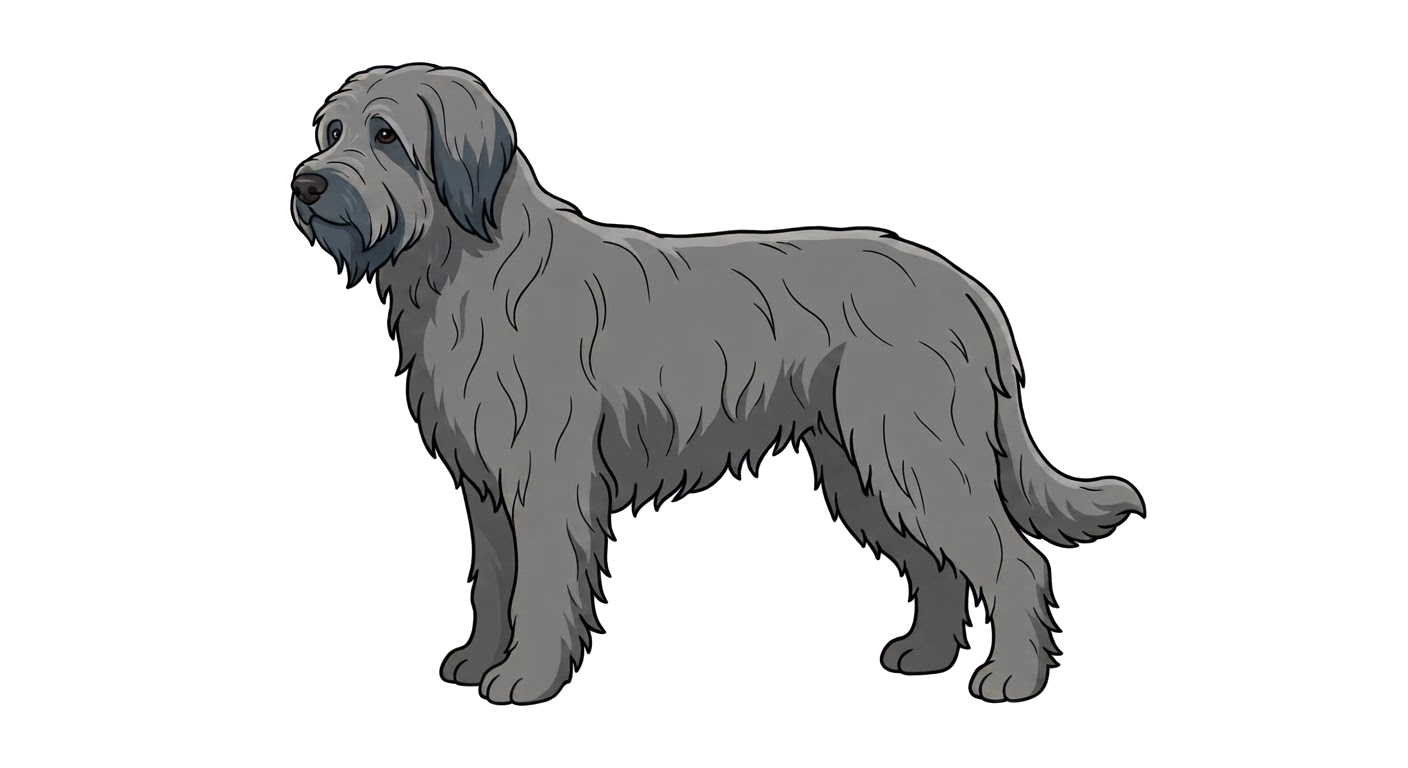
Grey
Standard colour
A slate-grey coat, less common than black or tawny.
Timeline
History & development
8th century
Early references
Long-coated herding dogs resembling the Briard are described in early French writings.
1809
Named breed type
The Briard was described formally as a distinct type in French agricultural writing.
1897
First French standard
The Club des Amis du Briard drew up a formal breed standard.
1914-1945
Wartime service
Briards served as messenger and sentry dogs for the French army in both World Wars.
1950s onward
The breed today
Kennel club registrations settled into a steady pattern and the Briard moved from a working specialist to a family companion, with breed clubs in the UK and abroad now focused on health testing and keeping true type alive.
Reference
Breed standard summary
- body
- Long, muscular, deep chest.
- coat
- Long, coarse, slightly wavy, with a fine undercoat.
- ears
- Set high, either cropped or natural and semi-erect.
- eyes
- Dark, set wide apart, giving a frank, questioning expression.
- gait
- Effortless, ground-covering trot.
- head
- Long, with a moderate stop, covered in hair falling over the eyes.
- size
- 56-68 cm at the shoulder.
- tail
- Long, forming a crook at the tip, carried low.
- colour
- Black, Tawny, Grey. Colours outside this list are seen but are not accepted by the kennel clubs.
- temperament
- Typical of the breed: strongest in grooming, energy, independence. Nervousness or aggression are serious faults in the show ring and in the home.
- general appearance
- Large, rustic sheepdog with a long, coarse coat and confident bearing.
Health
What to screen for
Green means little to worry about, amber means ask the breeder for test results, red means manage it actively.
Hip dysplasia
Screen for it
Ask for BVA/KC hip scores on both parents.
Congenital stationary night blindness
Screen for it
Ask for CSNB eye test results, common in the breed.
Bloat
Watch closely
Feed smaller meals and avoid exercise straight after eating.
Hypothyroidism
Screen for it
Ask about thyroid testing history in the line.
General information only — always speak to your vet about your own dog.
From real owners
Dogs like this
Briards added by PawPoint members through their pet passports. Share yours to appear here.
Loading the wall…
Made for the Briard
The book, plus prints, hoodies and mugs using our own Briard illustration — and one everyday accessory that suits any dog.

The book
Pawpoint: The Complete Dog Breed Book
Every officially recognised breed plus the unofficial ones nobody else documents. 400+ pages, hardback, printed and shipped from the UK.
Own stock — shipped by us
Framed poster
Briard Framed Poster
Museum-weight print of our Briard illustration, framed or unframed.
Printed to order
Hoodie
Briard Hoodie
Heavyweight hoodie carrying the Briard illustration on the chest.
Printed to order
Mug
Briard Mug
Ceramic mug with the Briard illustration wrapped around it.
Printed to order
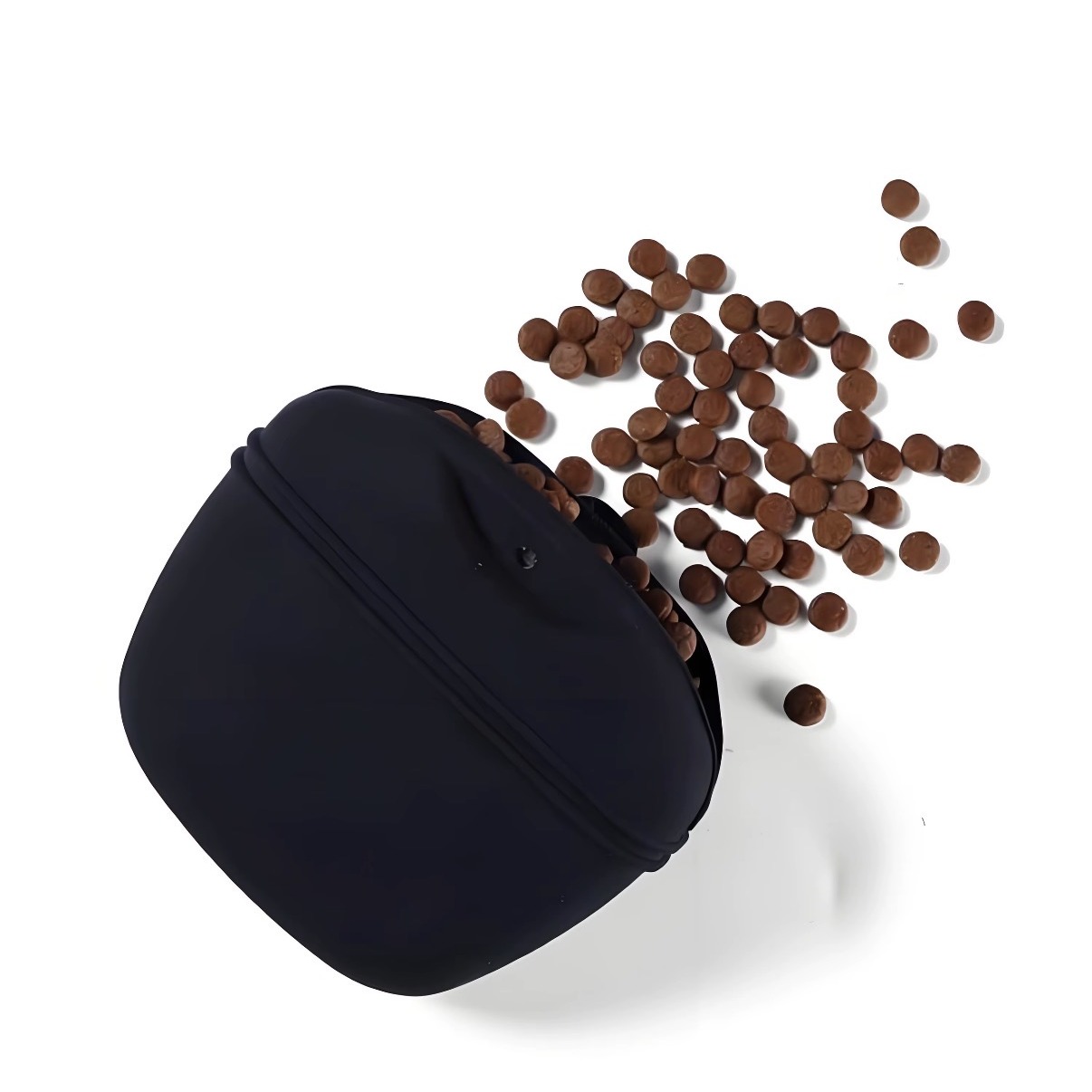
Accessory
Treat Pouch
Magnetic-close belt pouch for training sessions.
Fits any dog

Pawpoint on YouTube
Watch the full Briard video
Breed deep-dives, history and honest ownership talk. New film every week.
Watch now