Brittany
BRIT-uh-nee
France· Brittany
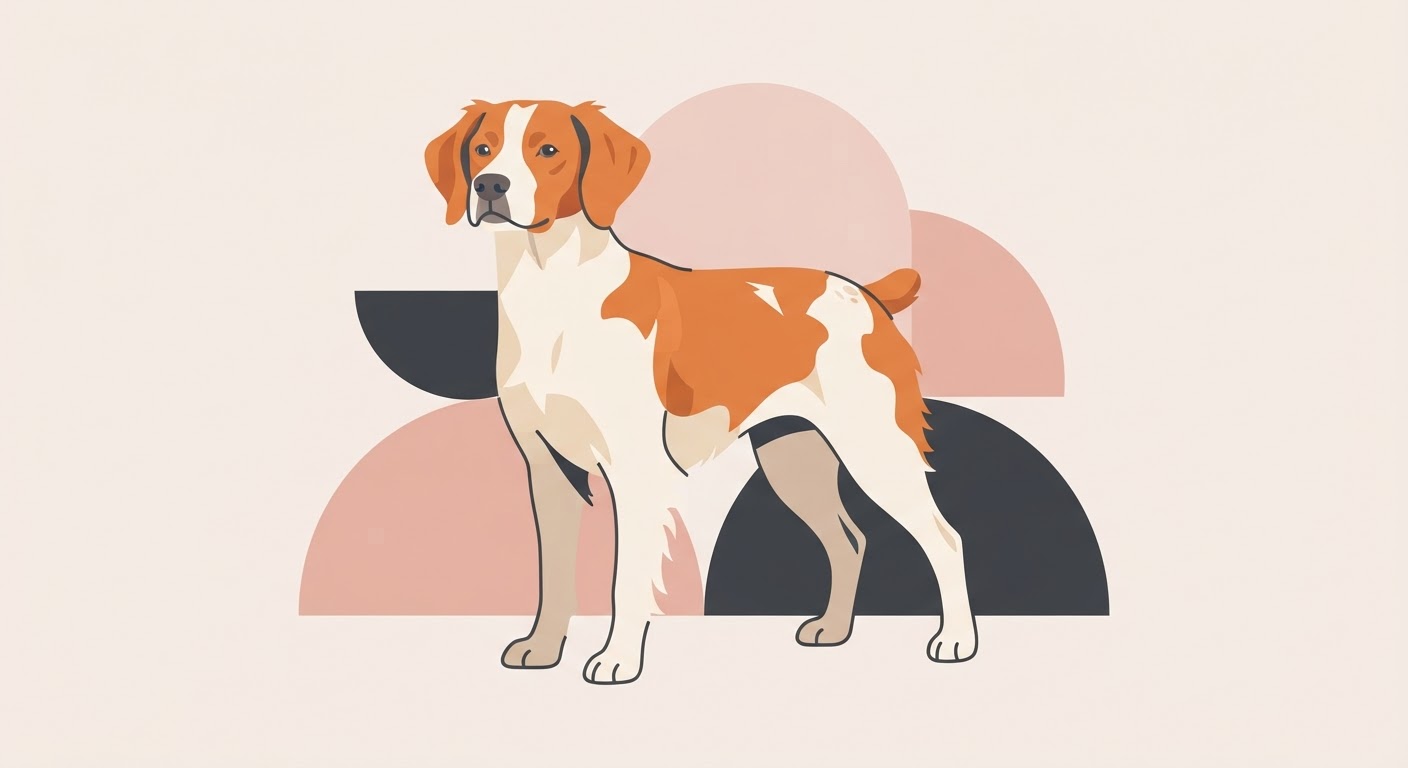
The Brittany is a compact, energetic French gundog bred to point and retrieve game, one of the smallest and most agile of the pointing breeds and a popular choice among working hunters today.
At a glance
Quick facts
Size
Medium
Exercise needs
2+ hours, ideally with fieldwork
Home size suited to
Small to medium home
Grooming frequency
Brush every other day, clip regularly
Coat length
Curly
Sheds
Very little
Lifespan
12-14 years
Town or country
Either, with enough exercise
Garden size needed
Small to medium
Where it comes from
Origins of the Brittany
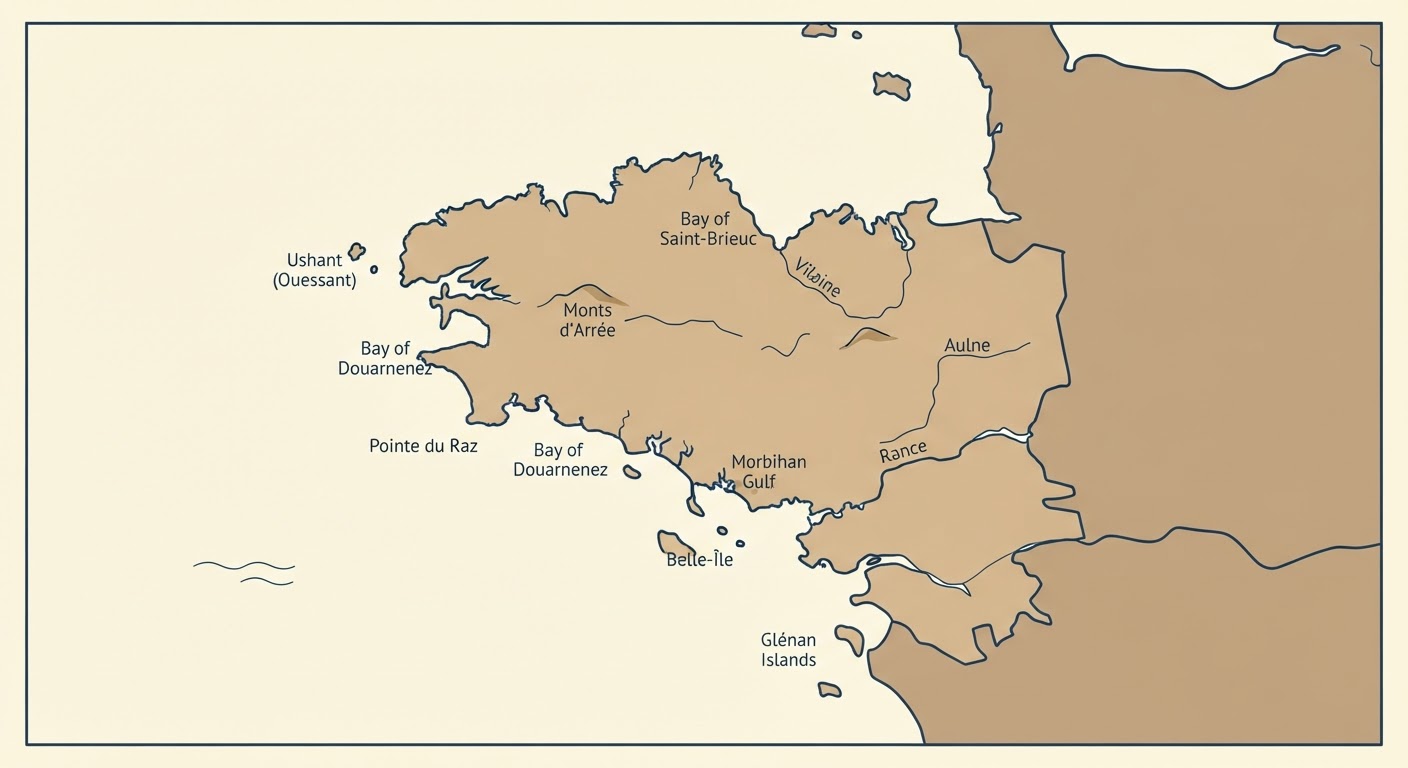
The Brittany developed among small-scale hunters in northwest France, who needed a compact, all-purpose dog able to point, flush and retrieve without keeping a large kennel. Its close-working, biddable style reflects that practical, one-dog-does-everything origin.
- Region
- Brittany
- Climate it was bred for
- Mild, wet Atlantic coastal climate
- Original job
- Pointing and retrieving game for peasant hunters
The long read
About the breed
The breed originates in the Brittany region of northwest France, where it developed among peasant hunters who needed a versatile, close-working dog able to point game and retrieve from land and water without a large kennel of dogs. Nineteenth-century sporting art and written accounts describe a small, often tailless, orange-and-white dog closely resembling the modern breed, which was formalised with a written standard in 1907 and later exported widely to North America, where it is usually called the Brittany Spaniel despite pointing rather than flushing like a true spaniel.
Living with a Brittany means living with a dog that has real drive and needs proper outlets for it: long walks are not enough on their own, and a Brittany without fieldwork, scent games or serious daily exercise can become anxious or destructive. The upside is a genuinely affectionate, biddable temperament that responds well to positive training and generally gets on well with children and other dogs, making it one of the more manageable pointing breeds for a first-time gundog owner willing to put in the exercise.
Today the Brittany remains an active working gundog in France and North America and is increasingly kept as a sporting companion in Britain, valued for combining a comparatively small, easy-to-manage size with genuine hunting ability and a warm temperament.
Living with one
Temperament & needs
Our own ratings, based on the breed standard and how these dogs behave in ordinary homes.
Friendliness
4/5
How openly the Brittany greets people it does not know.
Trainability
5/5
Highly biddable and eager to work with people.
Energy
5/5
Very high; needs serious daily exercise or fieldwork.
Barking
3/5
Can be vocal when excited or under-exercised.
Grooming
3/5
Medium coat needs weekly brushing.
Suits a first-time owner
3/5
How forgiving the Brittany is for someone taking on their first dog.
Sociability
4/5
Friendly with family, generally good with other dogs.
Independence
2/5
Wants to work closely with its handler.
Illustrated breed standard
The points of the breed
Hover or tap a numbered point to read what the standard asks for.
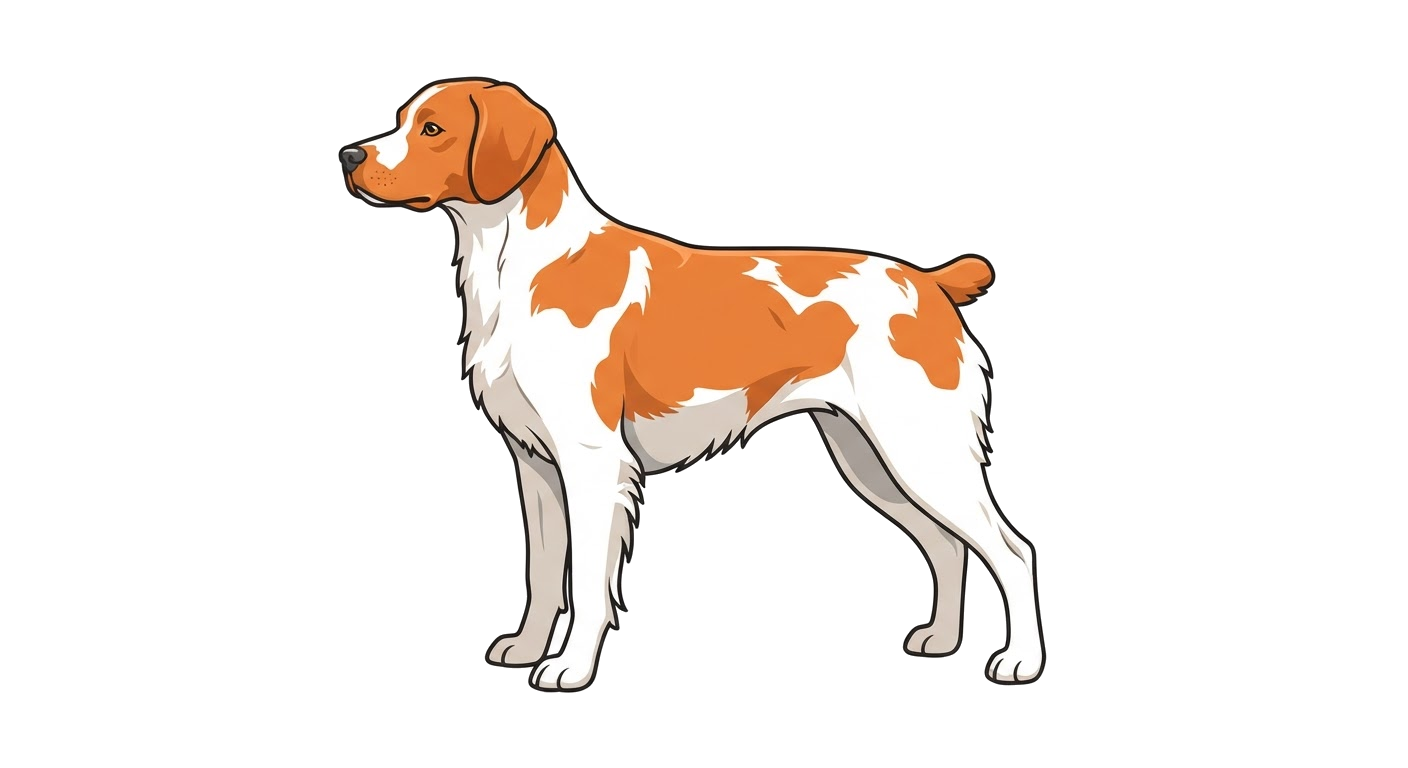
Point 1
Skull
The Brittany's skull is judged on balance rather than size — proportionate to the body, with a clean cheek and a stop typical of the breed. Coarseness or an over-refined head are both faulted.
Colours & patterns
Recognised coats
Which coats the standard accepts — and which are simply popular.
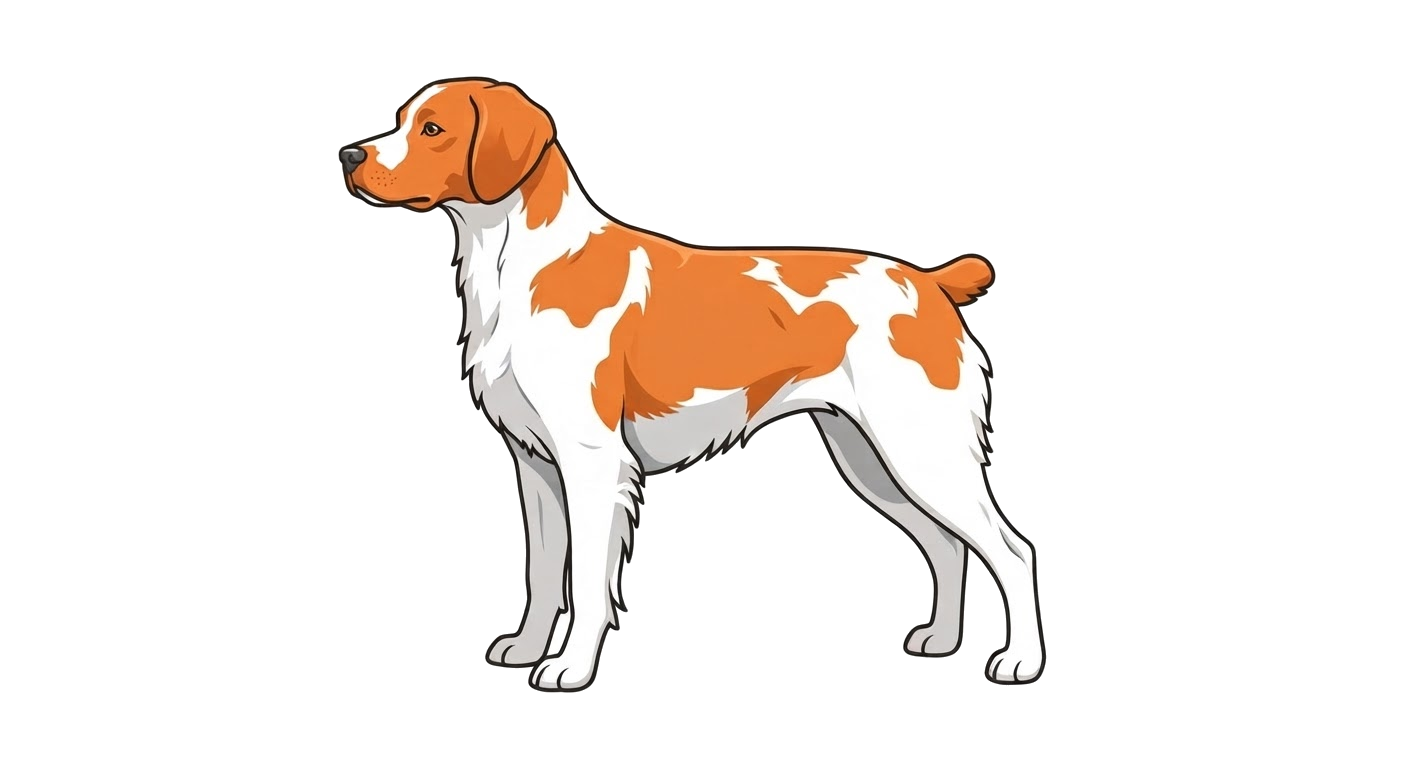
Orange and white
Standard colour
The most traditional colouring.
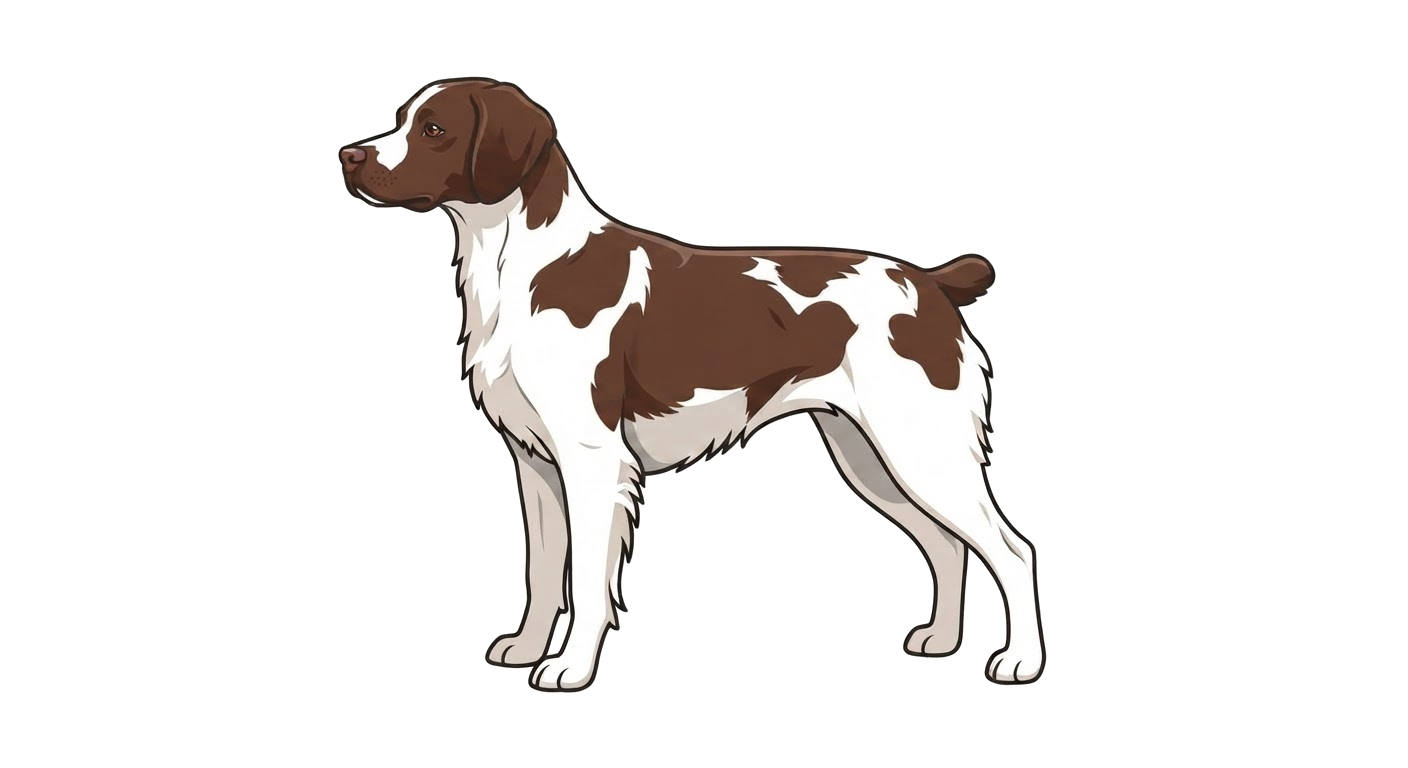
Liver and white
Standard colour
A warm brown replacing orange.
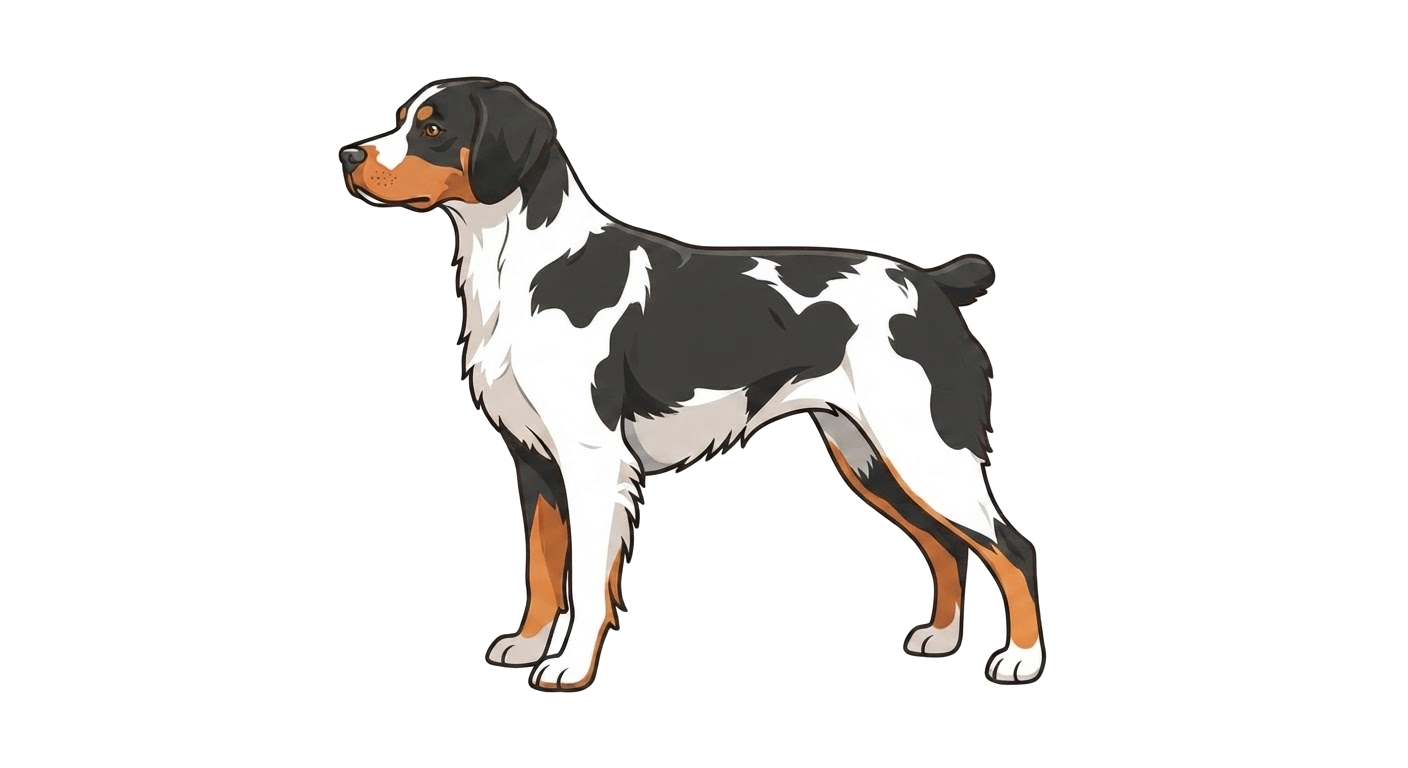
Tricolour
Standard colour
Orange or liver with black and white.
Outside the standard
Other colours
Dilute coats you will see advertised. They are the same breed, but no kennel club accepts them.
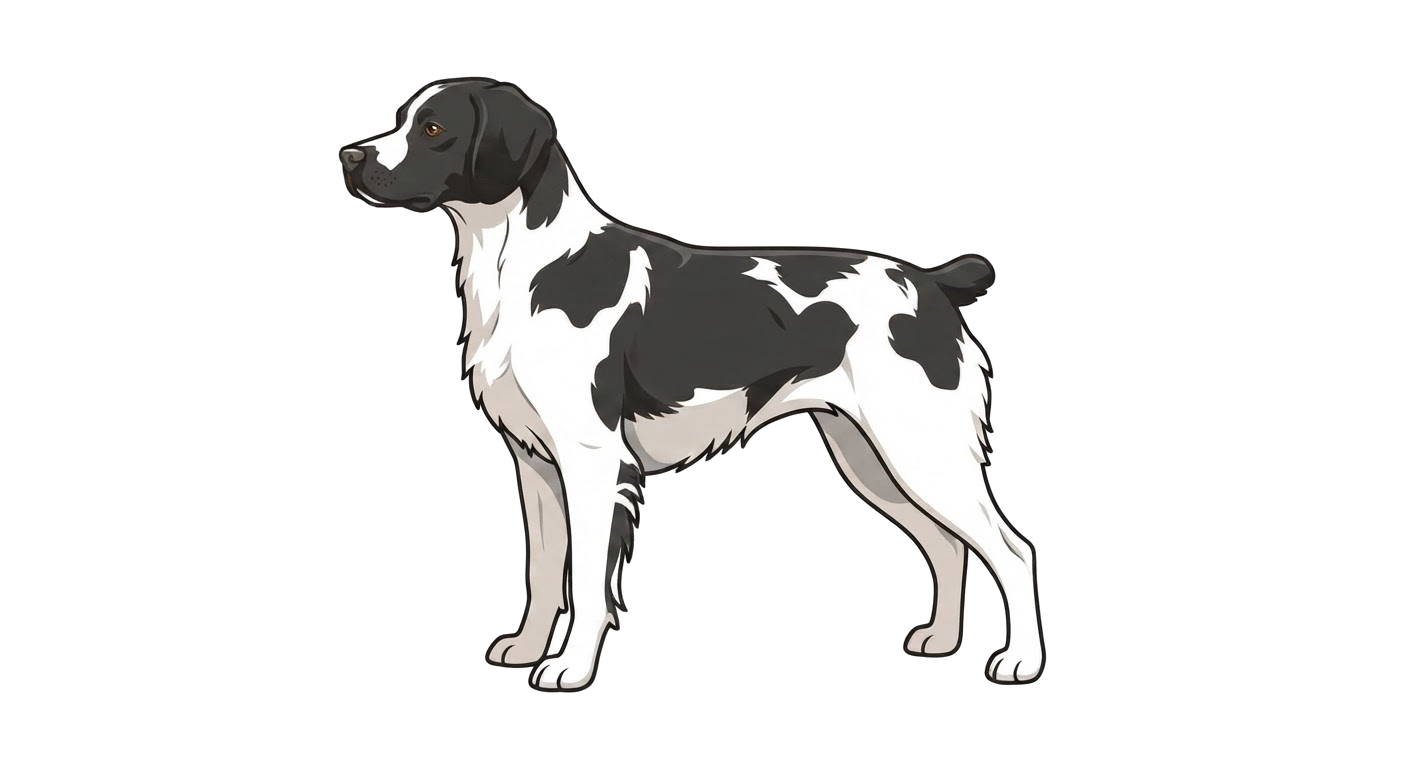
Black and white
Not in the standard
Seen in some lines but not accepted by all standards.
Timeline
History & development
1850s
Regional origins
Sporting art from Brittany depicts small, often tailless, orange-and-white pointing dogs.
1907
First written standard
The Club de l'Epagneul Breton drew up the first formal breed standard in France.
1931
Arrival in North America
The breed was imported to the United States, where it became known as the Brittany Spaniel.
1982
Name shortened
The American Kennel Club dropped Spaniel from the name to reflect the breed's pointing, not flushing, style.
Reference
Breed standard summary
- body
- Short-coupled, deep chest.
- coat
- Dense, flat or wavy, never curly.
- ears
- Set high, short, covered with wavy hair.
- eyes
- Amber to dark brown, alert expression.
- gait
- Quick, elastic, ground-covering.
- head
- Medium length, well-defined stop.
- size
- 44-52 cm at the shoulder.
- tail
- Naturally short or docked, carried horizontal.
- colour
- Orange and white, Liver and white, Tricolour. Colours outside this list are seen but are not accepted by the kennel clubs.
- temperament
- Typical of the breed: strongest in energy, trainability, sociability. Nervousness or aggression are serious faults in the show ring and in the home.
- general appearance
- Compact, leggy pointing dog, energetic and alert.
Health
What to screen for
Green means little to worry about, amber means ask the breeder for test results, red means manage it actively.
Hip dysplasia
Screen for it
Ask for hip scores on both parents.
Epilepsy
Watch closely
Ask breeders whether the line has any history of seizures.
Hypothyroidism
Screen for it
Ask about thyroid testing in the breeding line.
Progressive retinal atrophy
Screen for it
Ask for recent eye clearance test results.
General information only — always speak to your vet about your own dog.
From real owners
Dogs like this
Brittanys added by PawPoint members through their pet passports. Share yours to appear here.
Loading the wall…
Made for the Brittany
The book, plus prints, hoodies and mugs using our own Brittany illustration — and one everyday accessory that suits any dog.
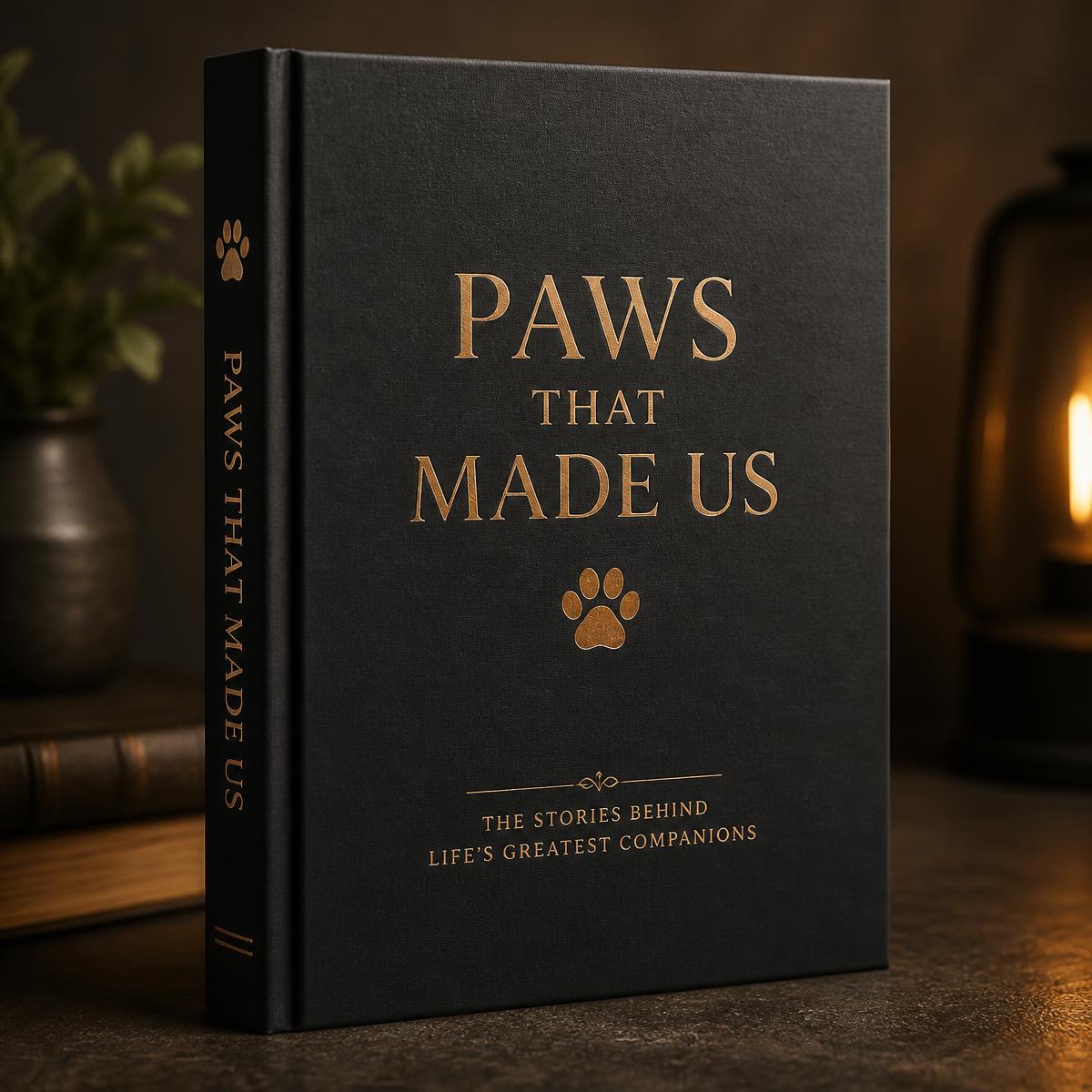
The book
Pawpoint: The Complete Dog Breed Book
Every officially recognised breed plus the unofficial ones nobody else documents. 400+ pages, hardback, printed and shipped from the UK.
Own stock — shipped by us
Framed poster
Brittany Framed Poster
Museum-weight print of our Brittany illustration, framed or unframed.
Printed to order
Hoodie
Brittany Hoodie
Heavyweight hoodie carrying the Brittany illustration on the chest.
Printed to order
Mug
Brittany Mug
Ceramic mug with the Brittany illustration wrapped around it.
Printed to order
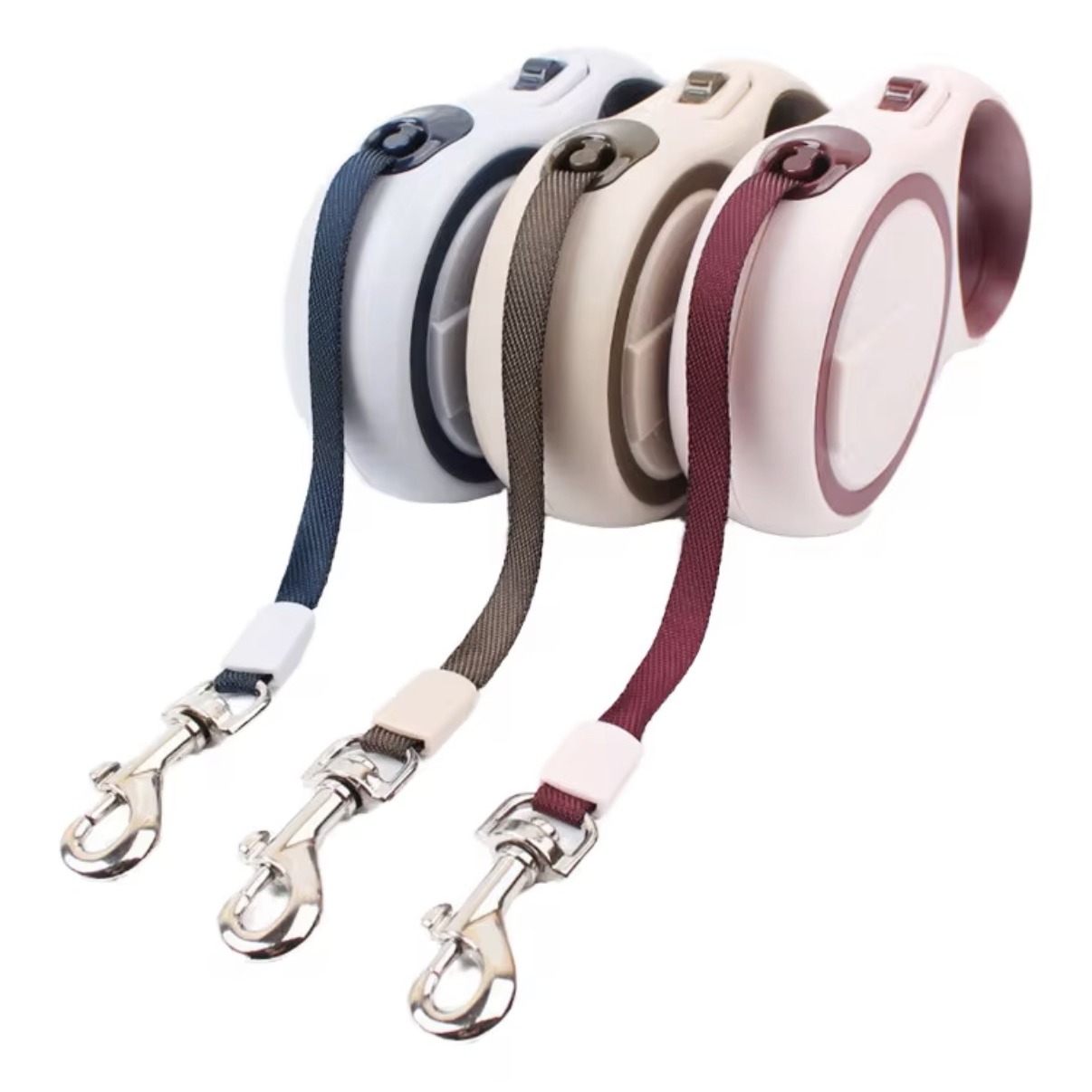
Accessory
Retractable Lead
5m retractable with one-touch brake.
Fits any dog
Pawpoint on YouTube
Watch the full Brittany video
Breed deep-dives, history and honest ownership talk. New film every week.
Watch now