
Bull Terrier
BULL TER-ee-uhr
England· Birmingham
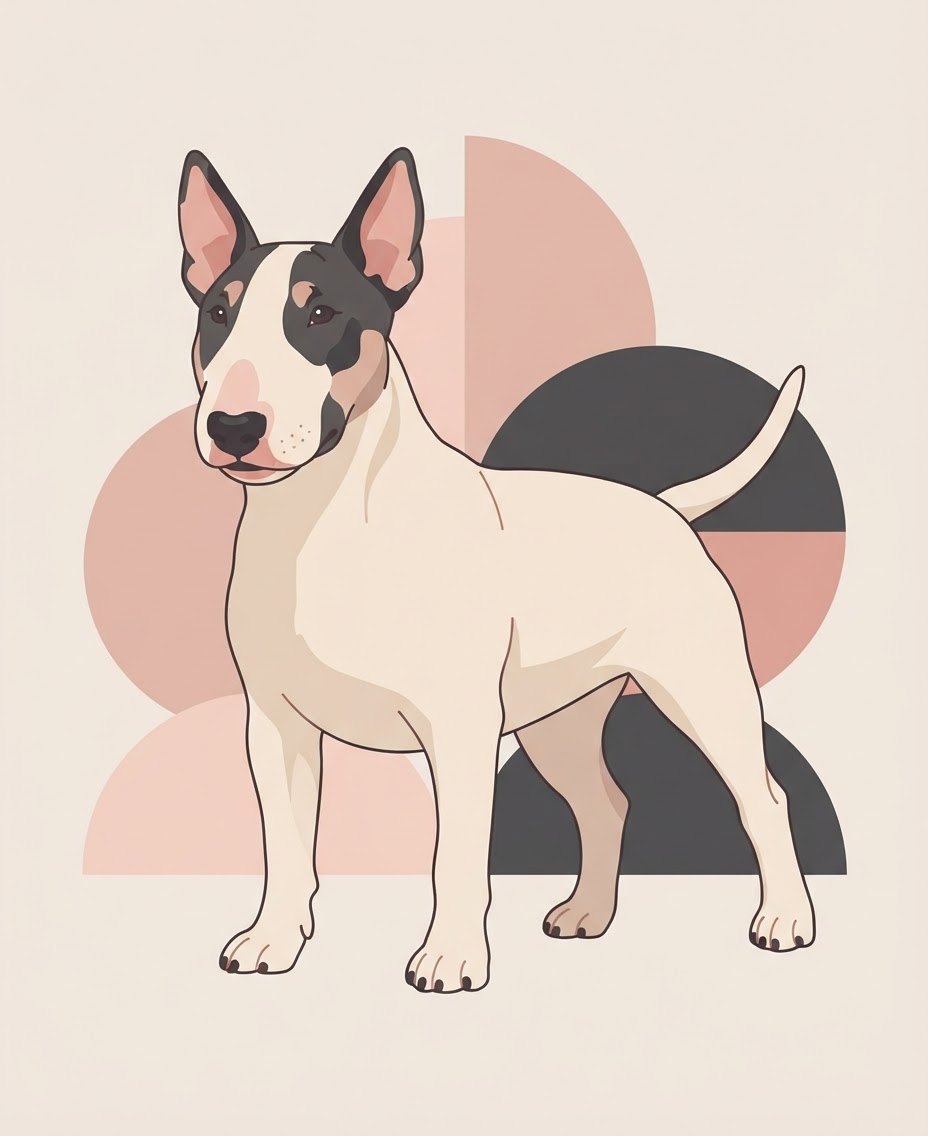
The Bull Terrier is an English terrier bred originally for the pit-fighting and ratting trade, now recognised chiefly for its egg-shaped head and irrepressible, comic personality.
At a glance
Quick facts
Size
Medium
Exercise needs
1-2 hours vigorous exercise
Home size suited to
Small to medium home
Grooming frequency
Weekly brush, hand-strip a few times a year
Coat length
Wiry
Sheds
Little, needs stripping instead
Lifespan
11-13 years
Town or country
Either, with enough exercise
Garden size needed
Small to medium
Where it comes from
Origins of the Bull Terrier
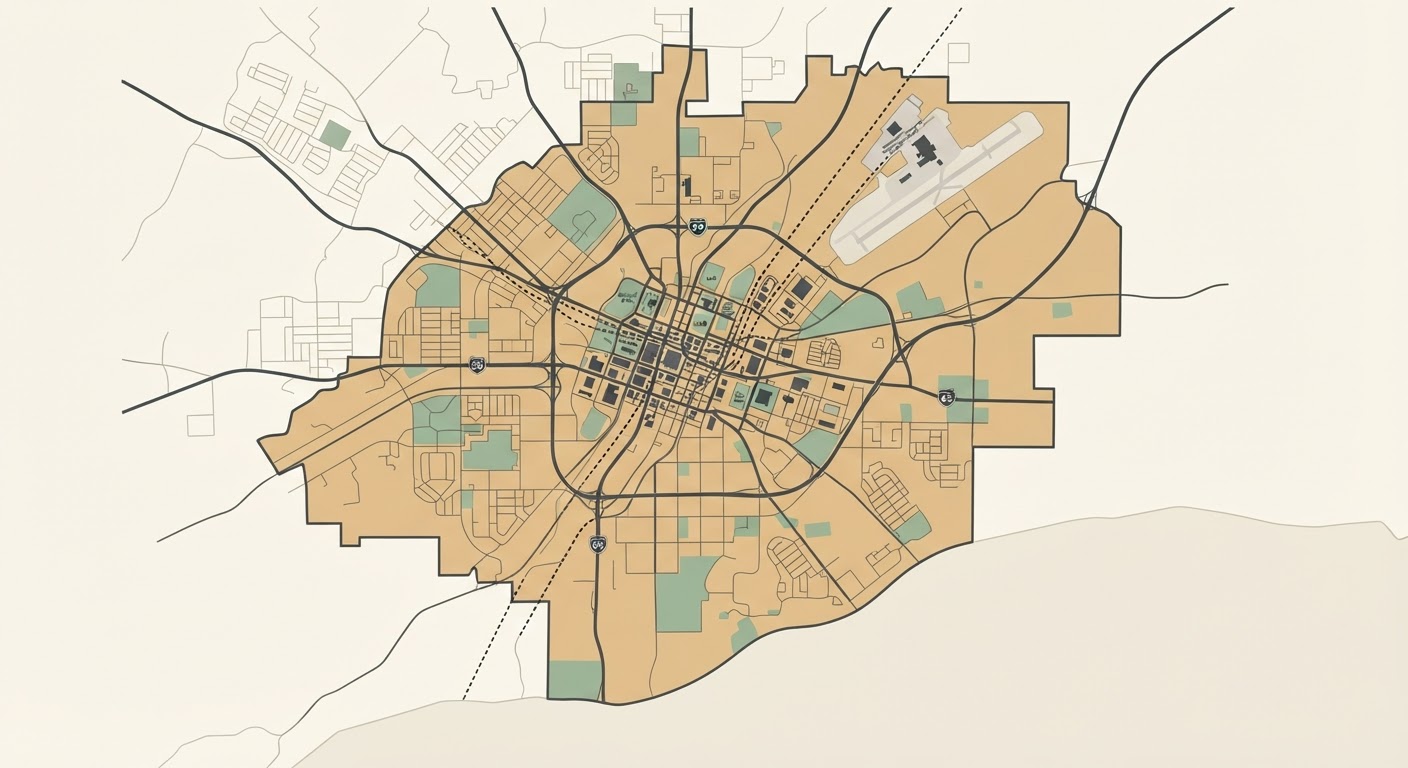
The Bull Terrier was developed in the industrial city of Birmingham in the mid-1800s, bred by crossing Bulldogs and the now-extinct English White Terrier for the fighting pits. Breeder James Hinks later refined the type into the egg-headed show dog recognisable today.
- Region
- Birmingham
- Climate it was bred for
- Temperate industrial Midlands
- Original job
- Pit fighting and ratting
The long read
About the breed
The breed was created in the 1850s by crossing Bulldogs with the now-extinct English White Terrier, producing a fast, gladiatorial dog for the illegal dog-fighting rings of Birmingham. James Hinks, a Birmingham dog dealer, refined the type into an all-white show dog he called the White Cavalier, breeding for the domed, egg-shaped head that distinguishes the modern Bull Terrier from its bull-and-terrier cousins. Coloured variants were added later by crossing back to Staffordshire Bull Terriers, and the breed's fighting use faded as dog-fighting was outlawed and it became established as a show and companion breed.
Living with a Bull Terrier means living with a strong-willed, high-energy dog with a genuinely playful, sometimes clownish streak, alongside real physical strength that demands early training and secure fencing. Bull Terriers can be territorial with unfamiliar dogs and need consistent, positive training from puppyhood; their determination, useful in the show ring, translates to real stubbornness in everyday obedience work. The breed thrives on close family contact and does not do well left alone for long hours.
Today the Bull Terrier is kept mainly as a companion, prized by its fans for its distinctive look and devoted, entertaining nature, though its history and strength mean some countries and insurers restrict or scrutinise ownership, and prospective owners should research local rules before committing to the breed.
Living with one
Temperament & needs
Our own ratings, based on the breed standard and how these dogs behave in ordinary homes.
Friendliness
3/5
How openly the Bull Terrier greets people it does not know.
Trainability
3/5
Intelligent but stubborn and strong-willed.
Energy
4/5
Needs daily vigorous exercise and play.
Barking
2/5
Not a habitual barker.
Grooming
1/5
Short coat needs minimal grooming.
Suits a first-time owner
3/5
How forgiving the Bull Terrier is for someone taking on their first dog.
Sociability
3/5
Devoted to family, can be reactive to unfamiliar dogs.
Independence
3/5
Determined and can be single-minded once fixed on something.
Illustrated breed standard
The points of the breed
Hover or tap a numbered point to read what the standard asks for.
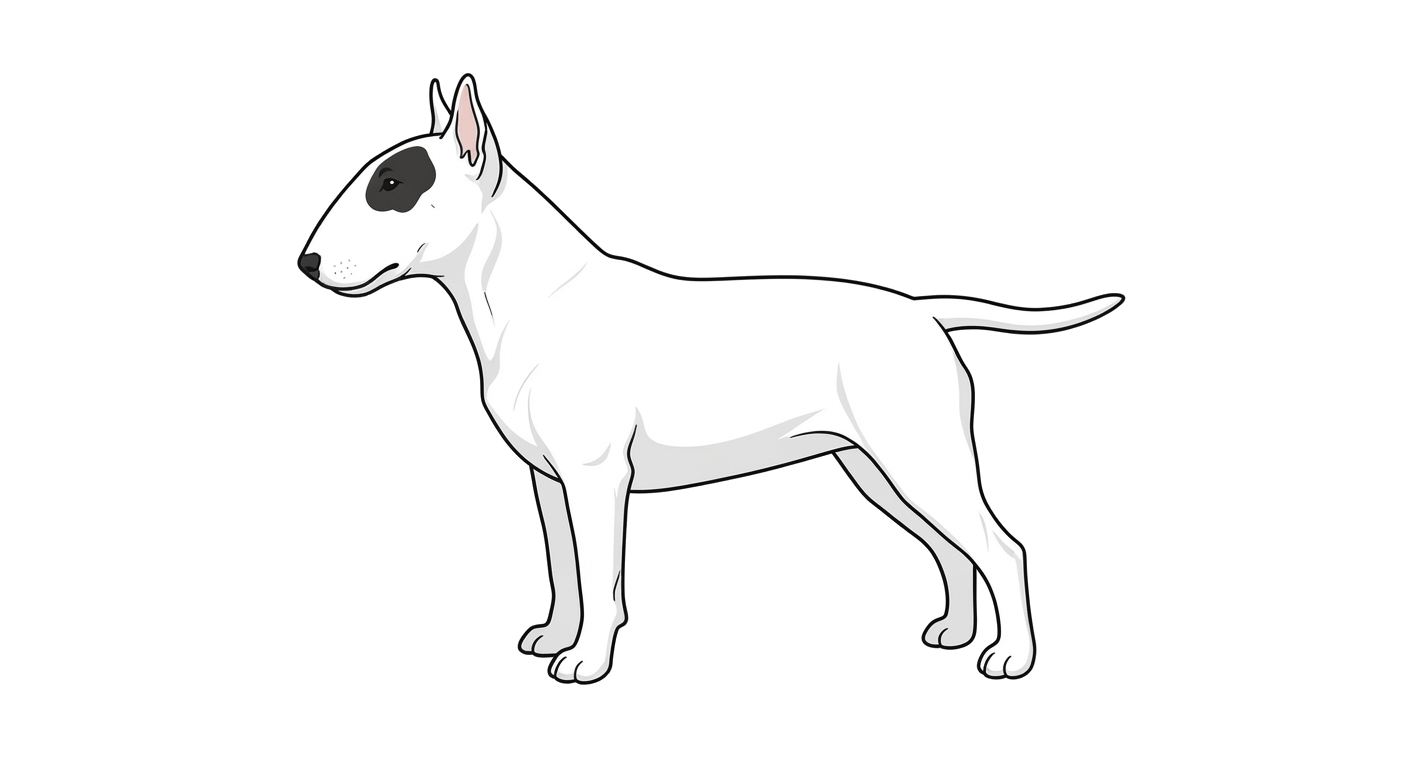
Point 1
Skull
The Bull Terrier's skull is judged on balance rather than size — proportionate to the body, with a clean cheek and a stop typical of the breed. Coarseness or an over-refined head are both faulted.
Colours & patterns
Recognised coats
Which coats the standard accepts — and which are simply popular.
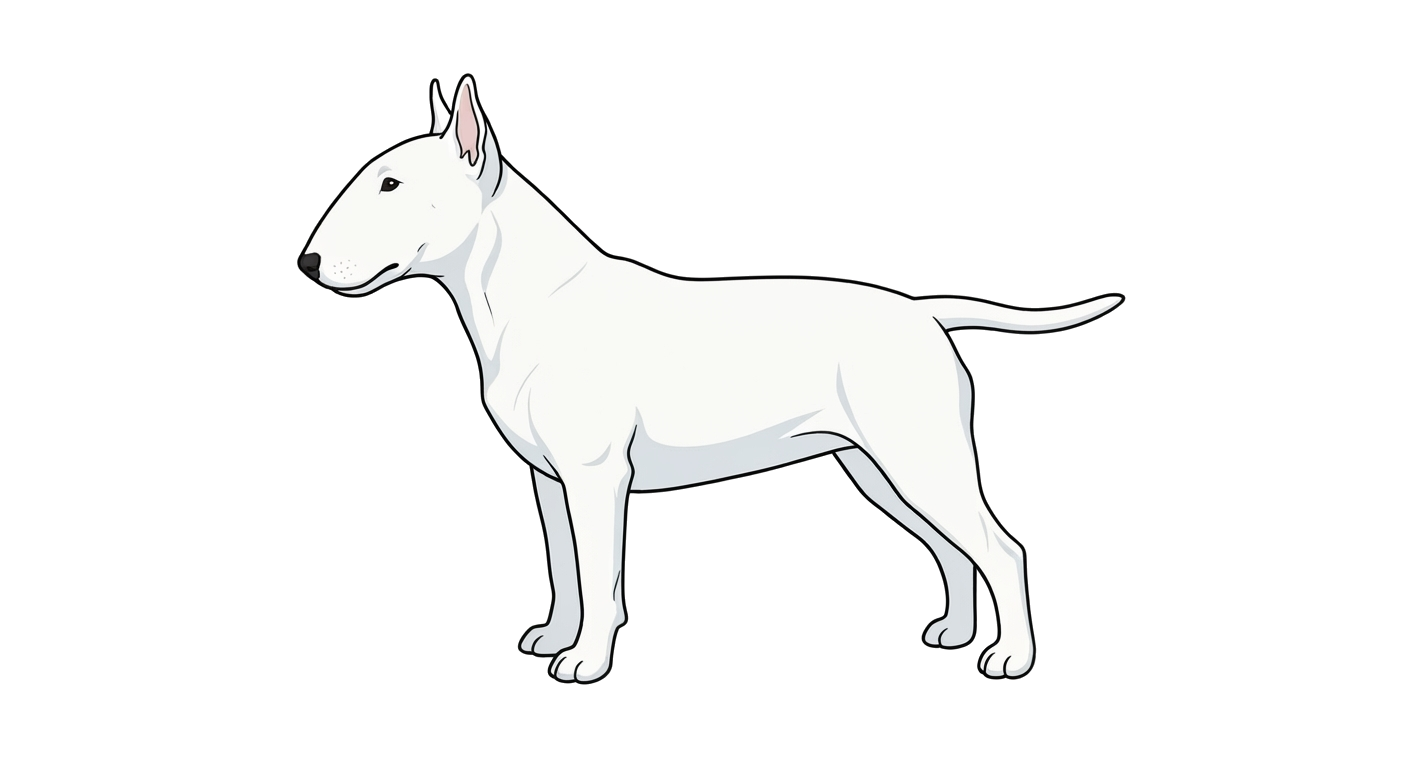
White
Standard colour
The classic all-white colouring, sometimes with head markings.
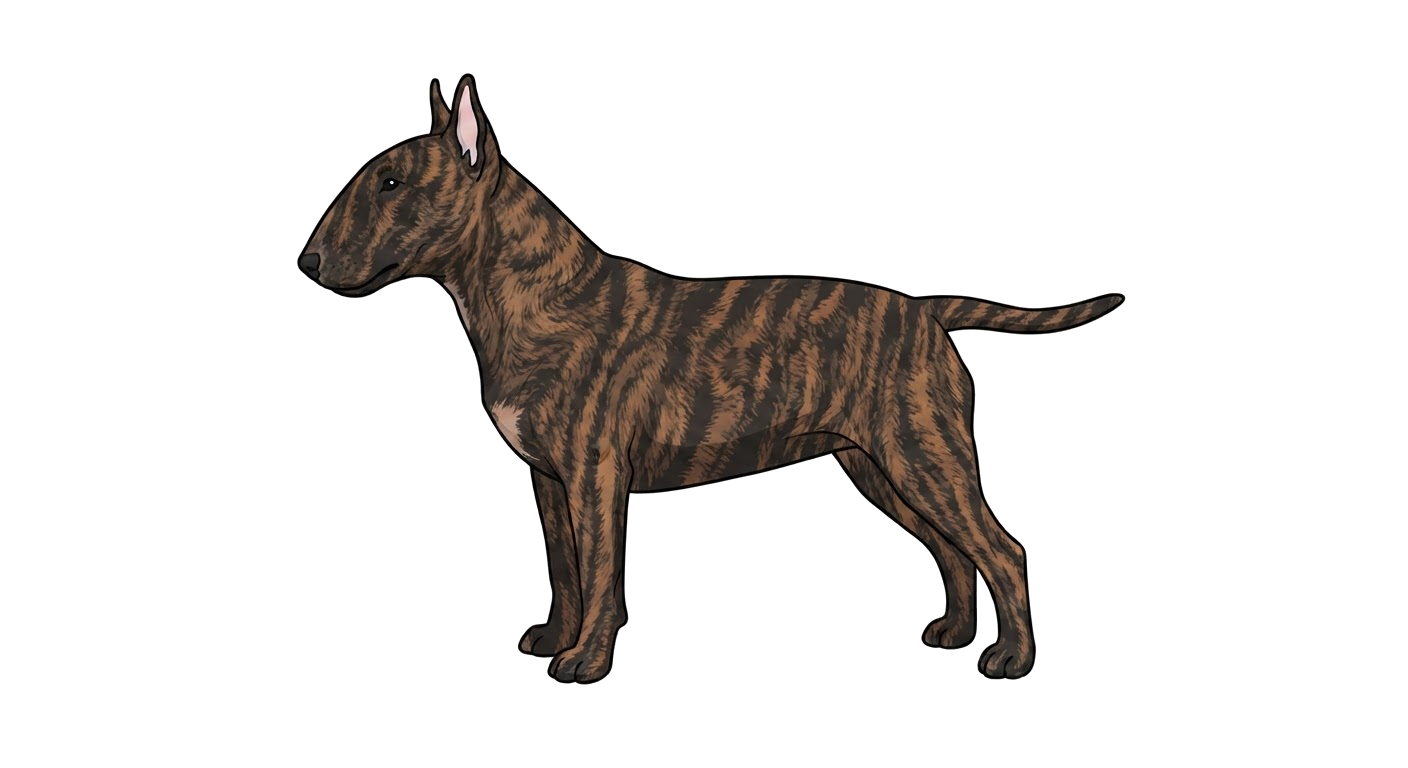
Brindle
Standard colour
Dark stripes over a lighter base, common in coloured Bull Terriers.
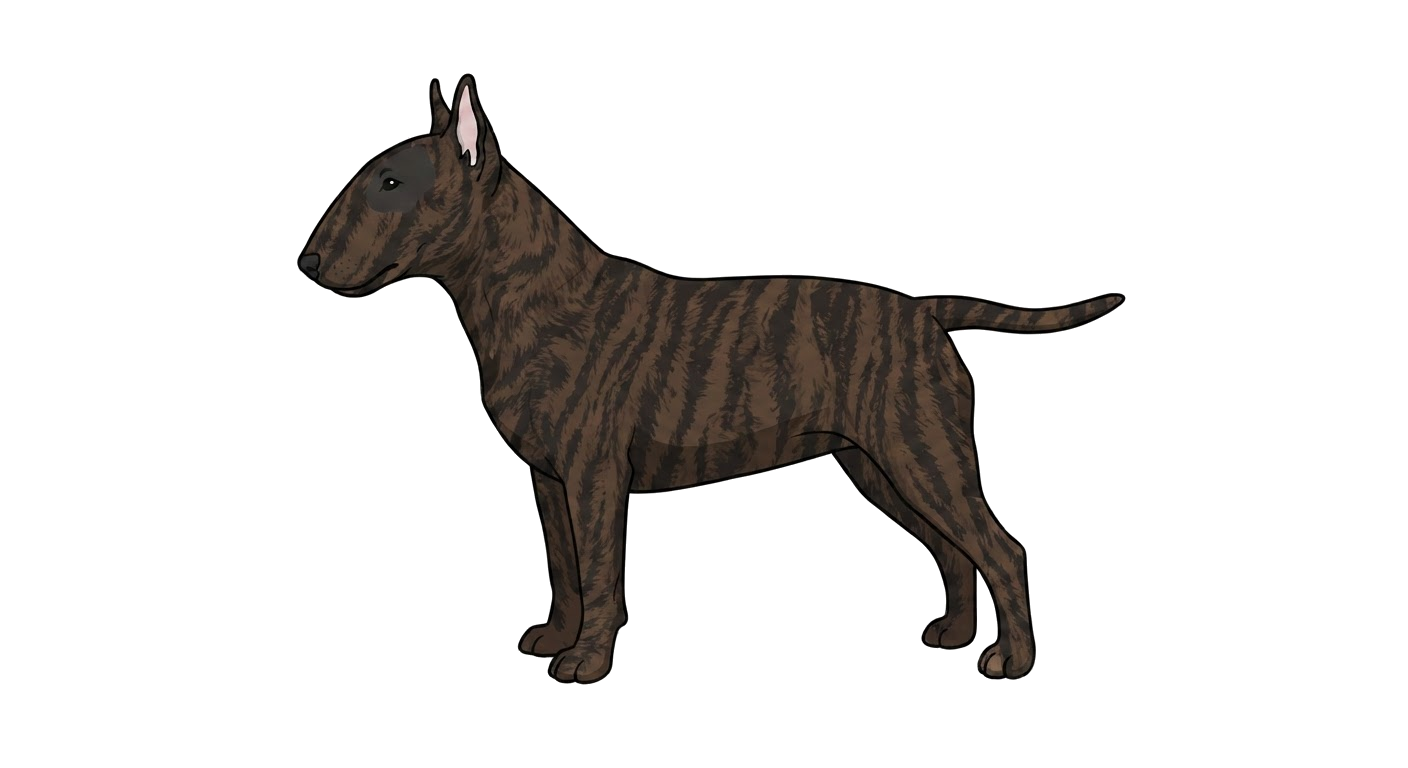
Black brindle
Standard colour
A very dark brindle appearing almost black.
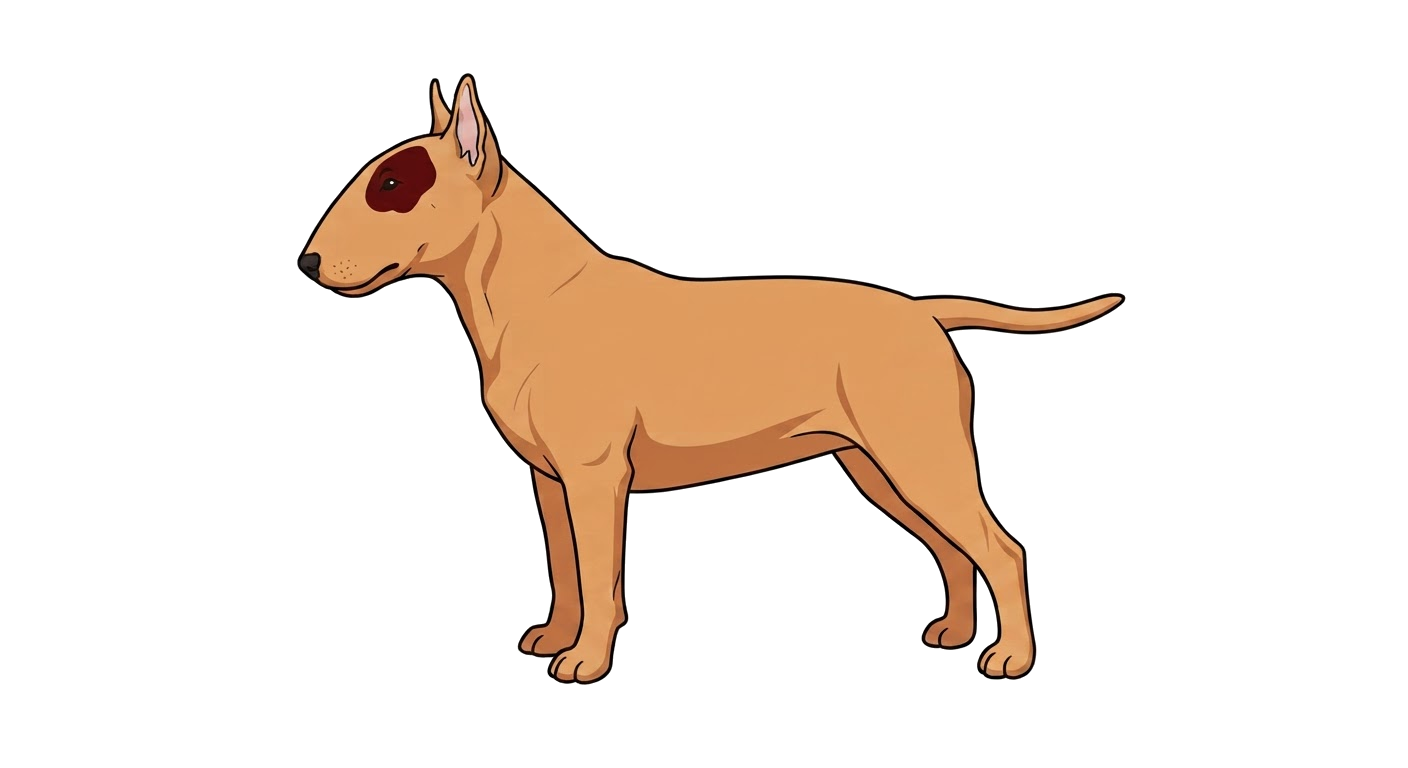
Red
Standard colour
A solid tan-red coat.
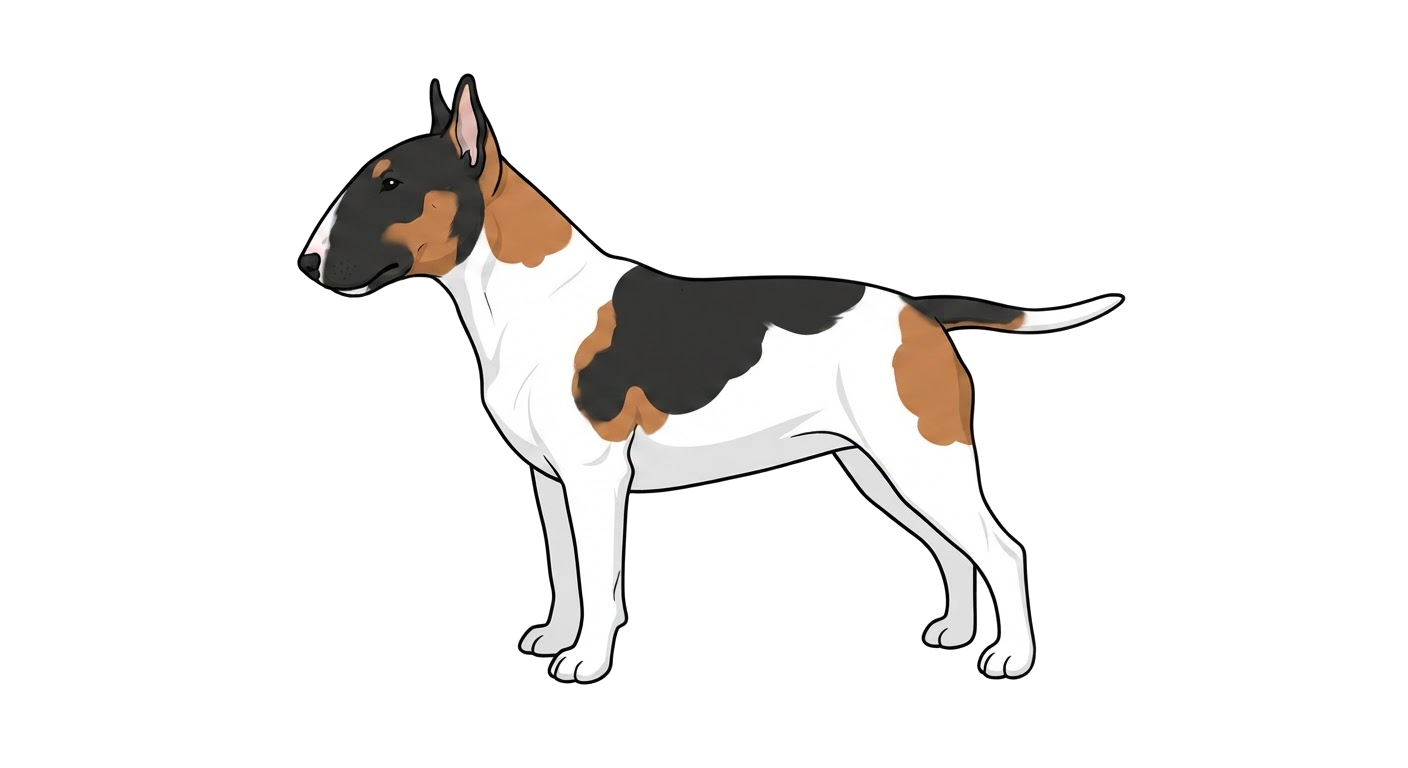
Tricolour
Standard colour
Black, tan and white in combination.
Timeline
History & development
1850s
Created in Birmingham
Bulldog and English White Terrier crosses produced a fast, gladiatorial dog for the fighting pits.
1862
White Cavalier
Breeder James Hinks showed his refined, all-white type, laying the foundation of the modern Bull Terrier.
1917
Coloured variety recognised
Crosses to Staffordshire Bull Terriers reintroduced colour, later recognised as a separate variety.
1939
Miniature variety recognised
A smaller version, the Miniature Bull Terrier, gained recognition as a distinct breed.
1950s onward
The breed today
Kennel club registrations settled into a steady pattern and the Bull Terrier moved from a working specialist to a family companion, with breed clubs in the UK and abroad now focused on health testing and keeping true type alive.
Reference
Breed standard summary
- body
- Well-rounded, deep chest, short, strong back.
- coat
- Short, flat, harsh to the touch.
- ears
- Small, thin, erect.
- eyes
- Small, triangular, deep-set, dark.
- gait
- Free-moving, jaunty, with a slight roll.
- head
- Long, deep, egg-shaped, no stop.
- size
- 45-55 cm at the shoulder.
- tail
- Short, carried horizontally.
- colour
- White, Brindle, Black brindle, Red, Tricolour. Colours outside this list are seen but are not accepted by the kennel clubs.
- temperament
- Typical of the breed: strongest in energy, trainability, sociability. Nervousness or aggression are serious faults in the show ring and in the home.
- general appearance
- Strongly built, muscular terrier with a distinctive egg-shaped head.
Health
What to screen for
Green means little to worry about, amber means ask the breeder for test results, red means manage it actively.
Deafness
Watch closely
Ask for BAER hearing test results, especially in white-coated puppies.
Kidney disease (hereditary nephritis)
Watch closely
Ask breeders about kidney testing history in the line.
Heart conditions
Watch closely
Ask for a cardiac check on breeding stock.
Skin allergies
Low concern
Ask about any history of skin sensitivity in the line.
General information only — always speak to your vet about your own dog.
From real owners
Dogs like this
Bull Terriers added by PawPoint members through their pet passports. Share yours to appear here.
Loading the wall…
Made for the Bull Terrier
The book, plus prints, hoodies and mugs using our own Bull Terrier illustration — and one everyday accessory that suits any dog.

The book
Pawpoint: The Complete Dog Breed Book
Every officially recognised breed plus the unofficial ones nobody else documents. 400+ pages, hardback, printed and shipped from the UK.
Own stock — shipped by us
Framed poster
Bull Terrier Framed Poster
Museum-weight print of our Bull Terrier illustration, framed or unframed.
Printed to order
Hoodie
Bull Terrier Hoodie
Heavyweight hoodie carrying the Bull Terrier illustration on the chest.
Printed to order
Mug
Bull Terrier Mug
Ceramic mug with the Bull Terrier illustration wrapped around it.
Printed to order
Accessory
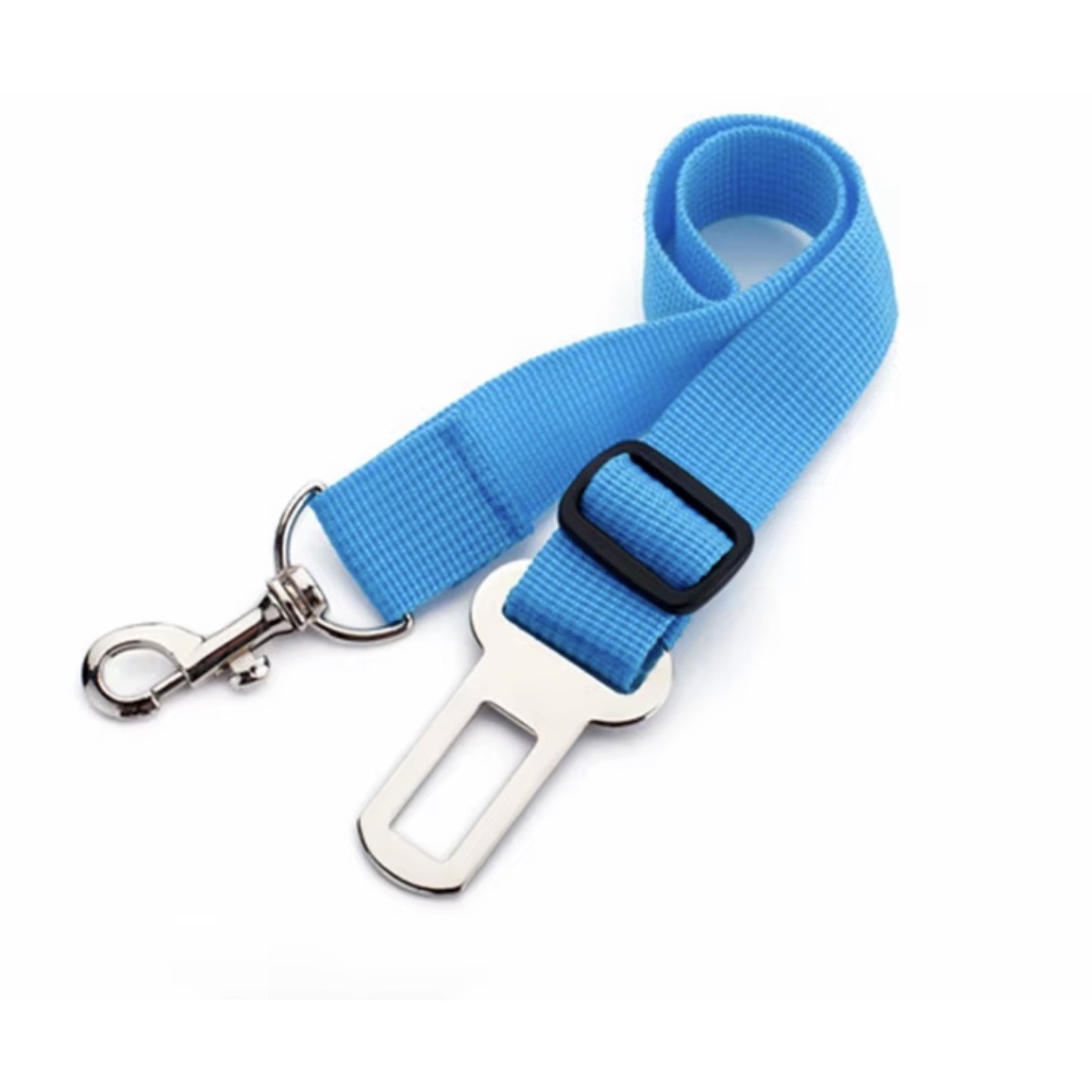
Car Seatbelt Restraint
Clips any harness to a standard seatbelt buckle.
Fits any dog
Pawpoint on YouTube
Watch the full Bull Terrier video
Breed deep-dives, history and honest ownership talk. New film every week.
Watch now