
Bulldog
BULL-dog
England· Midlands and southern England
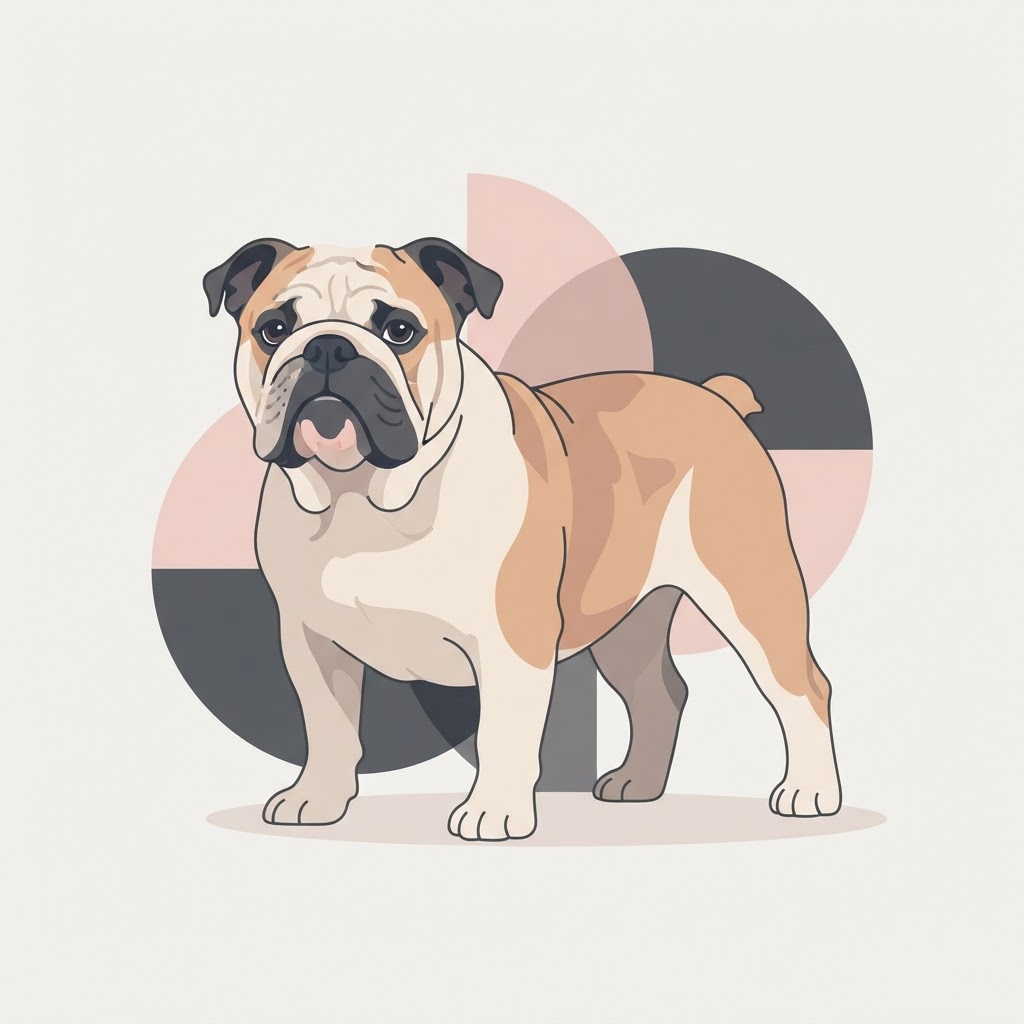
The Bulldog is an English breed instantly recognisable for its stocky, wrinkled build and pushed-in face, originally bred for the blood sport of bull-baiting and now one of the most popular companion breeds in the world despite serious inherited health problems.
At a glance
Quick facts
Size
Medium
Exercise needs
20–30 minutes a day, low intensity
Home size suited to
Flat or house — space matters less than temperature
Grooming frequency
Weekly brush, plus daily fold cleaning
Coat length
Short
Sheds
Yes, moderately
Lifespan
8–10 years
Town or country
Either, but cool and shaded either way
Garden size needed
Small is fine
Where it comes from
Origins of the Bulldog
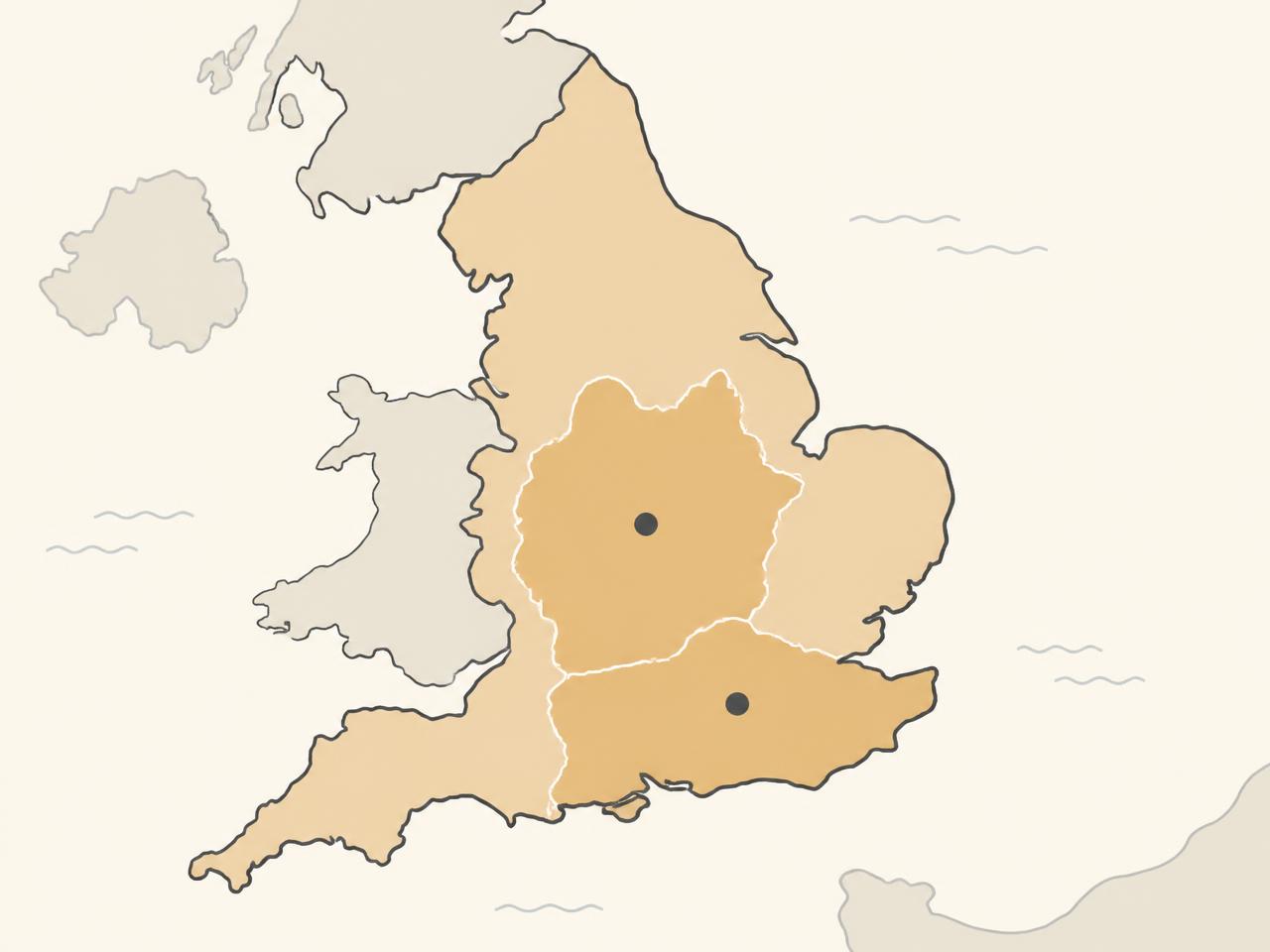
The Bulldog was developed in England for bull-baiting, a blood sport banned in 1835, which required a low, muscular dog able to grip a tethered bull and hold on. After the sport ended, breeders reshaped the dog into the companion and show breed known today.
- Region
- Midlands and southern England
- Climate it was bred for
- Temperate British climate
- Original job
- Bull-baiting
The long read
About the breed
The breed's name and original purpose come from bull-baiting, a sport banned in England in 1835 in which dogs were set on tethered bulls, work that demanded a low, powerful, tenacious dog able to grip and hold on. After the sport was outlawed, breeders reshaped the Bulldog into a calmer show and companion animal, deliberately exaggerating features such as the short muzzle and wrinkled face that had once served a functional purpose, in ways that modern veterinary opinion regards as harmful.
Living with a Bulldog today means living with an affectionate, low-energy, often comic companion that does not need much exercise, but also managing significant health considerations: most Bulldogs cannot give birth naturally and are delivered by planned caesarean section, many struggle to breathe efficiently, and the breed is notably prone to overheating, so hot weather and strenuous activity both need real caution.
The Bulldog's popularity has driven a growing movement, including within some kennel clubs, to breed for a longer muzzle and better airflow while keeping the breed's recognisable character, and prospective owners are increasingly encouraged to seek breeders who prioritise a functional airway and natural whelping ability over an extreme, traditionally "typey" look.
Living with one
Temperament & needs
Our own ratings, based on the breed standard and how these dogs behave in ordinary homes.
Friendliness
4/5
How openly the Bulldog greets people it does not know.
Trainability
3/5
Willing but can be stubborn.
Energy
2/5
Low energy; short walks suit the breed better than long ones.
Barking
2/5
Not a frequent barker.
Grooming
2/5
Short coat but facial folds need daily cleaning.
Suits a first-time owner
3/5
Easy-going and undemanding to walk, but new owners must be ready for daily fold care, heat management and higher vet costs.
Sociability
4/5
Affectionate and generally good with children.
Independence
2/5
Likes to be near its family.
Illustrated breed standard
The points of the breed
Hover or tap a numbered point to read what the standard asks for.
Point 1
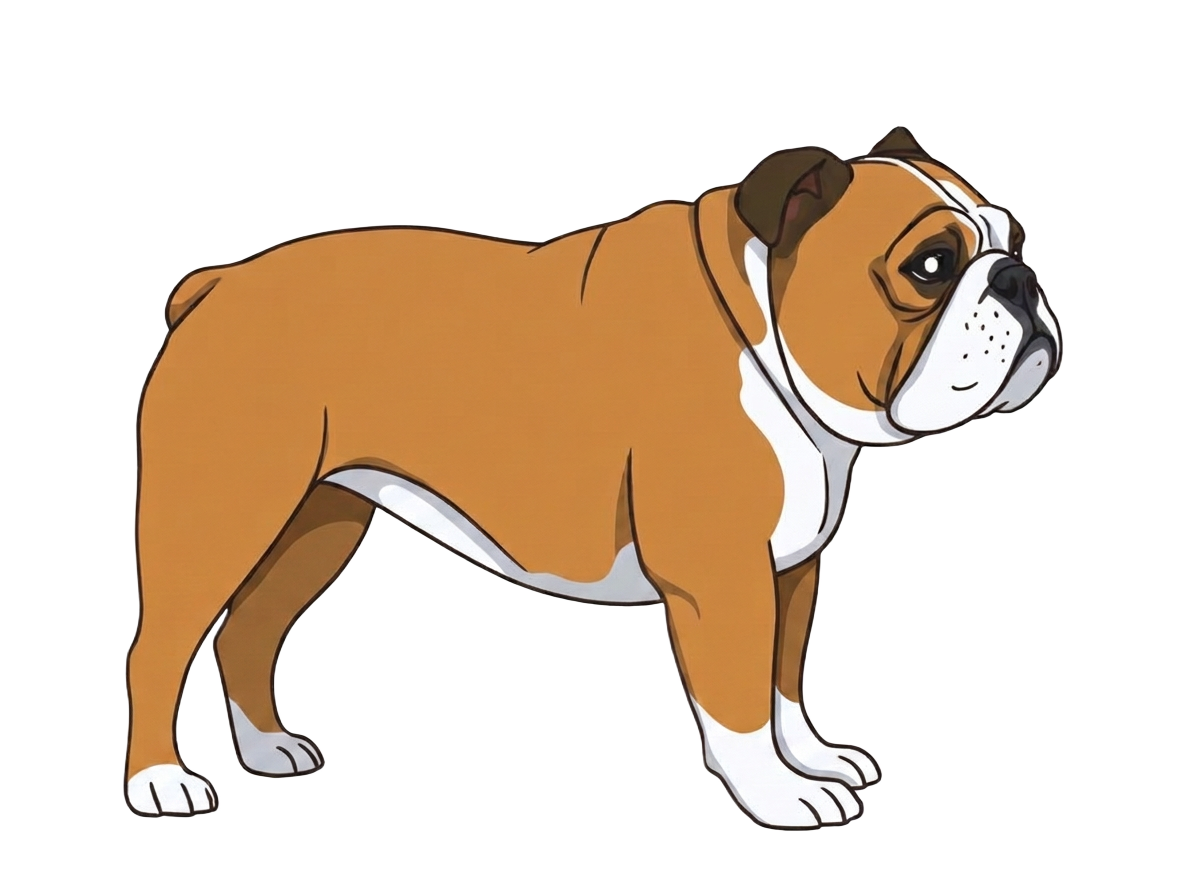
Massive skull
The skull is very large in circumference — the standard asks for it to measure at least the height of the dog at the shoulder. Viewed from the front it is high and square.
Colours & patterns
Recognised coats
Which coats the standard accepts — and which are simply popular.
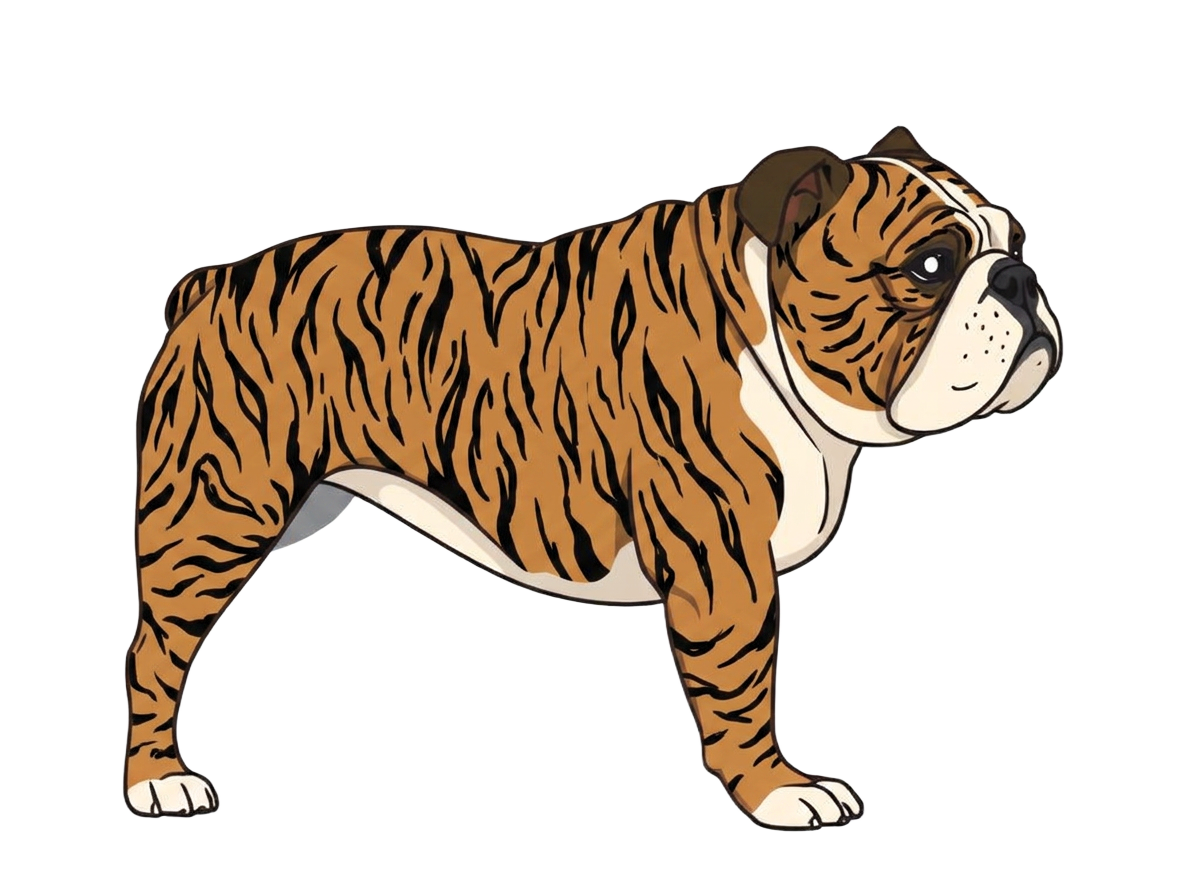
Brindle
Standard colour
Dark stripes over a lighter base, one of the most traditional colours.
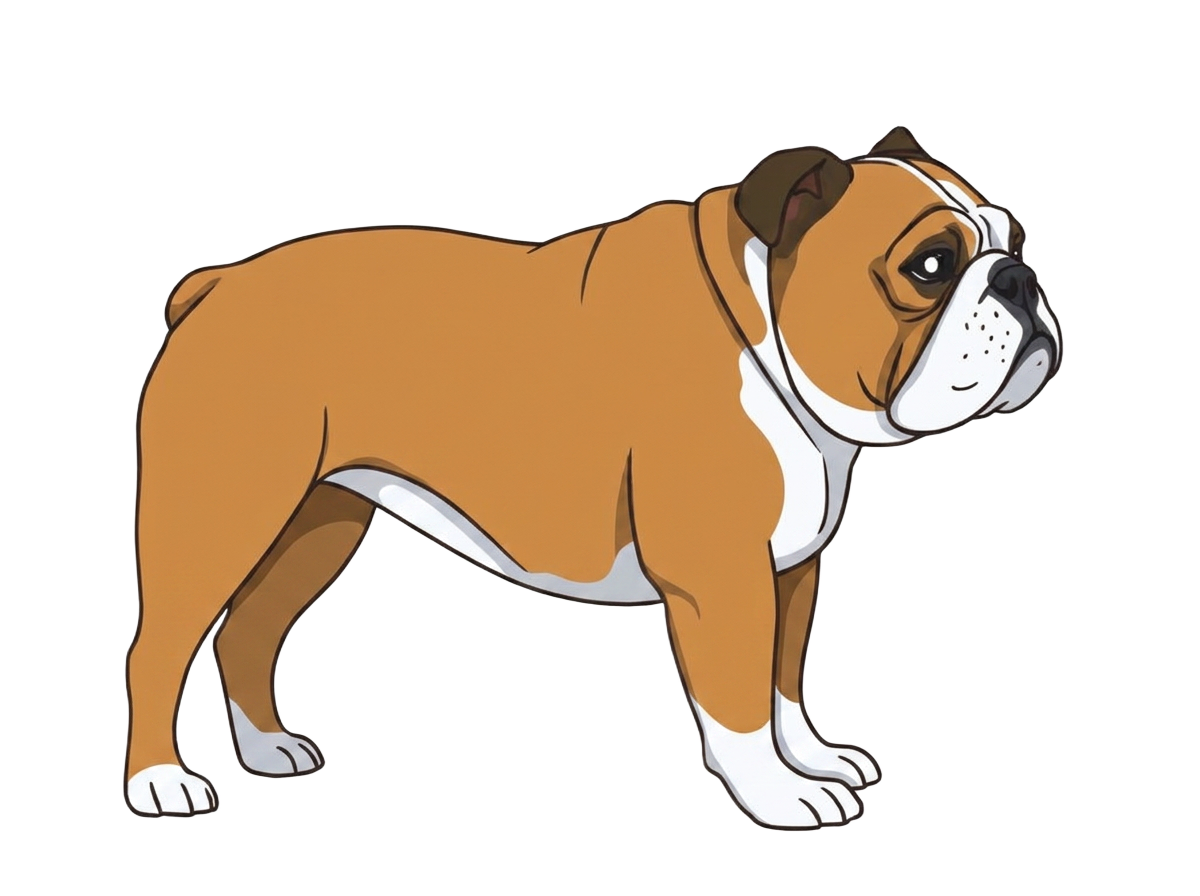
Fawn
Standard colour
A solid tan-fawn coat.
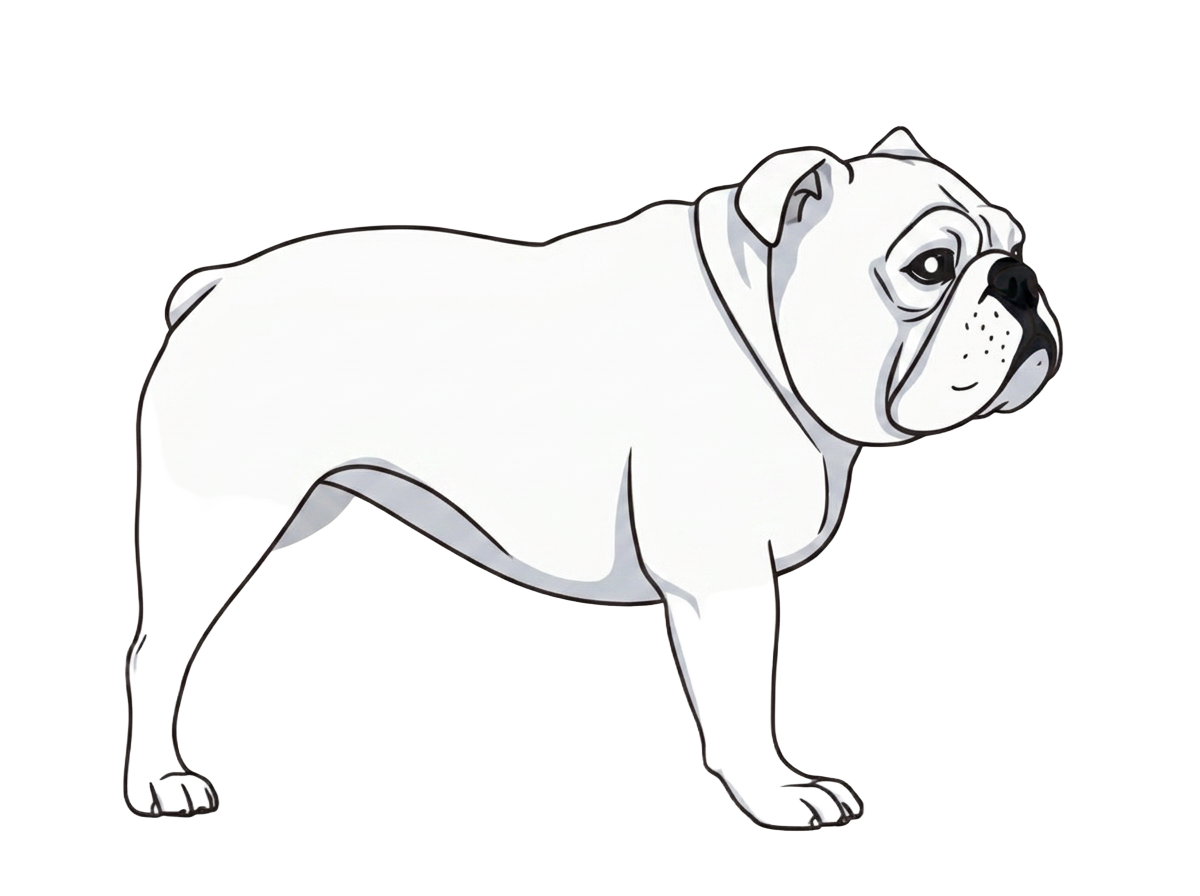
White
Standard colour
A solid or piebald white coat.
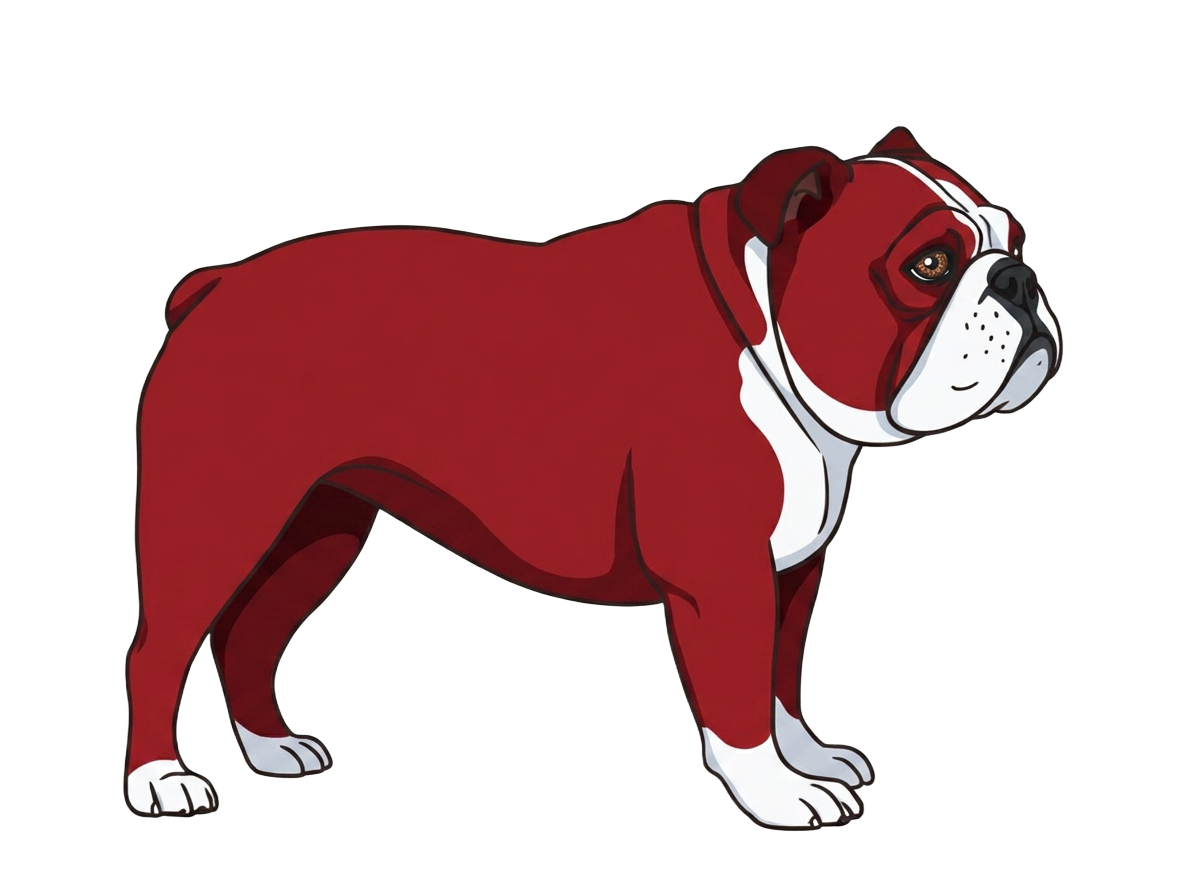
Red
Standard colour
A solid reddish coat.
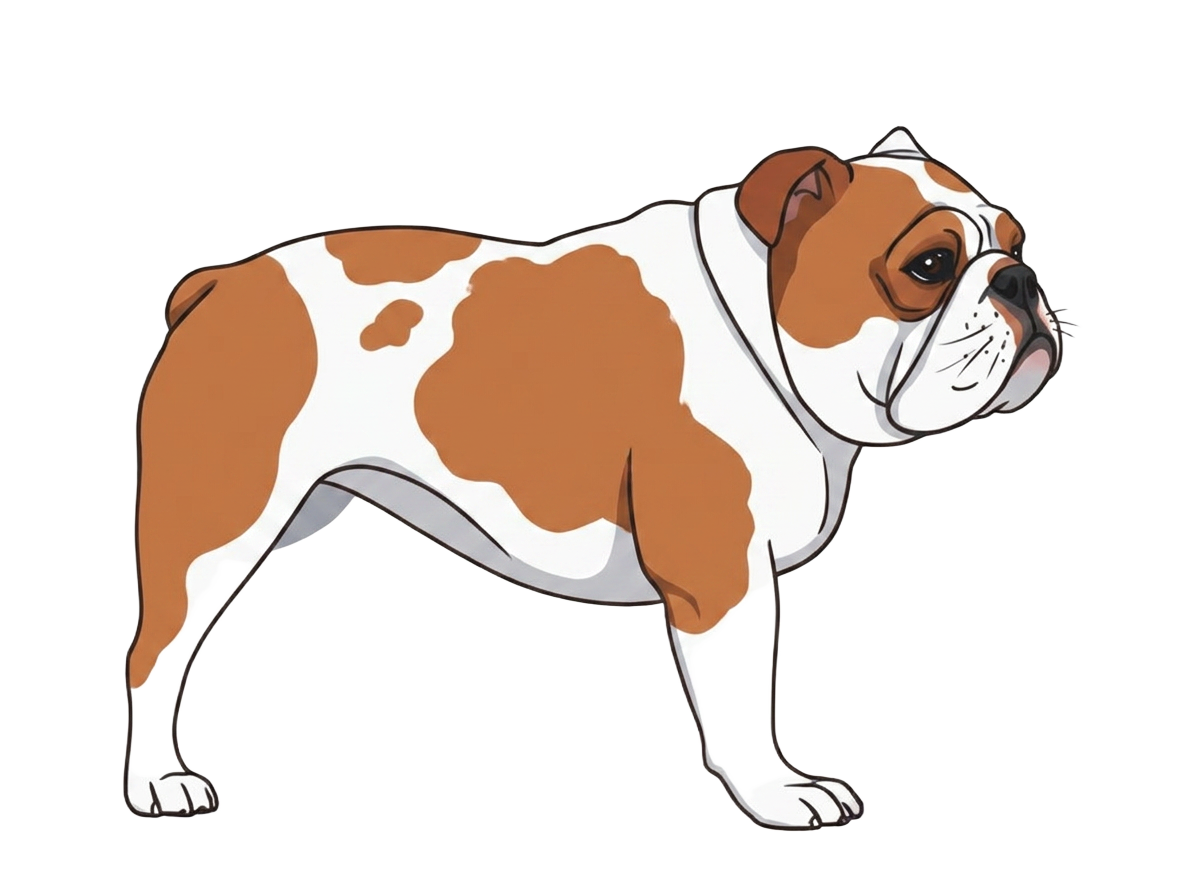
Piebald
Standard colour
Patches of colour on a white background.
Outside the standard
Other colours
Dilute coats you will see advertised. They are the same breed, but no kennel club accepts them.
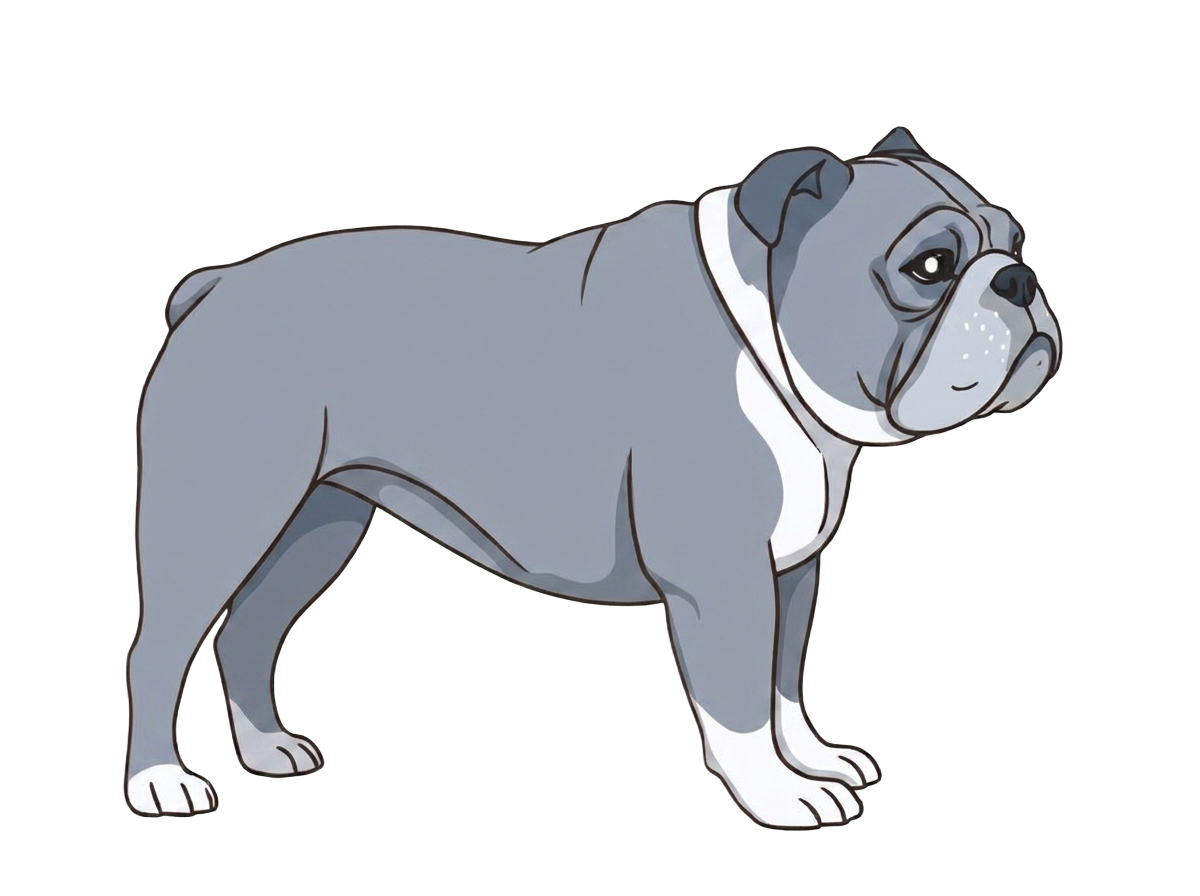
Blue
Not in the standard
A dilute grey coat produced by the same dilution gene seen in other breeds. Bred at a premium, but outside the Kennel Club standard.
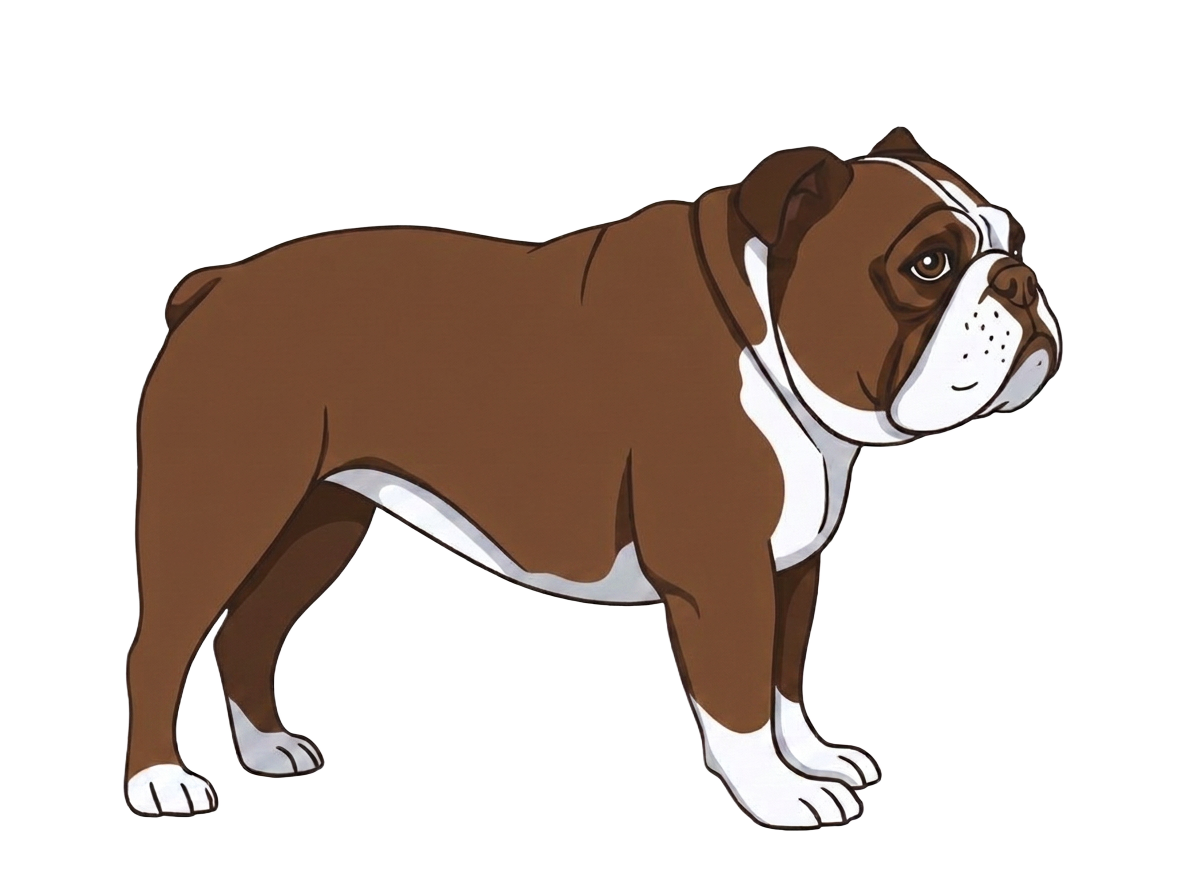
Chocolate
Not in the standard
A liver-brown coat with a brown nose and lighter eyes. Not a recognised Bulldog colour in the UK or US standards.
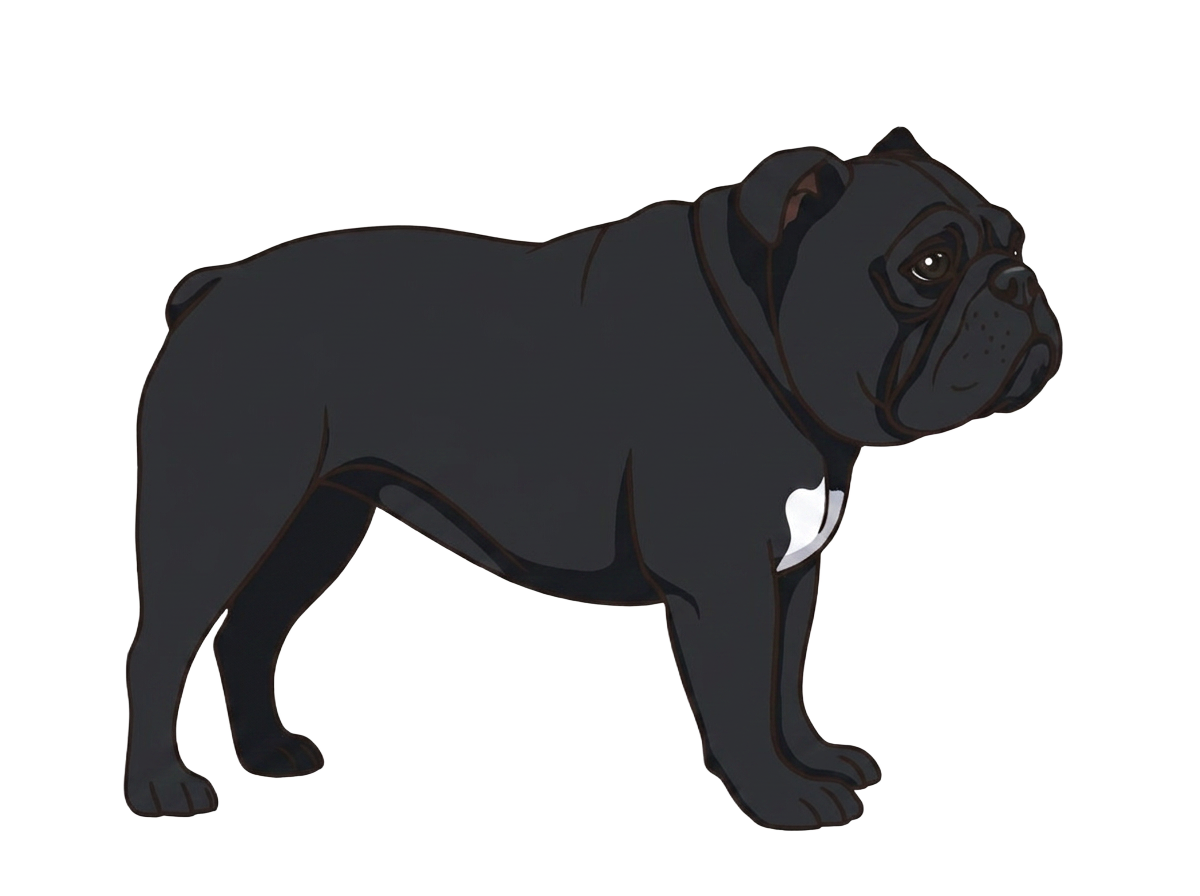
Black
Not in the standard
Solid black is explicitly undesirable in the breed standard, though it appears in some lines.
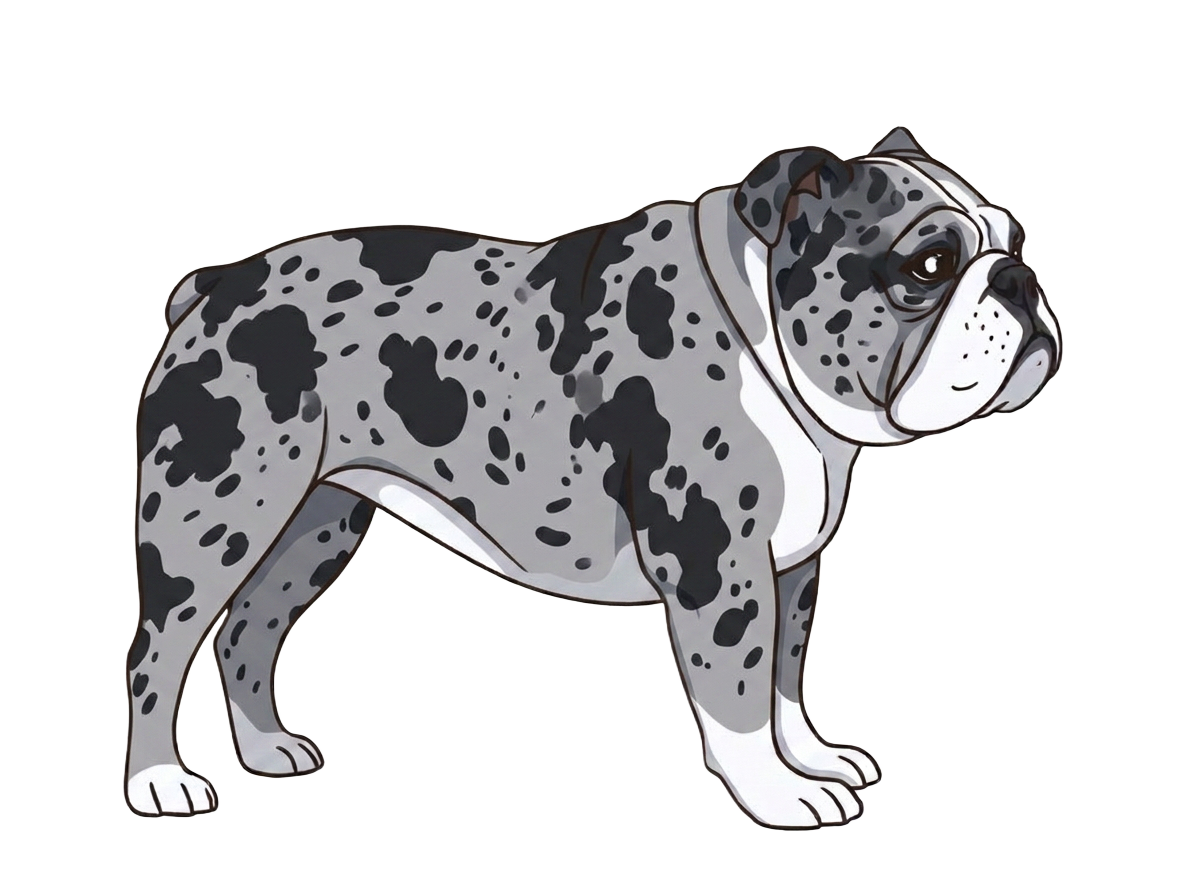
Merle
Not in the standard
Mottled grey-and-black patterning introduced from outside the breed. Carries known health risks and is not recognised.
Timeline
History & development
13th century
Early bull-baiting
Dogs used for bull-baiting in England are recorded from at least the 1200s.
1835
Bull-baiting banned
The Cruelty to Animals Act outlawed the sport, and breeders reshaped the dog as a companion animal.
1875
Bulldog Club founded
The first Bulldog breed club was established in England, drawing up an early standard.
2000s onward
Health reform movement
Growing veterinary and public concern has pushed some breeders and kennel clubs toward selecting for a longer muzzle and better airflow.
Reference
Breed standard summary
- body
- Broad chest, short, strong back with a roach.
- coat
- Short, flat, smooth, glossy.
- ears
- Small, thin, set high, folded back (rose ears).
- eyes
- Round, dark, set low and wide apart.
- gait
- Distinctive rolling, unhurried gait.
- head
- Massive, square, heavily wrinkled, short muzzle.
- size
- 31-40 cm at the shoulder.
- tail
- Short, low-set, straight or screwed.
- colour
- Brindle, red, fawn or fallow, and piebald. Solid black, black-and-tan, liver, blue and merle are undesirable.
- temperament
- Affectionate, resolute and courageous, never aggressive or vicious. Dignified and equable.
- general appearance
- Low, thickset, muscular dog with a heavy, wrinkled head.
Health
What to screen for
Green means little to worry about, amber means ask the breeder for test results, red means manage it actively.
Brachycephalic airway syndrome
Watch closely
Ask to hear the parents breathe; avoid dogs with loud snoring, snorting or gagging.
Dystocia (difficult birth)
Watch closely
Most Bulldogs need caesarean delivery; ask the breeder about their whelping approach.
Skin fold dermatitis
Watch closely
Clean facial and tail folds daily to prevent infection.
Hip dysplasia
Screen for it
Ask for hip scores where the breeder tests.
Heat intolerance
Watch closely
Avoid exercise in warm weather and never leave the dog in a hot car.
General information only — always speak to your vet about your own dog.
From real owners
Dogs like this
Bulldogs added by PawPoint members through their pet passports. Share yours to appear here.
Loading the wall…
Made for the Bulldog
The book, plus prints, hoodies and mugs using our own Bulldog illustration — and one everyday accessory that suits any dog.

The book
Pawpoint: The Complete Dog Breed Book
Every officially recognised breed plus the unofficial ones nobody else documents. 400+ pages, hardback, printed and shipped from the UK.
Own stock — shipped by us
Framed poster
Bulldog Framed Poster
Museum-weight print of our Bulldog illustration, framed or unframed.
Printed to order
Hoodie
Bulldog Hoodie
Heavyweight hoodie carrying the Bulldog illustration on the chest.
Printed to order
Mug
Bulldog Mug
Ceramic mug with the Bulldog illustration wrapped around it.
Printed to order
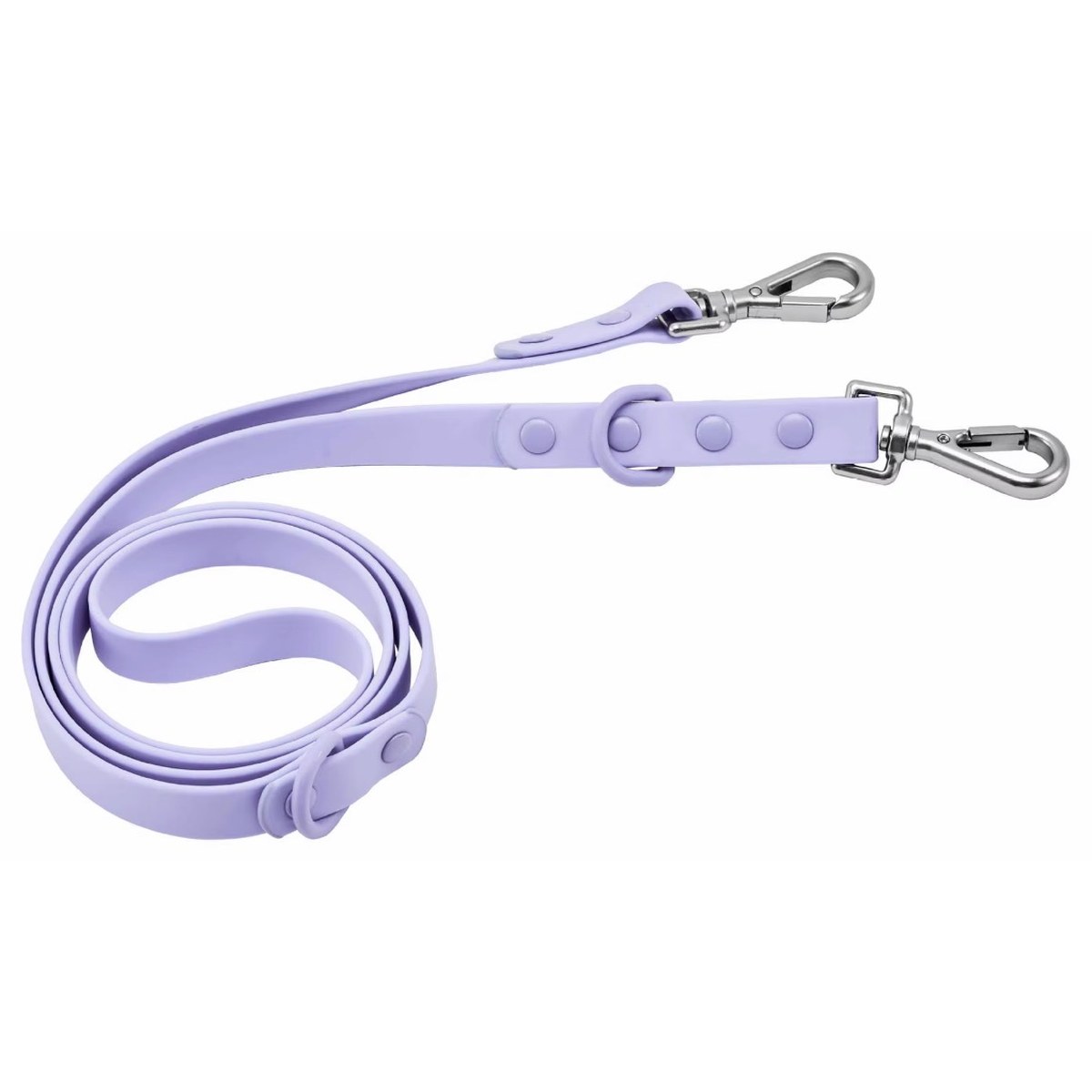
Accessory
Standard Lead
Padded-handle 1.2m lead in Pawpoint tan.
Fits any dog

Pawpoint on YouTube
Watch the full Bulldog video
Breed deep-dives, history and honest ownership talk. New film every week.
Watch now