
Canaan Dog
KAY-nuhn
Israel· Negev Desert and the wider Levant
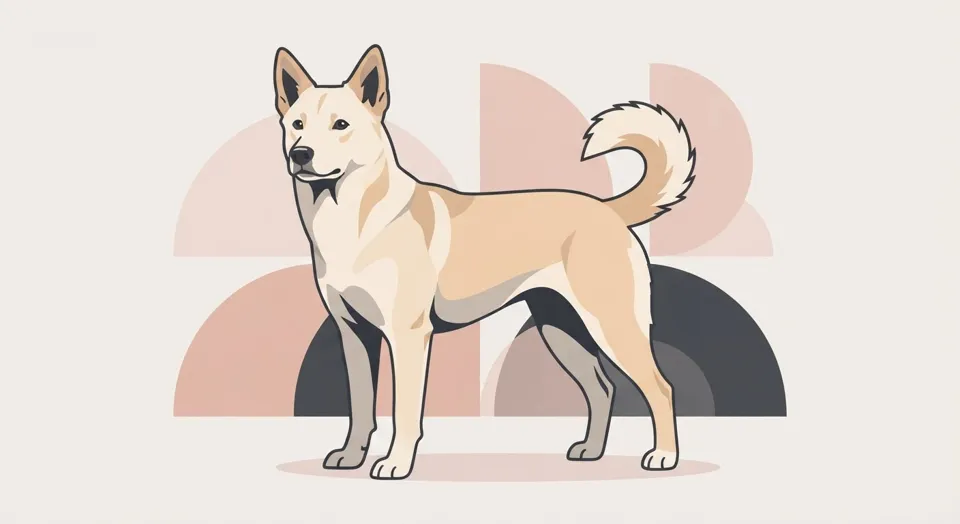
The Canaan Dog is Israel's national breed, a medium-sized pariah-type dog descended from the semi-feral dogs that have lived alongside people in the Levant for thousands of years.
At a glance
Quick facts
- Size
- Medium
- Exercise needs
- 60 minutes daily plus mental stimulation
- Home size suited to
- Medium to large home
- Grooming frequency
- Weekly brush, hand-strip a few times a year
- Coat length
- Wiry
- Sheds
- Yes, heavily when moulting
- Lifespan
- 12-15 years
- Town or country
- Happiest in the country
- Garden size needed
- Medium or larger
Where it comes from
Origins of the Canaan Dog
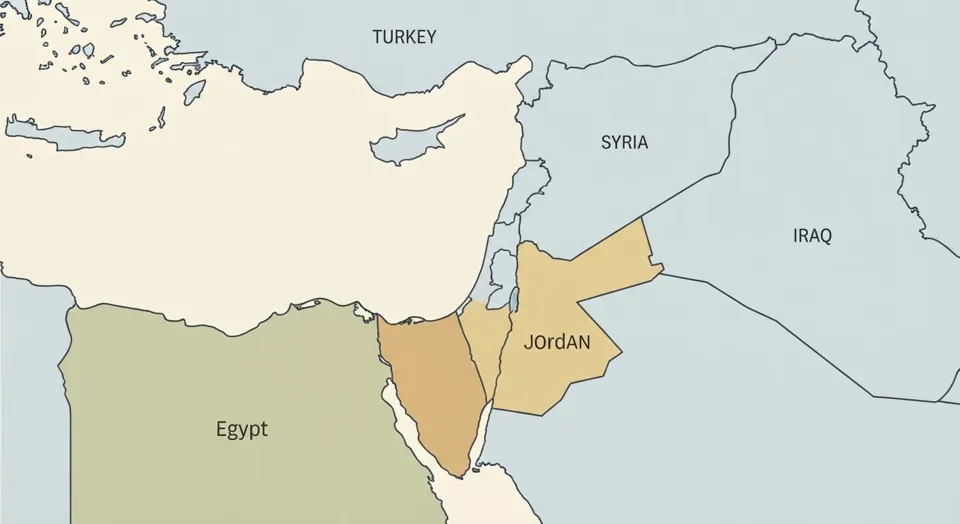
Descended from landrace pariah dogs that survived for millennia in the Negev Desert with little human management, developing a hardy, wary, self-sufficient temperament suited to scarce resources and harsh heat.
- Region
- Negev Desert and the wider Levant
- Climate it was bred for
- Arid desert with extreme temperature swings
- Original job
- Guarding flocks and camps, later military and guide work
The long read
About the breed
For centuries these dogs survived largely on their own around Bedouin camps and Israelite settlements, guarding flocks and property and scavenging on the margins of human life rather than being deliberately bred. In the 1930s the Austrian-Israeli cynologist Rudolphina Menzel began trapping desert dogs and selectively breeding them for temperament and trainability, turning a landrace survivor into a working breed used for mine detection, sentry duty and guide work for the blind.
Living with a Canaan Dog means living with an animal that still carries its ancient wariness. It bonds closely with its own household but tends to size up strangers before accepting them, and it is a natural, persistent barker, which makes it an excellent watchdog but not always a popular neighbour. It is intelligent and biddable once it trusts a handler, though it can be territorial with unfamiliar dogs and should be well socialised from puppyhood.
Today the Canaan Dog is kept mainly as a companion and occasional working or sport dog, and it remains close to its ancient form: square-built, wedge-headed, with a short weatherproof coat that needs little maintenance. It suits an owner who wants a genuinely independent-minded dog with a real sense of self-preservation, rather than one that seeks constant approval.
Living with one
Temperament & needs
Our own ratings, based on the breed standard and how these dogs behave in ordinary homes.
Friendliness
2/5
How openly the Canaan Dog greets people it does not know.
Trainability
4/5
Intelligent and capable but needs a consistent, patient handler.
Energy
4/5
Alert and active, needs daily exercise and mental work.
Barking
4/5
A natural, vocal watchdog that announces anything unusual.
Grooming
2/5
Short double coat needs only weekly brushing.
Suits a first-time owner
2/5
How forgiving the Canaan Dog is for someone taking on their first dog.
Sociability
2/5
Reserved with strangers; devoted to its own family.
Independence
5/5
Descended from dogs that survived largely without human help.
Illustrated breed standard
The points of the breed
Hover or tap a numbered point to read what the standard asks for.
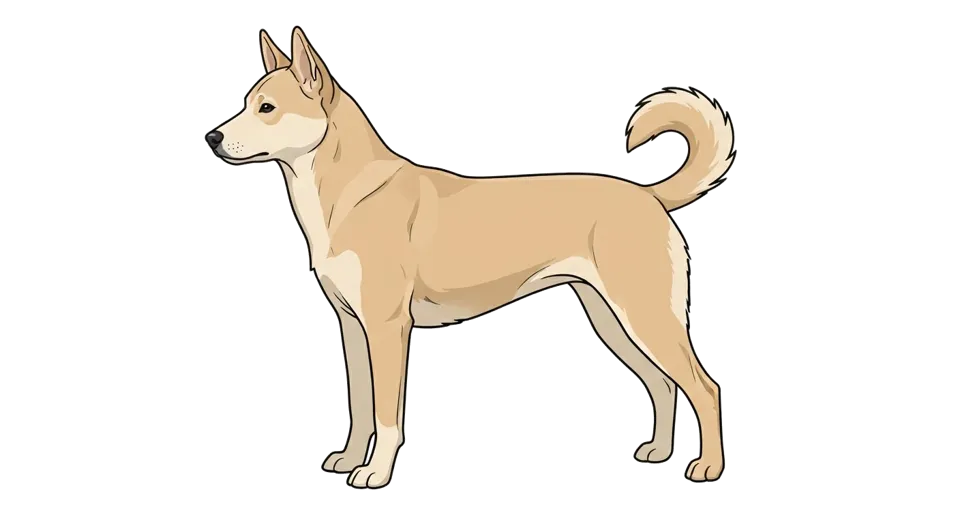
Point 1
Skull
The Canaan Dog's skull is judged on balance rather than size — proportionate to the body, with a clean cheek and a stop typical of the breed. Coarseness or an over-refined head are both faulted.
Colours & patterns
Recognised coats
Which coats the standard accepts — and which are simply popular.
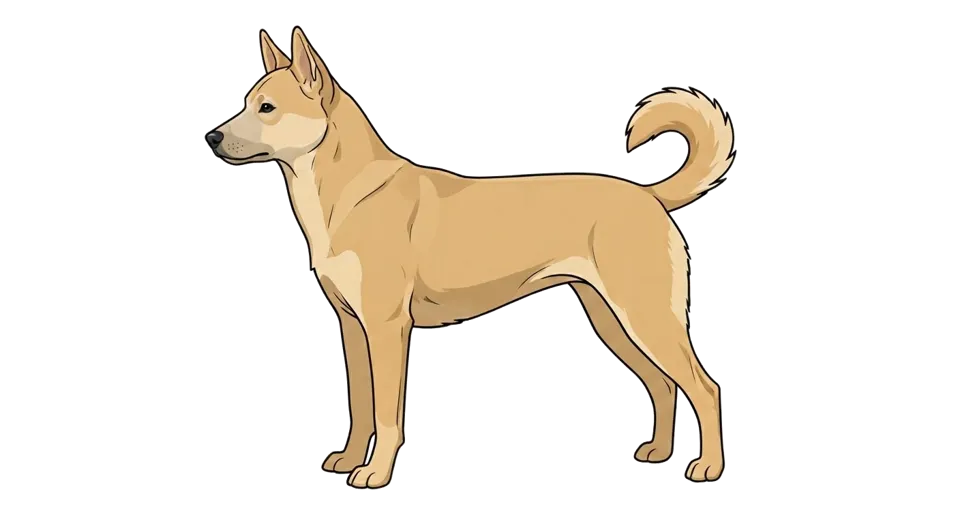
Sand/Tan
Standard colour
The most common desert-adapted colour, from cream to deep tan.
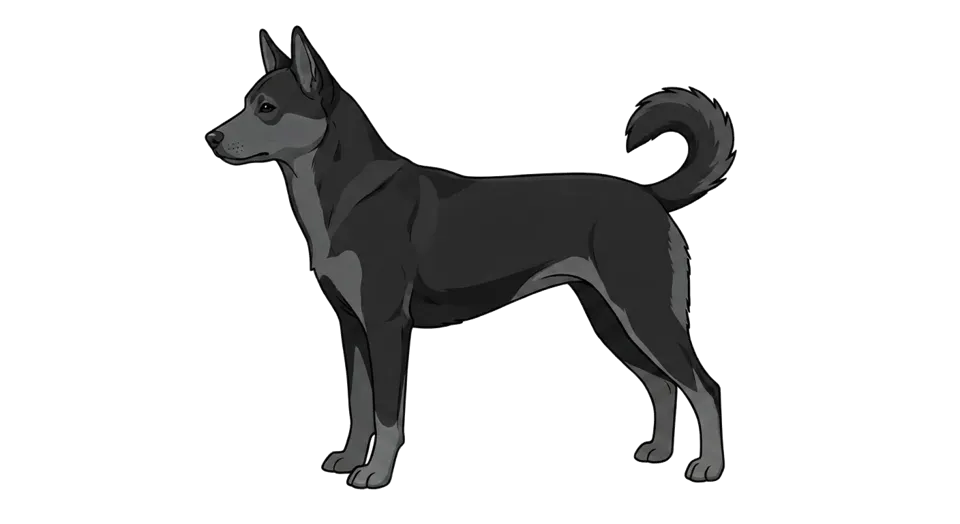
Black
Standard colour
Solid black, sometimes with white markings on chest and feet.
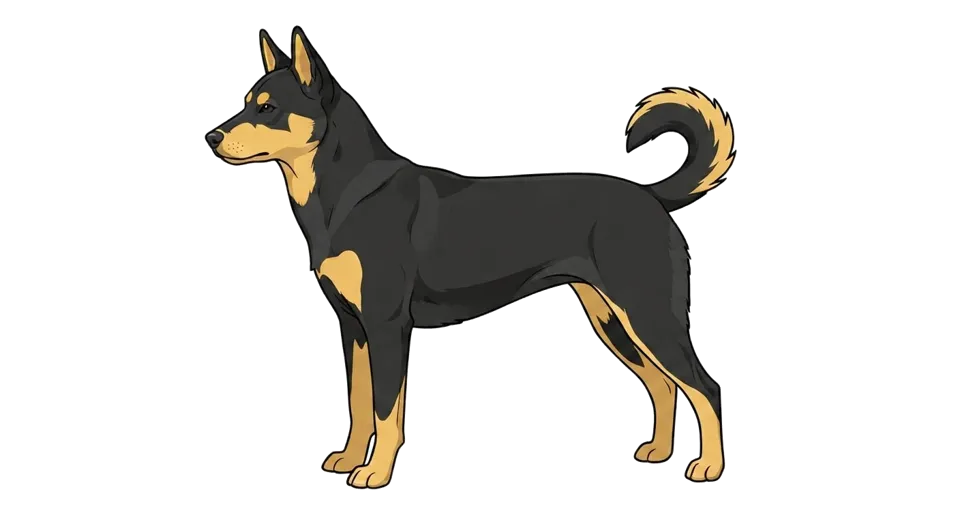
Black and tan
Standard colour
A patterned combination accepted in the standard.
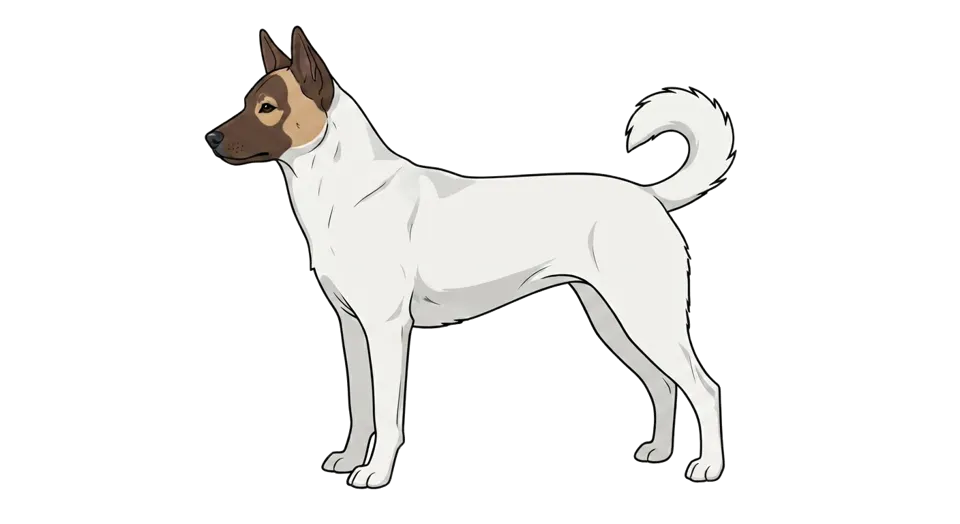
White with mask
Standard colour
Predominantly white with a coloured face mask, a hallmark look of the breed.
Timeline
History & development
pre-2000 BC
Ancient origins
Landrace pariah dogs lived alongside Israelite settlements and Bedouin camps, guarding flocks and property.
1930s
Domestication programme
Austrian-Israeli cynologist Rudolphina Menzel began trapping and taming desert pariah dogs for use as guard and messenger dogs.
1940s
Military and guide work
Canaan Dogs were trained for mine detection, sentry duty and later as guide dogs for the blind in Israel.
1965
National breed status
The Canaan Dog was recognised as the national dog breed of Israel.
1997
AKC recognition
The breed was fully recognised by the American Kennel Club.
Reference
Breed standard summary
- body
- Square in proportion, with a level back and deep chest.
- coat
- Straight, harsh, flat-lying outer coat with a soft undercoat.
- ears
- Erect, medium-large, set moderately low, giving acute hearing.
- eyes
- Dark, almond-shaped, with an alert, watchful expression.
- gait
- Quick, light and agile, capable of sustained trotting.
- head
- Wedge-shaped, with a moderate stop and tapering muzzle.
- size
- Height 50-60cm at the shoulder.
- tail
- Set high, carried curled over the back when alert.
- colour
- Sand/Tan, Black, Black and tan, White with mask. Colours outside this list are seen but are not accepted by the kennel clubs.
- temperament
- Typical of the breed: strongest in independence, energy, trainability. Nervousness or aggression are serious faults in the show ring and in the home.
- general appearance
- Medium-sized, square-built, wedge-headed pariah dog, alert and vigilant in outline.
Health
What to screen for
Green means little to worry about, amber means ask the breeder for test results, red means manage it actively.
Hip dysplasia
Screen for it
Ask for hip scores on both parents; the breed is generally sound but not exempt.
Hypothyroidism
Screen for it
Request thyroid panel history from the breeder's line.
Autoimmune conditions
Watch closely
Some lines report autoimmune issues; ask about health testing programmes.
General information only — always speak to your vet about your own dog.
From real owners
Canaan Dogs in the PAWPOINT Pack
Canaan Dogs added by PawPoint members through their pet passports. Share yours to appear here.
Loading the wall…
Made for the Canaan Dog
The book, plus hoodies, tees and mugs featuring the Canaan Dog.