
Canadian Eskimo Dog
kuh-NAY-dee-uhn ESS-kim-oh
Canada· Canadian Arctic and Greenland
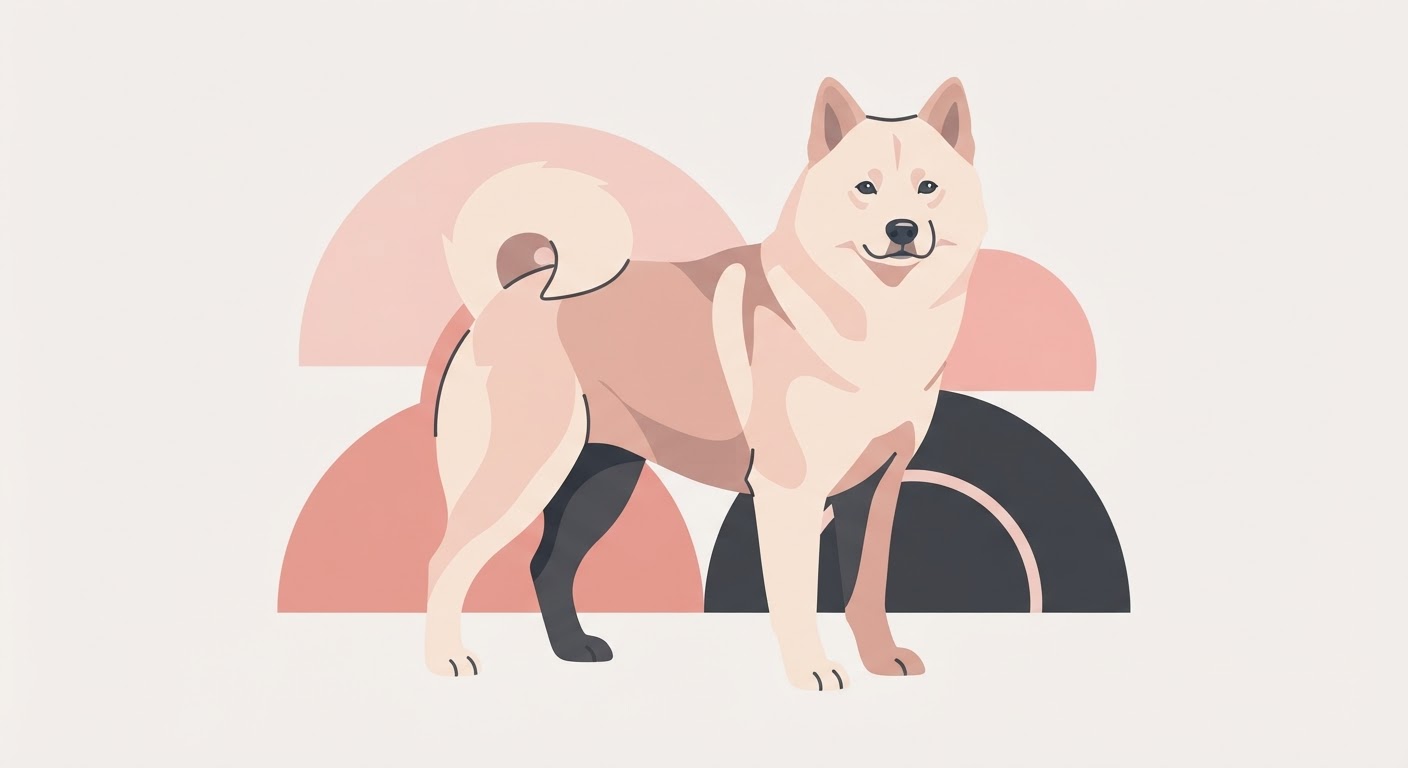
The Canadian Eskimo Dog is a powerful Arctic sled dog developed by Inuit communities across the Canadian Arctic and Greenland, one of the oldest and rarest indigenous breeds in North America.
At a glance
Quick facts
Size
Large
Exercise needs
90 minutes or more of vigorous activity daily
Home size suited to
Large home with space to stretch out
Grooming frequency
Twice weekly brush
Coat length
Medium
Sheds
Yes, heavily when moulting
Lifespan
10-15 years
Town or country
Either, happy in town
Garden size needed
Large and securely fenced
Where it comes from
Origins of the Canadian Eskimo Dog
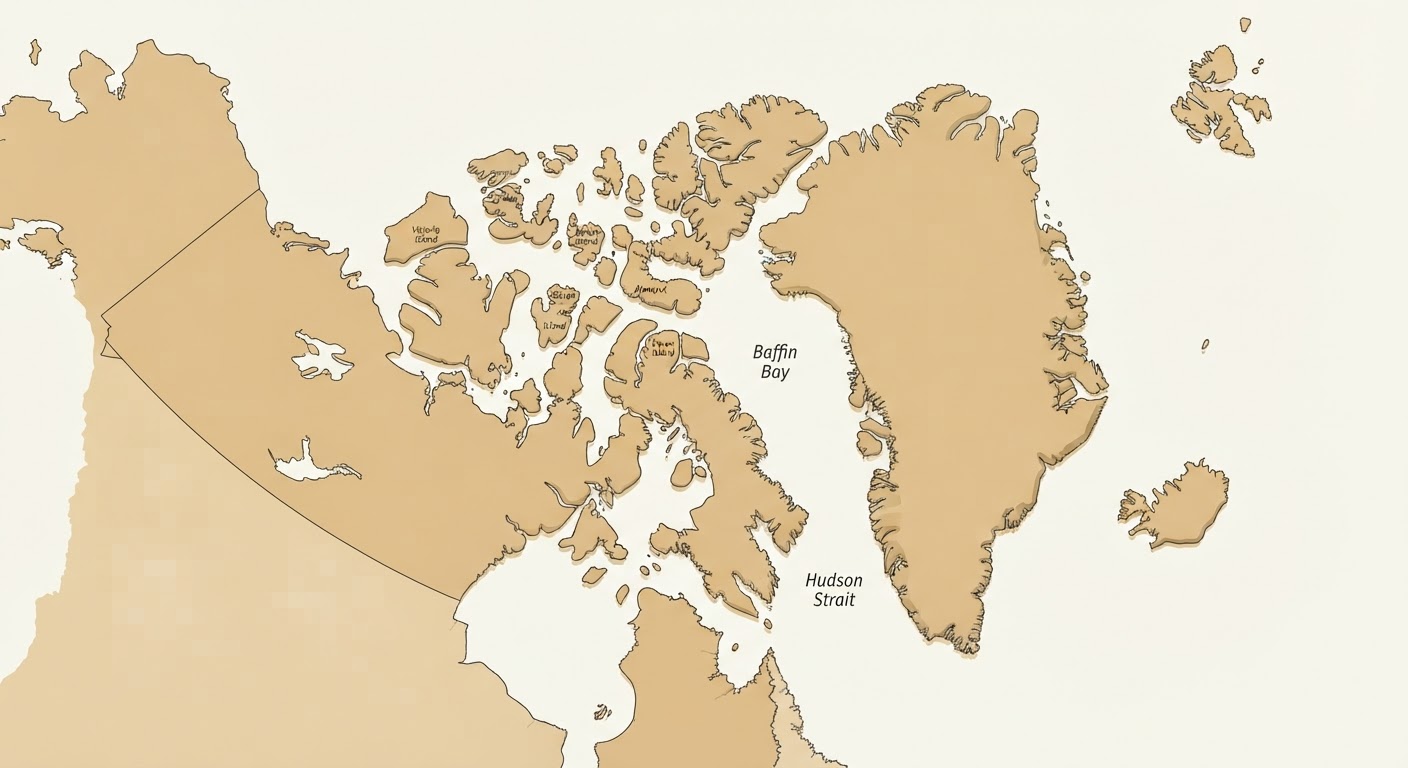
Bred by Inuit hunters across the high Arctic to haul sledges over sea ice and assist in hunting seal and polar bear, in a climate where a weaker dog simply would not survive.
- Region
- Canadian Arctic and Greenland
- Climate it was bred for
- Extreme Arctic cold, ice and snow
- Original job
- Pulling sledges and hunting seal and polar bear
The long read
About the breed
For thousands of years dogs of this type were essential to survival above the Arctic Circle, hauling sledges across sea ice, helping hunt seal and polar bear, and warning of approaching danger. They were bred purely for function in a landscape with no room for weakness, which produced a dog of exceptional stamina, thick insulating fur and a strong pack drive. The arrival of snowmobiles from the 1960s, combined with disease outbreaks and government-ordered dog culls, brought the breed close to extinction within a single generation.
Living with a Canadian Eskimo Dog today means living with an animal built for hard work and cold weather rather than sofa life. It needs serious daily exercise, thrives in a group with clear structure, and can be reserved with strangers and reactive toward small animals given its hunting background. The dense double coat sheds enormously twice a year and struggles in warm climates, so owners outside cold regions need to plan carefully for cooling and grooming.
The breed remains critically rare, sustained by a small number of dedicated breeders in Canada, Greenland and a handful of other countries, largely through rescue and careful management of a limited gene pool. It is not a breed for a first-time or casual owner, but for those equipped to meet its needs it offers a direct link to one of the oldest working partnerships between people and dogs.
Living with one
Temperament & needs
Our own ratings, based on the breed standard and how these dogs behave in ordinary homes.
Friendliness
3/5
How openly the Canadian Eskimo Dog greets people it does not know.
Trainability
3/5
Strong-willed and pack-oriented, responds to firm, fair handling.
Energy
5/5
An athletic working dog bred to pull for hours in harness.
Barking
2/5
Tends to howl rather than bark, in classic husky fashion.
Grooming
4/5
A dense double coat that blows out heavily twice a year.
Suits a first-time owner
2/5
How forgiving the Canadian Eskimo Dog is for someone taking on their first dog.
Sociability
3/5
Loyal to its team and family, reserved with strangers.
Independence
4/5
Worked at a distance from handlers in harsh conditions.
Illustrated breed standard
The points of the breed
Hover or tap a numbered point to read what the standard asks for.
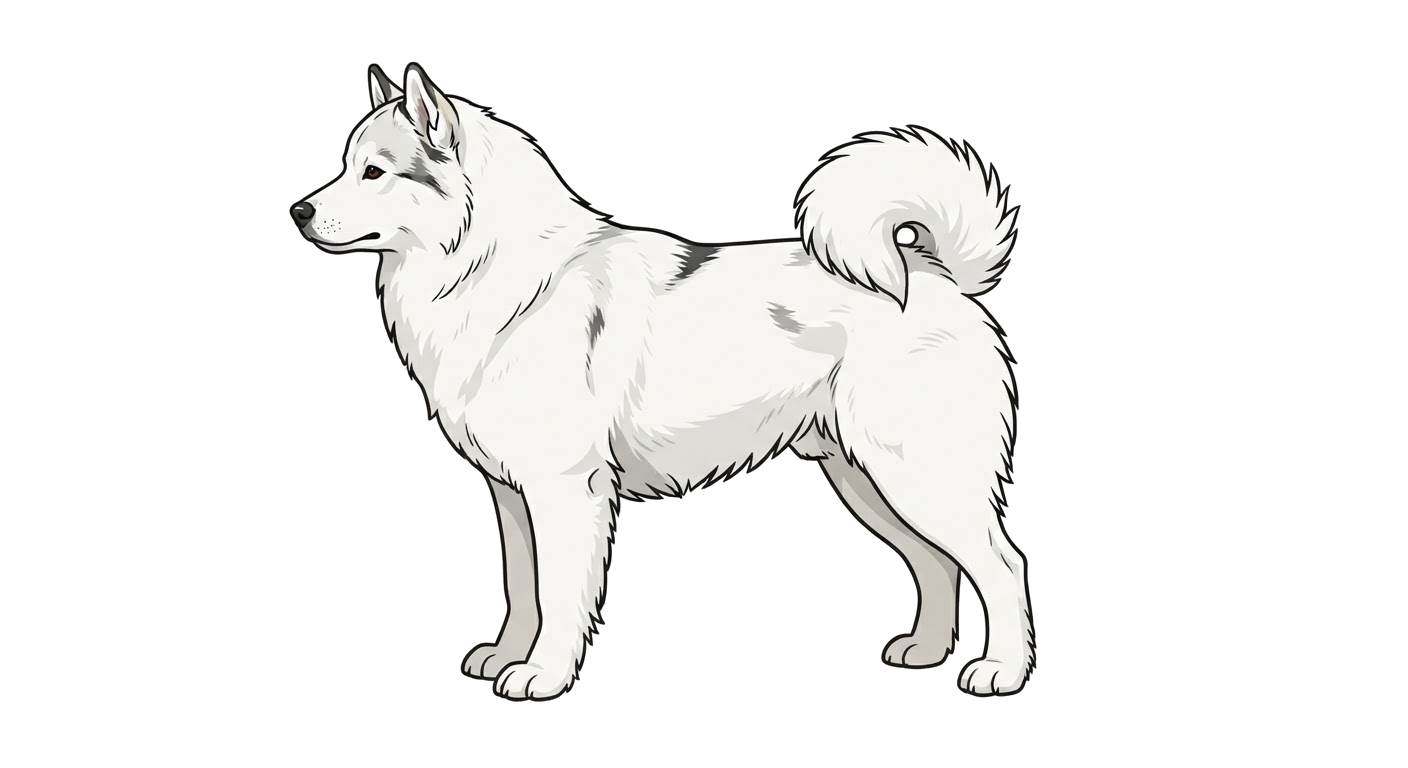
Point 1
Skull
The Canadian Eskimo Dog's skull is judged on balance rather than size — proportionate to the body, with a clean cheek and a stop typical of the breed. Coarseness or an over-refined head are both faulted.
Colours & patterns
Recognised coats
Which coats the standard accepts — and which are simply popular.
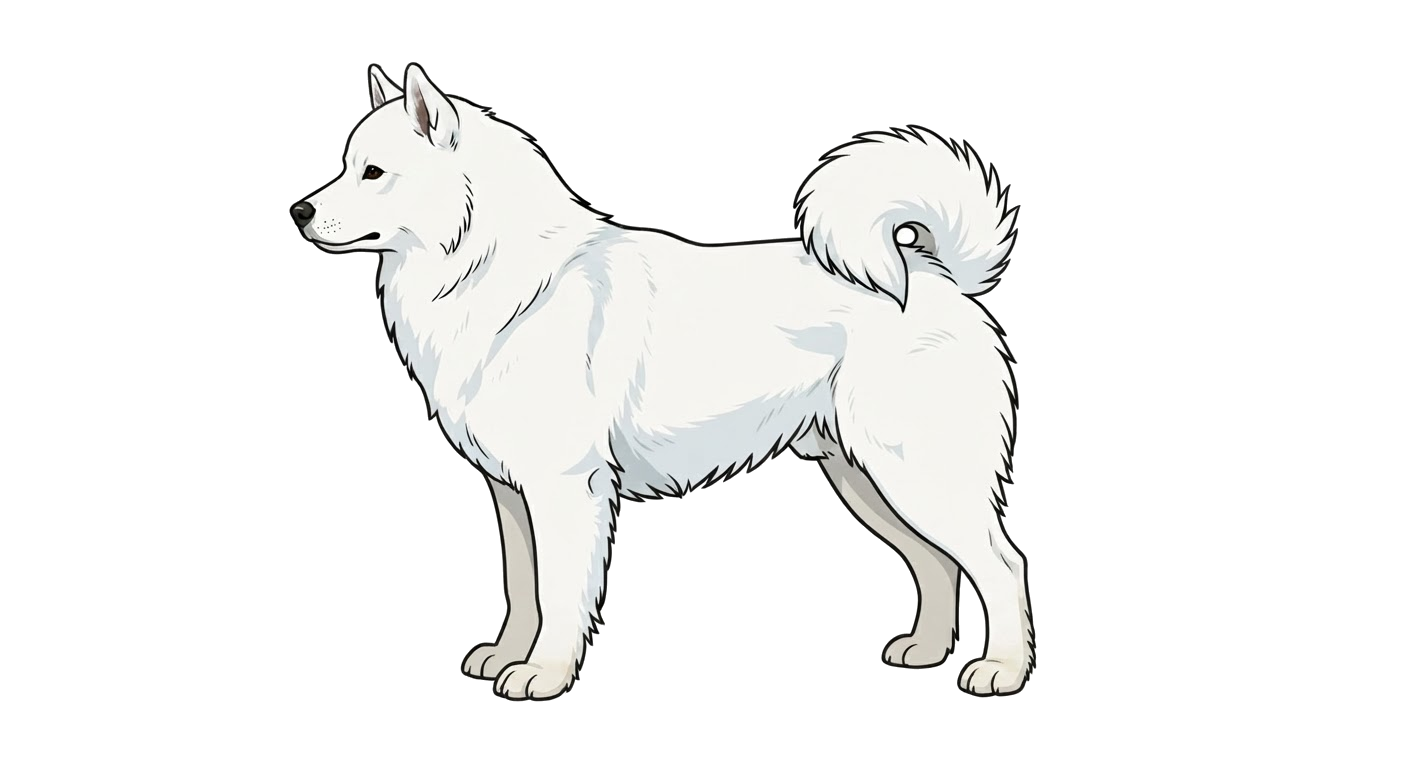
White
Standard colour
Common solid Arctic colouring.
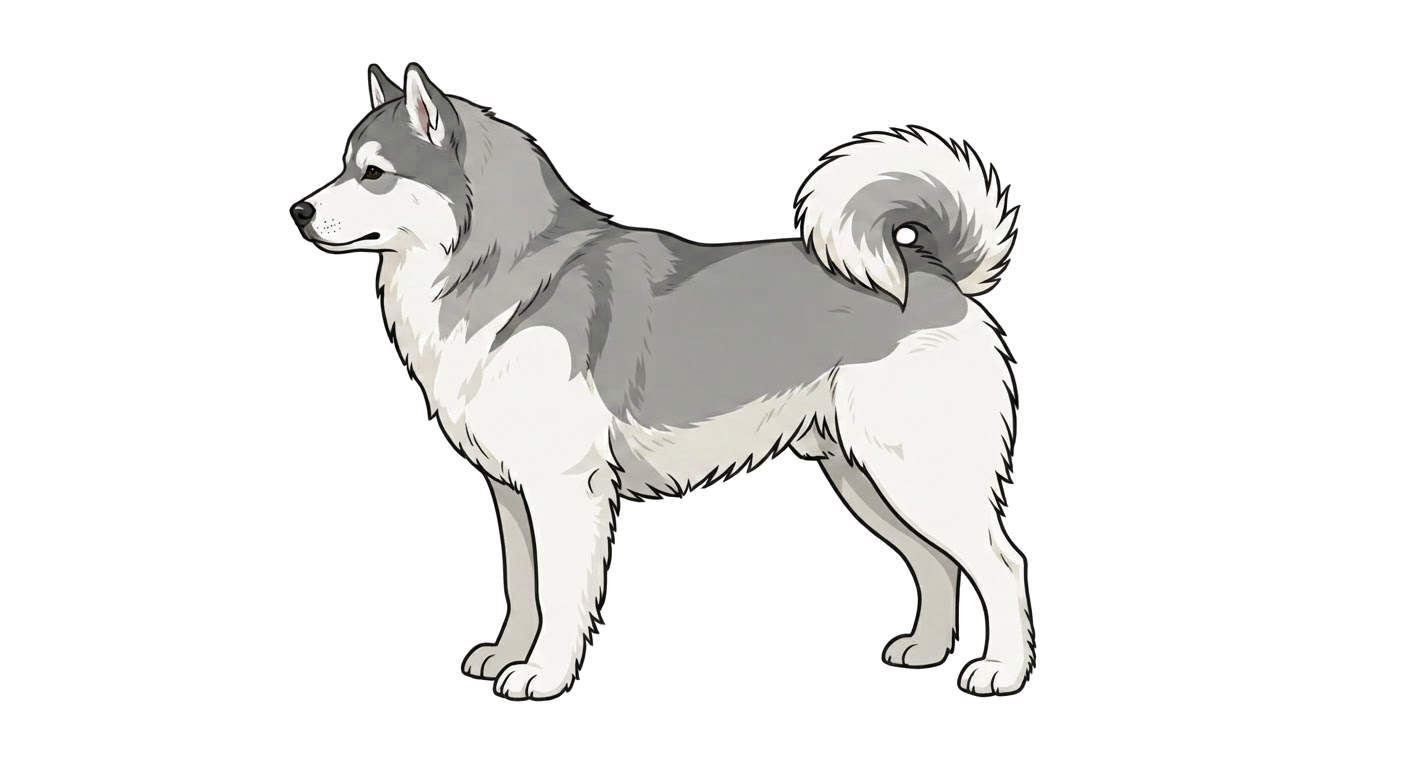
Grey and white
Standard colour
A frequent working-dog pattern.
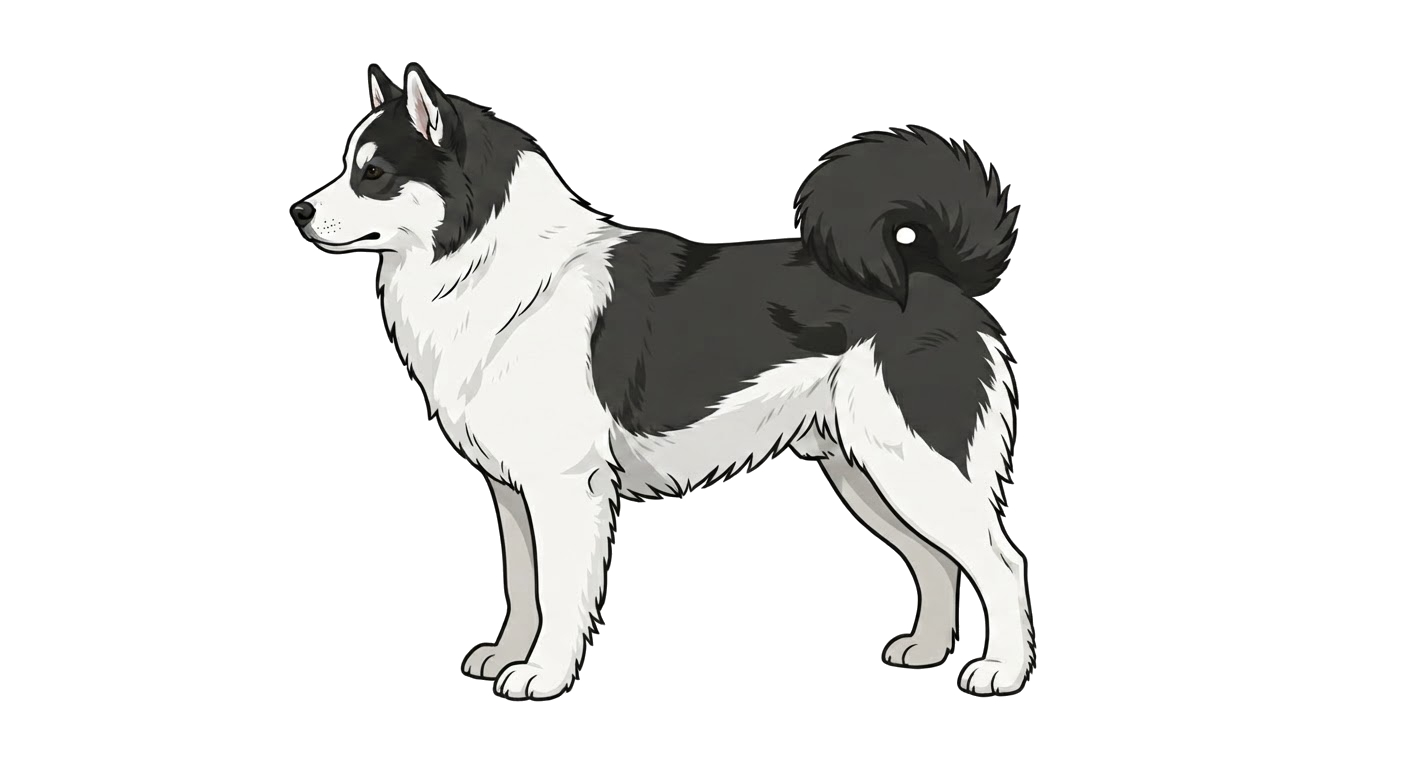
Black and white
Standard colour
Bold patched colouring seen in many teams.
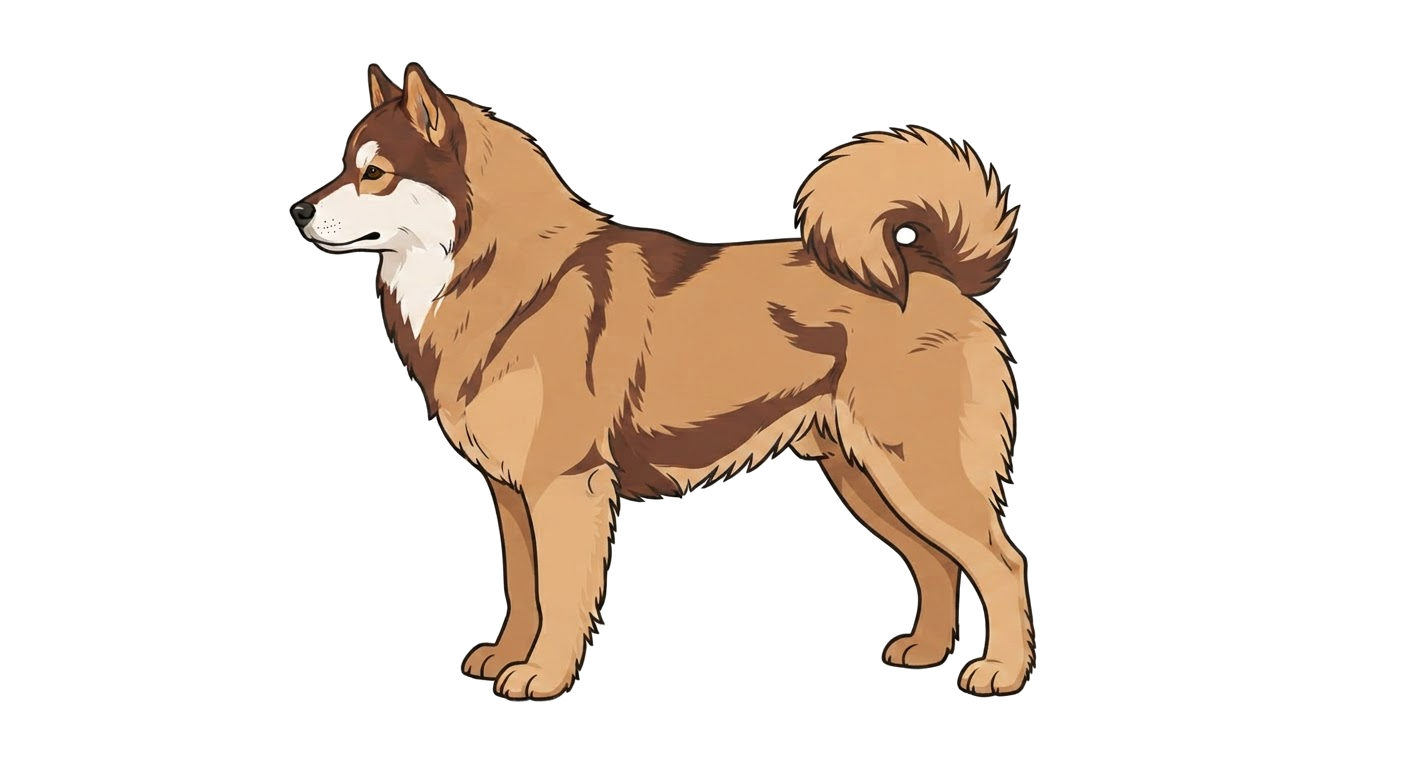
Red/tan
Standard colour
Less common but accepted shade.
Timeline
History & development
c. 2000 BC
Ancient Arctic partner
Dogs of this type accompanied Thule and earlier Arctic peoples across present-day Canada and Greenland for millennia.
1800s
Essential to Inuit life
The breed was central to transport, hunting and survival across the high Arctic before mechanised travel.
1920s-1960s
Sharp decline
Disease, government dog culls and the arrival of snowmobiles drastically reduced the population.
1970s
Rescue effort
The Eskimo Dog Research Foundation began locating and breeding surviving dogs to prevent extinction.
2000
Continued rarity
The breed remains one of the rarest purebred dogs in the world, with only a few hundred registered.
Reference
Breed standard summary
- body
- Deep, powerful chest with a strong, muscular back built for pulling.
- coat
- Dense double coat with a thick undercoat and coarse guard hairs.
- ears
- Small, erect, well-furred, triangular.
- eyes
- Dark, almond-shaped, set obliquely.
- gait
- Steady, tireless trot suited to long-distance hauling.
- head
- Broad skull with a strong, blocky muzzle.
- size
- Height 51-70cm at the shoulder.
- tail
- Well-furred, carried curled over the back.
- colour
- White, Grey and white, Black and white, Red/tan. Colours outside this list are seen but are not accepted by the kennel clubs.
- temperament
- Typical of the breed: strongest in energy, independence, grooming. Nervousness or aggression are serious faults in the show ring and in the home.
- general appearance
- Powerfully built Arctic sledge dog, deep-chested and heavily boned, built for endurance in extreme cold.
Health
What to screen for
Green means little to worry about, amber means ask the breeder for test results, red means manage it actively.
Hip dysplasia
Screen for it
Ask for hip scores; a large working breed should be screened.
Cold-climate coat issues in warm homes
Screen for it
The breed struggles with heat; ensure cool housing in warm climates.
Small gene pool
Watch closely
Very few dogs remain worldwide; ask breeders about inbreeding coefficients.
General information only — always speak to your vet about your own dog.
From real owners
Dogs like this
Canadian Eskimo Dogs added by PawPoint members through their pet passports. Share yours to appear here.
Loading the wall…
Made for the Canadian Eskimo Dog
The book, plus prints, hoodies and mugs using our own Canadian Eskimo Dog illustration — and one everyday accessory that suits any dog.

The book
Pawpoint: The Complete Dog Breed Book
Every officially recognised breed plus the unofficial ones nobody else documents. 400+ pages, hardback, printed and shipped from the UK.
Own stock — shipped by us
Framed poster
Canadian Eskimo Dog Framed Poster
Museum-weight print of our Canadian Eskimo Dog illustration, framed or unframed.
Printed to order
Hoodie
Canadian Eskimo Dog Hoodie
Heavyweight hoodie carrying the Canadian Eskimo Dog illustration on the chest.
Printed to order
Mug
Canadian Eskimo Dog Mug
Ceramic mug with the Canadian Eskimo Dog illustration wrapped around it.
Printed to order
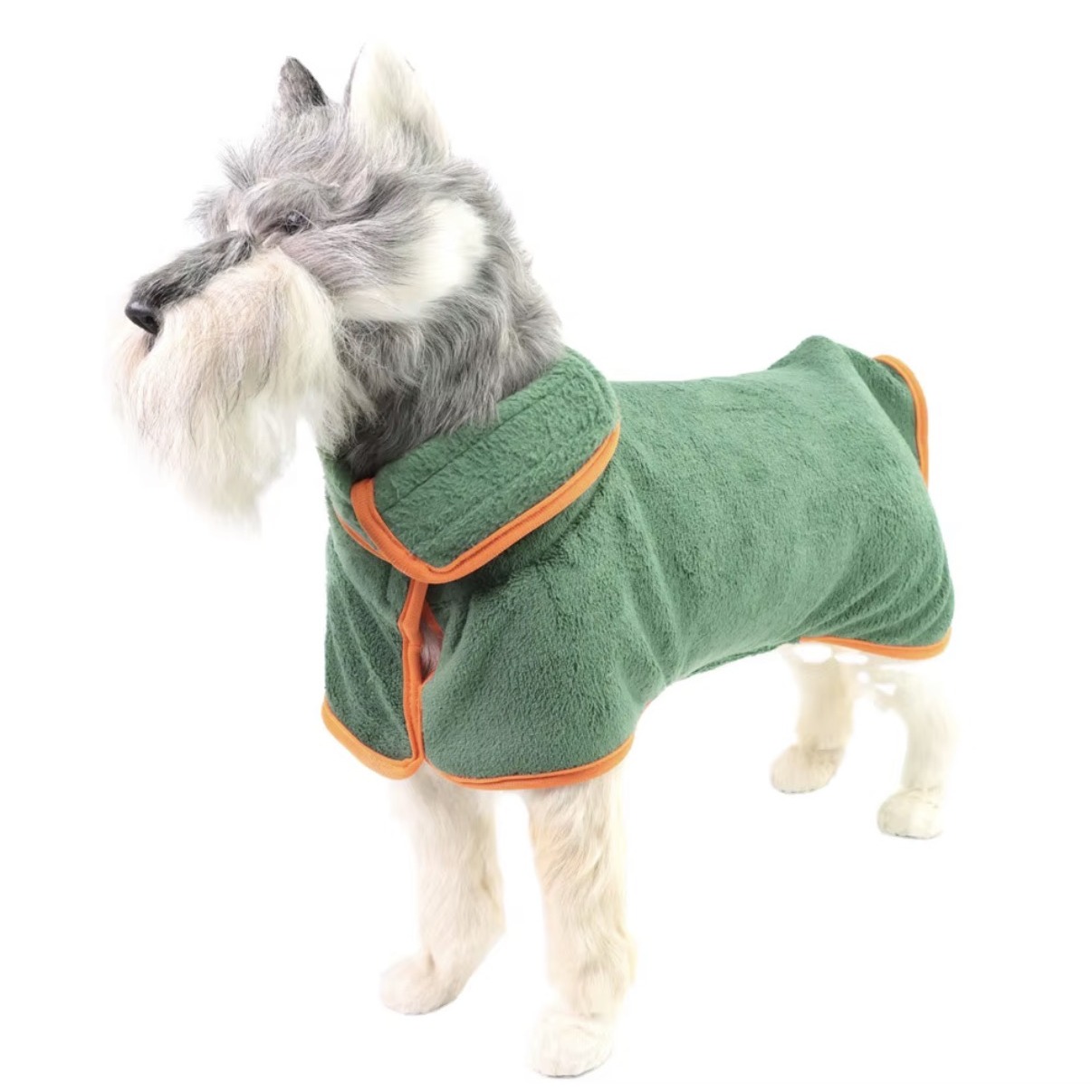
Accessory
Drying Towel Robe
Microfibre robe that soaks up a wet-walk shake.
Fits any dog
Pawpoint on YouTube
Watch the full Canadian Eskimo Dog video
Breed deep-dives, history and honest ownership talk. New film every week.
Watch now