
Cane Corso
KAH-nay KOR-so
Italy· Puglia, southern Italy
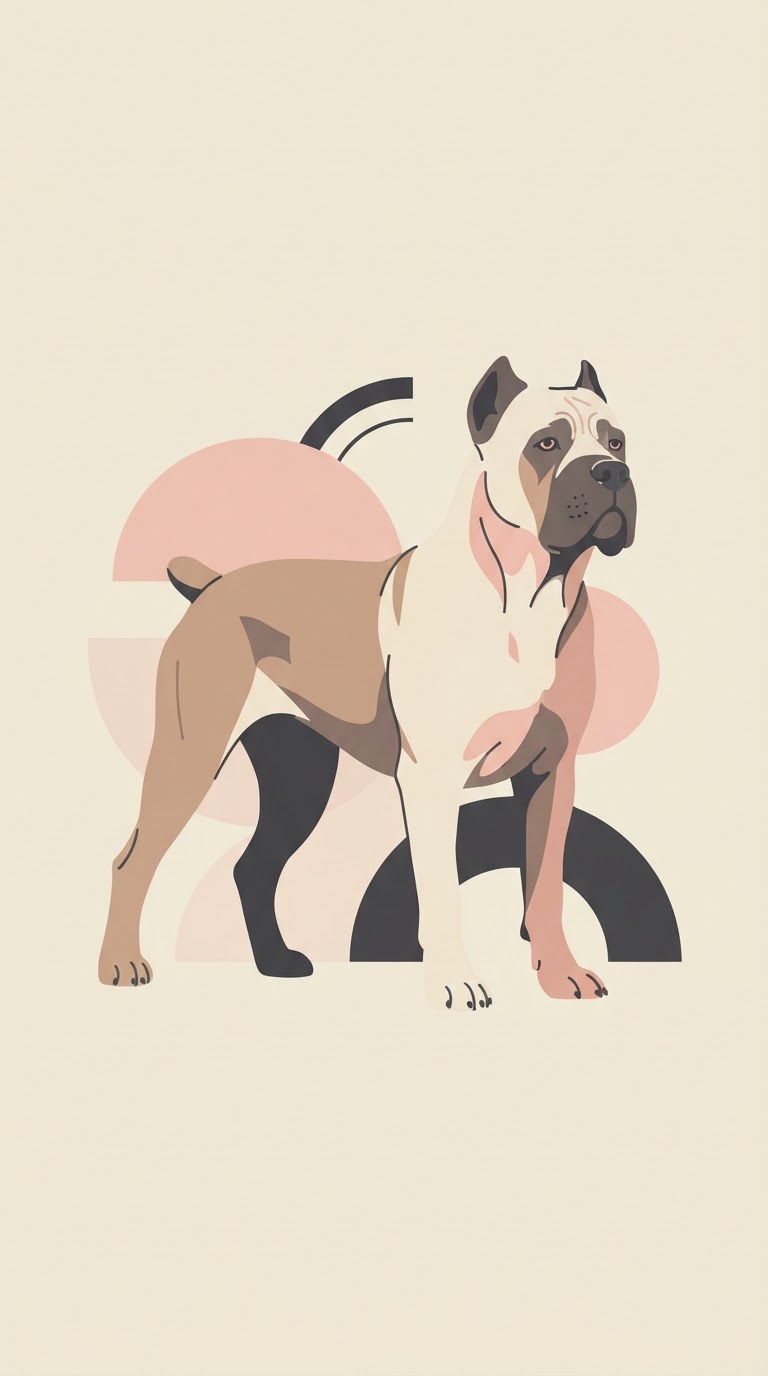
The Cane Corso is a large Italian mastiff-type guardian bred to work farms and protect property in the rural south of the country.
At a glance
Quick facts
Size
Large
Exercise needs
1-2 hours daily
Home size suited to
Medium to large home
Grooming frequency
Weekly brush
Coat length
Short
Sheds
Yes, heavily when moulting
Lifespan
9-12 years
Town or country
Either, with enough exercise
Garden size needed
Medium or larger
Where it comes from
Origins of the Cane Corso
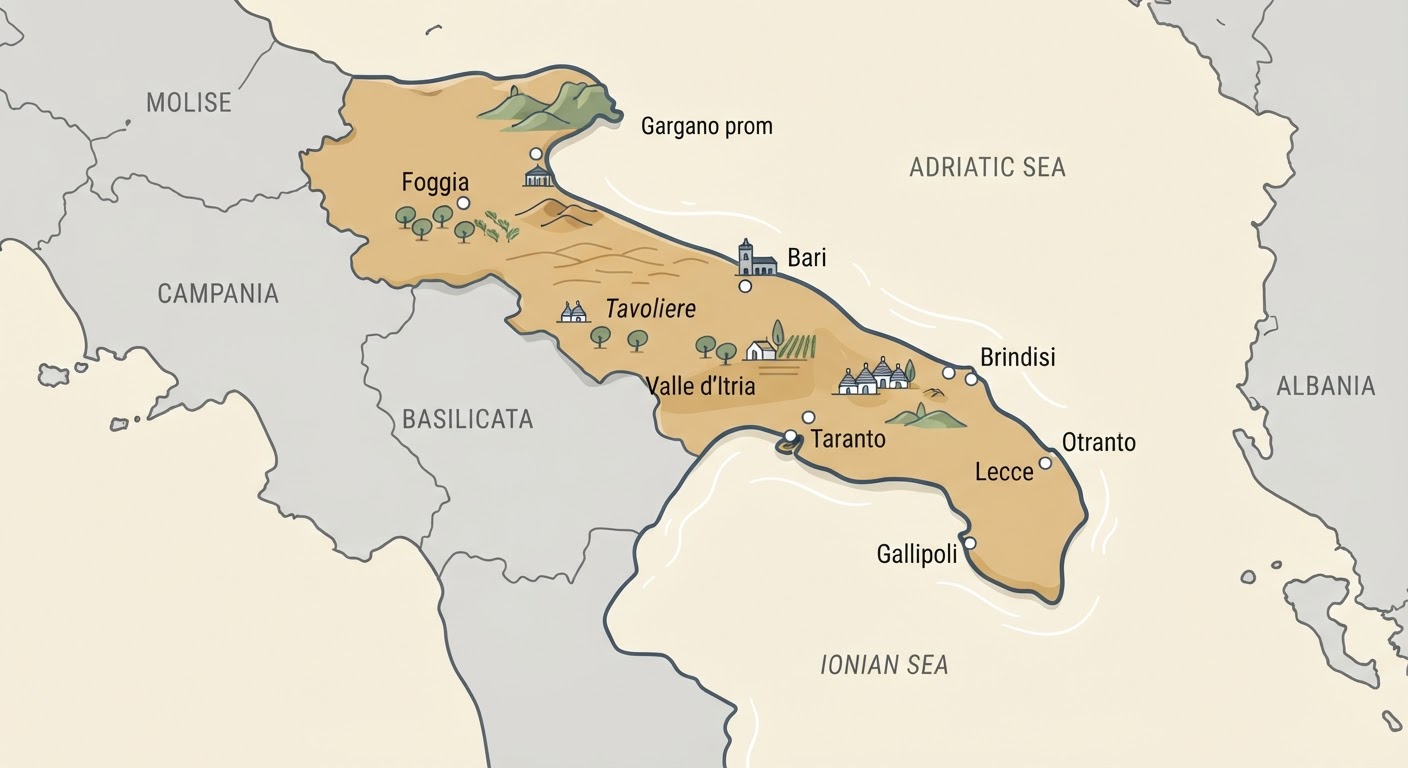
The Cane Corso was shaped on the sun-baked farms of Puglia, where it guarded livestock and homesteads from thieves and predators. Its stamina and heat tolerance still reflect that dry, exposed landscape.
- Region
- Puglia, southern Italy
- Climate it was bred for
- Hot, dry Mediterranean summers
- Original job
- Farm guardian and boar-hunting dog
The long read
About the breed
The breed descends from the old Roman molossus dogs, refined over centuries in Puglia to guard livestock and homesteads, drive cattle, and occasionally hunt wild boar. Its name is thought to derive from "cane da corso", a dog used to run down and hold large game. By the mid-20th century industrialisation and two world wars had pushed the breed to the edge of extinction, with only a handful surviving on remote farms in the Puglia and Basilicata regions.
Living with a Cane Corso means living with a dog that is physically imposing and mentally sharp. It bonds tightly with its household and is naturally watchful of strangers, so early and consistent socialisation is not optional; an under-socialised Cane Corso can become a genuine liability. It needs a confident, calm handler, structured training from puppyhood, and daily exercise beyond a short walk round the block. Drool, heavy shedding twice a year, and a short muzzle that snores are part of the package.
A group of Italian breed enthusiasts, including Dr Antonio Morsiani and Paolo Breber, began a formal recovery programme in the 1970s and 1980s, drawing up a standard and rebuilding numbers from surviving farm dogs. The breed reached the UK Kennel Club register in the 2000s and the US in the 2010s.
Today the Cane Corso is kept largely as a family guardian and companion in suburban and rural homes rather than as a working farm dog, though it retains the instincts of one. It suits experienced owners with secure gardens and the time to train thoroughly rather than first-time dog owners looking for an easy pet.
Living with one
Temperament & needs
Our own ratings, based on the breed standard and how these dogs behave in ordinary homes.
Friendliness
2/5
How openly the Cane Corso greets people it does not know.
Trainability
4/5
Quick to learn but needs a firm, consistent hand.
Energy
3/5
Needs a solid daily walk and mental work, not constant activity.
Barking
2/5
Not a nuisance barker but will sound the alarm.
Grooming
1/5
Short coat, occasional heavy shed, little else needed.
Suits a first-time owner
3/5
How forgiving the Cane Corso is for someone taking on their first dog.
Sociability
2/5
Loyal to its family, reserved with strangers.
Independence
3/5
Thinks for itself, especially when guarding.
Illustrated breed standard
The points of the breed
Hover or tap a numbered point to read what the standard asks for.
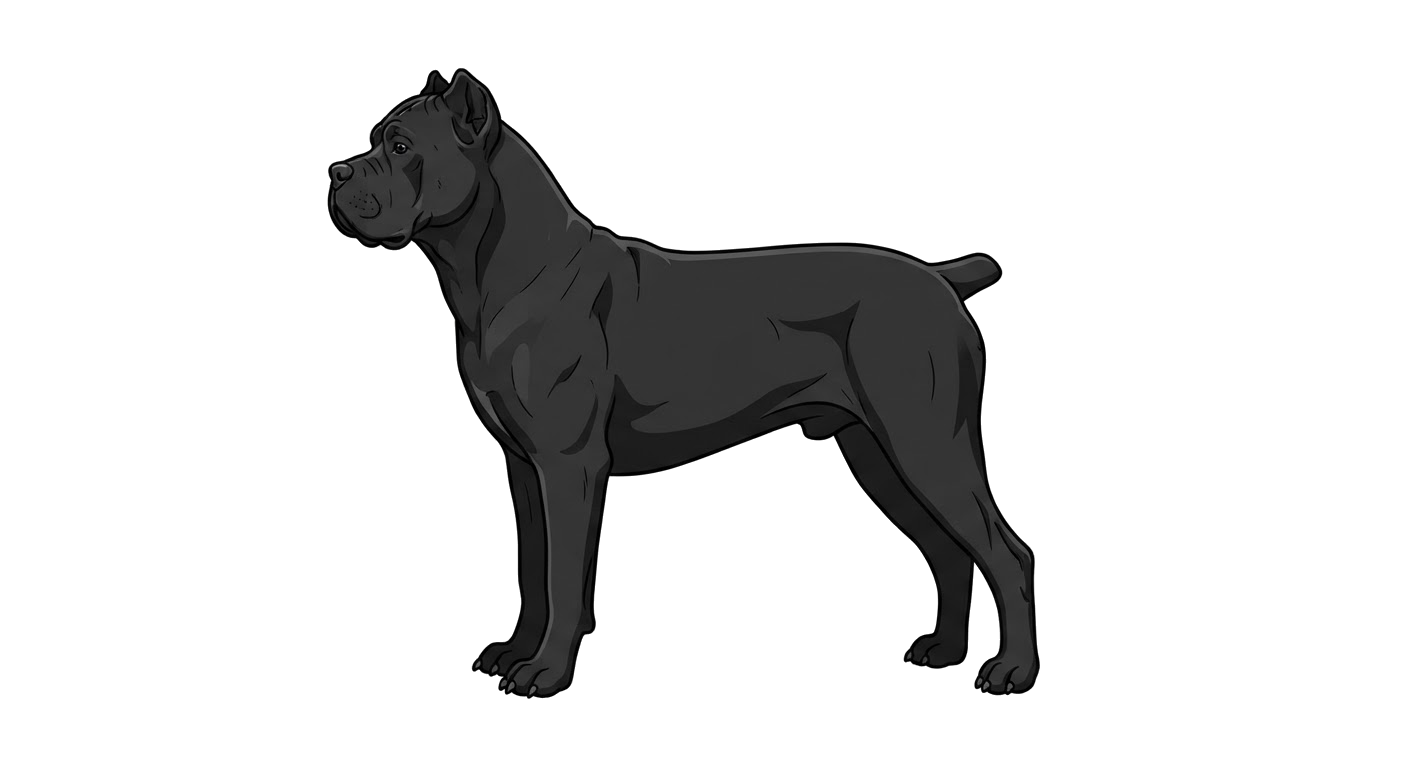
Point 1
Skull
The Cane Corso's skull is judged on balance rather than size — proportionate to the body, with a clean cheek and a stop typical of the breed. Coarseness or an over-refined head are both faulted.
Colours & patterns
Recognised coats
Which coats the standard accepts — and which are simply popular.
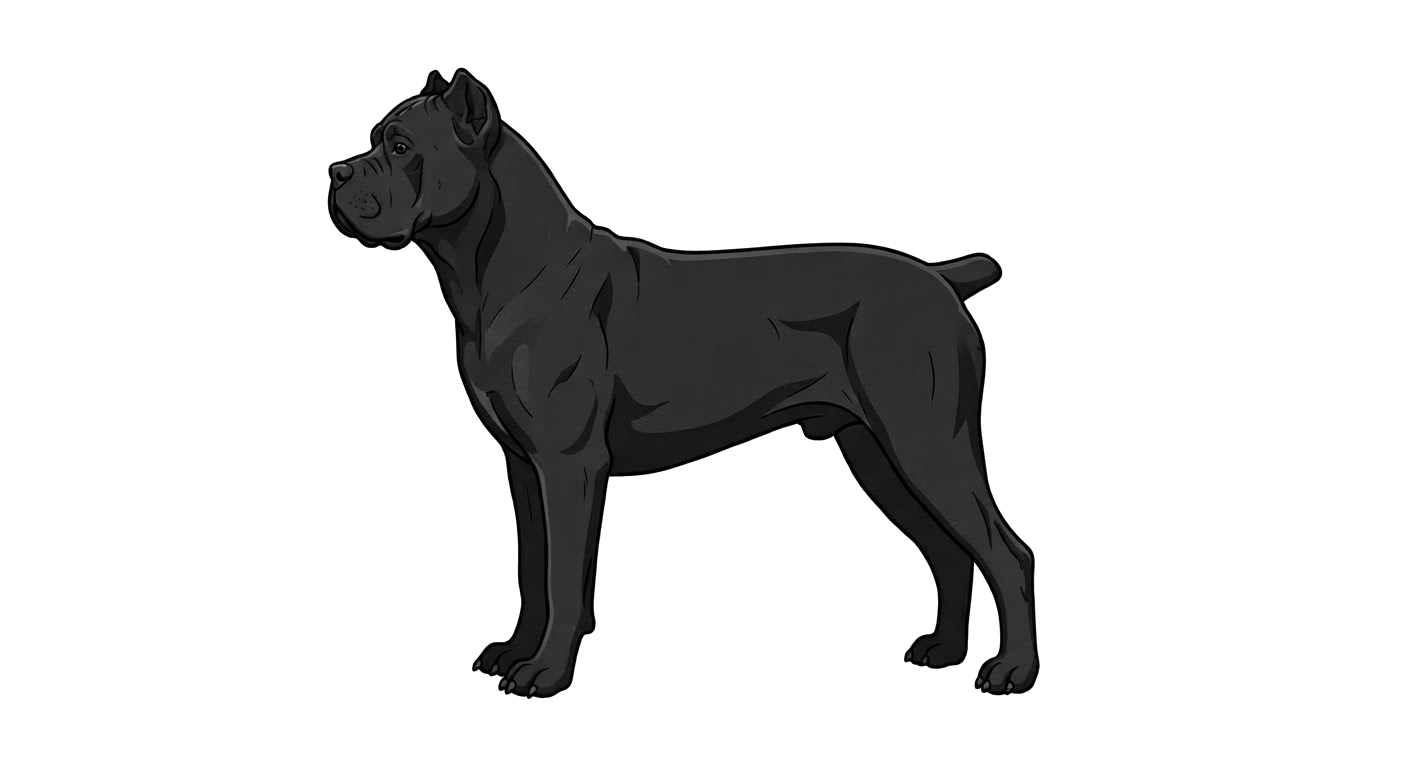
Black
Standard colour
The most common and classic Cane Corso colour.
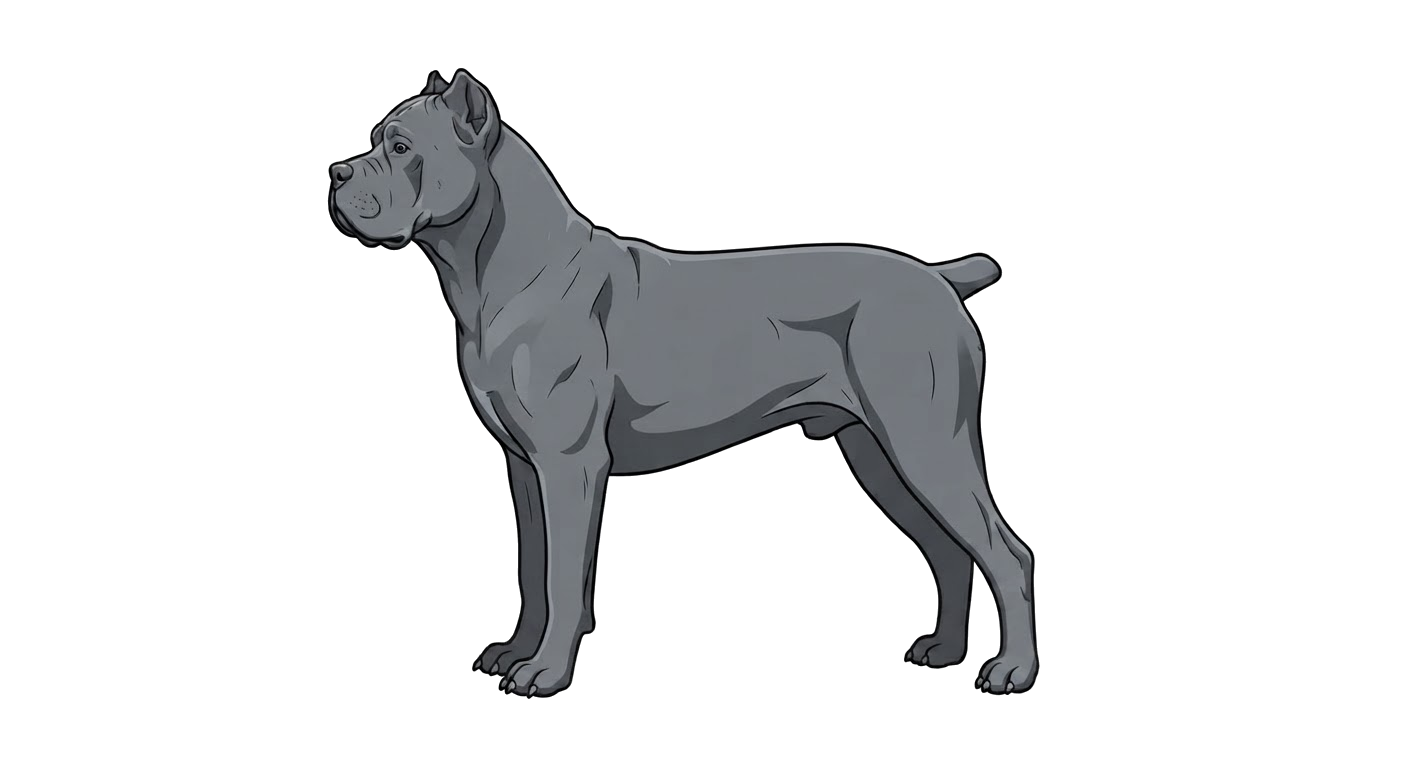
Grey (formentino)
Standard colour
A pale dilute shade sometimes called blue.
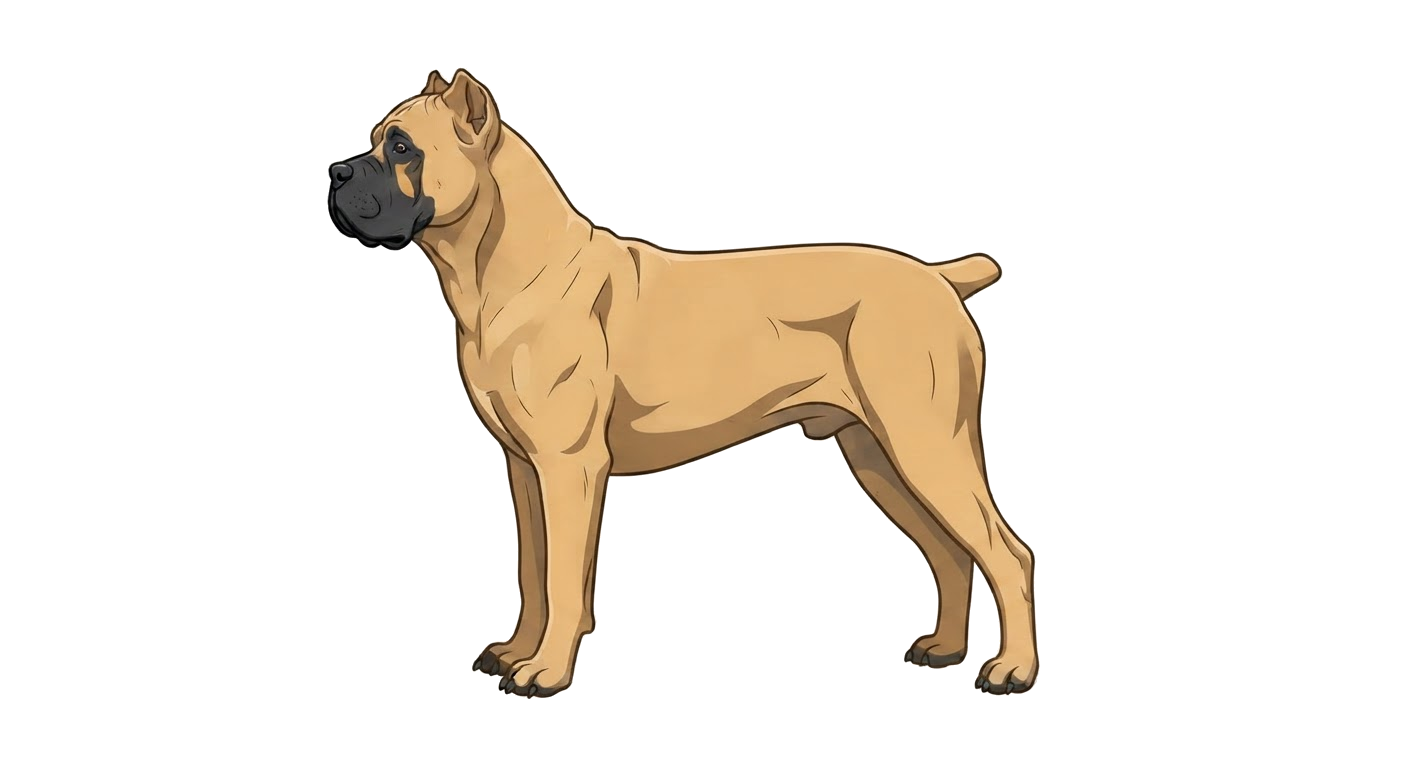
Fawn
Standard colour
Ranges from light tan to deep red-fawn, often with a mask.
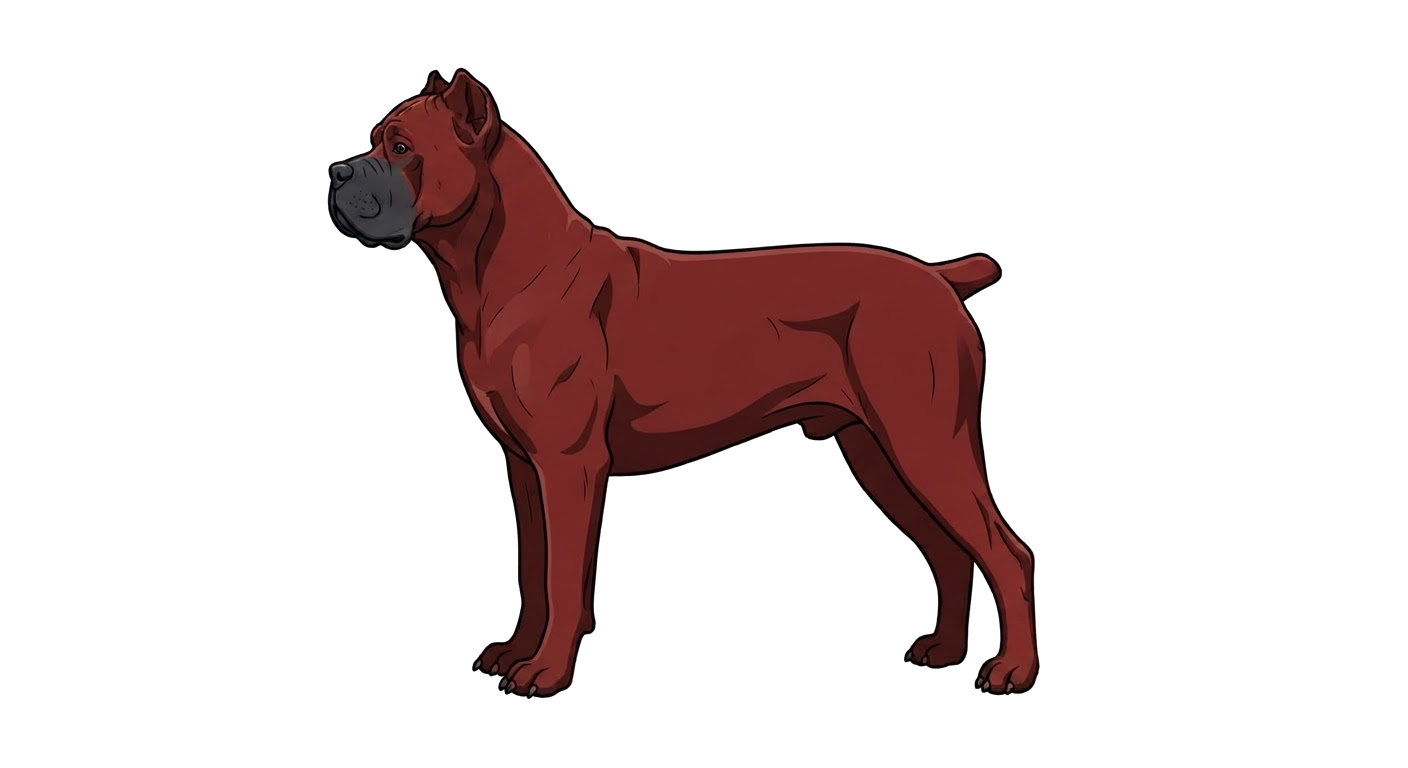
Red
Standard colour
A deep chestnut-red, sometimes brindled.
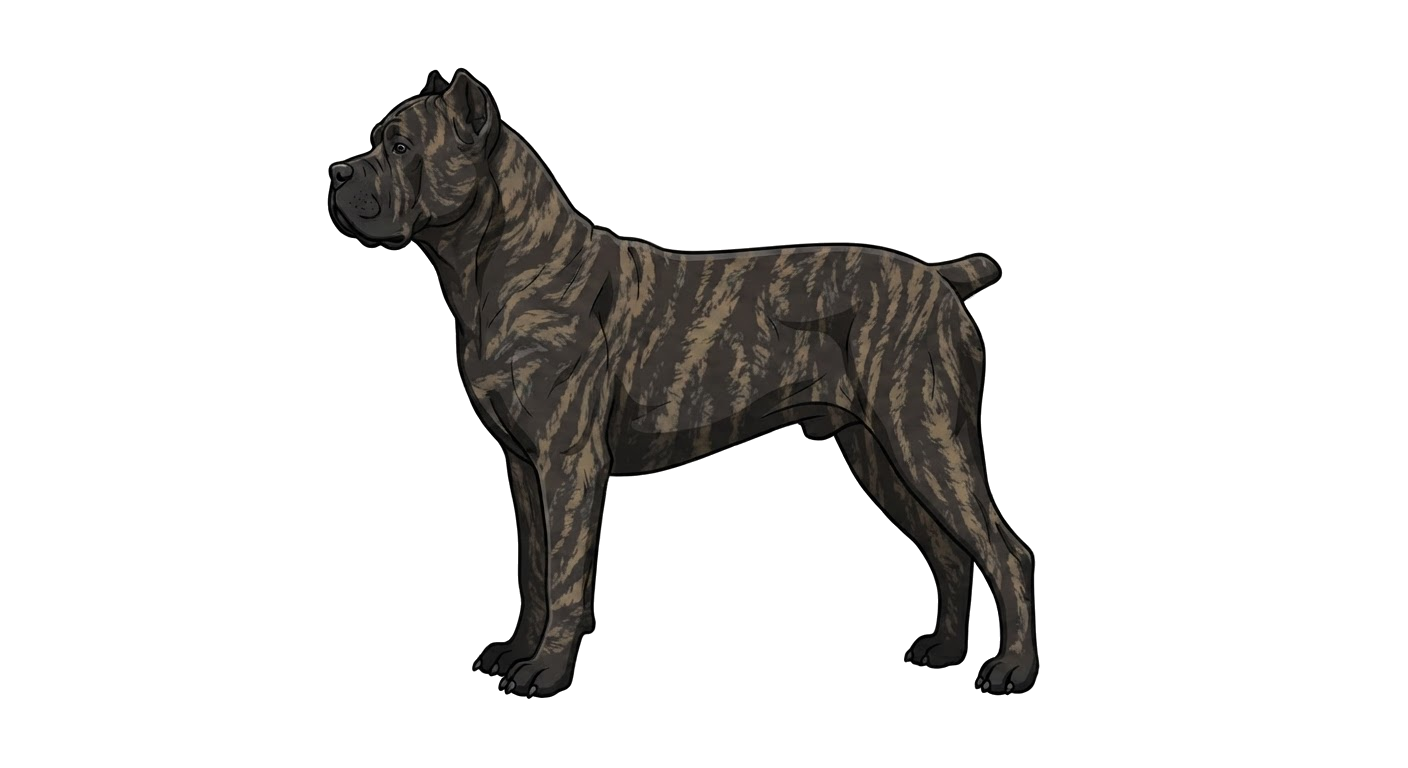
Black brindle
Standard colour
Black base with tiger-striping, common and traditional.
Outside the standard
Other colours
Dilute coats you will see advertised. They are the same breed, but no kennel club accepts them.
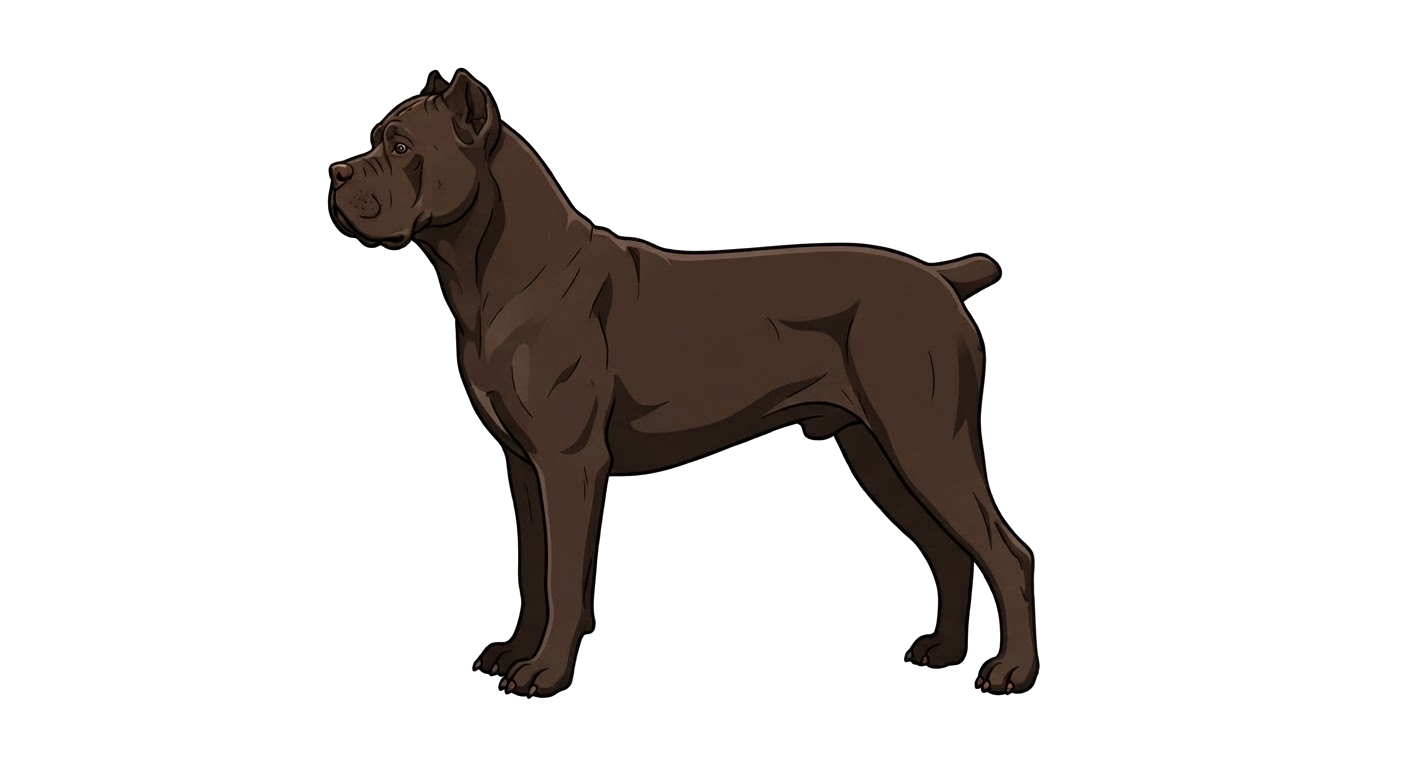
Chocolate
Not in the standard
Occurs but is outside most breed standards.
Timeline
History & development
Roman era
Molossus ancestry
The breed traces to the heavy war and guard dogs of ancient Rome, the molossus type.
Middle Ages–1900s
Farm guardian in Puglia
Refined on southern Italian farms to guard property and hunt boar.
1970s
Near extinction
Industrialisation left only a small number of working Cane Corsi on remote farms.
1983
Formal recovery begins
Breed enthusiasts led by Dr Antonio Morsiani started documenting and rebuilding the population.
1996
Italian recognition
The Cane Corso gained recognition from the Italian kennel club (ENCI).
Reference
Breed standard summary
- body
- Powerful, slightly longer than tall, deep chest.
- coat
- Short, stiff, dense with a light undercoat.
- ears
- Naturally dropped, triangular, often cropped historically though this is now discouraged.
- eyes
- Medium-sized, oval, alert expression.
- gait
- Free, powerful, ground-covering.
- head
- Large, broad skull with a moderately blunt muzzle.
- size
- Large
- tail
- Thick at the base, carried level with the back when alert.
- colour
- Black, Grey (formentino), Fawn, Red, Black brindle. Colours outside this list are seen but are not accepted by the kennel clubs.
- temperament
- Typical of the breed: strongest in trainability, energy, independence. Nervousness or aggression are serious faults in the show ring and in the home.
- general appearance
- Large, muscular, athletic mastiff-type with a commanding presence.
Health
What to screen for
Green means little to worry about, amber means ask the breeder for test results, red means manage it actively.
Hip dysplasia
Screen for it
Ask breeders for BVA/KC hip scores on both parents.
Elbow dysplasia
Screen for it
Request elbow grading alongside hip scores.
Gastric torsion (bloat)
Watch closely
Feed smaller meals and avoid strenuous exercise around feeding times.
Eyelid abnormalities
Screen for it
Screen for entropion and ectropion before breeding.
Dilated cardiomyopathy
Watch closely
Ask about cardiac screening in the breeding line.
General information only — always speak to your vet about your own dog.
From real owners
Dogs like this
Cane Corsos added by PawPoint members through their pet passports. Share yours to appear here.
Loading the wall…
Made for the Cane Corso
The book, plus prints, hoodies and mugs using our own Cane Corso illustration — and one everyday accessory that suits any dog.

The book
Pawpoint: The Complete Dog Breed Book
Every officially recognised breed plus the unofficial ones nobody else documents. 400+ pages, hardback, printed and shipped from the UK.
Own stock — shipped by us
Framed poster
Cane Corso Framed Poster
Museum-weight print of our Cane Corso illustration, framed or unframed.
Printed to order
Hoodie
Cane Corso Hoodie
Heavyweight hoodie carrying the Cane Corso illustration on the chest.
Printed to order
Mug
Cane Corso Mug
Ceramic mug with the Cane Corso illustration wrapped around it.
Printed to order
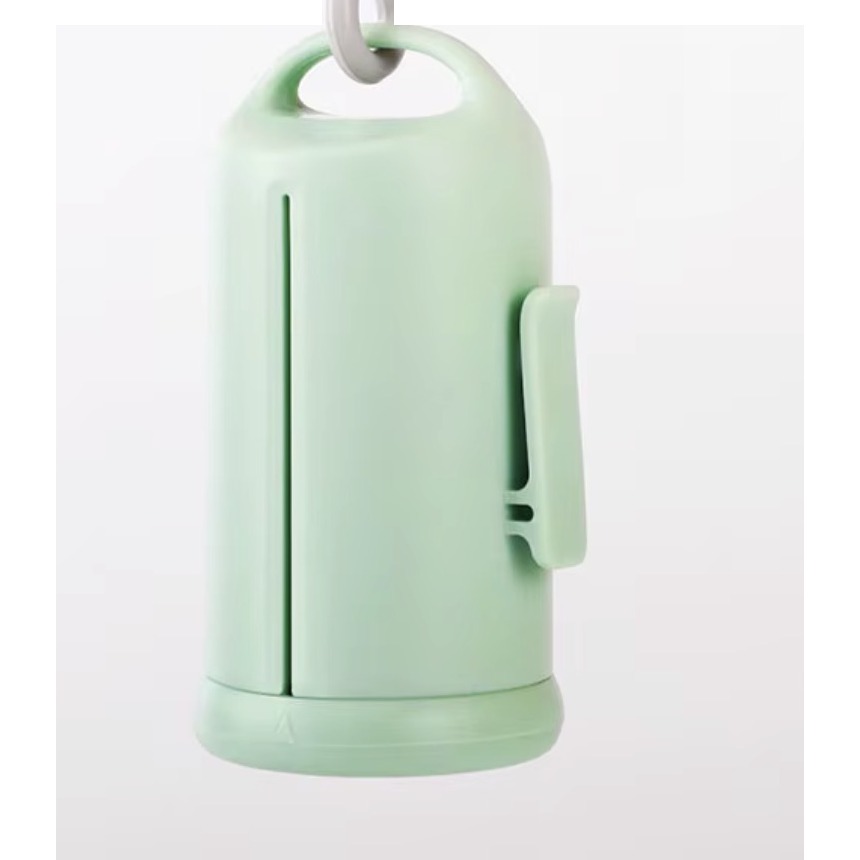
Accessory
Waste Bag Dispenser
Clips to the lead, holds one standard roll.
Fits any dog

Pawpoint on YouTube
Watch the full Cane Corso video
Breed deep-dives, history and honest ownership talk. New film every week.
Watch now