
Cardigan Welsh Corgi
KAR-di-guhn WELSH KOR-gee
United Kingdom· Cardiganshire, west Wales
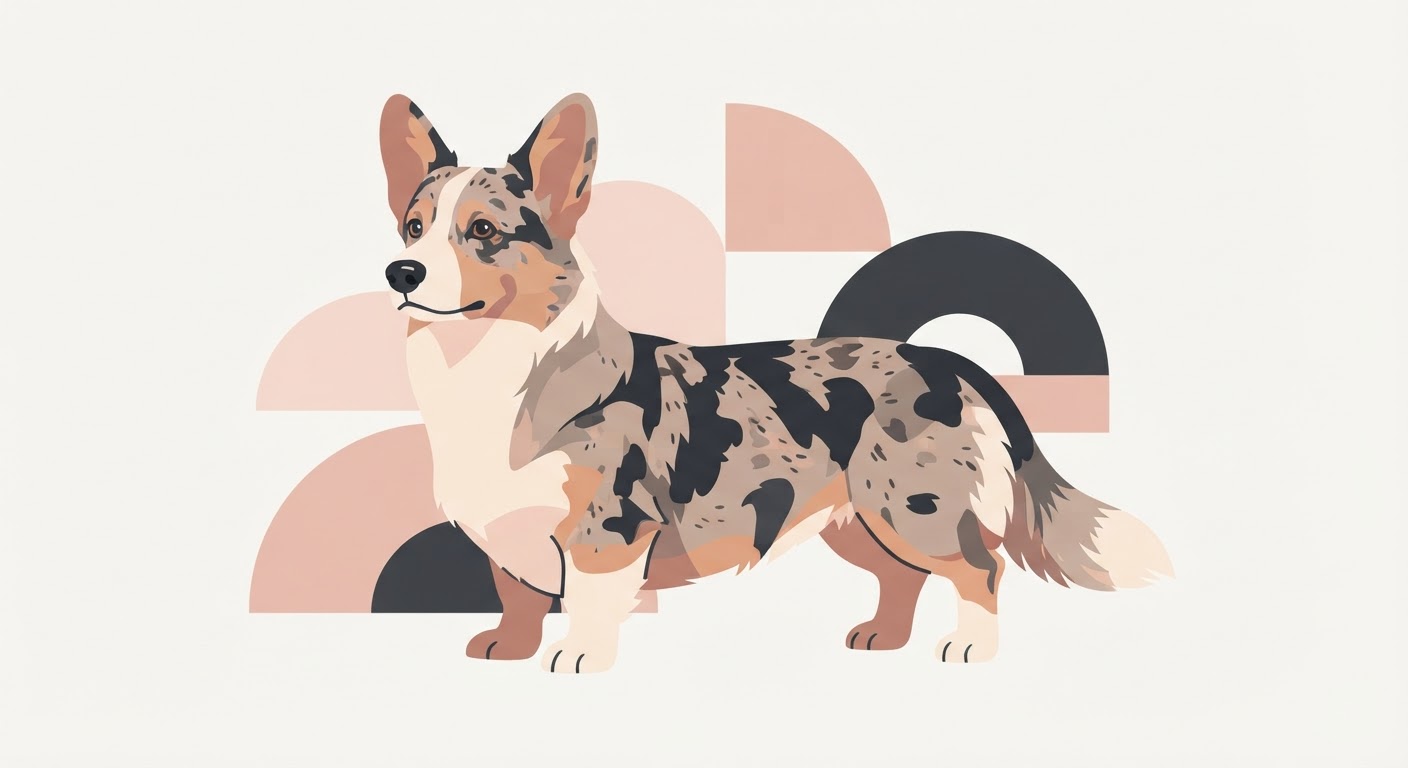
The Cardigan Welsh Corgi is a low-set, long-tailed Welsh herding dog, one of the oldest breeds native to Britain and distinct from its more famous cousin the Pembroke.
At a glance
Quick facts
Size
Small
Exercise needs
45-60 minutes daily
Home size suited to
Flat or small home
Grooming frequency
Twice weekly brush
Coat length
Medium
Sheds
Yes, heavily when moulting
Lifespan
12-15 years
Town or country
Happiest in the country
Garden size needed
Small garden or none
Where it comes from
Origins of the Cardigan Welsh Corgi
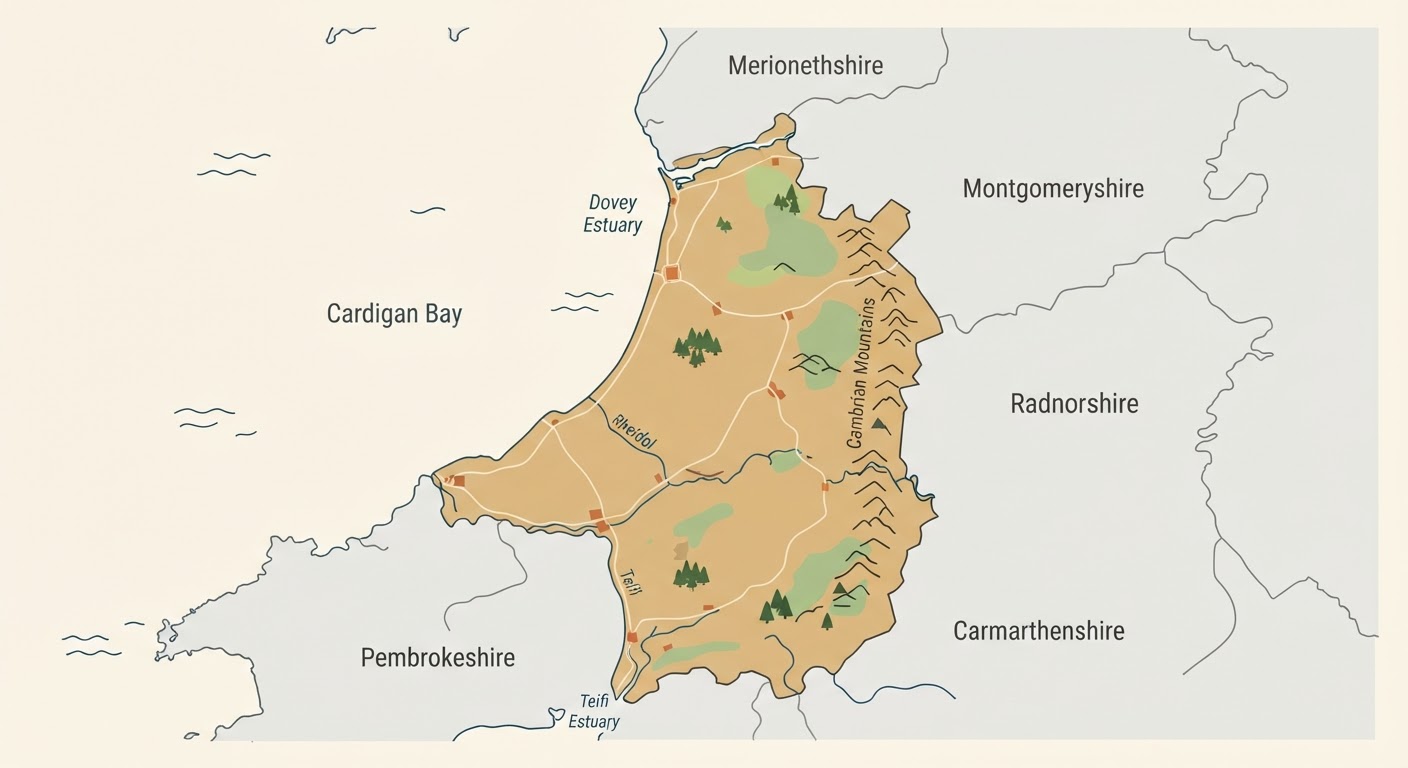
The Cardigan Welsh Corgi developed in the hills of Cardiganshire, where its low build let it work close to cattle without being kicked. The damp Welsh climate favoured its weatherproof double coat.
- Region
- Cardiganshire, west Wales
- Climate it was bred for
- Cool, damp hill country
- Original job
- Cattle droving and farm guarding
The long read
About the breed
Cardigans are believed to have arrived in Cardiganshire, west Wales, with Celtic tribes over 3,000 years ago, developing as an all-purpose farm dog used to drive cattle by nipping at their heels and to guard the homestead. Its long body and short legs let it dodge kicks while working close to livestock. For centuries it was kept purely as a working dog rather than a show breed, and the two corgi types were only formally separated by the Kennel Club in 1934.
Living with a Cardigan means living with a small dog with a big-dog attitude: confident, watchful, and vocal when something is amiss. It is intelligent and food-motivated, which makes training straightforward, but it also has a strong herding instinct that can show up as nipping at heels or chasing joggers and cyclists if not redirected early. Its long back needs protecting from jumping off furniture, and its double coat sheds steadily year-round with a heavier blow twice a year.
Numbers declined through the 20th century as farm work mechanised, and the Cardigan remains considerably rarer than the Pembroke, both in Wales and internationally; the Kennel Club still lists it among its vulnerable native breeds.
Today most Cardigans are companions and competitive obedience or agility dogs rather than working cattle dogs, though a few still work on Welsh hill farms. It suits owners who want a small dog with genuine working intelligence and don't mind a bit of barking and a fair amount of fur around the house.
Living with one
Temperament & needs
Our own ratings, based on the breed standard and how these dogs behave in ordinary homes.
Friendliness
3/5
How openly the Cardigan Welsh Corgi greets people it does not know.
Trainability
4/5
Sharp and food-driven, learns quickly with consistency.
Energy
3/5
Alert and active but content with moderate daily exercise.
Barking
4/5
Vocal by nature, will alert-bark readily.
Grooming
3/5
Sheds steadily with a heavy seasonal coat blow.
Suits a first-time owner
3/5
How forgiving the Cardigan Welsh Corgi is for someone taking on their first dog.
Sociability
3/5
Loyal to family, a little reserved with strangers.
Independence
3/5
Was bred to make working decisions unsupervised.
Illustrated breed standard
The points of the breed
Hover or tap a numbered point to read what the standard asks for.
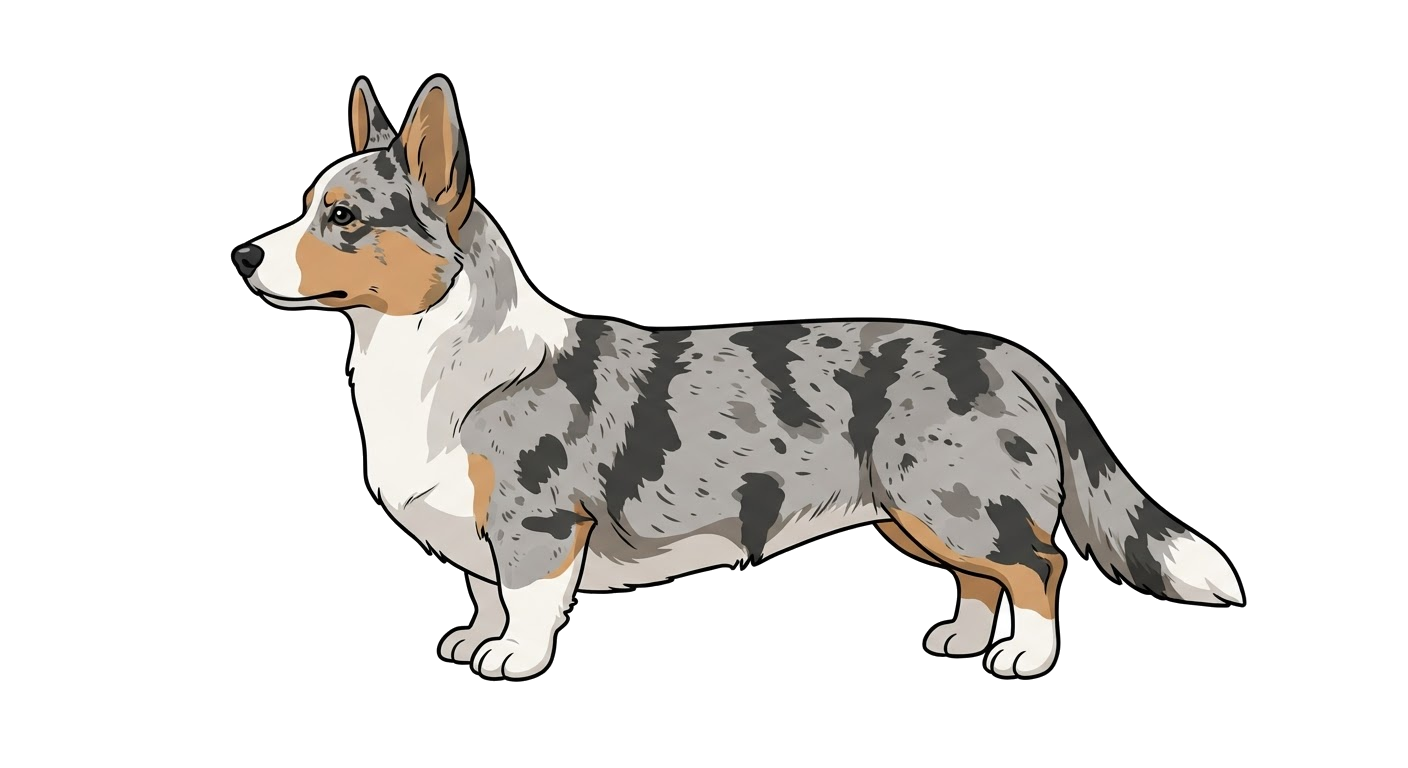
Point 1
Skull
The Cardigan Welsh Corgi's skull is judged on balance rather than size — proportionate to the body, with a clean cheek and a stop typical of the breed. Coarseness or an over-refined head are both faulted.
Colours & patterns
Recognised coats
Which coats the standard accepts — and which are simply popular.
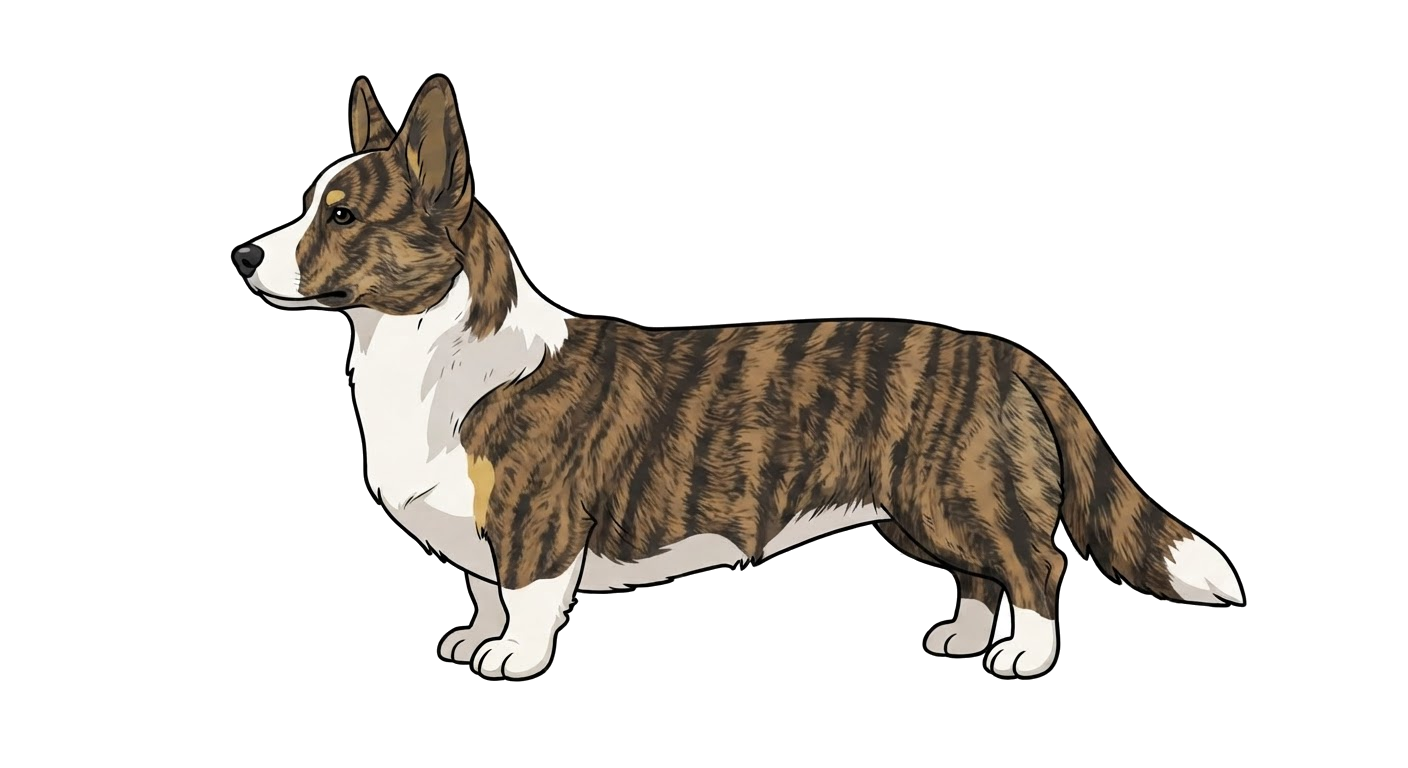
Brindle
Standard colour
A common tiger-striped pattern over a base colour.
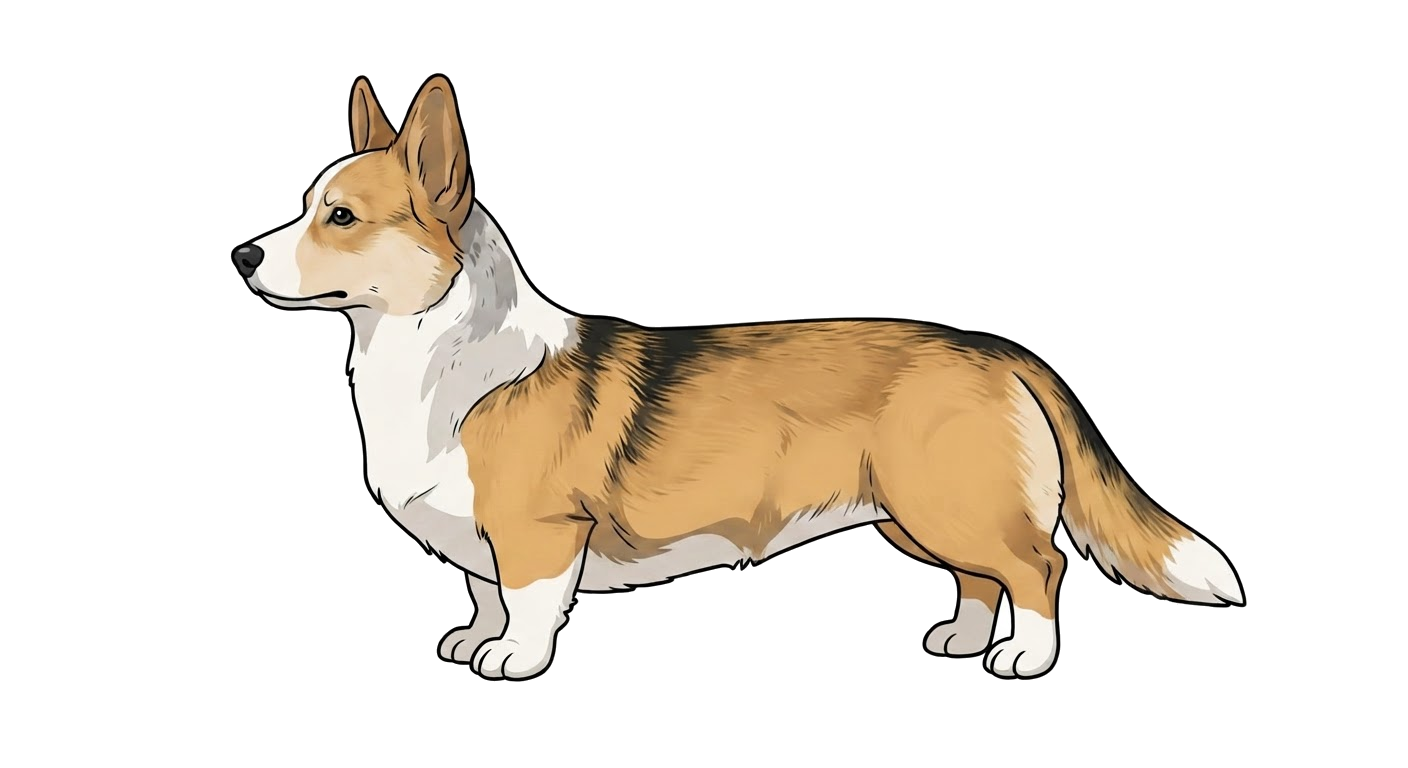
Sable
Standard colour
Reddish coat with black-tipped hairs.
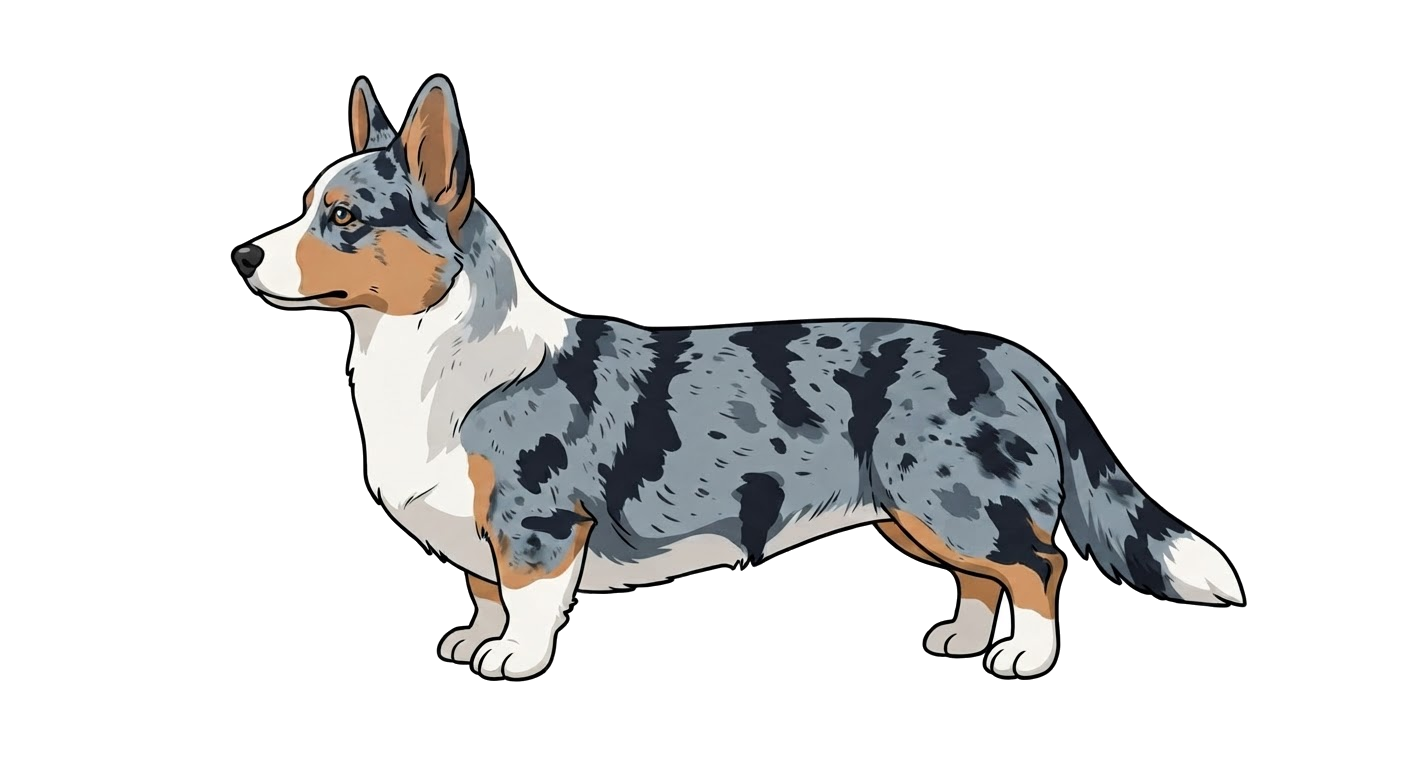
Blue merle
Standard colour
A marbled grey-blue pattern, often with blue or odd eyes.
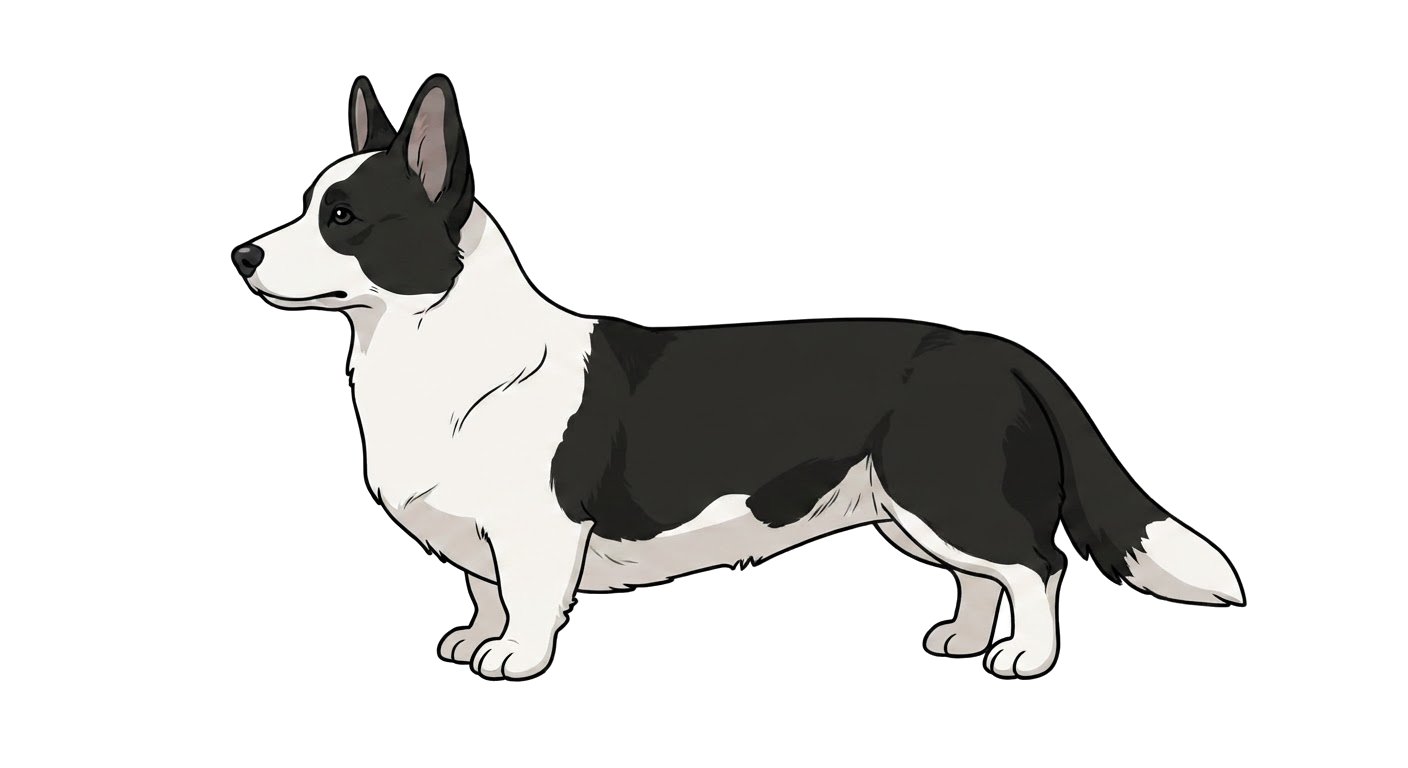
Black and white
Standard colour
Solid black with white markings, called tricolour with tan points.
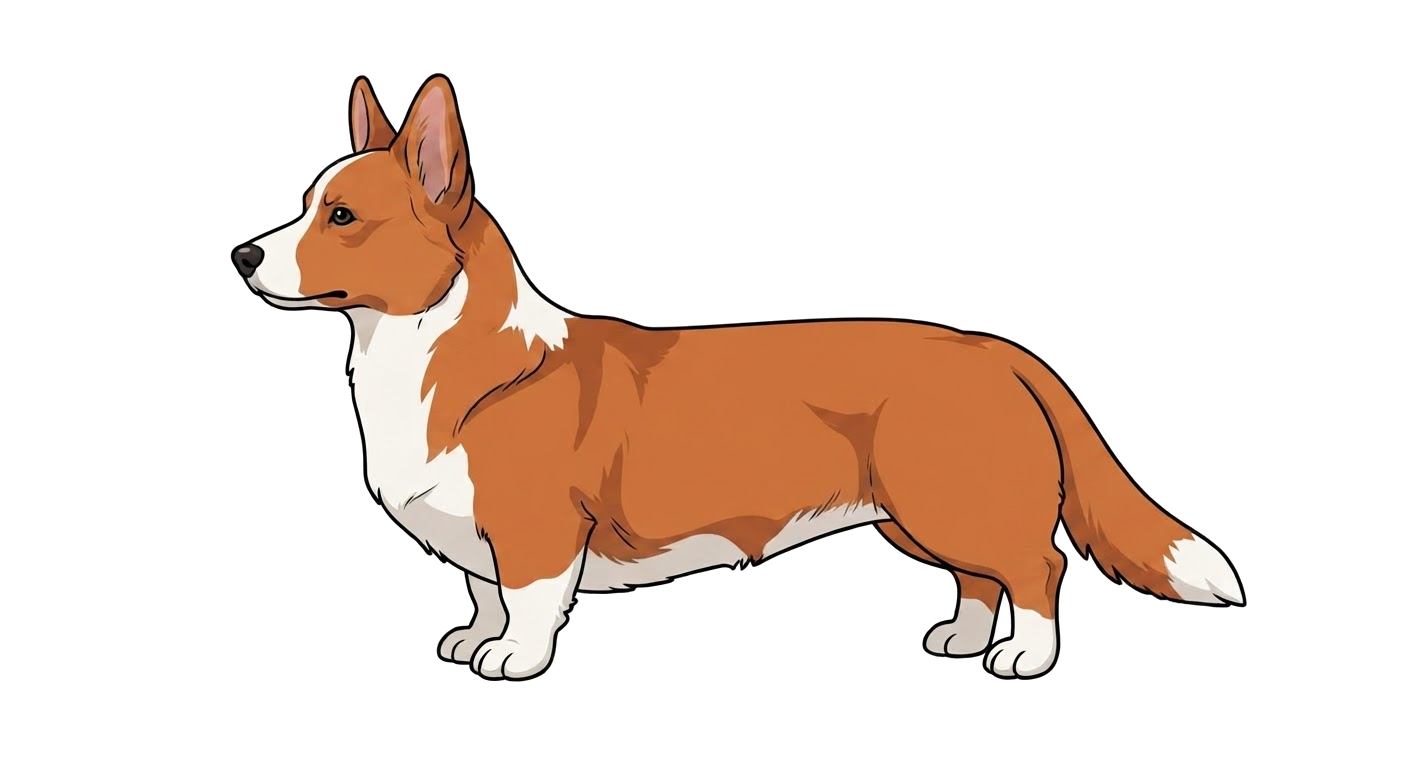
Red
Standard colour
Clear red with white markings on chest and legs.
Timeline
History & development
c. 1200 BC
Arrival in Wales
Ancestors are thought to have come to Cardiganshire with Celtic settlers.
Medieval period
Farm work
Used across Welsh hill farms to drive cattle and guard the homestead.
1925
Kennel Club recognition
The corgi was first recognised as a single breed by the Kennel Club.
1934
Split from Pembroke
Cardigan and Pembroke Welsh Corgis were formally separated into two breeds.
1950s onward
The breed today
Kennel club registrations settled into a steady pattern and the Cardigan Welsh Corgi moved from a working specialist to a family companion, with breed clubs in the UK and abroad now focused on health testing and keeping true type alive.
Reference
Breed standard summary
- body
- Long and moderately narrow, deep chest.
- coat
- Medium length, dense, weatherproof double coat.
- ears
- Large, rounded at the tip, carried erect.
- eyes
- Medium, clear, giving an alert expression.
- gait
- Free and smooth, not stilted.
- head
- Foxy in shape, flat skull, tapering muzzle.
- size
- Small
- tail
- Long, set in line with the body, carried low.
- colour
- Brindle, Sable, Blue merle, Black and white, Red. Colours outside this list are seen but are not accepted by the kennel clubs.
- temperament
- Typical of the breed: strongest in trainability, barking, energy. Nervousness or aggression are serious faults in the show ring and in the home.
- general appearance
- Long, low, sturdy with a substantial bone and a bold expression.
Health
What to screen for
Green means little to worry about, amber means ask the breeder for test results, red means manage it actively.
Intervertebral disc disease
Watch closely
Keep weight controlled and limit jumping to protect the long back.
Hip dysplasia
Screen for it
Ask for BVA/KC hip scores on breeding stock.
Progressive retinal atrophy
Screen for it
Request PRA DNA test results from the breeder.
Degenerative myelopathy
Watch closely
DNA testing is available and worth asking about in older breeding lines.
General information only — always speak to your vet about your own dog.
From real owners
Dogs like this
Cardigan Welsh Corgis added by PawPoint members through their pet passports. Share yours to appear here.
Loading the wall…
Made for the Cardigan Welsh Corgi
The book, plus prints, hoodies and mugs using our own Cardigan Welsh Corgi illustration — and one everyday accessory that suits any dog.
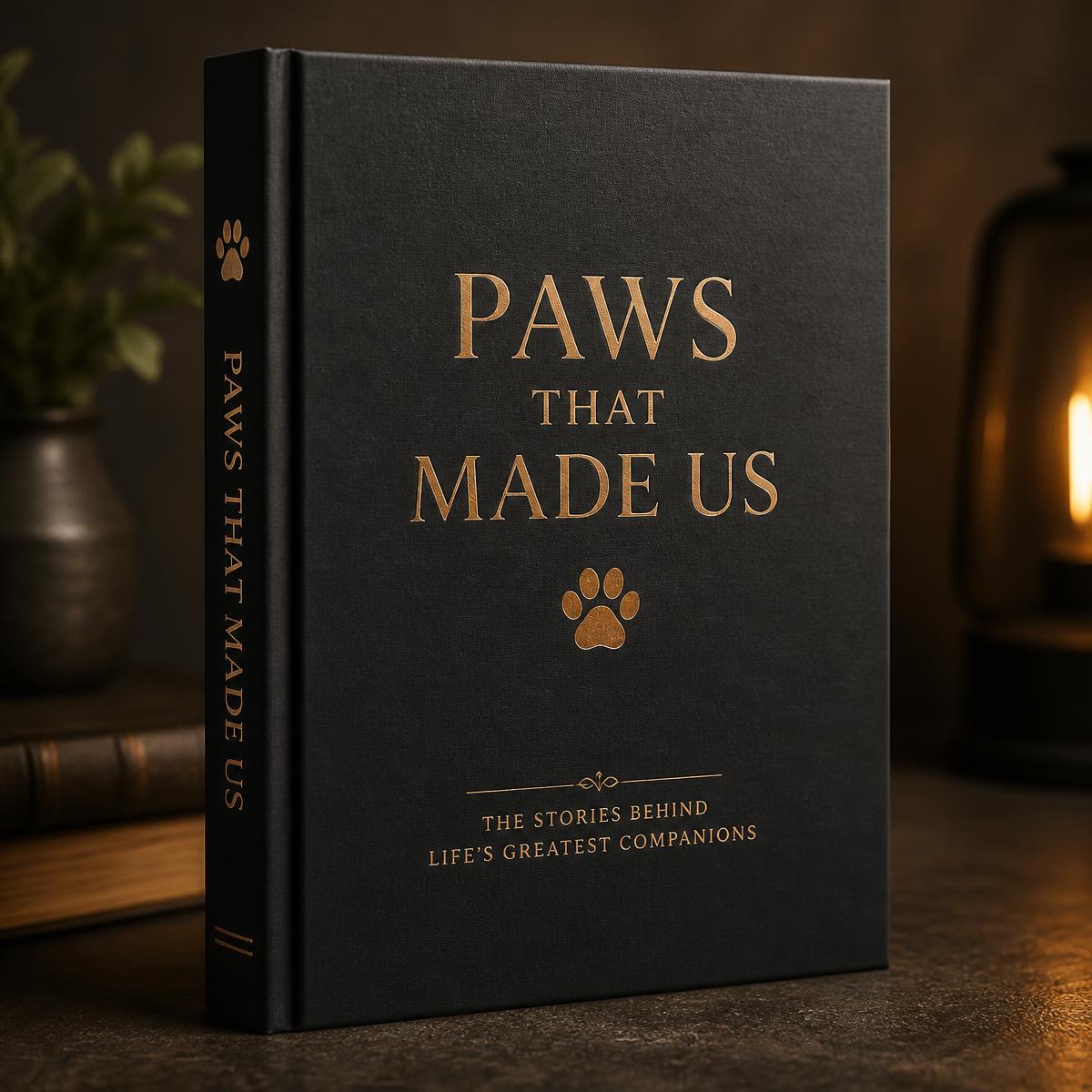
The book
Pawpoint: The Complete Dog Breed Book
Every officially recognised breed plus the unofficial ones nobody else documents. 400+ pages, hardback, printed and shipped from the UK.
Own stock — shipped by us
Framed poster
Cardigan Welsh Corgi Framed Poster
Museum-weight print of our Cardigan Welsh Corgi illustration, framed or unframed.
Printed to order
Hoodie
Cardigan Welsh Corgi Hoodie
Heavyweight hoodie carrying the Cardigan Welsh Corgi illustration on the chest.
Printed to order
Mug
Cardigan Welsh Corgi Mug
Ceramic mug with the Cardigan Welsh Corgi illustration wrapped around it.
Printed to order
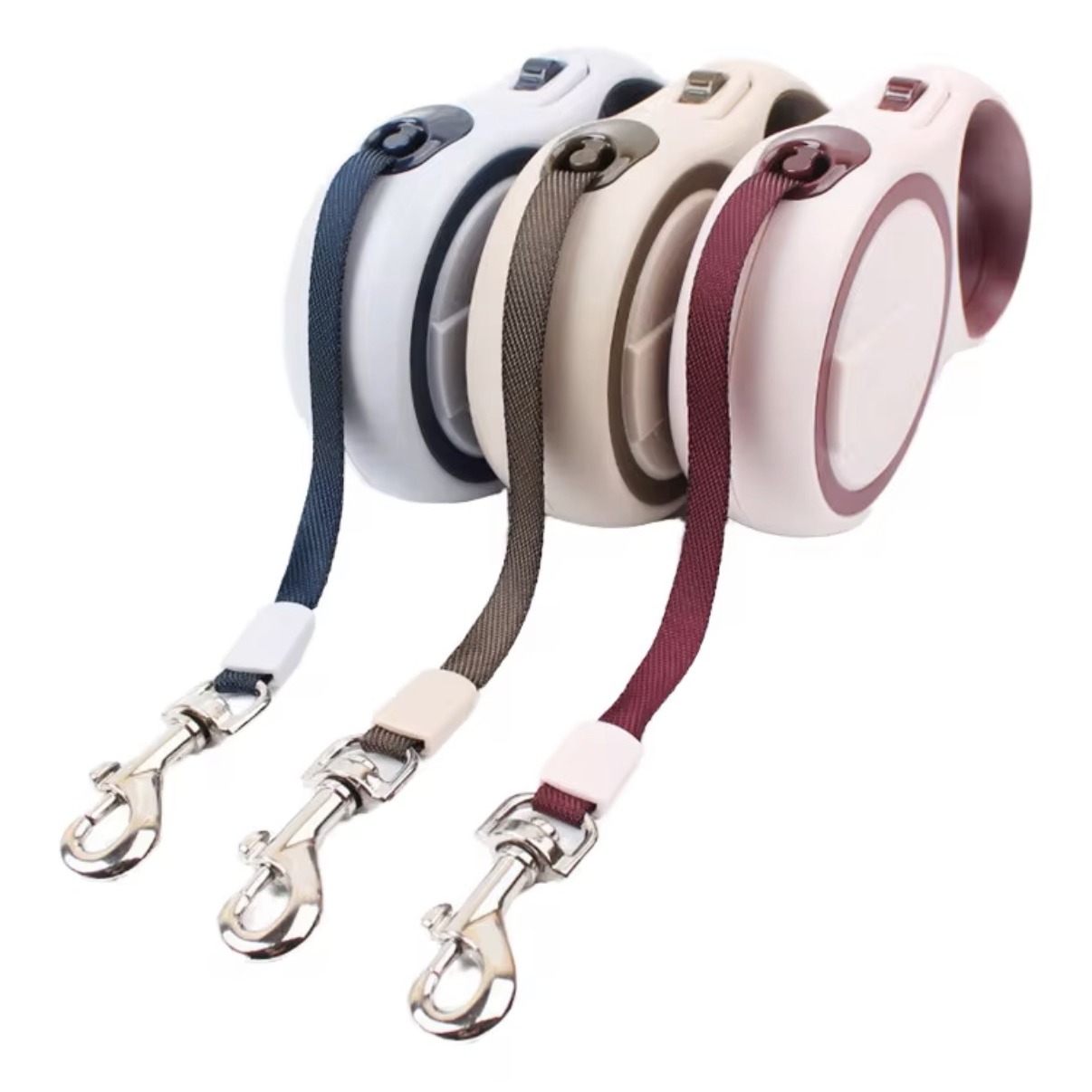
Accessory
Retractable Lead
5m retractable with one-touch brake.
Fits any dog

Pawpoint on YouTube
Watch the full Cardigan Welsh Corgi video
Breed deep-dives, history and honest ownership talk. New film every week.
Watch now