
Cavalier King Charles Spaniel
kav-uh-LEER KING CHARLZ SPAN-yuhl
United Kingdom· England
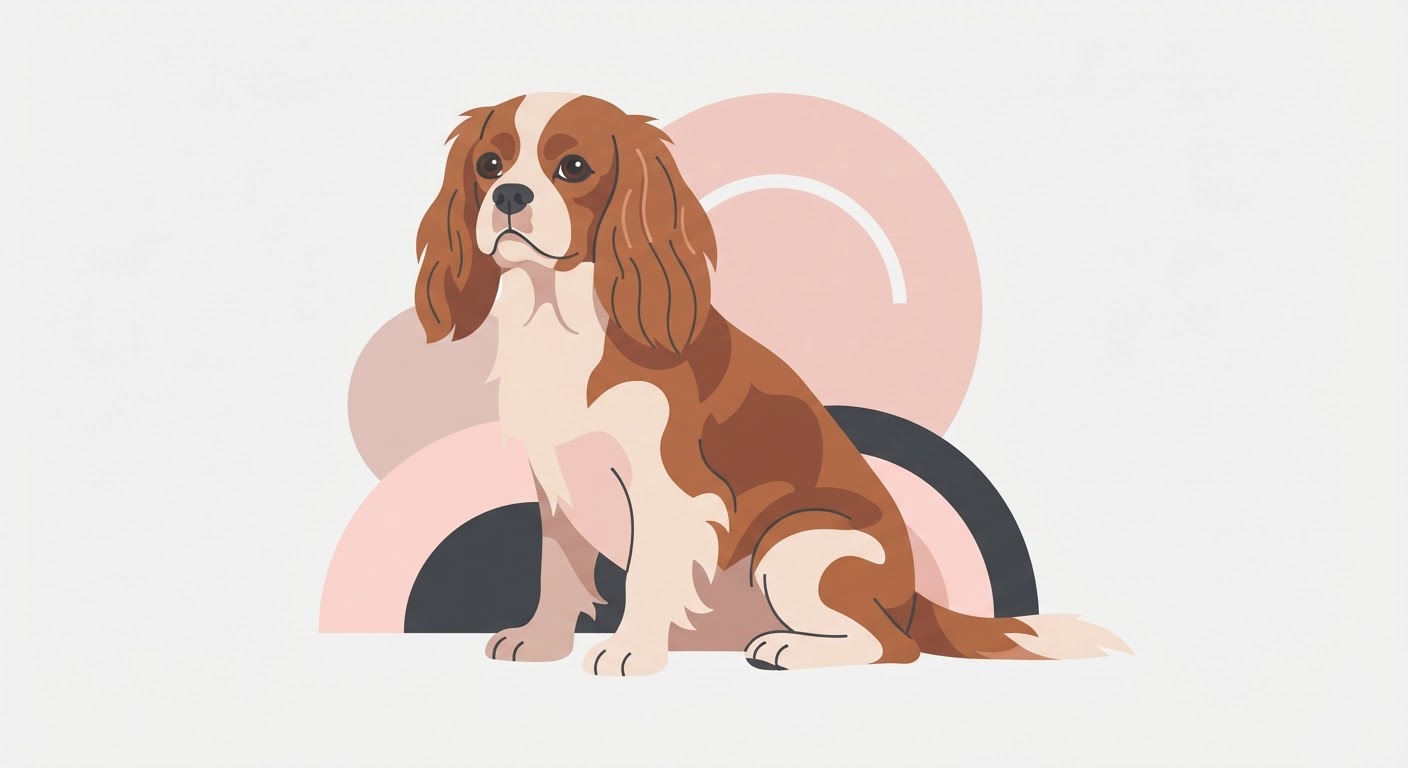
The Cavalier King Charles Spaniel is a small, silky-coated toy breed developed in England as a companion dog, named after King Charles II, who was rarely seen without one.
At a glance
Quick facts
Size
Toy
Exercise needs
30-45 minutes daily
Home size suited to
Flat or any size home
Grooming frequency
Brush every other day, clip regularly
Coat length
Curly
Sheds
Very little
Lifespan
9-14 years
Town or country
Either, happy in town
Garden size needed
None needed
Where it comes from
Origins of the Cavalier King Charles Spaniel

Bred in English royal courts as a companion for aristocracy, the Cavalier owes its gentle, people-focused temperament to centuries spent indoors alongside its owners rather than working outside.
- Region
- England
- Climate it was bred for
- Temperate, indoor court life
- Original job
- Royal lapdog and companion
The long read
About the breed
Toy spaniels of this general type appear in British court portraits from the 16th and 17th centuries, favoured by the Stuart kings. As pugs and other flat-faced breeds became fashionable in the 19th century, the longer-nosed spaniel type nearly disappeared, until an American enthusiast, Roswell Eldridge, offered a cash prize at Crufts in 1926 for dogs bred to resemble the old portraits. Breeders took up the challenge, and the modern Cavalier was established as a distinct breed from the flatter-faced King Charles Spaniel by the 1940s.
Living with a Cavalier is easy in most practical respects: it is small, adaptable to flats or houses, and eager to please, so basic training generally goes smoothly. Its defining trait is an intense attachment to people; it does not cope well with being left alone for long stretches and can develop separation-related distress. It gets on well with children, other dogs and cats, which makes it one of the more sociable toy breeds. The silky coat needs regular brushing to prevent matting behind the ears and on the legs.
The breed's popularity has brought serious health concerns, most notably a high rate of mitral valve disease and syringomyelia, a painful spinal cord condition linked to the shape of its skull, and responsible buyers need to look past a cute face to a breeder's health testing record.
Today the Cavalier remains one of the most popular toy breeds in Britain and abroad, valued as an affectionate, undemanding family companion rather than for any working role.
Living with one
Temperament & needs
Our own ratings, based on the breed standard and how these dogs behave in ordinary homes.
Friendliness
5/5
How openly the Cavalier King Charles Spaniel greets people it does not know.
Trainability
4/5
Eager to please and generally easy to teach.
Energy
2/5
Enjoys a walk but is equally happy curled up indoors.
Barking
2/5
Generally quiet, occasional alert bark.
Grooming
3/5
Silky coat needs regular brushing, especially behind the ears.
Suits a first-time owner
4/5
How forgiving the Cavalier King Charles Spaniel is for someone taking on their first dog.
Sociability
5/5
Affectionate with everyone, including strangers, children and other pets.
Independence
1/5
Struggles with being left alone for long periods.
Illustrated breed standard
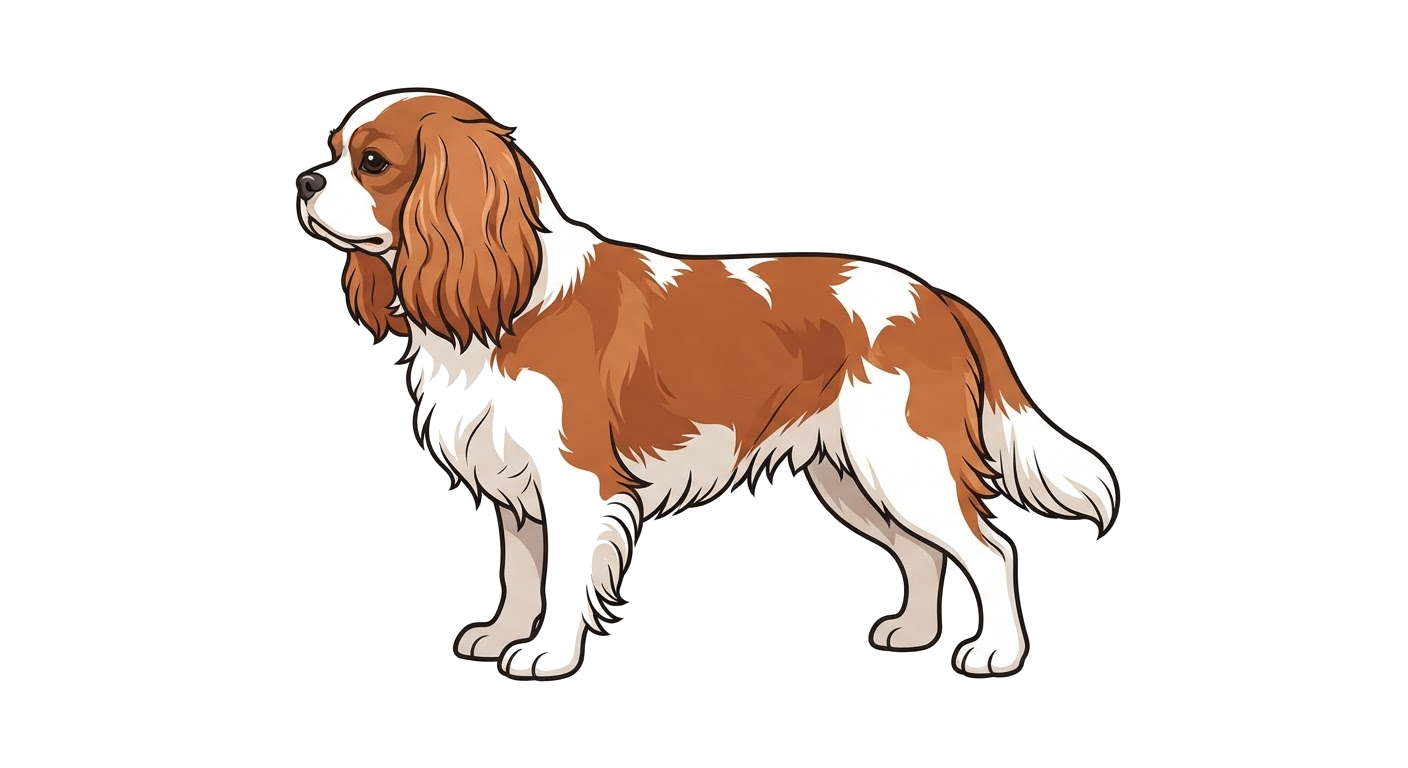
The points of the breed
Hover or tap a numbered point to read what the standard asks for.
Point 1
Skull
The Cavalier King Charles Spaniel's skull is judged on balance rather than size — proportionate to the body, with a clean cheek and a stop typical of the breed. Coarseness or an over-refined head are both faulted.
Colours & patterns
Recognised coats
Which coats the standard accepts — and which are simply popular.
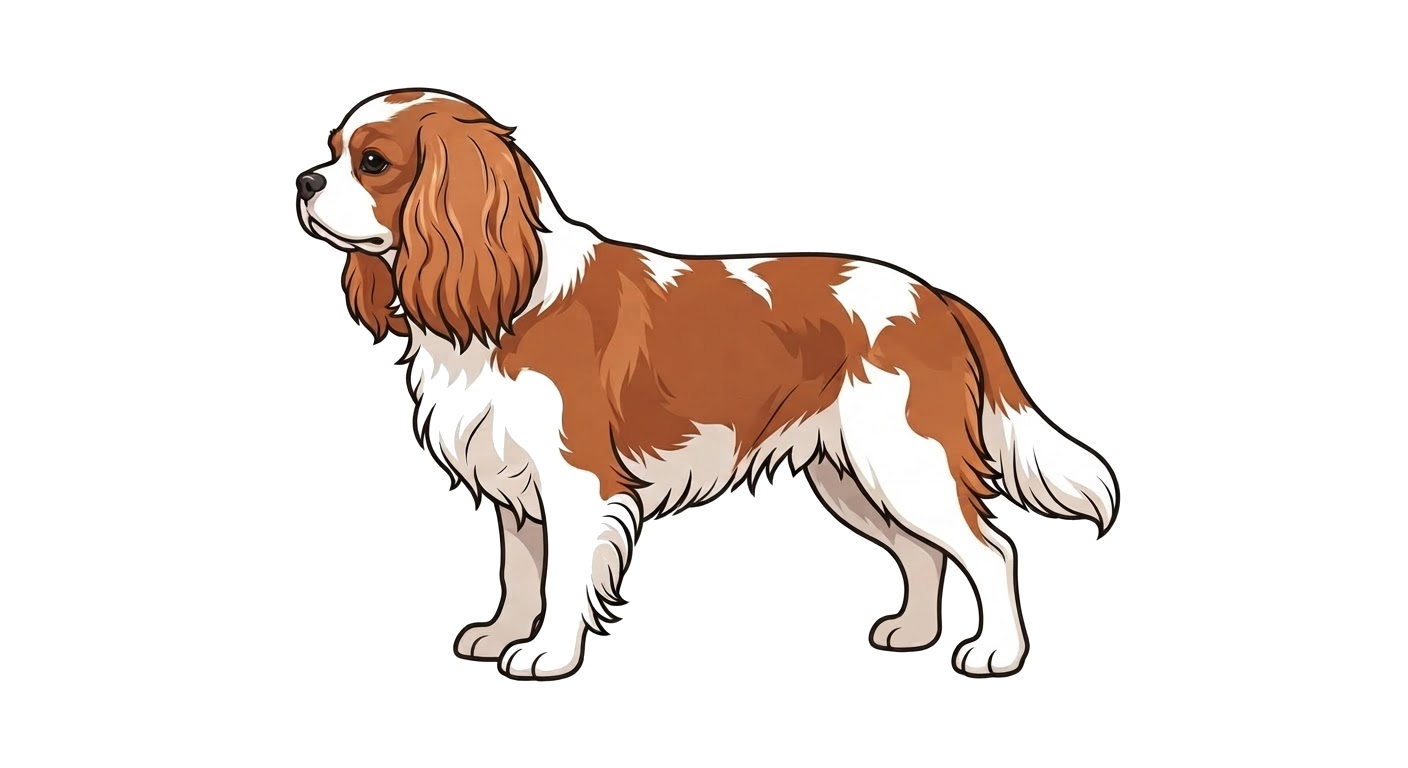
Blenheim
Standard colour
Chestnut markings on a pearly white background, the most common colour.
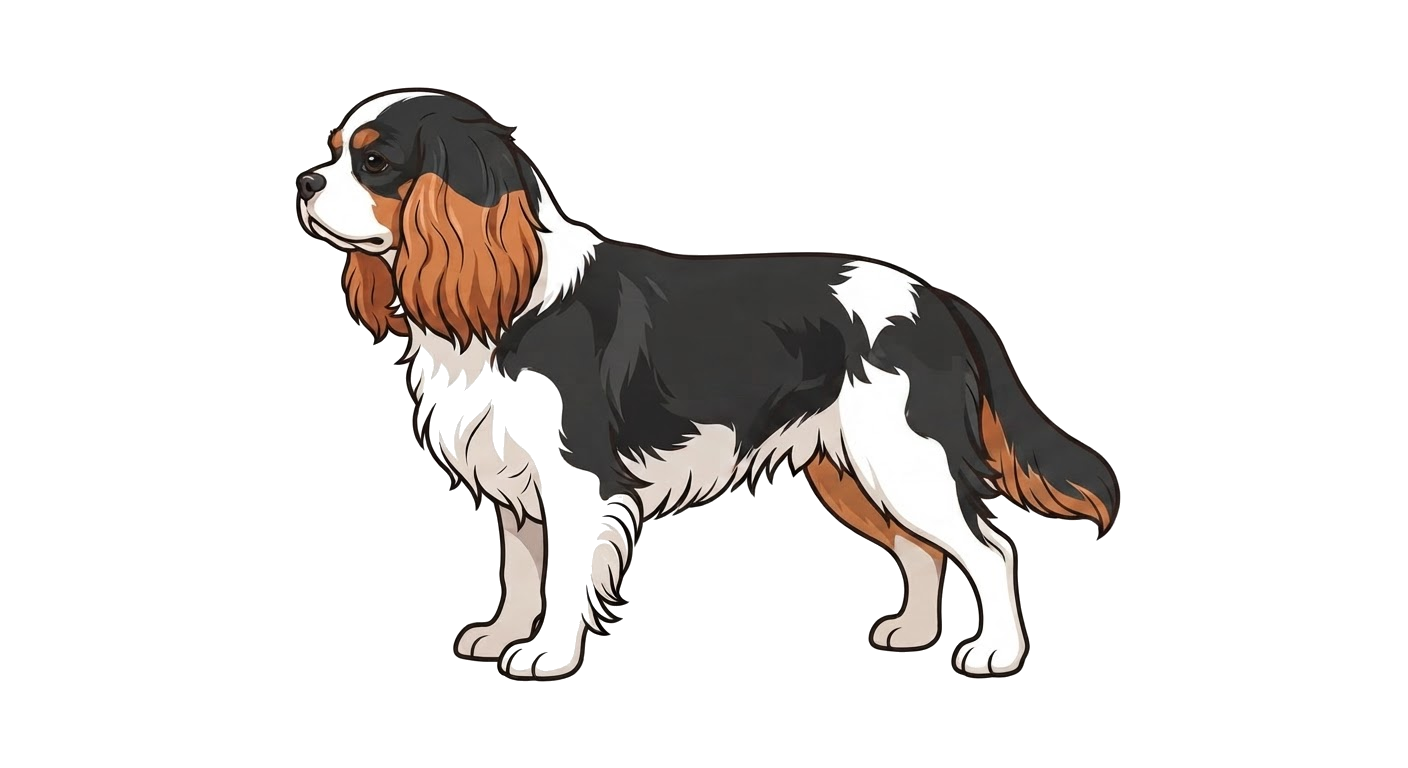
Tricolour
Standard colour
Black and white with tan markings over the eyes and cheeks.
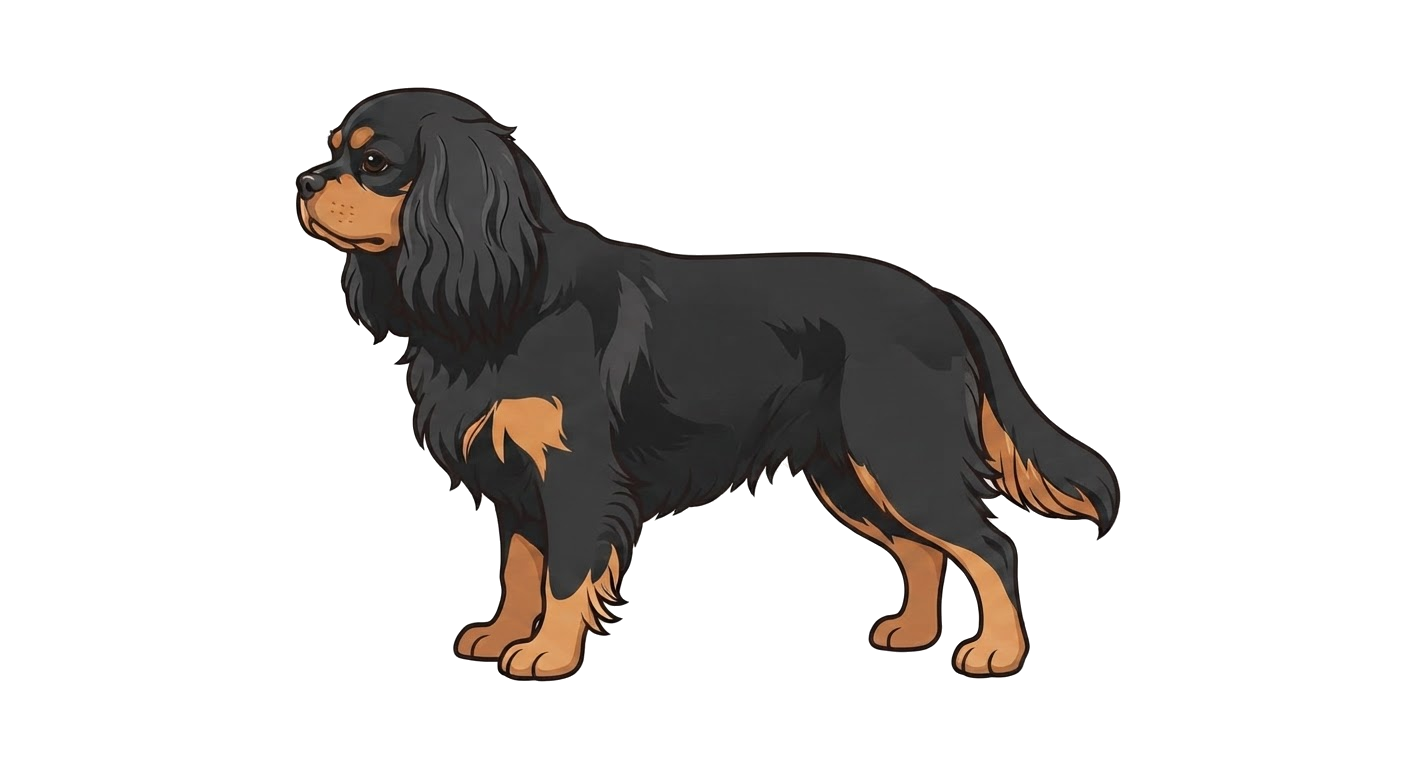
Black and tan
Standard colour
Solid black with tan points, a striking and less common variety.
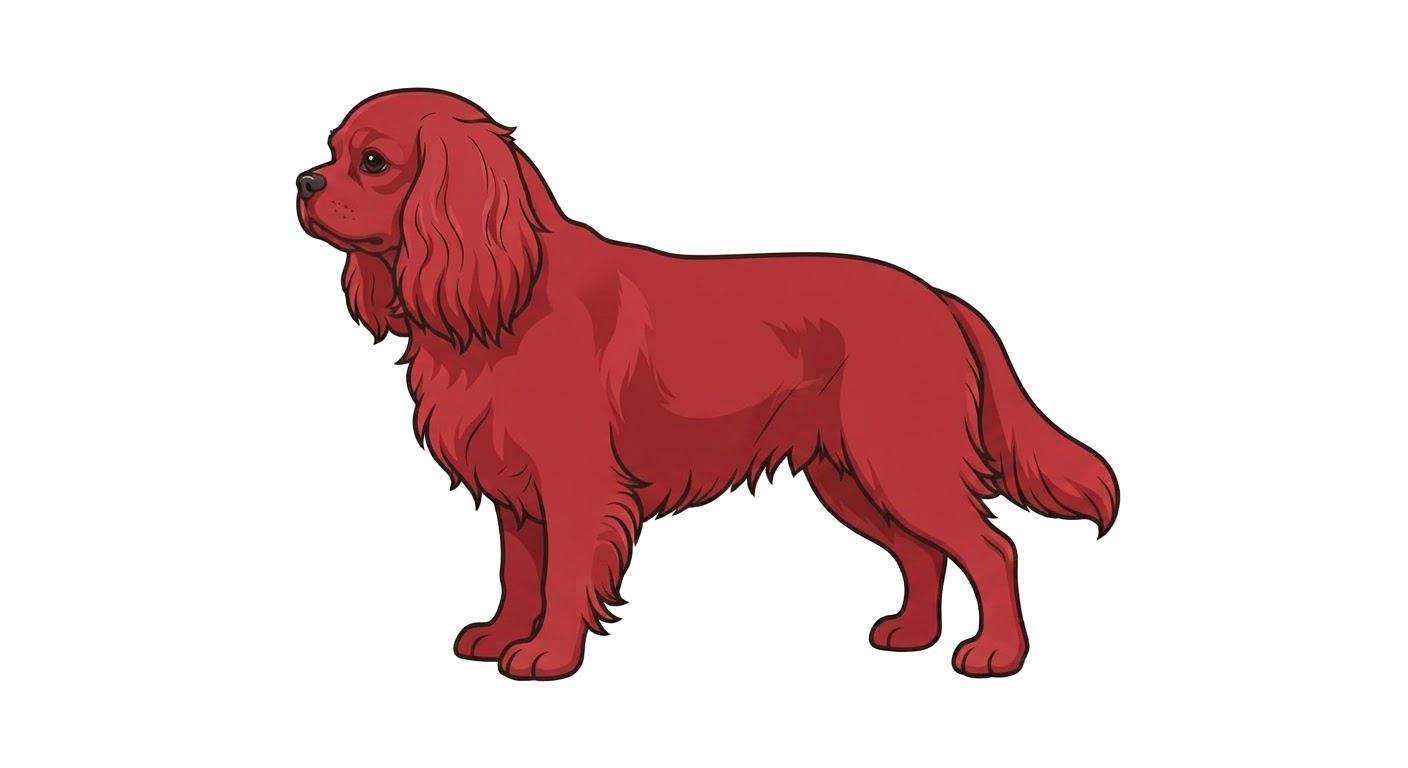
Ruby
Standard colour
A rich, solid red all over.
Timeline
History & development
1600s
Royal court favourite
Toy spaniels of this type were kept by King Charles II and appear in period portraits.
1800s
Decline of the type
Fashion shifted toward flatter-faced toy spaniels, pushing the older type toward extinction.
1926
Eldridge's challenge
American Roswell Eldridge offered a prize at Crufts for spaniels resembling the old portraits.
1945
Breed club formed
The Cavalier King Charles Spaniel Club was established, separating it from the King Charles Spaniel.
1996
US recognition
The American Kennel Club recognised the breed.
Reference
Breed standard summary
- body
- Short-coupled with a level topline.
- coat
- Long, silky, free from curl with feathering.
- ears
- Long, set high, well feathered.
- eyes
- Large, round, dark, giving a melting expression.
- gait
- Free-moving, elegant.
- head
- Almost flat between the ears, gentle rise to the muzzle.
- size
- Toy
- tail
- Well feathered, in constant gentle motion.
- colour
- Blenheim, Tricolour, Black and tan, Ruby. Colours outside this list are seen but are not accepted by the kennel clubs.
- temperament
- Typical of the breed: strongest in sociability, trainability, grooming. Nervousness or aggression are serious faults in the show ring and in the home.
- general appearance
- Elegant, graceful toy spaniel with a gentle, friendly expression.
Health
What to screen for
Green means little to worry about, amber means ask the breeder for test results, red means manage it actively.
Mitral valve disease
Watch closely
Ask for recent heart auscultation results from an approved cardiologist on both parents.
Syringomyelia
Watch closely
Request MRI screening results (Cavalier/Chiari scheme) from the breeder.
Patellar luxation
Screen for it
Ask for a patella score on the breeding pair.
Hip dysplasia
Screen for it
Hip scoring is advisable in this breed despite its small size.
General information only — always speak to your vet about your own dog.
From real owners
Dogs like this
Cavalier King Charles Spaniels added by PawPoint members through their pet passports. Share yours to appear here.
Loading the wall…
Made for the Cavalier King Charles Spaniel
The book, plus prints, hoodies and mugs using our own Cavalier King Charles Spaniel illustration — and one everyday accessory that suits any dog.

The book
Pawpoint: The Complete Dog Breed Book
Every officially recognised breed plus the unofficial ones nobody else documents. 400+ pages, hardback, printed and shipped from the UK.
Own stock — shipped by us
Framed poster
Cavalier King Charles Spaniel Framed Poster
Museum-weight print of our Cavalier King Charles Spaniel illustration, framed or unframed.
Printed to order
Hoodie
Cavalier King Charles Spaniel Hoodie
Heavyweight hoodie carrying the Cavalier King Charles Spaniel illustration on the chest.
Printed to order
Mug
Cavalier King Charles Spaniel Mug
Ceramic mug with the Cavalier King Charles Spaniel illustration wrapped around it.
Printed to order

Accessory
Standard Lead
Padded-handle 1.2m lead in Pawpoint tan.
Fits any dog

Pawpoint on YouTube
Watch the full Cavalier King Charles Spaniel video
Breed deep-dives, history and honest ownership talk. New film every week.
Watch now