
Chesapeake Bay Retriever
CHESS-a-peek
United States· Chesapeake Bay, Maryland
The Chesapeake Bay Retriever is a sturdy American gundog developed to retrieve waterfowl from the cold, choppy waters of the Chesapeake Bay.
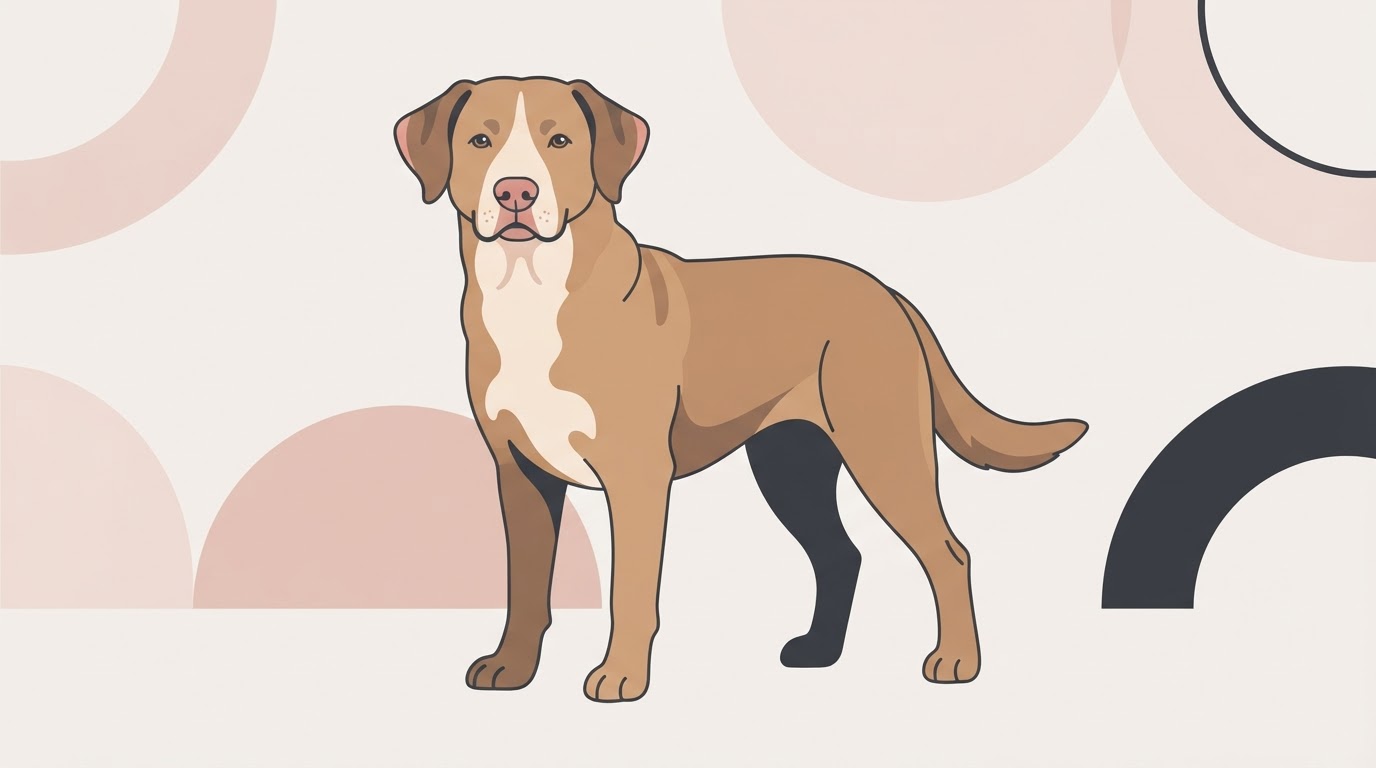
At a glance
Quick facts
Size
Large
Exercise needs
1-2 hours daily
Home size suited to
Medium to large home
Grooming frequency
Weekly brush
Coat length
Short
Sheds
Yes, heavily when moulting
Lifespan
10-13 years
Town or country
Either, with enough exercise
Garden size needed
Medium or larger
Where it comes from
Origins of the Chesapeake Bay Retriever
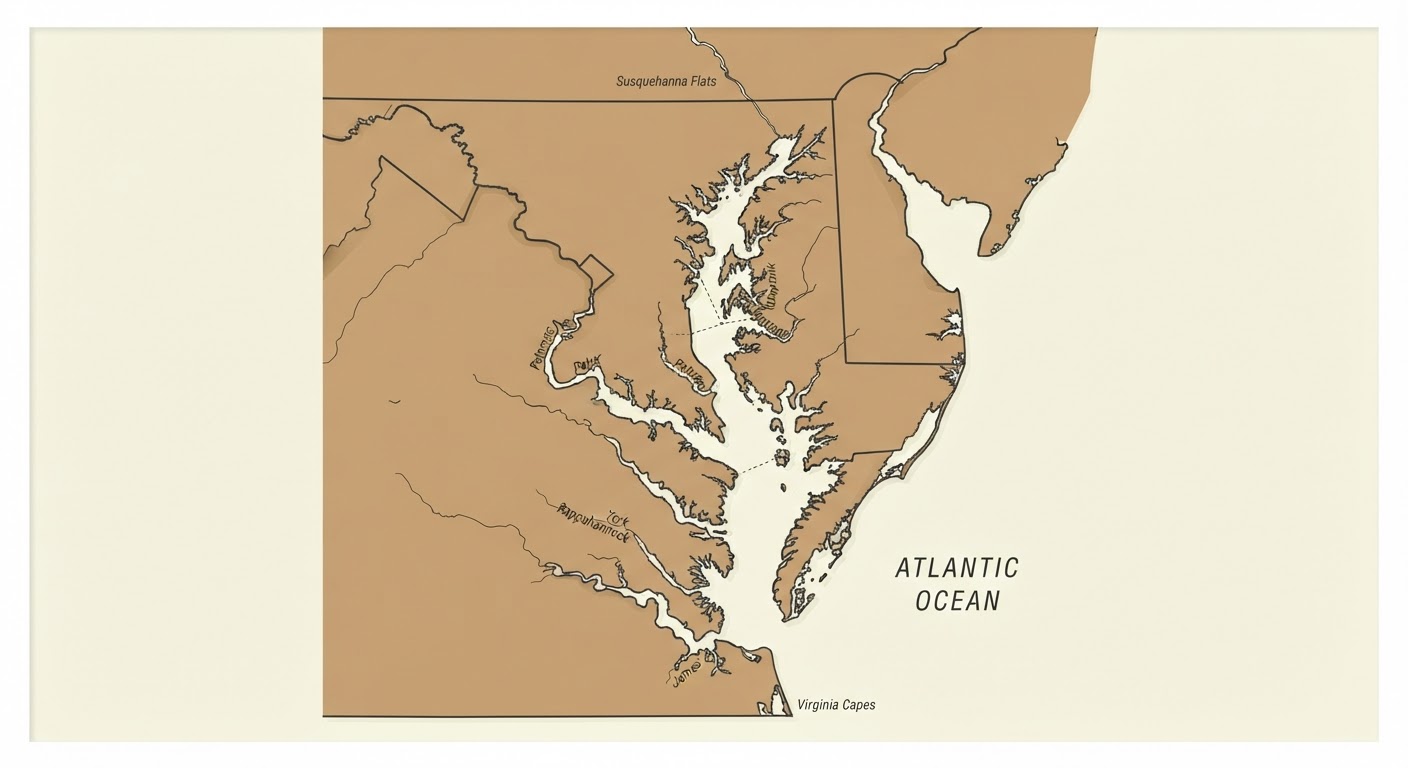
Developed along the Chesapeake Bay, this retriever was bred to withstand icy, choppy water all day, giving it a tougher build and oilier coat than its British retriever relatives.
- Region
- Chesapeake Bay, Maryland
- Climate it was bred for
- Cold, rough coastal waters
- Original job
- Retrieving waterfowl from icy water
The long read
About the breed
Its origin is traced to 1807, when two Newfoundland-type puppies survived a shipwreck off the coast of Maryland and were bred locally with existing retrievers, hounds and setters. The resulting dogs were prized by market hunters and watermen who needed a retriever able to work all day in icy, rough water, breaking ice if necessary, and still haul a boat's worth of ducks back to shore. It became the official state dog of Maryland in 1964.
Living with a Chesapeake means living with a strong, independent-minded working dog that needs a real job or serious daily exercise to stay content. It is devoted to its family but tends to be more reserved and protective toward strangers than the more universally friendly Labrador or Golden Retriever, and it can be territorial. Its distinctive oily, wavy double coat sheds water efficiently and needs relatively little grooming beyond regular brushing, though it does carry a noticeable "wet dog" smell that is hard to eliminate entirely.
The breed's toughness and drive mean it does not suit a sedentary household; without adequate exercise and mental stimulation it can become destructive or difficult to manage. It also tends to mature slowly, staying puppyish in outlook well past a year old.
Today the Chesapeake is still used by working wildfowlers in North America and increasingly competes in field trials, while also serving as a loyal, capable family dog for active owners prepared to meet its exercise needs.
Living with one
Temperament & needs
Our own ratings, based on the breed standard and how these dogs behave in ordinary homes.
Friendliness
3/5
How openly the Chesapeake Bay Retriever greets people it does not know.
Trainability
3/5
Intelligent but more independent than other retrievers.
Energy
5/5
Very high energy, needs serious daily exercise and a job to do.
Barking
2/5
Not prone to nuisance barking but will guard territory.
Grooming
2/5
Water-shedding coat needs brushing but little else.
Suits a first-time owner
2/5
How forgiving the Chesapeake Bay Retriever is for someone taking on their first dog.
Sociability
3/5
Devoted to family, reserved and sometimes wary of strangers.
Independence
4/5
Bred to make decisions unsupervised in the field.
Illustrated breed standard
The points of the breed
Hover or tap a numbered point to read what the standard asks for.
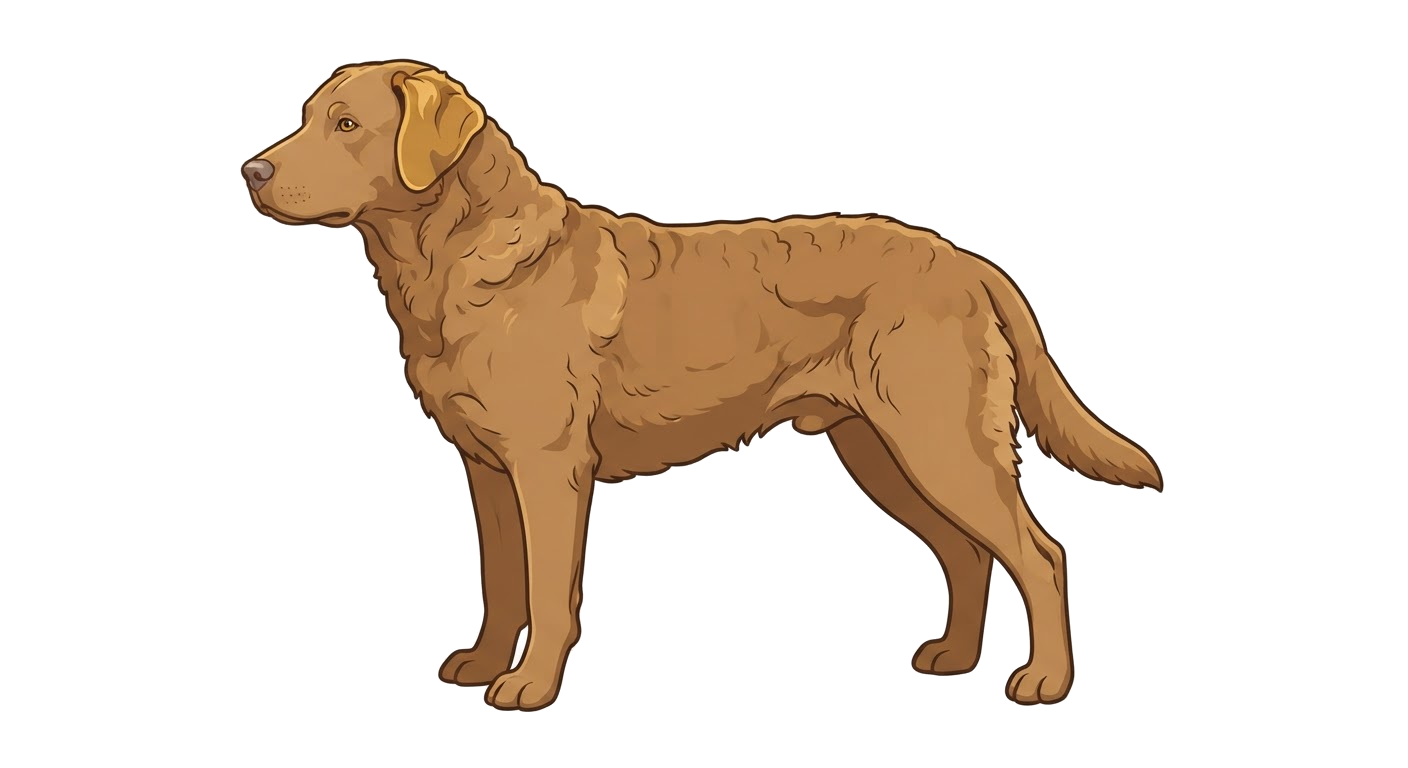
Point 1
Skull
The Chesapeake Bay Retriever's skull is judged on balance rather than size — proportionate to the body, with a clean cheek and a stop typical of the breed. Coarseness or an over-refined head are both faulted.
Colours & patterns
Recognised coats
Which coats the standard accepts — and which are simply popular.
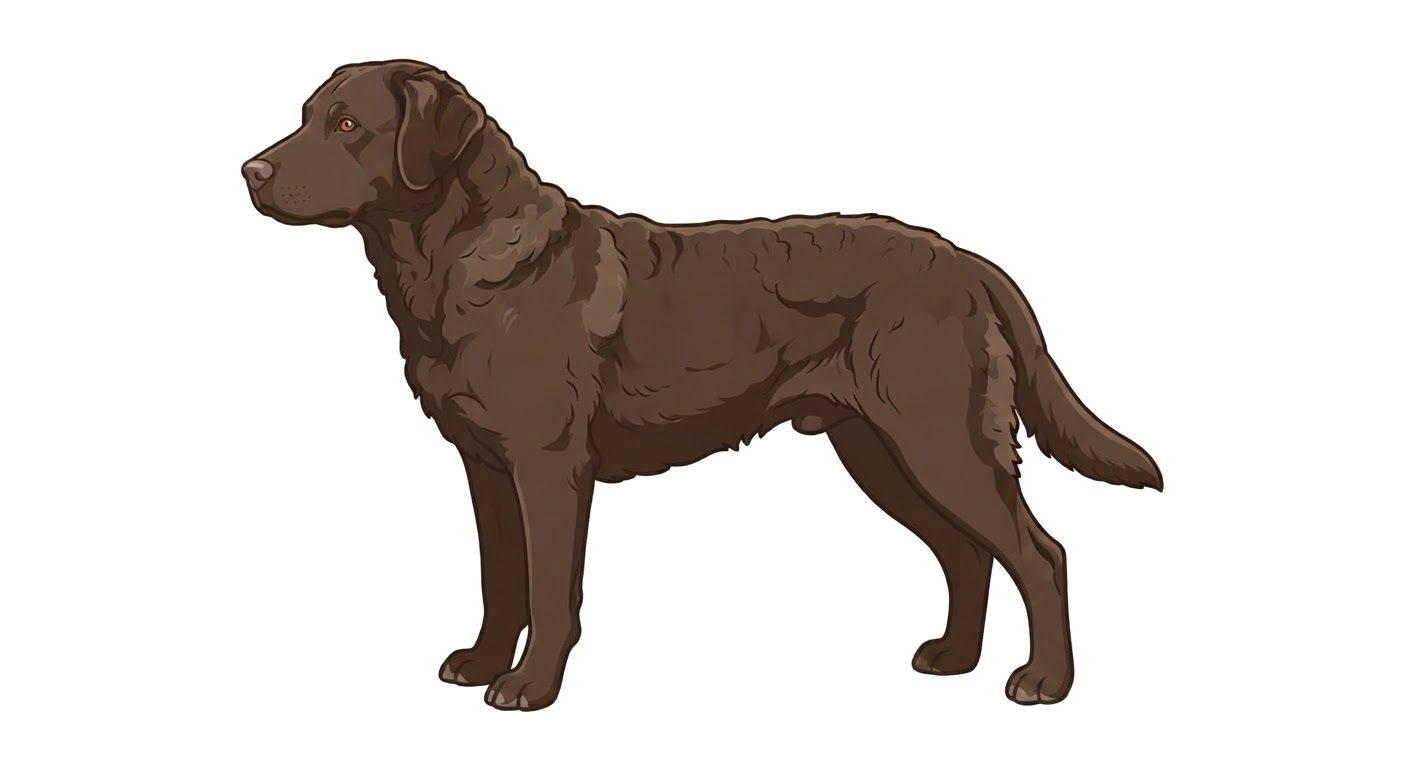
Dark brown
Standard colour
The most classic and common shade.
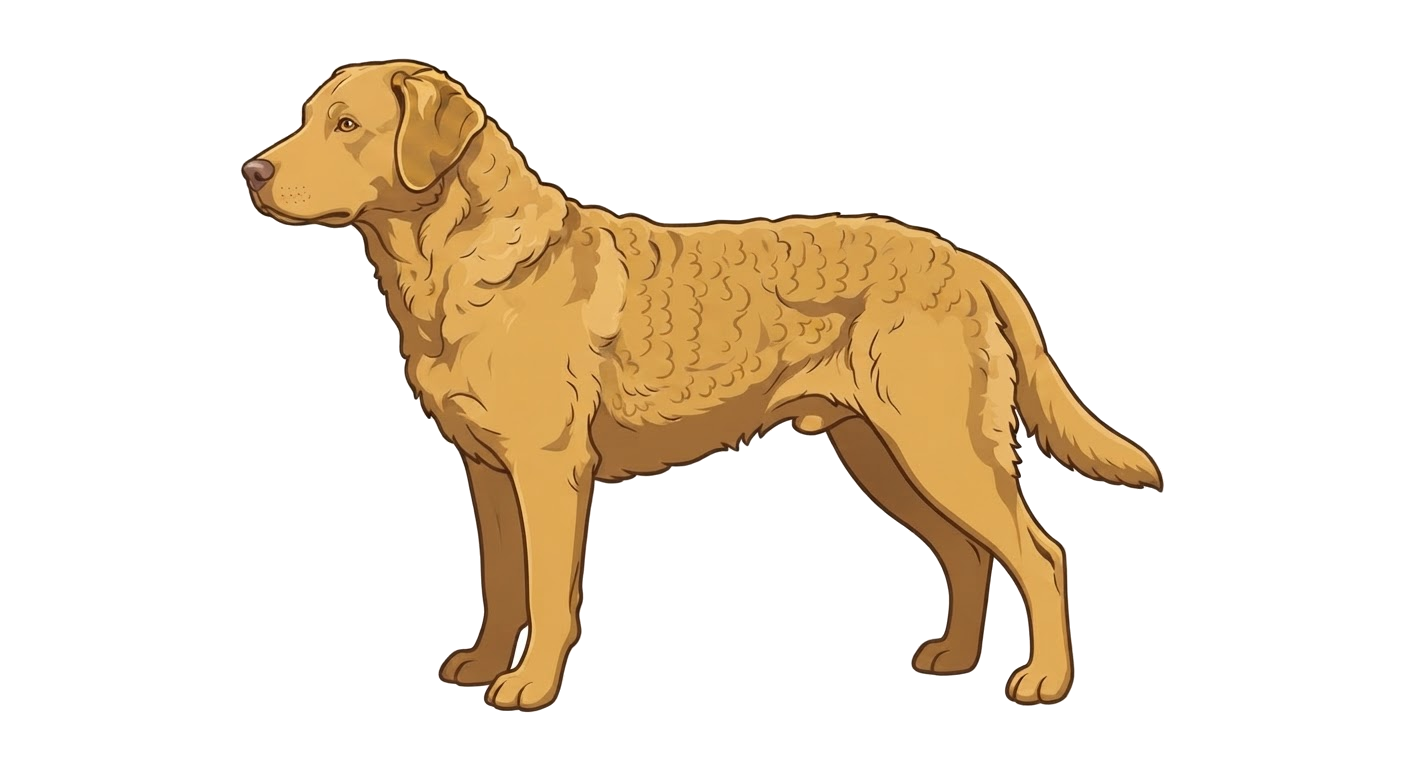
Sedge
Standard colour
A reddish-brown shade, likened to dried marsh grass.
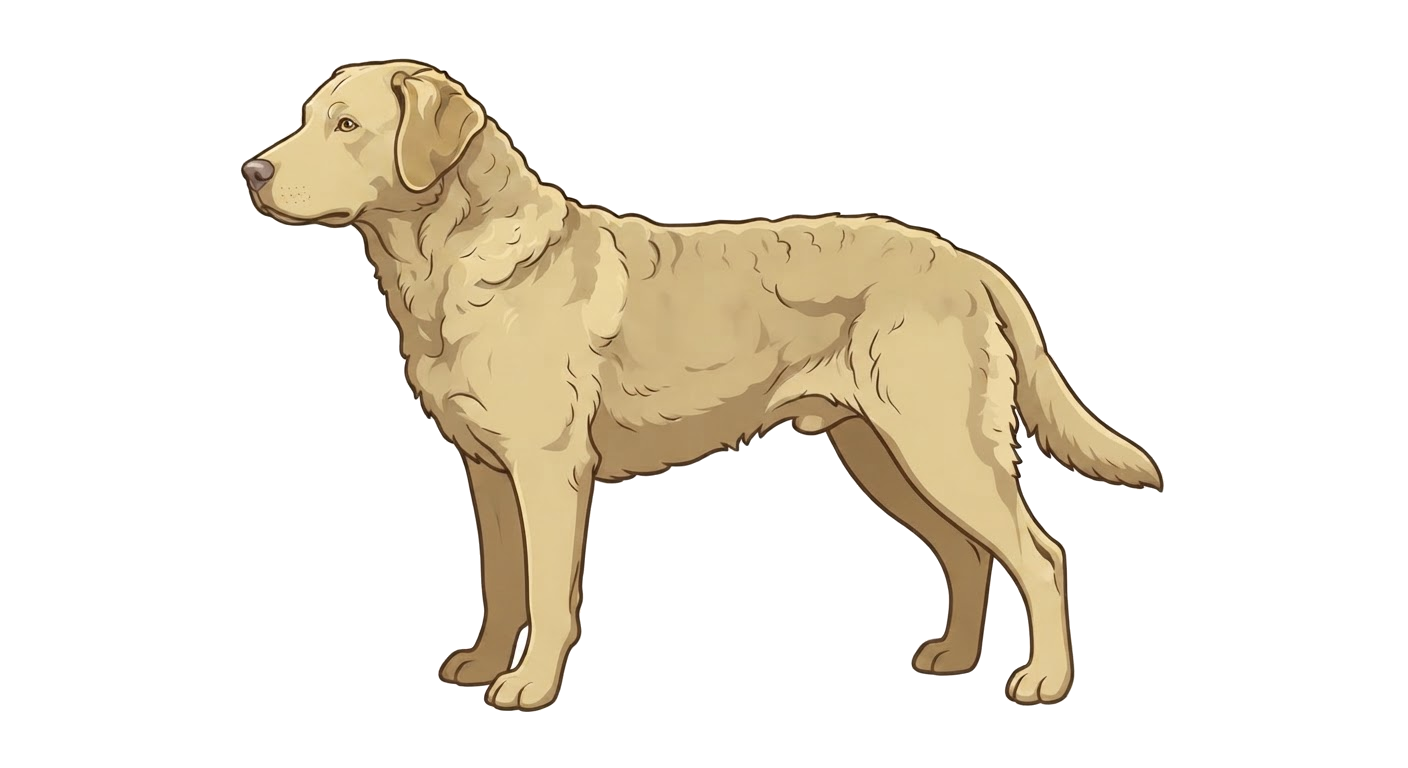
Deadgrass
Standard colour
A pale tan colour, prized for camouflage in marshland.
Timeline
History & development
1807
Shipwreck origin
Two Newfoundland-type puppies survived a wreck off Maryland and became foundation dogs.
1800s
Waterman's retriever
Local breeding produced a tough retriever suited to icy Chesapeake Bay waters.
1878
AKC recognition
The breed was recognised by the American Kennel Club.
1964
State dog of Maryland
The Chesapeake Bay Retriever was named the official state dog of Maryland.
Reference
Breed standard summary
- body
- Strong, medium-length back, deep chest.
- coat
- Short, thick, wavy, water-resistant with oily undercoat.
- ears
- Small, set high, hanging loosely.
- eyes
- Yellow or amber, wide-set.
- gait
- Free, powerful, effortless.
- head
- Broad skull, medium-length muzzle.
- size
- Large
- tail
- Medium length, straight or slightly curved.
- colour
- Dark brown, Sedge, Deadgrass. Colours outside this list are seen but are not accepted by the kennel clubs.
- temperament
- Typical of the breed: strongest in energy, independence, trainability. Nervousness or aggression are serious faults in the show ring and in the home.
- general appearance
- Powerful, well-balanced retriever with a bright, keen expression.
Health
What to screen for
Green means little to worry about, amber means ask the breeder for test results, red means manage it actively.
Hip dysplasia
Screen for it
Ask for BVA/OFA hip scores on both parents.
Elbow dysplasia
Screen for it
Request elbow grading alongside hip scores.
Progressive retinal atrophy
Screen for it
Ask for PRA DNA clearance from the breeder.
Exercise-induced collapse
Watch closely
DNA testing is available; ask if the sire and dam are clear.
General information only — always speak to your vet about your own dog.
From real owners
Dogs like this
Chesapeake Bay Retrievers added by PawPoint members through their pet passports. Share yours to appear here.
Loading the wall…
Made for the Chesapeake Bay Retriever
The book, plus prints, hoodies and mugs using our own Chesapeake Bay Retriever illustration — and one everyday accessory that suits any dog.

The book
Pawpoint: The Complete Dog Breed Book
Every officially recognised breed plus the unofficial ones nobody else documents. 400+ pages, hardback, printed and shipped from the UK.
Own stock — shipped by us
Framed poster
Chesapeake Bay Retriever Framed Poster
Museum-weight print of our Chesapeake Bay Retriever illustration, framed or unframed.
Printed to order
Hoodie
Chesapeake Bay Retriever Hoodie
Heavyweight hoodie carrying the Chesapeake Bay Retriever illustration on the chest.
Printed to order
Mug
Chesapeake Bay Retriever Mug
Ceramic mug with the Chesapeake Bay Retriever illustration wrapped around it.
Printed to order
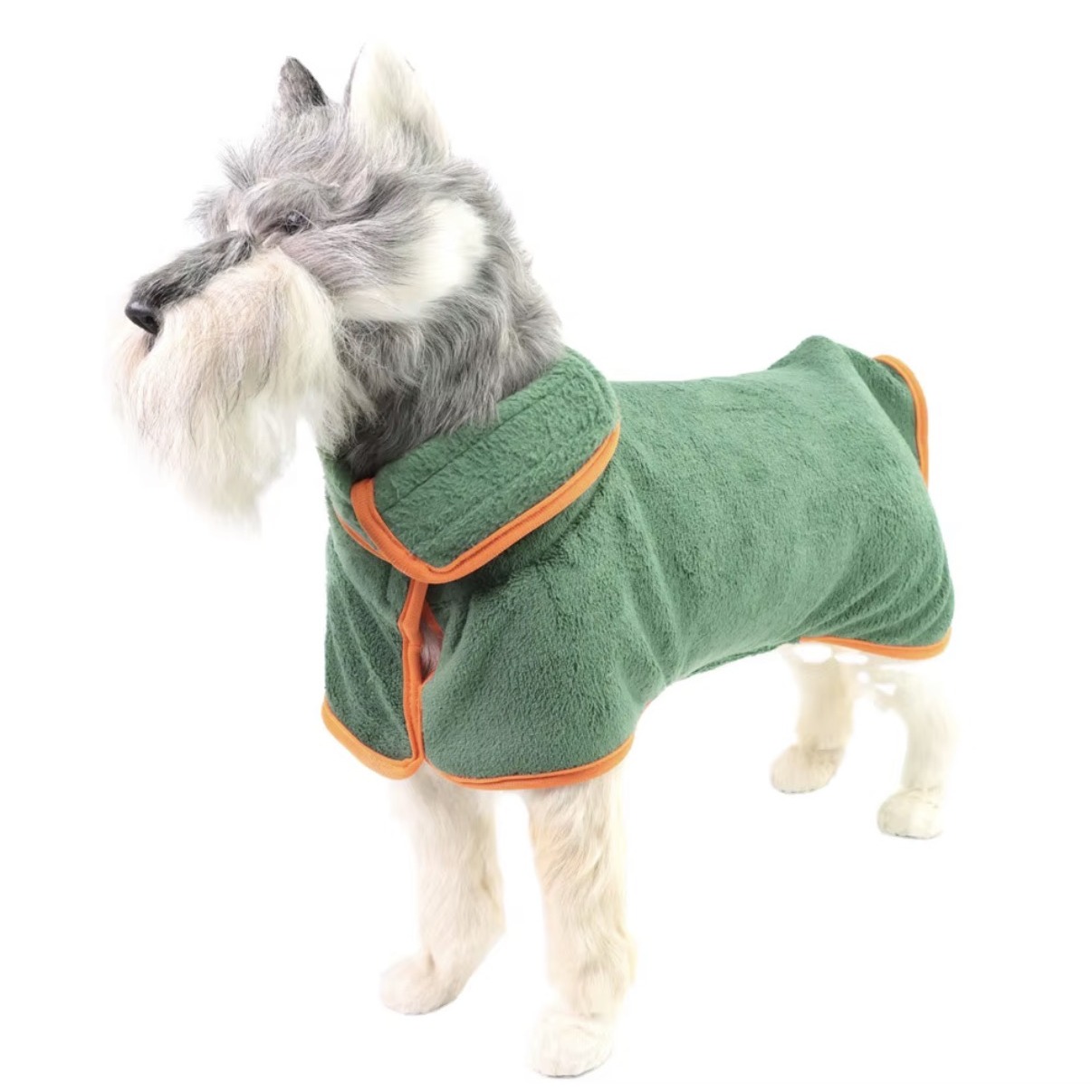
Accessory
Drying Towel Robe
Microfibre robe that soaks up a wet-walk shake.
Fits any dog

Pawpoint on YouTube
Watch the full Chesapeake Bay Retriever video
Breed deep-dives, history and honest ownership talk. New film every week.
Watch now