
Chihuahua (Long Coat)
chi-WAH-wah
Mexico· Chihuahua state
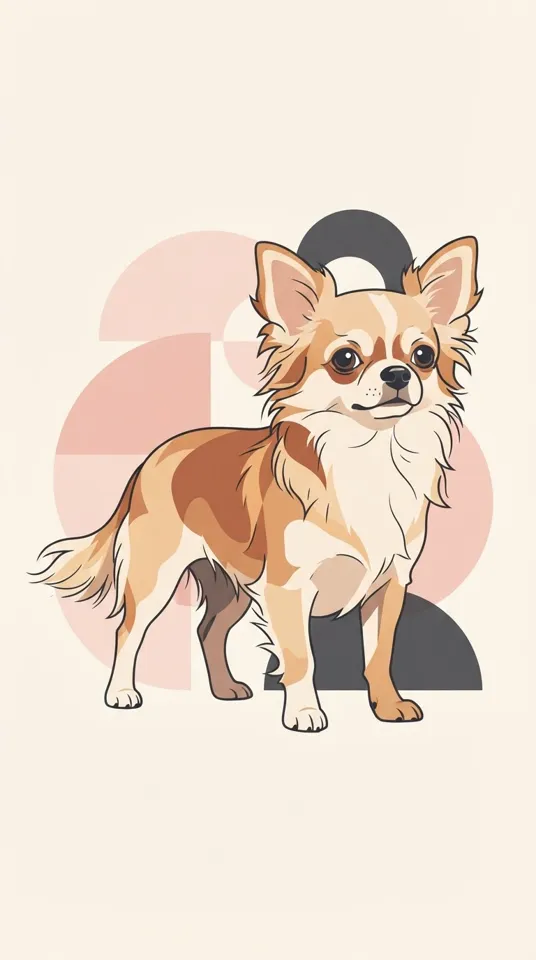
The Chihuahua Long Coat is a fine-boned toy breed from Mexico, distinguished from its Smooth Coat counterpart by a soft, flowing coat with feathering on the ears, legs and tail.
At a glance
Quick facts
- Size
- Toy
- Exercise needs
- 20-30 minutes daily
- Home size suited to
- Flat or any size home
- Grooming frequency
- Daily brushing
- Coat length
- Long
- Sheds
- Yes
- Lifespan
- 14-17 years
- Town or country
- Either, happy in town
- Garden size needed
- None needed
Where it comes from
Origins of the Chihuahua (Long Coat)
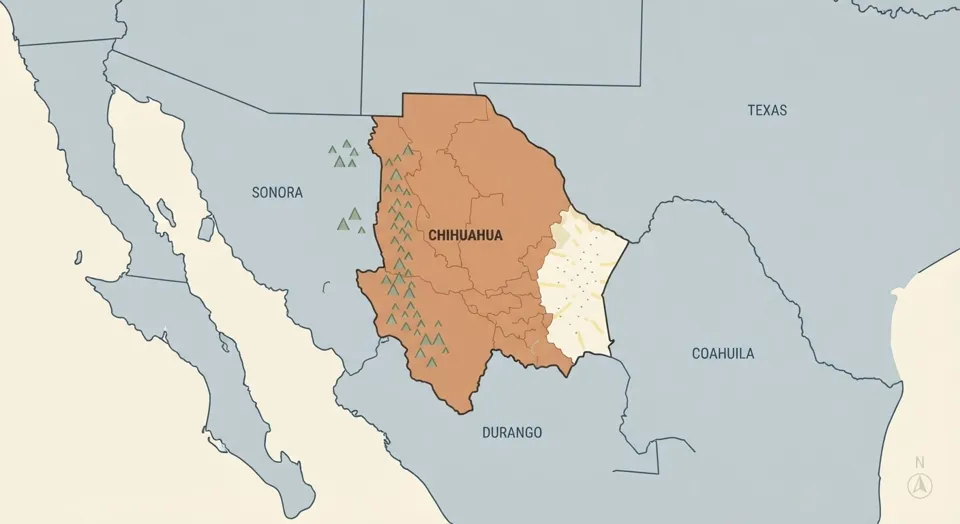
Named for the Mexican desert state where it was first documented, the Chihuahua's tiny size and short-haired ancestry likely helped it cope with the region's intense heat.
- Region
- Chihuahua state
- Climate it was bred for
- Hot, arid desert
- Original job
- Companion dog
The long read
About the breed
The breed takes its name from the Mexican state of Chihuahua, where small dogs matching its description were found in the mid-19th century, thought to descend from the Techichi, a companion dog kept by the Toltec and later Aztec civilisations. The long-coated variety is a natural, recessive coat variation rather than a separate later development, and both coat types can appear in the same litter. American traders exported the breed north from the 1850s onward, and it was recognised by the American Kennel Club in 1904.
Living with a Long Coat Chihuahua means living with the smallest dog breed recognised by major kennel clubs, which brings both convenience and fragility. It travels easily and needs relatively little space, but its tiny bones fracture easily around rough handling or falls, making it a poor match for very young children. It is fiercely loyal, often to one person in particular, and can be wary of strangers and other dogs, expressing this vocally. Its longer coat needs brushing a few times a week to prevent tangles but sheds less noticeably than the smooth coat.
Chihuahuas are prone to shivering in cold weather owing to their size and short coat length relative to their body, and many owners use coats for winter walks. They also tend to be feisty and unaware of their own size, which owners need to manage around larger dogs.
Today the Long Coat Chihuahua is kept almost exclusively as a companion, popular in cities and apartments for its size, portability and strong personal attachment to its owner.
Living with one
Temperament & needs
Our own ratings, based on the breed standard and how these dogs behave in ordinary homes.
Friendliness
2/5
How openly the Chihuahua (Long Coat) greets people it does not know.
Trainability
3/5
Intelligent but can be stubborn if not started young.
Energy
3/5
Lively in short bursts, doesn't need much space to exercise.
Barking
4/5
Quick to bark at noises and unfamiliar people.
Grooming
2/5
Long coat needs brushing a few times weekly.
Suits a first-time owner
3/5
How forgiving the Chihuahua (Long Coat) is for someone taking on their first dog.
Sociability
2/5
Devoted to one person, often wary of strangers and other dogs.
Independence
3/5
Has a strong, assertive personality for its size.
Illustrated breed standard
The points of the breed
Hover or tap a numbered point to read what the standard asks for.
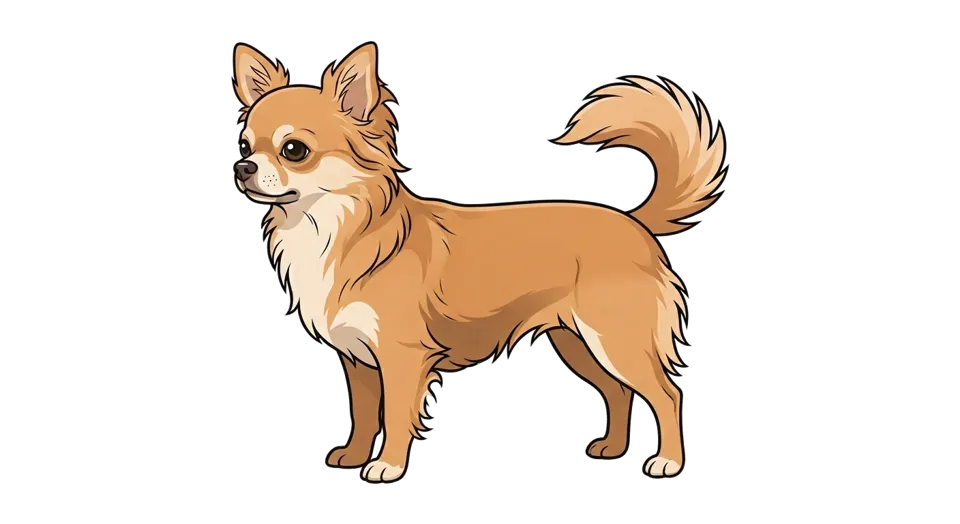
Point 1
Skull
The Chihuahua (Long Coat)'s skull is judged on balance rather than size — proportionate to the body, with a clean cheek and a stop typical of the breed. Coarseness or an over-refined head are both faulted.
Colours & patterns
Recognised coats
Which coats the standard accepts — and which are simply popular.
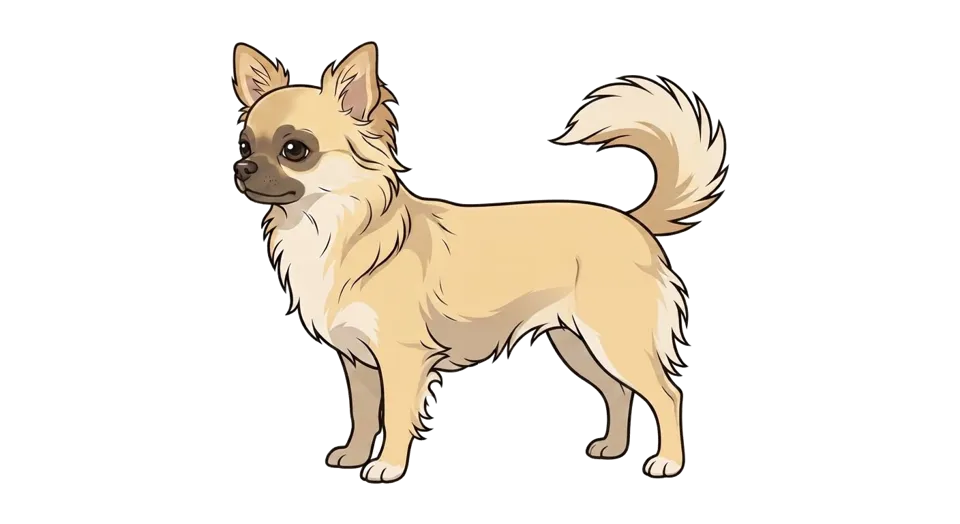
Fawn
Standard colour
One of the most common solid colours.
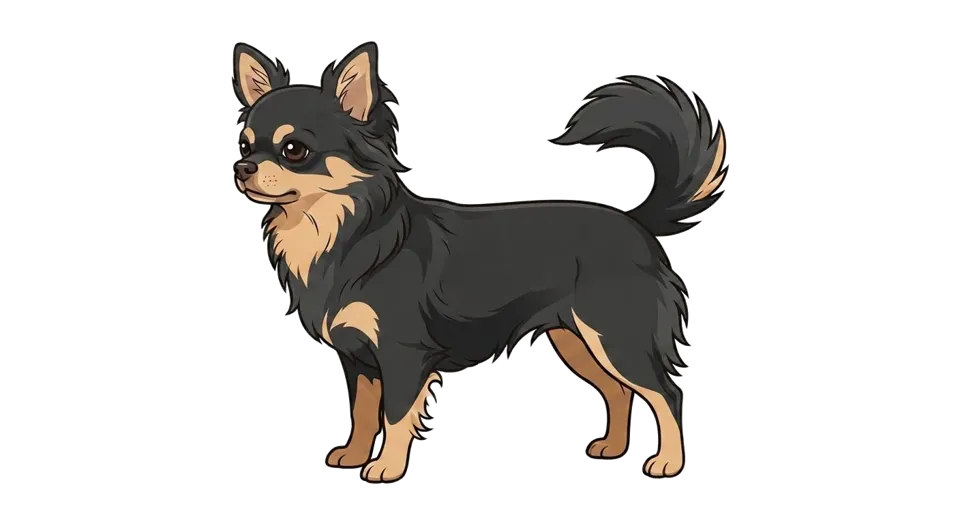
Black and tan
Standard colour
Black base with tan points.
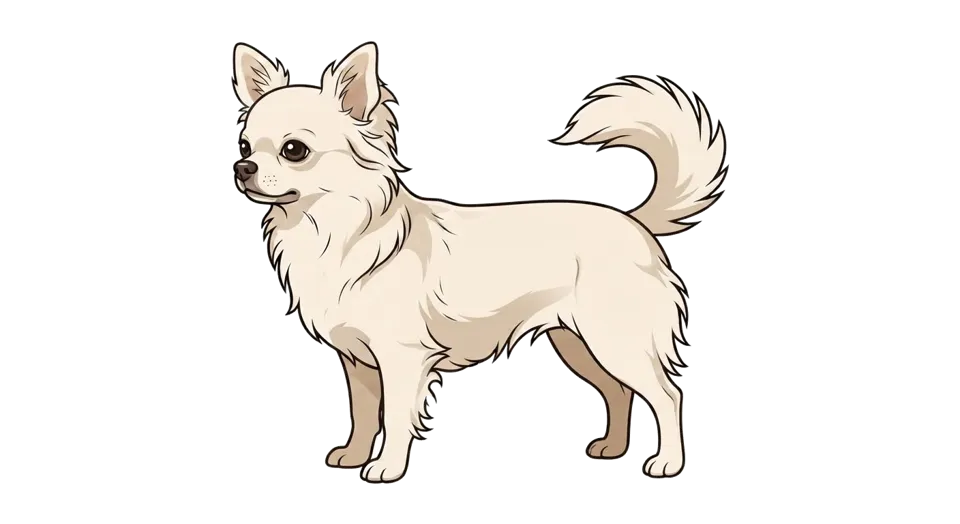
Cream
Standard colour
A pale, solid cream coat.
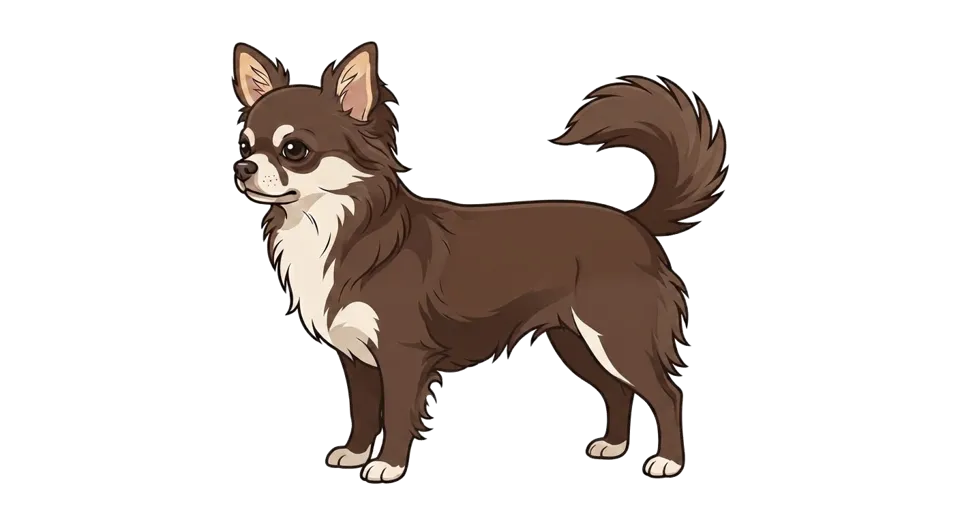
Chocolate
Standard colour
A rich brown, less common than fawn.
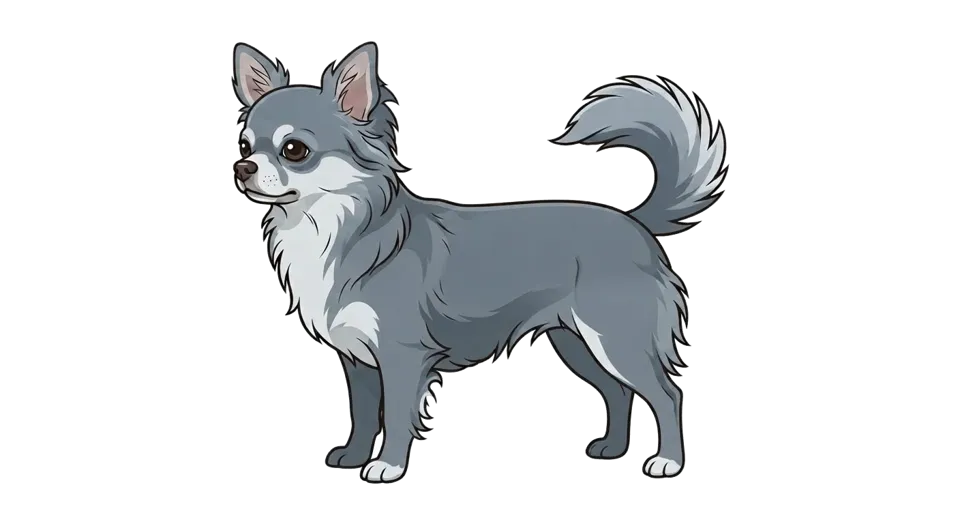
Blue
Standard colour
A dilute grey-blue shade, considered a rarer colour.
Timeline
History & development
9th century
Techichi ancestor
A small companion dog kept by Toltec and later Aztec peoples is considered the likely ancestor.
1850s
Discovered in Chihuahua
American travellers found small dogs of this type in the Mexican state of Chihuahua.
1904
AKC recognition
The Chihuahua was recognised by the American Kennel Club.
1952
Coat varieties separated for showing
Long and smooth coats began to be shown as separate varieties in some registries.
Reference
Breed standard summary
- body
- Slightly longer than tall, level back.
- coat
- Long, soft, flat or slightly wavy with feathering.
- ears
- Large, flaring, held erect when alert.
- eyes
- Large, round, dark or ruby.
- gait
- Swift, brisk, with a firm stride.
- head
- Apple-domed skull, short pointed muzzle.
- size
- Toy
- tail
- Long, carried up and over the back, plumed.
- colour
- Fawn, Black and tan, Cream, Chocolate, Blue. Colours outside this list are seen but are not accepted by the kennel clubs.
- temperament
- Typical of the breed: strongest in barking, energy, trainability. Nervousness or aggression are serious faults in the show ring and in the home.
- general appearance
- Tiny, alert, saucy toy dog with a graceful long coat.
Health
What to screen for
Green means little to worry about, amber means ask the breeder for test results, red means manage it actively.
Patellar luxation
Screen for it
Ask for a patella score on both parents.
Molera (open fontanelle)
Screen for it
A soft skull spot common in the breed; ask the vet to check at check-ups.
Dental disease
Low concern
Small jaws crowd teeth; regular dental care is important.
Mitral valve disease
Watch closely
Ask about heart screening in older breeding dogs.
General information only — always speak to your vet about your own dog.
From real owners
Chihuahua (Long Coat)s in the PAWPOINT Pack
Chihuahua (Long Coat)s added by PawPoint members through their pet passports. Share yours to appear here.
Loading the wall…
Made for the Chihuahua (Long Coat)
The book, plus hoodies, tees and mugs featuring the Chihuahua (Long Coat).