
Chinese Crested
chy-NEEZ KREST-id
China· Uncertain, popularised via Chinese trading ports
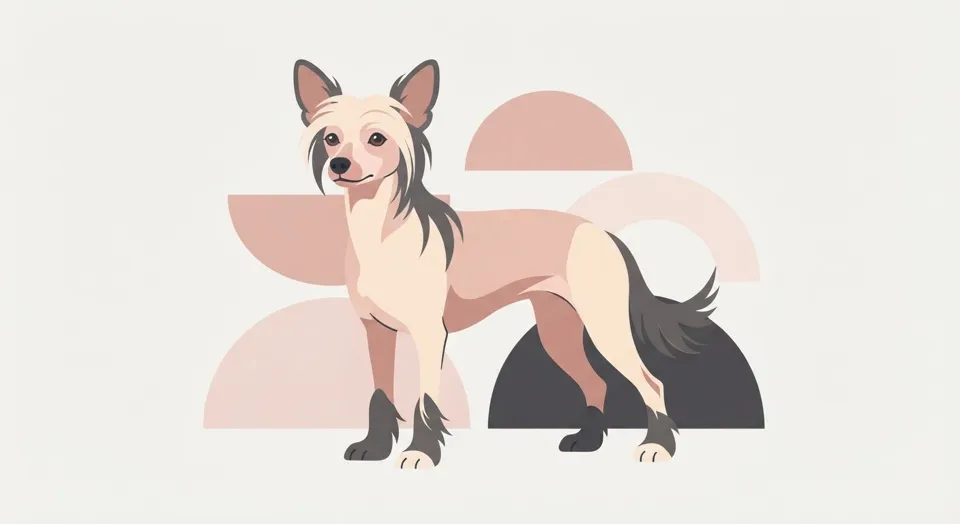
The Chinese Crested is a small companion breed best known for its Hairless variety, with soft tufts of hair on the head, tail and feet, though a fully coated Powderpuff variety occurs in the same litters.
At a glance
Quick facts
- Size
- Toy
- Exercise needs
- 30 minutes daily
- Home size suited to
- Flat or any size home
- Grooming frequency
- Skin care weekly
- Coat length
- Hairless
- Sheds
- No
- Lifespan
- 13-15 years
- Town or country
- Either, happy in town
- Garden size needed
- None needed
Where it comes from
Origins of the Chinese Crested

Chinese trading ships are thought to have carried small hairless dogs as ratters and trade goods, giving the breed its name even though its exact geographic origin remains uncertain.
- Region
- Uncertain, popularised via Chinese trading ports
- Climate it was bred for
- Varied, refined mainly by American breeders indoors
- Original job
- Shipboard ratter and trade companion
The long read
About the breed
Despite the name, the breed's exact origins are unclear; hairless dogs of this general type are documented across Africa, Asia and Central America, and it is thought Chinese traders carried small hairless dogs on ships as ratters and as trade goods, popularising the "Chinese" association in the 19th century. The breed was developed largely in its modern form by American breeders, particularly Ida Garrett and Debra Woods, through the mid-20th century, and gained American Kennel Club recognition in 1991.
Living with a Hairless Chinese Crested means paying close attention to skin care: without a coat, the skin is exposed to sunburn, cold, and contact irritants, so sunscreen in summer and a coat or jumper in winter are standard kit rather than an indulgence. It is an affectionate, people-oriented breed that dislikes being left alone and tends to climb into laps and under blankets given the chance. Its skin can also develop blackheads, dryness or acne, requiring regular gentle cleaning and moisturising.
The Powderpuff variety, with a full soft double coat, needs the more conventional grooming of regular brushing to prevent matting, but shares the same affectionate, alert temperament, since both varieties can appear in a single litter and are considered the same breed.
Today the Chinese Crested is kept as a companion and show dog, appreciated by owners drawn to its unusual appearance and its warm, clingy personality, though it is not a breed suited to households wanting a low-maintenance, hands-off dog.
Living with one
Temperament & needs
Our own ratings, based on the breed standard and how these dogs behave in ordinary homes.
Friendliness
4/5
How openly the Chinese Crested greets people it does not know.
Trainability
4/5
Eager to please and generally easy to teach.
Energy
3/5
Playful and lively indoors, doesn't need intense exercise.
Barking
3/5
Can be vocal, especially when alerting to visitors.
Grooming
3/5
Hairless variety needs skin care; Powderpuff needs regular brushing.
Suits a first-time owner
4/5
How forgiving the Chinese Crested is for someone taking on their first dog.
Sociability
4/5
Affectionate and people-focused, good with other pets.
Independence
1/5
Dislikes being left alone for long periods.
Illustrated breed standard
The points of the breed
Hover or tap a numbered point to read what the standard asks for.
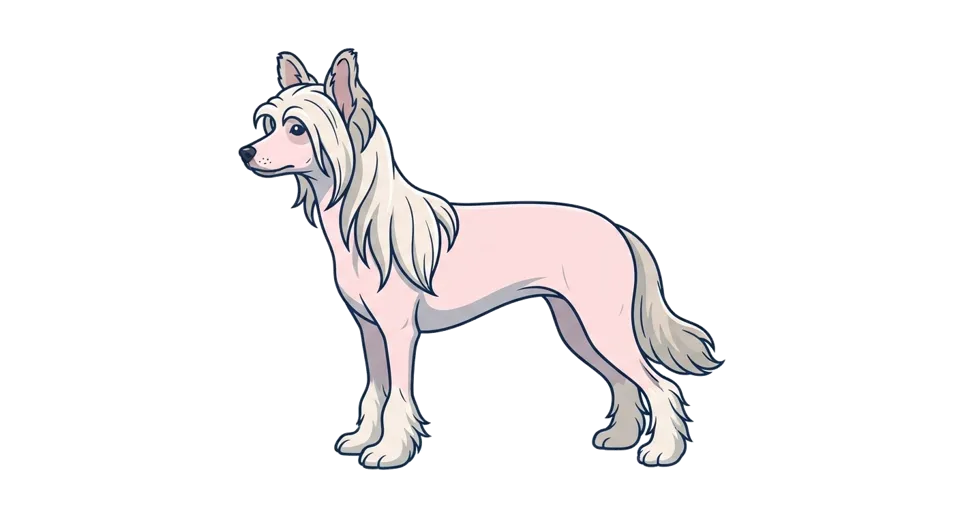
Point 1
Skull
The Chinese Crested's skull is judged on balance rather than size — proportionate to the body, with a clean cheek and a stop typical of the breed. Coarseness or an over-refined head are both faulted.
Colours & patterns
Recognised coats
Which coats the standard accepts — and which are simply popular.
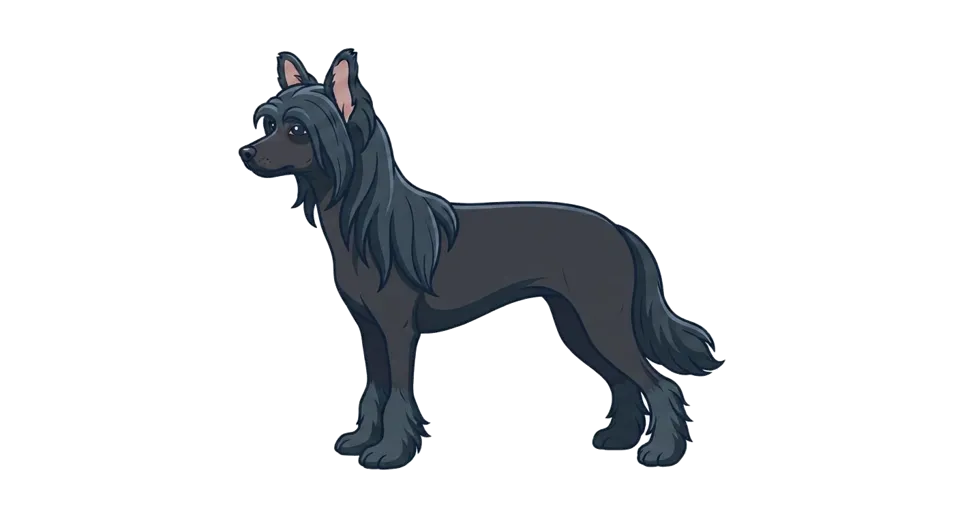
Black (skin, hairless variety)
Standard colour
Any skin colour is accepted in the hairless variety.
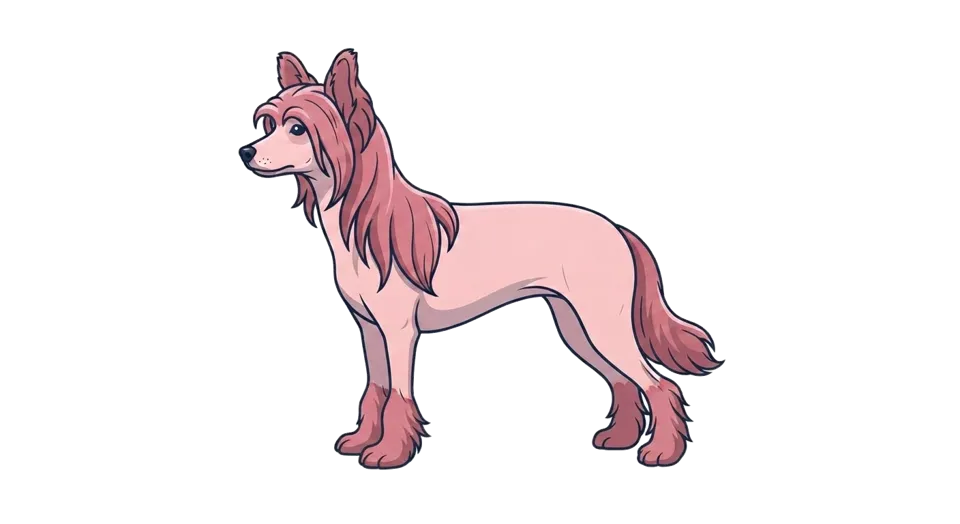
Pink and mottled
Standard colour
A common mottled pink-and-dark skin pattern.
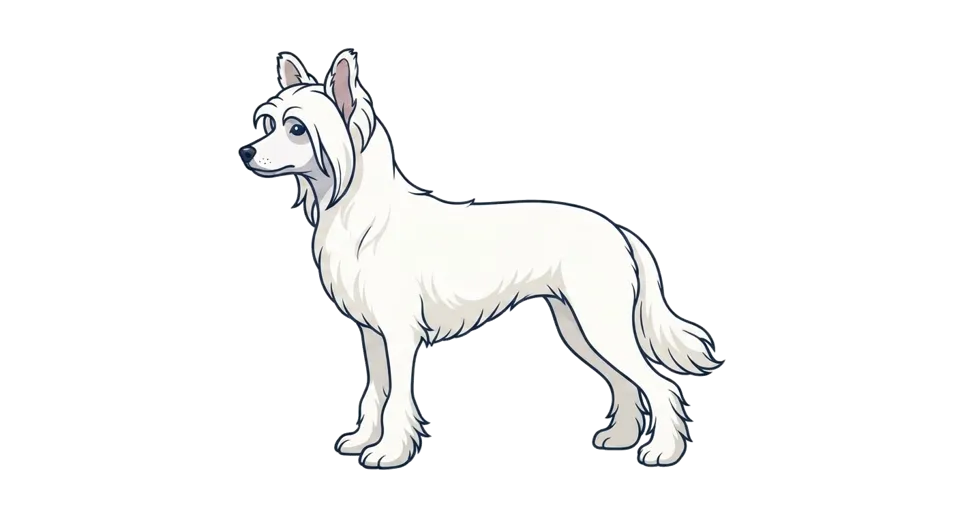
White (Powderpuff)
Standard colour
A full white coat on the Powderpuff variety.
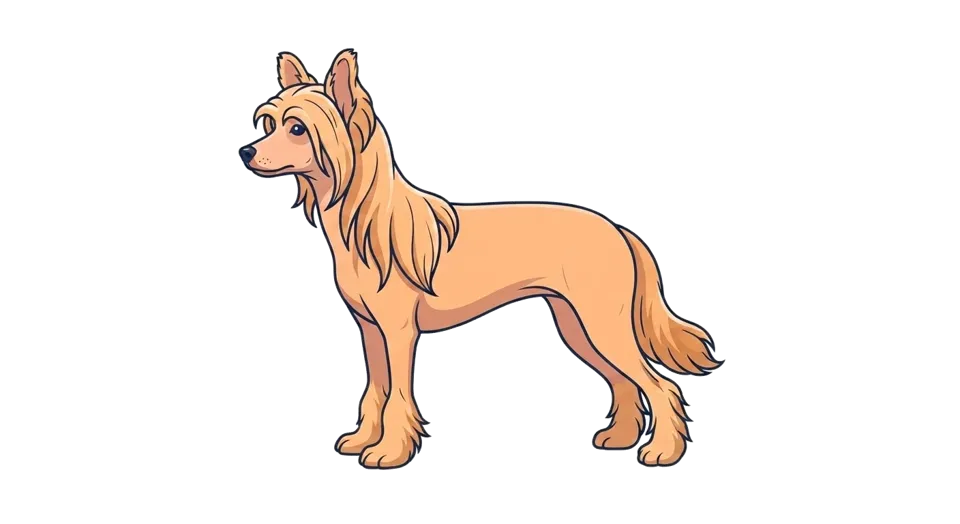
Apricot (Powderpuff)
Standard colour
A warm apricot coat colour on the coated variety.
Timeline
History & development
Ancient era
Hairless dogs in trade routes
Hairless dogs of similar type are recorded in African, Asian and American port trade for centuries.
1800s
Chinese trading ships
Small hairless dogs travelled aboard Chinese ships, giving rise to the breed's name.
1950s-1960s
American development
Breeders Ida Garrett and Debra Woods established much of the modern standard in the US.
1991
AKC recognition
The Chinese Crested was recognised by the American Kennel Club.
Reference
Breed standard summary
- body
- Lean, elegant, slightly longer than tall.
- coat
- Hairless with crest, socks and plume, or full soft coat.
- ears
- Large, erect, set low.
- eyes
- Almond-shaped, wide-set.
- gait
- Light, agile, swift.
- head
- Slightly rounded skull, long tapering muzzle.
- size
- Toy
- tail
- Long, tapering, carried gaily with a plume in the hairless variety.
- colour
- Black (skin, hairless variety), Pink and mottled, White (Powderpuff), Apricot (Powderpuff). Colours outside this list are seen but are not accepted by the kennel clubs.
- temperament
- Typical of the breed: strongest in trainability, sociability, energy. Nervousness or aggression are serious faults in the show ring and in the home.
- general appearance
- Fine-boned, elegant toy dog, hairless or fully coated.
Health
What to screen for
Green means little to worry about, amber means ask the breeder for test results, red means manage it actively.
Skin conditions
Screen for it
Ask breeders about the incidence of acne, dryness and sunburn sensitivity in the hairless variety.
Dental issues
Low concern
The hairless gene affects tooth development, so missing or malformed teeth are common.
Patellar luxation
Screen for it
Ask for a patella score on both parents.
Progressive retinal atrophy
Screen for it
Ask for PRA DNA clearance from the breeder.
General information only — always speak to your vet about your own dog.
From real owners
Chinese Cresteds in the PAWPOINT Pack
Chinese Cresteds added by PawPoint members through their pet passports. Share yours to appear here.
Loading the wall…
Made for the Chinese Crested
The book, plus hoodies, tees and mugs featuring the Chinese Crested.