Chow Chow
CHOW CHOW
China· Northern China
The Chow Chow is an ancient Chinese breed known for its lion-like ruff, blue-black tongue, and famously aloof, independent temperament.
At a glance
Quick facts
Size
Medium
Exercise needs
30-45 minutes daily
Home size suited to
Small to medium home
Grooming frequency
Weekly brush
Coat length
Short
Sheds
Yes, heavily when moulting
Lifespan
9-15 years
Town or country
Either, happy in town
Garden size needed
Small to medium
Where it comes from
Origins of the Chow Chow
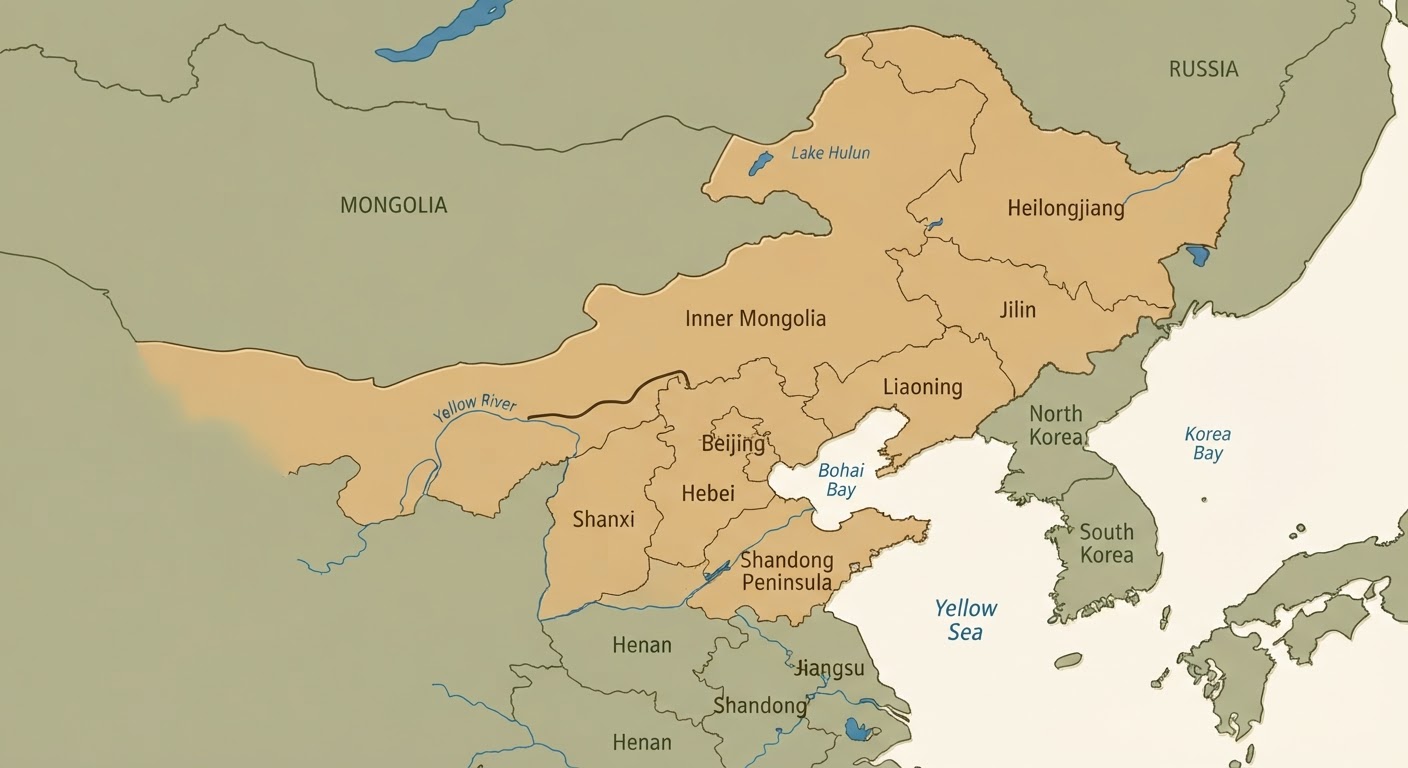
The Chow Chow developed in the cold, dry regions of northern China, where its dense double coat provided insulation for guarding and hauling work in harsh winters.
- Region
- Northern China
- Climate it was bred for
- Cold, dry northern continental climate
- Original job
- Guarding, hauling and hunting
The long read
About the breed
Its origins go back at least 2,000 years in northern China, where dogs of this type worked as guards, haulers and hunters, and were also, in leaner periods, bred for meat and fur, a fact rarely mentioned in modern breed histories but part of the honest record. The breed's Western name likely comes from "chow", a pidgin English term British traders used for miscellaneous cargo brought from China in the 19th century, under which category the dogs were shipped. Queen Victoria kept Chow Chows in the 1890s, which helped popularise the breed in Britain.
Living with a Chow Chow means accepting a dog that is dignified rather than demonstrative; it is not typically a breed that seeks constant affection or plays fetch enthusiastically, and it can be reserved to the point of standoffishness with people outside its household. Early, thorough socialisation is important, since an unsocialised Chow can become genuinely difficult around strangers and other dogs. Its dense double coat, whether smooth or rough, sheds heavily and needs several sessions of brushing a week to prevent matting, more during its twice-yearly heavy shed.
The breed's stiff-legged gait and deep-set eyes are distinctive but linked to some structural and eye issues, so buying from breeders who screen for these conditions matters more than usual with this breed.
Today the Chow Chow is kept mainly as a companion and show dog rather than a working animal, suited to owners who want an independent, low-key dog and are prepared to put in real effort on socialisation and coat care.
Living with one
Temperament & needs
Our own ratings, based on the breed standard and how these dogs behave in ordinary homes.
Friendliness
2/5
How openly the Chow Chow greets people it does not know.
Trainability
2/5
Independent-minded and slow to take direction.
Energy
2/5
Low to moderate energy, prefers a steady routine over vigorous play.
Barking
2/5
Generally quiet and undemonstrative.
Grooming
5/5
Dense double coat needs frequent brushing, heavy seasonal shedding.
Suits a first-time owner
2/5
How forgiving the Chow Chow is for someone taking on their first dog.
Sociability
2/5
Reserved and aloof, especially with strangers.
Independence
5/5
Highly self-reliant, does not seek constant attention.
Illustrated breed standard
The points of the breed
Hover or tap a numbered point to read what the standard asks for.
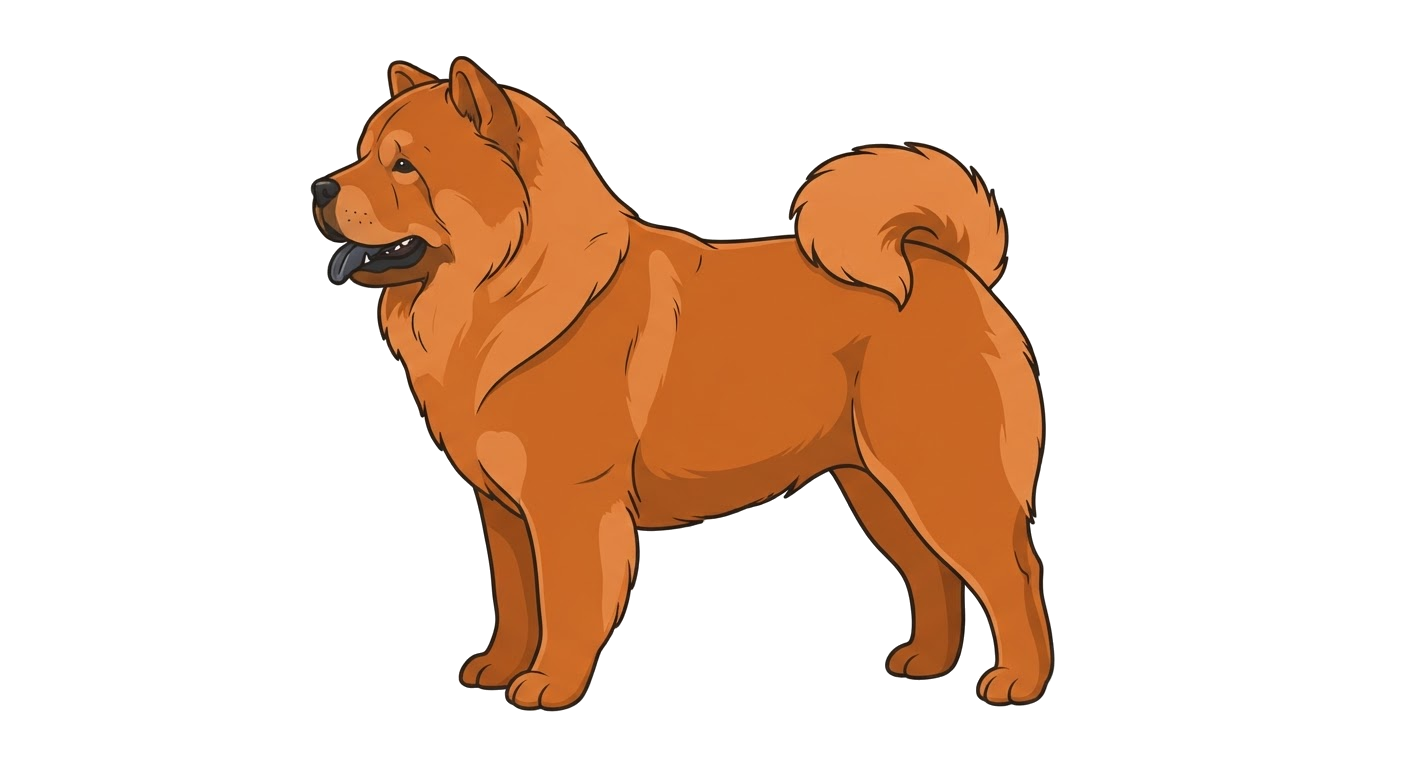
Point 1
Skull
The Chow Chow's skull is judged on balance rather than size — proportionate to the body, with a clean cheek and a stop typical of the breed. Coarseness or an over-refined head are both faulted.
Colours & patterns
Recognised coats
Which coats the standard accepts — and which are simply popular.
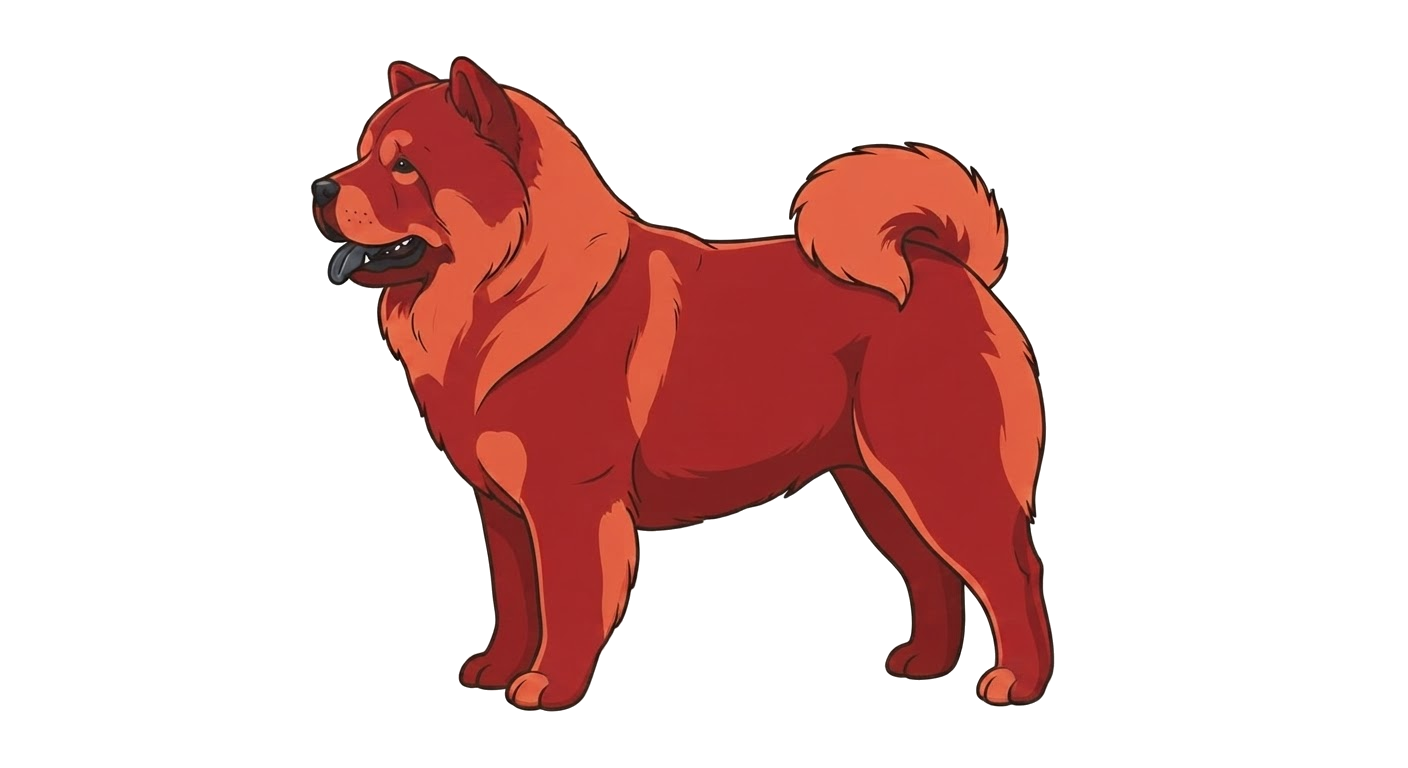
Red
Standard colour
The most common and traditional colour.
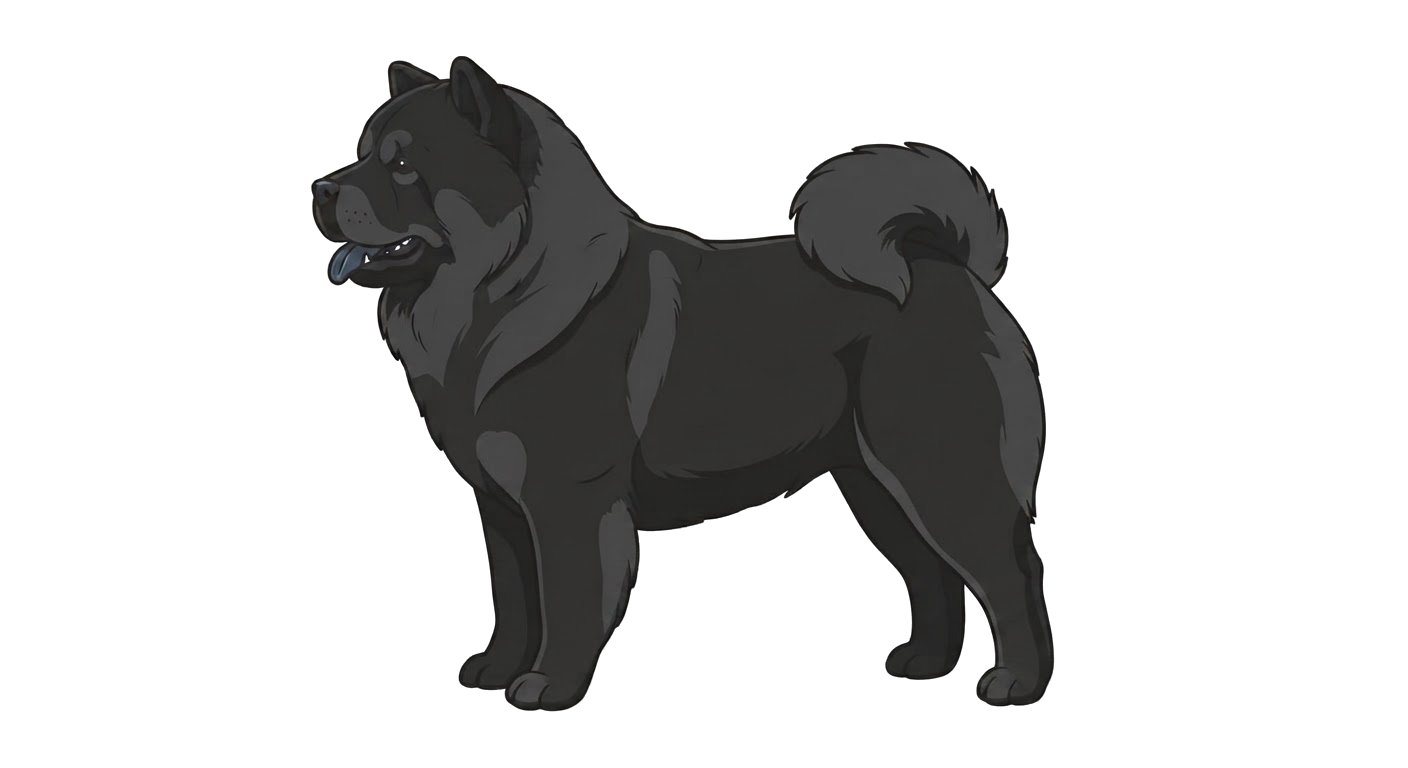
Black
Standard colour
A solid, dense black coat.
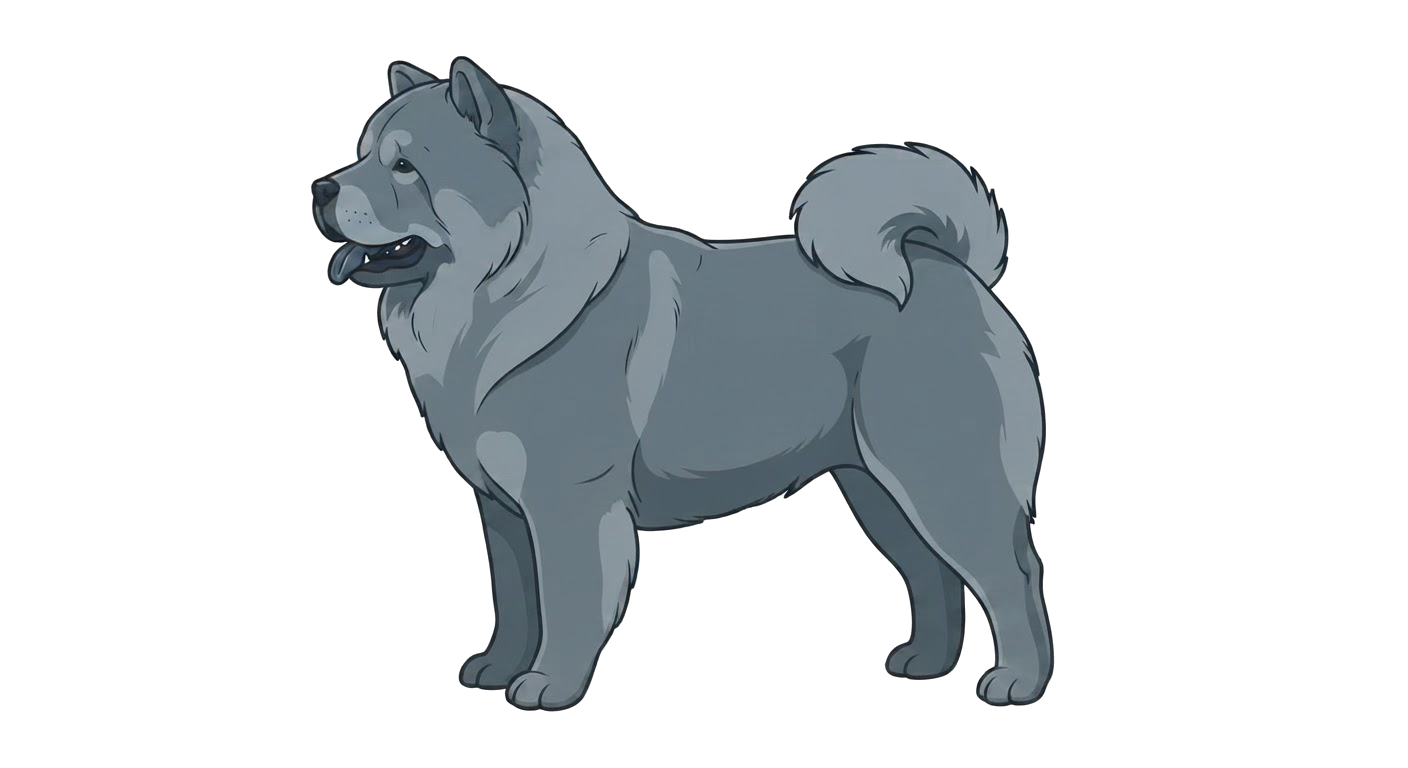
Blue
Standard colour
A dilute grey-blue shade.
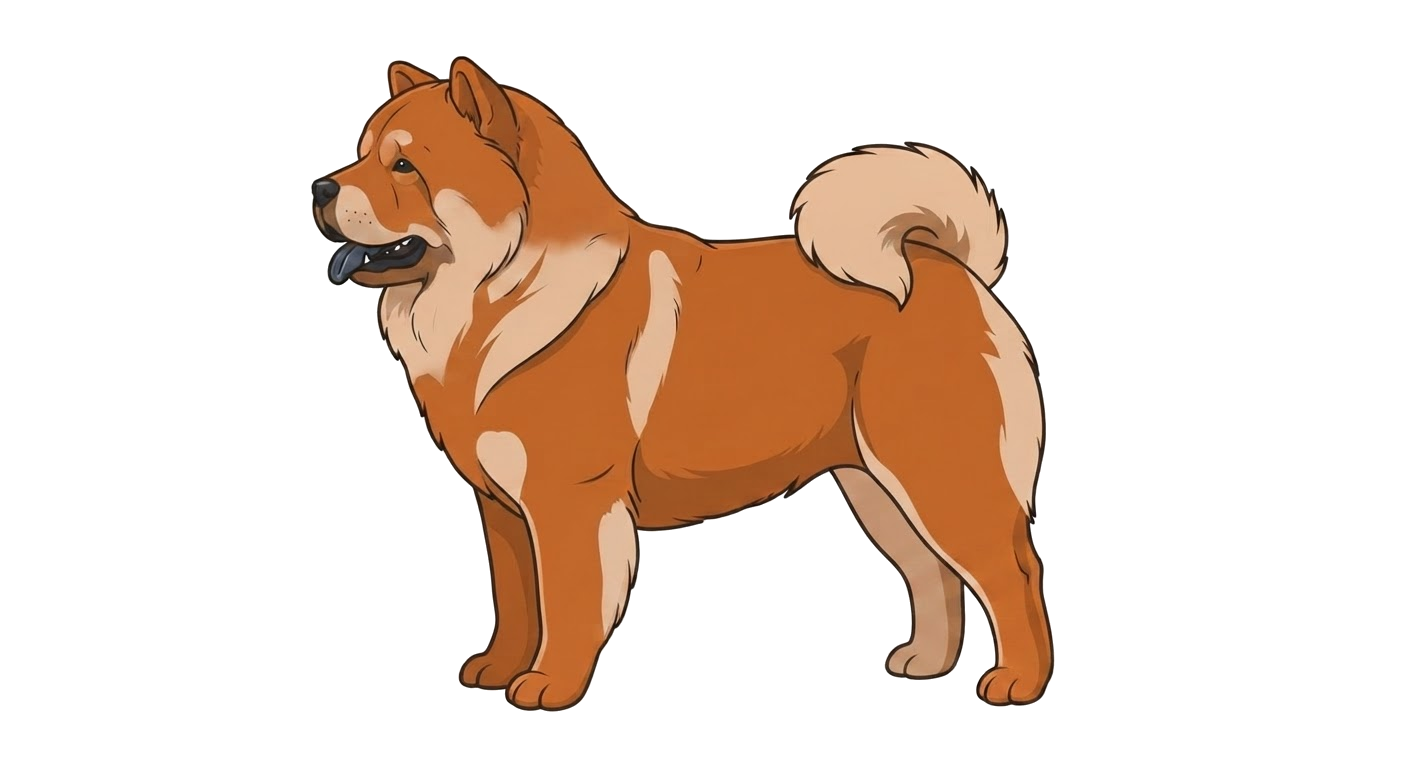
Cinnamon
Standard colour
A warm fawn-brown shade, also called fawn.
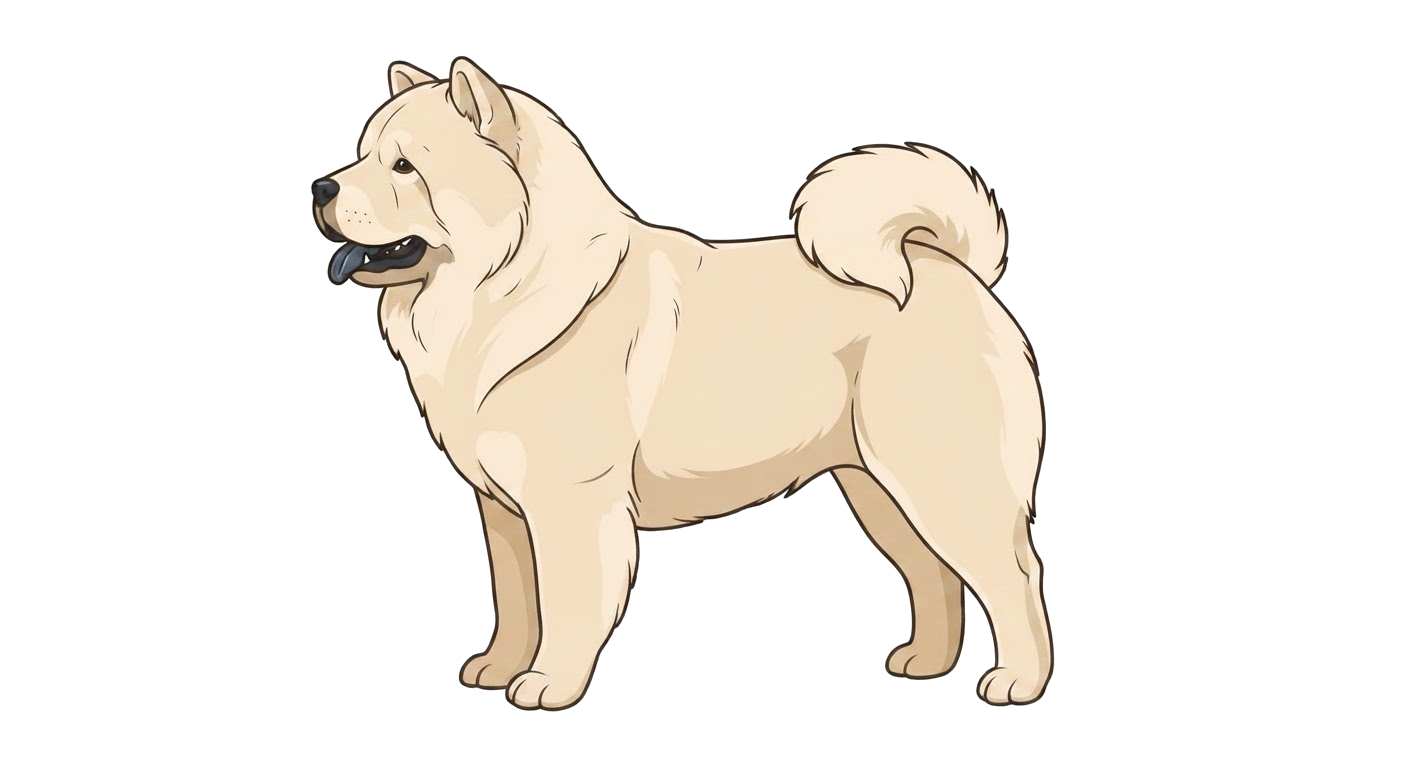
Cream
Standard colour
A pale, uncommon colour variant.
Timeline
History & development
c. 200 BC
Ancient Chinese origins
Dogs resembling the Chow Chow are documented in northern China from the Han dynasty period.
1800s
Named via trade
The breed's Western name likely derives from 'chow', a pidgin term for miscellaneous Chinese cargo.
1890s
Royal popularity
Queen Victoria's ownership of Chow Chows boosted the breed's profile in Britain.
1903
AKC recognition
The Chow Chow was recognised by the American Kennel Club.
1950s onward
The breed today
Kennel club registrations settled into a steady pattern and the Chow Chow moved from a working specialist to a family companion, with breed clubs in the UK and abroad now focused on health testing and keeping true type alive.
Reference
Breed standard summary
- body
- Short-coupled, broad, deep chest.
- coat
- Dense double coat, either smooth or rough, with a blue-black tongue.
- ears
- Small, thick, carried stiffly erect.
- eyes
- Small, deep-set, dark, giving a scowling expression.
- gait
- Short, stilted, distinctive straight-legged gait.
- head
- Broad, flat skull with a distinctive ruff.
- size
- Medium
- tail
- Set high, carried closely over the back.
- colour
- Red, Black, Blue, Cinnamon, Cream. Colours outside this list are seen but are not accepted by the kennel clubs.
- temperament
- Typical of the breed: strongest in independence, grooming, energy. Nervousness or aggression are serious faults in the show ring and in the home.
- general appearance
- Sturdy, square, lion-like dog with a dignified, aloof bearing.
Health
What to screen for
Green means little to worry about, amber means ask the breeder for test results, red means manage it actively.
Hip dysplasia
Screen for it
Ask for BVA/KC hip scores on both parents.
Entropion
Low concern
Ask the breeder whether eyelid conformation has been checked.
Elbow dysplasia
Screen for it
Request elbow grading on breeding stock.
Gastric torsion (bloat)
Watch closely
Feed smaller meals and avoid vigorous exercise straight after eating.
General information only — always speak to your vet about your own dog.
From real owners
Dogs like this
Chow Chows added by PawPoint members through their pet passports. Share yours to appear here.
Loading the wall…
Made for the Chow Chow
The book, plus prints, hoodies and mugs using our own Chow Chow illustration — and one everyday accessory that suits any dog.
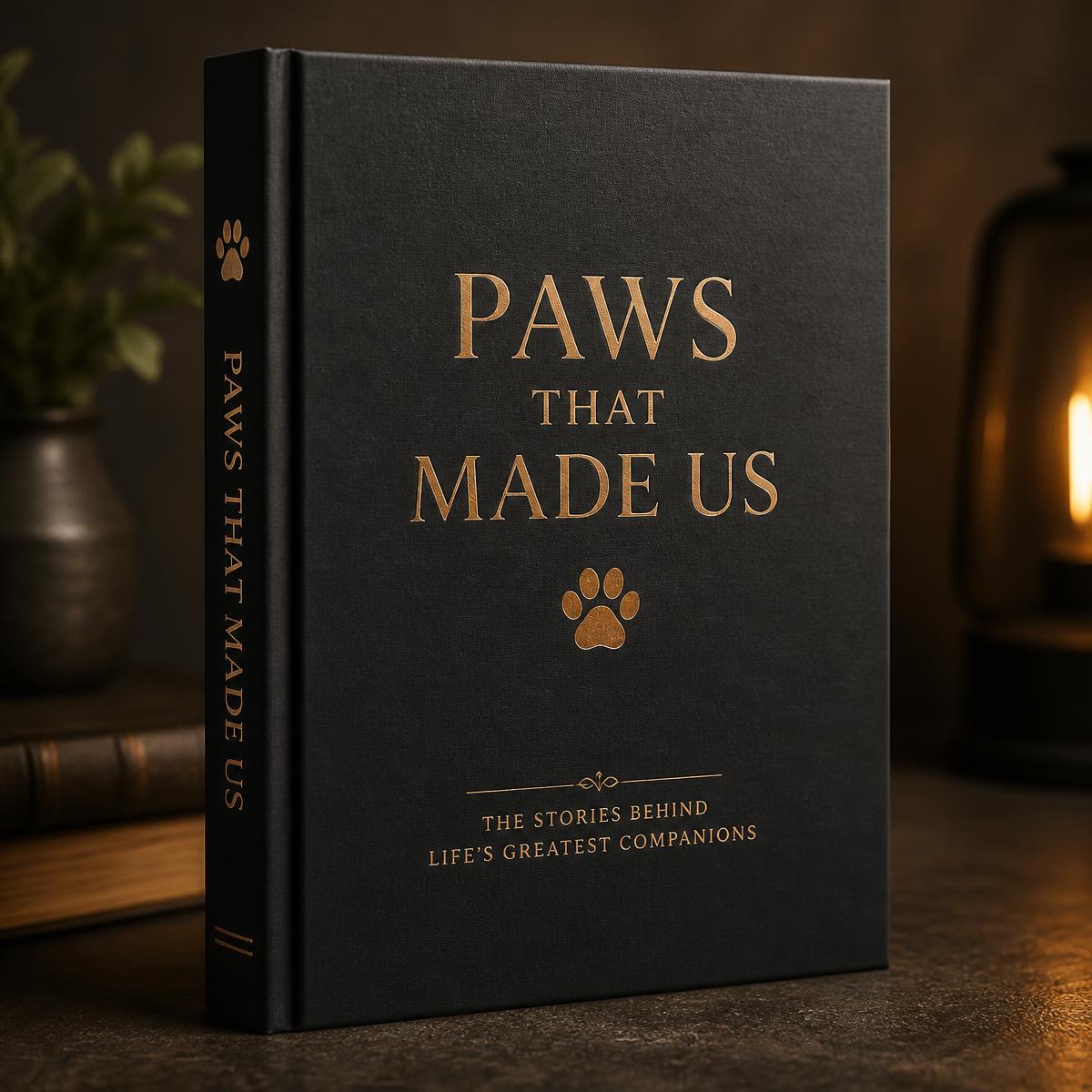
The book
Pawpoint: The Complete Dog Breed Book
Every officially recognised breed plus the unofficial ones nobody else documents. 400+ pages, hardback, printed and shipped from the UK.
Own stock — shipped by us
Framed poster
Chow Chow Framed Poster
Museum-weight print of our Chow Chow illustration, framed or unframed.
Printed to order
Hoodie
Chow Chow Hoodie
Heavyweight hoodie carrying the Chow Chow illustration on the chest.
Printed to order
Mug
Chow Chow Mug
Ceramic mug with the Chow Chow illustration wrapped around it.
Printed to order
Accessory
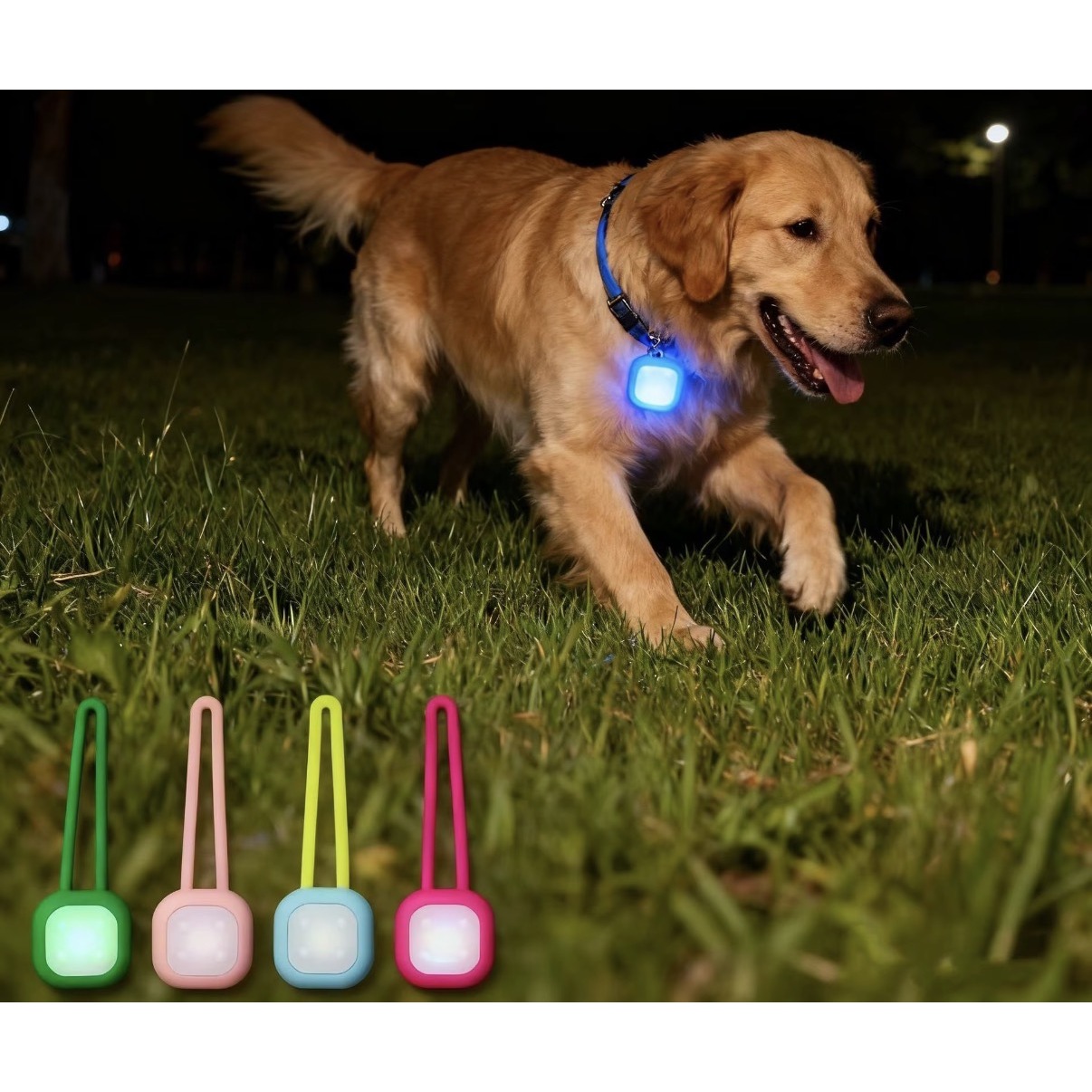
LED Reflective Lead Light
Rechargeable clip-on light for dark walks.
Fits any dog
Pawpoint on YouTube
Watch the full Chow Chow video
Breed deep-dives, history and honest ownership talk. New film every week.
Watch now