
Cirneco dell'Etna
cheer-NAY-koh dell-ET-na
Italy· Mount Etna, Sicily
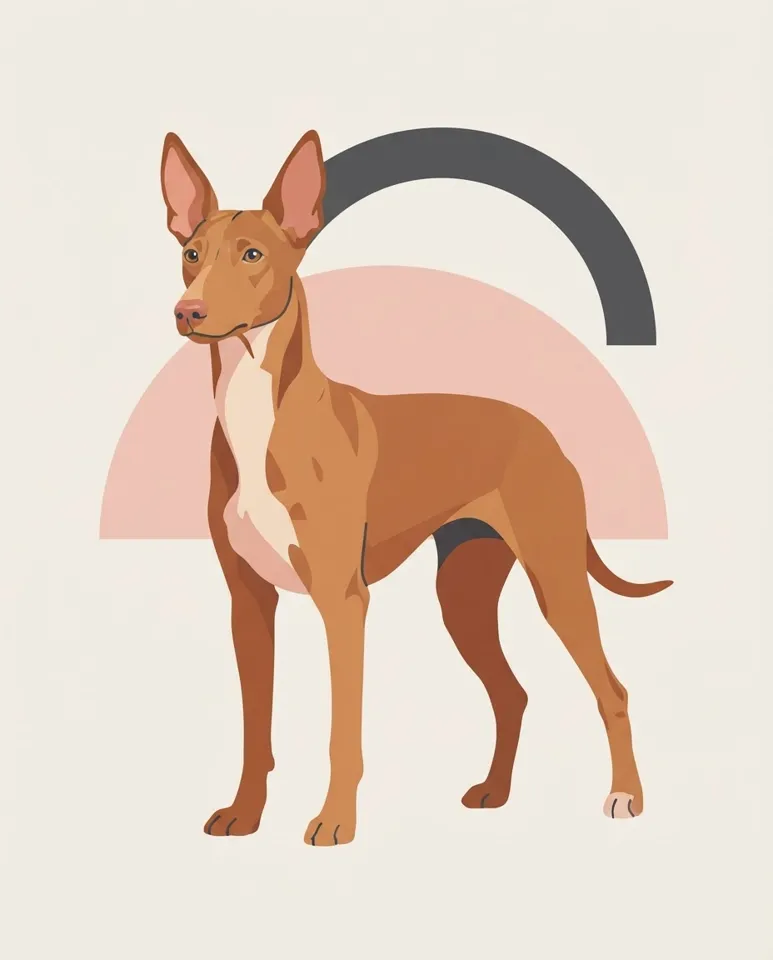
The Cirneco dell'Etna is a small, elegant Sicilian hound bred to hunt rabbits by sight and scent across the volcanic slopes of Mount Etna.
At a glance
Quick facts
- Size
- Medium
- Exercise needs
- 1-1.5 hours daily in secure areas
- Home size suited to
- Small to medium home
- Grooming frequency
- Weekly brush
- Coat length
- Short
- Sheds
- Yes, heavily when moulting
- Lifespan
- 12-14 years
- Town or country
- Happiest in the country
- Garden size needed
- Small to medium
Where it comes from
Origins of the Cirneco dell'Etna

Isolated on the volcanic slopes of Mount Etna in Sicily, this hound developed a lean, efficient build suited to hunting rabbits across rough, sun-baked terrain on minimal food.
- Region
- Mount Etna, Sicily
- Climate it was bred for
- Hot, dry volcanic terrain
- Original job
- Rabbit hunting on volcanic slopes
The long read
About the breed
The breed is believed to descend from ancient Egyptian-type hounds brought to Sicily by Phoenician traders, remaining largely unchanged for over two thousand years thanks to the island's geographic isolation, particularly around Mount Etna where it worked with minimal outside influence. Sicilian hunters valued it for coursing rabbits over the rough volcanic terrain, working independently and covering ground efficiently on relatively little food, a trait suited to Sicily's often lean rural economy. The breed nearly vanished in the early 20th century before Baroness Agata Paterno Castello led a rescue and documentation effort in the 1930s and 1940s.
Living with a Cirneco means living with a light-framed, athletic hound that retains a strong hunting instinct and a notable prey drive toward small animals. It is affectionate and gentle with its own family but can be reserved with strangers, and it needs secure fencing since its sighthound instincts mean it will chase and can clear surprisingly high barriers. Its short coat is easy to maintain, needing only occasional brushing, and it is not a heavy shedder.
The breed remains rare outside Sicily and Italy, and buyers looking for one outside its homeland may need to wait for a litter or travel to find a reputable breeder.
Today the Cirneco is still used for rabbit hunting in Sicily and has a small but growing following elsewhere as a companion and lure-coursing dog, valued for its stamina, low-maintenance coat and gentle temperament at home.
Living with one
Temperament & needs
Our own ratings, based on the breed standard and how these dogs behave in ordinary homes.
Friendliness
3/5
How openly the Cirneco dell'Etna greets people it does not know.
Trainability
3/5
Independent hunting instinct makes recall a challenge.
Energy
4/5
Athletic and needs plenty of secure space to run.
Barking
2/5
Generally quiet outside of hunting contexts.
Grooming
1/5
Short coat needs minimal maintenance.
Suits a first-time owner
2/5
How forgiving the Cirneco dell'Etna is for someone taking on their first dog.
Sociability
3/5
Affectionate at home, reserved with strangers.
Independence
4/5
Bred to hunt independently without close direction.
Illustrated breed standard
The points of the breed
Hover or tap a numbered point to read what the standard asks for.
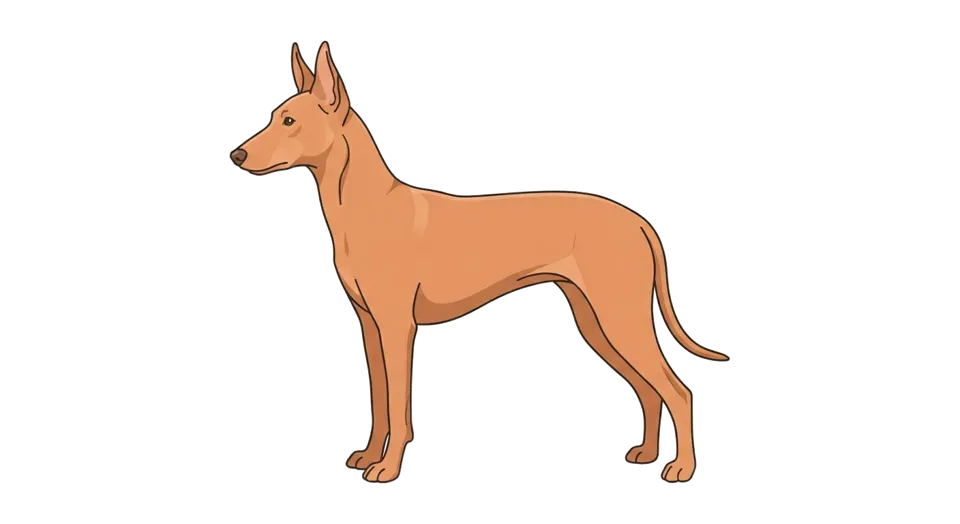
Point 1
Skull
The Cirneco dell'Etna's skull is judged on balance rather than size — proportionate to the body, with a clean cheek and a stop typical of the breed. Coarseness or an over-refined head are both faulted.
Colours & patterns
Recognised coats
Which coats the standard accepts — and which are simply popular.
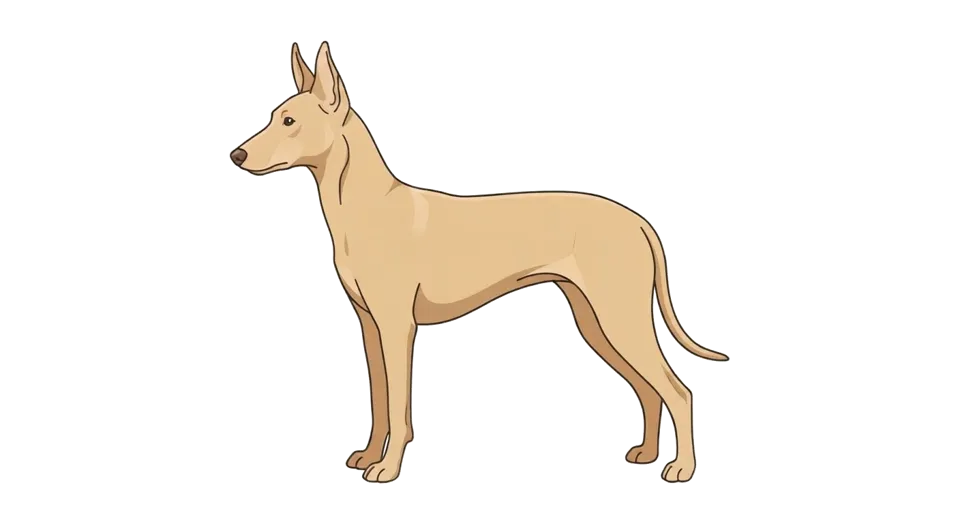
Tan (fawn)
Standard colour
The most common and traditional colour.
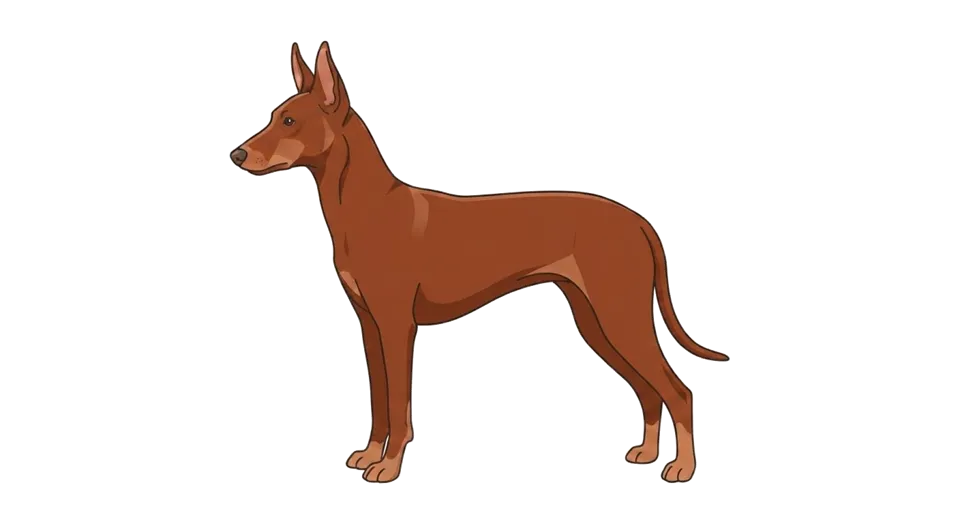
Chestnut
Standard colour
A deeper reddish-brown shade.
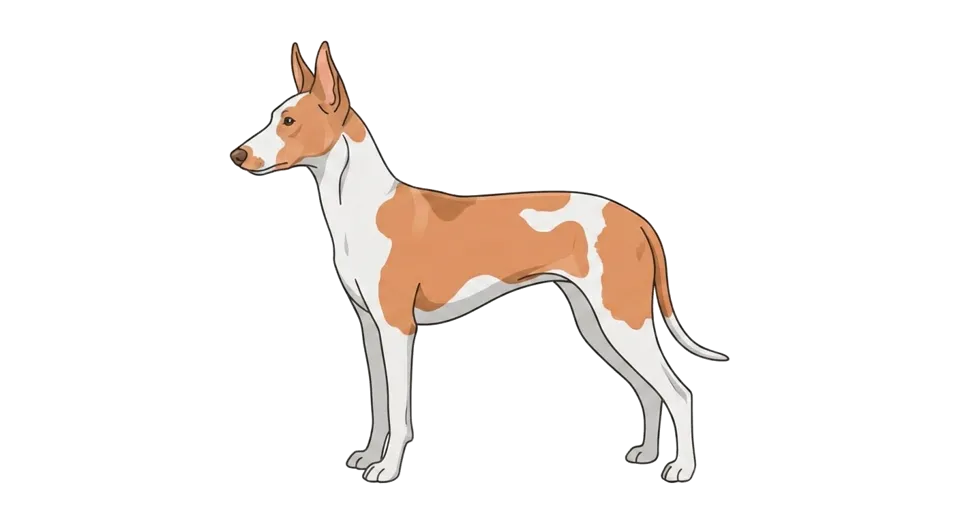
White and tan
Standard colour
White with tan patches, a recognised pattern.
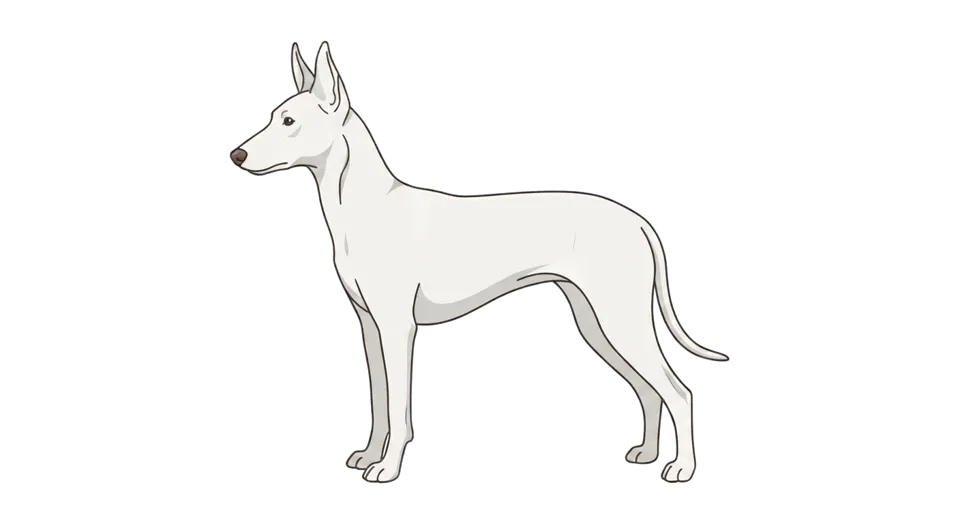
White
Standard colour
Solid white, accepted though less common.
Timeline
History & development
Antiquity
Phoenician introduction
Ancestors likely arrived in Sicily via Phoenician trade routes from Egypt.
For centuries
Isolated on Etna
The breed developed largely unchanged on the slopes of Mount Etna, isolated from outside dogs.
1930s-1940s
Rescue and documentation
Baroness Agata Paterno Castello led efforts to document and preserve the breed.
1956
Italian recognition
The breed standard was formally recognised in Italy.
Reference
Breed standard summary
- body
- Lean, slightly longer than tall, deep chest.
- coat
- Short, smooth, glossy, no undercoat.
- ears
- Large, erect, highly mobile.
- eyes
- Small, oval, amber to ochre.
- gait
- Light, springy, agile.
- head
- Long, narrow, slightly domed skull.
- size
- Medium
- tail
- Set low, carried curved when moving.
- colour
- Tan (fawn), Chestnut, White and tan, White. Colours outside this list are seen but are not accepted by the kennel clubs.
- temperament
- Typical of the breed: strongest in energy, independence, trainability. Nervousness or aggression are serious faults in the show ring and in the home.
- general appearance
- Light, elegant hound built for speed and endurance.
Health
What to screen for
Green means little to worry about, amber means ask the breeder for test results, red means manage it actively.
Hip dysplasia
Low concern
Uncommon in the breed but hip scoring is still worth asking about.
Progressive retinal atrophy
Screen for it
Ask for PRA DNA clearance from the breeder.
Cryptorchidism
Low concern
Ask whether the line has a history of undescended testicles in males.
General information only — always speak to your vet about your own dog.
From real owners
Cirneco dell'Etnas in the PAWPOINT Pack
Cirneco dell'Etnas added by PawPoint members through their pet passports. Share yours to appear here.
Loading the wall…
Made for the Cirneco dell'Etna
The book, plus hoodies, tees and mugs featuring the Cirneco dell'Etna.