
Clumber Spaniel
KLUM-ber
United Kingdom· Clumber Park, Nottinghamshire
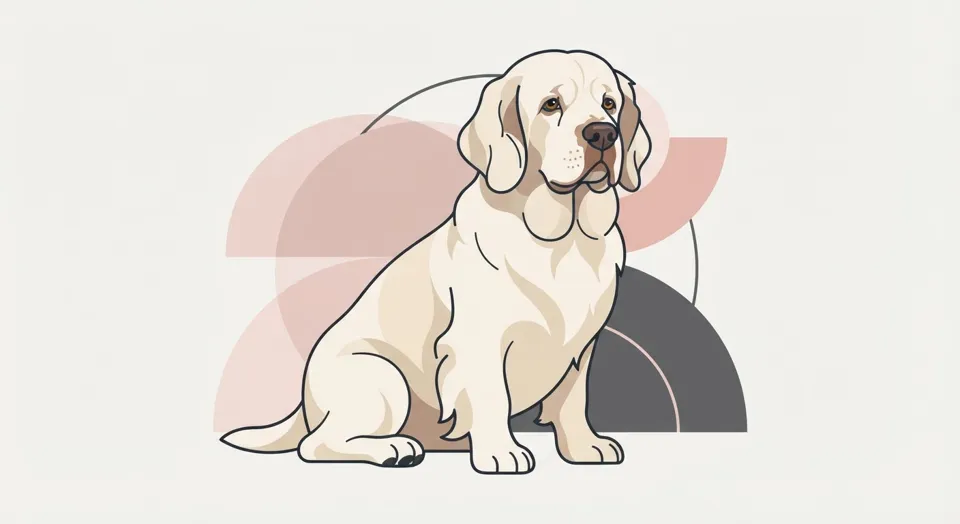
The Clumber Spaniel is a heavy-boned, low-slung gundog bred to flush and retrieve game slowly and methodically through dense undergrowth, distinct from the faster, lighter spaniels it is related to.
At a glance
Quick facts
- Size
- Large
- Exercise needs
- 45-60 minutes daily
- Home size suited to
- Medium to large home
- Grooming frequency
- Daily brushing
- Coat length
- Long
- Sheds
- Yes, heavily when moulting
- Lifespan
- 10-12 years
- Town or country
- Either, with enough exercise
- Garden size needed
- Medium or larger
Where it comes from
Origins of the Clumber Spaniel
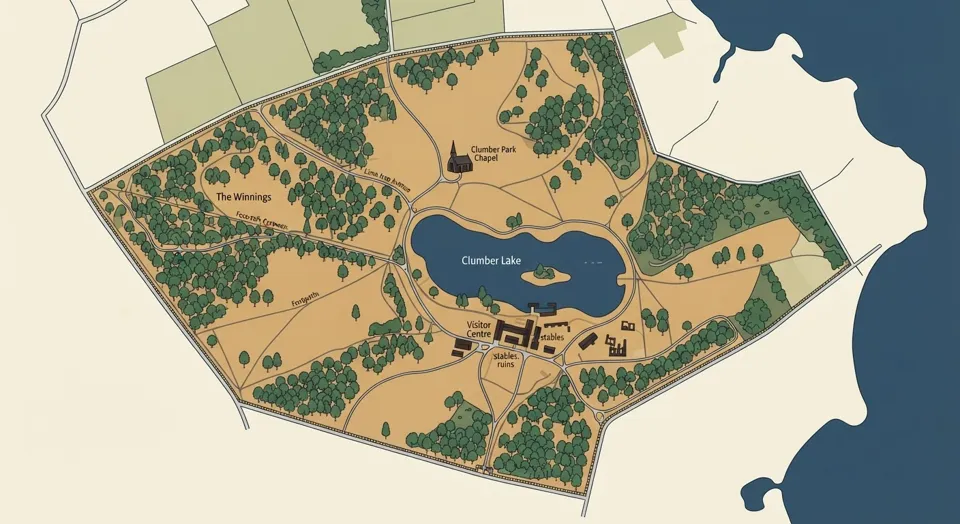
Named after Clumber Park in Nottinghamshire, this spaniel was bred to work slowly and thoroughly through dense woodland cover, favoured for driven shoots on English country estates.
- Region
- Clumber Park, Nottinghamshire
- Climate it was bred for
- Cool, damp English woodland
- Original job
- Flushing and retrieving game in dense cover
The long read
About the breed
The breed is associated with Clumber Park in Nottinghamshire, the estate of the Dukes of Newcastle, from where it takes its name in the late 18th century, though its exact ancestry is debated, with some evidence suggesting French basset-type dogs contributed to the type. It became a favourite of British royalty, notably Prince Albert and later King Edward VII and King George V, who used Clumbers for driven shoots where a slower, quieter, methodical worker suited close beating in thick cover.
Living with a Clumber Spaniel suits owners who want a gundog's nose and work ethic without the frenetic pace of a springer or cocker. It moves and works at a deliberate, unhurried speed, though it is far from lazy and needs a proper daily walk and, ideally, some scent work or retrieving to stay satisfied. It sheds heavily year-round and drools more than most spaniels, and its heavy-boned build means it can be prone to overheating in warm weather.
Its distinctive appearance, a massive head on a long, low, powerfully built body, comes with some structural health considerations, and its facial folds need regular cleaning to prevent skin irritation and eye problems.
Today the Clumber Spaniel is rare even in Britain, listed among the Kennel Club's vulnerable native breeds, kept by a small dedicated community of shooting enthusiasts and companion owners who value its calm, affectionate nature at home.
Living with one
Temperament & needs
Our own ratings, based on the breed standard and how these dogs behave in ordinary homes.
Friendliness
4/5
How openly the Clumber Spaniel greets people it does not know.
Trainability
4/5
Willing and methodical, responds well to patient training.
Energy
3/5
Steady rather than frantic, but needs a proper daily walk.
Barking
2/5
Not prone to excessive barking.
Grooming
4/5
Heavy year-round shedding and facial folds need regular cleaning.
Suits a first-time owner
4/5
How forgiving the Clumber Spaniel is for someone taking on their first dog.
Sociability
4/5
Affectionate and good-natured with family and visitors.
Independence
2/5
Works closely with its handler rather than independently.
Illustrated breed standard
The points of the breed
Hover or tap a numbered point to read what the standard asks for.
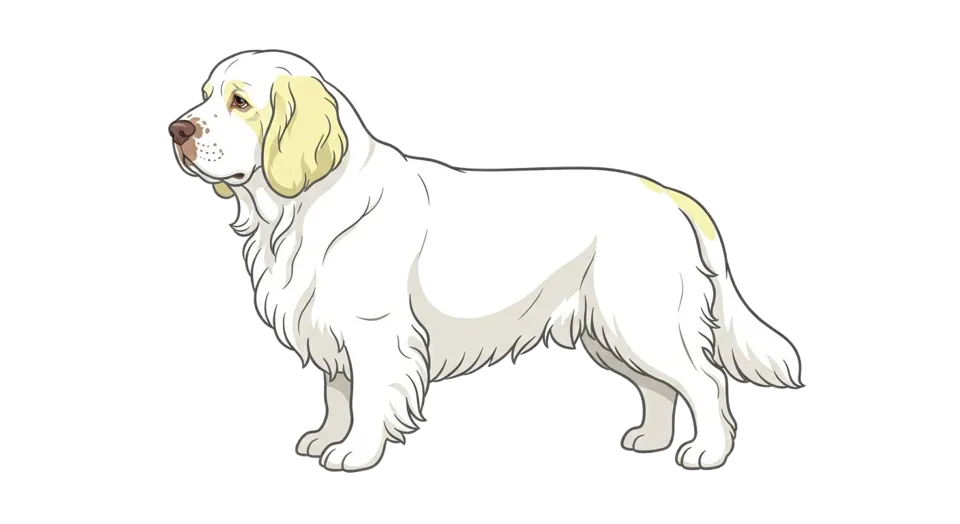
Point 1
Skull
The Clumber Spaniel's skull is judged on balance rather than size — proportionate to the body, with a clean cheek and a stop typical of the breed. Coarseness or an over-refined head are both faulted.
Colours & patterns
Recognised coats
Which coats the standard accepts — and which are simply popular.
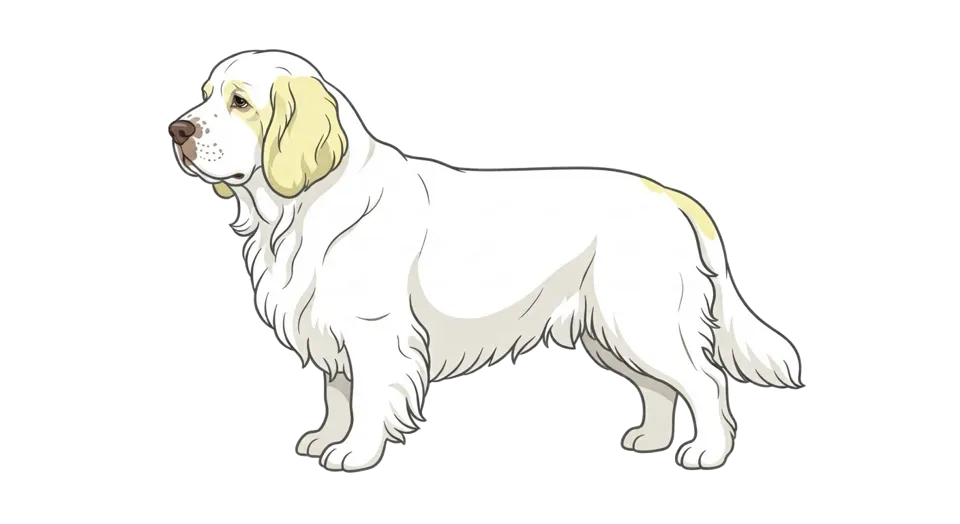
White with lemon markings
Standard colour
The most common colour combination in the breed.
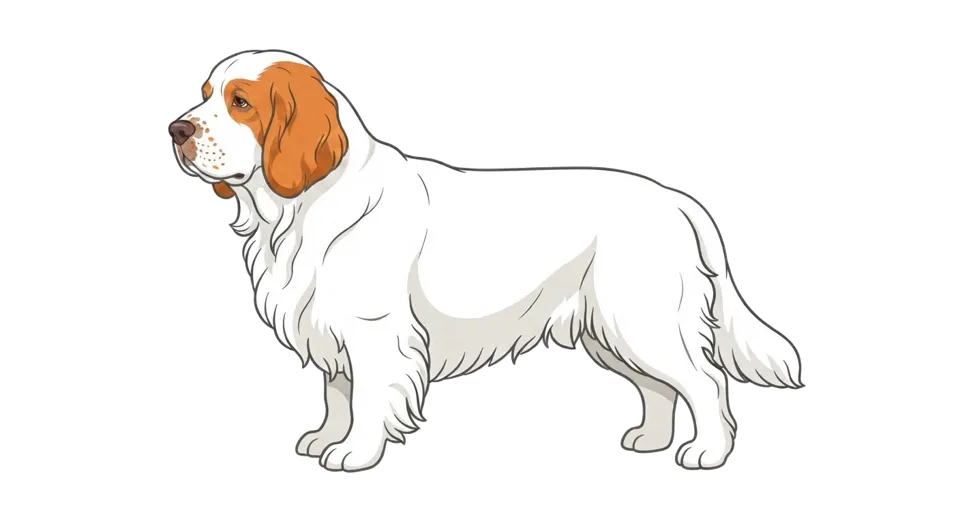
White with orange markings
Standard colour
An accepted, slightly less common variant.
Timeline
History & development
Late 1700s
Associated with Clumber Park
The breed takes its name from the Nottinghamshire estate of the Dukes of Newcastle.
1800s
Royal favour
Prince Albert and later Kings Edward VII and George V kept and shot over Clumbers.
1883
Kennel Club recognition
The Clumber Spaniel was among the first breeds recognised by the Kennel Club.
2000s
Vulnerable native breed
Low registration numbers led to its listing as a UK vulnerable native breed.
Reference
Breed standard summary
- body
- Long, low, heavily boned, deep chest.
- coat
- Dense, straight, silky, weatherproof.
- ears
- Large, vine-leaf shaped, hanging close to the head.
- eyes
- Dark amber, slightly deep-set.
- gait
- Rolling but effective, methodical rather than fast.
- head
- Large, square, with a heavy brow.
- size
- Large
- tail
- Set low, carried level with the back.
- colour
- White with lemon markings, White with orange markings. Colours outside this list are seen but are not accepted by the kennel clubs.
- temperament
- Typical of the breed: strongest in trainability, sociability, grooming. Nervousness or aggression are serious faults in the show ring and in the home.
- general appearance
- Long, low, heavily built spaniel with a thoughtful expression.
Health
What to screen for
Green means little to worry about, amber means ask the breeder for test results, red means manage it actively.
Hip dysplasia
Screen for it
Ask for BVA/KC hip scores on both parents.
Elbow dysplasia
Screen for it
Request elbow grading alongside hip scores.
Entropion/ectropion
Low concern
Ask whether eyelid conformation has been checked in the line.
Intervertebral disc disease
Watch closely
Keep the dog lean given its long back and short legs.
General information only — always speak to your vet about your own dog.
From real owners
Clumber Spaniels in the PAWPOINT Pack
Clumber Spaniels added by PawPoint members through their pet passports. Share yours to appear here.
Loading the wall…
Made for the Clumber Spaniel
The book, plus hoodies, tees and mugs featuring the Clumber Spaniel.