
Cocker Spaniel
KOK-uhr SPAN-yuhl
United Kingdom· England
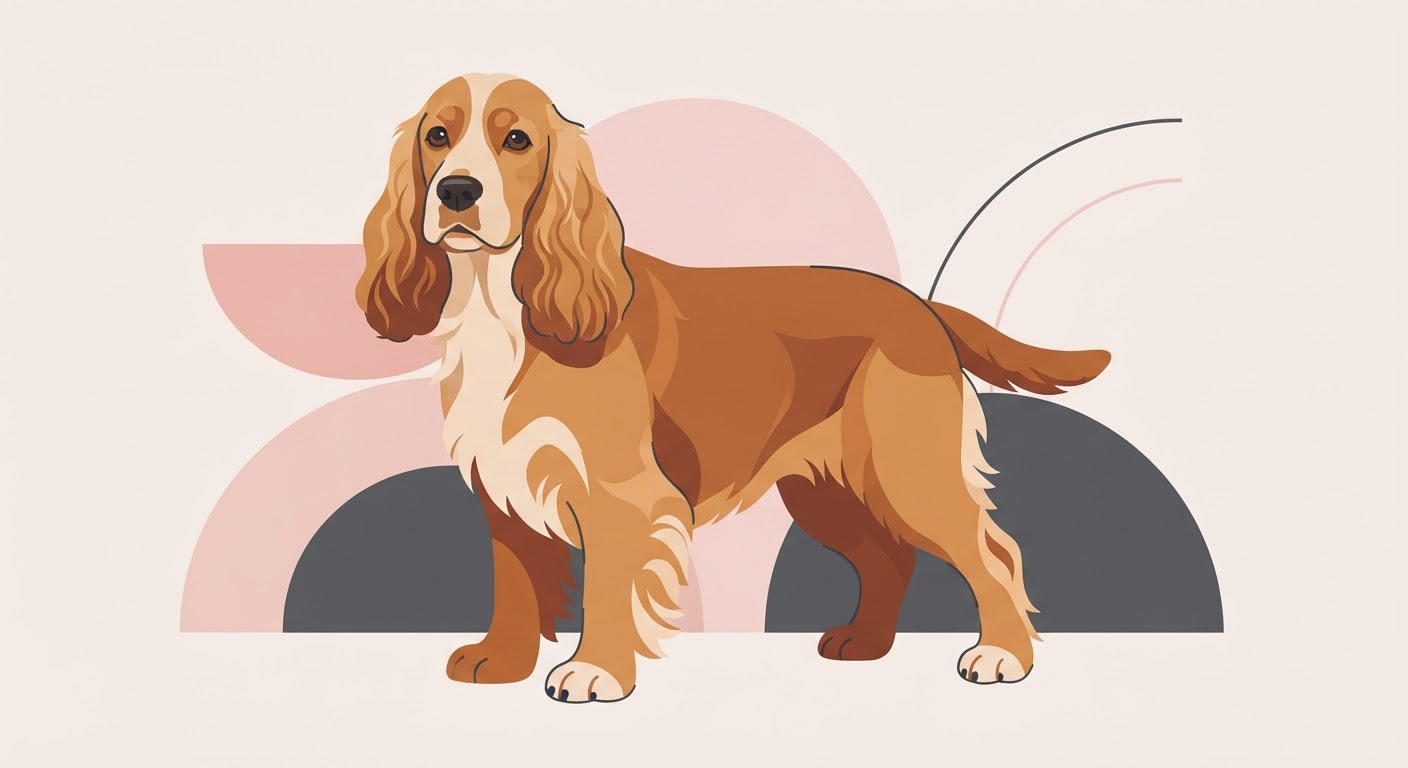
The Cocker Spaniel is a compact, cheerful gundog bred originally to flush woodcock from dense cover, and now one of the most popular family dogs in Britain.
At a glance
Quick facts
Size
Medium
Exercise needs
1 hour daily
Home size suited to
Small to medium home
Grooming frequency
Daily brushing
Coat length
Long
Sheds
Yes
Lifespan
12-15 years
Town or country
Either, with enough exercise
Garden size needed
Small to medium
Where it comes from
Origins of the Cocker Spaniel

Bred to work close, dense cover flushing woodcock across the English countryside, the Cocker Spaniel developed a compact, agile build well suited to hedgerows and thickets.
- Region
- England
- Climate it was bred for
- Temperate, mixed woodland and farmland
- Original job
- Flushing woodcock from dense cover
The long read
About the breed
Spaniels of various types were used for hunting in Britain for centuries, but the Cocker was distinguished as a smaller, quicker type around the mid-19th century, specialised for working close cover and flushing woodcock, from which its name derives. The English Kennel Club formally separated the Cocker Spaniel from the larger Field and Springer Spaniels in 1892, and the breed diverged further in America into the American Cocker Spaniel, a separate breed with a more heavily coated, refined show type.
Living with a Cocker Spaniel means living with a genuinely enthusiastic, affectionate dog that thrives on activity and attention. It has real stamina for its size and does best with a proper daily walk plus some off-lead time to use its nose. Its long, silky ears and feathered coat need regular grooming and ear checks, since floppy ears trap moisture and are prone to infection. Working-line Cockers tend to be higher-drive and more intense than show-line dogs, so it is worth being clear with a breeder about which type a puppy comes from.
The breed's cheerful, food-motivated nature makes it generally easy to train, though some individuals, particularly certain golden and red-coloured lines, have historically been associated with "cocker rage", a controversial and much-debated aggression syndrome; reputable breeders and temperament testing have reduced its prevalence considerably.
Today the Cocker Spaniel is kept both as an active working gundog on shoots and, far more commonly, as a family companion, valued for its size, adaptability and famously affectionate, wagging-tail disposition.
Living with one
Temperament & needs
Our own ratings, based on the breed standard and how these dogs behave in ordinary homes.
Friendliness
5/5
How openly the Cocker Spaniel greets people it does not know.
Trainability
4/5
Eager to please and food-motivated, generally easy to train.
Energy
4/5
Genuinely energetic, needs a proper daily walk and off-lead time.
Barking
3/5
Can be vocal when excited or under-exercised.
Grooming
4/5
Silky feathered coat and long ears need regular attention.
Suits a first-time owner
3/5
How forgiving the Cocker Spaniel is for someone taking on their first dog.
Sociability
5/5
Affectionate with family, friendly with strangers and other dogs.
Independence
2/5
Prefers to work and play alongside people.
Illustrated breed standard
The points of the breed
Hover or tap a numbered point to read what the standard asks for.
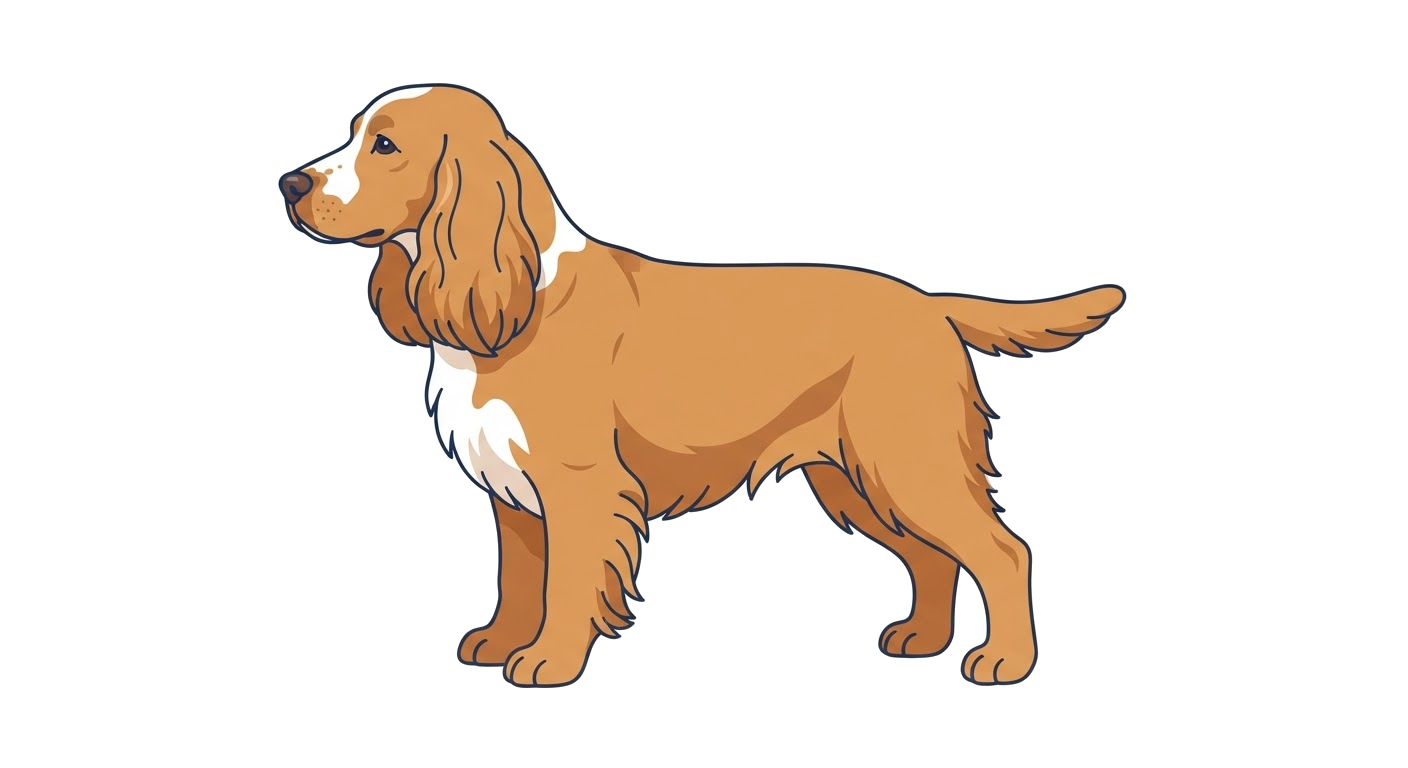
Point 1
Skull
The Cocker Spaniel's skull is judged on balance rather than size — proportionate to the body, with a clean cheek and a stop typical of the breed. Coarseness or an over-refined head are both faulted.
Colours & patterns
Recognised coats
Which coats the standard accepts — and which are simply popular.
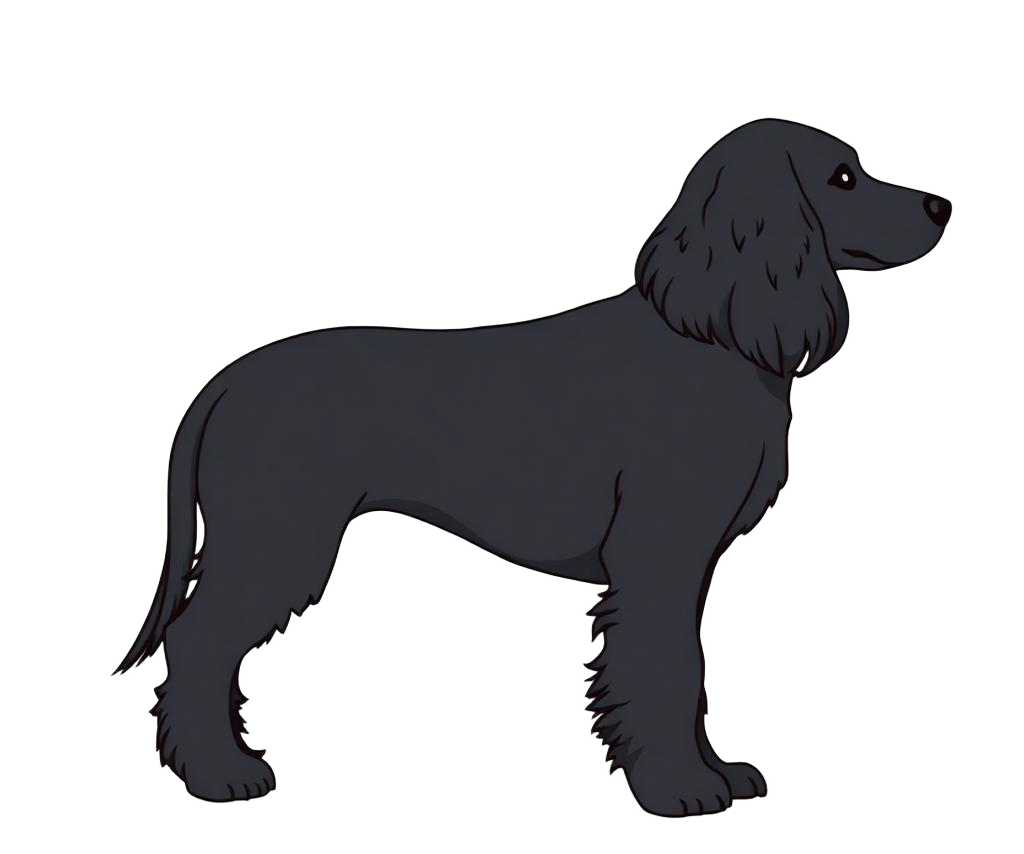
Black
Standard colour
A classic solid colour, common in working lines.
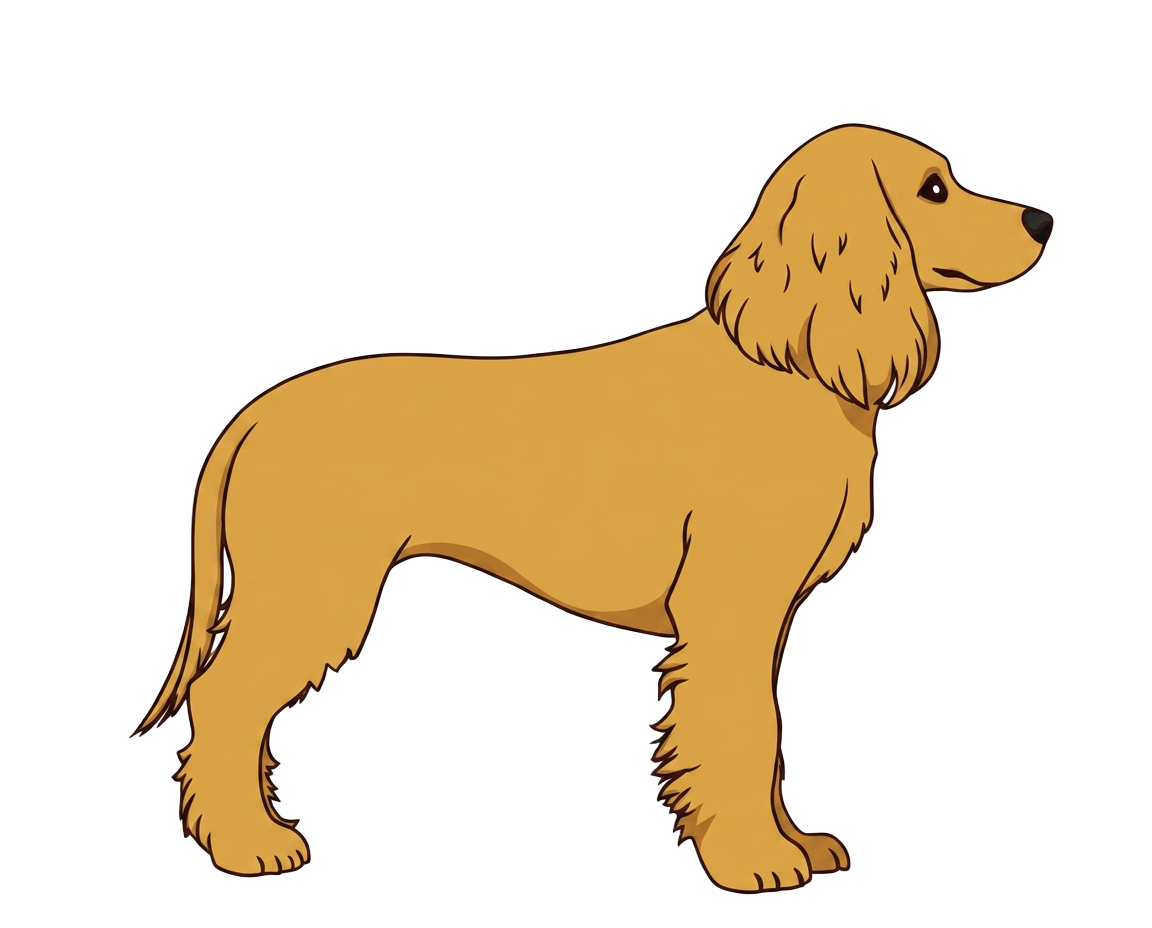
Golden
Standard colour
A rich golden shade, one of the most popular colours.
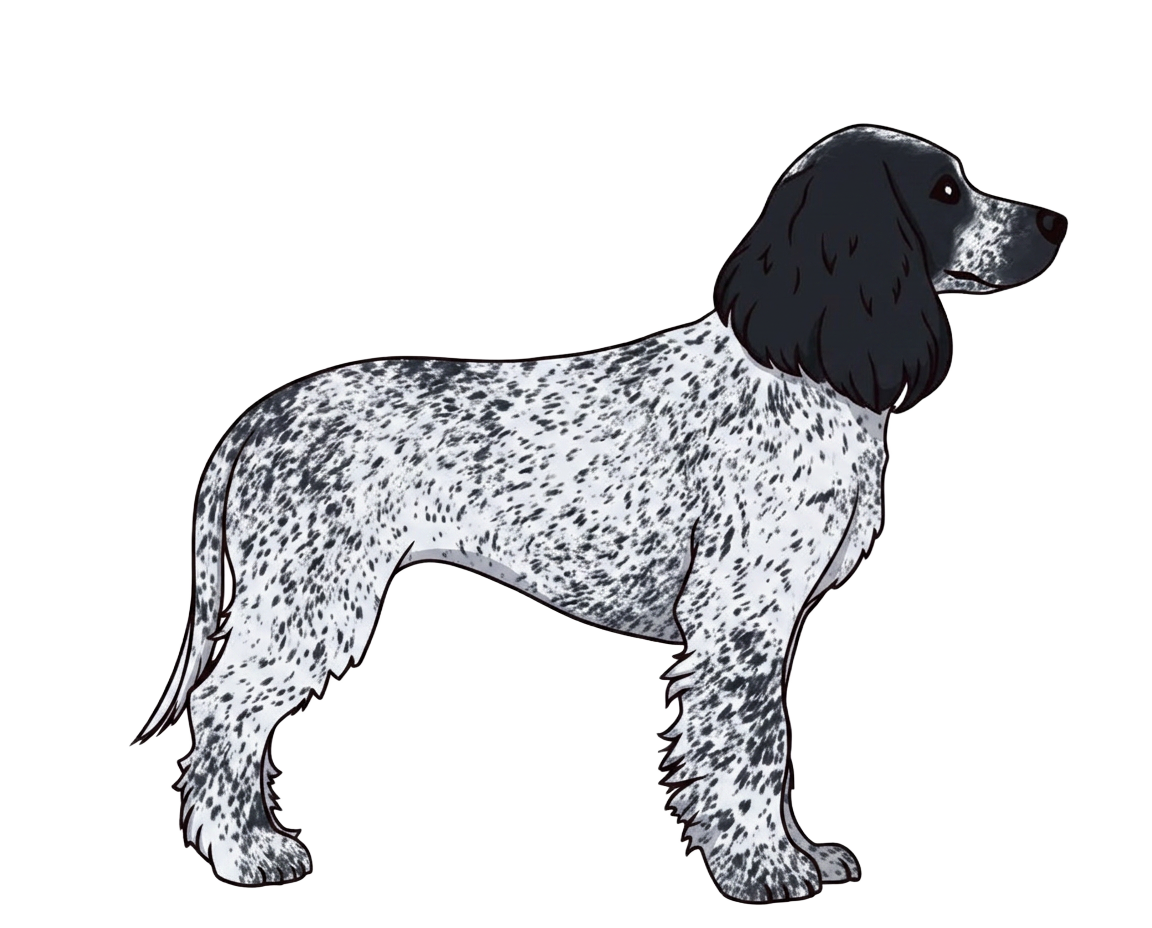
Blue roan
Standard colour
A mottled blue-grey and white pattern, very popular in working lines.
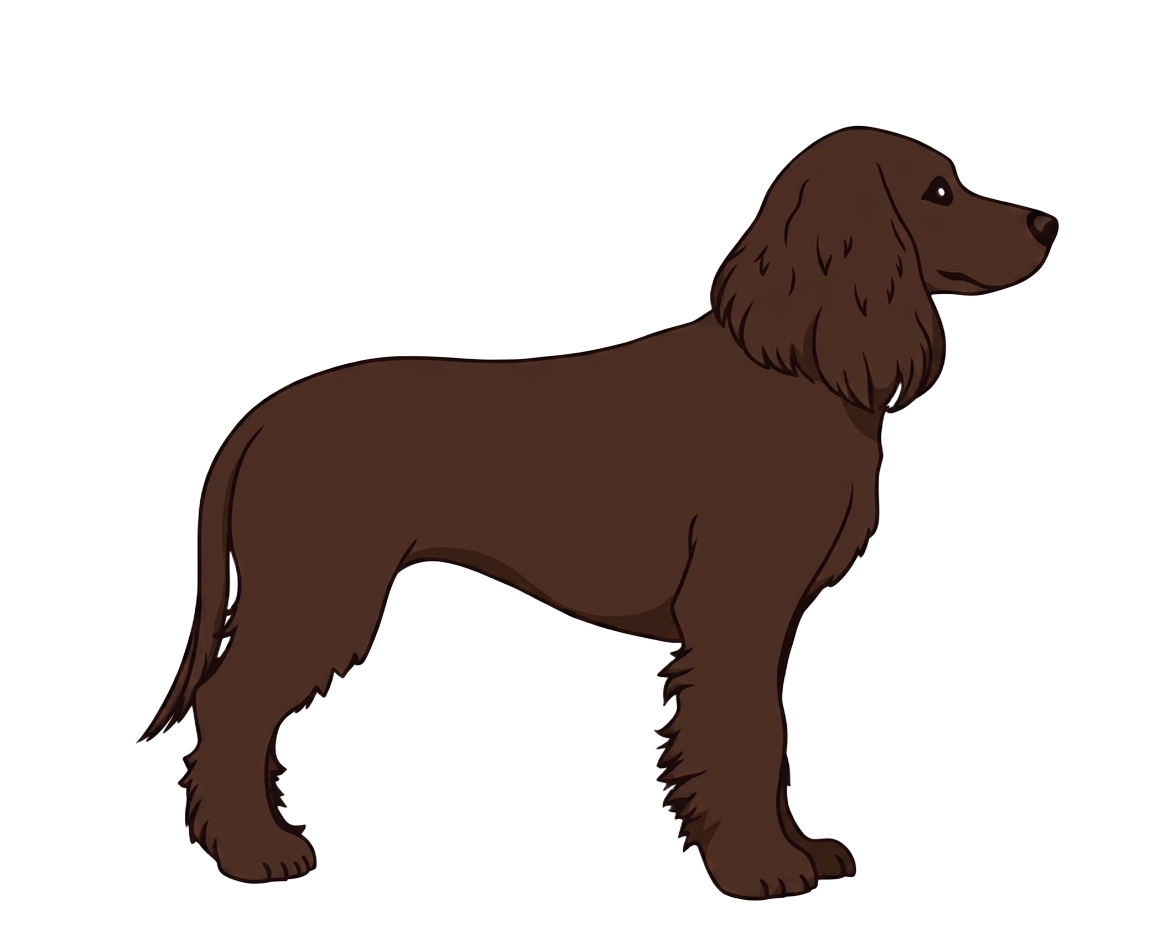
Liver (chocolate)
Standard colour
A rich brown solid colour.
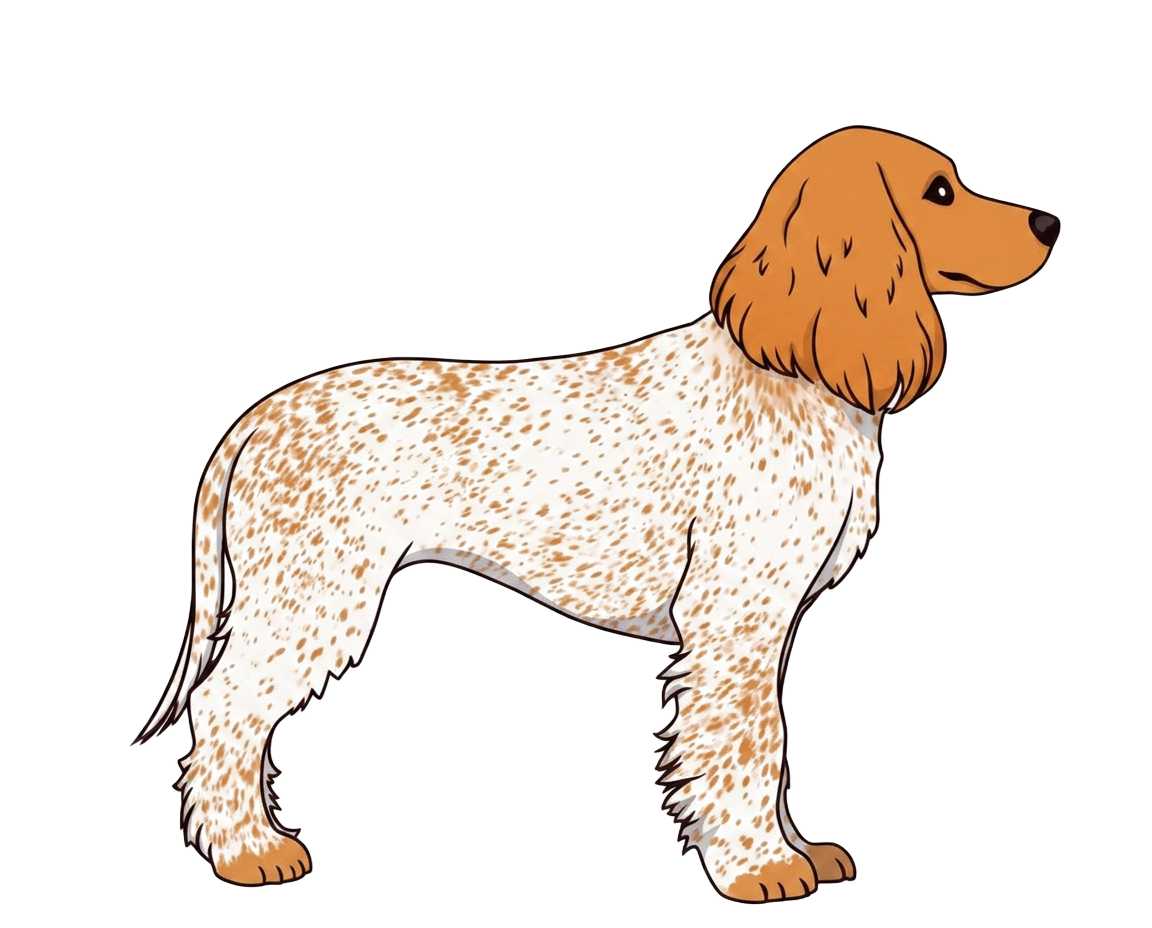
Orange roan
Standard colour
A mottled orange and white pattern.
Timeline
History & development
Mid-1800s
Distinguished from other spaniels
Smaller, quicker spaniels bred for woodcock flushing became known as Cockers.
1892
Kennel Club separation
The Cocker Spaniel was formally separated from the Field and Springer Spaniel.
1936
American divergence
The American Cocker Spaniel began developing as a distinct, more heavily coated breed.
1950s onward
Rise as a family pet
The English Cocker Spaniel became one of Britain's most popular household dogs.
Reference
Breed standard summary
- body
- Compact, strong, short-coupled.
- coat
- Flat, silky, well feathered without being excessive.
- ears
- Long, set low, well feathered.
- eyes
- Dark, full but not prominent, gentle expression.
- gait
- Free, merry, with a lot of drive.
- head
- Well-developed, square muzzle.
- size
- Medium
- tail
- Set low, carried level, in constant motion when working.
- colour
- Black, Golden, Blue roan, Liver (chocolate), Orange roan. Colours outside this list are seen but are not accepted by the kennel clubs.
- temperament
- Typical of the breed: strongest in sociability, energy, trainability. Nervousness or aggression are serious faults in the show ring and in the home.
- general appearance
- Merry, compact gundog with a wagging tail rarely still.
Health
What to screen for
Green means little to worry about, amber means ask the breeder for test results, red means manage it actively.
Progressive retinal atrophy
Screen for it
Ask for PRA DNA clearance from the breeder.
Familial nephropathy
Screen for it
A kidney condition seen in some lines; ask breeders about family history.
Ear infections
Low concern
Long, floppy ears need regular checking and cleaning.
Hip dysplasia
Low concern
Less common than in larger breeds but hip scoring is still worthwhile.
General information only — always speak to your vet about your own dog.
From real owners
Dogs like this
Cocker Spaniels added by PawPoint members through their pet passports. Share yours to appear here.
Loading the wall…
Made for the Cocker Spaniel
The book, plus prints, hoodies and mugs using our own Cocker Spaniel illustration — and one everyday accessory that suits any dog.

The book
Pawpoint: The Complete Dog Breed Book
Every officially recognised breed plus the unofficial ones nobody else documents. 400+ pages, hardback, printed and shipped from the UK.
Own stock — shipped by us
Framed poster
Cocker Spaniel Framed Poster
Museum-weight print of our Cocker Spaniel illustration, framed or unframed.
Printed to order
Hoodie
Cocker Spaniel Hoodie
Heavyweight hoodie carrying the Cocker Spaniel illustration on the chest.
Printed to order
Mug
Cocker Spaniel Mug
Ceramic mug with the Cocker Spaniel illustration wrapped around it.
Printed to order

Accessory
Travel Water Bottle & Bowl
550ml bottle with a fold-out drinking trough.
Fits any dog

Pawpoint on YouTube
Watch the full Cocker Spaniel video
Breed deep-dives, history and honest ownership talk. New film every week.
Watch now