
Collie (Smooth)
KOL-ee SMOOTH
United Kingdom· Scottish Lowlands and Borders
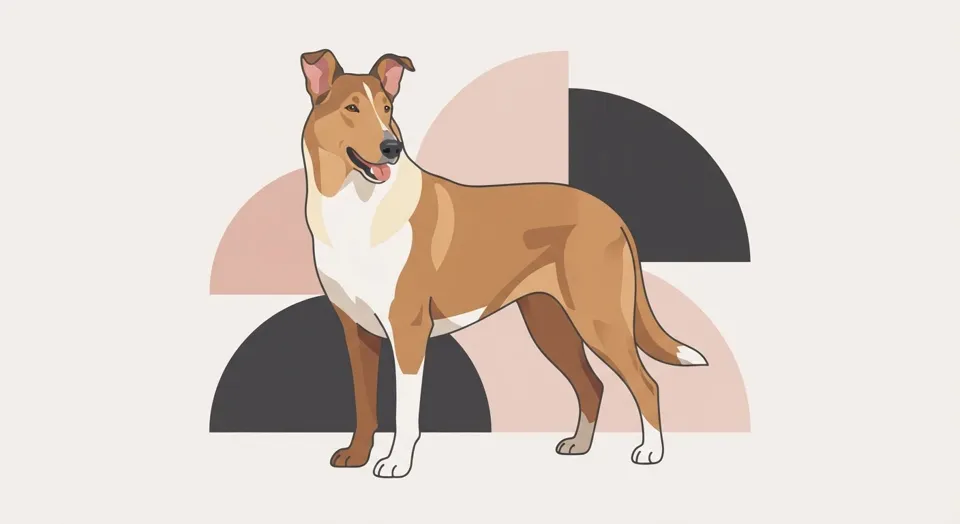
The Smooth Collie is the short-coated variety of the Scottish herding collie, sharing the same working ancestry and temperament as its Rough-coated relative but with a coat that suited drovers who needed a lower-maintenance working dog.
At a glance
Quick facts
- Size
- Large
- Exercise needs
- 1 hour daily
- Home size suited to
- Medium to large home
- Grooming frequency
- Weekly brush
- Coat length
- Short
- Sheds
- Yes, heavily when moulting
- Lifespan
- 12-14 years
- Town or country
- Happiest in the country
- Garden size needed
- Medium or larger
Where it comes from
Origins of the Collie (Smooth)

Favoured by cattle drovers for its easier-to-maintain coat, the Smooth Collie shares its Scottish herding roots with the Rough Collie but was better suited to long days on dusty droving roads.
- Region
- Scottish Lowlands and Borders
- Climate it was bred for
- Cold, wet, exposed hill and lowland country
- Original job
- Droving cattle over long distances
The long read
About the breed
Historically, the smooth coat was favoured by cattle drovers moving stock over long distances, since it shed dirt and burrs more easily than a long coat and was less prone to matting on the road, while the Rough Collie became more associated with sheep herding and, later, the show ring. Both coat types can occur in the same litter, as coat length is governed by a single gene, and they are considered varieties of one breed by the Kennel Club rather than separate breeds.
Living with a Smooth Collie brings the same intelligent, gentle, biddable temperament as the Rough Collie in a much easier-to-groom package, needing only weekly brushing rather than several sessions. It is watchful and loyal, generally excellent with children, and highly trainable, doing well in obedience and agility. It does shed noticeably, particularly during seasonal coat changes, but without the matting risk of the longer coat.
Because it is considerably rarer than the Rough Collie, especially in Britain, finding a puppy can take patience, and buyers benefit from seeking breeders who health-test for the same eye and drug-sensitivity concerns found across the breed.
Today the Smooth Collie is kept almost entirely as a companion and sport dog, appreciated by owners who want the Collie temperament without the heavy coat commitment.
Living with one
Temperament & needs
Our own ratings, based on the breed standard and how these dogs behave in ordinary homes.
Friendliness
4/5
How openly the Collie (Smooth) greets people it does not know.
Trainability
5/5
Highly intelligent and eager to please.
Energy
3/5
Active but not frantic, enjoys daily walks and mental work.
Barking
3/5
Can be vocal when alerting or under-stimulated.
Grooming
2/5
Short coat sheds but is far easier to maintain than the Rough variety.
Suits a first-time owner
4/5
How forgiving the Collie (Smooth) is for someone taking on their first dog.
Sociability
4/5
Gentle and affectionate, generally excellent with children.
Independence
2/5
Prefers close cooperation with its handler.
Illustrated breed standard
The points of the breed
Hover or tap a numbered point to read what the standard asks for.
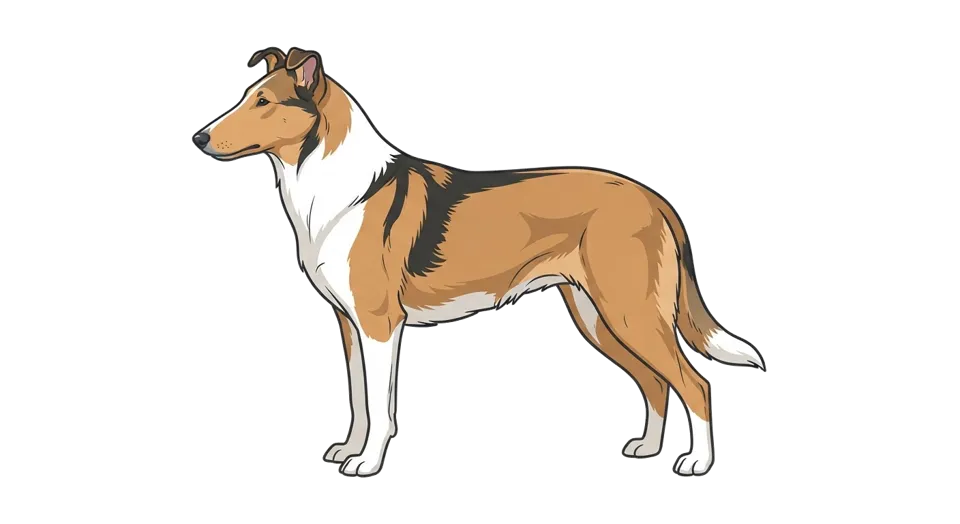
Point 1
Skull
The Collie (Smooth)'s skull is judged on balance rather than size — proportionate to the body, with a clean cheek and a stop typical of the breed. Coarseness or an over-refined head are both faulted.
Colours & patterns
Recognised coats
Which coats the standard accepts — and which are simply popular.
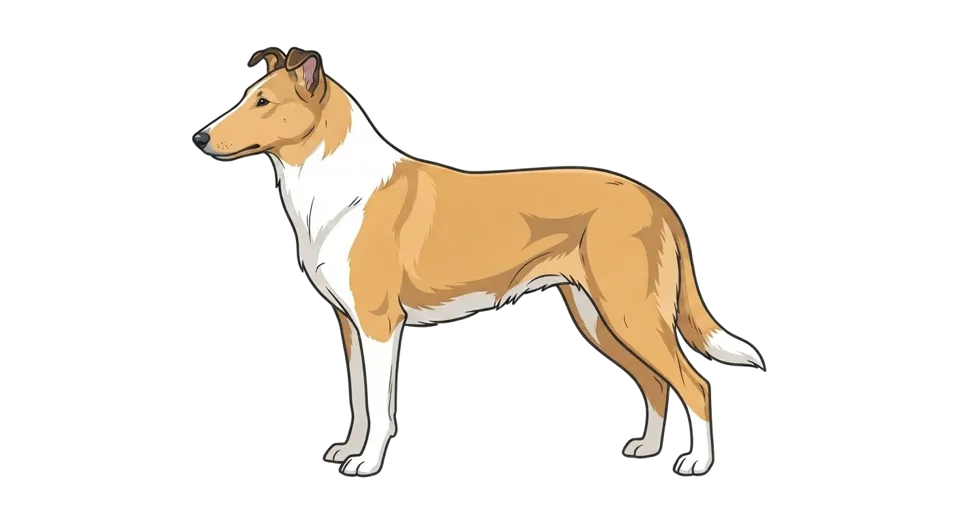
Sable and white
Standard colour
The most common and recognisable colour.
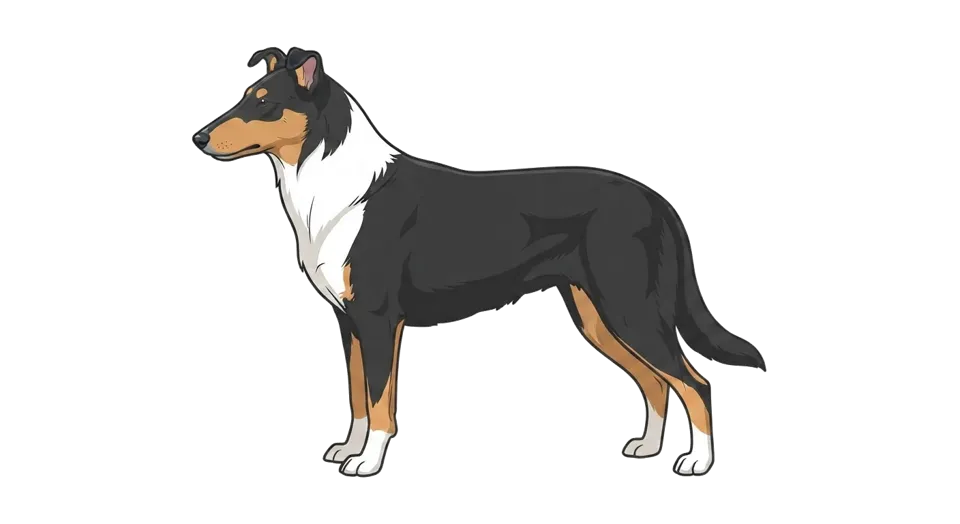
Tricolour
Standard colour
Black, white and tan markings.
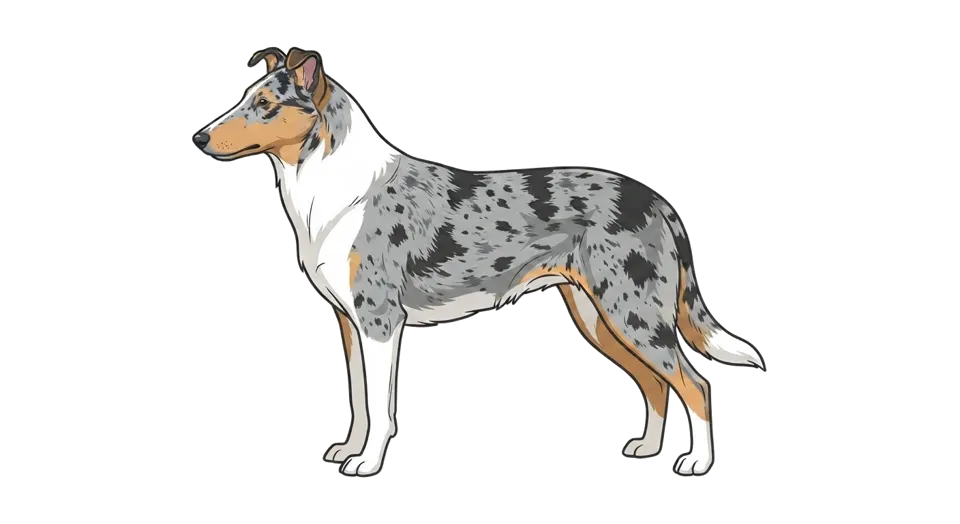
Blue merle
Standard colour
A marbled grey-blue pattern, often with blue or odd eyes.
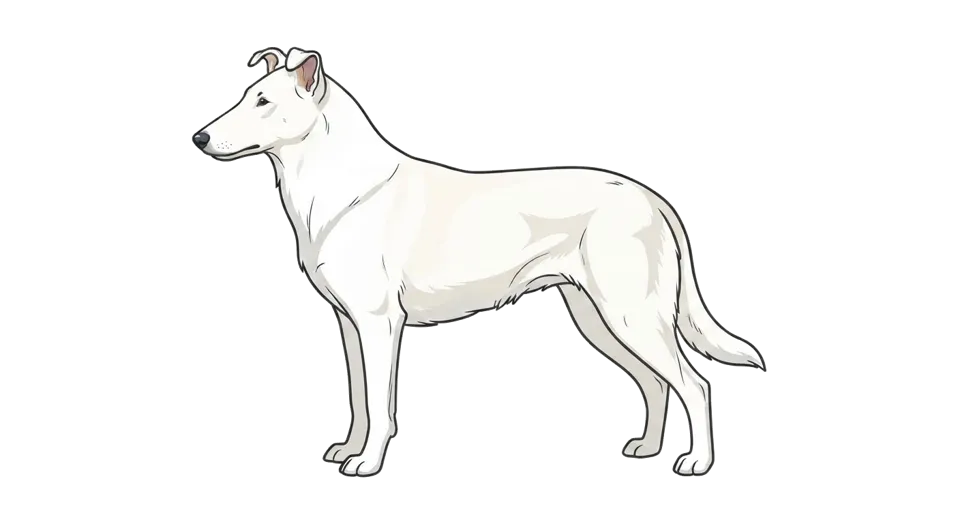
White
Standard colour
Predominantly white with coloured head markings, a less common variety.
Timeline
History & development
1700s-1800s
Droving origins
Smooth-coated collies were favoured by cattle drovers for their low-maintenance coat on long journeys.
1800s
Shared ancestry with Rough Collie
Both coat types occurred in the same litters, governed by a single coat gene.
1886
Kennel Club recognition
The Smooth Collie was recognised as a variety alongside the Rough Collie.
20th century
Rarer than the Rough variety
The Smooth Collie remained considerably less common, especially outside working and show circles.
1950s onward
The breed today
Kennel club registrations settled into a steady pattern and the Collie (Smooth) moved from a working specialist to a family companion, with breed clubs in the UK and abroad now focused on health testing and keeping true type alive.
Reference
Breed standard summary
- body
- Slightly long, deep chest, strong loin.
- coat
- Short, flat, dense double coat.
- ears
- Small, carried semi-erect with tips folding forward.
- eyes
- Almond-shaped, dark, sweet expression.
- gait
- Free, smooth, ground-covering.
- head
- Long, wedge-shaped, flat skull.
- size
- Large
- tail
- Long, carried low with an upward swirl at the tip.
- colour
- Sable and white, Tricolour, Blue merle, White. Colours outside this list are seen but are not accepted by the kennel clubs.
- temperament
- Typical of the breed: strongest in trainability, sociability, energy. Nervousness or aggression are serious faults in the show ring and in the home.
- general appearance
- Elegant, lithe, strongly built with a refined head, identical in outline to the Rough Collie.
Health
What to screen for
Green means little to worry about, amber means ask the breeder for test results, red means manage it actively.
Collie eye anomaly
Screen for it
Ask for CEA/CH eye testing results on both parents.
MDR1 drug sensitivity
Watch closely
Ask whether the breeding line has been tested for the MDR1 mutation.
Hip dysplasia
Low concern
Uncommon but hip scoring is still worth checking.
Progressive retinal atrophy
Screen for it
Ask for PRA DNA clearance from the breeder.
General information only — always speak to your vet about your own dog.
From real owners
Collie (Smooth)s in the PAWPOINT Pack
Collie (Smooth)s added by PawPoint members through their pet passports. Share yours to appear here.
Loading the wall…
Made for the Collie (Smooth)
The book, plus hoodies, tees and mugs featuring the Collie (Smooth).