
Curly Coated Retriever
KUR-lee KOH-tid ri-TREE-vuhr
England· East Anglia
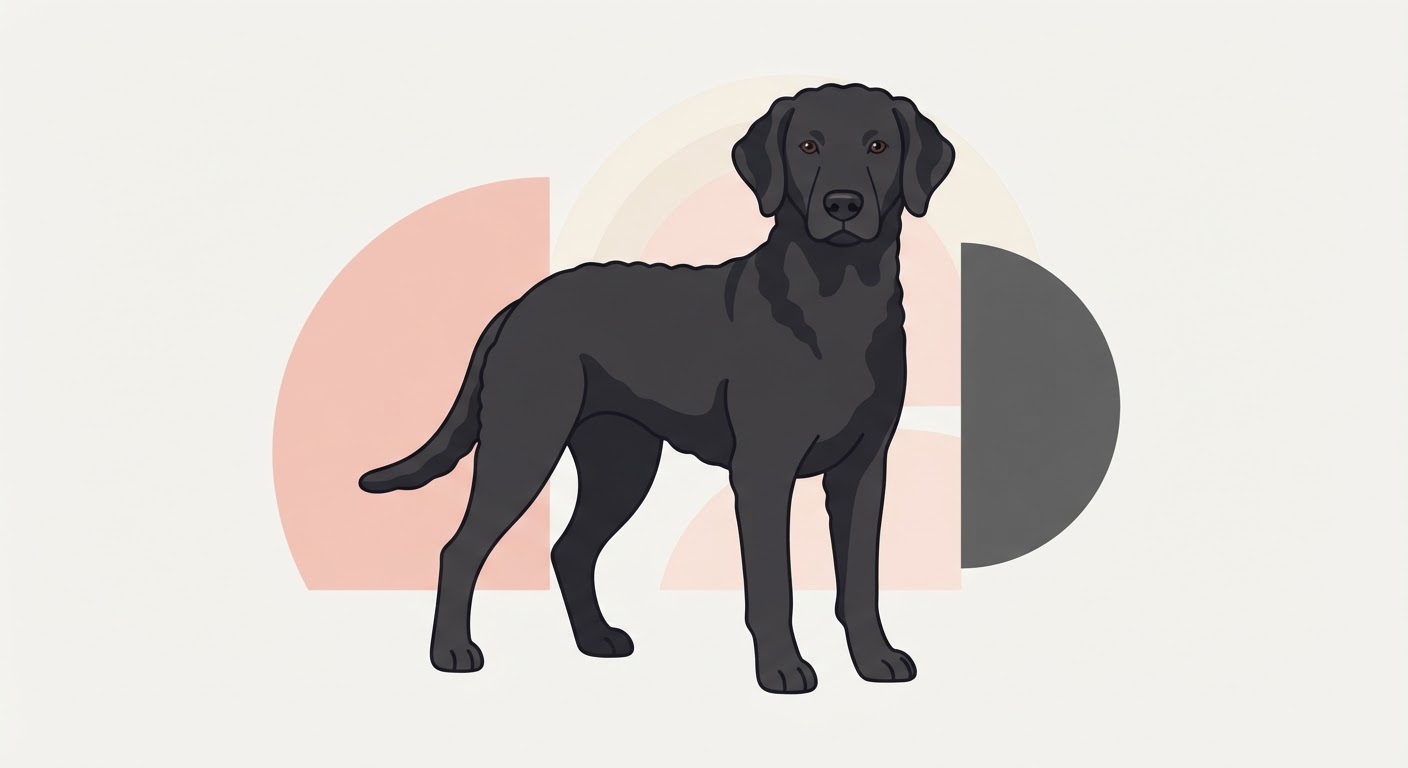
The Curly Coated Retriever is Britain's oldest retriever breed, a tall, tightly curled gundog built for hard days retrieving from cold water and thick cover.
At a glance
Quick facts
Size
Large
Exercise needs
60+ minutes daily
Home size suited to
Medium to large home
Grooming frequency
Brush every other day, clip regularly
Coat length
Curly
Sheds
Very little
Lifespan
10-12 years
Town or country
Either, with enough exercise
Garden size needed
Medium or larger
Where it comes from
Origins of the Curly Coated Retriever
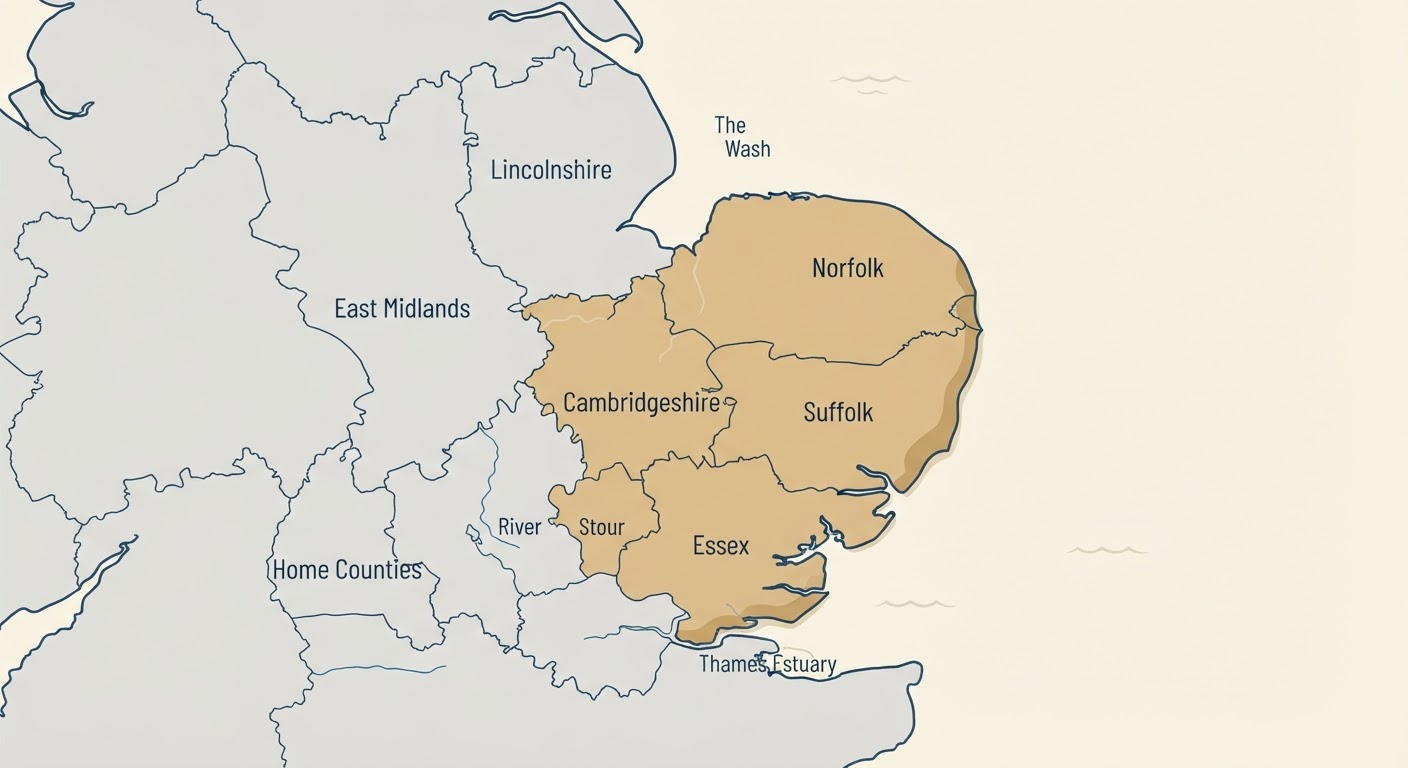
The breed was shaped in the cold, waterlogged fen and marsh country of East Anglia, where wildfowlers needed a dog that could swim for long periods without chilling. Its tight curl sheds water rather than absorbing it, a direct answer to the local climate.
- Region
- East Anglia
- Climate it was bred for
- Cold, wet marshland and river country
- Original job
- Retrieving waterfowl from cold water and cover
The long read
About the breed
Its exact origins are debated, but the breed was established in England by the early 1800s, likely drawing on the old English Water Dog, the Irish Water Spaniel and the Poodle to produce a dog with a dense, waterproof curl that could work all day in freezing rivers and marshland without the coat becoming waterlogged. It was a favourite of Norfolk and Suffolk wildfowlers before the Labrador and Golden Retriever rose to greater popularity in the twentieth century.
Living with a Curly suits an active household. It is intelligent and can be a touch more independent-minded than a Labrador, thinking through a problem rather than automatically deferring, which some owners enjoy and others find slower to train. Exercise needs are substantial; a bored Curly left under-stimulated will find its own entertainment, usually destructive. The coat is low-shedding and needs surprisingly little brushing, since brushing out the curl actually causes frizz, but it does need a proper towel-dry and occasional bath.
Today the breed is rare even in its homeland, well outside the Kennel Club's top fifty registered breeds, kept mainly by working gundog enthusiasts and a small band of pet owners drawn to its unusual coat and quieter temperament compared with more mainstream retrievers. It remains a genuine working dog at heart and is happiest with a job, whether formal fieldwork or simply committed daily retrieving games.
Living with one
Temperament & needs
Our own ratings, based on the breed standard and how these dogs behave in ordinary homes.
Friendliness
4/5
How openly the Curly Coated Retriever greets people it does not know.
Trainability
3/5
Intelligent but more independent-minded than most retrievers.
Energy
5/5
Needs serious daily exercise and mental work, not a dog for a sedentary home.
Barking
2/5
Generally quiet unless genuinely alarmed.
Grooming
2/5
Low-shedding curls need minimal brushing but regular towel-drying after swims.
Suits a first-time owner
2/5
How forgiving the Curly Coated Retriever is for someone taking on their first dog.
Sociability
4/5
Loyal to its family, often more reserved with strangers than a Labrador.
Independence
3/5
Capable of working things out alone, which can look like stubbornness.
Illustrated breed standard
The points of the breed
Hover or tap a numbered point to read what the standard asks for.
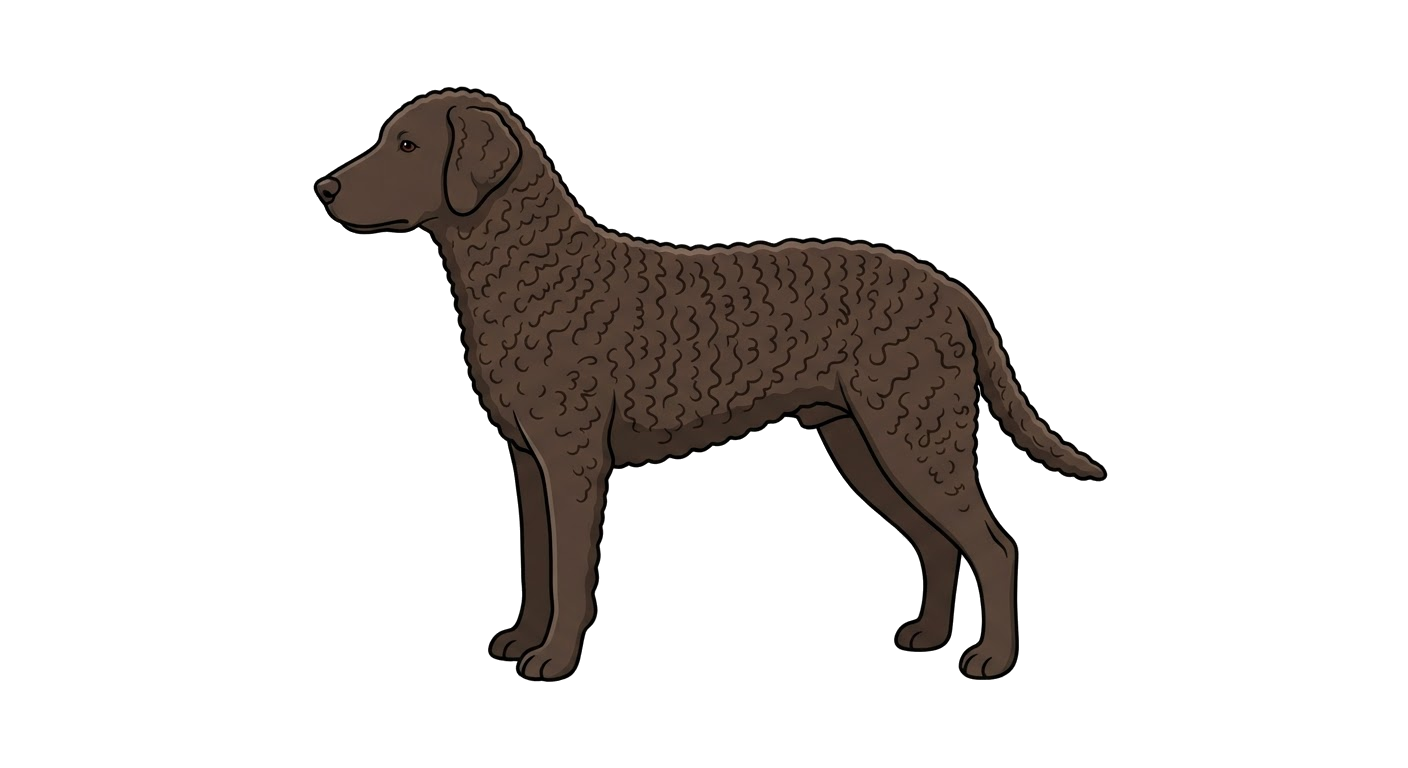
Point 1
Skull
The Curly Coated Retriever's skull is judged on balance rather than size — proportionate to the body, with a clean cheek and a stop typical of the breed. Coarseness or an over-refined head are both faulted.
Colours & patterns
Recognised coats
Which coats the standard accepts — and which are simply popular.
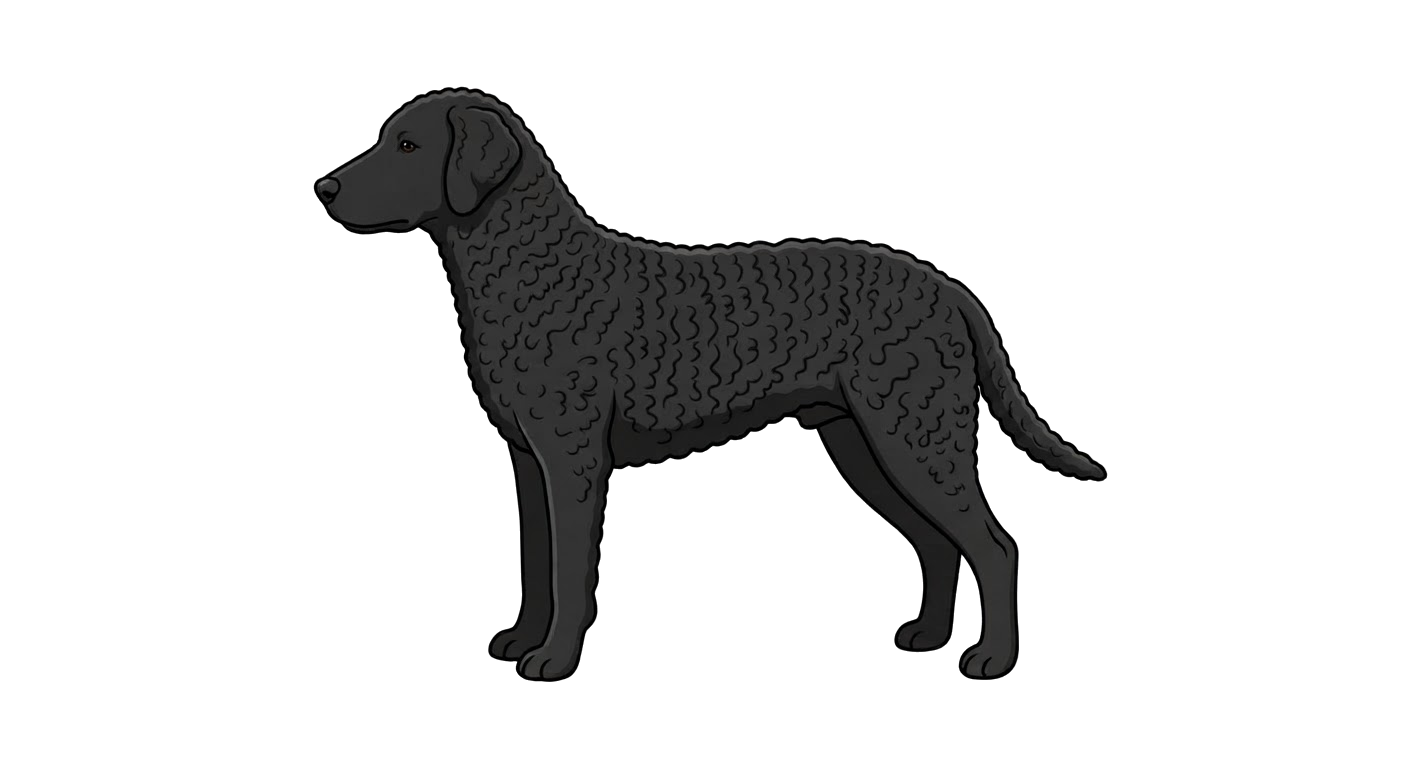
Black
Standard colour
The most traditional and commonly seen colour.
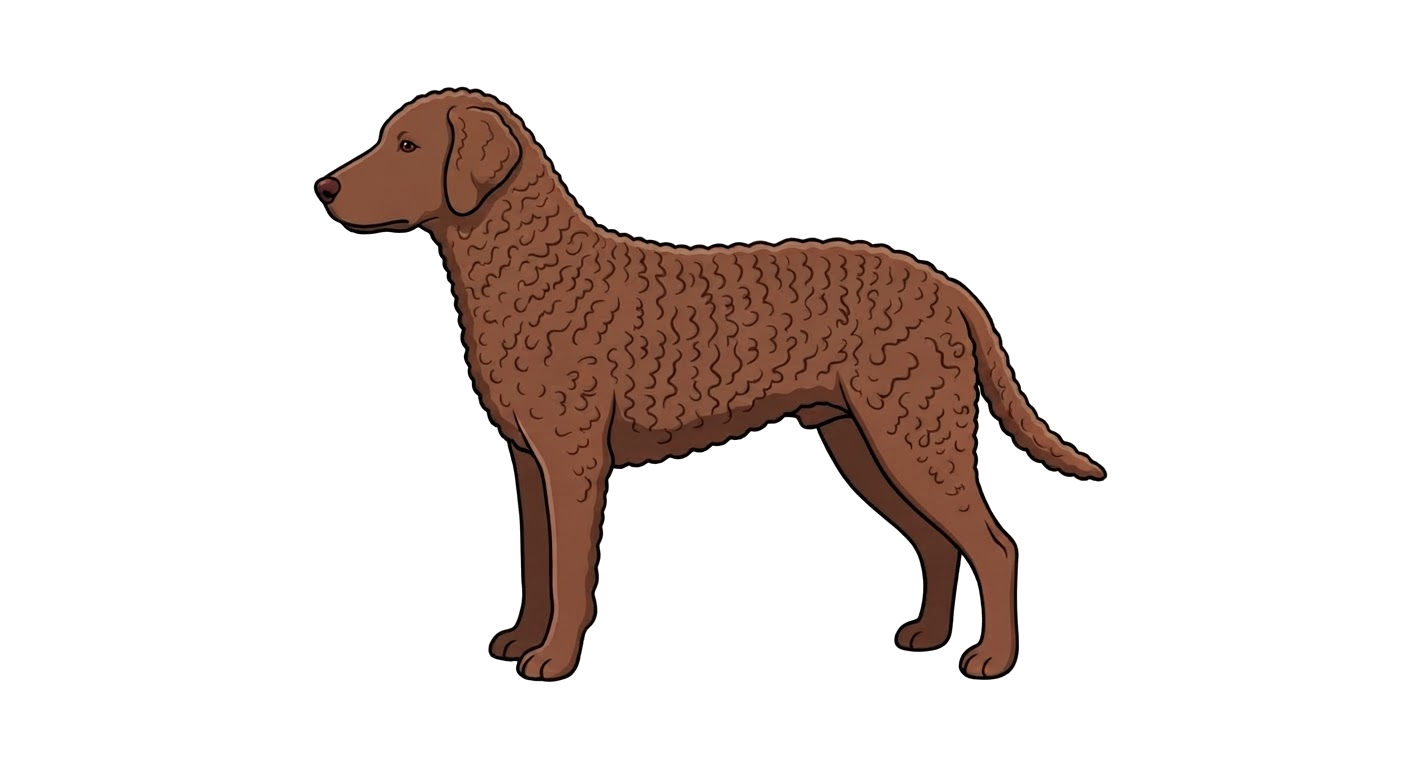
Liver
Standard colour
A rich brown, equally accepted in the show ring.
Outside the standard
Other colours
Dilute coats you will see advertised. They are the same breed, but no kennel club accepts them.
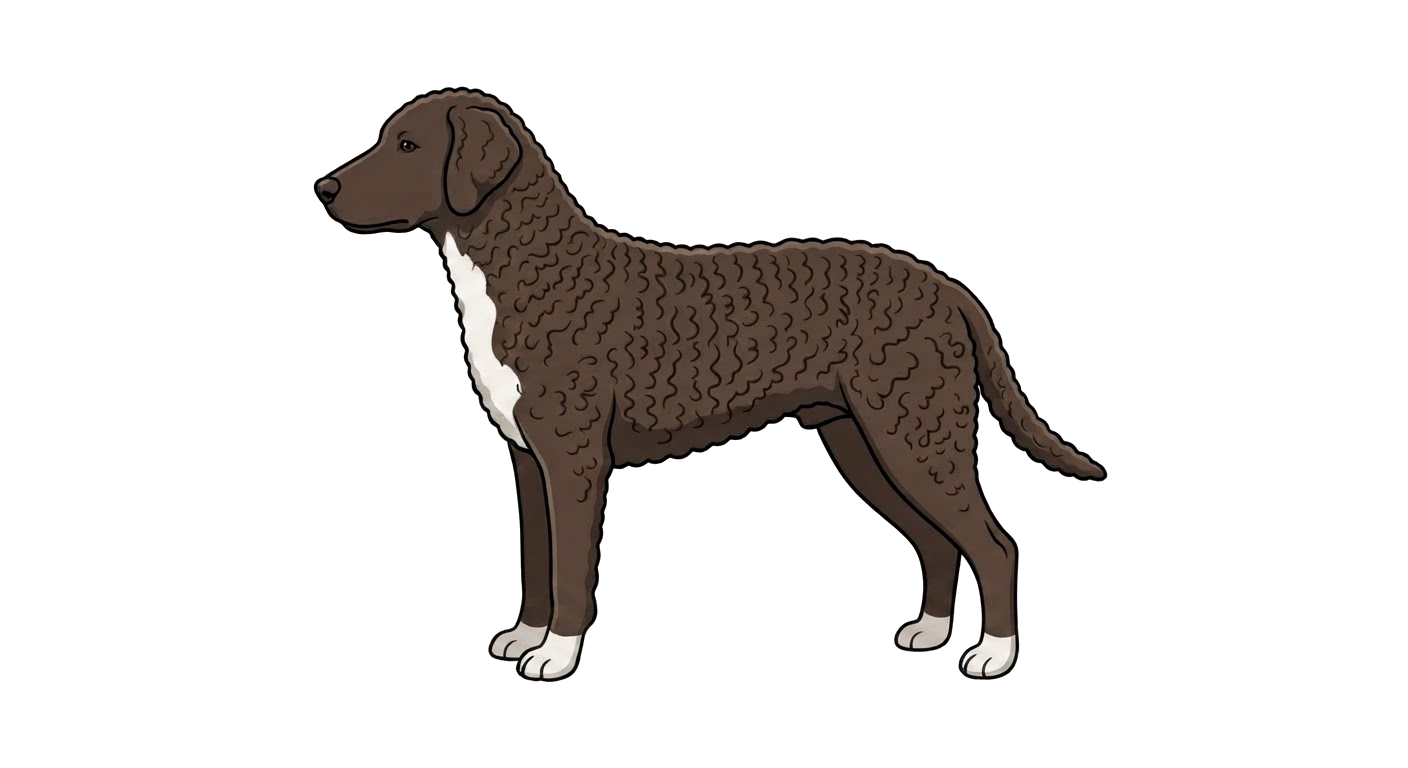
White chest patch
Not in the standard
Small white marks occur but are considered a minor fault.
Timeline
History & development
early 1800s
Established in England
The breed took recognisable shape in England, likely from Water Dog, Irish Water Spaniel and Poodle stock.
1860s
Early dog shows
Curly Coated Retrievers appeared at some of the earliest organised dog shows in Britain.
1907
Breed club formed
A dedicated breed club was established to protect the working type.
20th century
Overtaken in popularity
Labradors and Golden Retrievers became far more popular, leaving the Curly as a minority breed.
1950s onward
The breed today
Kennel club registrations settled into a steady pattern and the Curly Coated Retriever moved from a working specialist to a family companion, with breed clubs in the UK and abroad now focused on health testing and keeping true type alive.
Reference
Breed standard summary
- body
- Deep-chested, well ribbed, strong loin
- coat
- Full of small, tight, crisp curls covering the whole body
- ears
- Small, set low and lying close to the head
- eyes
- Large, dark or black in black dogs, brown in liver dogs
- gait
- Free, powerful movement with good drive
- head
- Long and well-proportioned, with a moderate stop
- size
- Large working gundog
- tail
- Moderate length, covered in curls, carried straight or with a slight upward curve
- colour
- Black, Liver. Colours outside this list are seen but are not accepted by the kennel clubs.
- temperament
- Typical of the breed: strongest in energy, sociability, trainability. Nervousness or aggression are serious faults in the show ring and in the home.
- general appearance
- Tall, strongly built retriever covered in a mass of crisp curls
Health
What to screen for
Green means little to worry about, amber means ask the breeder for test results, red means manage it actively.
Hip dysplasia
Screen for it
Ask for BVA/KC hip scores on both parents before buying.
Exercise-induced collapse (EIC)
Watch closely
DNA testing is available; ask breeders whether parents are clear.
Progressive retinal atrophy
Screen for it
Request current eye certification from a breeder.
Bloat
Watch closely
Deep-chested, so feed smaller meals and avoid vigorous exercise around feeding time.
General information only — always speak to your vet about your own dog.
From real owners
Dogs like this
Curly Coated Retrievers added by PawPoint members through their pet passports. Share yours to appear here.
Loading the wall…
Made for the Curly Coated Retriever
The book, plus prints, hoodies and mugs using our own Curly Coated Retriever illustration — and one everyday accessory that suits any dog.

The book
Pawpoint: The Complete Dog Breed Book
Every officially recognised breed plus the unofficial ones nobody else documents. 400+ pages, hardback, printed and shipped from the UK.
Own stock — shipped by us
Framed poster
Curly Coated Retriever Framed Poster
Museum-weight print of our Curly Coated Retriever illustration, framed or unframed.
Printed to order
Hoodie
Curly Coated Retriever Hoodie
Heavyweight hoodie carrying the Curly Coated Retriever illustration on the chest.
Printed to order
Mug
Curly Coated Retriever Mug
Ceramic mug with the Curly Coated Retriever illustration wrapped around it.
Printed to order
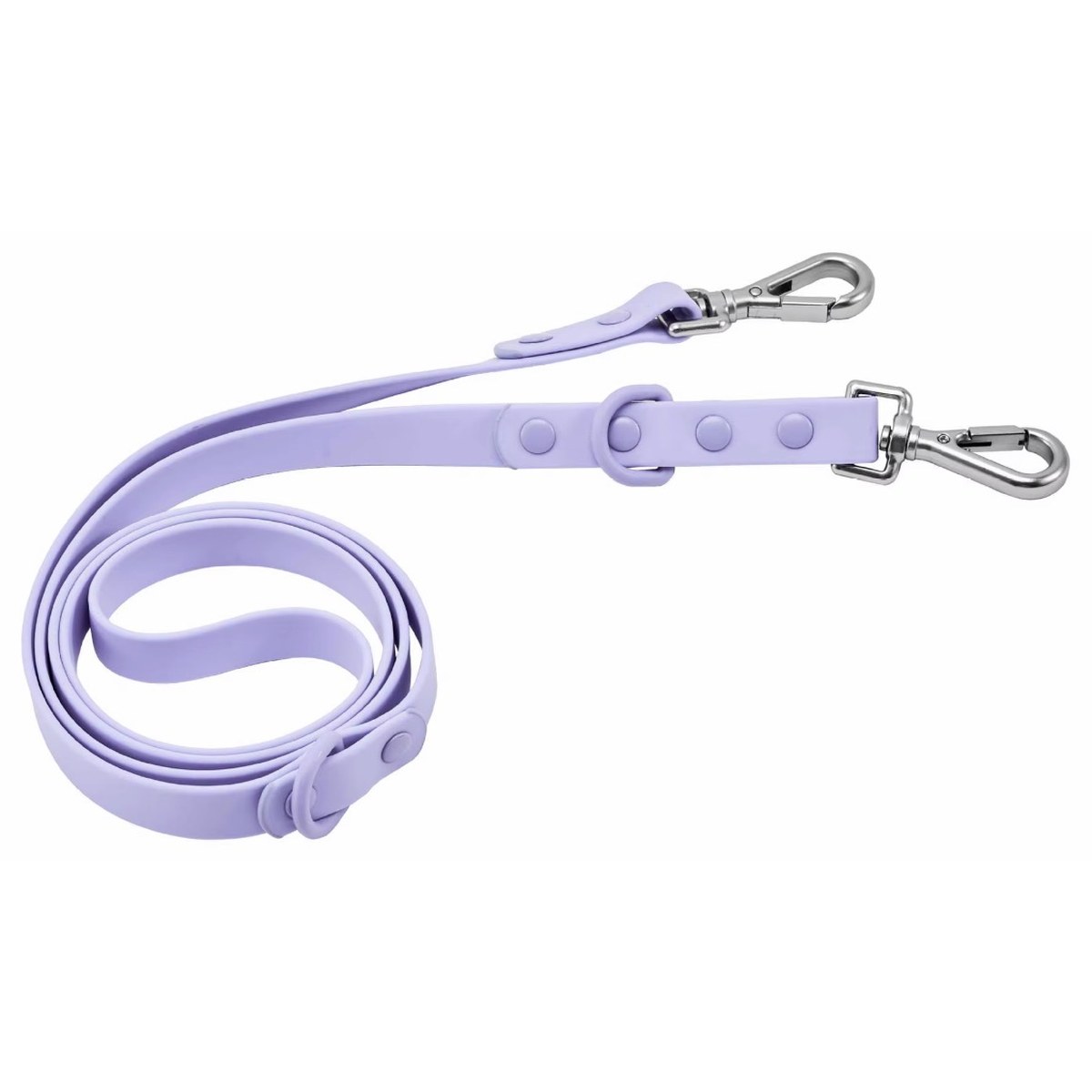
Accessory
Standard Lead
Padded-handle 1.2m lead in Pawpoint tan.
Fits any dog

Pawpoint on YouTube
Watch the full Curly Coated Retriever video
Breed deep-dives, history and honest ownership talk. New film every week.
Watch now