
Dachshund (Long Haired)
DAKS-hund
Germany· Various German states, particularly the south
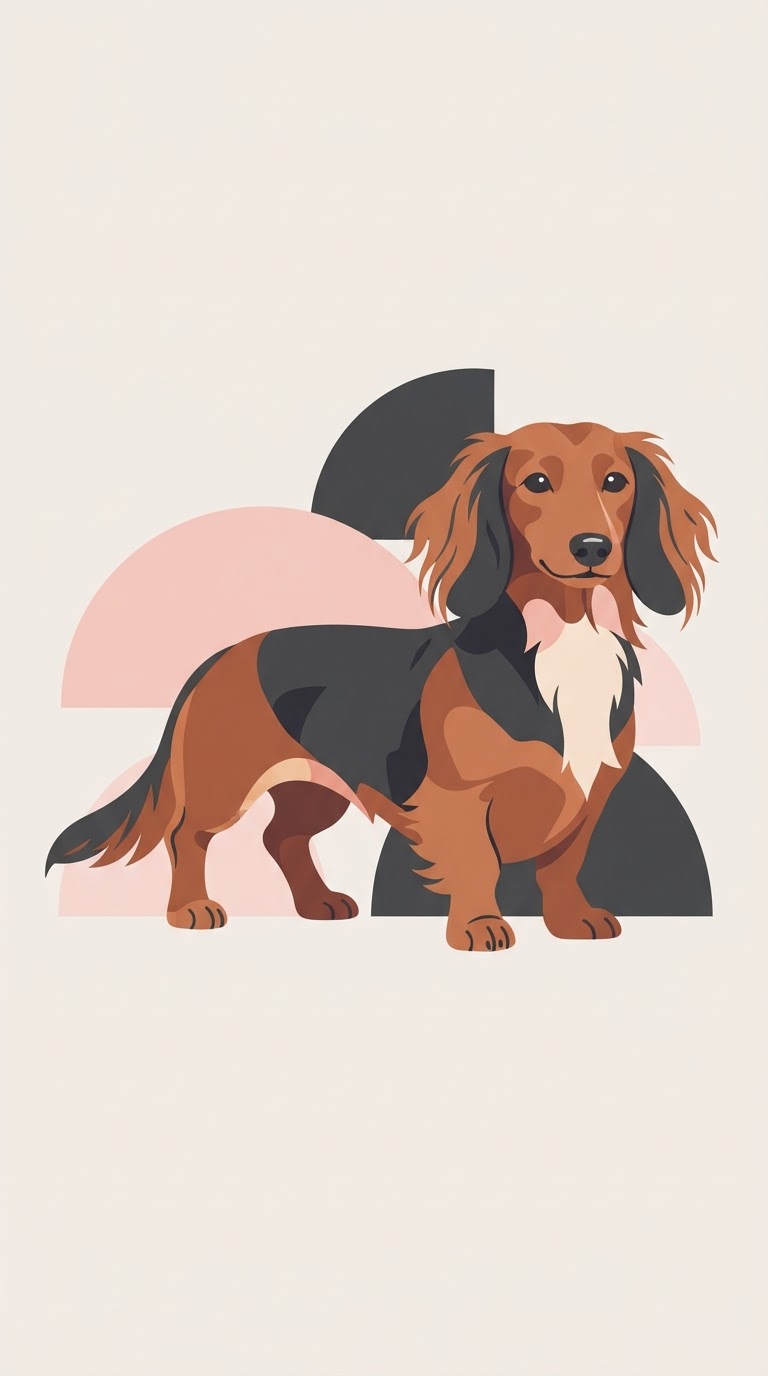
The Long Haired Dachshund is a low-slung German hound bred to go to ground after badgers and foxes, with a silky, slightly wavy coat and a famously determined character.
At a glance
Quick facts
Size
Small
Exercise needs
30-45 minutes daily
Home size suited to
Flat or small home
Grooming frequency
Daily brushing
Coat length
Long
Sheds
Yes
Lifespan
12-16 years
Town or country
Happiest in the country
Garden size needed
Small garden or none
Where it comes from
Origins of the Dachshund (Long Haired)
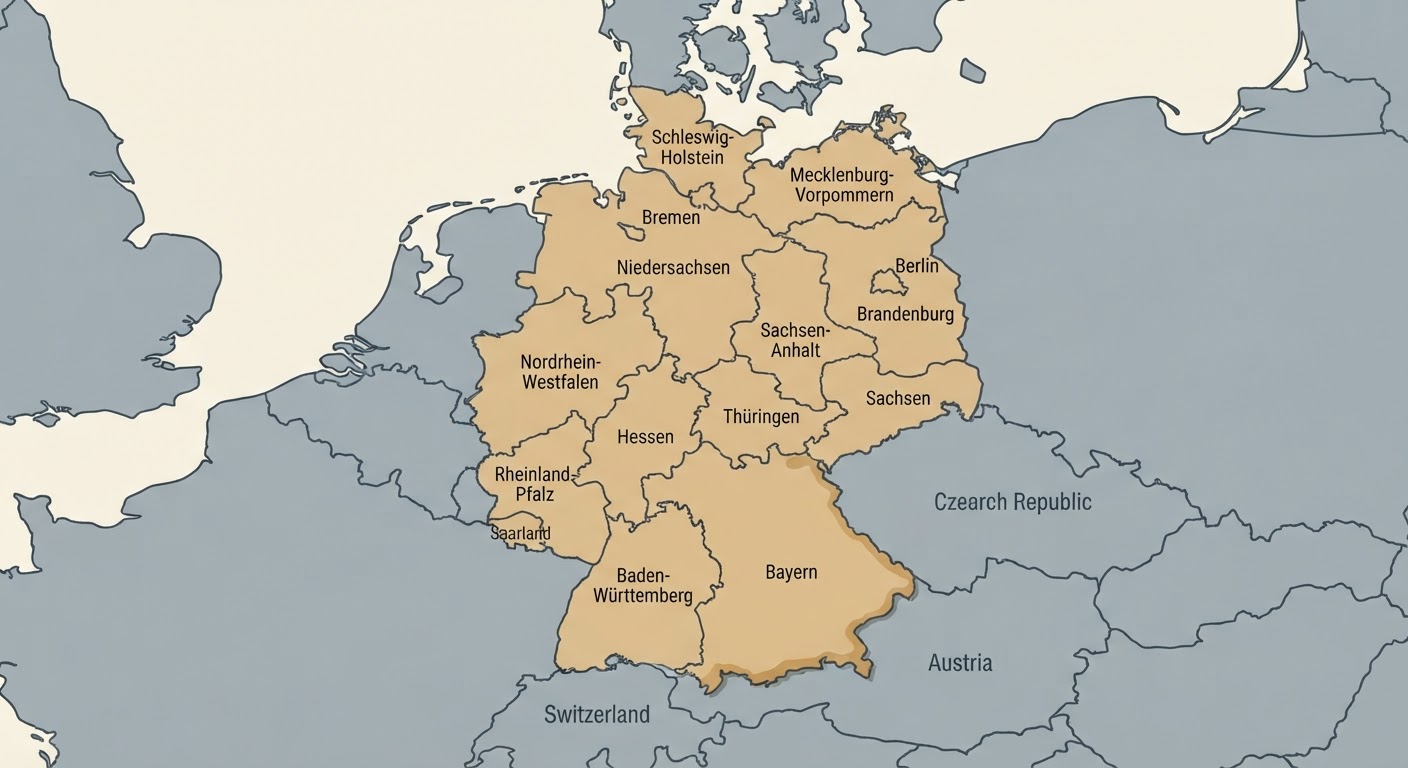
Dachshunds were developed across German forest and farmland to hunt badgers underground, the name itself meaning badger dog. The long-haired coat is believed to owe something to spaniel crosses added to the original short-haired hunting stock.
- Region
- Various German states, particularly the south
- Climate it was bred for
- Temperate forest and farmland
- Original job
- Going to ground after badgers and foxes
The long read
About the breed
The Dachshund's short legs and long body were developed in Germany from the 1600s onward specifically so the dog could enter and work underground burrows, following quarry into tight tunnels where longer-legged hounds could not follow. The long-haired variety is generally thought to have appeared through crosses with spaniels, adding a softer, silkier coat while keeping the same digging, tunnelling build and nose.
Living with a Long Haired Dachshund means accepting a small dog with a large personality. It is bold, often surprisingly stubborn, and was never bred to take instructions from a human standing above ground, so training takes patience and consistent reward-based work rather than force. The long back is a genuine vulnerability; jumping on and off furniture or excessive stair use raises the risk of intervertebral disc disease, so many owners use ramps and steps. The coat needs regular brushing, particularly behind the ears and on the feathering, to prevent tangles.
Today the Long Haired Dachshund is a popular pet and occasional show and field dog across Britain and Germany, valued for its affectionate, often quite vocal nature and its willingness to burrow into blankets and laps just as readily as it once burrowed into badger setts. It suits owners who want a characterful small dog and who are prepared to manage its back health carefully throughout its life.
Living with one
Temperament & needs
Our own ratings, based on the breed standard and how these dogs behave in ordinary homes.
Friendliness
3/5
How openly the Dachshund (Long Haired) greets people it does not know.
Trainability
2/5
Intelligent but independent, bred to make its own decisions underground.
Energy
3/5
Enjoys a good walk and digging opportunities but not a marathon runner.
Barking
4/5
Prone to barking at noises and passers-by.
Grooming
3/5
Silky coat needs regular brushing, especially the feathering on ears and legs.
Suits a first-time owner
2/5
How forgiving the Dachshund (Long Haired) is for someone taking on their first dog.
Sociability
3/5
Devoted to its family, can be wary or vocal with strangers.
Independence
4/5
Strong-willed and confident well beyond its size.
Illustrated breed standard
The points of the breed
Hover or tap a numbered point to read what the standard asks for.
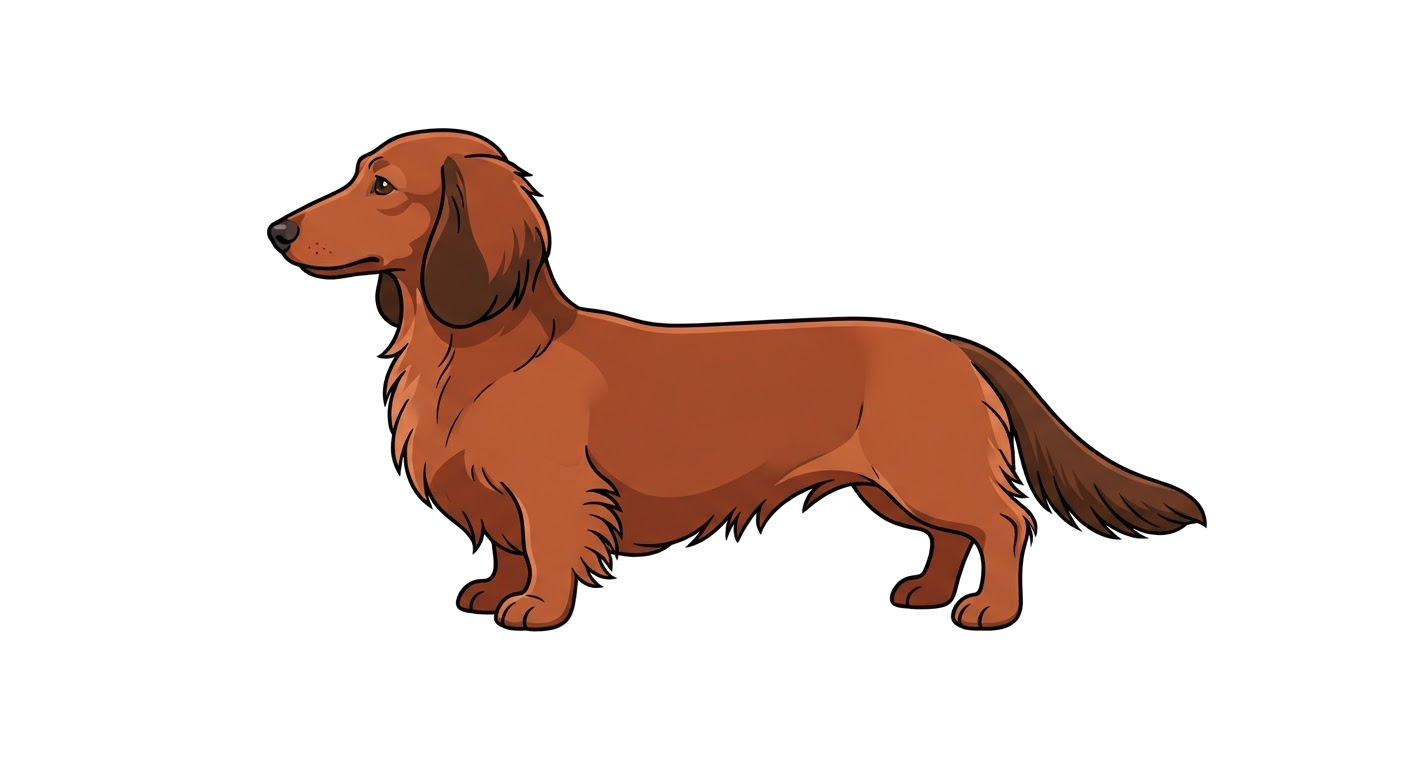
Point 1
Skull
The Dachshund (Long Haired)'s skull is judged on balance rather than size — proportionate to the body, with a clean cheek and a stop typical of the breed. Coarseness or an over-refined head are both faulted.
Colours & patterns
Recognised coats
Which coats the standard accepts — and which are simply popular.
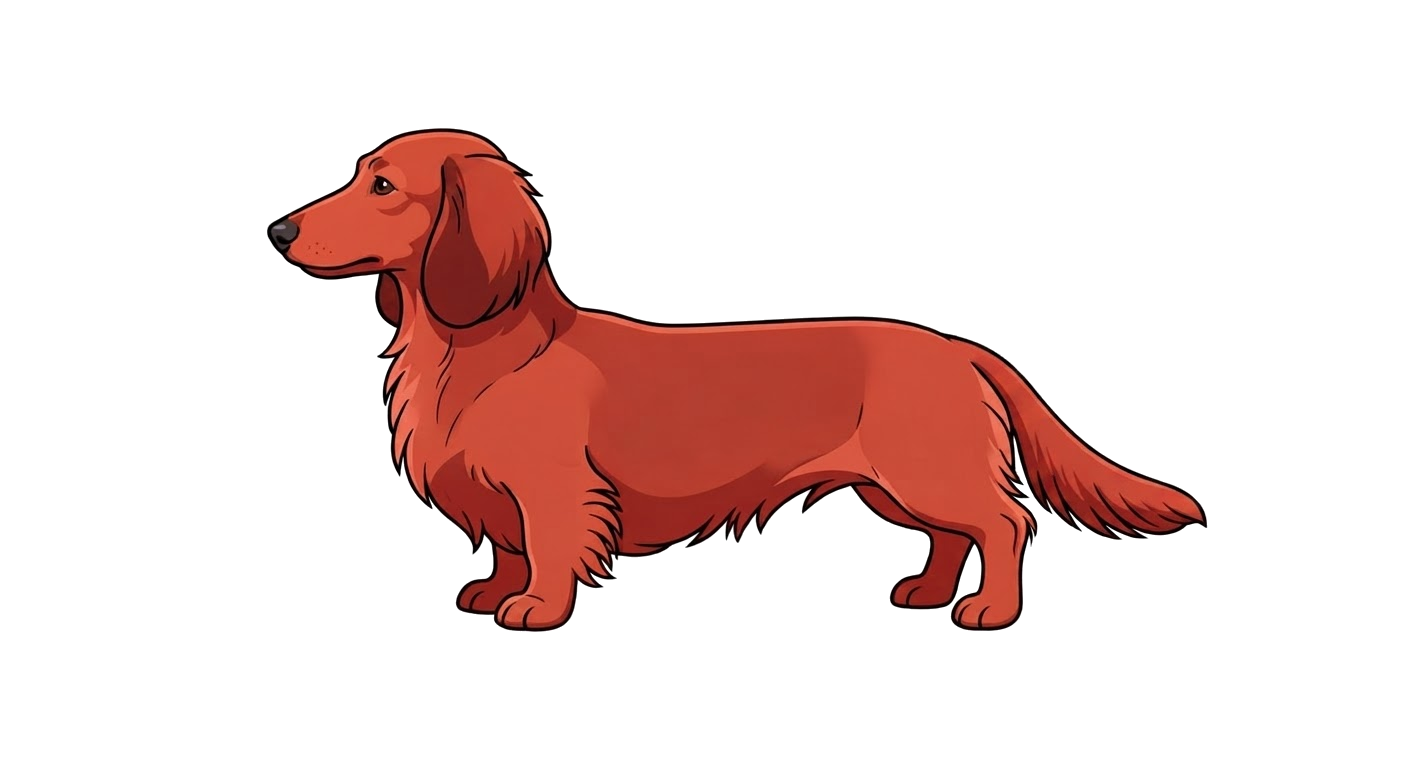
Red
Standard colour
The most common solid colour.
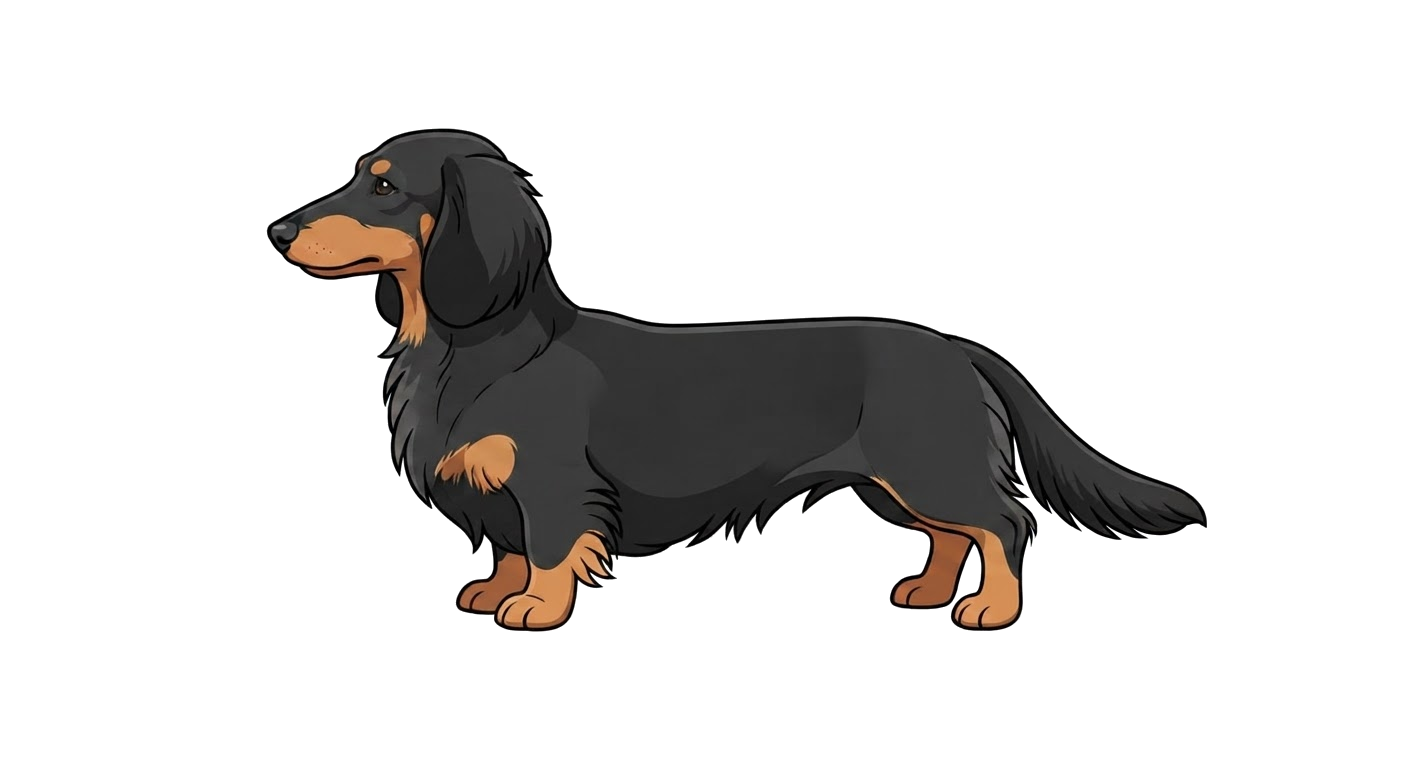
Black and Tan
Standard colour
A classic pattern with tan points over the eyes, chest and legs.
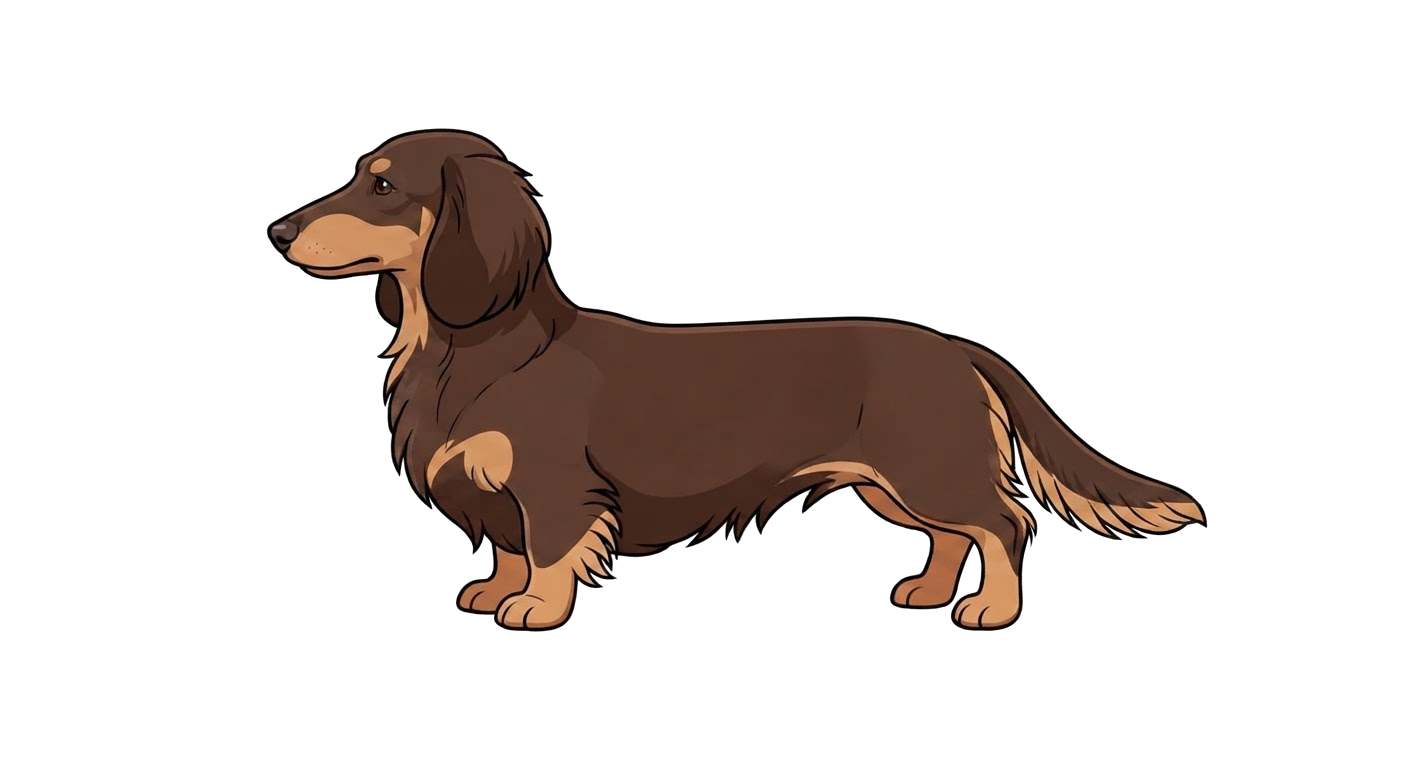
Chocolate and Tan
Standard colour
Warm brown base with tan points.
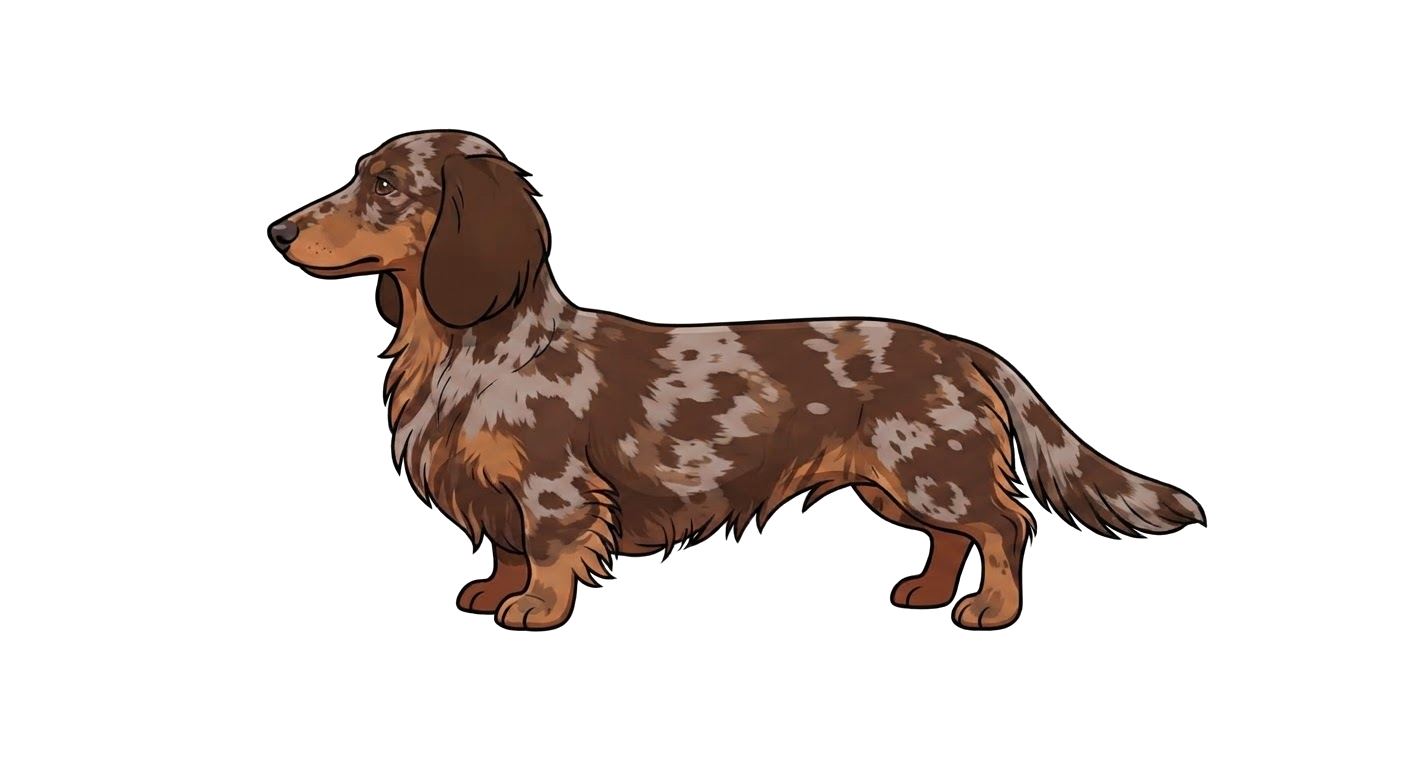
Dapple
Standard colour
Mottled marbling pattern over a solid base colour.
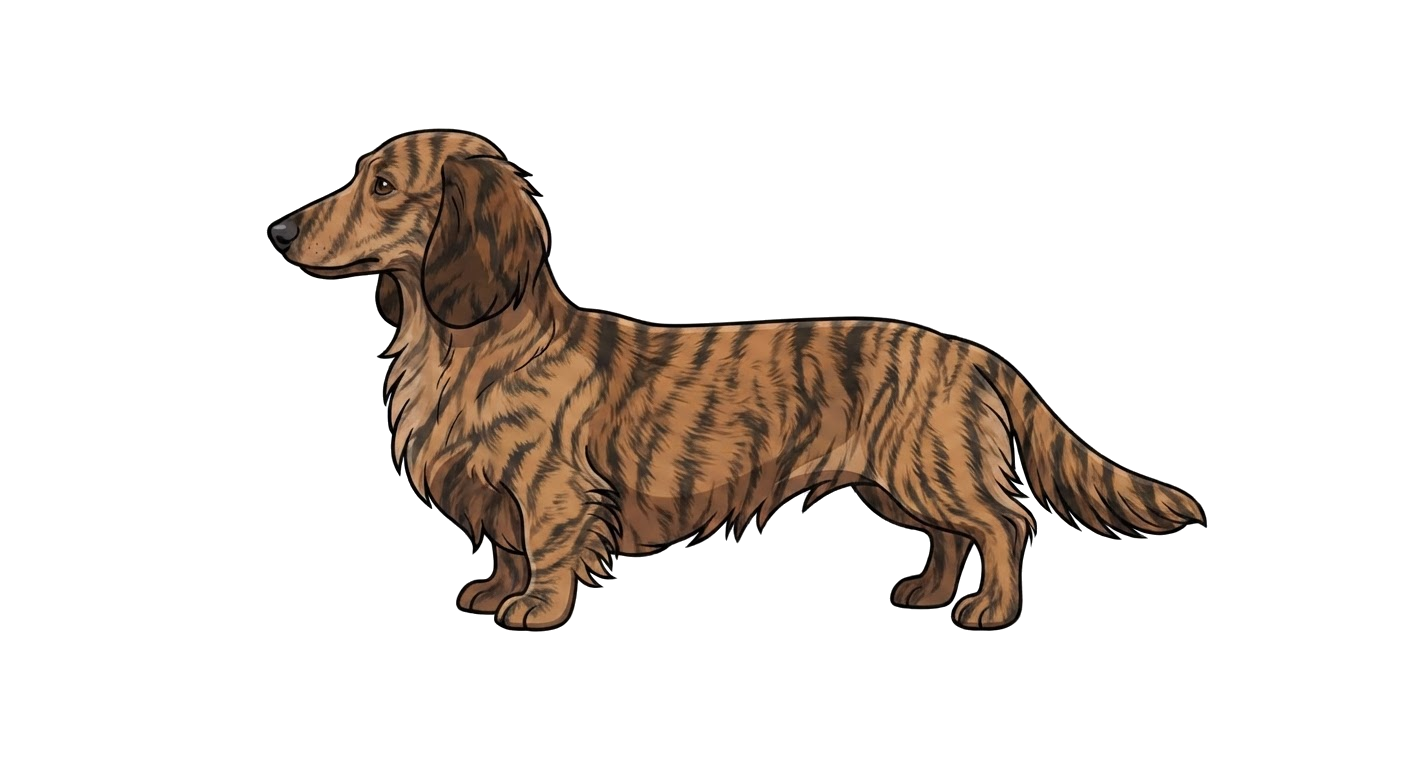
Brindle
Standard colour
Tiger-striped pattern over a solid base.
Timeline
History & development
1600s
Origins in Germany
Short-legged, long-bodied hunting dogs were developed to pursue badgers into their setts.
1700s
Long-haired variety emerges
Crosses with spaniel-type dogs are thought to have produced the silkier long-haired coat.
1888
German breed club founded
The Deutscher Teckelklub was established to standardise the breed.
20th century
Rise as a companion breed
The Dachshund became one of the most popular small companion dogs worldwide, well beyond its hunting origins.
1950s onward
The breed today
Kennel club registrations settled into a steady pattern and the Dachshund (Long Haired) moved from a working specialist to a family companion, with breed clubs in the UK and abroad now focused on health testing and keeping true type alive.
Reference
Breed standard summary
- body
- Long and muscular with a deep, moderately tucked-up belly
- coat
- Soft, straight or slightly waved, longer under the neck, body and tail
- ears
- Set high, long, rounded, hanging close to the cheeks
- eyes
- Medium, oval, dark
- head
- Long and tapering, viewed from above and side
- size
- Small hound, long-backed and short-legged
- tail
- Continues the topline, not curled or carried too high
- colour
- Red, Black and Tan, Chocolate and Tan, Dapple, Brindle. Colours outside this list are seen but are not accepted by the kennel clubs.
- temperament
- Typical of the breed: strongest in independence, barking, energy. Nervousness or aggression are serious faults in the show ring and in the home.
- general appearance
- Long, low-bodied hound with a bold, confident carriage
Health
What to screen for
Green means little to worry about, amber means ask the breeder for test results, red means manage it actively.
Intervertebral disc disease
Watch closely
Manage weight, limit jumping, and use ramps for furniture and cars.
Progressive retinal atrophy
Screen for it
Ask breeders for eye clearance certificates on breeding stock.
Patellar luxation
Screen for it
Request a patella check from the breeder before buying.
Obesity
Watch closely
Keep the dog lean, since excess weight adds direct strain to the long back.
General information only — always speak to your vet about your own dog.
From real owners
Dogs like this
Dachshund (Long Haired)s added by PawPoint members through their pet passports. Share yours to appear here.
Loading the wall…
Made for the Dachshund (Long Haired)
The book, plus prints, hoodies and mugs using our own Dachshund (Long Haired) illustration — and one everyday accessory that suits any dog.
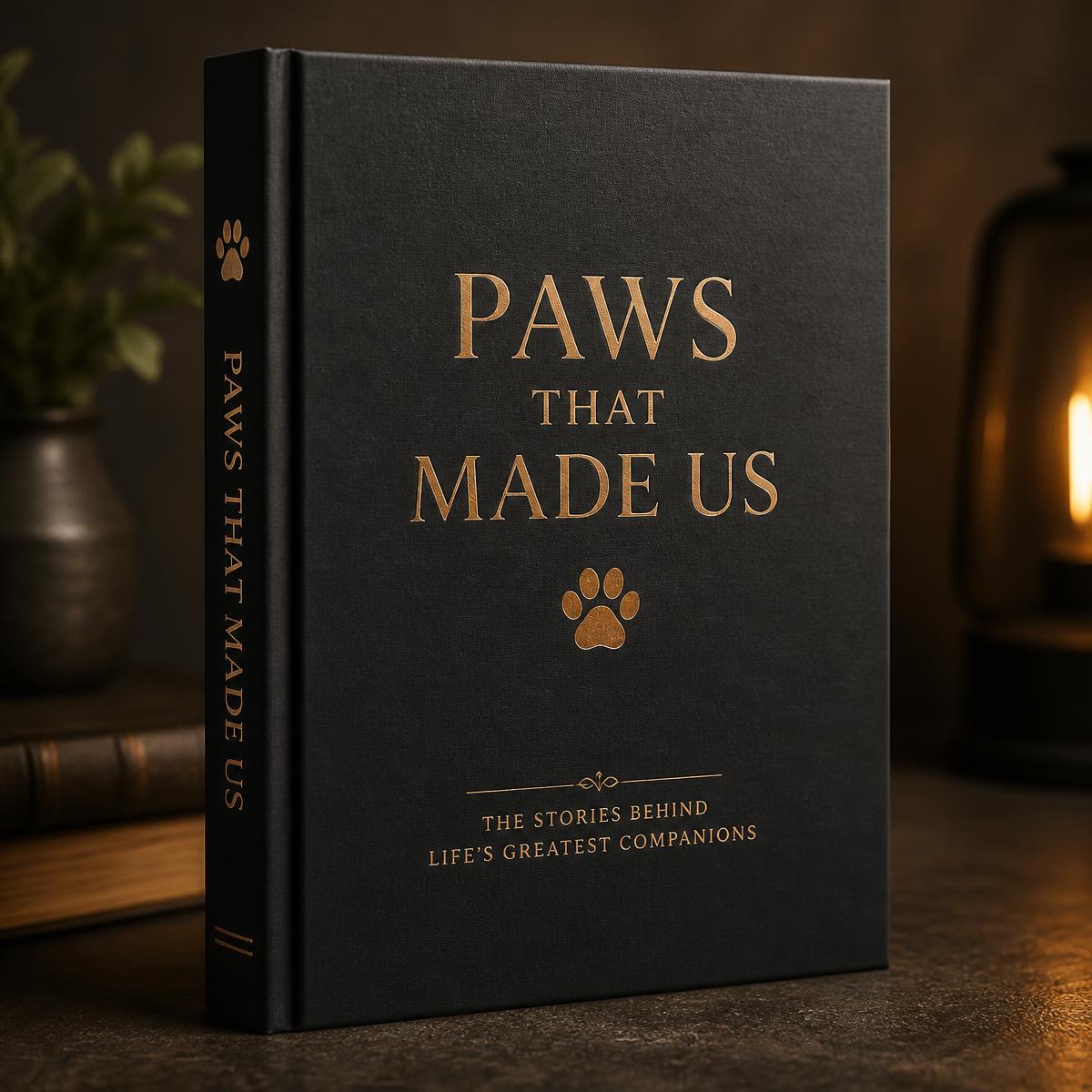
The book
Pawpoint: The Complete Dog Breed Book
Every officially recognised breed plus the unofficial ones nobody else documents. 400+ pages, hardback, printed and shipped from the UK.
Own stock — shipped by us
Framed poster
Dachshund (Long Haired) Framed Poster
Museum-weight print of our Dachshund (Long Haired) illustration, framed or unframed.
Printed to order
Hoodie
Dachshund (Long Haired) Hoodie
Heavyweight hoodie carrying the Dachshund (Long Haired) illustration on the chest.
Printed to order
Mug
Dachshund (Long Haired) Mug
Ceramic mug with the Dachshund (Long Haired) illustration wrapped around it.
Printed to order
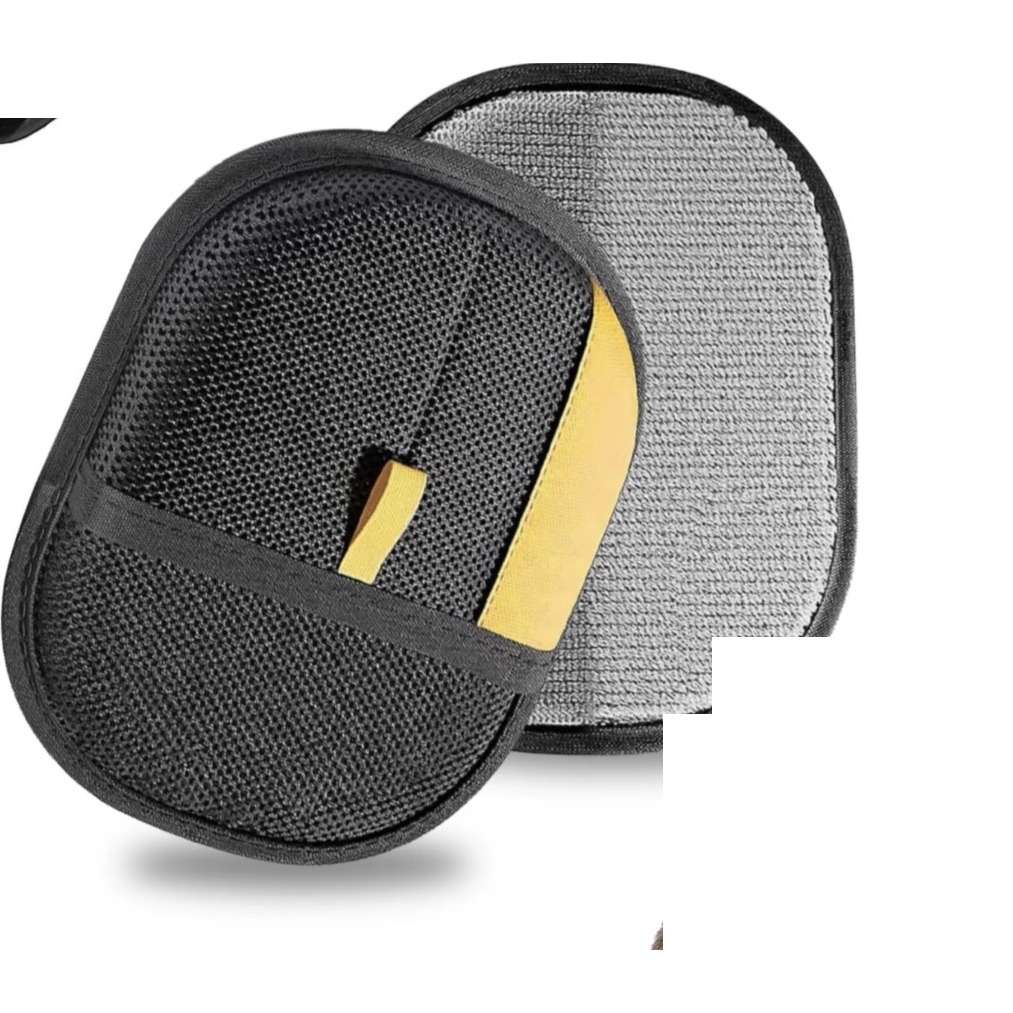
Accessory
Slicker & Deshedding Brush
Self-cleaning slicker head for coats of every length.
Fits any dog
Pawpoint on YouTube
Watch the full Dachshund (Long Haired) video
Breed deep-dives, history and honest ownership talk. New film every week.
Watch now