
Dachshund (Smooth Haired)
DAKS-hund
Germany· Various German states
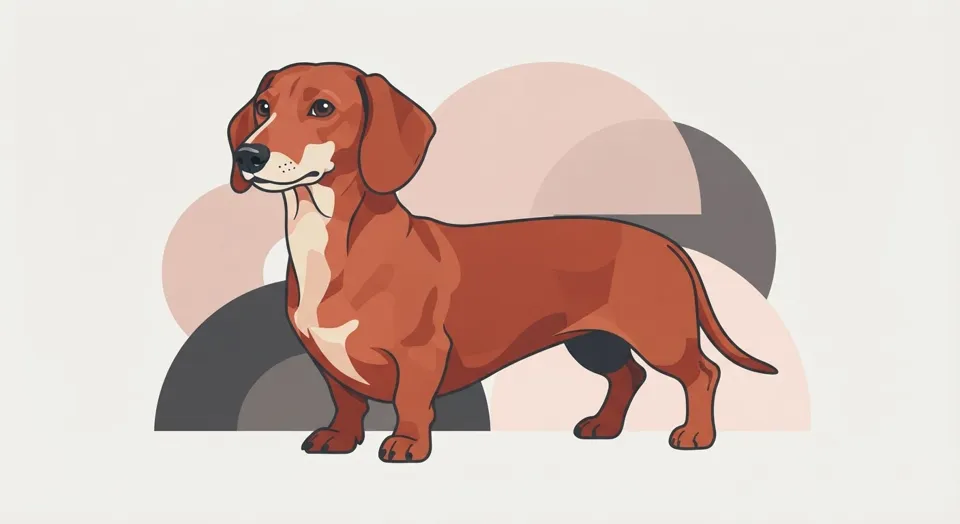
The Smooth Haired Dachshund is the original short-coated version of Germany's badger-hunting hound, compact, low to the ground and considerably more independent-minded than its size suggests.
At a glance
Quick facts
- Size
- Small
- Exercise needs
- 30-45 minutes daily
- Home size suited to
- Flat or small home
- Grooming frequency
- Weekly brush
- Coat length
- Short
- Sheds
- Yes, heavily when moulting
- Lifespan
- 12-16 years
- Town or country
- Happiest in the country
- Garden size needed
- Small garden or none
Where it comes from
Origins of the Dachshund (Smooth Haired)
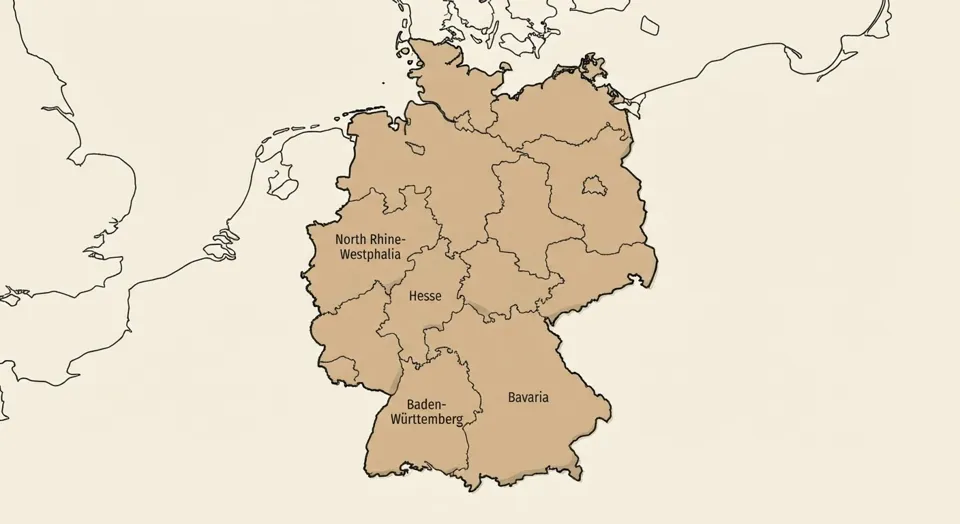
The Smooth Haired Dachshund is the original coat type of this German badger hound, developed across forested and farmed regions where hunters needed a dog able to fit into narrow underground setts. Its build reflects that job far more than fashion.
- Region
- Various German states
- Climate it was bred for
- Temperate forest and farmland
- Original job
- Going to ground after badgers and foxes
The long read
About the breed
Developed in Germany from at least the 1600s, the smooth coat is the ancestral type from which the wire and long-haired varieties are thought to have branched through later crosses. Its long body and short, powerful legs let it dig into and travel through badger and fox setts, while a deep chest and loud voice underground helped hunters locate it once it had cornered quarry.
Living with a Smooth Haired Dachshund is rarely dull. It is affectionate with its own family, often fiercely so, but was bred to hunt alone underground and think for itself, which shows up as a stubborn streak at training time. Food-based, patient methods work far better than repetition or correction. The short coat sheds moderately and needs little grooming, but the long spine is a genuine weak point, so stairs, sofas and car boots are best managed with ramps or lifting rather than free jumping.
Today it is one of the most recognisable small dogs in the world, popular as a pet across Britain, still used for hunting in parts of continental Europe, and a familiar sight at Kennel Club shows in both standard and miniature sizes. Its combination of a big personality in a small, low body has kept it consistently popular for well over a century.
Living with one
Temperament & needs
Our own ratings, based on the breed standard and how these dogs behave in ordinary homes.
Friendliness
3/5
How openly the Dachshund (Smooth Haired) greets people it does not know.
Trainability
2/5
Clever but bred to work independently, so training needs patience.
Energy
3/5
Enjoys walks and digging but does not need marathon exercise.
Barking
4/5
Alert and vocal, quick to bark at noises.
Grooming
1/5
Short coat needs only a weekly wipe-over and occasional bath.
Suits a first-time owner
2/5
How forgiving the Dachshund (Smooth Haired) is for someone taking on their first dog.
Sociability
3/5
Loyal and affectionate at home, often reserved with strangers.
Independence
4/5
Confident and strong-willed, rarely a pushover.
Illustrated breed standard
The points of the breed
Hover or tap a numbered point to read what the standard asks for.
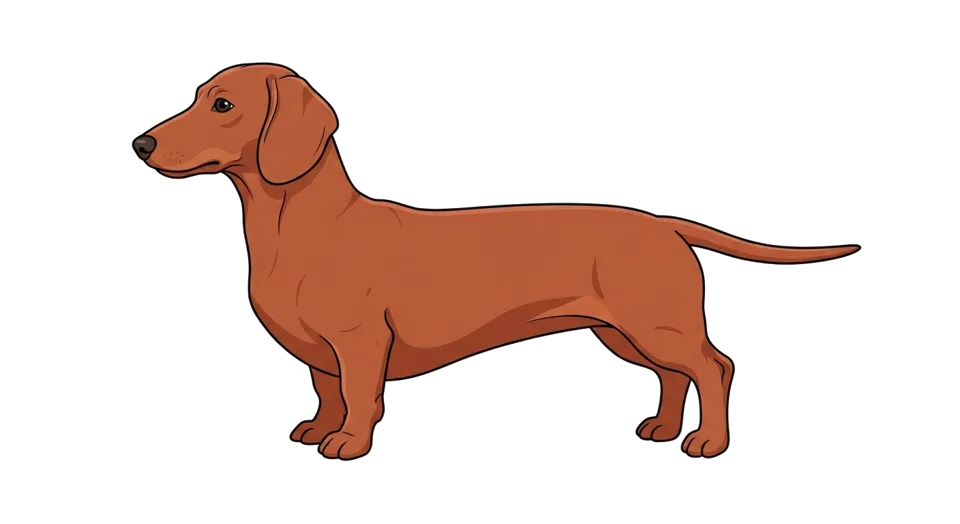
Point 1
Skull
The Dachshund (Smooth Haired)'s skull is judged on balance rather than size — proportionate to the body, with a clean cheek and a stop typical of the breed. Coarseness or an over-refined head are both faulted.
Colours & patterns
Recognised coats
Which coats the standard accepts — and which are simply popular.
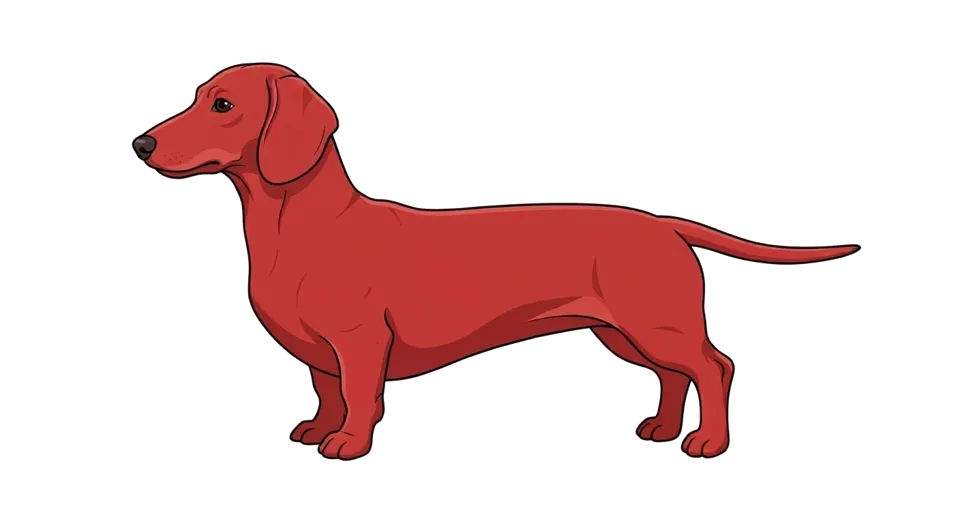
Red
Standard colour
The most widely seen solid colour.
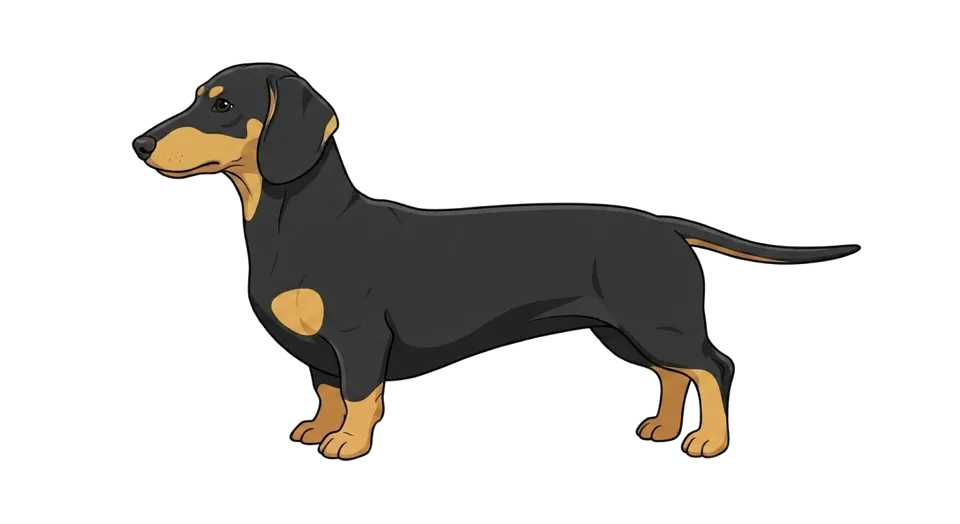
Black and Tan
Standard colour
Classic pattern with tan points.
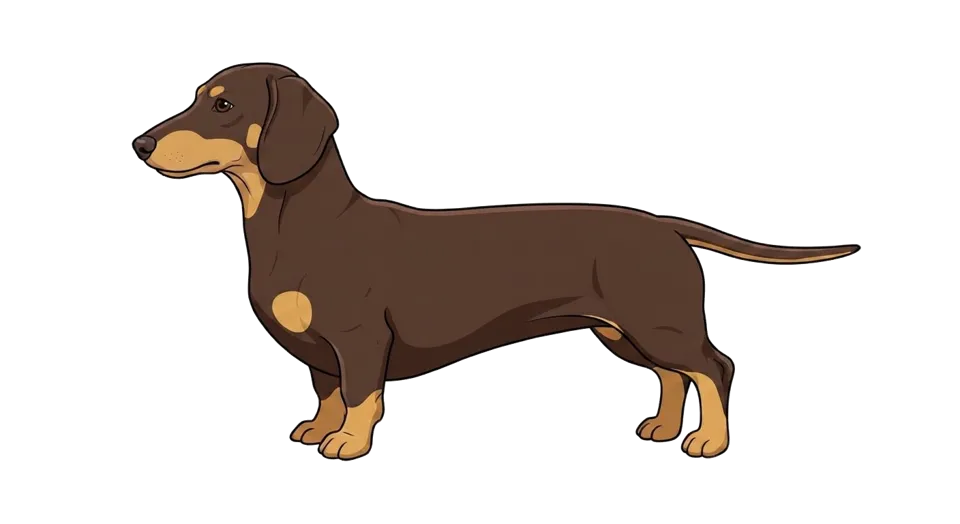
Chocolate and Tan
Standard colour
Warm brown with tan points.
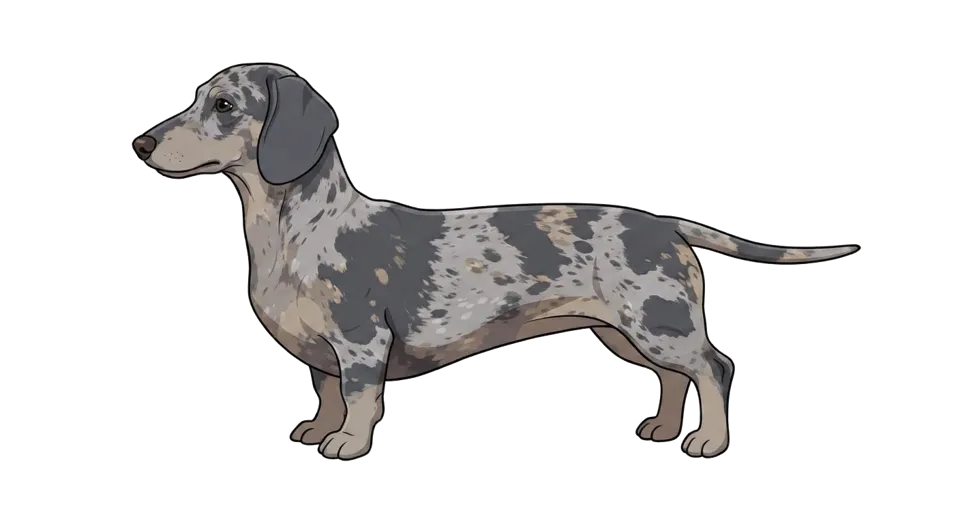
Dapple
Standard colour
Mottled marbled pattern, striking but requires careful breeding to avoid health issues in double dapples.
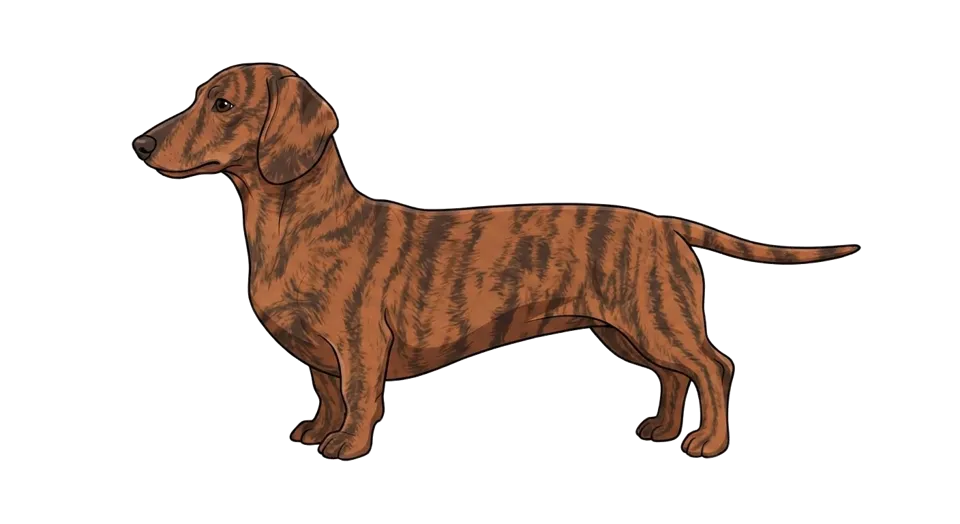
Brindle
Standard colour
Striped pattern over a solid base colour.
Timeline
History & development
1600s
Early German hunting dog
Short-legged hounds were bred to pursue badgers and foxes into underground burrows.
1888
German breed club founded
The Deutscher Teckelklub was formed to define and standardise the breed.
1900s
Introduction to Britain
The breed grew in popularity in the UK, interrupted briefly by anti-German sentiment during the World Wars.
Present day
Global companion breed
Now one of the most popular small dogs worldwide, kept mainly as a pet.
Reference
Breed standard summary
- body
- Long, deep-chested, moderately tucked up
- coat
- Short, dense, shiny and close-fitting
- ears
- Set high, rounded, hanging close to the head
- eyes
- Medium, oval, dark
- head
- Long and tapering with a slight stop
- size
- Small, long-backed hound
- tail
- Follows the line of the spine, tapering to a point
- colour
- Red, Black and Tan, Chocolate and Tan, Dapple, Brindle. Colours outside this list are seen but are not accepted by the kennel clubs.
- temperament
- Typical of the breed: strongest in independence, barking, energy. Nervousness or aggression are serious faults in the show ring and in the home.
- general appearance
- Long, low, muscular hound with a bold expression
Health
What to screen for
Green means little to worry about, amber means ask the breeder for test results, red means manage it actively.
Intervertebral disc disease
Watch closely
Keep the dog lean and limit jumping from furniture or car boots.
Progressive retinal atrophy
Screen for it
Ask for eye test certificates on the breeding pair.
Patellar luxation
Screen for it
Request a patella check from the breeder.
Obesity
Watch closely
Extra weight adds direct pressure on the long spine.
General information only — always speak to your vet about your own dog.
From real owners
Dachshund (Smooth Haired)s in the PAWPOINT Pack
Dachshund (Smooth Haired)s added by PawPoint members through their pet passports. Share yours to appear here.
Loading the wall…
Made for the Dachshund (Smooth Haired)
The book, plus hoodies, tees and mugs featuring the Dachshund (Smooth Haired).