
Dalmatian
dal-MAY-shuhn
Croatia· Dalmatia, Adriatic coast
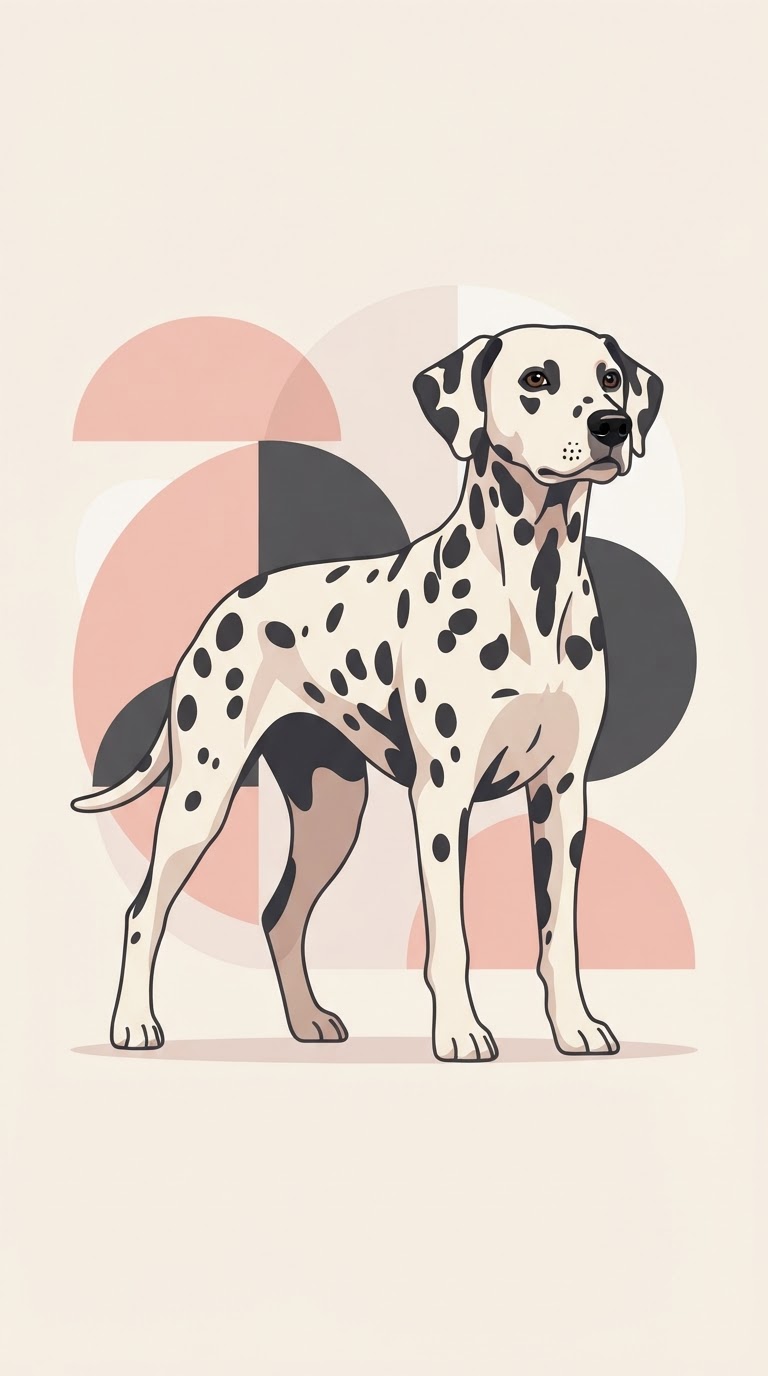
The Dalmatian is a tall, spotted coach dog bred to run alongside horse-drawn carriages, an athletic breed with far more stamina than its ornamental reputation suggests.
At a glance
Quick facts
Size
Large
Exercise needs
90+ minutes daily
Home size suited to
Medium to large home
Grooming frequency
Weekly brush
Coat length
Short
Sheds
Yes, heavily when moulting
Lifespan
11-13 years
Town or country
Either, happy in town
Garden size needed
Medium or larger
Where it comes from
Origins of the Dalmatian

The breed's name comes from Dalmatia, the historical Adriatic coastal region of modern Croatia, though its precise origins are debated among historians. It found its defining job in Britain and continental Europe as a coach dog, trotting for hours beside horse-drawn carriages.
- Region
- Dalmatia, Adriatic coast
- Climate it was bred for
- Mediterranean coastal climate
- Original job
- Coach dog, running alongside horse-drawn carriages
The long read
About the breed
Its precise origins are uncertain and disputed, but the breed has long been associated with the historical region of Dalmatia on the Adriatic coast, and by the 1700s it was firmly established in Britain as a carriage dog, trotting for miles beside coaches and guarding horses and property at coaching inns overnight. This role demanded genuine endurance, and the breed's spots, unique among dog breeds in pattern, made it instantly recognisable riding alongside a coach.
Living with a Dalmatian means living with a genuinely energetic dog; it was bred to run for hours and a couple of short walks will not meet its needs, leading to destructive or anxious behaviour if under-exercised. It is intelligent and can be trained well but needs an owner committed to consistent, early socialisation, since the breed can be reserved or protective without it. The short coat sheds constantly, all year round, more than its length suggests, and a good vacuum cleaner becomes a daily necessity in Dalmatian households.
Today the breed is best known to the wider public through Disney's 101 Dalmatians, which triggered a wave of impulse buying in the 1990s followed by a wave of abandonments once owners discovered the exercise and grooming demands. It remains a popular breed in Britain for people who genuinely want a running or cycling companion, and unlike its film image, it thrives on real jobs and structure rather than looking decorative on a sofa.
Living with one
Temperament & needs
Our own ratings, based on the breed standard and how these dogs behave in ordinary homes.
Friendliness
3/5
How openly the Dalmatian greets people it does not know.
Trainability
4/5
Intelligent and responsive with consistent, positive training.
Energy
5/5
Bred for stamina, needs substantial daily running or cycling exercise.
Barking
3/5
Alert watchdog, barks to announce but not constantly.
Grooming
2/5
Short coat sheds heavily year-round despite its length.
Suits a first-time owner
3/5
How forgiving the Dalmatian is for someone taking on their first dog.
Sociability
3/5
Loyal to family, needs thorough early socialisation to be relaxed with strangers.
Independence
3/5
Can think for itself but works well as part of a team with its owner.
Illustrated breed standard
The points of the breed
Hover or tap a numbered point to read what the standard asks for.
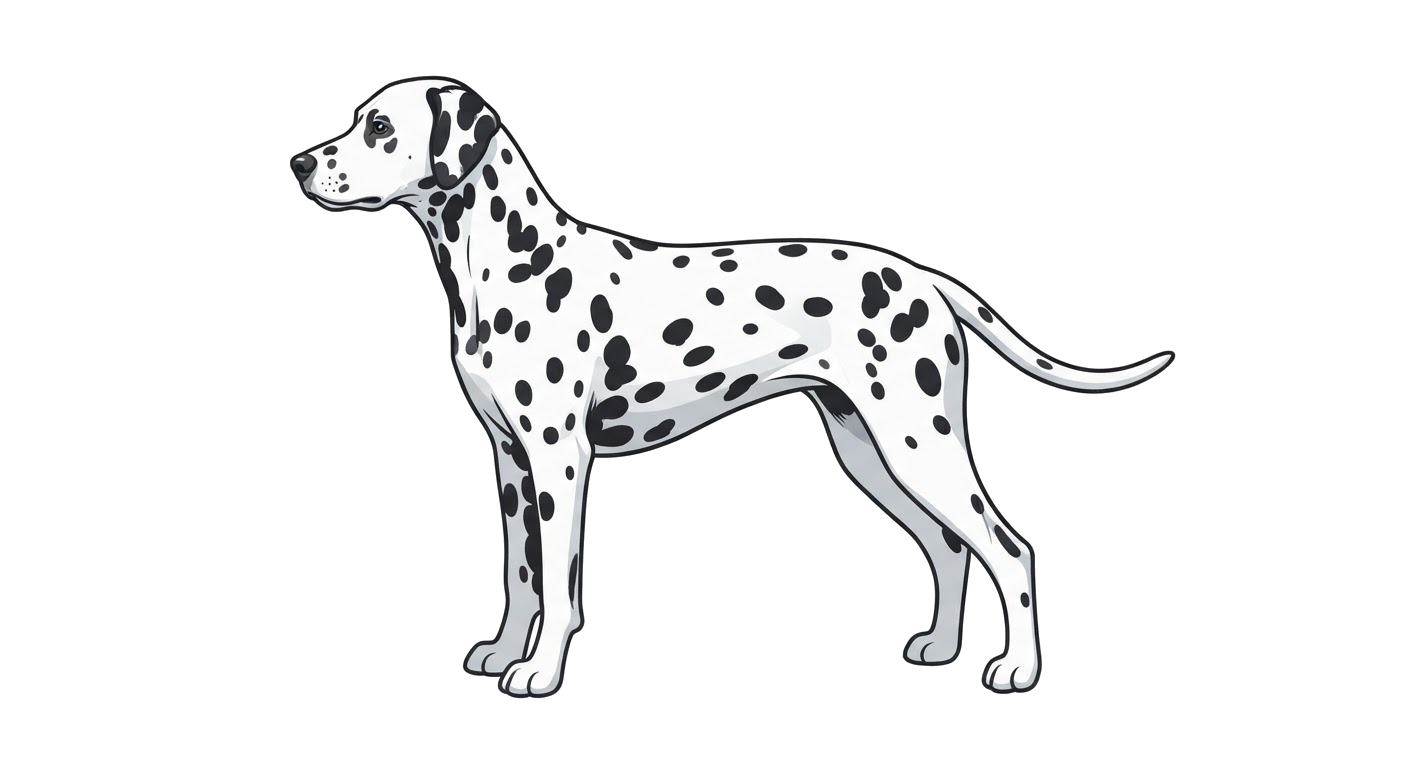
Point 1
Skull
The Dalmatian's skull is judged on balance rather than size — proportionate to the body, with a clean cheek and a stop typical of the breed. Coarseness or an over-refined head are both faulted.
Colours & patterns
Recognised coats
Which coats the standard accepts — and which are simply popular.
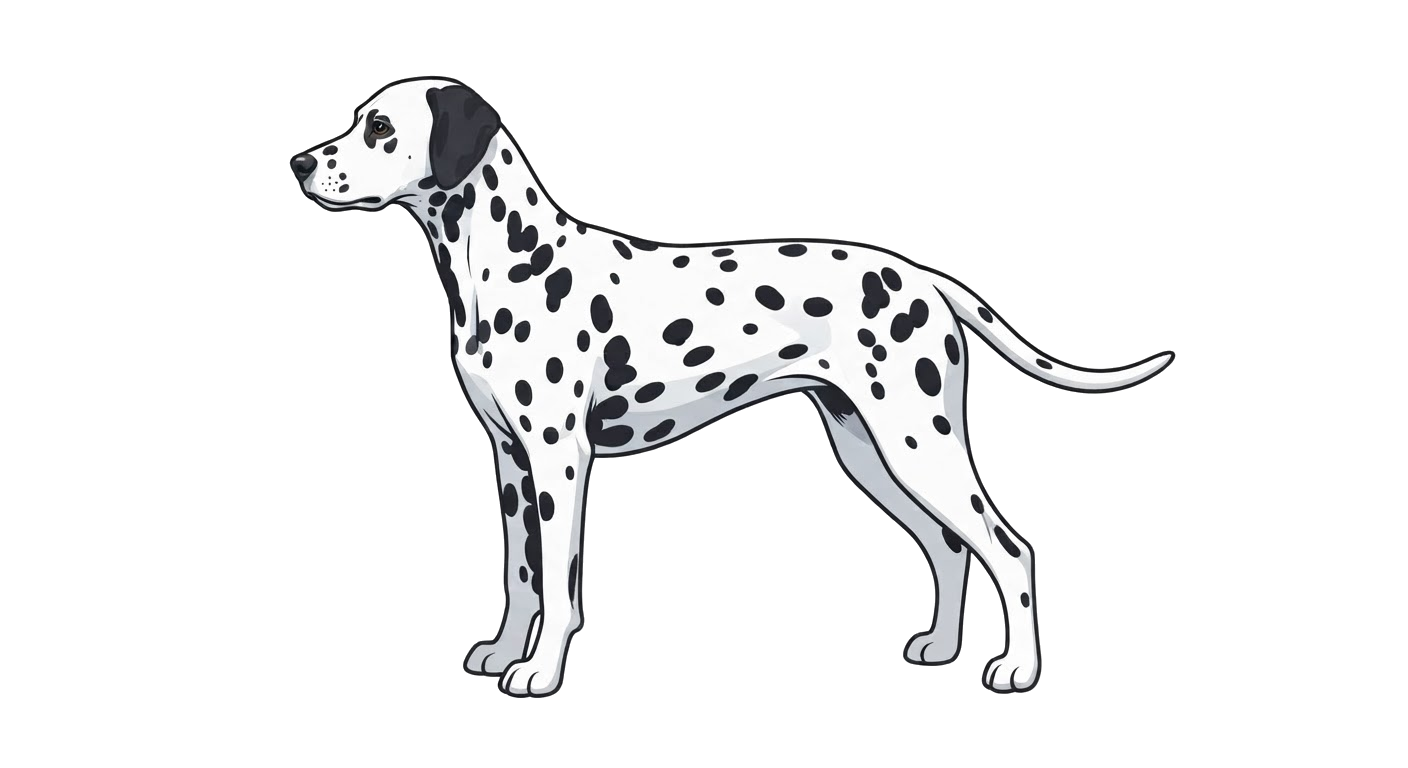
Black Spotted
Standard colour
Black spots on a pure white ground, the most familiar variant.
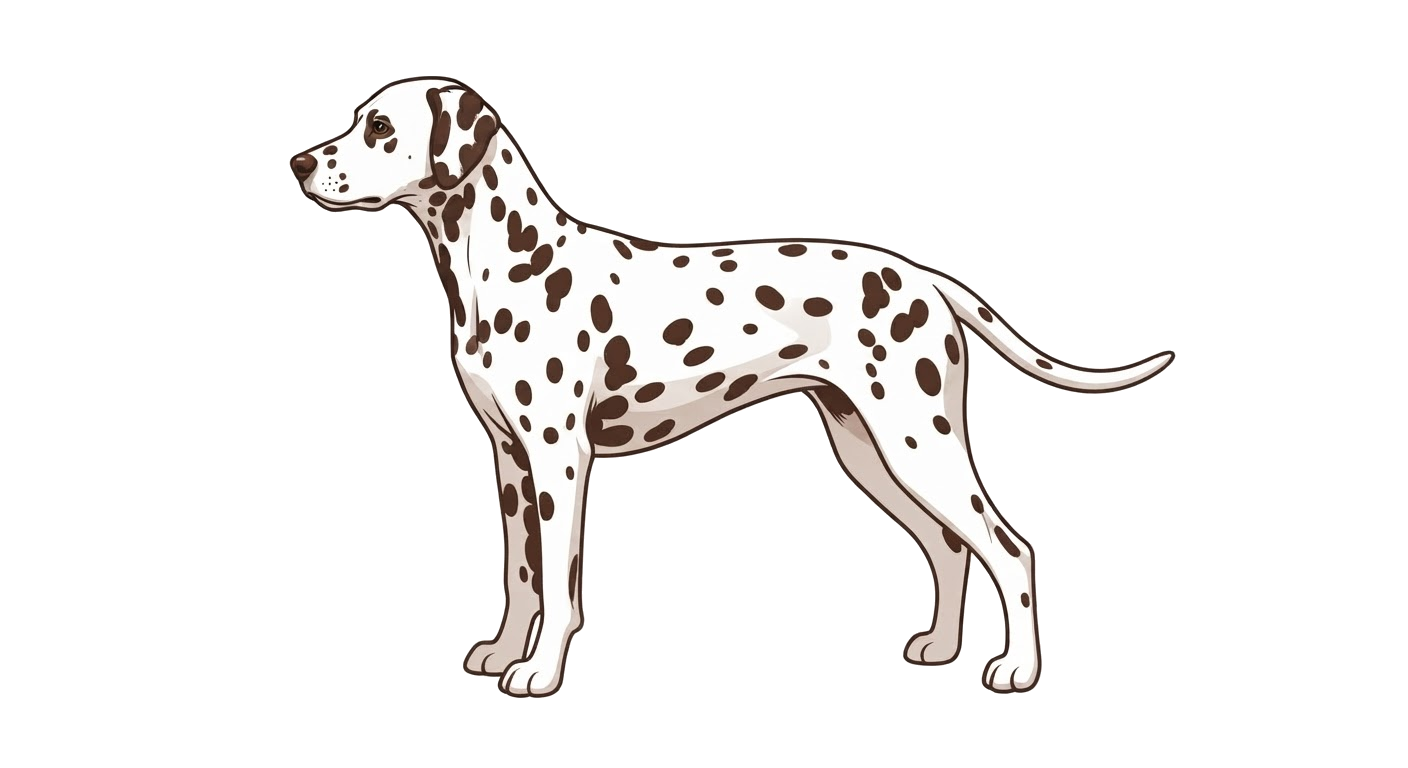
Liver Spotted
Standard colour
Brown spots on white, equally accepted in the breed standard.
Outside the standard
Other colours
Dilute coats you will see advertised. They are the same breed, but no kennel club accepts them.
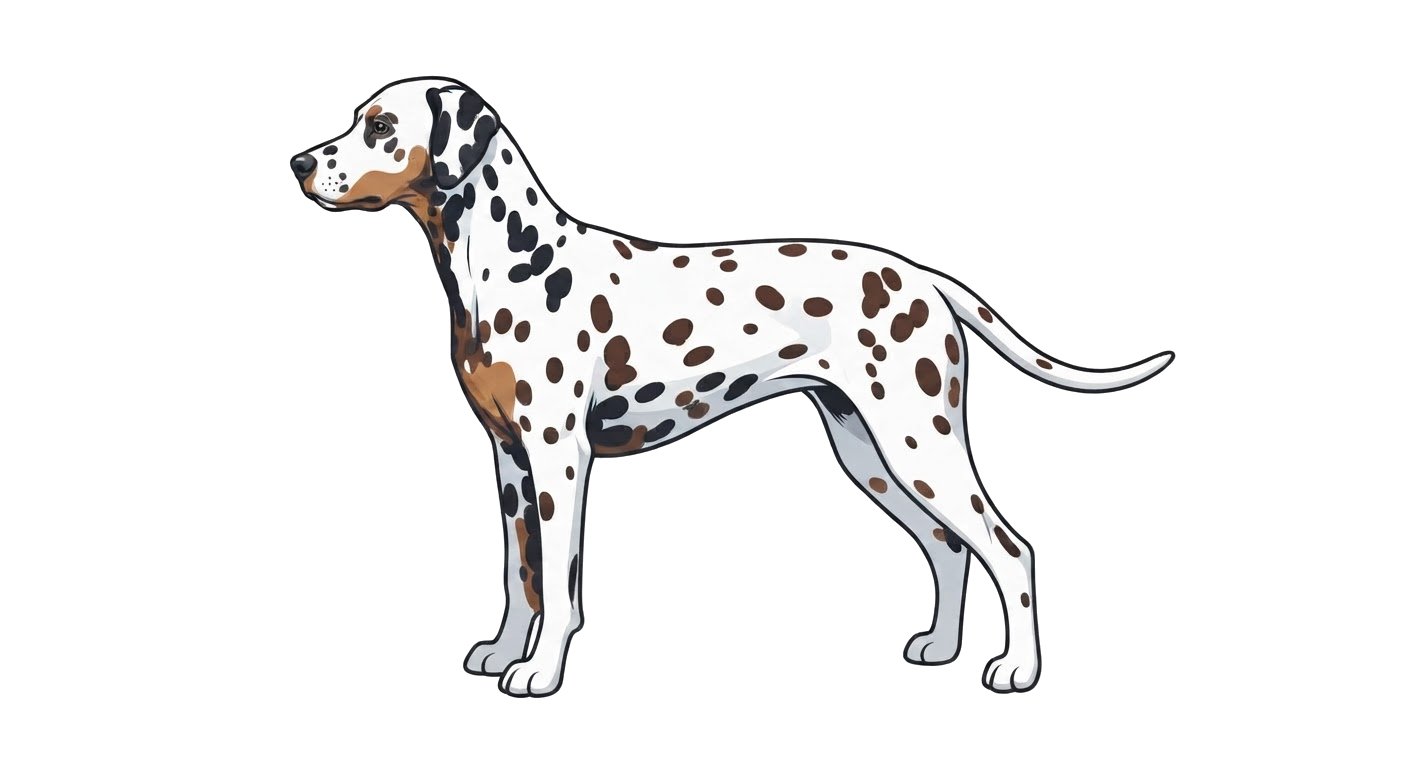
Tricolour markings
Not in the standard
Additional tan markings occasionally seen but not accepted in the standard.
Timeline
History & development
1600s-1700s
Early references
Spotted dogs resembling the modern Dalmatian are recorded in the Dalmatia region and elsewhere in Europe.
1700s
Coach dog role in Britain
The breed became firmly established as a carriage-running and stable-guarding dog among the British aristocracy.
1890
Breed club formed
The Dalmatian Club was founded in England to formalise the breed standard.
1996
Disney-driven popularity spike
101 Dalmatians caused a surge in demand followed by a wave of abandoned dogs once owners found the exercise needs overwhelming.
Reference
Breed standard summary
- body
- Deep chest, powerful, well-balanced
- coat
- Short, hard, dense, sleek and glossy, evenly spotted
- ears
- Set fairly high, moderate size, tapering to a rounded point
- eyes
- Medium, round, dark or amber depending on coat colour
- gait
- Steady, effortless trot with strong reach and drive
- head
- Fairly long, no loose skin, flat skull
- size
- Large, athletic breed
- tail
- Reaches to the hock, carried with a slight upward curve
- colour
- Black Spotted, Liver Spotted. Colours outside this list are seen but are not accepted by the kennel clubs.
- temperament
- Typical of the breed: strongest in energy, trainability, sociability. Nervousness or aggression are serious faults in the show ring and in the home.
- general appearance
- Elegant, athletic, muscular dog of great endurance
Health
What to screen for
Green means little to worry about, amber means ask the breeder for test results, red means manage it actively.
Deafness
Watch closely
BAER hearing testing of puppies is essential; ask to see results before buying.
Urinary stones (urate)
Screen for it
Ask about diet management and whether parents have a history of bladder stones.
Hip dysplasia
Screen for it
Request BVA/KC hip scores on both parents.
Skin allergies
Low concern
Occurs occasionally; a vet can advise on diet if it appears.
General information only — always speak to your vet about your own dog.
From real owners
Dogs like this
Dalmatians added by PawPoint members through their pet passports. Share yours to appear here.
Loading the wall…
Made for the Dalmatian
The book, plus prints, hoodies and mugs using our own Dalmatian illustration — and one everyday accessory that suits any dog.

The book
Pawpoint: The Complete Dog Breed Book
Every officially recognised breed plus the unofficial ones nobody else documents. 400+ pages, hardback, printed and shipped from the UK.
Own stock — shipped by us
Framed poster
Dalmatian Framed Poster
Museum-weight print of our Dalmatian illustration, framed or unframed.
Printed to order
Hoodie
Dalmatian Hoodie
Heavyweight hoodie carrying the Dalmatian illustration on the chest.
Printed to order
Mug
Dalmatian Mug
Ceramic mug with the Dalmatian illustration wrapped around it.
Printed to order
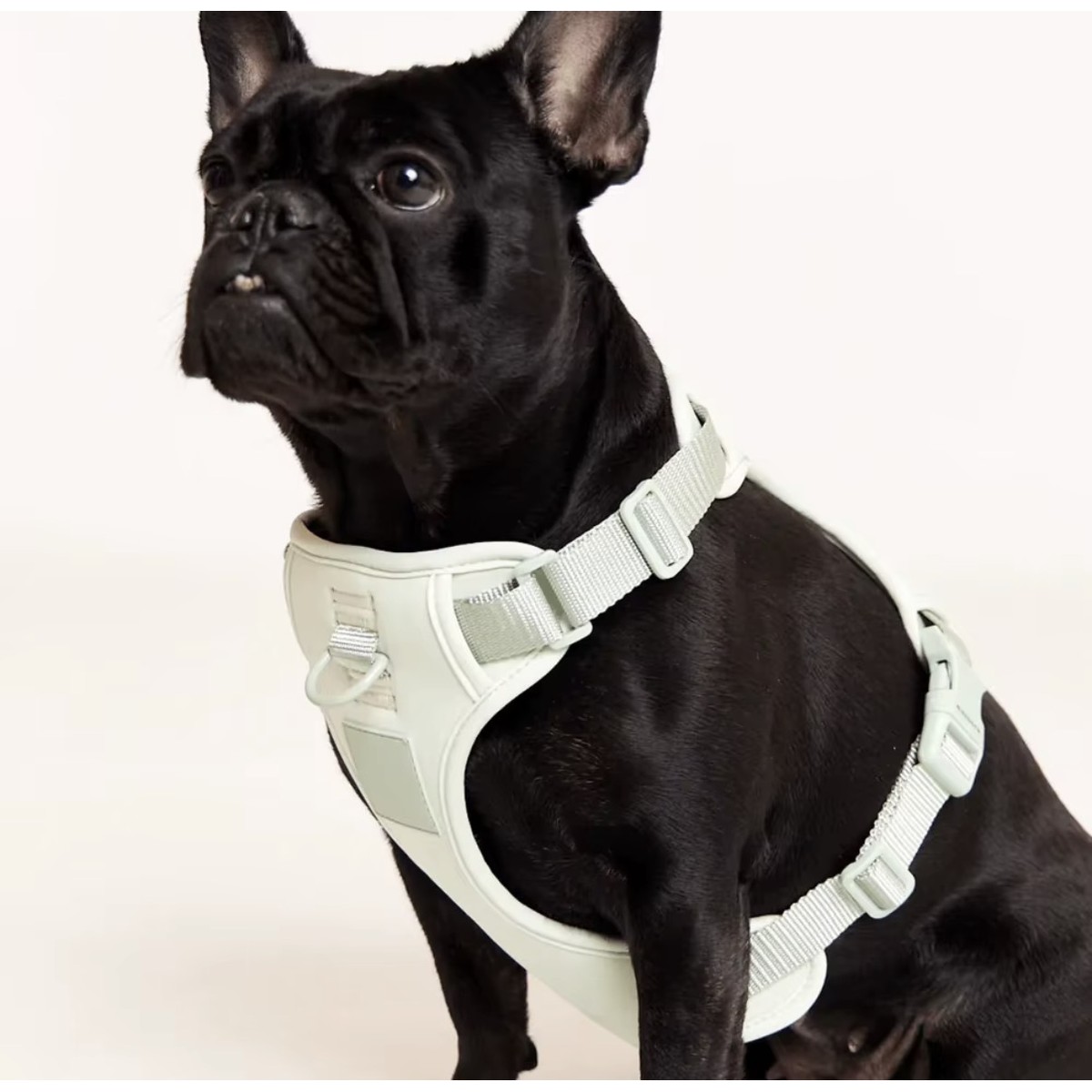
Accessory
Adjustable Harness (S/M/L)
Fully adjustable chest and girth straps — no fixed sizing.
Fits any dog

Pawpoint on YouTube
Watch the full Dalmatian video
Breed deep-dives, history and honest ownership talk. New film every week.
Watch now