
Deerhound
DEER-hownd
Scotland· Scottish Highlands
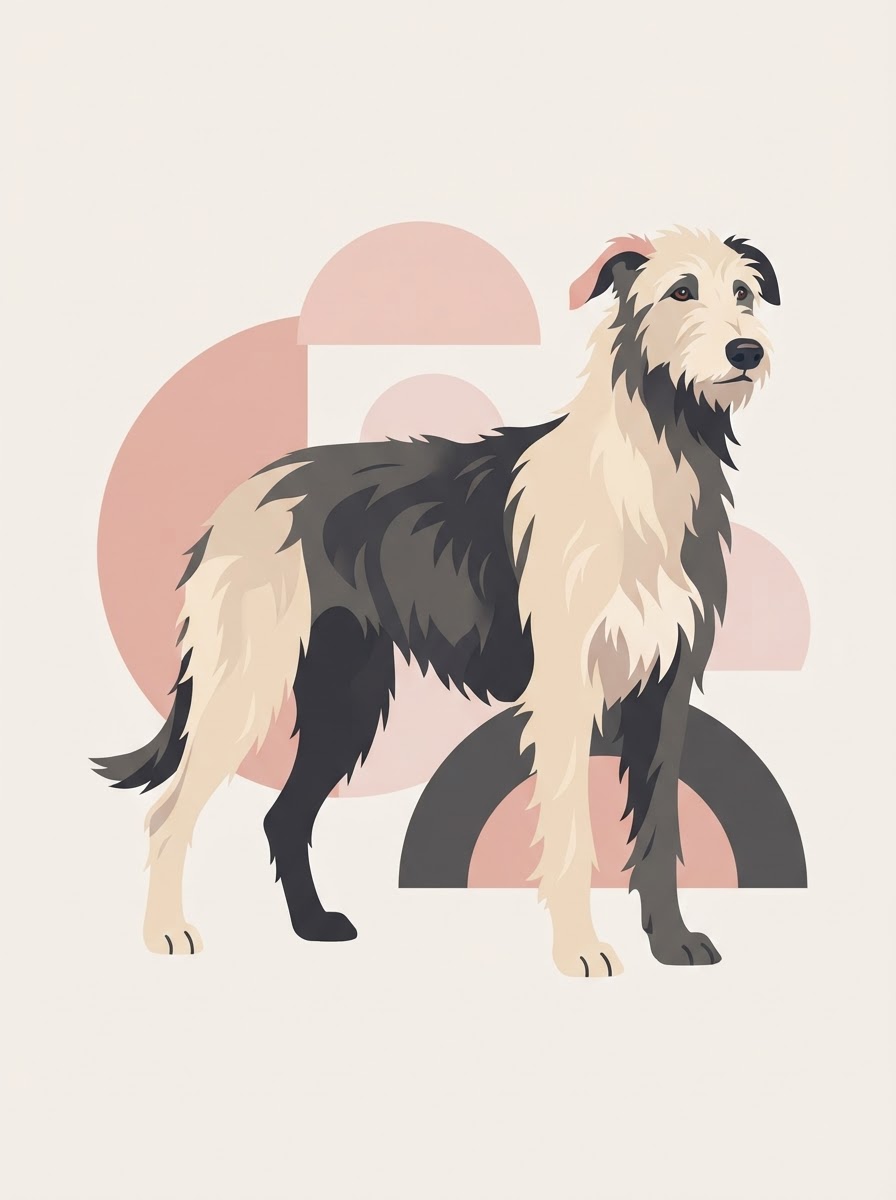
The Deerhound is a tall, rough-coated Scottish sighthound bred to course red deer across the Highlands, one of the largest and most gentle-natured sighthounds in existence.
At a glance
Quick facts
Size
Giant
Exercise needs
60 minutes daily with room to run
Home size suited to
Large home with space to stretch out
Grooming frequency
Weekly brush, hand-strip a few times a year
Coat length
Wiry
Sheds
Little, needs stripping instead
Lifespan
8-10 years
Town or country
Happiest in the country
Garden size needed
Large and securely fenced
Where it comes from
Origins of the Deerhound
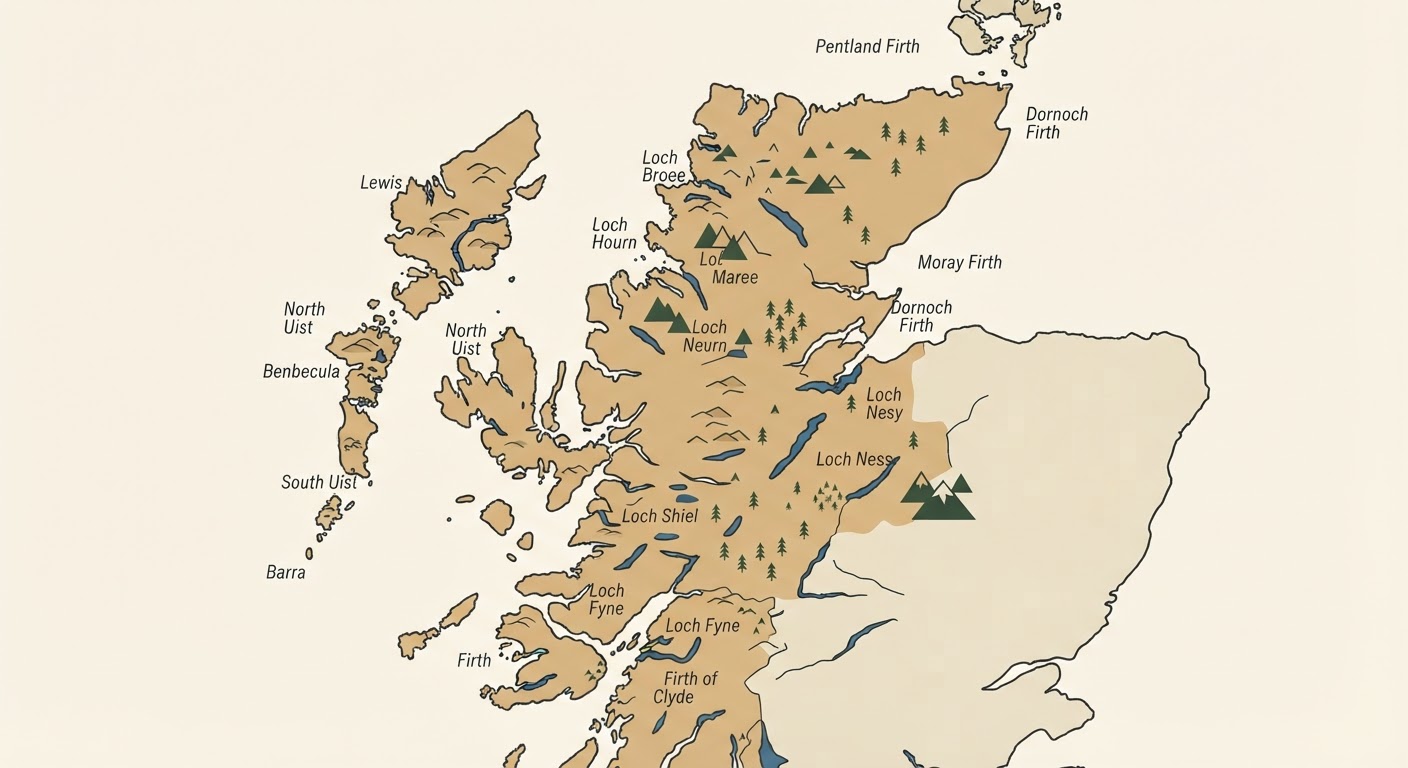
The Deerhound was bred in the Scottish Highlands to course red deer across open moorland, a task that demanded both great speed and the size to bring down large game. For centuries it was restricted largely to Scottish clan chiefs and nobility.
- Region
- Scottish Highlands
- Climate it was bred for
- Cold, wet, mountainous moorland
- Original job
- Coursing red deer
The long read
About the breed
The breed's ancestry stretches back centuries in Scotland, where it was bred and kept almost exclusively by clan chiefs and nobility as a hunting dog capable of bringing down a full-grown stag on open moorland, a task requiring both extreme speed and considerable size and strength. Ownership was so restricted at points in Scottish history that keeping a Deerhound below a certain rank was effectively forbidden, reflecting the value placed on a dog that could genuinely take deer.
Living with a Deerhound is calmer than its hunting job suggests. Despite standing among the tallest of dogs, it is famously gentle, quiet and undemanding indoors, often described as a couch potato once its exercise needs are met, needing a good daily run somewhere it can safely stretch into a gallop rather than constant activity. It gets on well with people, including children, though its size means supervision matters around toddlers simply due to accidental knocks. Its sighthound instincts mean recall around small fleeing animals needs real caution, and secure fencing at home is essential given its speed.
Today the Deerhound remains a rare breed even in Scotland, kept by dedicated enthusiasts and coursing and lure enthusiasts more than casual pet owners, partly because of its size and the space and running opportunities it requires. Those who do take one on tend to describe it as one of the calmest, most dignified dogs they have owned once past a boisterous puppyhood.
Living with one
Temperament & needs
Our own ratings, based on the breed standard and how these dogs behave in ordinary homes.
Friendliness
4/5
How openly the Deerhound greets people it does not know.
Trainability
3/5
Willing but independent, sighthound instincts can override recall.
Energy
3/5
Needs a good daily run but is calm and restful indoors afterwards.
Barking
1/5
Notably quiet, rarely barks without good reason.
Grooming
3/5
Rough coat needs weekly brushing and occasional hand-stripping.
Suits a first-time owner
3/5
How forgiving the Deerhound is for someone taking on their first dog.
Sociability
4/5
Gentle and friendly with people, generally good with children under supervision.
Independence
3/5
Bred to hunt on its own initiative at speed.
Illustrated breed standard
The points of the breed
Hover or tap a numbered point to read what the standard asks for.
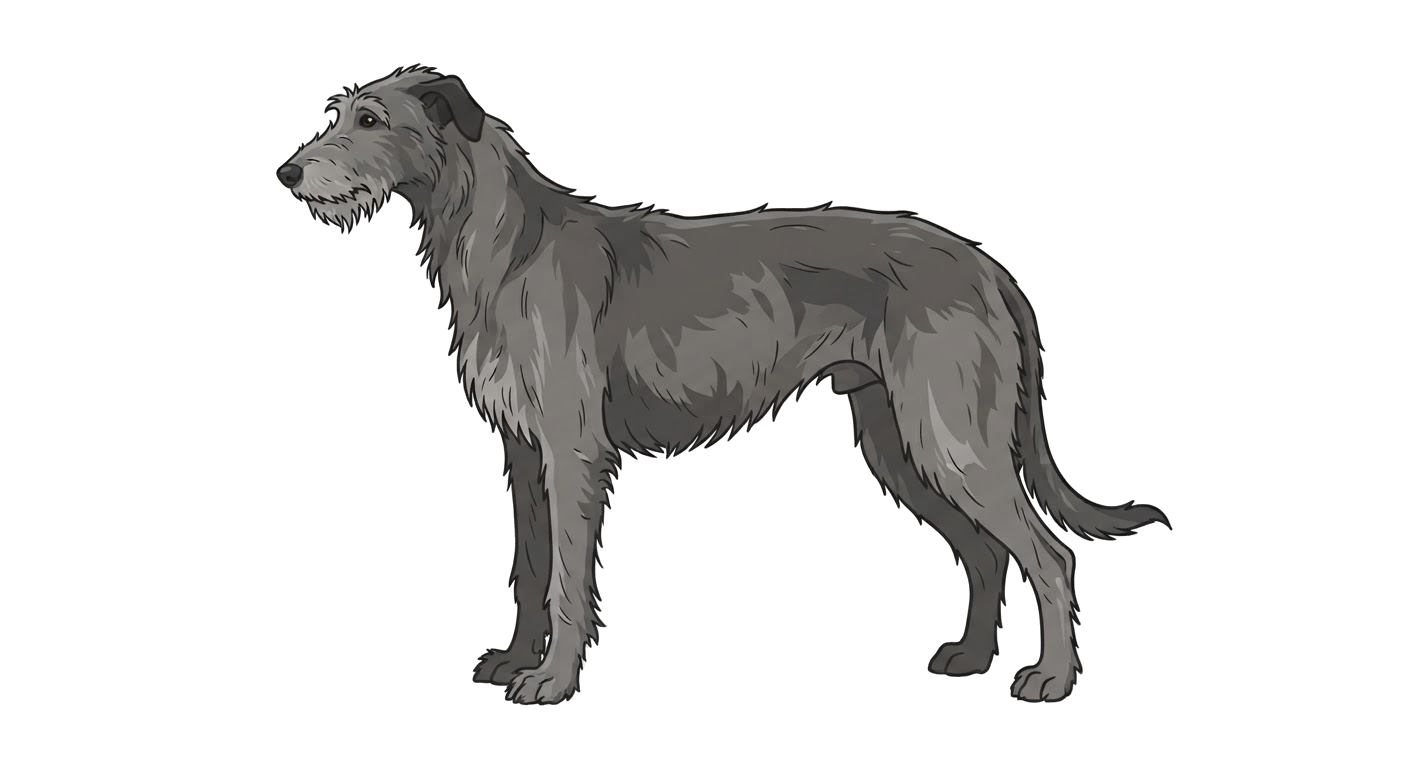
Point 1
Skull
The Deerhound's skull is judged on balance rather than size — proportionate to the body, with a clean cheek and a stop typical of the breed. Coarseness or an over-refined head are both faulted.
Colours & patterns
Recognised coats
Which coats the standard accepts — and which are simply popular.
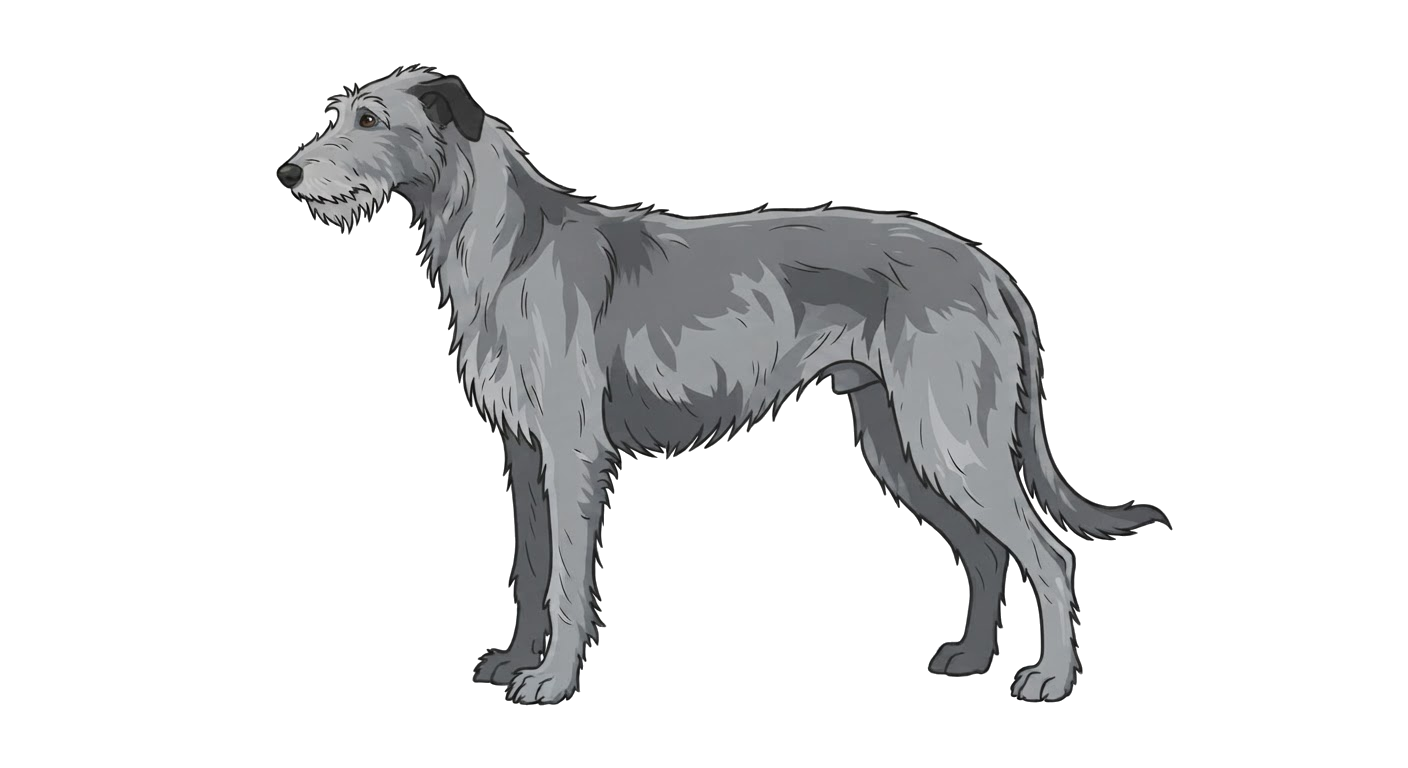
Grey
Standard colour
The most traditional and preferred colour.
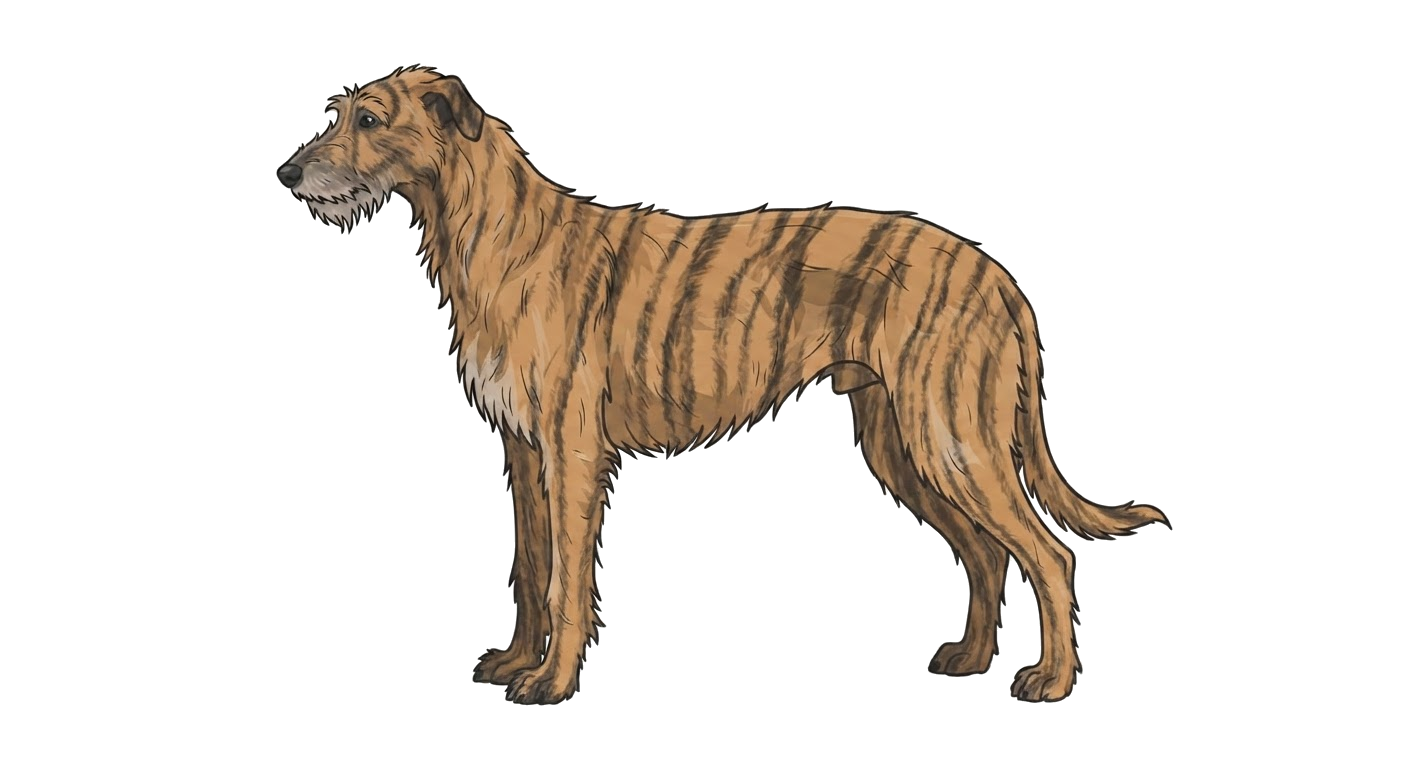
Brindle
Standard colour
Striped pattern, accepted and often favoured.
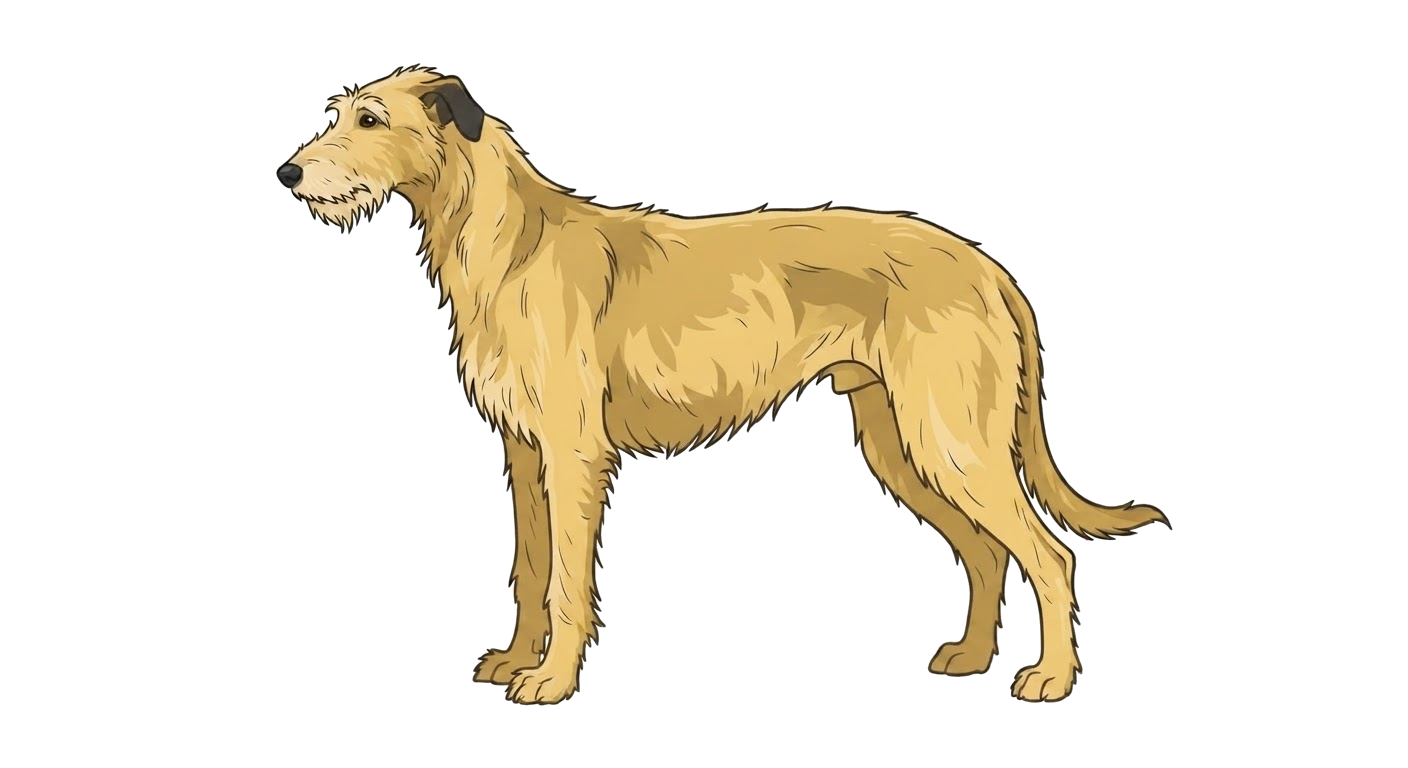
Yellow/Sandy
Standard colour
A sandy fawn shade, accepted in the standard.
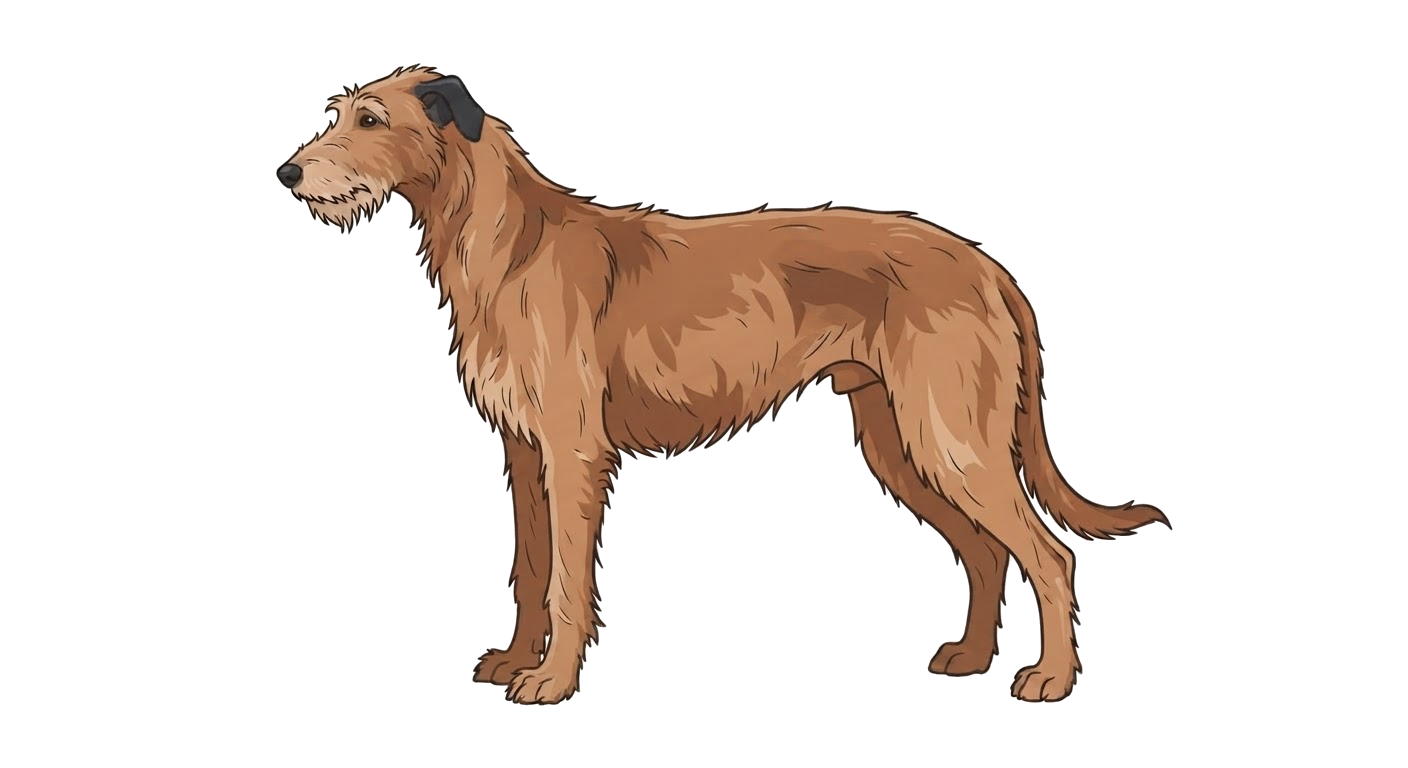
Red Fawn
Standard colour
A warmer reddish shade, also accepted.
Timeline
History & development
1500s and earlier
Ancient Highland hunting dog
Large rough-coated sighthounds were bred by Scottish clan chiefs to course red deer.
1800s
Decline and revival
Numbers fell sharply after Highland clan structures broke down, and Victorian enthusiasts worked to preserve the breed.
1892
Breed club founded
The Deerhound Club was established in Scotland to protect and standardise the breed.
Present day
Rare but stable
The Deerhound remains uncommon but is maintained by dedicated enthusiasts in the UK and abroad.
Reference
Breed standard summary
- body
- Deep chest, long, well-sprung ribs, arched loin
- coat
- Harsh, wiry, about three or four inches long
- ears
- Set high, folded back when relaxed
- eyes
- Dark, generally hazel or dark brown
- gait
- Easy, active movement with a long stride
- head
- Broadest at the ears, tapering to the nose
- size
- Giant sighthound
- tail
- Long, tapering, carried low with an upward curve at the tip
- colour
- Grey, Brindle, Yellow/Sandy, Red Fawn. Colours outside this list are seen but are not accepted by the kennel clubs.
- temperament
- Typical of the breed: strongest in sociability, energy, trainability. Nervousness or aggression are serious faults in the show ring and in the home.
- general appearance
- Tall, majestic sighthound resembling a rough-coated Greyhound, built for speed and strength
Health
What to screen for
Green means little to worry about, amber means ask the breeder for test results, red means manage it actively.
Bloat
Watch closely
Deep-chested; feed smaller meals and avoid exercise straight after eating.
Dilated cardiomyopathy
Watch closely
Ask breeders about heart screening in the family line.
Osteosarcoma
Screen for it
Large breed, so be alert to unexplained limping or swelling in older dogs.
Hip dysplasia
Low concern
Less common than in some giant breeds but still worth a hip check.
General information only — always speak to your vet about your own dog.
From real owners
Dogs like this
Deerhounds added by PawPoint members through their pet passports. Share yours to appear here.
Loading the wall…
Made for the Deerhound
The book, plus prints, hoodies and mugs using our own Deerhound illustration — and one everyday accessory that suits any dog.

The book
Pawpoint: The Complete Dog Breed Book
Every officially recognised breed plus the unofficial ones nobody else documents. 400+ pages, hardback, printed and shipped from the UK.
Own stock — shipped by us
Framed poster
Deerhound Framed Poster
Museum-weight print of our Deerhound illustration, framed or unframed.
Printed to order
Hoodie
Deerhound Hoodie
Heavyweight hoodie carrying the Deerhound illustration on the chest.
Printed to order
Mug
Deerhound Mug
Ceramic mug with the Deerhound illustration wrapped around it.
Printed to order
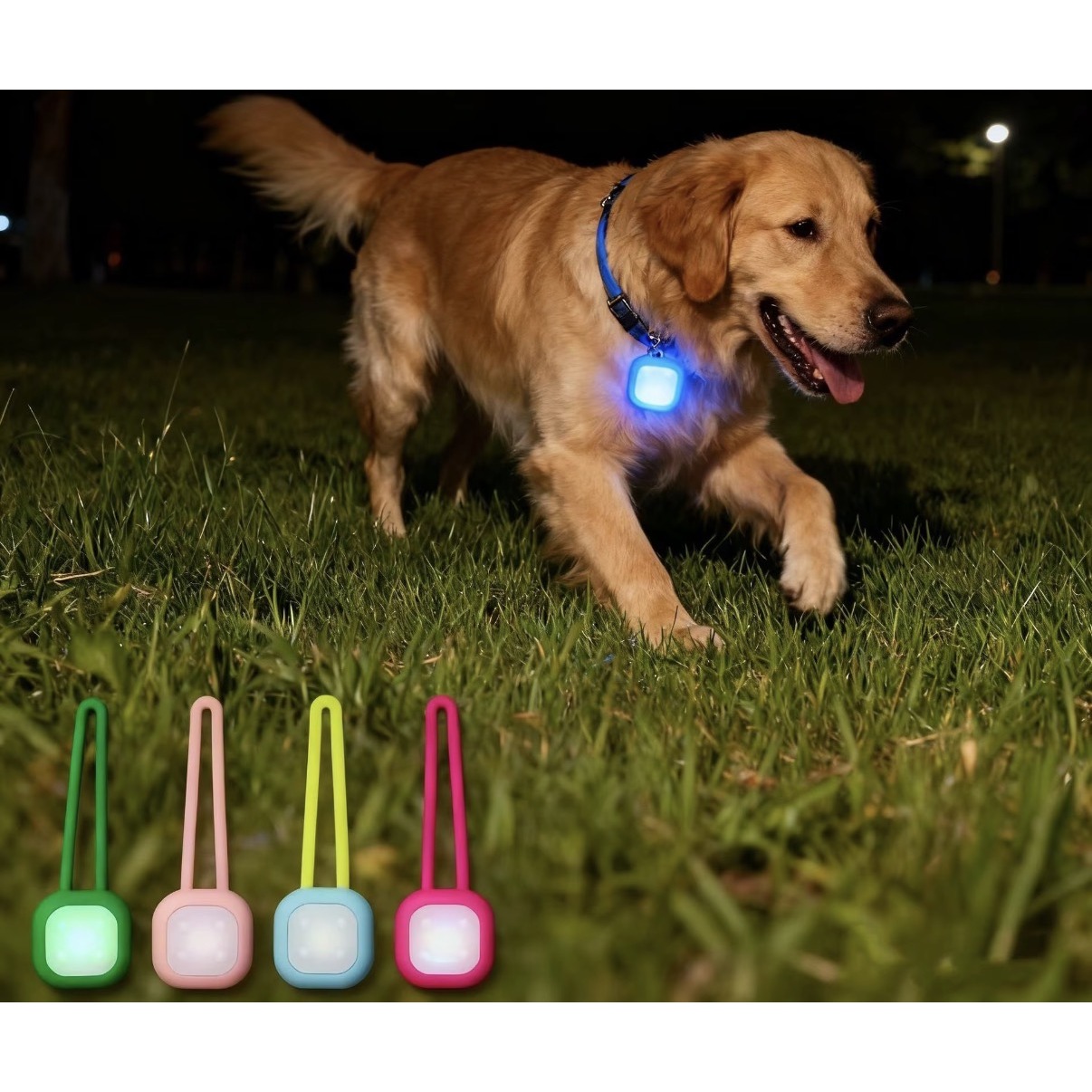
Accessory
LED Reflective Lead Light
Rechargeable clip-on light for dark walks.
Fits any dog

Pawpoint on YouTube
Watch the full Deerhound video
Breed deep-dives, history and honest ownership talk. New film every week.
Watch now