Doxiepoo
DOK-see-poo
United States· No fixed region, part of the wider designer-dog trend
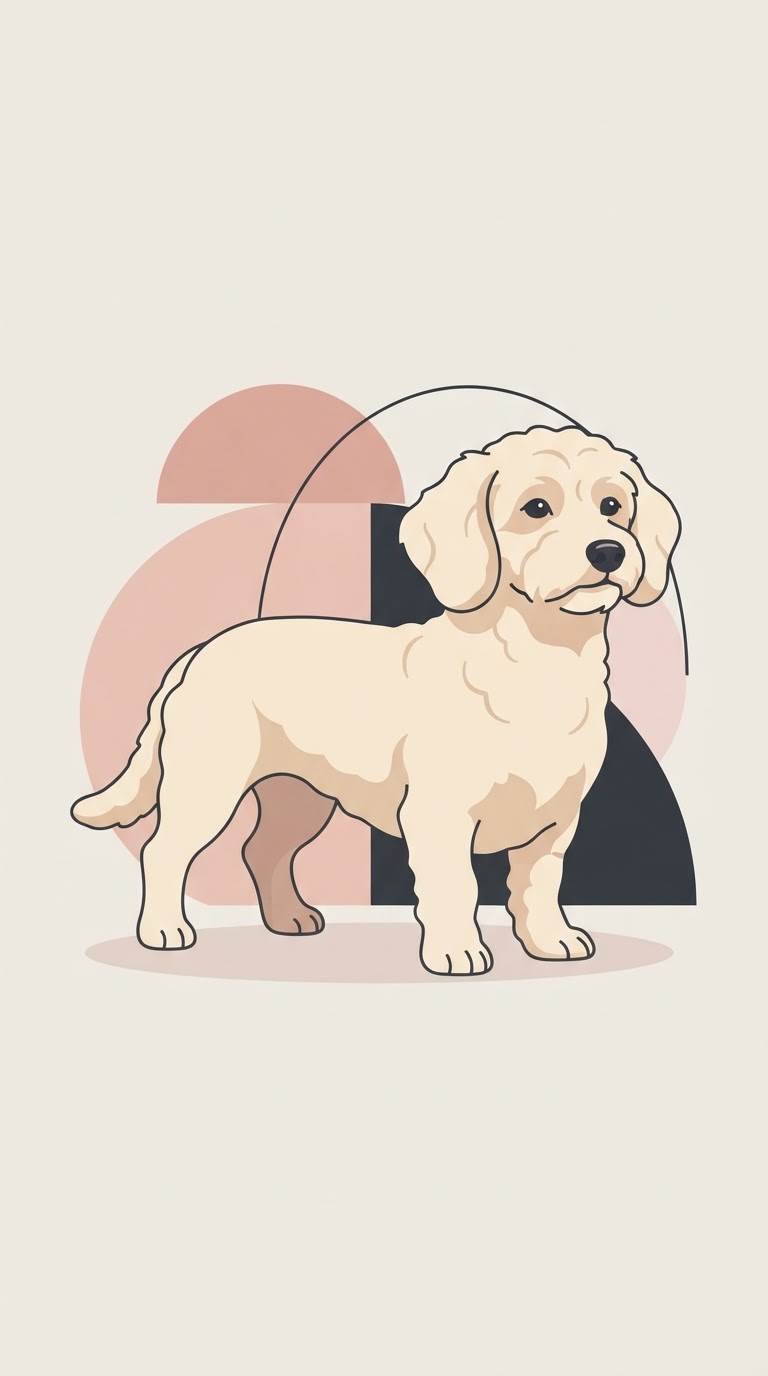
The Doxiepoo is a modern crossbreed between a Dachshund and a Poodle (usually Miniature or Toy), bred for a low-shedding coat and a compact, affectionate companion size.
At a glance
Quick facts
Size
Small
Exercise needs
30-45 minutes daily
Home size suited to
Flat or small home
Grooming frequency
Brush every other day, clip regularly
Coat length
Curly
Sheds
Very little
Lifespan
12-16 years
Town or country
Either, with enough exercise
Garden size needed
Small garden or none
Where it comes from
Origins of the Doxiepoo
The Doxiepoo has no single place of origin, having emerged from general designer-dog breeding trends that paired Poodles with other popular breeds. Its Dachshund and Poodle parent breeds themselves come from very different backgrounds in Germany and France/Germany respectively.
- Region
- No fixed region, part of the wider designer-dog trend
- Climate it was bred for
- Varied, no single defining climate
- Original job
- Companion crossbreed
The long read
About the breed
As a deliberate crossbreed with no long-established breeding programme, the Doxiepoo does not have a single fixed origin story in the way an old working breed does; it emerged from the wider designer-dog trend of recent decades, where breeders paired Poodles with other popular breeds hoping to combine the Poodle's low-shedding coat with another breed's size, look or temperament. Litters can vary considerably depending on which generation and which Dachshund and Poodle sizes are used.
Living with a Doxiepoo means accepting genuine variability, since crossbreed puppies from the same litter can differ in size, coat type and temperament more than puppies of an established breed. Most Doxiepoos inherit a playful, affectionate character and reasonable trainability from the Poodle side, tempered by the Dachshund's independent streak and strong nose. As with any Dachshund cross, the long-backed body shape carried through many lines means care should be taken with jumping and stairs to protect the spine. The coat can range from smooth to wavy or curly and grooming needs vary accordingly, so it is worth asking a breeder what the specific puppy's coat is likely to be like.
Today the Doxiepoo remains an unofficial, unrecognised cross rather than a breed with a fixed standard, popular mainly through direct breeder sales and word of mouth rather than through kennel club shows. Prospective owners should treat health testing of both parent breeds as seriously as they would for a purebred dog, since crossing breeds does not automatically remove the health risks present in either parent line.
Living with one
Temperament & needs
Our own ratings, based on the breed standard and how these dogs behave in ordinary homes.
Friendliness
4/5
How openly the Doxiepoo greets people it does not know.
Trainability
3/5
Often bright and eager like the Poodle side, but can inherit Dachshund stubbornness.
Energy
3/5
Moderate exercise needs, enjoys walks and play but not overly demanding.
Barking
3/5
Can be vocal, particularly if it takes after the Dachshund side.
Grooming
3/5
Coat type varies from smooth to curly, so grooming needs differ between individuals.
Suits a first-time owner
3/5
How forgiving the Doxiepoo is for someone taking on their first dog.
Sociability
4/5
Generally affectionate and people-oriented.
Independence
3/5
Varies by individual, some show strong Dachshund independence.
Illustrated breed standard
The points of the breed
Hover or tap a numbered point to read what the standard asks for.
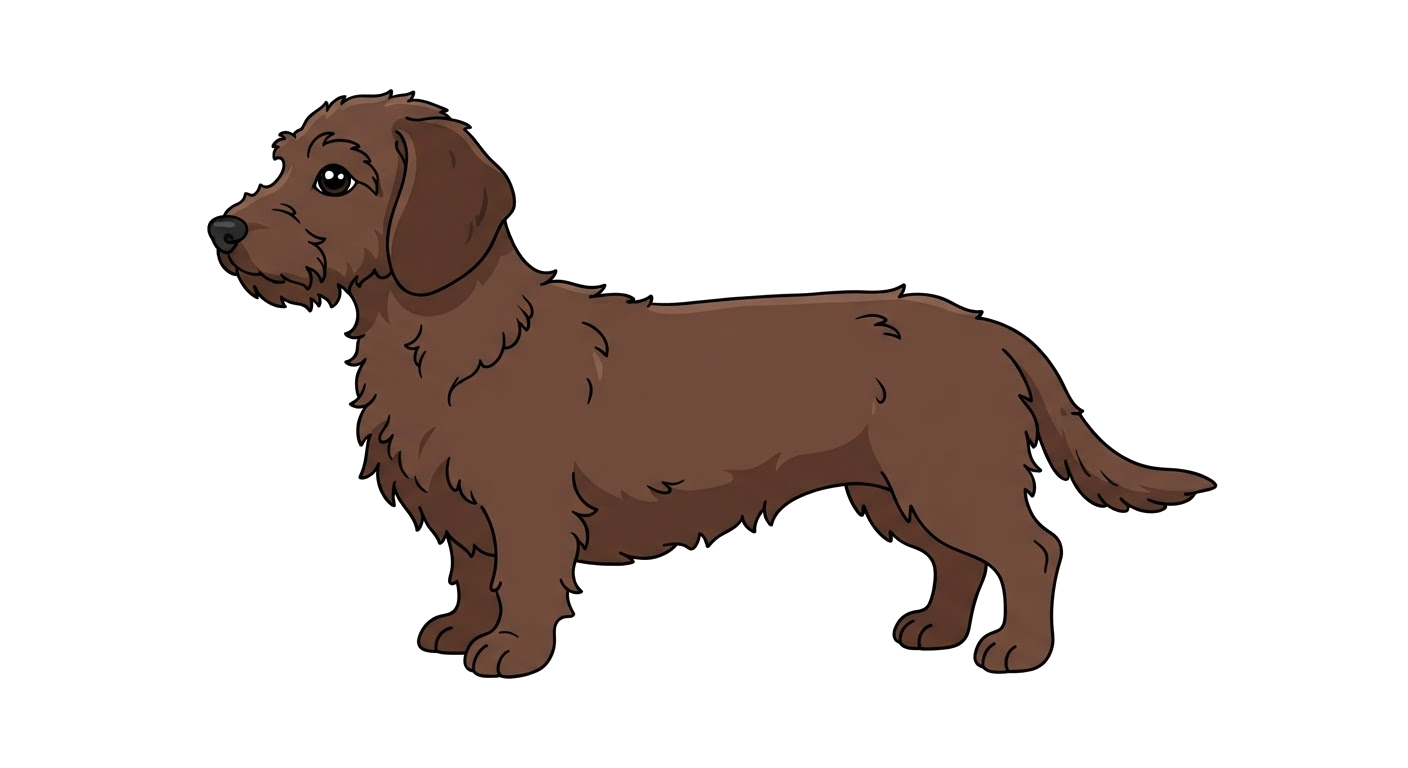
Point 1
Skull
The Doxiepoo's skull is judged on balance rather than size — proportionate to the body, with a clean cheek and a stop typical of the breed. Coarseness or an over-refined head are both faulted.
Colours & patterns
Recognised coats
Which coats the standard accepts — and which are simply popular.
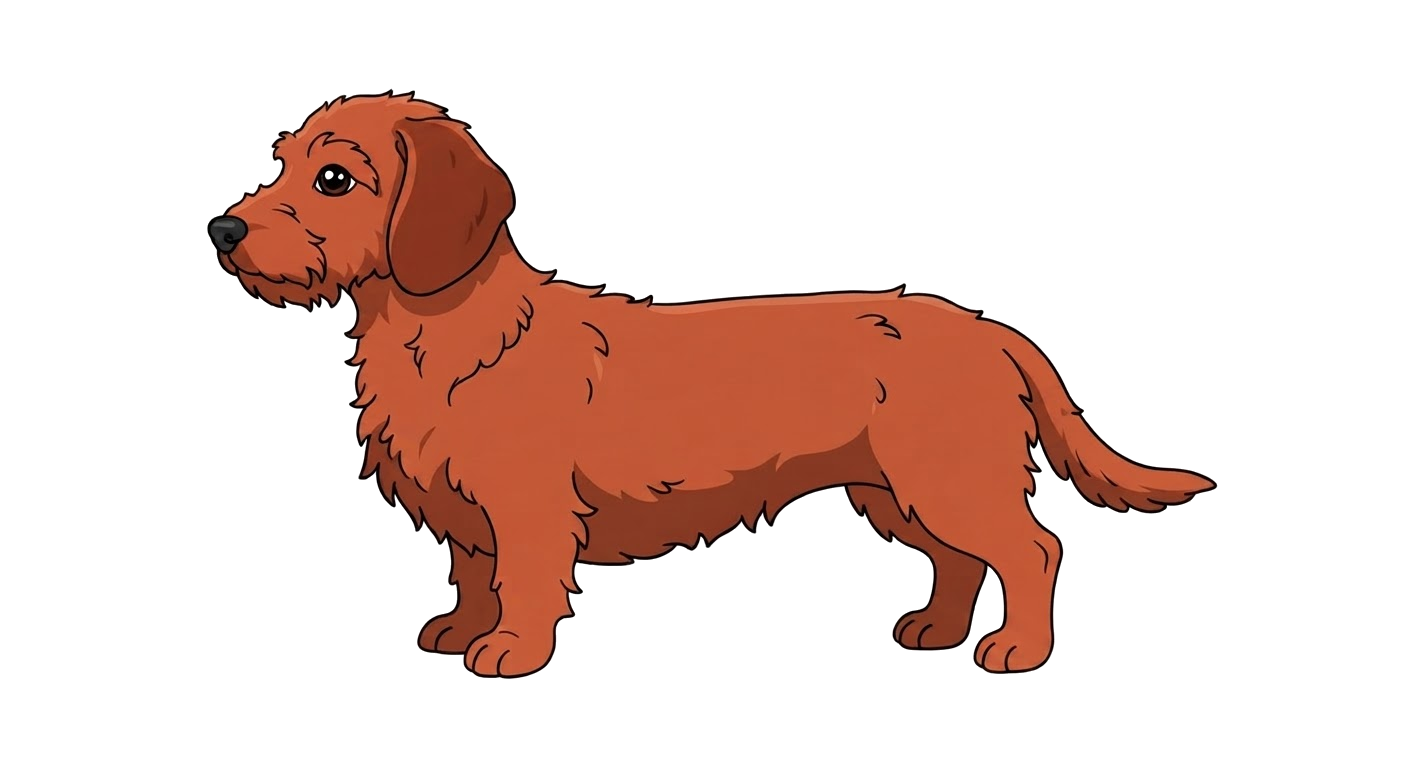
Red
Standard colour
A common solid colour inherited from the Dachshund side.
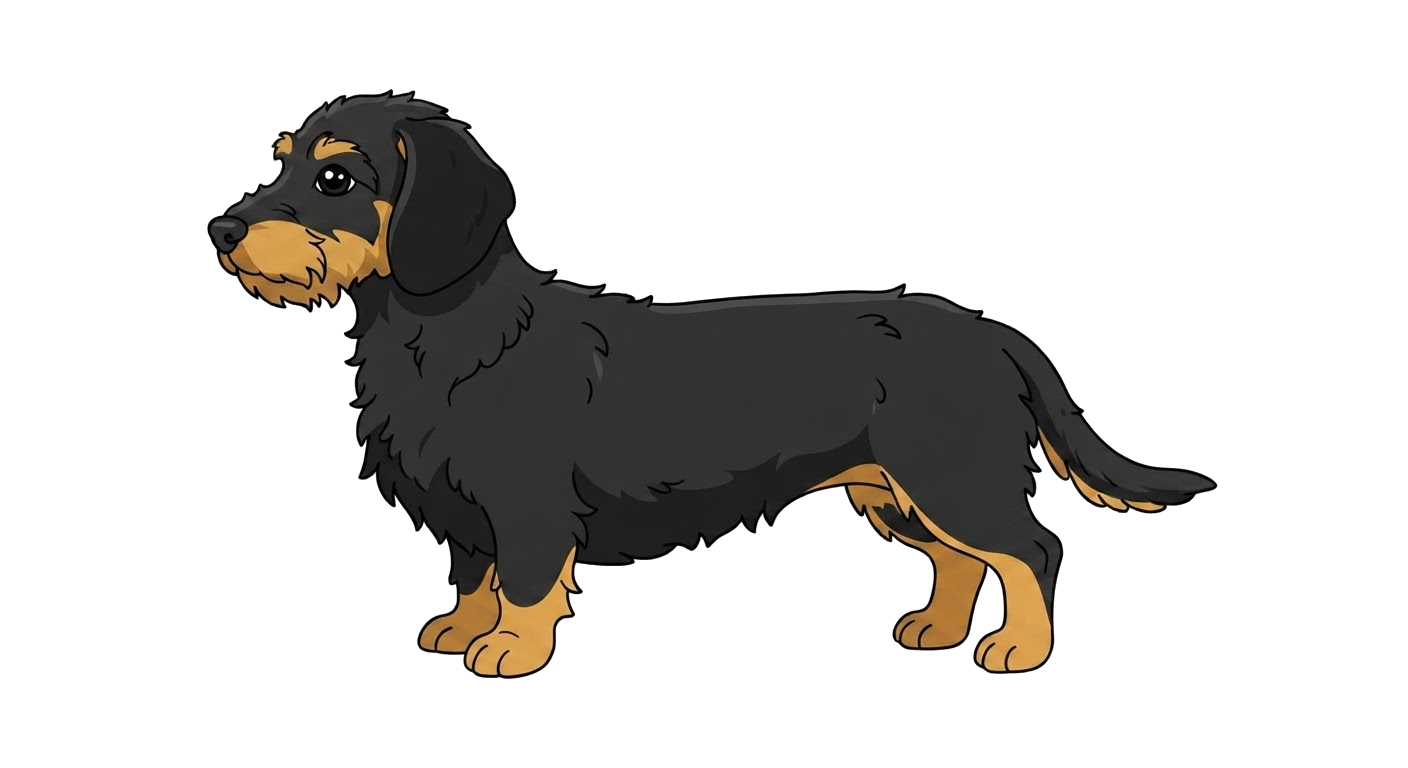
Black and Tan
Standard colour
A classic pattern seen in many litters.
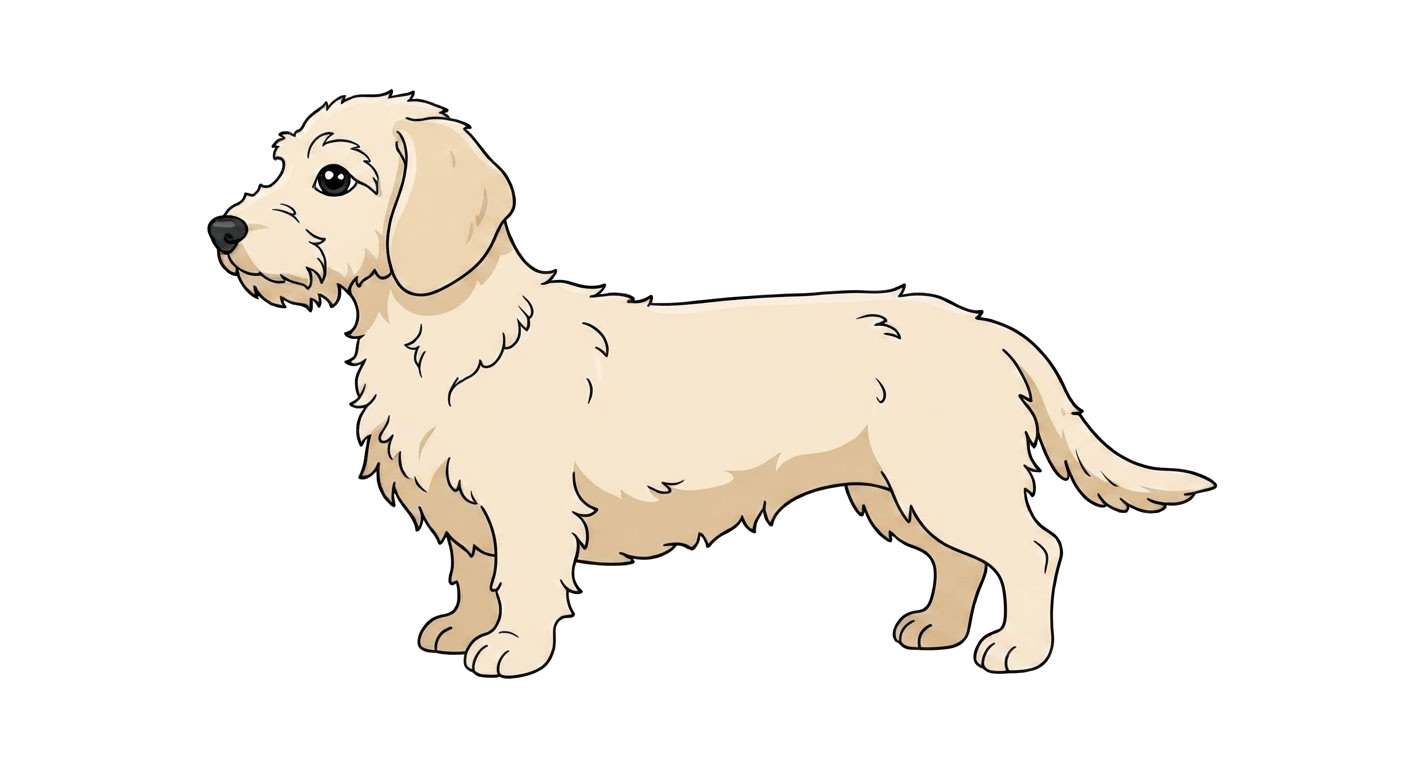
Cream
Standard colour
A pale shade often inherited from the Poodle side.
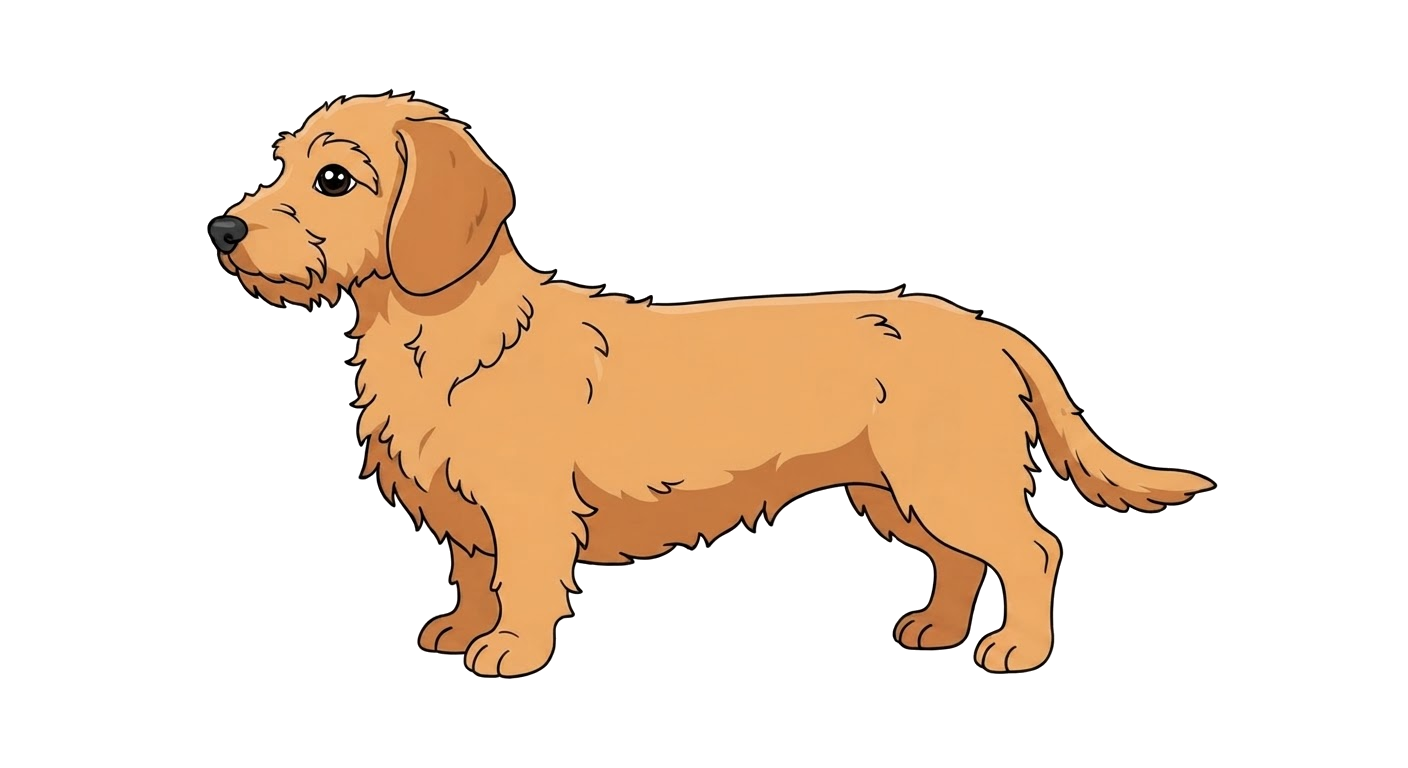
Apricot
Standard colour
A warm golden tone common in Poodle-cross litters.
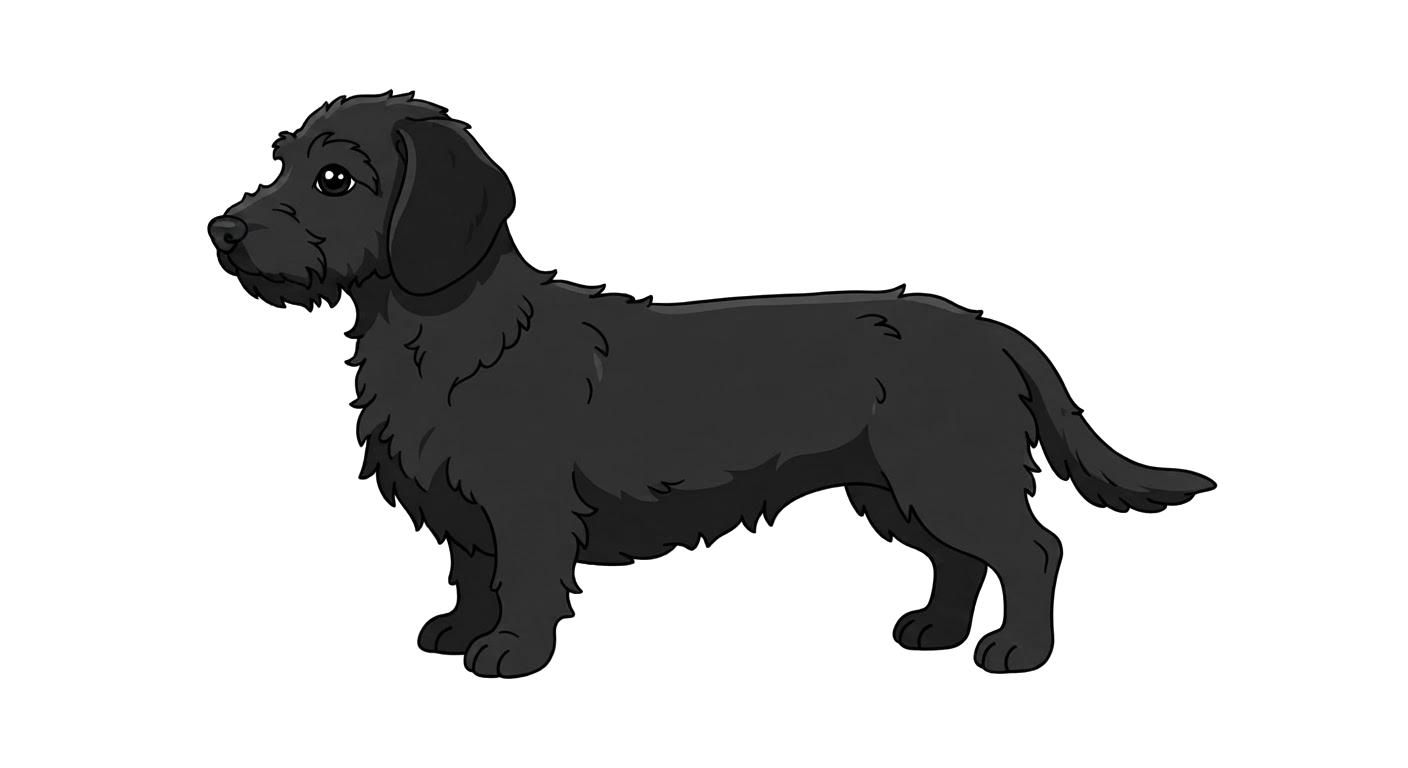
Black
Standard colour
A solid black coat, seen in some lines.
Timeline
History & development
1990s-2000s
Emergence of designer crossbreeds
Breeders began deliberately crossing Poodles with other popular breeds, including the Dachshund, to create low-shedding companion dogs.
2000s onward
Growth in popularity
The Doxiepoo gained a following through online breeder marketing and word of mouth rather than formal kennel club promotion.
Present day
Unrecognised but popular
The cross remains unrecognised by major kennel clubs but continues to be bred and sold as a companion dog.
Reference
Breed standard summary
- body
- Well-bodied and sound: a firm level topline, deep chest with well-sprung ribs and a strong, muscular loin.
- coat
- Varies from smooth to wavy or curly, in good condition and weatherproof for the breed's original work.
- ears
- Ear set, size and carriage follow the Doxiepoo standard, clean and mobile, never thickened or badly carried.
- eyes
- Set well apart, of a shade in keeping with the coat, giving an alert and intelligent expression. Light or protruding eyes are undesirable.
- head
- The head is proportionate to the body and carries the expression the Doxiepoo standard asks for, clean in cheek with a moderate stop.
- size
- Small · 20-30cm · 4-9kg
- colour
- Red, Black and Tan, Cream, Apricot, Black. Colours outside this list are seen but are not accepted by the kennel clubs.
- temperament
- Typical of the breed: strongest in sociability, energy, trainability. Nervousness or aggression are serious faults in the show ring and in the home.
- general appearance
- Small crossbreed, body shape and coat varying between individuals depending on parentage
Health
What to screen for
Green means little to worry about, amber means ask the breeder for test results, red means manage it actively.
Intervertebral disc disease
Watch closely
Ask whether the Dachshund parent is a standard or miniature build, as back risk carries through.
Progressive retinal atrophy
Screen for it
Ask for eye test results on both parent breeds.
Patellar luxation
Screen for it
Common in small crossbreeds; request a patella check on the parents.
Hip dysplasia
Low concern
Less common at this size but worth a general vet check.
General information only — always speak to your vet about your own dog.
From real owners
Dogs like this
Doxiepoos added by PawPoint members through their pet passports. Share yours to appear here.
Loading the wall…
Made for the Doxiepoo
The book, plus prints, hoodies and mugs using our own Doxiepoo illustration — and one everyday accessory that suits any dog.
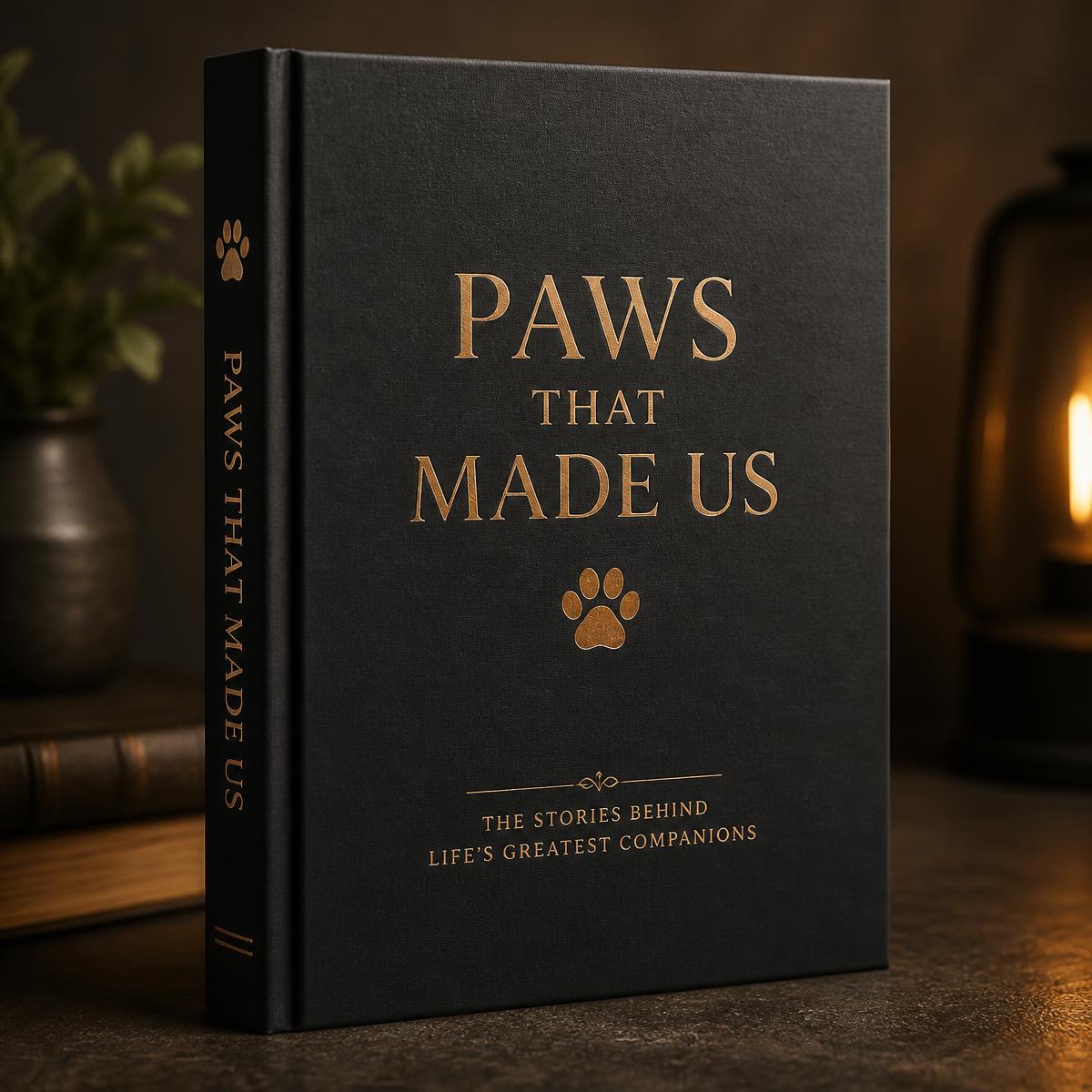
The book
Pawpoint: The Complete Dog Breed Book
Every officially recognised breed plus the unofficial ones nobody else documents. 400+ pages, hardback, printed and shipped from the UK.
Own stock — shipped by us
Framed poster
Doxiepoo Framed Poster
Museum-weight print of our Doxiepoo illustration, framed or unframed.
Printed to order
Hoodie
Doxiepoo Hoodie
Heavyweight hoodie carrying the Doxiepoo illustration on the chest.
Printed to order
Mug
Doxiepoo Mug
Ceramic mug with the Doxiepoo illustration wrapped around it.
Printed to order
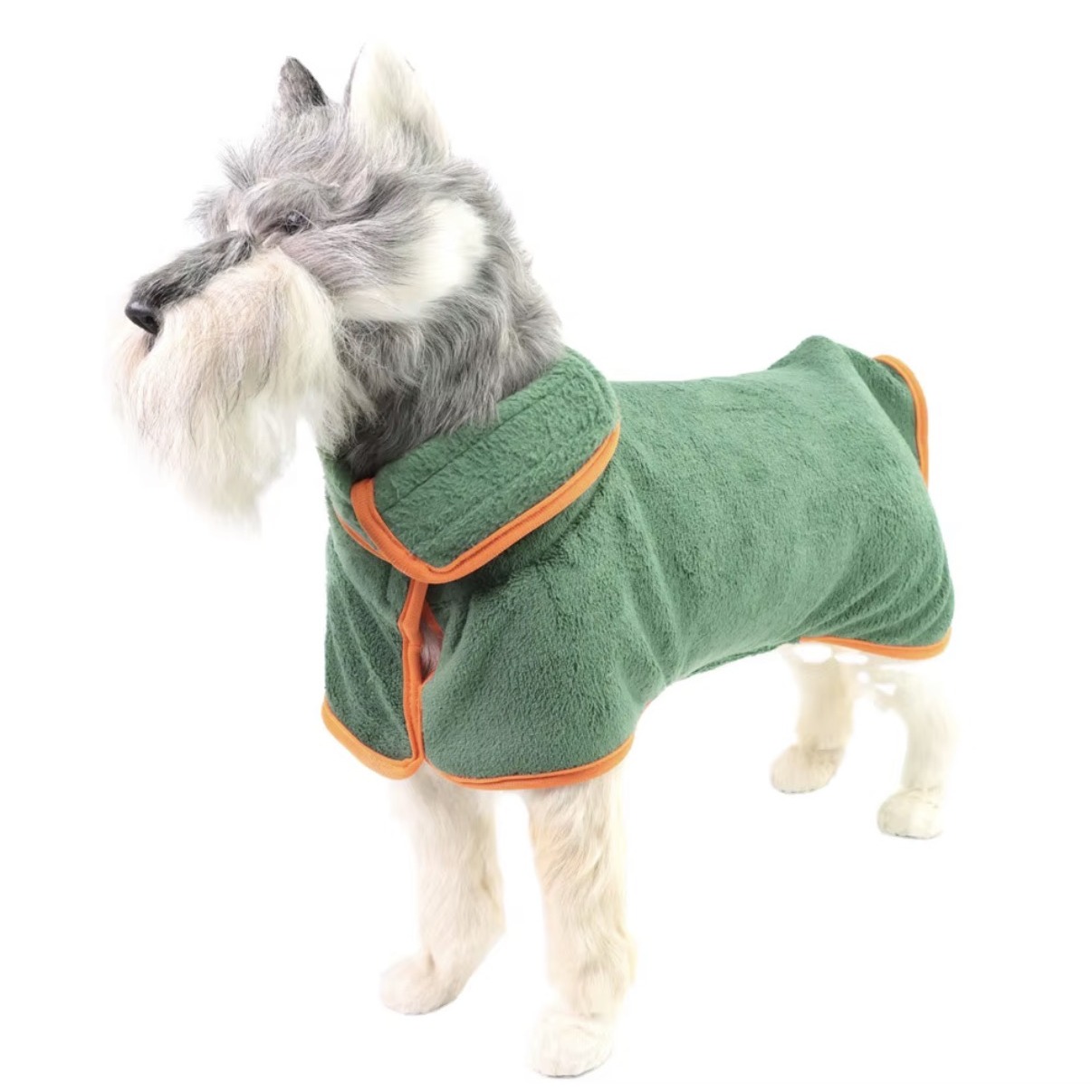
Accessory
Drying Towel Robe
Microfibre robe that soaks up a wet-walk shake.
Fits any dog
Pawpoint on YouTube
Watch the full Doxiepoo video
Breed deep-dives, history and honest ownership talk. New film every week.
Watch now