
English Setter
ING-glish SET-uhr
England· England, refined by breeders in Shropshire and Wales
The English Setter is an elegant, feathered gundog bred to locate and point game birds, one of the oldest of the setter breeds and known for a gentle, affectionate temperament alongside its working ability.
At a glance
Quick facts
Size
Large
Exercise needs
60+ minutes daily
Home size suited to
Medium to large home
Grooming frequency
Brush every other day, clip regularly
Coat length
Curly
Sheds
Very little
Lifespan
10-12 years
Town or country
Either, with enough exercise
Garden size needed
Medium or larger
Where it comes from
Origins of the English Setter
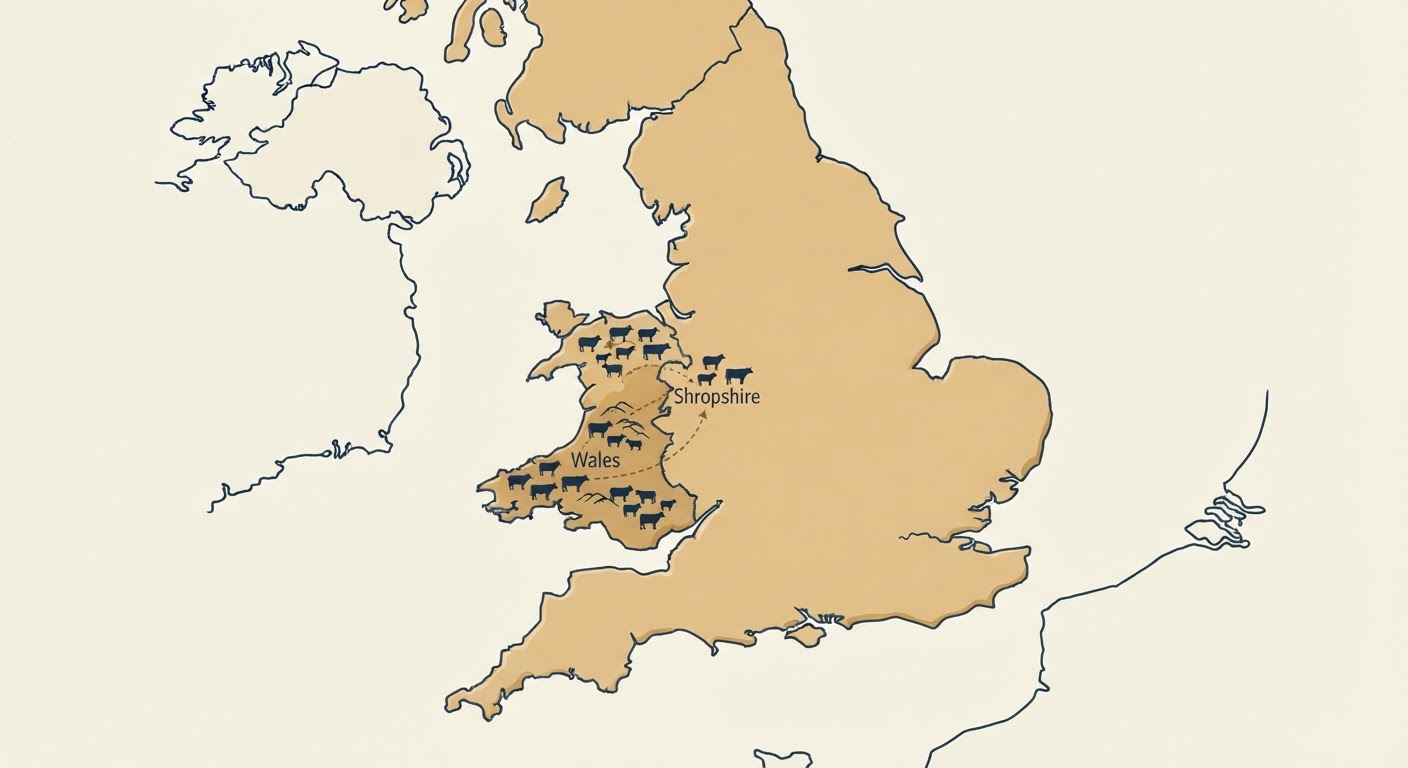
The English Setter developed over centuries in the English countryside from spaniel-type dogs trained to crouch and point when they found game birds. Edward Laverack's careful nineteenth-century breeding programme in Shropshire and Wales shaped much of the modern type.
- Region
- England, refined by breeders in Shropshire and Wales
- Climate it was bred for
- Temperate, varied countryside
- Original job
- Pointing and setting game birds for hunters
The long read
About the breed
The breed was developed in England over centuries from spaniel-type dogs trained to "set" or crouch when they located game for hunters using nets, a technique that predates the shotgun. Edward Laverack, working in the 1800s, is credited with refining the modern type through a carefully documented breeding programme, and his dogs, along with those later developed by R. L. Purcell Llewellin for field trial work, form the basis of the breed as it exists today, sometimes divided informally into show-bred and field-bred lines.
Living with an English Setter suits an active family that enjoys the outdoors. It is friendly, gentle and generally excellent with children, often described as one of the more easygoing gundog breeds temperamentally, though field-bred lines in particular retain strong hunting drive and need proper daily exercise to stay settled indoors. The feathered coat needs regular brushing, particularly behind the ears, on the legs and around the tail, to prevent matting, and field-bred setters that work in cover need regular checks for grass seeds and burrs.
Today the English Setter is kept both as a working gundog and increasingly as a family companion, valued for its calm, sociable nature once its exercise needs are met. Numbers in Britain have declined from their Victorian heyday, and the breed now sits among the Kennel Club's less commonly registered gundogs, appreciated mainly by those who know its particular blend of elegance, gentleness and field ability.
Living with one
Temperament & needs
Our own ratings, based on the breed standard and how these dogs behave in ordinary homes.
Friendliness
5/5
How openly the English Setter greets people it does not know.
Trainability
4/5
Responsive and eager to please with positive training.
Energy
4/5
Needs a good daily run, especially in field-bred lines.
Barking
2/5
Not a frequent barker, generally calm indoors.
Grooming
4/5
Feathered coat needs regular brushing to prevent matting.
Suits a first-time owner
3/5
How forgiving the English Setter is for someone taking on their first dog.
Sociability
5/5
Gentle, friendly and generally excellent with children and other dogs.
Independence
2/5
Bonds closely with its family and does not thrive left alone often.
Illustrated breed standard
The points of the breed
Hover or tap a numbered point to read what the standard asks for.
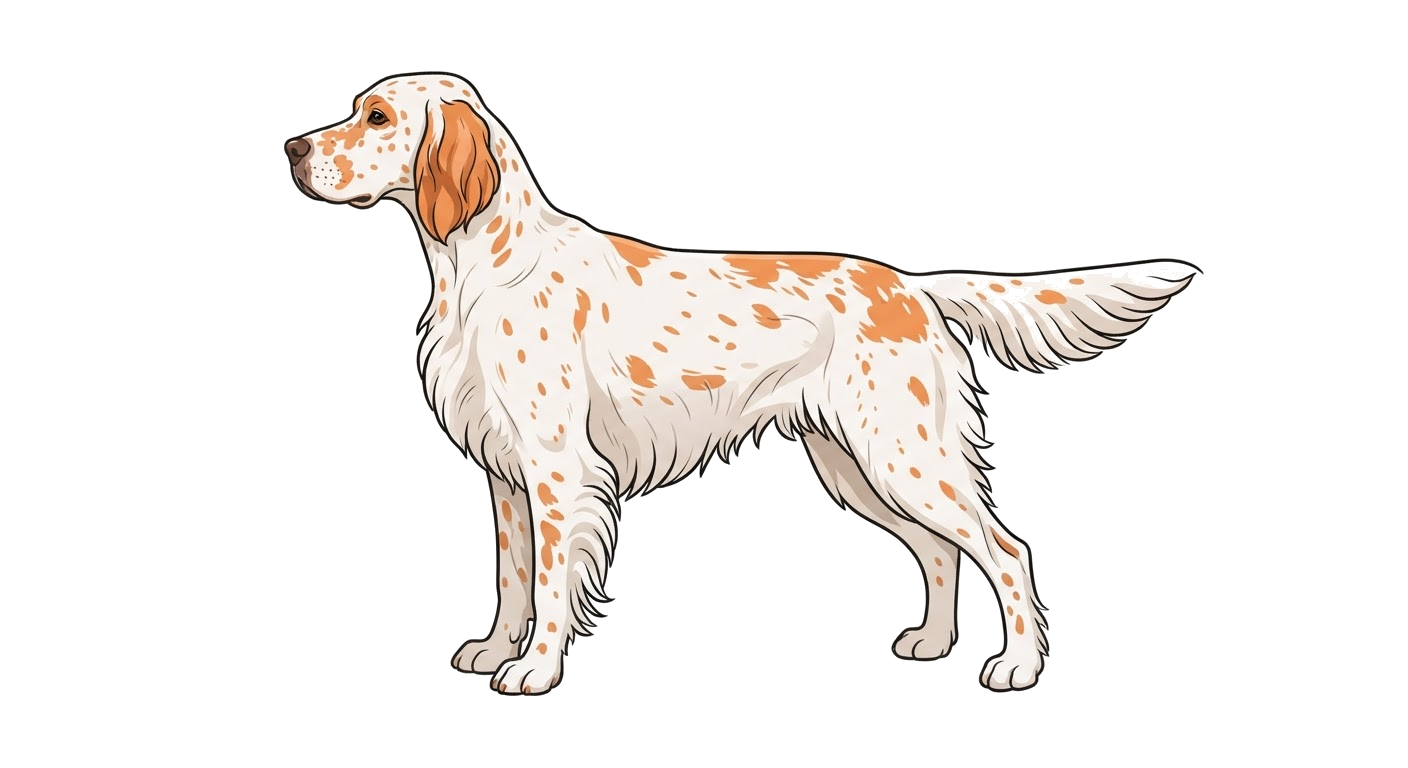
Point 1
Skull
The English Setter's skull is judged on balance rather than size — proportionate to the body, with a clean cheek and a stop typical of the breed. Coarseness or an over-refined head are both faulted.
Colours & patterns
Recognised coats
Which coats the standard accepts — and which are simply popular.
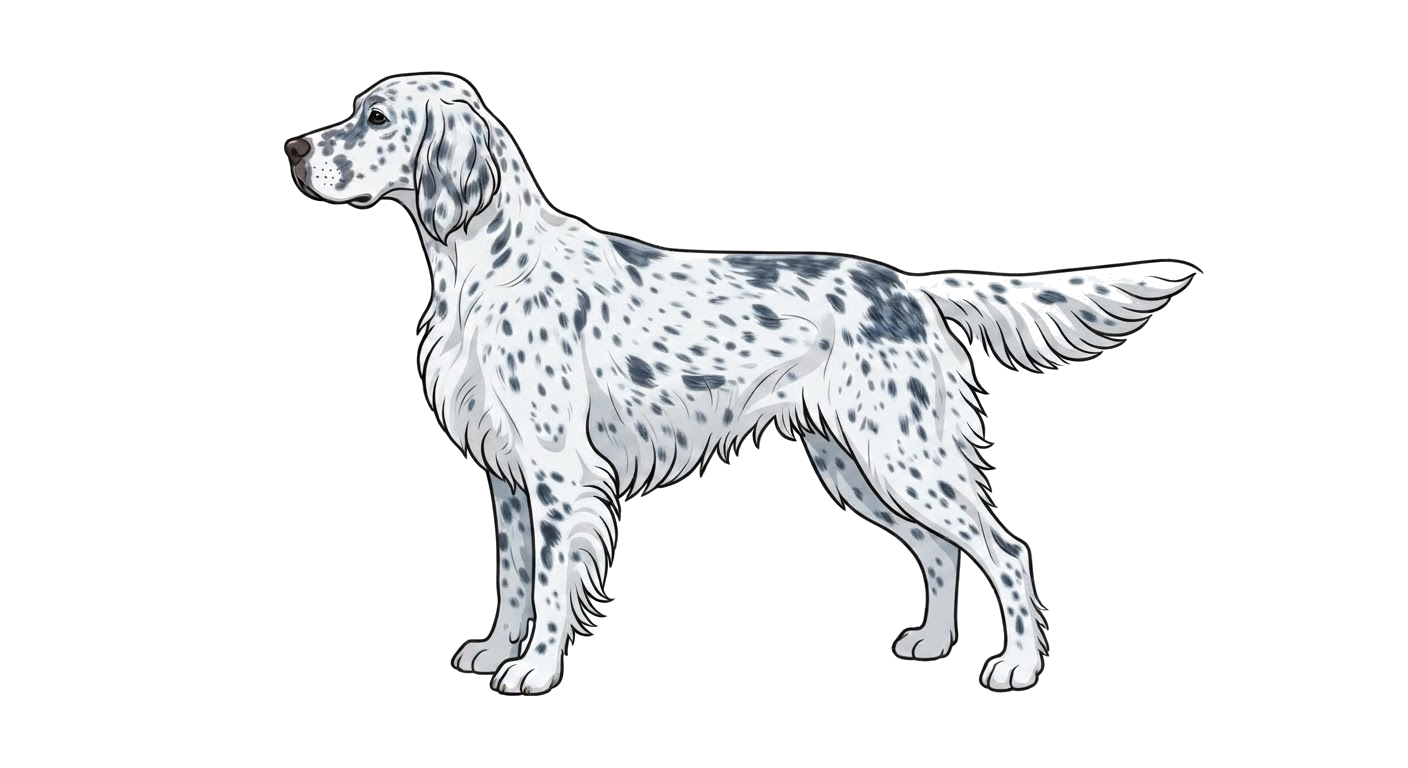
Blue Belton
Standard colour
A flecked black and white pattern, one of the most recognisable setter colours.
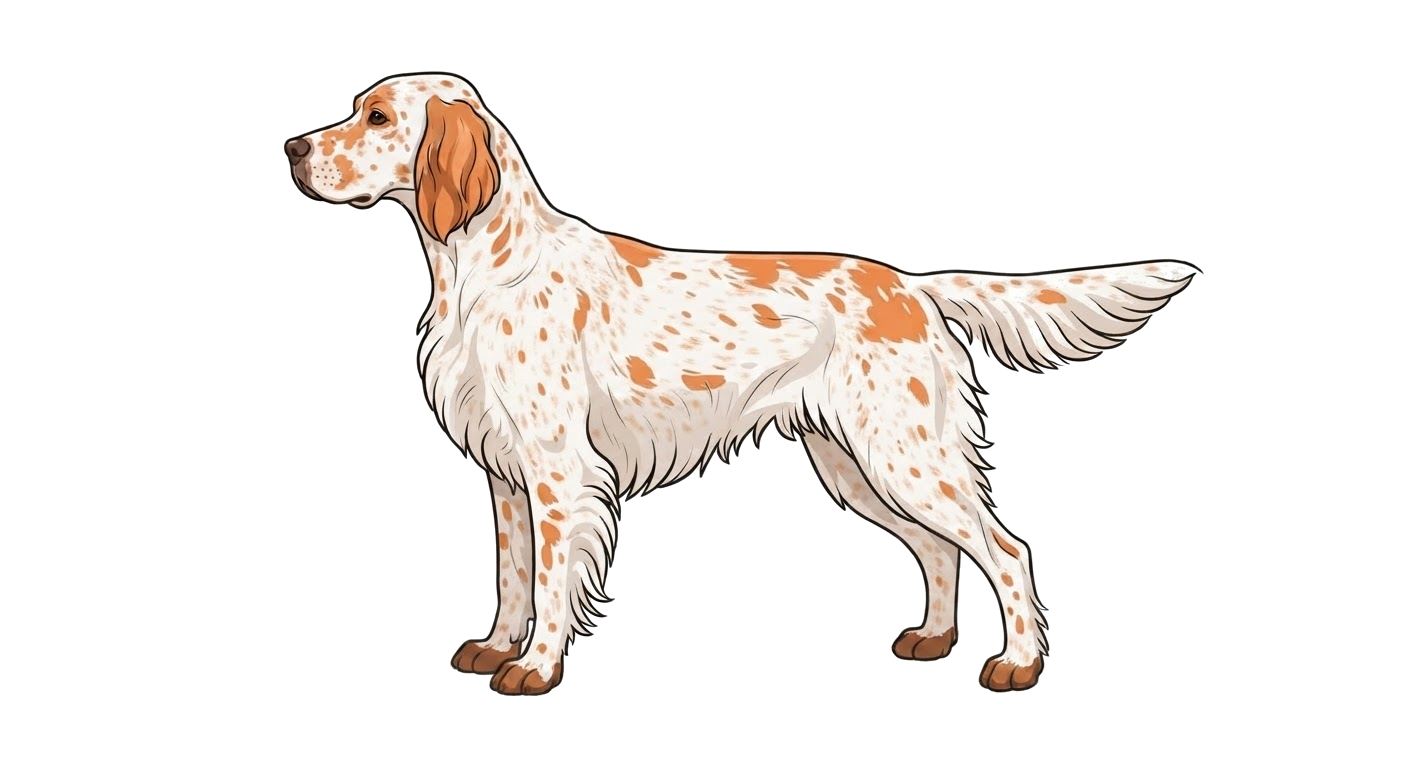
Orange Belton
Standard colour
Flecked orange and white pattern.
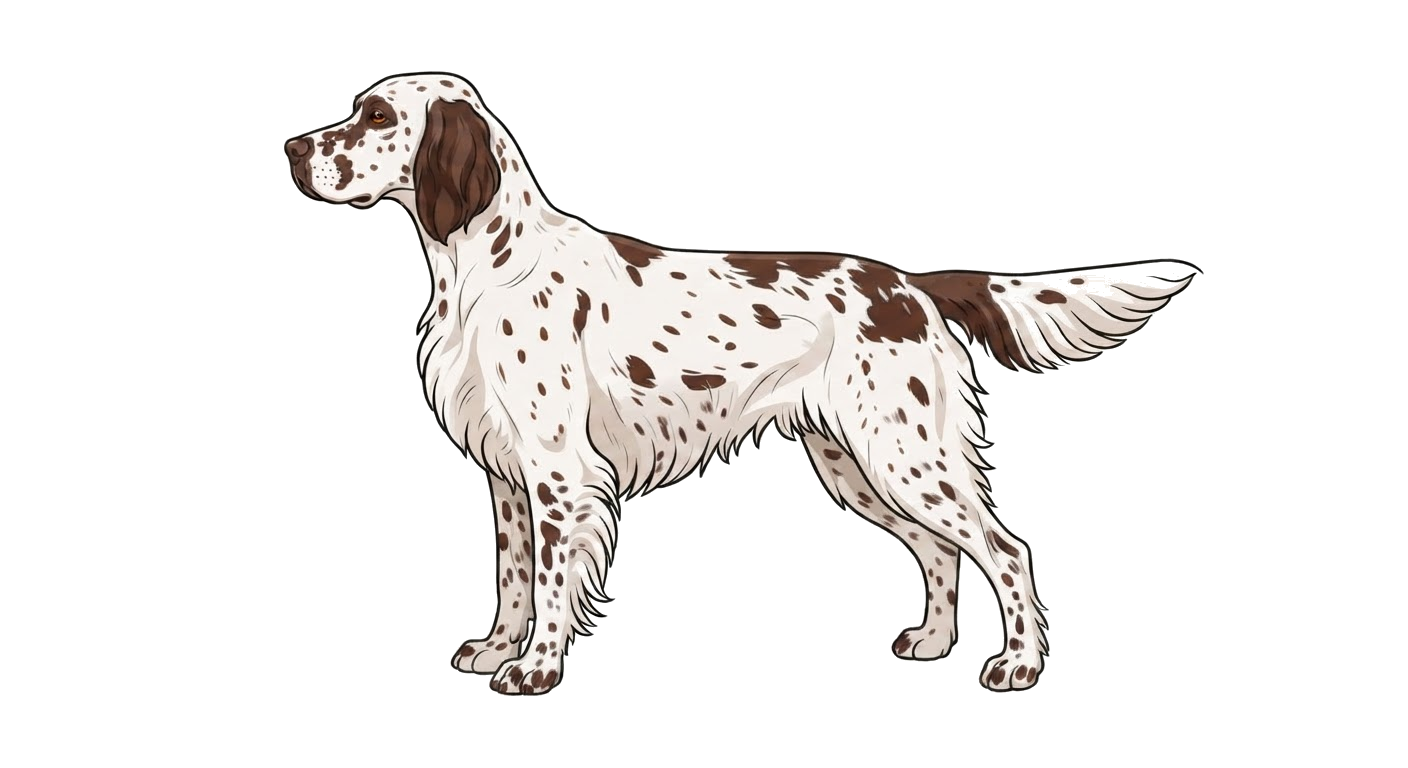
Liver Belton
Standard colour
Flecked liver and white pattern.
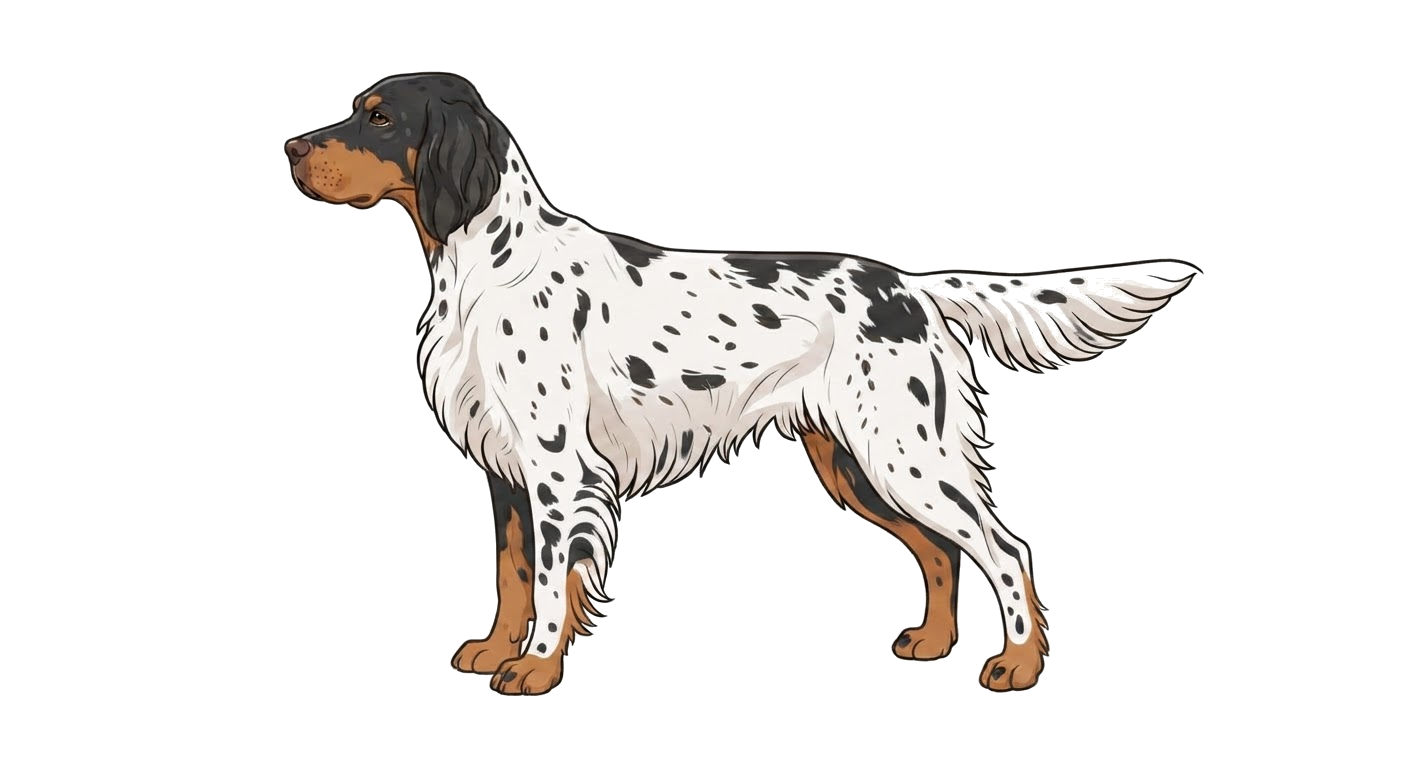
Tricolour
Standard colour
Blue or liver belton with tan markings.
Timeline
History & development
1500s
Early setting dogs
Spaniel-type dogs trained to crouch and point at game were used by hunters with nets in England.
1825-1875
Laverack's breeding programme
Edward Laverack developed a carefully documented line that shaped the modern show-type English Setter.
1870s
Llewellin field lines
R. L. Purcell Llewellin developed field-trial lines focused on working ability, still referenced today as Llewellin Setters.
1884
Kennel Club recognition
The breed was formally recognised and shown under Kennel Club rules.
1950s onward
The breed today
Kennel club registrations settled into a steady pattern and the English Setter moved from a working specialist to a family companion, with breed clubs in the UK and abroad now focused on health testing and keeping true type alive.
Reference
Breed standard summary
- body
- Moderate length, deep chest, strong loin
- coat
- Long, silky, flat, without curl, with feathering on legs, ears and tail
- ears
- Set low, moderate length, hanging in neat folds
- eyes
- Bright, mild expression, dark brown
- gait
- Free, graceful, effortless movement with good reach
- head
- Long and lean, well-defined stop
- size
- Large gundog
- tail
- Set on nearly level with the back, feathered, tapering to a point
- colour
- Blue Belton, Orange Belton, Liver Belton, Tricolour. Colours outside this list are seen but are not accepted by the kennel clubs.
- temperament
- Typical of the breed: strongest in sociability, energy, trainability. Nervousness or aggression are serious faults in the show ring and in the home.
- general appearance
- Elegant, upstanding gundog with a silky, feathered coat
Health
What to screen for
Green means little to worry about, amber means ask the breeder for test results, red means manage it actively.
Hip dysplasia
Screen for it
Ask for BVA/KC hip scores on both parents.
Deafness
Watch closely
BAER hearing testing is worth requesting, particularly relevant to predominantly white-coated dogs.
Hypothyroidism
Low concern
A vet blood test can confirm if symptoms such as weight gain or lethargy develop.
Elbow dysplasia
Screen for it
Request elbow scores alongside hips for breeding stock.
General information only — always speak to your vet about your own dog.
From real owners
Dogs like this
English Setters added by PawPoint members through their pet passports. Share yours to appear here.
Loading the wall…
Made for the English Setter
The book, plus prints, hoodies and mugs using our own English Setter illustration — and one everyday accessory that suits any dog.

The book
Pawpoint: The Complete Dog Breed Book
Every officially recognised breed plus the unofficial ones nobody else documents. 400+ pages, hardback, printed and shipped from the UK.
Own stock — shipped by us
Framed poster
English Setter Framed Poster
Museum-weight print of our English Setter illustration, framed or unframed.
Printed to order
Hoodie
English Setter Hoodie
Heavyweight hoodie carrying the English Setter illustration on the chest.
Printed to order
Mug
English Setter Mug
Ceramic mug with the English Setter illustration wrapped around it.
Printed to order

Accessory
Car Seatbelt Restraint
Clips any harness to a standard seatbelt buckle.
Fits any dog

Pawpoint on YouTube
Watch the full English Setter video
Breed deep-dives, history and honest ownership talk. New film every week.
Watch now