
Entlebucher Mountain Dog
ENT-luh-book-er
Switzerland· Entlebuch valley, canton of Lucerne
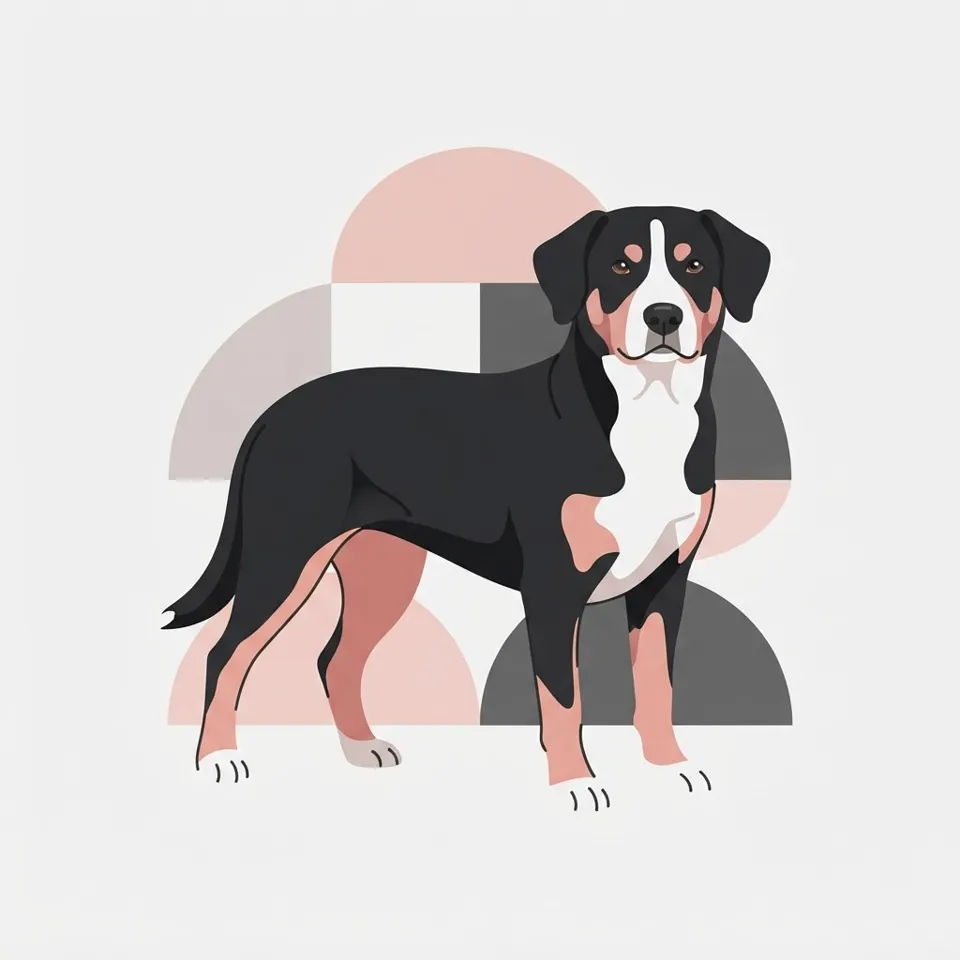
The Entlebucher Mountain Dog is the smallest of the four Swiss mountain dog breeds, a compact, muscular cattle-driving dog from the Entlebuch valley bred for stamina and close-working herding ability.
At a glance
Quick facts
- Size
- Medium
- Exercise needs
- 60+ minutes daily plus mental stimulation
- Home size suited to
- Small to medium home
- Grooming frequency
- Weekly brush
- Coat length
- Short
- Sheds
- Yes, heavily when moulting
- Lifespan
- 11-13 years
- Town or country
- Either, with enough exercise
- Garden size needed
- Small to medium
Where it comes from
Origins of the Entlebucher Mountain Dog
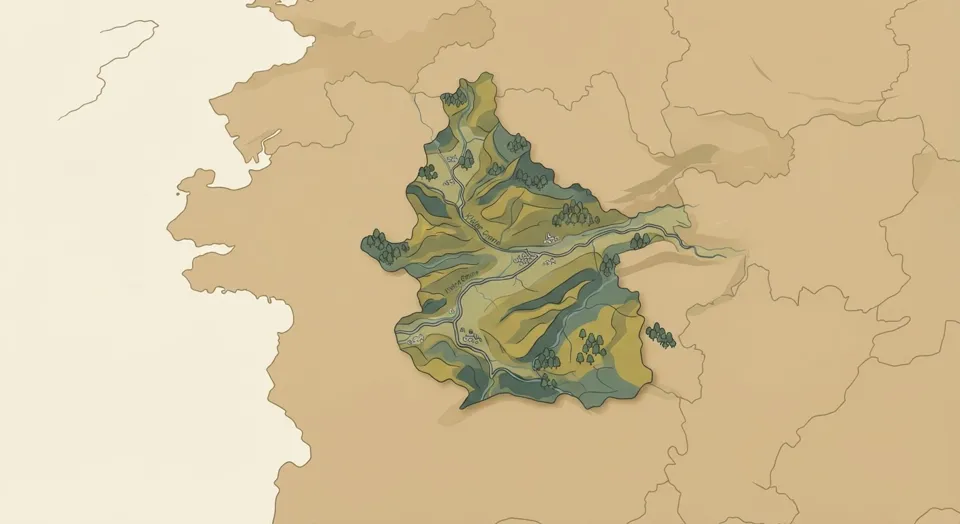
The breed takes its name from the Entlebuch valley in the canton of Lucerne, where farmers needed a compact, agile dog able to work close to cattle's heels on steep Alpine tracks. It is the smallest and last recognised of Switzerland's four native mountain dog breeds.
- Region
- Entlebuch valley, canton of Lucerne
- Climate it was bred for
- Cold, mountainous Alpine climate
- Original job
- Driving cattle to and from Alpine pastures
The long read
About the breed
It developed in the hilly Entlebuch region of the canton of Lucerne, where farmers used it to drive cattle to and from Alpine pastures, working close to the herd's heels in a way better suited to a smaller, more agile dog than the larger Bernese or Greater Swiss Mountain Dogs used for cart-pulling and guarding. The breed was the last of the four Swiss mountain breeds to be formally distinguished, only fully recognised as separate in the early twentieth century after a Swiss dog show judge identified it as a distinct type in 1913.
Living with an Entlebucher suits an active family used to working breeds. It is intelligent, energetic and genuinely needs a job or structured activity, whether herding, agility, or serious daily exercise, since without an outlet it can become vocal and pushy around the house. It tends to be devoted to its family, often quite reserved with strangers, and its herding instinct means it may try to nip at heels of children or other pets during play, a trait worth managing early through training. The short double coat is low-maintenance, needing only occasional brushing.
Today the Entlebucher remains rare outside Switzerland and a small international community of enthusiasts, valued as a herding, agility and family dog by those who know the breed, though its intensity and exercise needs mean it does not suit a passive household. Anyone considering one should be prepared for a genuinely driven working dog packed into a mid-sized frame.
Living with one
Temperament & needs
Our own ratings, based on the breed standard and how these dogs behave in ordinary homes.
Friendliness
3/5
How openly the Entlebucher Mountain Dog greets people it does not know.
Trainability
4/5
Intelligent and capable, though can be strong-willed without consistent handling.
Energy
5/5
Highly active, needs a real job or substantial daily exercise.
Barking
3/5
Can become vocal if under-exercised or bored.
Grooming
1/5
Short double coat needs only occasional brushing.
Suits a first-time owner
3/5
How forgiving the Entlebucher Mountain Dog is for someone taking on their first dog.
Sociability
3/5
Devoted to family, often reserved with strangers.
Independence
3/5
Confident working dog that can think for itself when herding.
Illustrated breed standard
The points of the breed
Hover or tap a numbered point to read what the standard asks for.
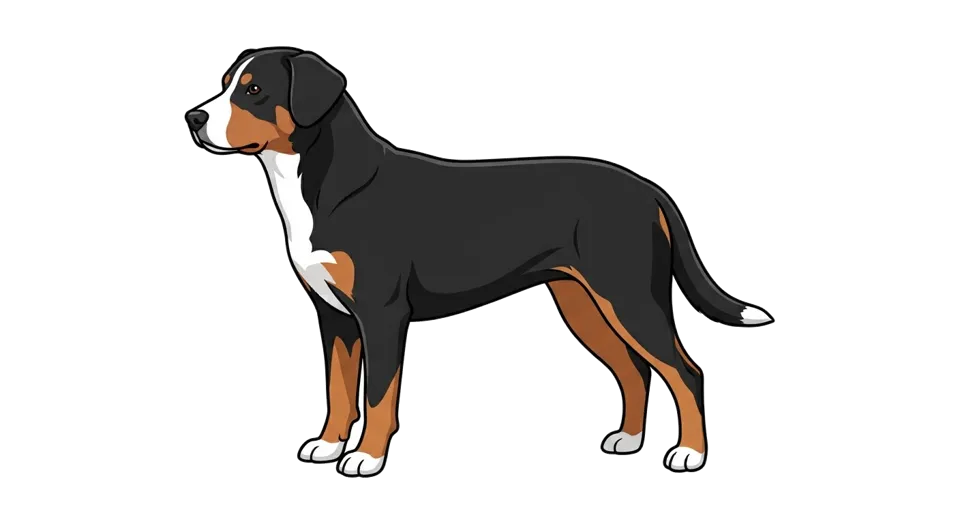
Point 1
Skull
The Entlebucher Mountain Dog's skull is judged on balance rather than size — proportionate to the body, with a clean cheek and a stop typical of the breed. Coarseness or an over-refined head are both faulted.
Colours & patterns
Recognised coats
Which coats the standard accepts — and which are simply popular.
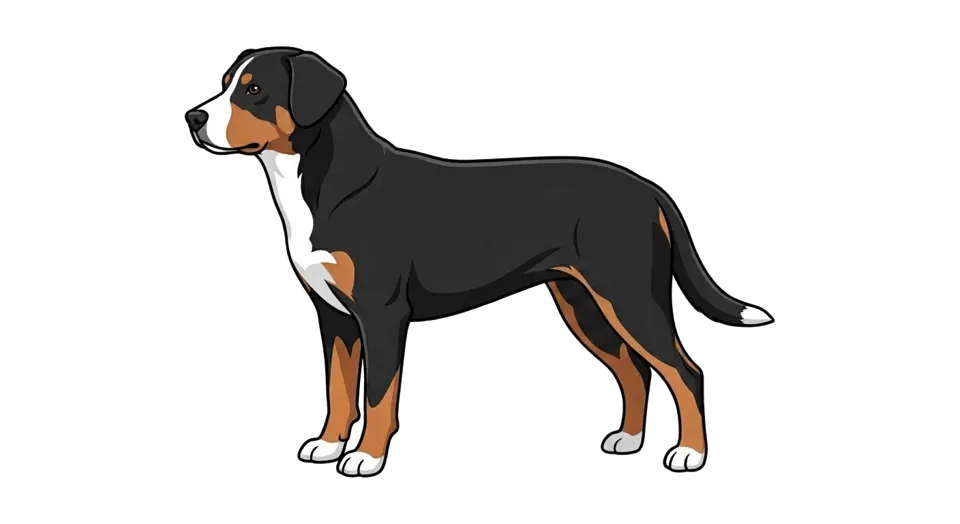
Tricolour
Standard colour
The standard black, tan and white pattern, the only accepted colouring.
Timeline
History & development
1800s and earlier
Cattle-driving dog in the Alps
Farmers in the Entlebuch valley used small, agile dogs to drive cattle between valley and Alpine pasture.
1913
Identified as a distinct breed
Swiss dog show judge Albert Heim identified the Entlebucher as separate from the other Swiss mountain dog types.
1926
Breed club founded
A dedicated Swiss breed club was established to standardise and promote the breed.
1980s
Introduction to North America and UK
The breed began to spread beyond Switzerland to a small international following.
Reference
Breed standard summary
- body
- Long in proportion to height, deep chest
- coat
- Short, dense, shiny double coat
- ears
- Medium, triangular, set high, hanging close to the head
- eyes
- Small, triangular, dark brown
- gait
- Ground-covering, tireless trot
- head
- Strong, flat skull, moderate stop
- size
- Medium working breed
- tail
- Fairly short, thick at base
- colour
- Tricolour. Colours outside this list are seen but are not accepted by the kennel clubs.
- temperament
- Typical of the breed: strongest in energy, trainability, sociability. Nervousness or aggression are serious faults in the show ring and in the home.
- general appearance
- Compact, muscular tricolour mountain dog, the smallest of the Swiss Sennenhund breeds
Health
What to screen for
Green means little to worry about, amber means ask the breeder for test results, red means manage it actively.
Hip dysplasia
Screen for it
Ask for BVA/KC hip scores on both parents.
Progressive retinal atrophy
Screen for it
Request eye certification from the breeder.
Entlebucher Mountain Dog deafness/eye syndrome
Watch closely
A DNA test exists for this condition; ask breeders whether parents are tested clear.
Patellar luxation
Low concern
Occurs occasionally; a general vet check is usually sufficient.
General information only — always speak to your vet about your own dog.
From real owners
Entlebucher Mountain Dogs in the PAWPOINT Pack
Entlebucher Mountain Dogs added by PawPoint members through their pet passports. Share yours to appear here.
Loading the wall…
Made for the Entlebucher Mountain Dog
The book, plus hoodies, tees and mugs featuring the Entlebucher Mountain Dog.