
Eurasier
yoo-RAY-zee-er
Germany· Weinheim, Baden-Württemberg
The Eurasier is a medium-sized spitz developed in Germany in the 1960s purely as a calm, watchful family companion, one of the few breeds engineered from the outset with no working brief at all.
At a glance
Quick facts
Size
Medium
Exercise needs
45-60 minutes daily
Home size suited to
Small to medium home
Grooming frequency
Twice weekly brush
Coat length
Medium
Sheds
Yes, heavily when moulting
Lifespan
12-14 years
Town or country
Either, happy in town
Garden size needed
Small to medium
Where it comes from
Origins of the Eurasier
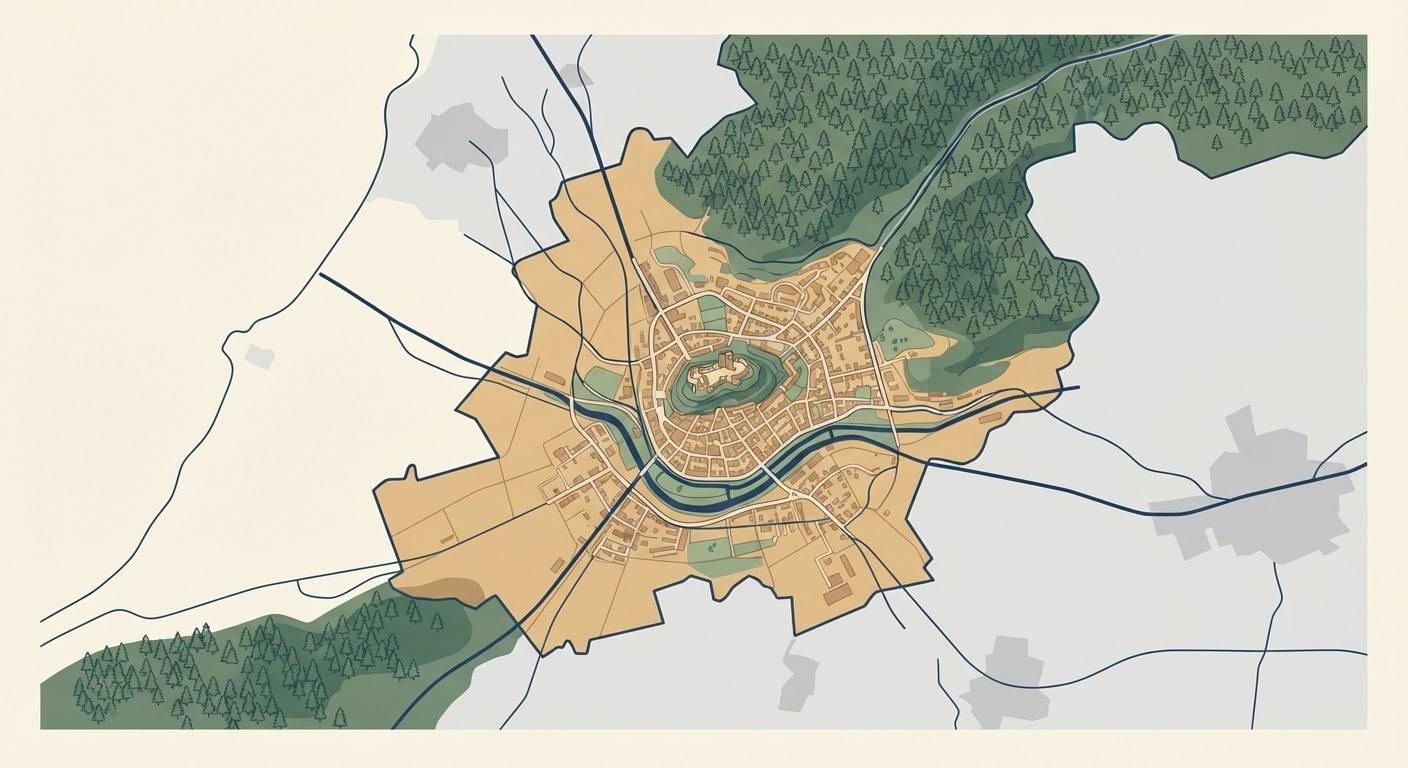
Bred deliberately in postwar Germany rather than descended from an old working line. The founders wanted calm household temperament above all else, and selected accordingly rather than for any job.
- Region
- Weinheim, Baden-Württemberg
- Climate it was bred for
- Temperate central European
- Original job
- Purpose-bred family companion
The long read
About the breed
Julius Wipfel began the project near Weinheim by crossing Chow Chows with Wolfspitz, later adding Samoyed to soften temperament and broaden the gene pool. He wanted a dog with the composure of the Chow and the sociability of the spitz types, without the aloofness of either parent breed alone. The breed was recognised in Germany in 1973 and remains rare outside its homeland.
Living with a Eurasier means living with a dog that watches rather than performs. They bond tightly to their own household and tend to be reserved, sometimes indifferent, with strangers, though not aggressive when correctly socialised from puppyhood. They are not natural barkers and dislike being left alone for long stretches, forming strong one-family attachments rather than general friendliness. The dense double coat sheds heavily twice a year and needs brushing two or three times a week outside those periods.
Today the Eurasier is kept almost exclusively as a companion and is still bred in modest numbers by hobbyist clubs that police temperament and hip scores closely. It suits a household wanting a calm, undemanding presence rather than a dog that craves constant activity, provided early socialisation is taken seriously.
Living with one
Temperament & needs
Our own ratings, based on the breed standard and how these dogs behave in ordinary homes.
Friendliness
2/5
How openly the Eurasier greets people it does not know.
Trainability
3/5
Intelligent but can be independent-minded.
Energy
2/5
Content with a couple of steady walks a day.
Barking
1/5
Notably quiet for a spitz type.
Grooming
4/5
Heavy seasonal shedding needs regular brushing.
Suits a first-time owner
3/5
How forgiving the Eurasier is for someone taking on their first dog.
Sociability
2/5
Reserved with strangers, devoted to its own family.
Independence
3/5
Comfortable amusing itself once settled.
Illustrated breed standard
The points of the breed
Hover or tap a numbered point to read what the standard asks for.
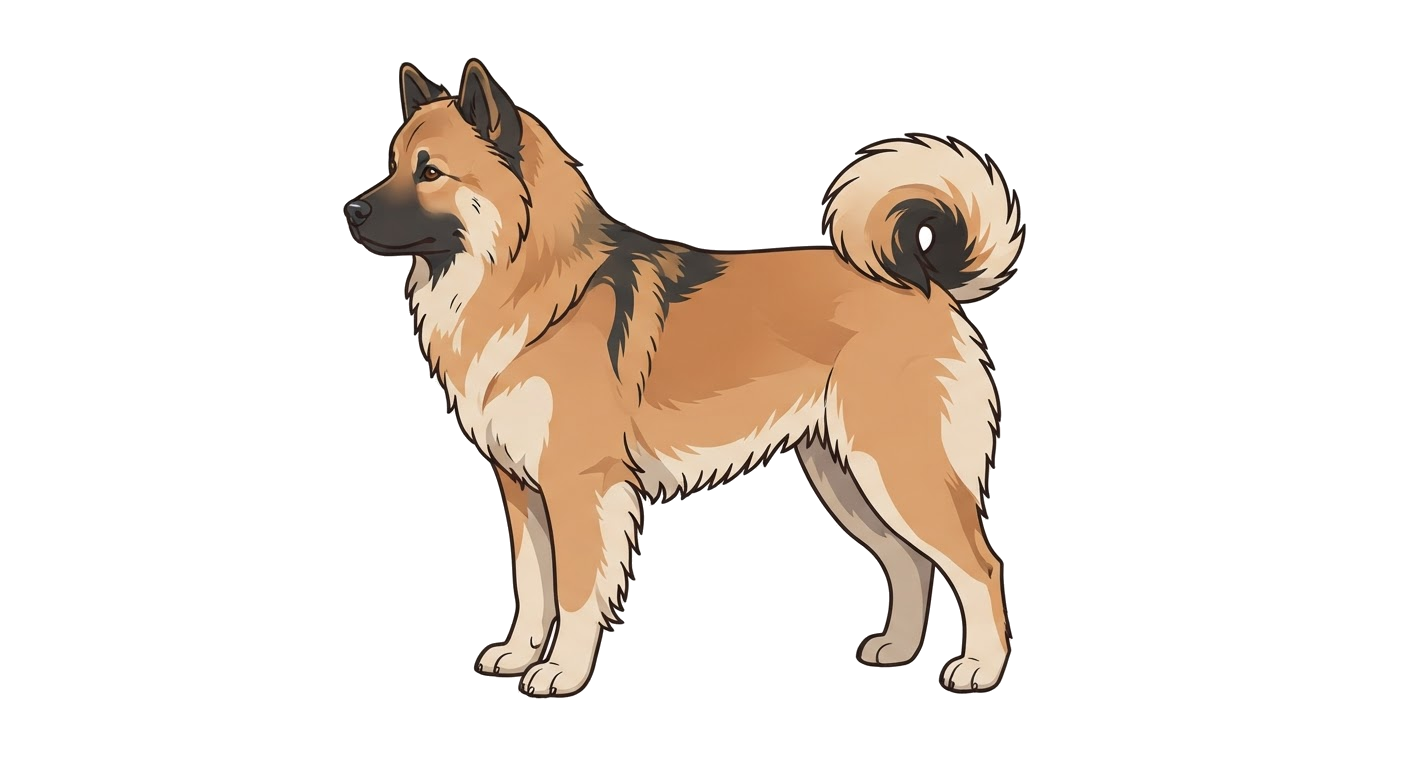
Point 1
Skull
The Eurasier's skull is judged on balance rather than size — proportionate to the body, with a clean cheek and a stop typical of the breed. Coarseness or an over-refined head are both faulted.
Colours & patterns
Recognised coats
Which coats the standard accepts — and which are simply popular.
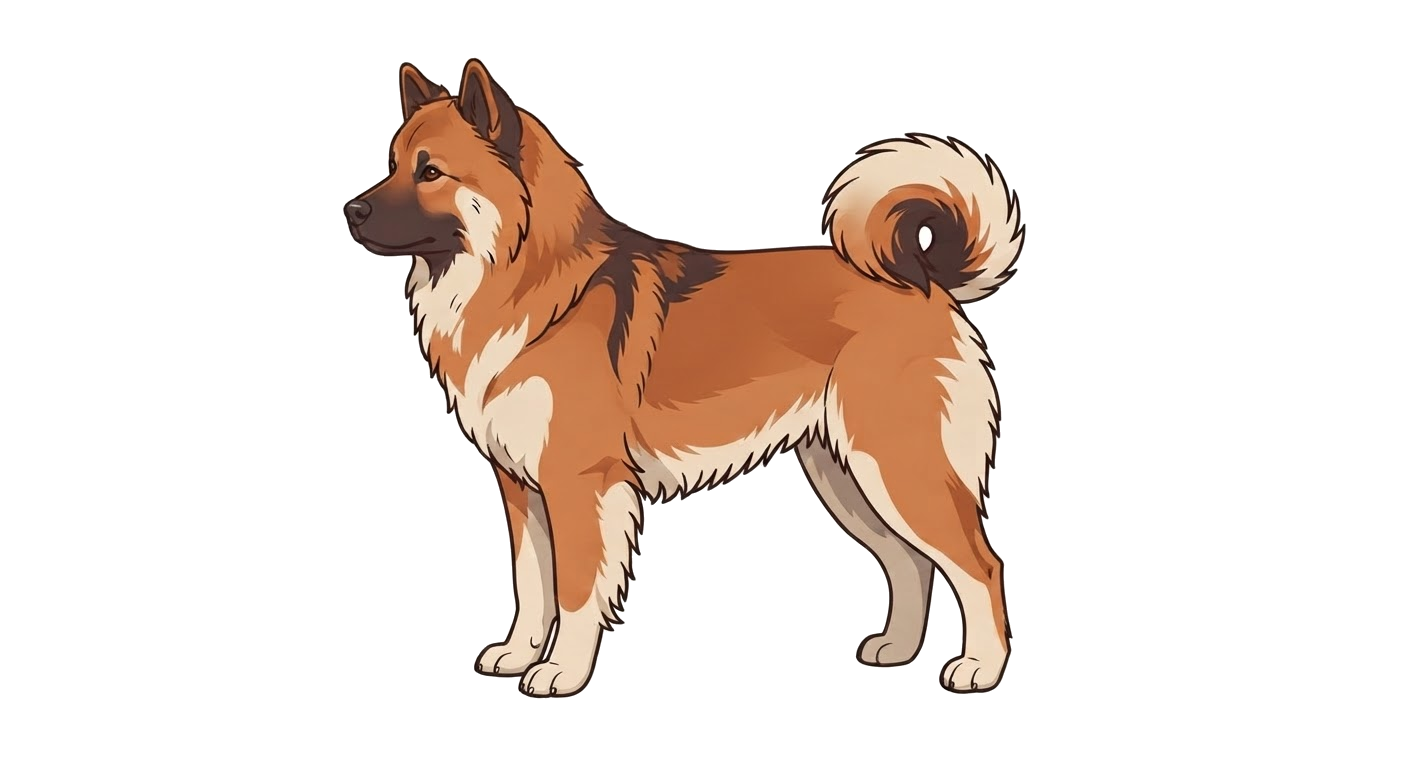
Red
Standard colour
Most common shade, ranging from fawn to deep chestnut.
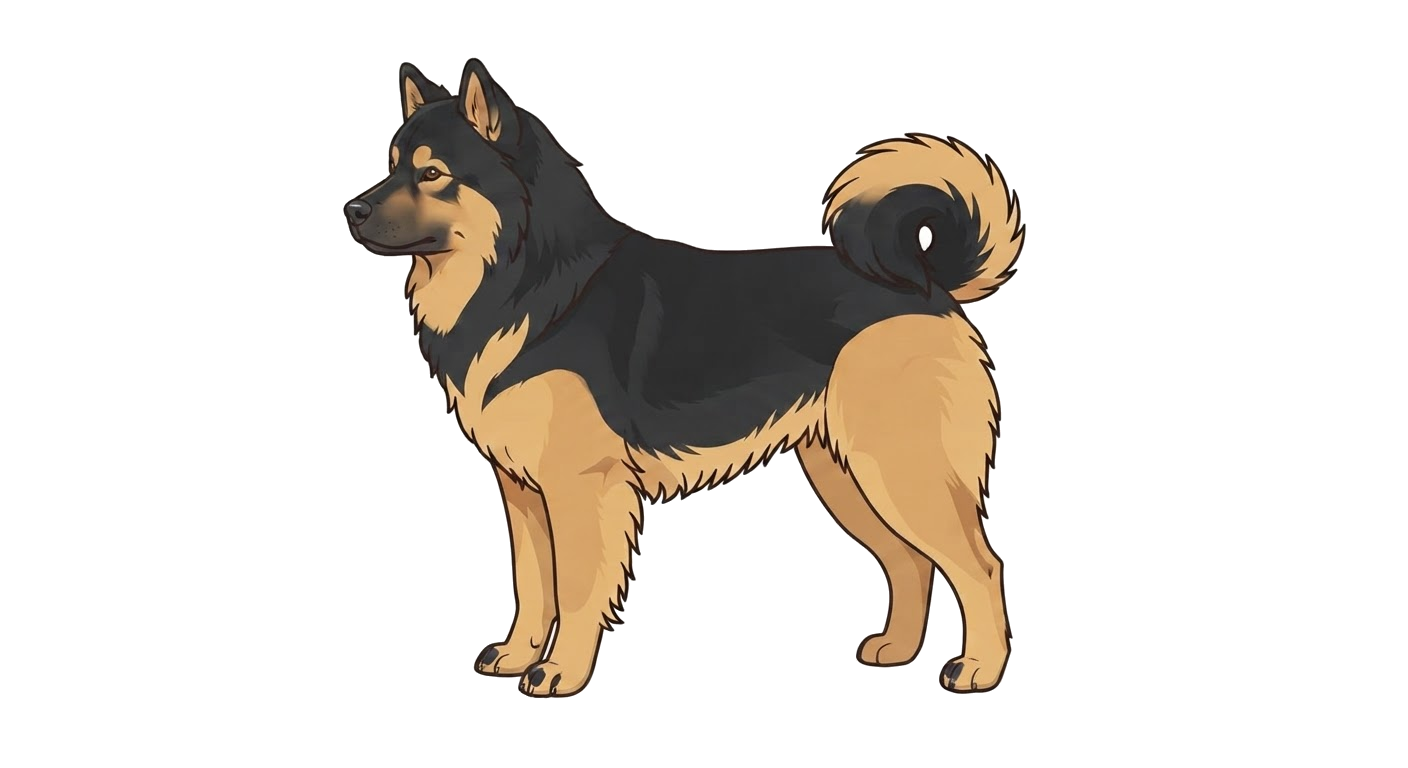
Black and tan
Standard colour
Black body with tan points, a classic spitz pattern.
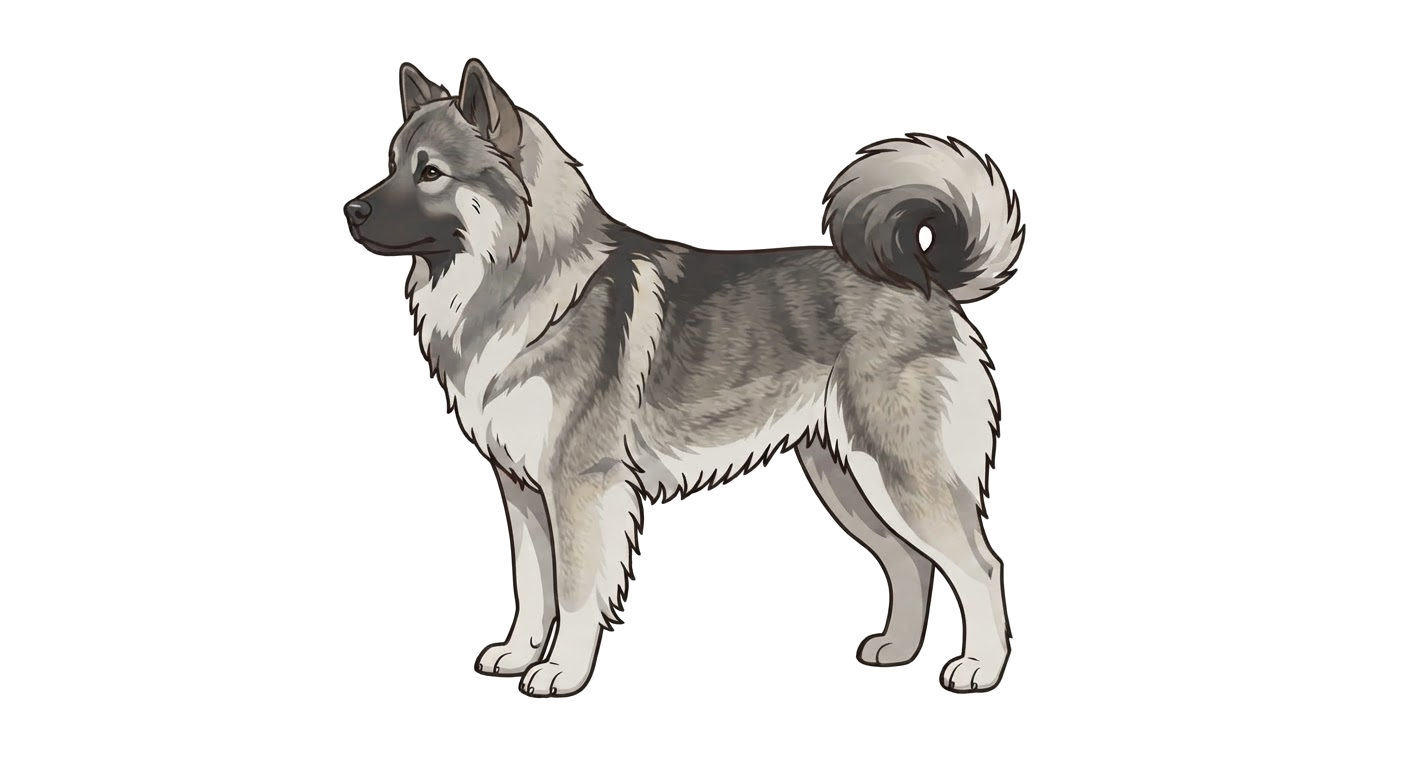
Wolf grey
Standard colour
Agouti banding reminiscent of the Wolfspitz parent.
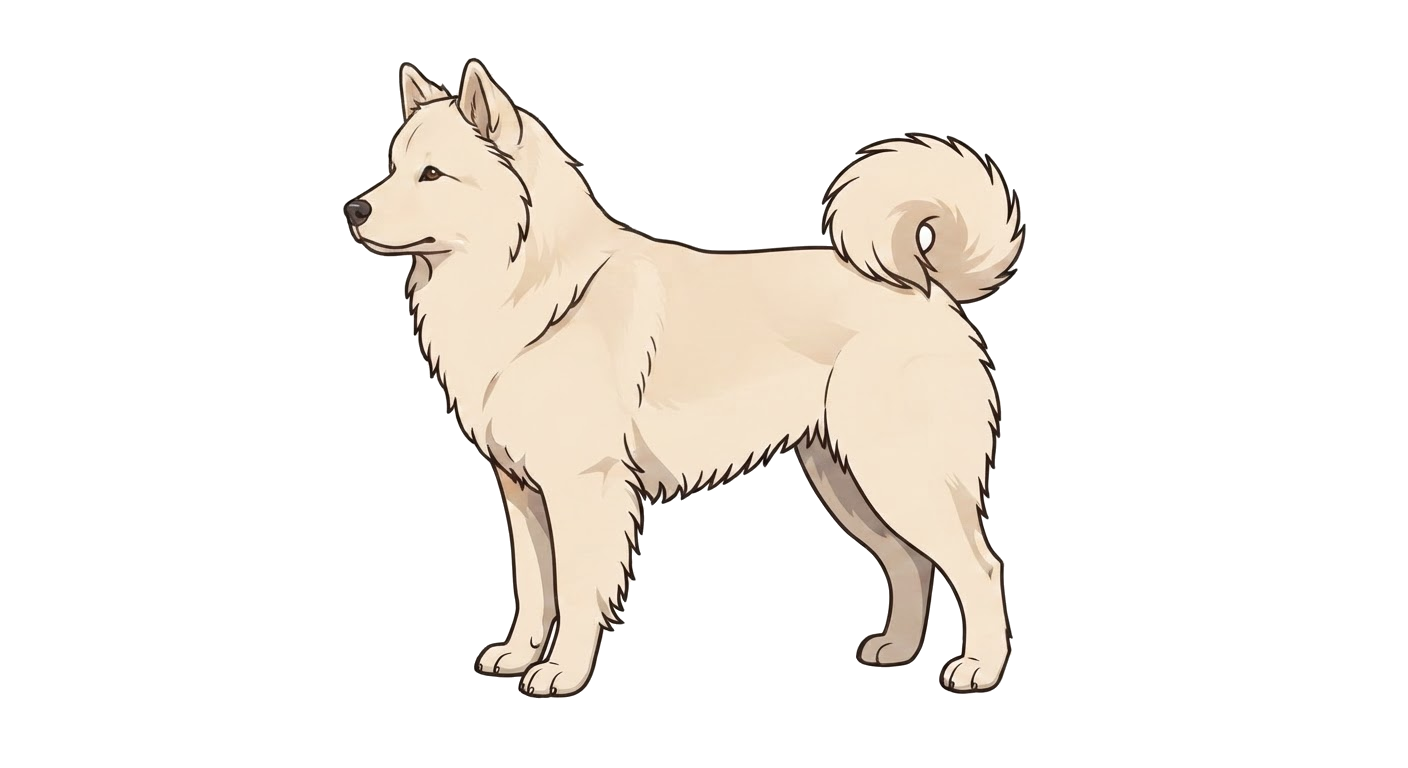
Cream
Standard colour
Pale, softer shade seen less often than red.
Outside the standard
Other colours
Dilute coats you will see advertised. They are the same breed, but no kennel club accepts them.
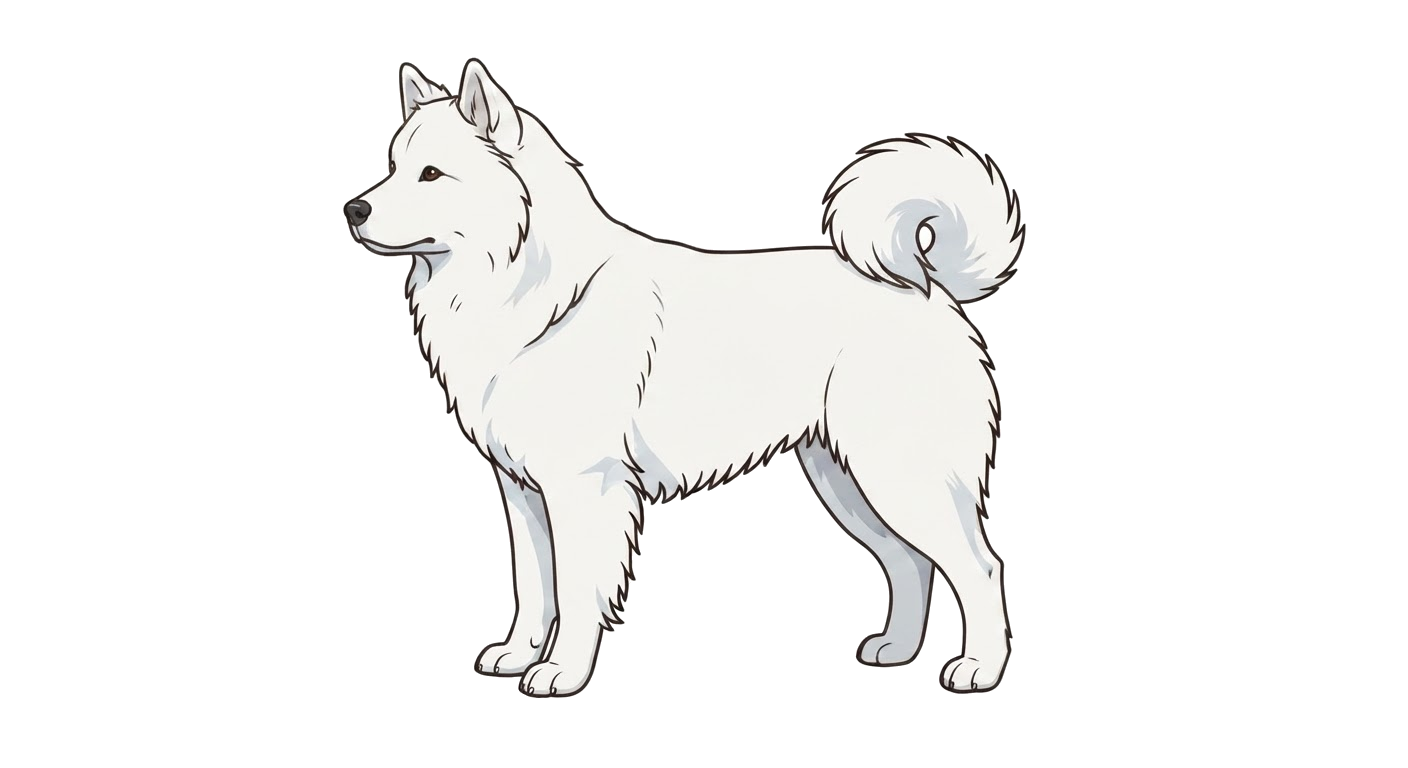
Solid white
Not in the standard
Not part of the accepted standard, unlike some spitz relatives.
Timeline
History & development
1960
Project begins
Julius Wipfel starts crossing Chow Chow and Wolfspitz near Weinheim to fix a calm temperament.
1969
Samoyed added
Samoyed blood is introduced to widen the gene pool and soften character further.
1973
German recognition
The breed is officially recognised and named Eurasier by the German kennel club.
1995
UK arrival
Small numbers reach Britain, kept mostly by dedicated hobby breeders.
Reference
Breed standard summary
- body
- Compact, slightly longer than tall
- coat
- Double coat, longer ruff around neck
- ears
- Small, triangular, erect
- eyes
- Dark, medium size, slightly slanted
- gait
- Light, ground-covering trot
- head
- Wedge-shaped, moderate stop
- size
- Medium · 48-60cm · 18-32kg
- tail
- Carried curled over the back
- colour
- Red, Black and tan, Wolf grey, Cream. Colours outside this list are seen but are not accepted by the kennel clubs.
- temperament
- Typical of the breed: strongest in grooming, trainability, independence. Nervousness or aggression are serious faults in the show ring and in the home.
- general appearance
- Medium spitz type, well balanced, calm bearing
Health
What to screen for
Green means little to worry about, amber means ask the breeder for test results, red means manage it actively.
Hip dysplasia
Screen for it
Ask breeders for hip scoring on both parents.
Hypothyroidism
Screen for it
Request thyroid panel results where available.
Patellar luxation
Low concern
Occasional; vets check knee stability at routine visits.
Distichiasis
Low concern
Eye check certificates are reassuring but not essential.
General information only — always speak to your vet about your own dog.
From real owners
Dogs like this
Eurasiers added by PawPoint members through their pet passports. Share yours to appear here.
Loading the wall…
Made for the Eurasier
The book, plus prints, hoodies and mugs using our own Eurasier illustration — and one everyday accessory that suits any dog.

The book
Pawpoint: The Complete Dog Breed Book
Every officially recognised breed plus the unofficial ones nobody else documents. 400+ pages, hardback, printed and shipped from the UK.
Own stock — shipped by us
Framed poster
Eurasier Framed Poster
Museum-weight print of our Eurasier illustration, framed or unframed.
Printed to order
Hoodie
Eurasier Hoodie
Heavyweight hoodie carrying the Eurasier illustration on the chest.
Printed to order
Mug
Eurasier Mug
Ceramic mug with the Eurasier illustration wrapped around it.
Printed to order
Accessory
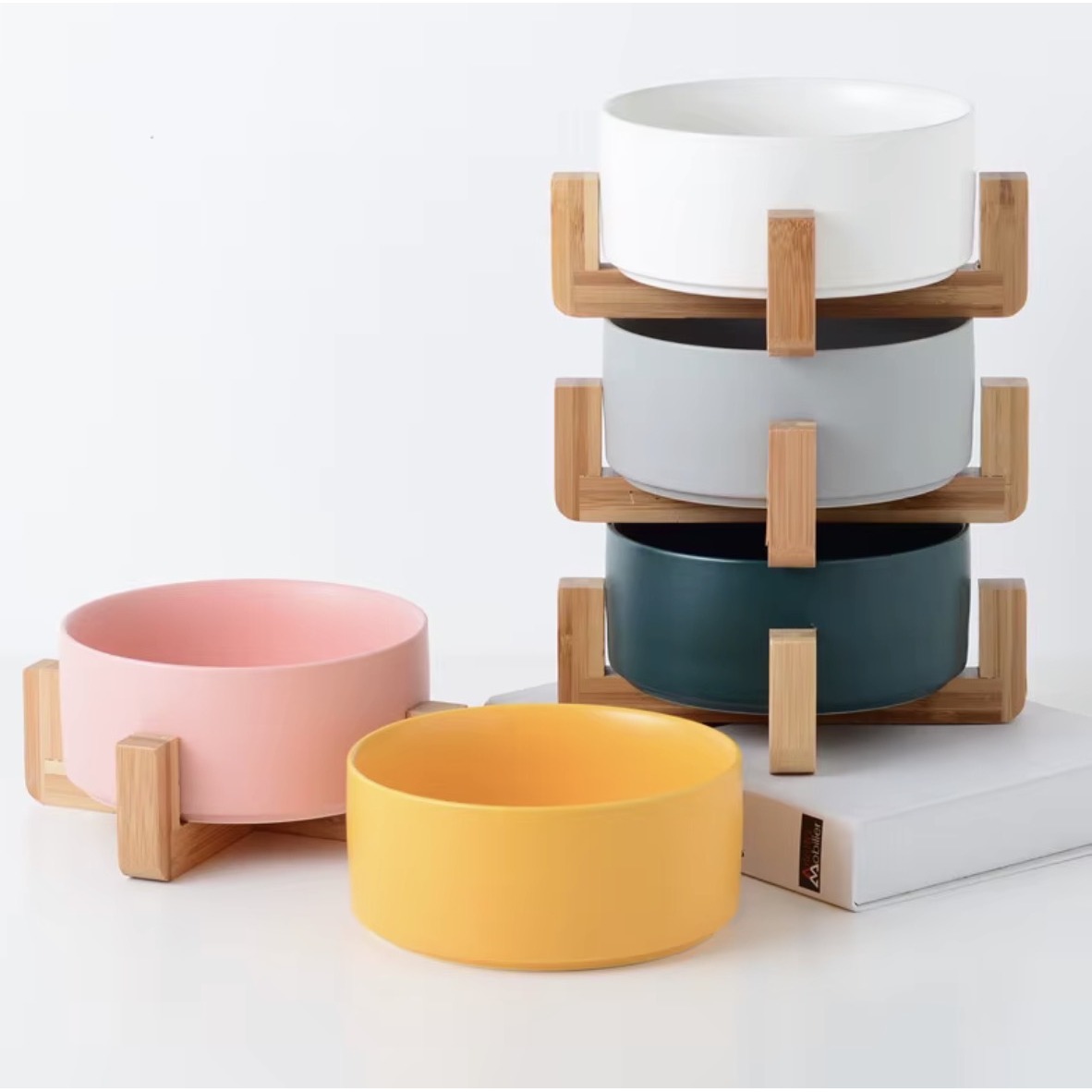
Stainless Dog Bowl
Weighted, non-slip base. Dishwasher safe.
Fits any dog
Pawpoint on YouTube
Watch the full Eurasier video
Breed deep-dives, history and honest ownership talk. New film every week.
Watch now