
Finnish Lapphund
LAP-hund
Finland· Finnish Lapland
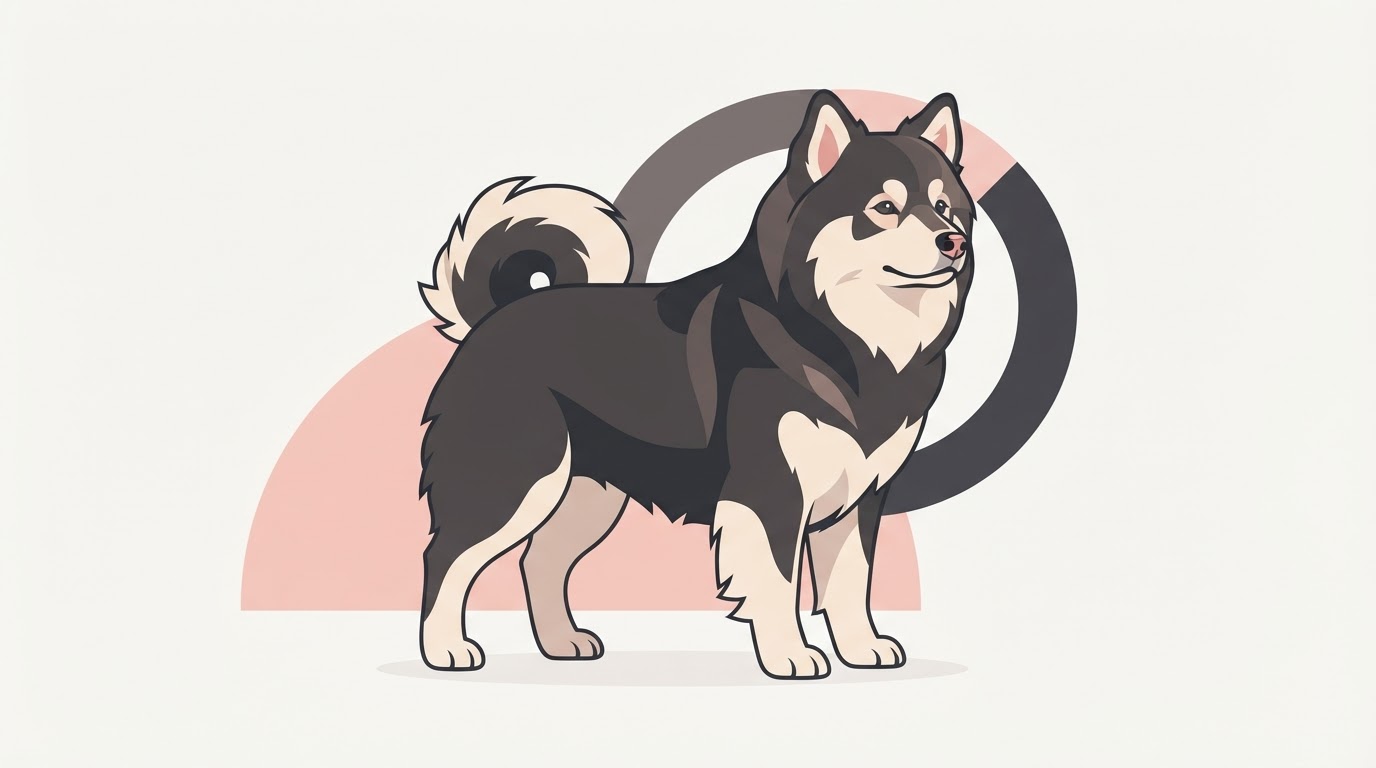
The Finnish Lapphund is a hardy herding spitz from Finnish Lapland, bred by the Sami people to help manage reindeer across vast Arctic distances.
At a glance
Quick facts
Size
Medium
Exercise needs
60 minutes daily
Home size suited to
Small to medium home
Grooming frequency
Weekly brush, hand-strip a few times a year
Coat length
Wiry
Sheds
Yes, heavily when moulting
Lifespan
12-14 years
Town or country
Happiest in the country
Garden size needed
Small to medium
Where it comes from
Origins of the Finnish Lapphund
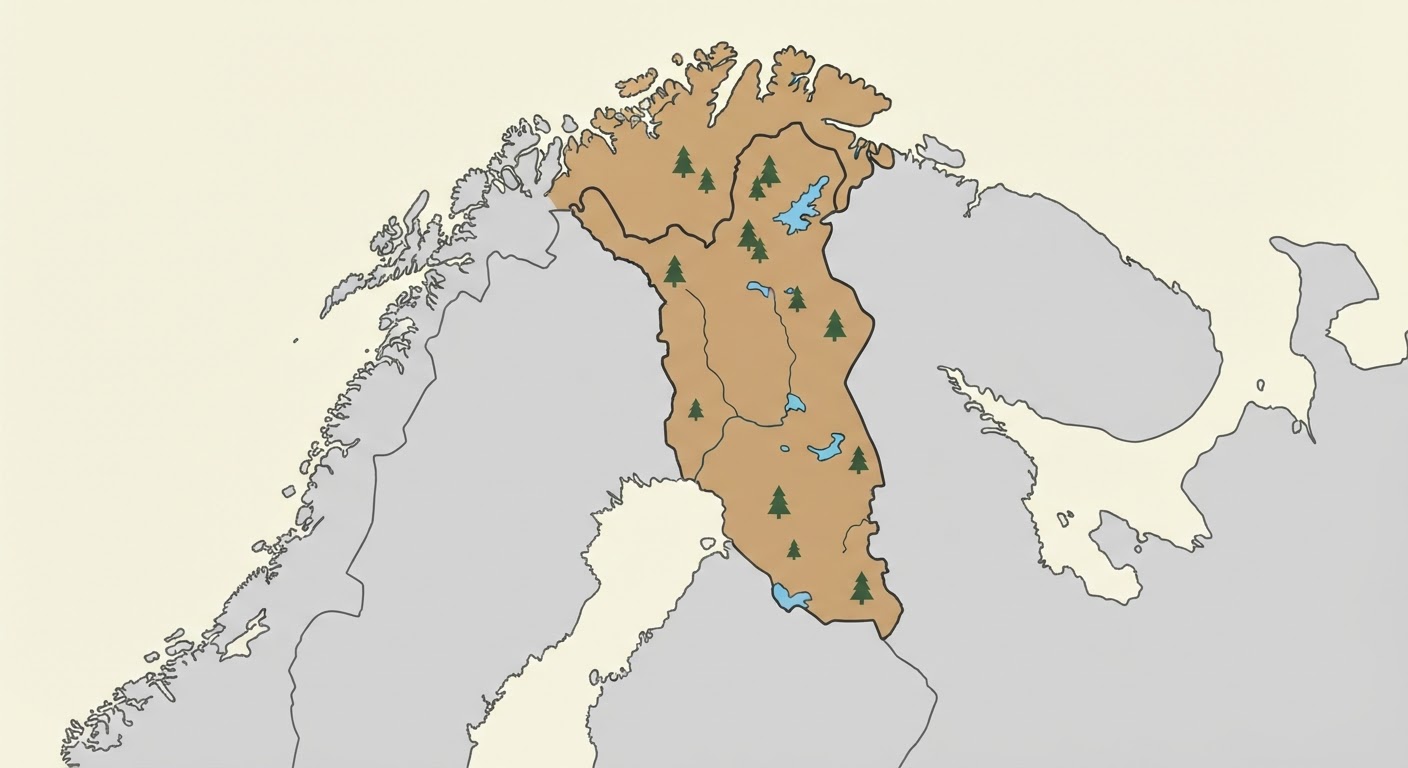
Developed by Sami reindeer herders in the far north of Finland, where a dog needed a coat thick enough for Arctic cold and enough independence to work herds unsupervised.
- Region
- Finnish Lapland
- Climate it was bred for
- Arctic, long harsh winters
- Original job
- Herding and guarding reindeer
The long read
About the breed
For centuries Sami herders relied on capable, weatherproof dogs to gather and control semi-wild reindeer herds across open tundra and forest, often working at a distance from any human settlement for days at a time. The breed's thick double coat and calm, watchful temperament reflect that job: a dog needed to withstand extreme cold, work with minimal direction, and stay steady around large, easily-spooked animals. It was formally recognised as a distinct breed in Finland in 1945.
Living with a Finnish Lapphund suits an active household that enjoys the outdoors in any weather. They are famously good-natured and biddable for a spitz breed, eager to please and generally excellent with children, though the herding instinct means some will try to gather running children or other pets. They are vocal, using bark as a herding tool, which owners in close-quartered housing should weigh carefully. The coat sheds heavily twice yearly and needs thorough brushing to prevent matting.
Today the breed is popular in Scandinavia as both a working reindeer dog and a family companion, and its numbers are slowly growing elsewhere in Europe and North America. It remains an all-rounder, equally happy at herding trials, obedience work, or curled up at home after a long winter walk.
Living with one
Temperament & needs
Our own ratings, based on the breed standard and how these dogs behave in ordinary homes.
Friendliness
5/5
How openly the Finnish Lapphund greets people it does not know.
Trainability
4/5
Eager to please, among the more biddable spitz breeds.
Energy
3/5
Enjoys long outdoor activity but settles well indoors.
Barking
4/5
Vocal by nature, barking was part of its herding job.
Grooming
4/5
Thick double coat sheds heavily twice a year.
Suits a first-time owner
4/5
How forgiving the Finnish Lapphund is for someone taking on their first dog.
Sociability
5/5
Warm and friendly, good with children and strangers.
Independence
2/5
Likes to be included in family activity.
Illustrated breed standard
The points of the breed
Hover or tap a numbered point to read what the standard asks for.
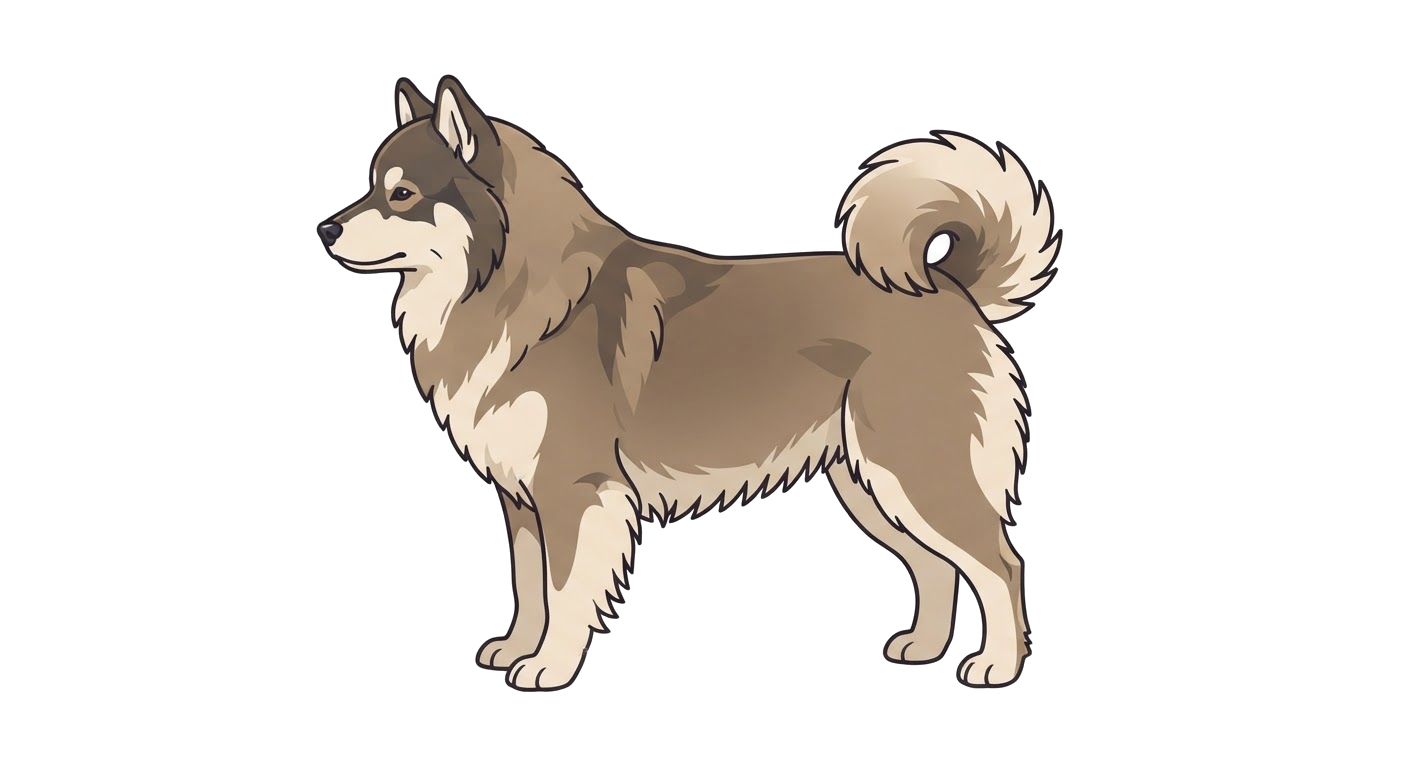
Point 1
Skull
The Finnish Lapphund's skull is judged on balance rather than size — proportionate to the body, with a clean cheek and a stop typical of the breed. Coarseness or an over-refined head are both faulted.
Colours & patterns
Recognised coats
Which coats the standard accepts — and which are simply popular.
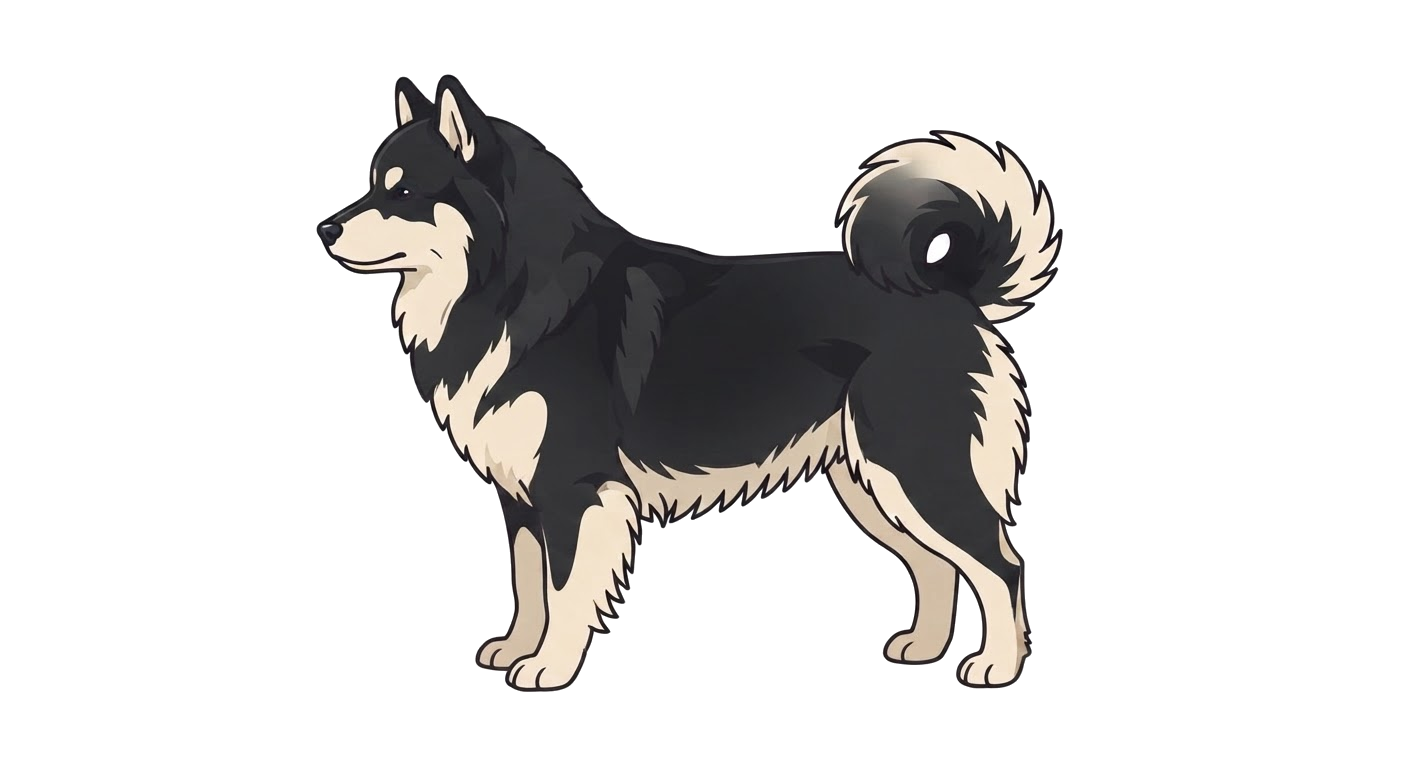
Black
Standard colour
Solid black with or without white markings is common.
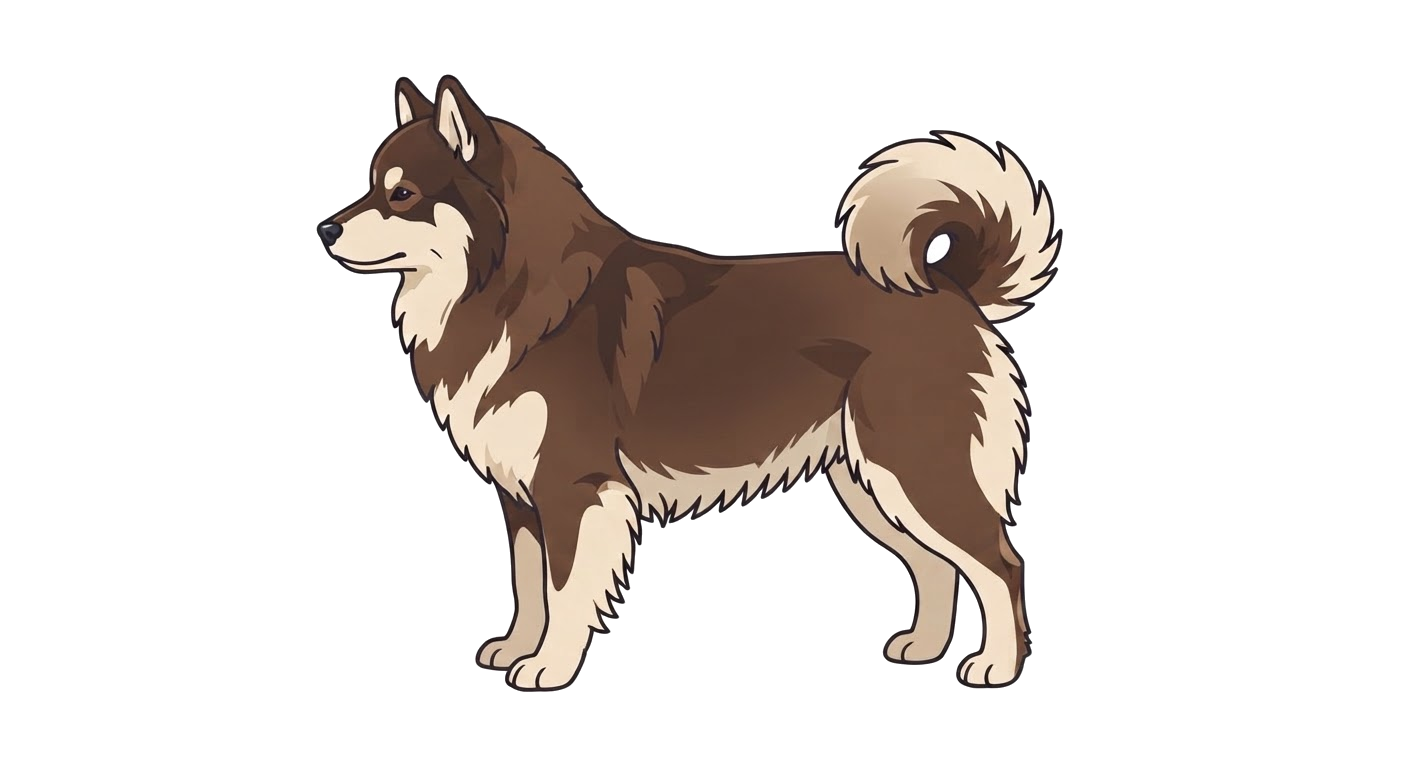
Brown
Standard colour
Ranges from light to dark chocolate brown.
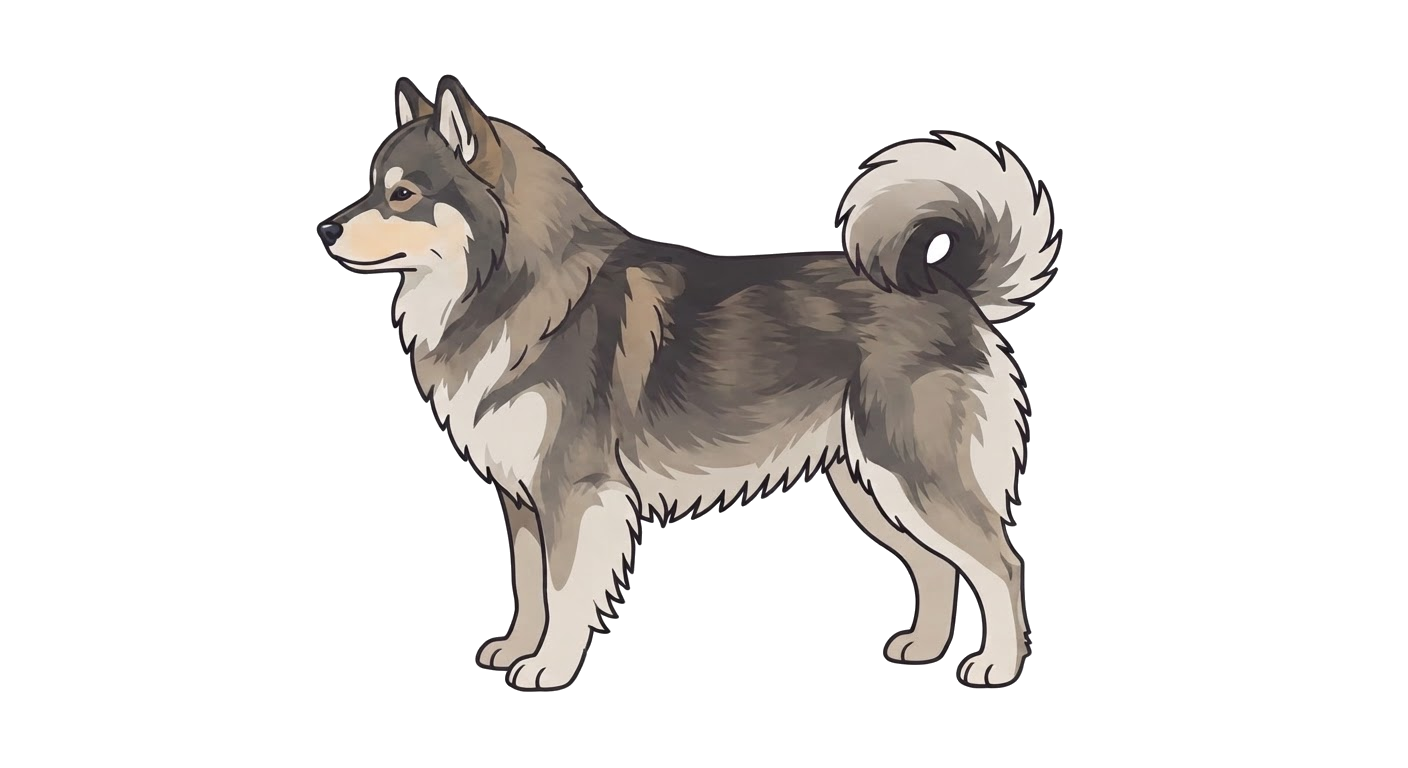
Wolf sable
Standard colour
Grey-brown banded coat resembling wild canids.
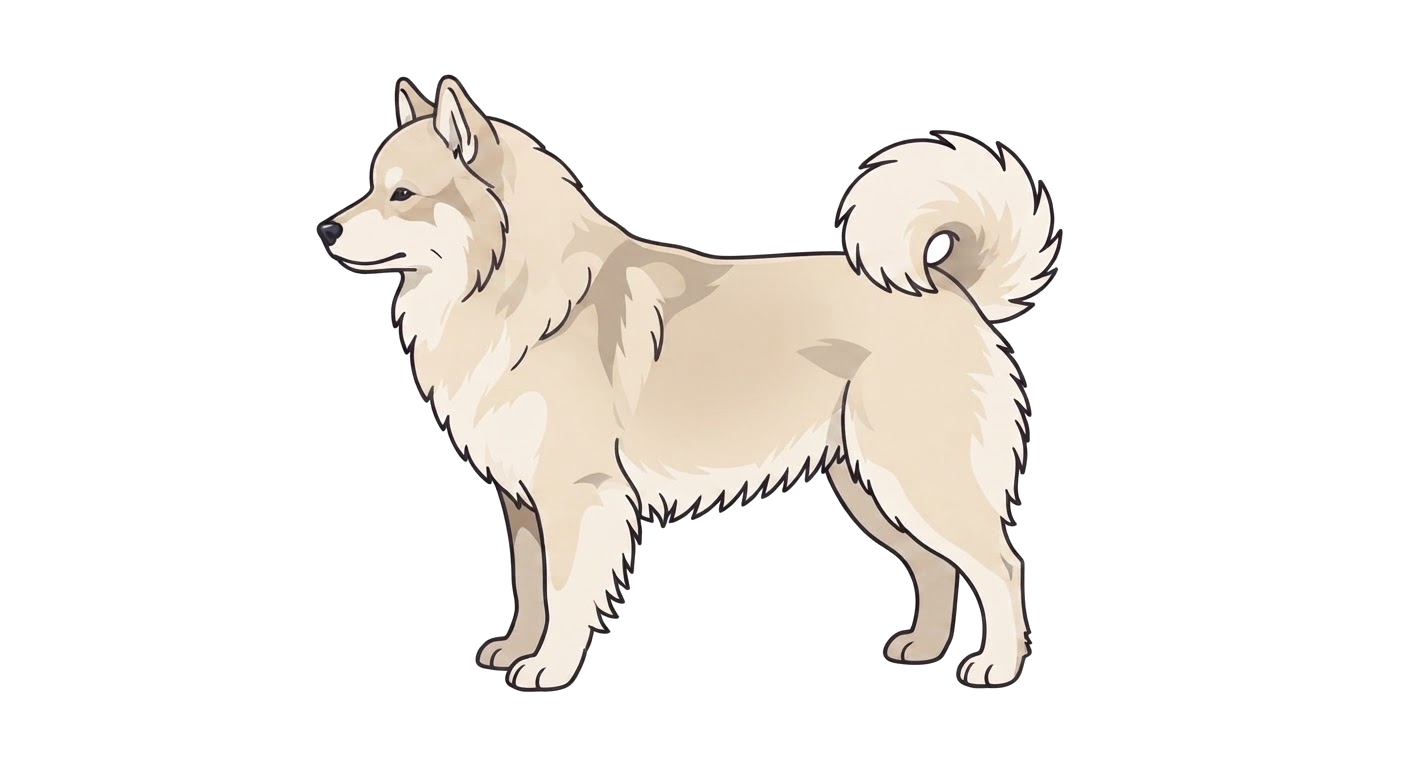
Cream
Standard colour
Pale shade, less common than darker colours.
Timeline
History & development
1600s
Sami working dog
Ancestors of the breed work alongside Sami herders managing reindeer across Lapland.
1945
Breed recognition
The Finnish Kennel Club formally recognises the Finnish Lapphund as a distinct breed.
1967
Standard revised
The breed standard is updated to reflect the dog as both herder and companion.
1995
Wider export
Numbers grow beyond Scandinavia as the breed gains popularity abroad.
Reference
Breed standard summary
- body
- Rectangular, strong, well-boned
- coat
- Long, harsh outer coat, soft dense undercoat
- ears
- Medium, erect, well furred
- eyes
- Dark brown, almond-shaped
- gait
- Free and effortless, covers ground easily
- head
- Broad skull, moderate stop
- size
- Medium · 41-49cm · 14-24kg
- tail
- Bushy, carried curled over the back
- colour
- Black, Brown, Wolf sable, Cream. Colours outside this list are seen but are not accepted by the kennel clubs.
- temperament
- Typical of the breed: strongest in sociability, trainability, barking. Nervousness or aggression are serious faults in the show ring and in the home.
- general appearance
- Sturdy spitz, slightly longer than tall, weatherproof
Health
What to screen for
Green means little to worry about, amber means ask the breeder for test results, red means manage it actively.
Progressive retinal atrophy
Screen for it
DNA testing is available and worth checking in breeding stock.
Hip dysplasia
Low concern
Uncommon but hip scoring is sensible for larger individuals.
Elbow dysplasia
Low concern
Occasional; ask for elbow scores if available.
Glaucoma
Screen for it
Some lines carry a hereditary risk; eye testing is recommended.
General information only — always speak to your vet about your own dog.
From real owners
Dogs like this
Finnish Lapphunds added by PawPoint members through their pet passports. Share yours to appear here.
Loading the wall…
Made for the Finnish Lapphund
The book, plus prints, hoodies and mugs using our own Finnish Lapphund illustration — and one everyday accessory that suits any dog.

The book
Pawpoint: The Complete Dog Breed Book
Every officially recognised breed plus the unofficial ones nobody else documents. 400+ pages, hardback, printed and shipped from the UK.
Own stock — shipped by us
Framed poster
Finnish Lapphund Framed Poster
Museum-weight print of our Finnish Lapphund illustration, framed or unframed.
Printed to order
Hoodie
Finnish Lapphund Hoodie
Heavyweight hoodie carrying the Finnish Lapphund illustration on the chest.
Printed to order
Mug
Finnish Lapphund Mug
Ceramic mug with the Finnish Lapphund illustration wrapped around it.
Printed to order
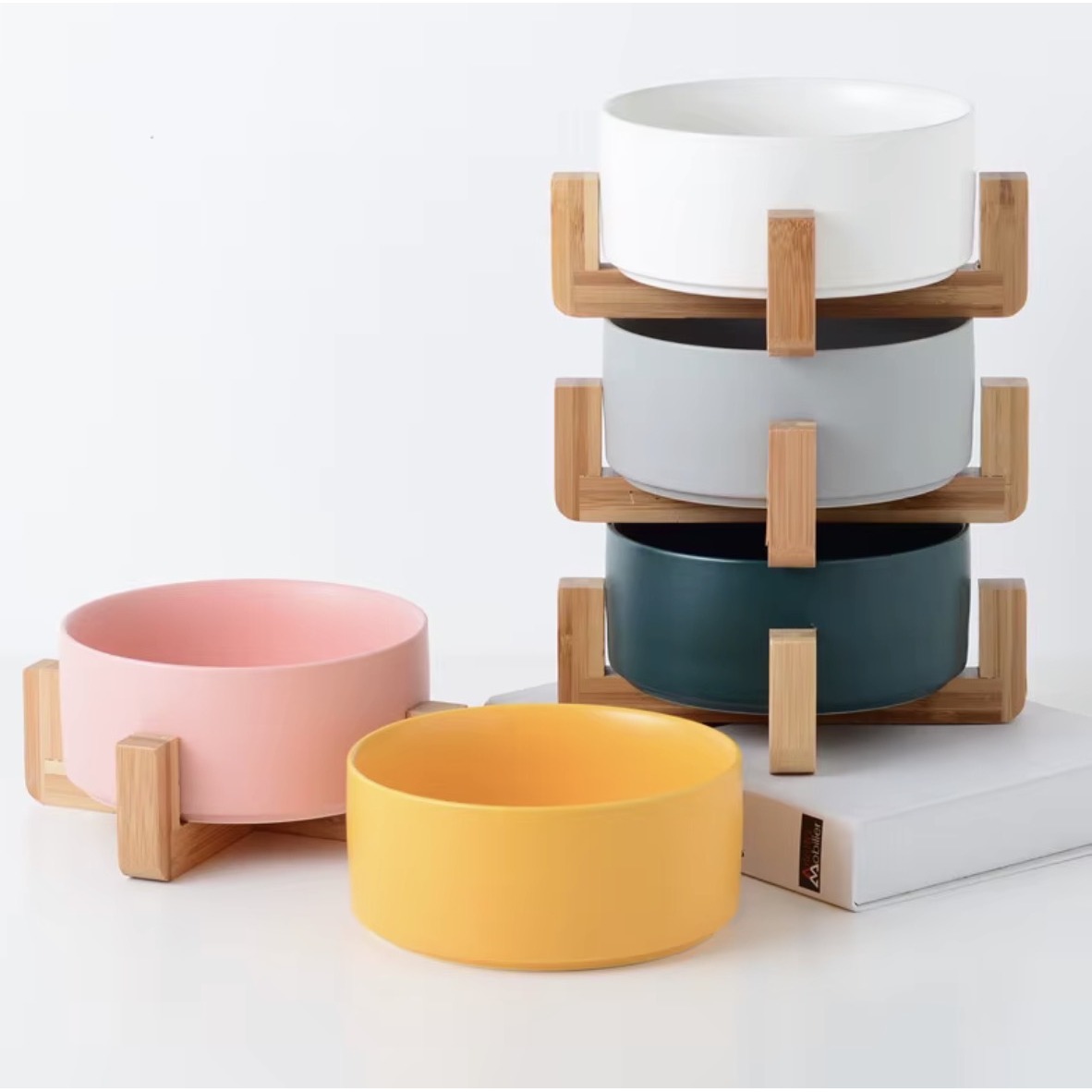
Accessory
Stainless Dog Bowl
Weighted, non-slip base. Dishwasher safe.
Fits any dog
Pawpoint on YouTube
Watch the full Finnish Lapphund video
Breed deep-dives, history and honest ownership talk. New film every week.
Watch now