
Flat Coated Retriever
FLAT KOH-tid ri-TREE-vuhr
United Kingdom· England
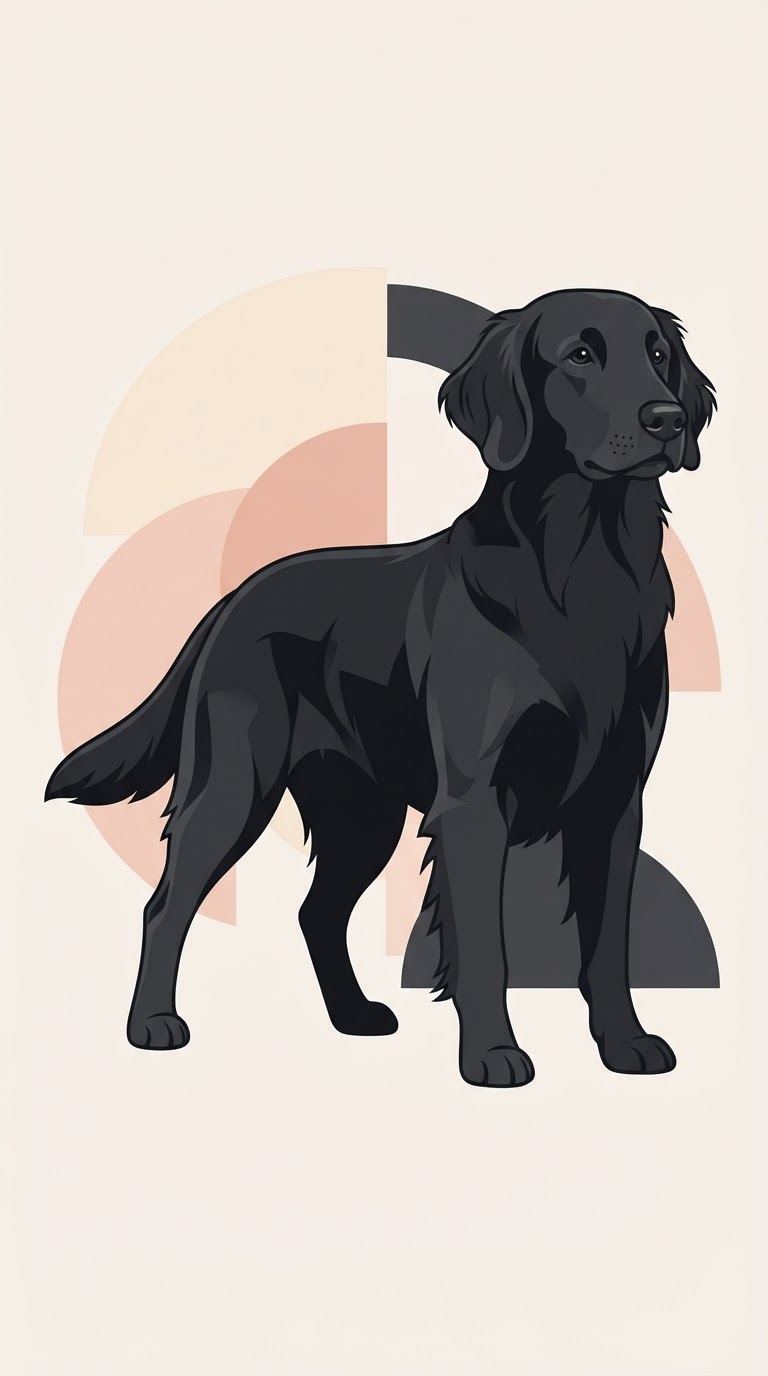
The Flat-Coated Retriever is a Victorian gundog bred to retrieve shot game from both land and water with a cheerful, willing temperament that has changed little in over a century.
At a glance
Quick facts
Size
Large
Exercise needs
90 minutes daily
Home size suited to
Medium to large home
Grooming frequency
Daily brushing
Coat length
Long
Sheds
Yes, heavily when moulting
Lifespan
8-10 years
Town or country
Either, with enough exercise
Garden size needed
Medium or larger
Where it comes from
Origins of the Flat Coated Retriever

Developed on English shooting estates in the Victorian era, where a retriever needed a soft mouth, a love of water, and the stamina for a full day in the field.
- Region
- England
- Climate it was bred for
- Temperate, mixed farmland and water
- Original job
- Retrieving shot game from land and water
The long read
About the breed
Developed in England during the mid-to-late 1800s from a mix of setter, spaniel, sheepdog and Newfoundland-type stock, the Flat-Coat was among the first retrievers to be shown and bred to a fixed type, championed by trainer Sewallis Shirley and later the breed's great populariser S. E. Shirley in the 1870s and 1880s. It was overtaken in general popularity by the Labrador during the twentieth century but retained a dedicated following of gundog trialists and family owners who value its exuberant, biddable character.
Living with a Flat-Coat means living with a dog often described as keeping puppy enthusiasm well into adulthood, sometimes three or four years, which delights some owners and tests the patience of others. They are exceptionally friendly, rarely aggressive or suspicious, and thrive with a job to do, whether formal gundog work, retrieving games, or simply a long daily walk with plenty of mental stimulation. Their long, flat coat needs regular brushing and is prone to picking up mud and burrs on country walks.
Today the breed is still worked by shooting enthusiasts as well as kept as a family companion, and it remains one of the more biddable and outgoing of the retriever breeds. Its main modern health concern, an elevated cancer rate compared with other retrievers, means prospective owners should ask breeders about family longevity as much as any other factor.
Living with one
Temperament & needs
Our own ratings, based on the breed standard and how these dogs behave in ordinary homes.
Friendliness
5/5
How openly the Flat Coated Retriever greets people it does not know.
Trainability
4/5
Eager and biddable, though slow to mature mentally.
Energy
4/5
Athletic and enthusiastic, needs plenty of daily exercise.
Barking
2/5
Not a habitual barker.
Grooming
3/5
Long flat coat needs regular brushing, especially after muddy walks.
Suits a first-time owner
3/5
How forgiving the Flat Coated Retriever is for someone taking on their first dog.
Sociability
5/5
Exceptionally friendly with people and other dogs.
Independence
2/5
Wants to be with people and involved in activity.
Illustrated breed standard
The points of the breed
Hover or tap a numbered point to read what the standard asks for.
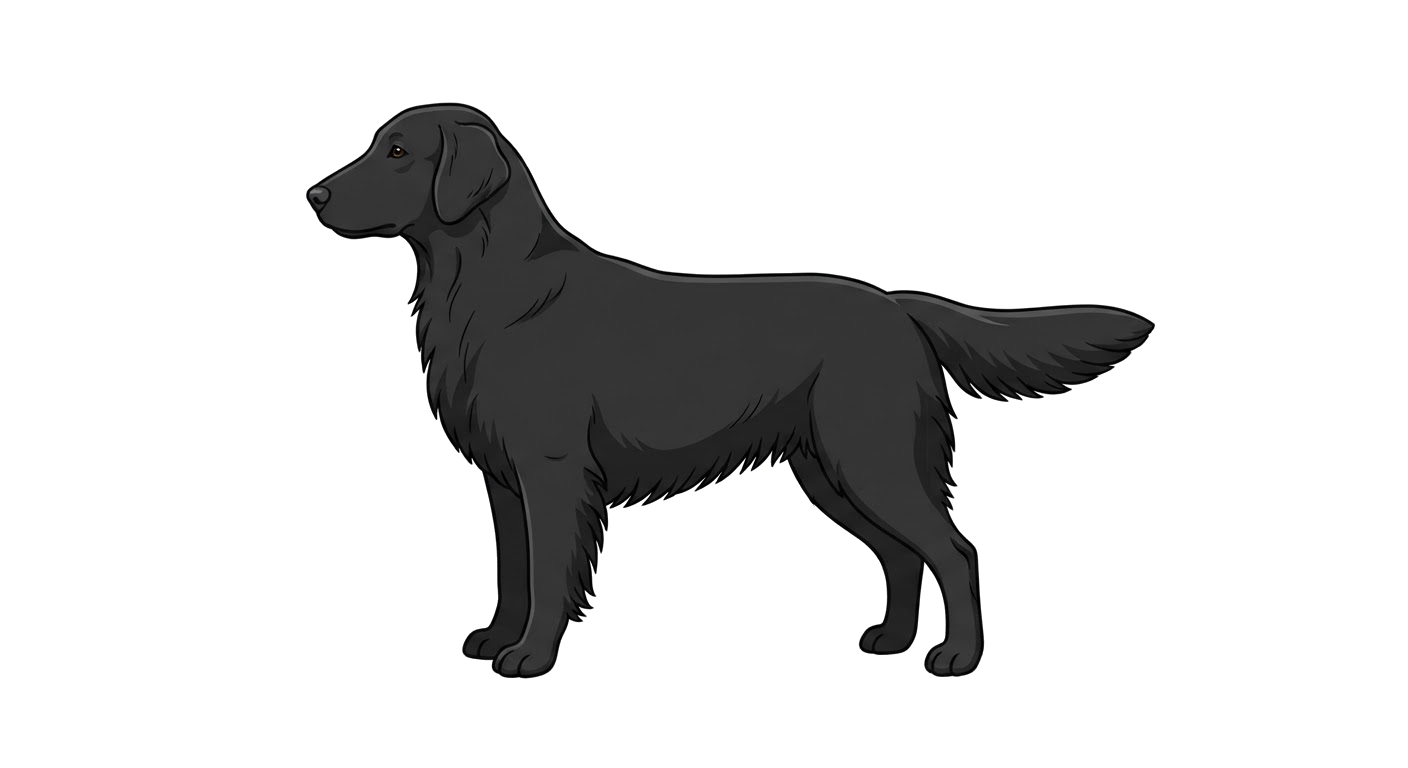
Point 1
Skull
The Flat Coated Retriever's skull is judged on balance rather than size — proportionate to the body, with a clean cheek and a stop typical of the breed. Coarseness or an over-refined head are both faulted.
Colours & patterns
Recognised coats
Which coats the standard accepts — and which are simply popular.
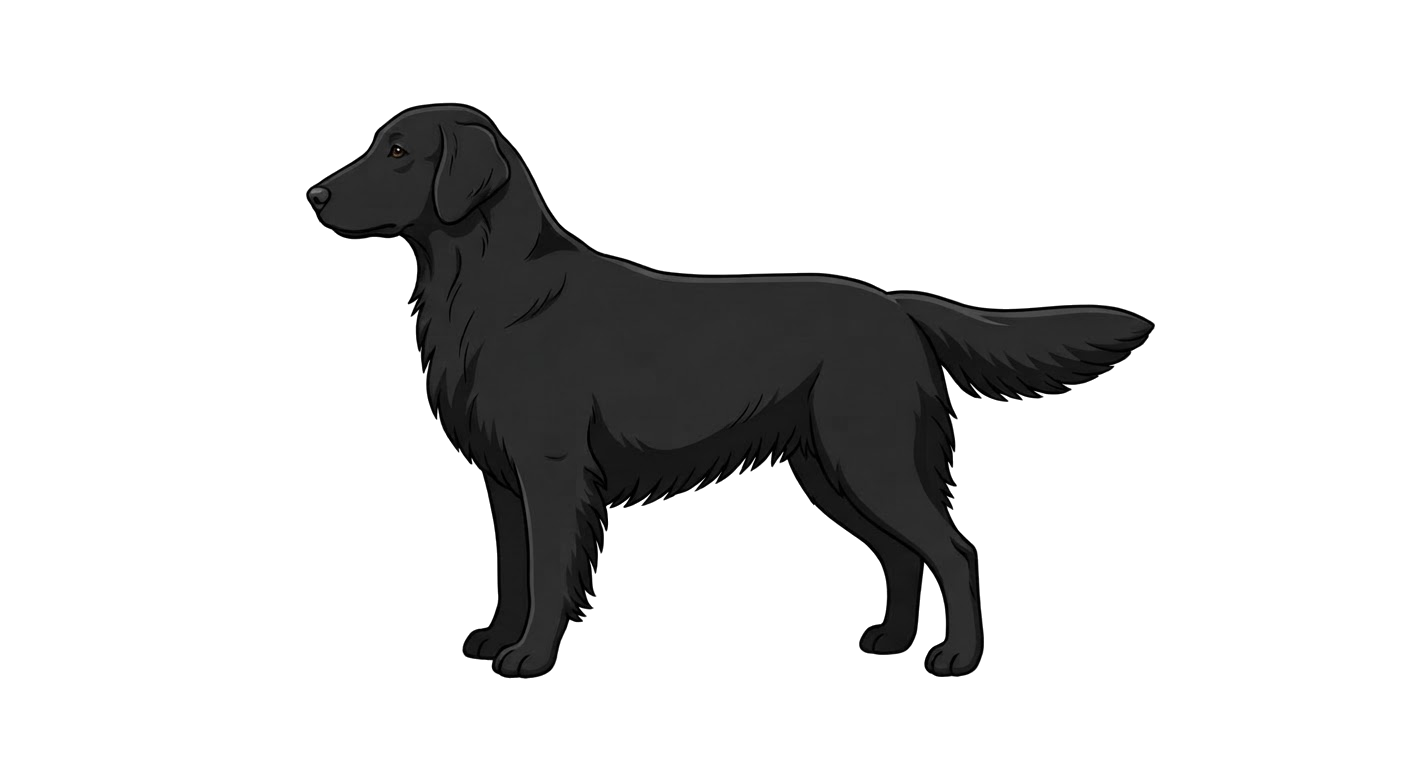
Black
Standard colour
The most common and classic Flat-Coat colour.
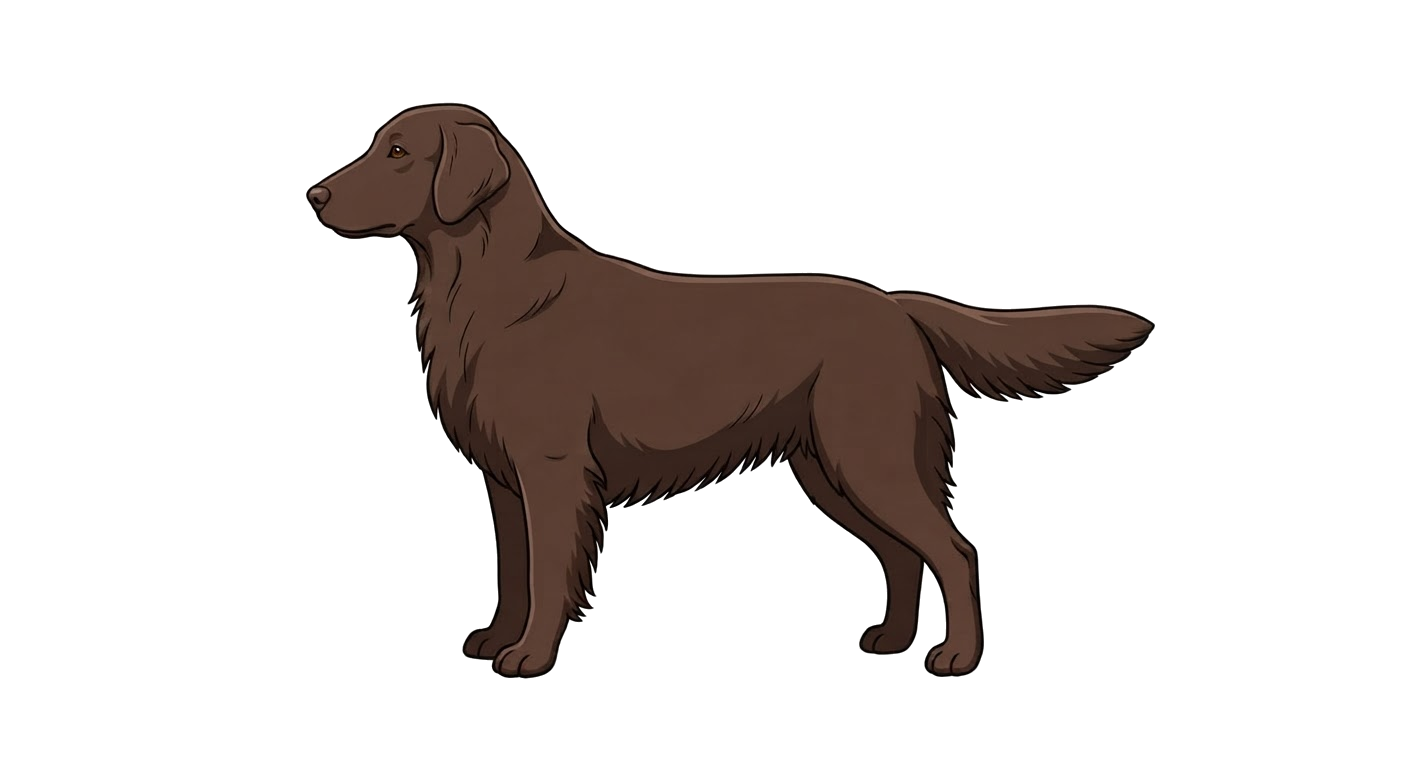
Liver
Standard colour
Warm brown shade, equally accepted in the standard.
Timeline
History & development
1860s
Early development
Retrievers combining setter, spaniel and Newfoundland ancestry are refined into a fixed type.
1873
First shown
The breed appears at early dog shows under the name Wavy or Flat-Coated Retriever.
1915
Breed club founded
The Flat-Coated Retriever Society is established in England.
1960s
Overtaken by Labrador
The Labrador Retriever eclipses the Flat-Coat in general popularity.
Reference
Breed standard summary
- body
- Deep-chested, strong, well ribbed
- coat
- Flat, dense, fine texture with good feathering
- ears
- Small, well set, close to head
- eyes
- Dark brown, medium size, kind expression
- gait
- Free, powerful, effortless movement
- head
- Long, moderately broad skull
- size
- Large · 56-61cm · 25-36kg
- tail
- Straight, carried level with back
- colour
- Black, Liver. Colours outside this list are seen but are not accepted by the kennel clubs.
- temperament
- Typical of the breed: strongest in sociability, energy, trainability. Nervousness or aggression are serious faults in the show ring and in the home.
- general appearance
- Active, well-balanced, medium-sized retriever
Health
What to screen for
Green means little to worry about, amber means ask the breeder for test results, red means manage it actively.
Cancer
Watch closely
Elevated rates in the breed; ask about longevity in the pedigree.
Hip dysplasia
Screen for it
Request hip scores for both parents.
Elbow dysplasia
Screen for it
Elbow scoring is standard practice among responsible breeders.
Glaucoma
Screen for it
Eye testing is recommended before breeding.
General information only — always speak to your vet about your own dog.
From real owners
Dogs like this
Flat Coated Retrievers added by PawPoint members through their pet passports. Share yours to appear here.
Loading the wall…
Made for the Flat Coated Retriever
The book, plus prints, hoodies and mugs using our own Flat Coated Retriever illustration — and one everyday accessory that suits any dog.

The book
Pawpoint: The Complete Dog Breed Book
Every officially recognised breed plus the unofficial ones nobody else documents. 400+ pages, hardback, printed and shipped from the UK.
Own stock — shipped by us
Framed poster
Flat Coated Retriever Framed Poster
Museum-weight print of our Flat Coated Retriever illustration, framed or unframed.
Printed to order
Hoodie
Flat Coated Retriever Hoodie
Heavyweight hoodie carrying the Flat Coated Retriever illustration on the chest.
Printed to order
Mug
Flat Coated Retriever Mug
Ceramic mug with the Flat Coated Retriever illustration wrapped around it.
Printed to order
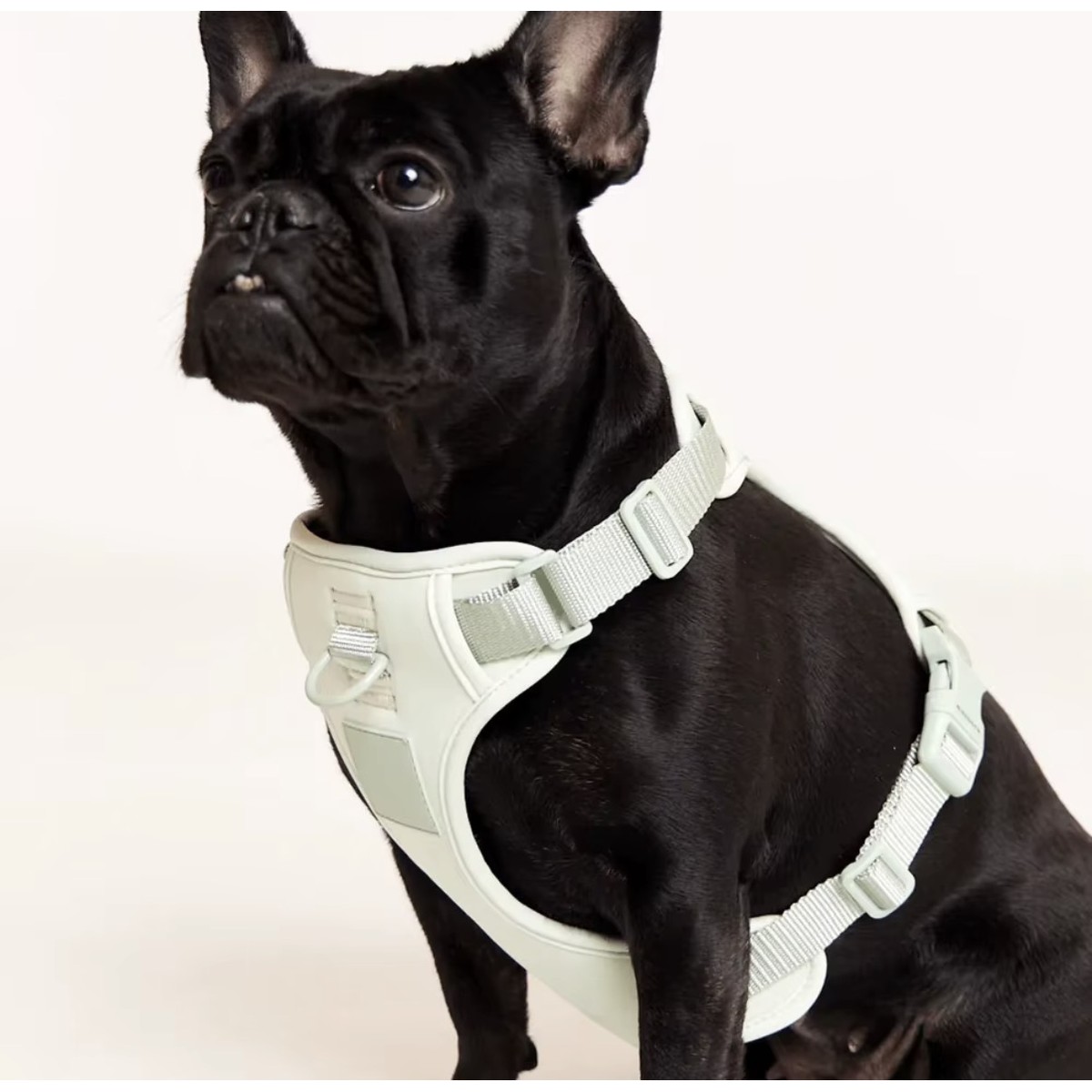
Accessory
Adjustable Harness (S/M/L)
Fully adjustable chest and girth straps — no fixed sizing.
Fits any dog

Pawpoint on YouTube
Watch the full Flat Coated Retriever video
Breed deep-dives, history and honest ownership talk. New film every week.
Watch now