
Fox Terrier (Smooth)
FOKS TER-ee-uhr SMOOTH
United Kingdom· England
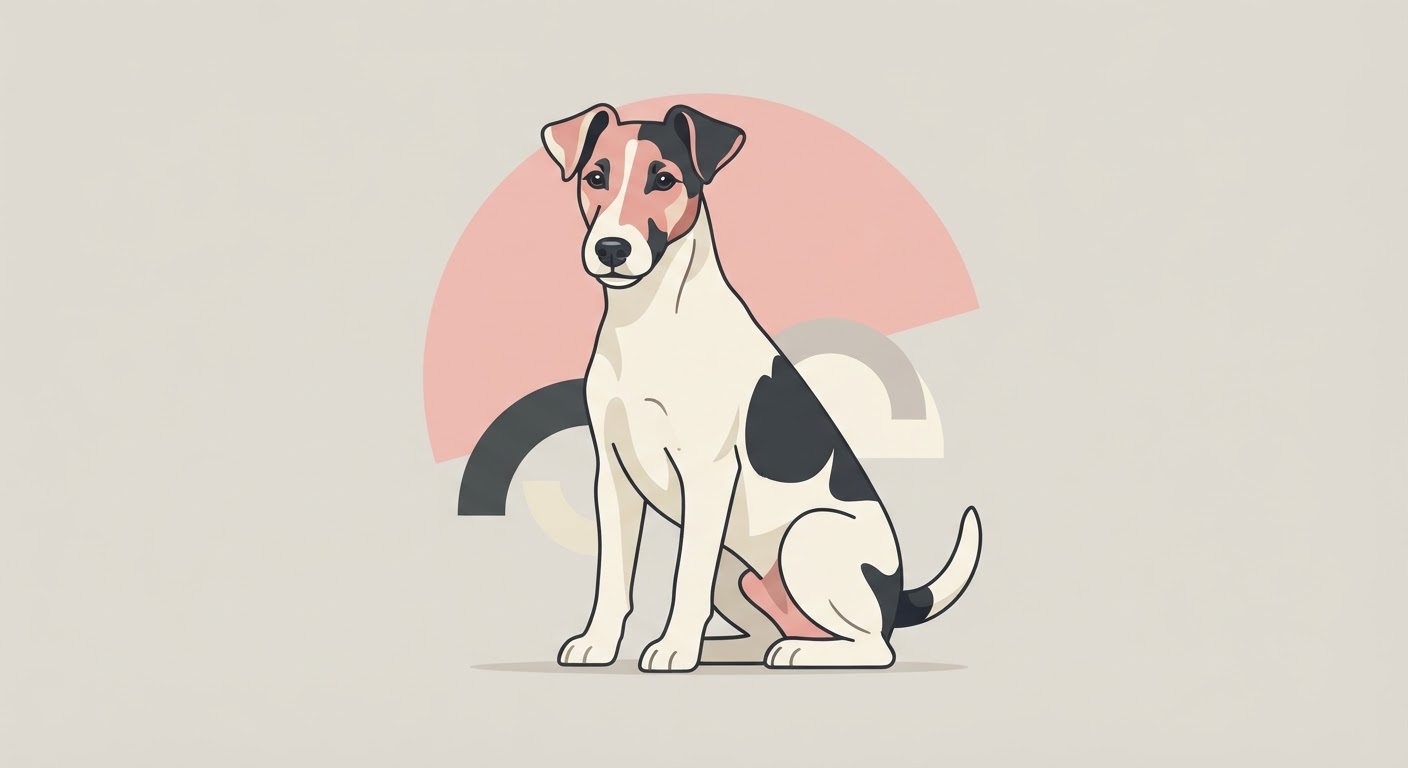
The Smooth Fox Terrier is a compact, sharp-witted English terrier bred to bolt foxes from their earths so hounds and horses could continue the chase above ground.
At a glance
Quick facts
Size
Small
Exercise needs
60 minutes daily
Home size suited to
Flat or small home
Grooming frequency
Weekly brush
Coat length
Short
Sheds
Yes, heavily when moulting
Lifespan
12-15 years
Town or country
Either, with enough exercise
Garden size needed
Small garden or none
Where it comes from
Origins of the Fox Terrier (Smooth)
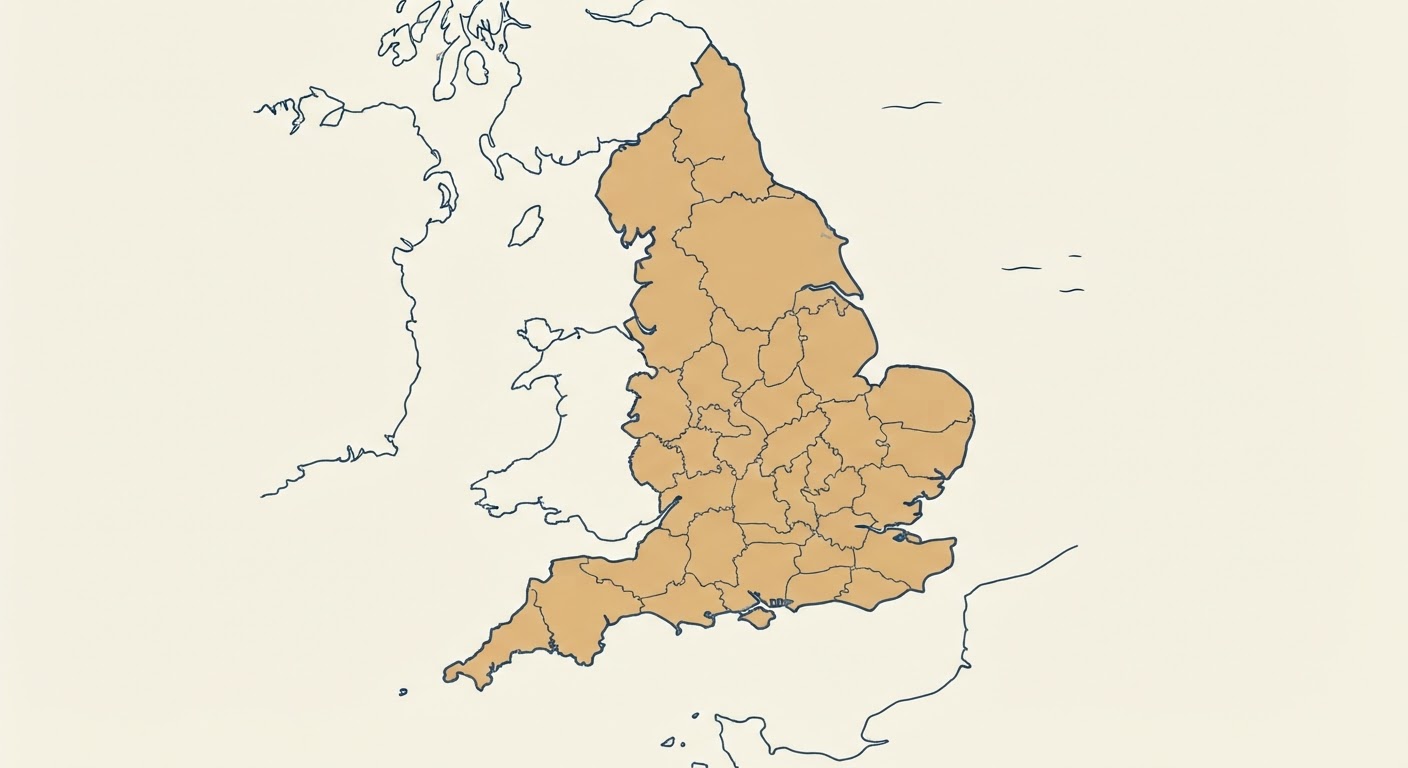
Bred on English hunting estates to work alongside foxhounds, going underground to flush foxes from their dens while a mostly white coat kept them visible to huntsmen.
- Region
- England
- Climate it was bred for
- Temperate rural farmland
- Original job
- Bolting foxes from their earths
The long read
About the breed
Developed in England during the 1800s from older black-and-tan terrier stock, the breed was refined to hunt alongside foxhound packs, its job being to go underground after a fox that had gone to earth and drive it back out. Breeders favoured a mostly white coat so the dog could be told apart from the fox in poor light, and a compact, flexible body that could fit down a den. The Smooth and Wire Fox Terriers were treated as a single breed with two coat types until they were split into separate breeds in the twentieth century.
Living with a Smooth Fox Terrier means living with a bold, busy, and often mischievous dog that retains strong prey drive and a talent for finding trouble if under-exercised. They are intelligent and trainable but can be stubborn and are not always reliable with small pets or unfamiliar dogs, reflecting their working background as solitary hunters rather than pack animals. The short, dense coat is low-maintenance, needing only occasional brushing.
Today the breed is kept mainly as a companion and show dog rather than a working terrier, though its terrier instincts remain intact. It suits owners who enjoy an active, characterful small dog and are prepared for firm, consistent training and secure fencing.
Living with one
Temperament & needs
Our own ratings, based on the breed standard and how these dogs behave in ordinary homes.
Friendliness
3/5
How openly the Fox Terrier (Smooth) greets people it does not know.
Trainability
3/5
Clever but strong-willed, needs consistent handling.
Energy
5/5
Highly active, needs vigorous daily exercise.
Barking
4/5
Alert and vocal, quick to raise the alarm.
Grooming
1/5
Short, dense coat needs minimal upkeep.
Suits a first-time owner
2/5
How forgiving the Fox Terrier (Smooth) is for someone taking on their first dog.
Sociability
3/5
Bold and confident but can be selective with other dogs.
Independence
4/5
Bred to think and act alone when working underground.
Illustrated breed standard
The points of the breed
Hover or tap a numbered point to read what the standard asks for.
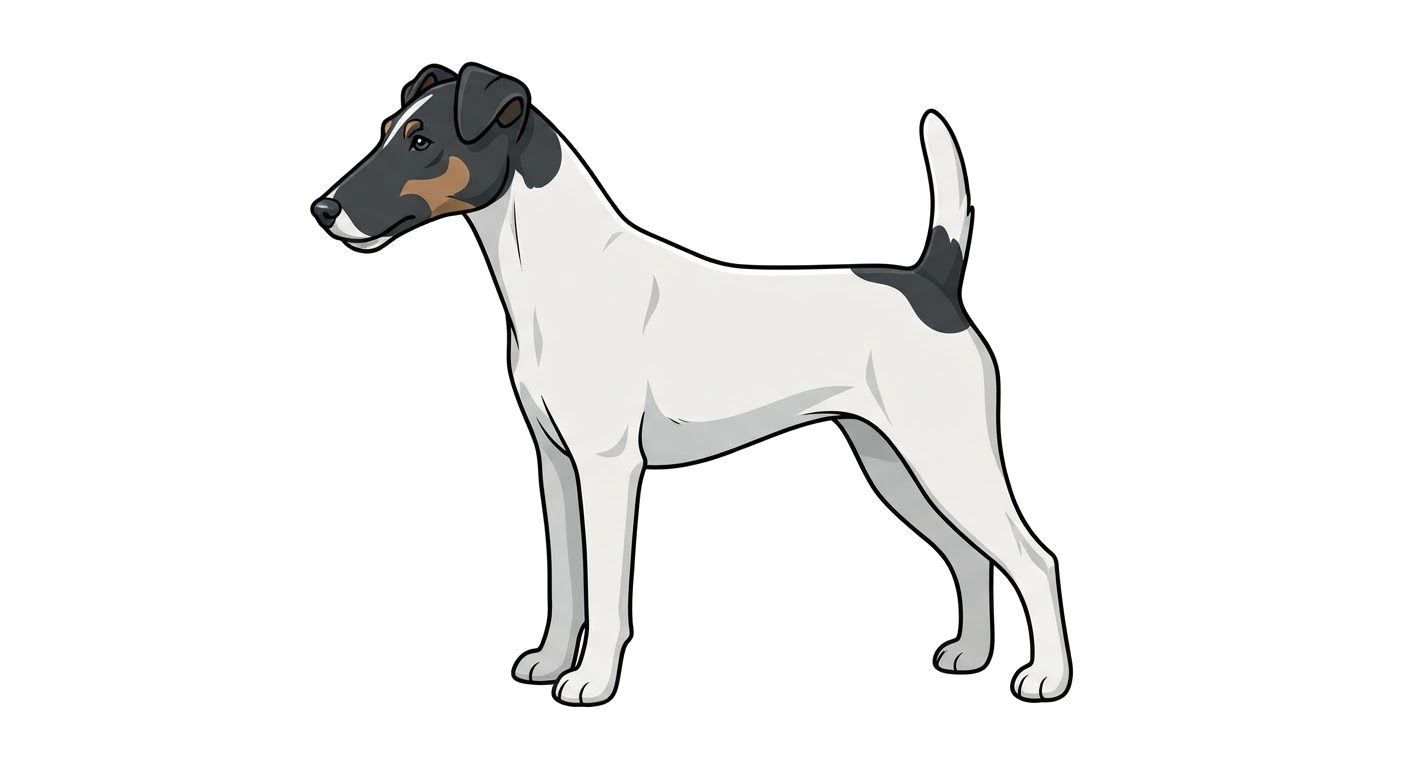
Point 1
Skull
The Fox Terrier (Smooth)'s skull is judged on balance rather than size — proportionate to the body, with a clean cheek and a stop typical of the breed. Coarseness or an over-refined head are both faulted.
Colours & patterns
Recognised coats
Which coats the standard accepts — and which are simply popular.
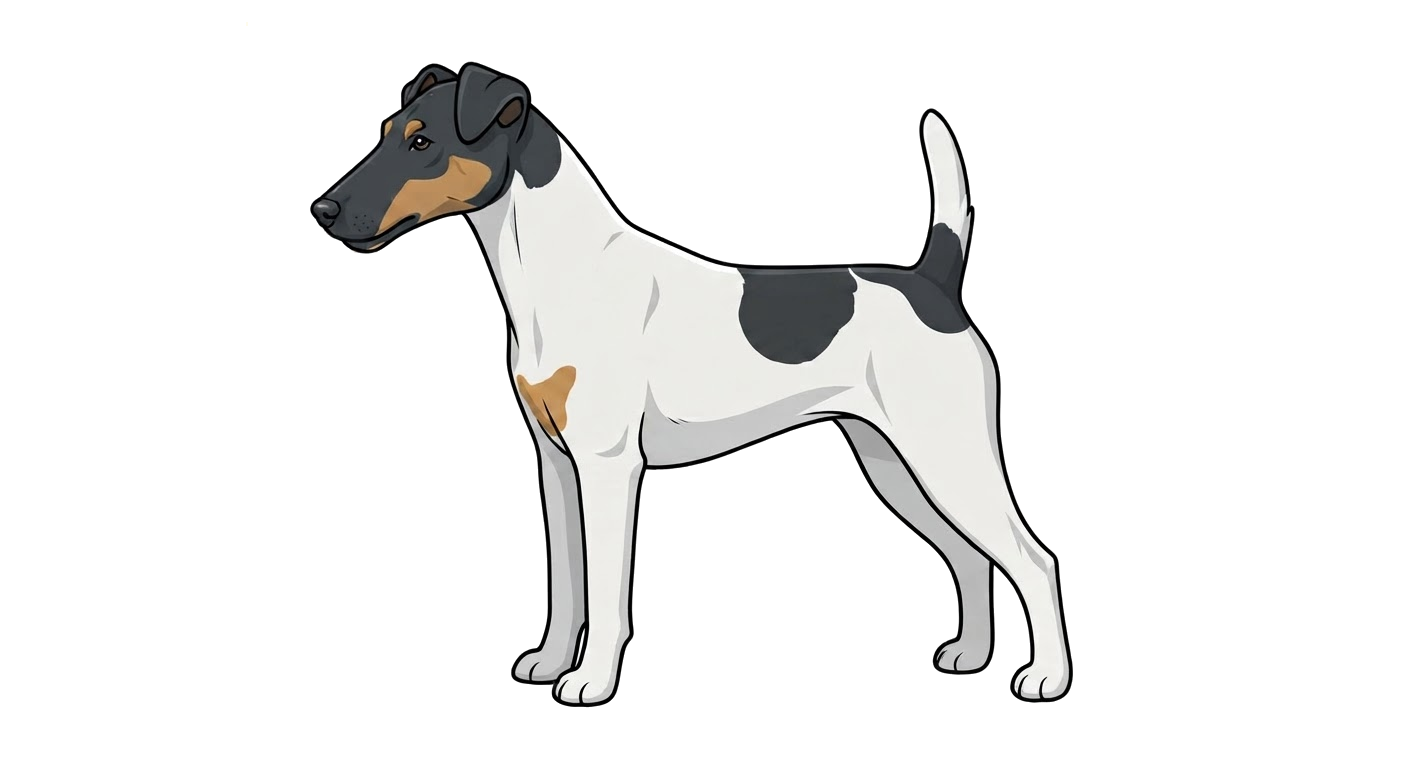
White, black and tan
Standard colour
The classic tricolour pattern, predominantly white.
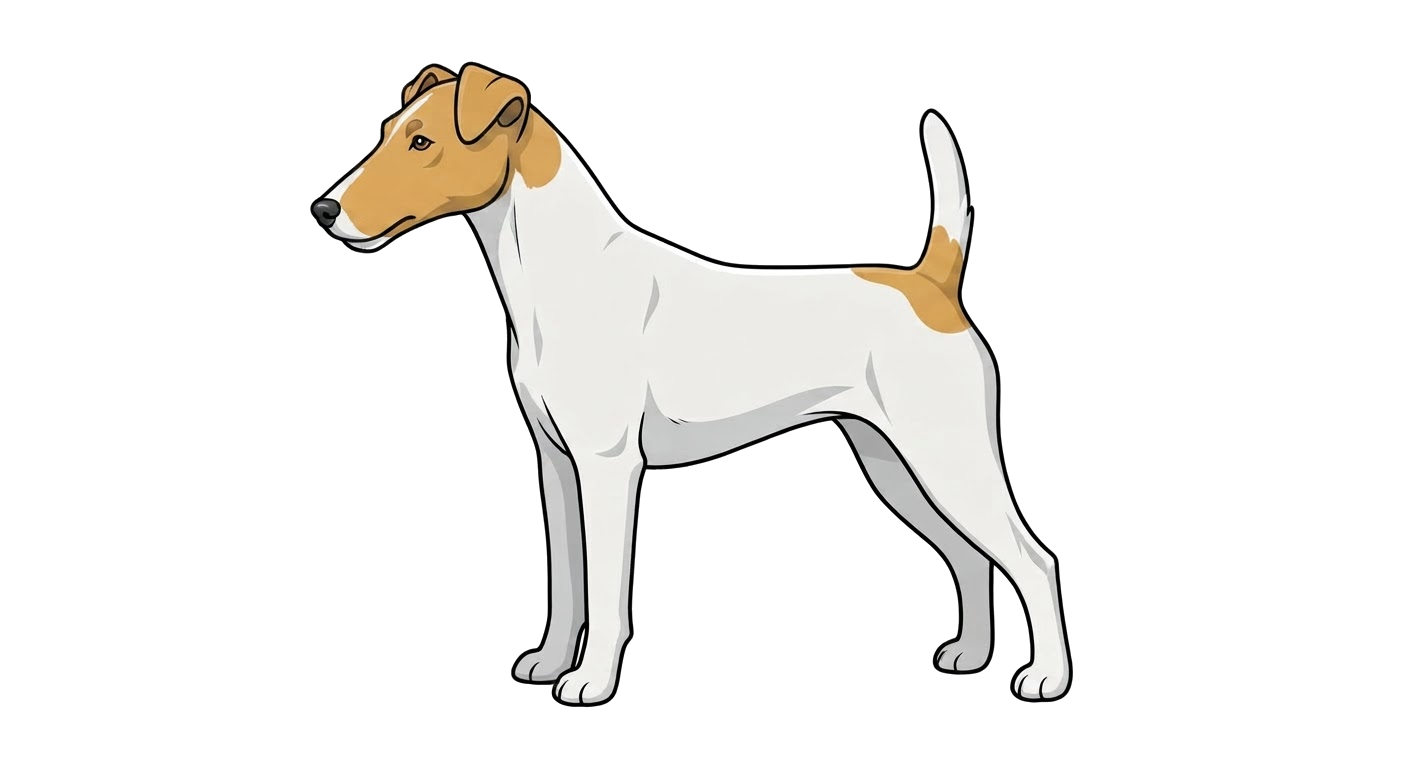
White and tan
Standard colour
White base with tan patches, no black.
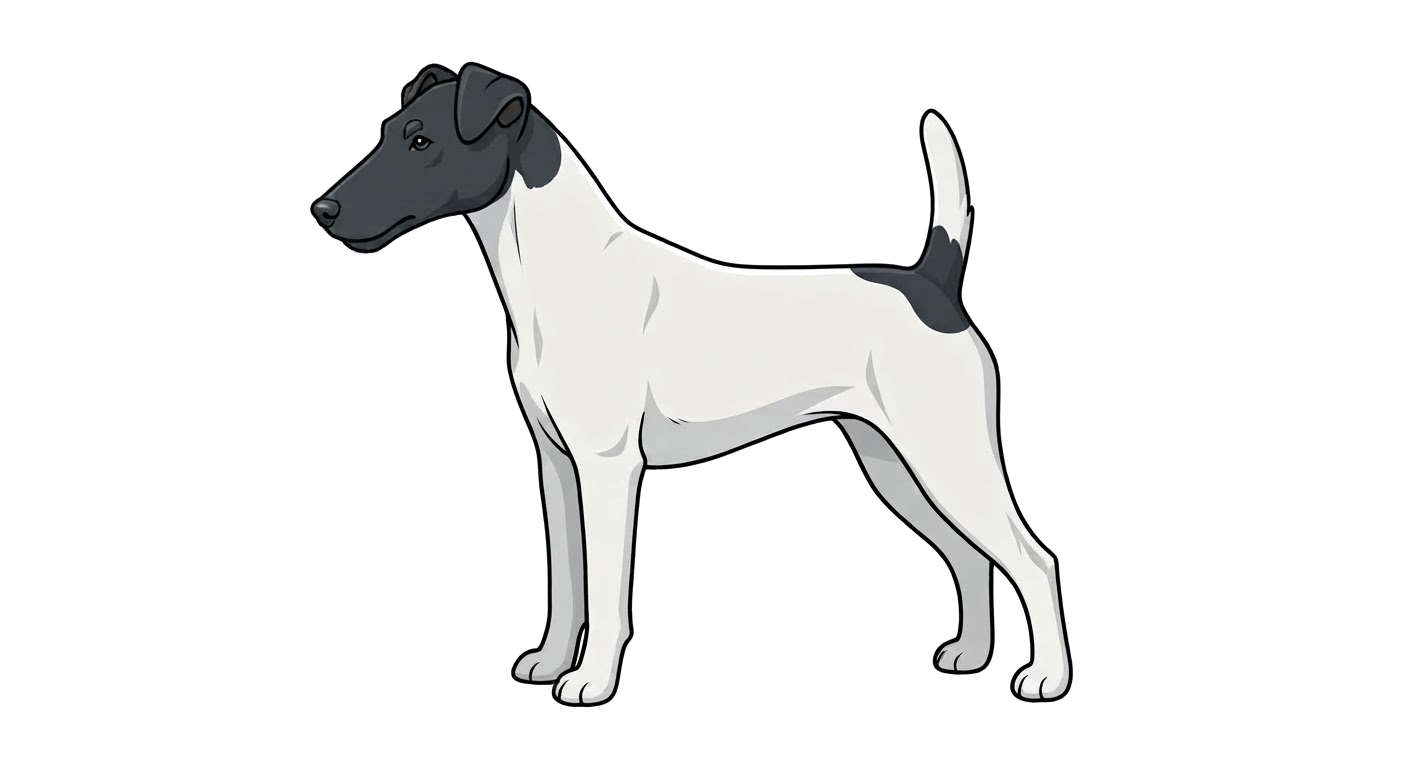
White and black
Standard colour
White base with solid black patches.
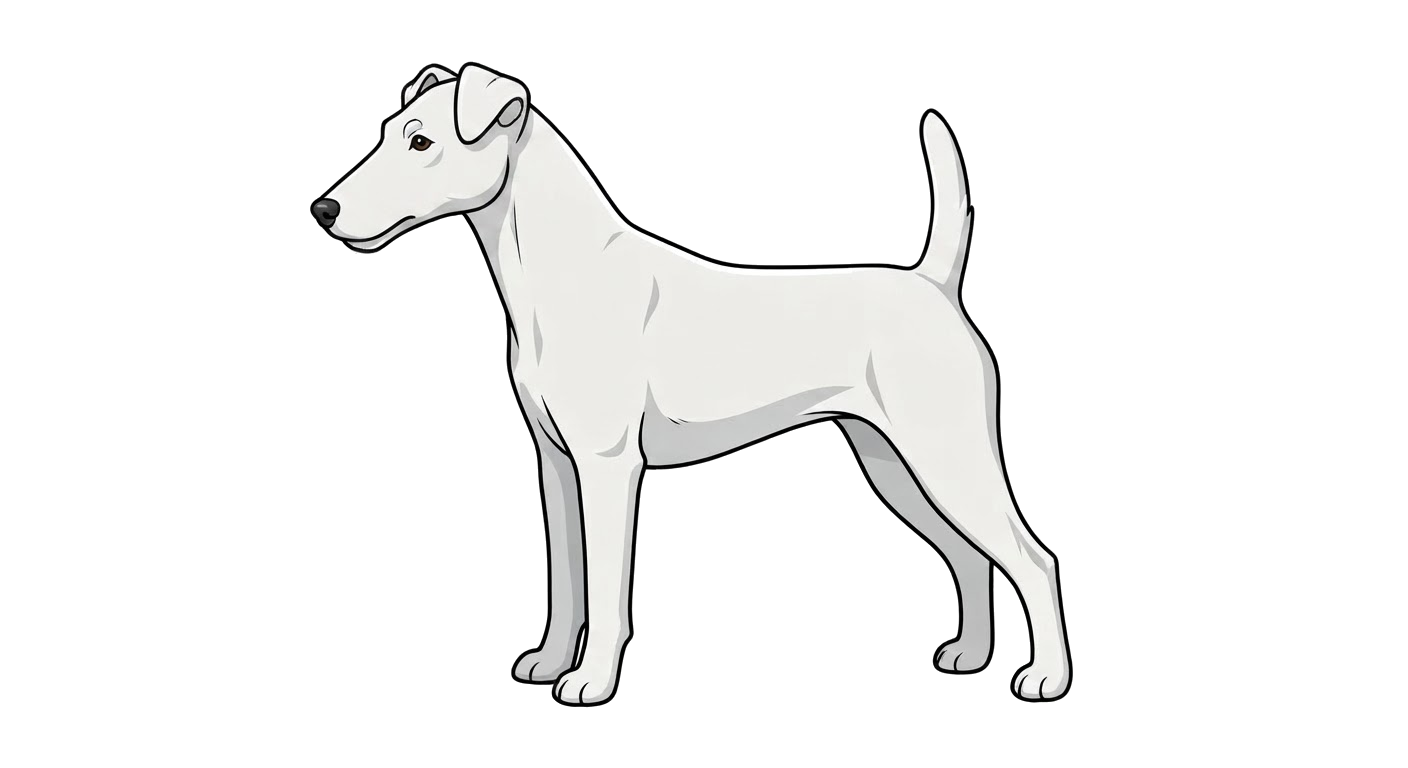
Predominantly white
Standard colour
White must always predominate under the breed standard.
Timeline
History & development
1790s
Early terrier stock
Black-and-tan working terriers are used to bolt foxes on English hunts.
1860s
White coat favoured
Breeders select for mostly white coats to distinguish dogs from foxes underground.
1876
Breed club founded
The Fox Terrier Club is established in England to formalise the standard.
1985
Formal split
The Kennel Club fully separates Smooth and Wire Fox Terriers into distinct breeds.
Reference
Breed standard summary
- body
- Short-coupled, deep chest
- coat
- Smooth, dense, flat
- ears
- V-shaped, folded forward
- eyes
- Dark, small, keen expression
- gait
- Free, straight, driving movement
- head
- Flat skull, moderate stop
- size
- Small · 36-39cm · 7-8kg
- tail
- Set high, carried erect
- colour
- White, black and tan, White and tan, White and black, Predominantly white. Colours outside this list are seen but are not accepted by the kennel clubs.
- temperament
- Typical of the breed: strongest in energy, independence, barking. Nervousness or aggression are serious faults in the show ring and in the home.
- general appearance
- Compact, balanced, alert terrier
Health
What to screen for
Green means little to worry about, amber means ask the breeder for test results, red means manage it actively.
Patellar luxation
Screen for it
Vets can check knee stability during routine exams.
Lens luxation
Watch closely
DNA testing for the ADAMTS17 gene is recommended.
Deafness
Watch closely
BAER hearing testing is worth requesting given the mostly white coat.
Legg-Calve-Perthes disease
Low concern
Uncommon but seen occasionally in small terriers.
General information only — always speak to your vet about your own dog.
From real owners
Dogs like this
Fox Terrier (Smooth)s added by PawPoint members through their pet passports. Share yours to appear here.
Loading the wall…
Made for the Fox Terrier (Smooth)
The book, plus prints, hoodies and mugs using our own Fox Terrier (Smooth) illustration — and one everyday accessory that suits any dog.

The book
Pawpoint: The Complete Dog Breed Book
Every officially recognised breed plus the unofficial ones nobody else documents. 400+ pages, hardback, printed and shipped from the UK.
Own stock — shipped by us
Framed poster
Fox Terrier (Smooth) Framed Poster
Museum-weight print of our Fox Terrier (Smooth) illustration, framed or unframed.
Printed to order
Hoodie
Fox Terrier (Smooth) Hoodie
Heavyweight hoodie carrying the Fox Terrier (Smooth) illustration on the chest.
Printed to order
Mug
Fox Terrier (Smooth) Mug
Ceramic mug with the Fox Terrier (Smooth) illustration wrapped around it.
Printed to order
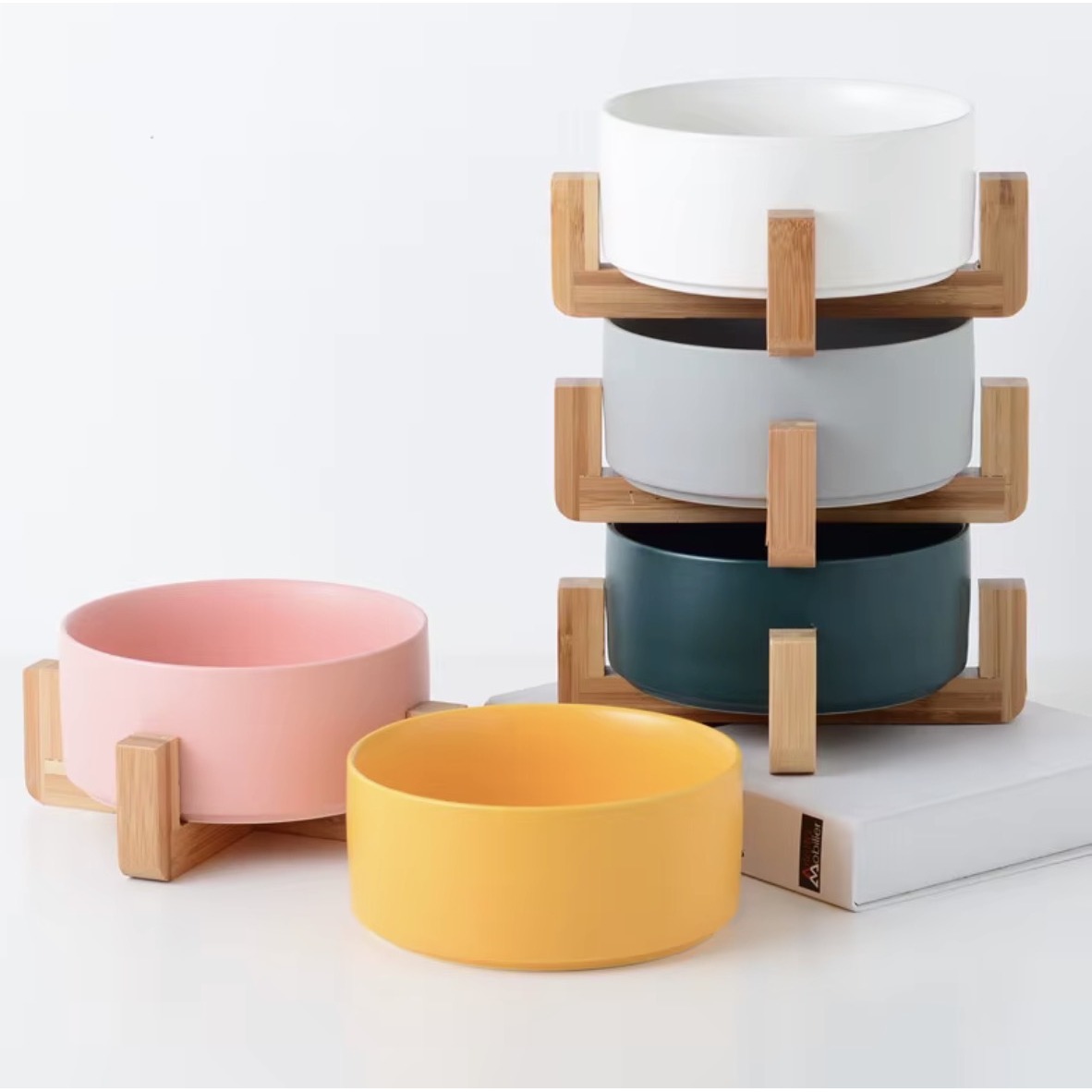
Accessory
Stainless Dog Bowl
Weighted, non-slip base. Dishwasher safe.
Fits any dog
Pawpoint on YouTube
Watch the full Fox Terrier (Smooth) video
Breed deep-dives, history and honest ownership talk. New film every week.
Watch now